The modern anime action RPG has become one of the most crowded genres on PC. Every new release inevitably invites comparisons to games such as Genshin Impact, Granblue Fantasy: Relink or Wuthering Waves, all of which have helped shape player expectations for fast-paced combat, sprawling worlds and long-term character progression. DragonSword: Awakening arrives with the additional burden of overcoming first impressions. Before launch, many players had already written it off as another live-service project built around familiar anime aesthetics, assuming it would rely on aggressive monetization or endless grinding rather than offering a complete adventure. In practice, Hound13’s latest release turns out to be something rather different. Although the game has its roots in the Korean free-to-play version of DragonSword, the international PC release has been rebuilt as a premium buy-to-play action RPG that removes gacha mechanics entirely while preserving much of the underlying progression and combat design.
That transition is still visible in places. Certain progression systems, collectible loops and upgrade mechanics occasionally feel like remnants of a project originally designed to encourage long-term engagement, but they have been adapted into a conventional single-player structure that respects the player’s time far more often than it wastes it. Rather than constantly pushing monetization or daily objectives, DragonSword focuses on building an enjoyable gameplay loop around exploration, combat and character development, and that alone gives it a noticeably different feel from many games it superficially resembles. None of this means DragonSword: Awakening reinvents the genre, however, because almost every major mechanic will feel familiar to anyone who has spent time with recent open-world action RPGs. There are towers to climb, hidden caves to discover, puzzles scattered throughout the landscape and a generous amount of optional content waiting beyond the critical path. Familiarity, though, is not necessarily a weakness, especially when the execution is consistently competent.
DragonSword succeeds because it rarely overreaches. Instead of attempting to revolutionize open-world RPG design, it concentrates on delivering satisfying combat, rewarding exploration and a world that remains enjoyable to traverse throughout a lengthy campaign. The narrative never reaches the emotional highs of the genre’s best stories and some open-world activities eventually become repetitive, yet the game maintains enough confidence in its strongest systems that those shortcomings rarely dominate the experience. By the time the credits roll, it becomes clear that Hound13 has produced a thoroughly enjoyable action RPG that earns recognition through refinement rather than novelty.
Story and World
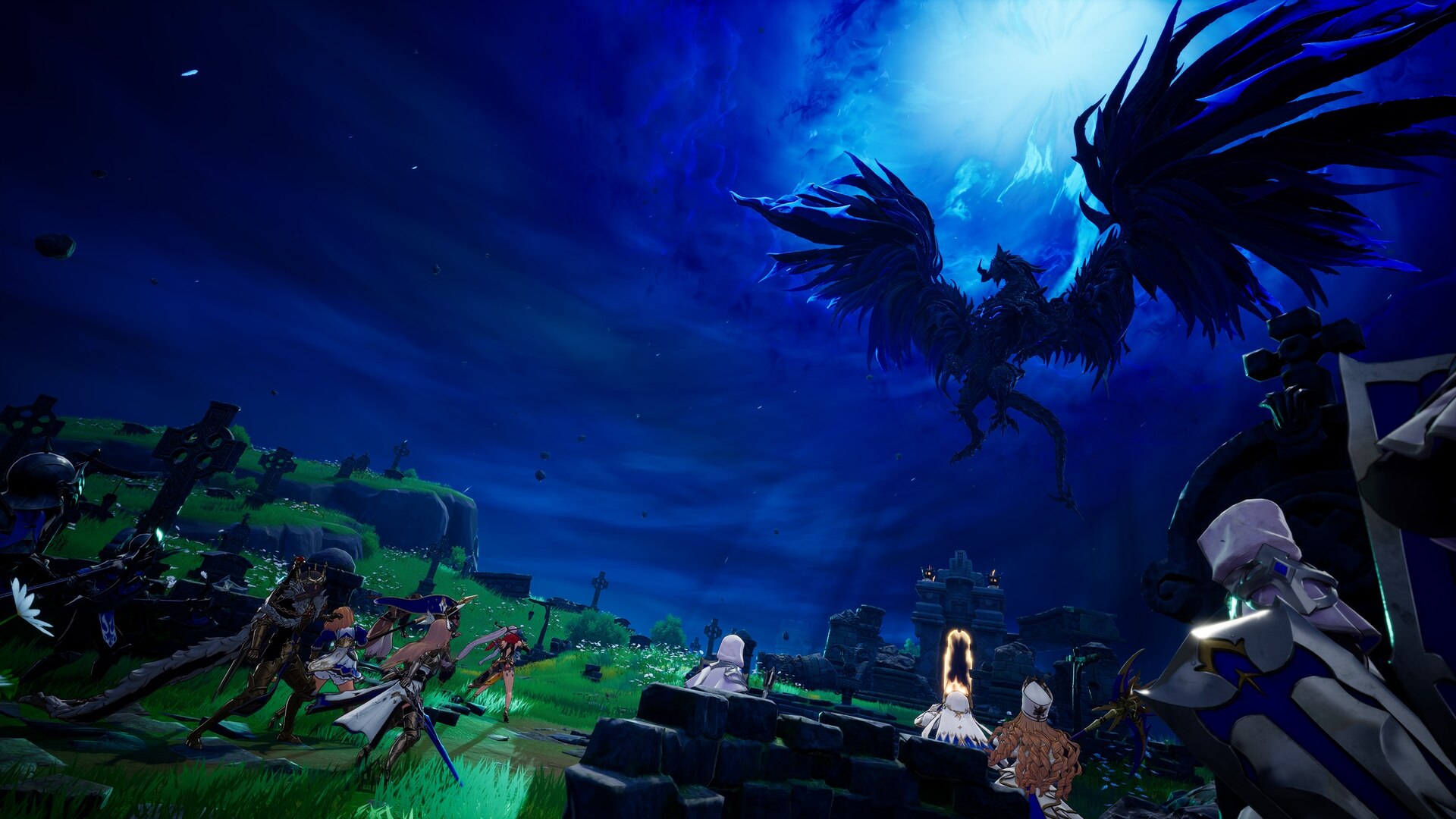
DragonSword: Awakening opens sixty years after the return of an ancient dragon whose reappearance threatens the continent of Orbis. The premise embraces traditional fantasy rather than attempting to subvert it, placing players in the role of a hero who gradually assembles a growing party of companions while uncovering the history behind the world’s current crisis. From the outset, the story establishes its central conflict clearly without overwhelming players with excessive lore or exposition.
Veterans of Japanese and Korean RPGs will recognize many of the narrative beats, from ancient civilizations and forgotten powers to rival factions and increasingly dangerous enemies, but familiarity is offset by confident pacing that keeps the campaign moving without becoming bogged down in lengthy cutscenes or dialogue. Major revelations arrive at regular intervals, character introductions are spread naturally across the adventure and the main quest rarely loses sight of its central objective even as it encourages detours into optional content.
The supporting cast plays an equally important role in maintaining that momentum. As players recruit additional companions, the party gradually develops through optional conversations and story events that flesh out individual personalities without overwhelming the player with lengthy dialogue sequences. Most characters fit recognizable archetypes, but they possess enough individuality to avoid feeling interchangeable, while their interactions strike a comfortable balance between lighter moments and more serious developments. The English localization is generally solid throughout the campaign, even if occasional lines still sound slightly awkward in less important conversations, and it succeeds in making relationships feel natural enough that the cast remains consistently likeable over dozens of hours.
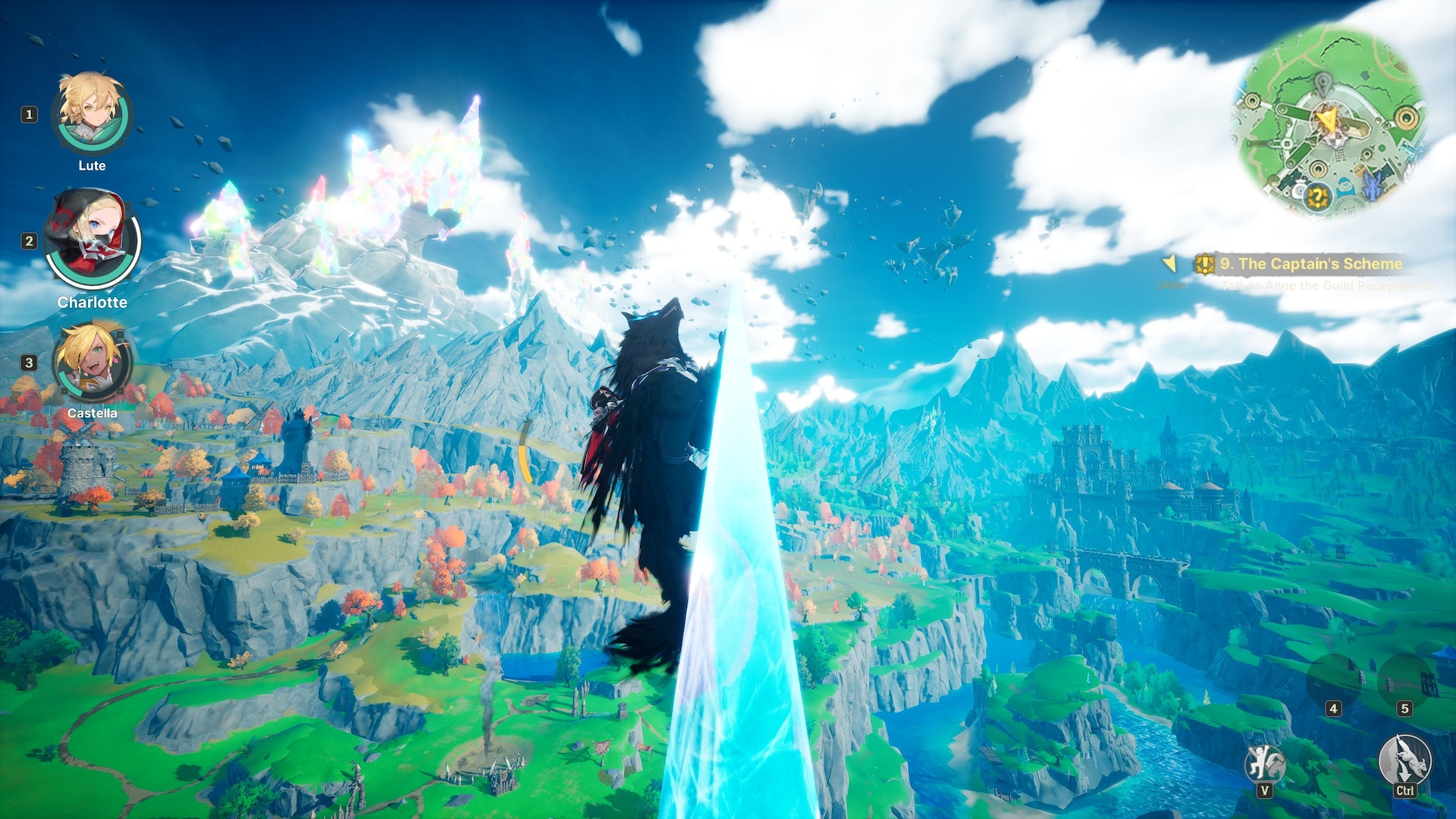
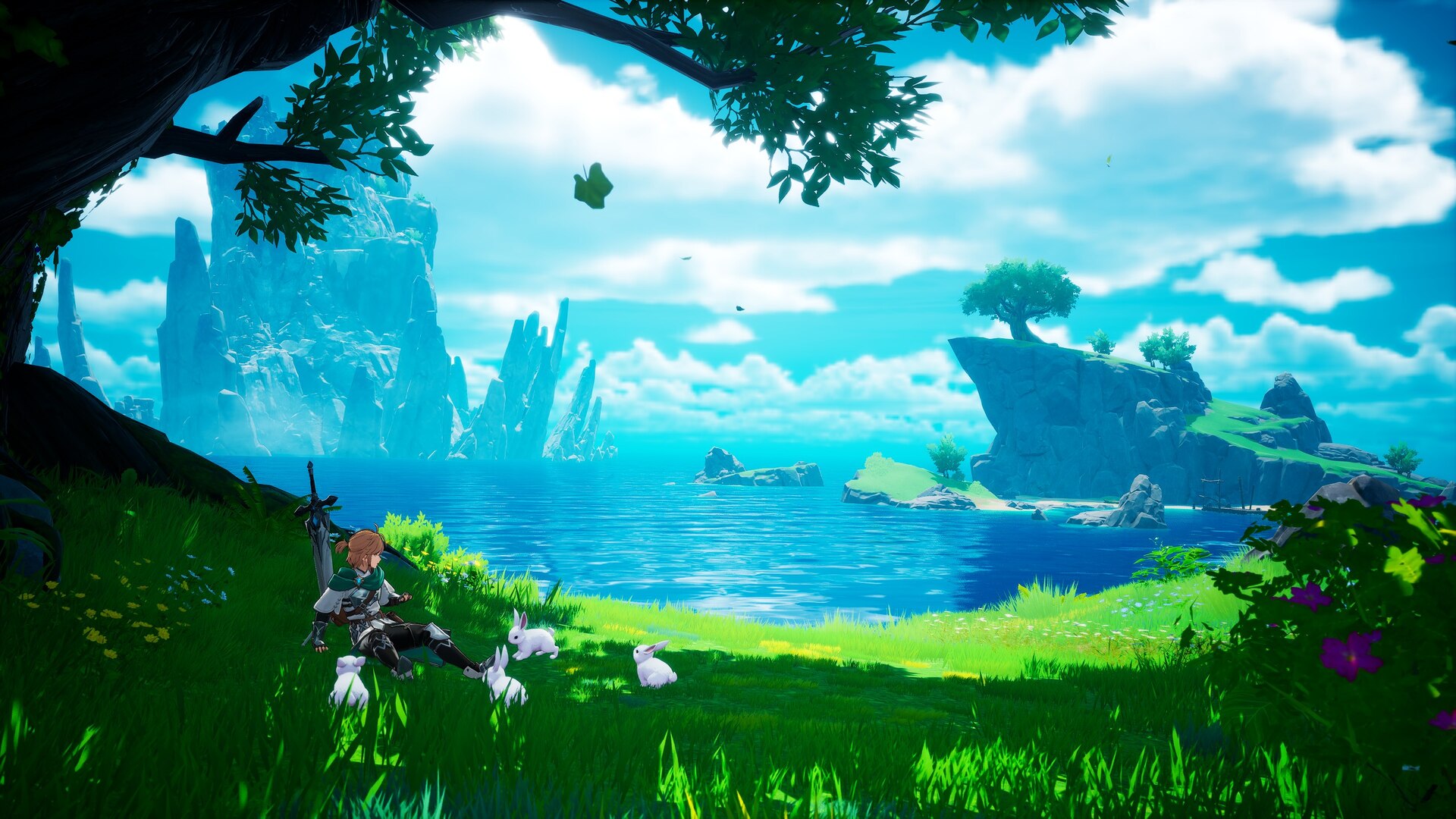
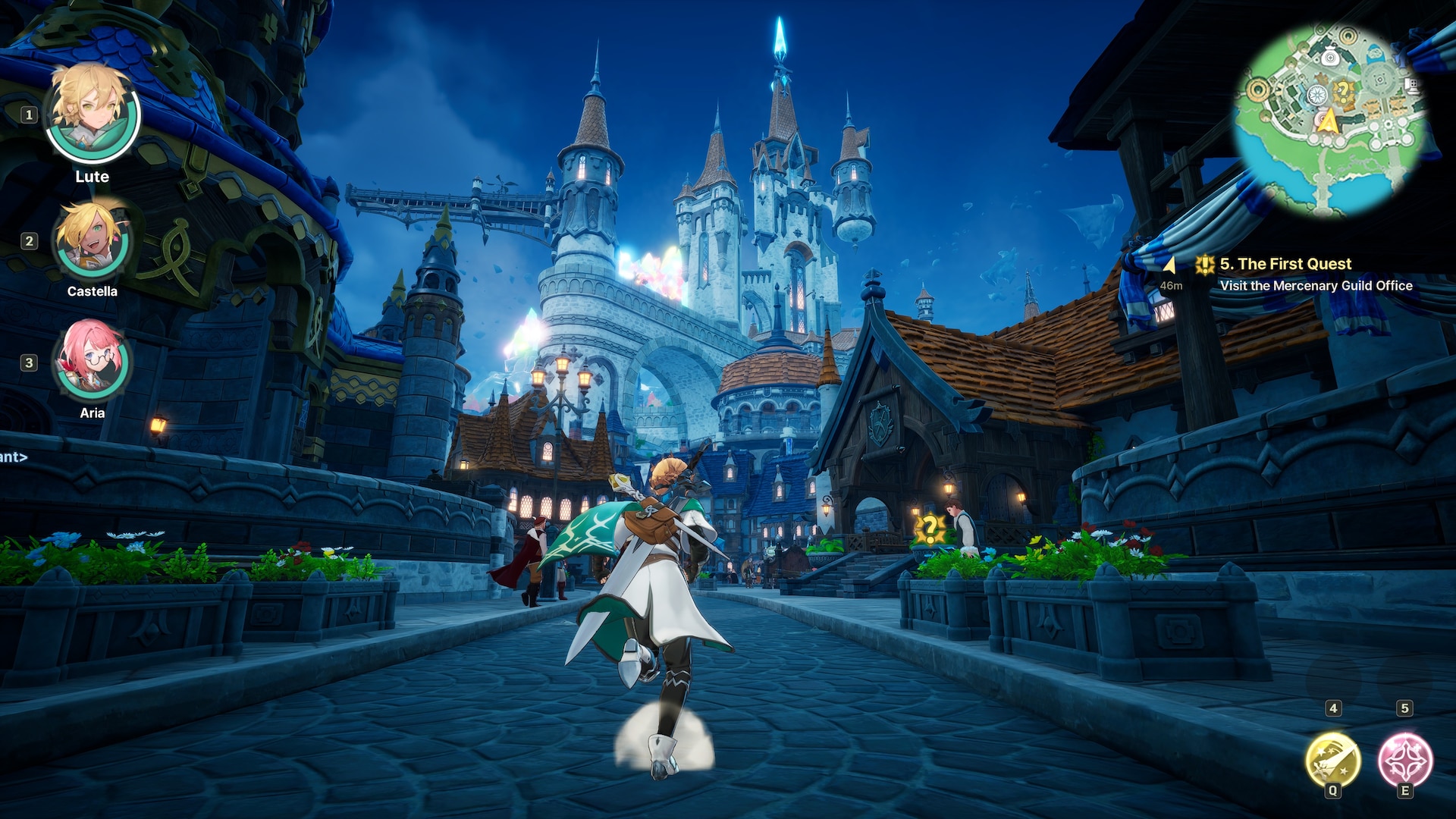
While the narrative remains engaging throughout, the world itself ultimately leaves an even stronger impression. Orbis is a seamless fantasy continent built in Unreal Engine 5, featuring forests, mountains, ruined fortresses, medieval settlements and underground dungeons that are connected with remarkably little interruption. The environments immediately establish a convincing sense of scale without relying solely on sheer size, as almost every region contains visible landmarks that encourage players to leave the beaten path and investigate whatever catches their attention. Climbing a distant cliff often reveals another cave system, abandoned structure or hidden path that naturally leads into further discoveries, creating the satisfying feeling that exploration is driven more by curiosity than by map markers.
That density is one of DragonSword’s greatest strengths, although it is not entirely free from repetition. Puzzle mechanics gradually begin recycling familiar ideas, hidden treasure becomes somewhat predictable after extended play and several enemy encounters reappear frequently across different regions. These issues become more noticeable during the latter stages of the adventure, but they never entirely undermine the pleasure of simply wandering through Orbis, largely because the world itself remains consistently attractive and rewards exploration often enough to justify stepping away from the main story. It is not one of the finest open worlds the genre has produced, yet it provides a strong foundation for the systems that surround it and remains enjoyable to explore from beginning to end.
Gameplay and Mechanics
Combat is unquestionably DragonSword: Awakening’s strongest feature, with moment-to-moment action that feels responsive, energetic and mechanically engaging throughout nearly the entire campaign. Players control a party of three characters who can be switched almost instantly during battle, allowing encounters to flow at a much faster pace than traditional action RPGs that focus on a single protagonist. Rather than simply changing weapons or abilities, each party member brings unique attack strings, elemental affinities and specialized techniques that encourage experimentation with different team compositions instead of relying on one favourite character from start to finish. The constant ability to rotate between companions keeps encounters feeling dynamic and rewards players who learn how individual abilities complement one another instead of treating each character as an isolated moveset.
The game’s signature mechanic revolves around status ailments and tag-team attacks. Applying specific effects to enemies creates opportunities to trigger powerful follow-up abilities, with teammates seamlessly entering combat to extend combos or exploit temporary openings before returning control to the active character. These chained attacks are visually impressive, but more importantly they provide genuine tactical depth because players are constantly deciding whether to continue building a combo, reposition to avoid incoming attacks or switch characters to maximize damage while an enemy remains vulnerable. The result is a combat system that rarely settles into repetitive attack patterns, even during lengthy encounters, because every battle presents a continuous stream of small decisions that keep the player actively engaged instead of simply repeating the same sequence of abilities.
Boss encounters benefit particularly well from this design. Larger enemies demand careful observation of attack patterns, thoughtful use of character switching and well-timed dodges rather than simply rewarding higher statistics, allowing player skill to remain an important part of progression throughout the campaign. Defensive mechanics generally feel reliable, successful evasions create satisfying opportunities for counterattacks and the escalating complexity of later boss fights ensures that combat continues introducing fresh challenges instead of merely increasing enemy health pools. Although some encounters become visually busy as particle effects, elemental attacks and overlapping animations fill the screen, readability usually remains good enough that failures feel earned rather than arbitrary.
Combat has also improved noticeably compared with the public demo shown prior to release. Community feedback prompted Hound13 to refine several mechanics before launch, including adjustments to controls and camera behaviour, and while occasional camera issues still occur during particularly chaotic encounters involving multiple large enemies, the final release feels considerably more polished than earlier demonstrations suggested.
The progression systems surrounding combat generally complement its strengths without becoming unnecessarily convoluted. Equipment upgrades, skill improvements and character development gradually expand tactical possibilities rather than replacing them outright, while the absence of gacha mechanics means every meaningful upgrade is earned through exploration, quest completion or ordinary gameplay. There is still a noticeable amount of grinding available for players pursuing optional upgrades or post-game optimization, reflecting some of the game’s original design roots, but the campaign itself rarely demands excessive repetition simply to maintain forward momentum. That balance allows DragonSword to preserve the satisfying sense of long-term character growth associated with many modern anime RPGs while avoiding the frustration that often accompanies heavily monetized progression systems, making its combat loop consistently rewarding from the opening hours through the final chapters.
Exploration and Side Content
DragonSword: Awakening spends a considerable amount of time encouraging players to ignore the main objective, and more often than not those distractions prove worthwhile. Exploration rarely feels like a simple process of clearing icons from a map because the world has been designed to guide curiosity through environmental landmarks rather than constant on-screen direction.
Distant ruins, isolated towers, unusual rock formations and hidden valleys naturally draw attention while travelling, creating a satisfying rhythm where one unexpected discovery frequently leads to another. Reaching the top of a mountain may reveal a cave system tucked beneath a cliffside, which in turn opens a shortcut into an entirely different region or uncovers an optional encounter that would have been easy to miss by following the main quest alone. It is a familiar design philosophy that owes a clear debt to several modern open-world RPGs, but DragonSword executes it well enough that exploration remains consistently enjoyable throughout much of the campaign.
Traversal plays an equally important role in maintaining that momentum. Characters move through the world quickly, climbing mechanics feel responsive and the relatively seamless nature of the environment helps preserve immersion by minimizing interruptions between destinations. The game does not attempt to reinvent movement systems, nor does it burden exploration with unnecessary restrictions, allowing players to approach new regions with a sense of freedom that complements the open-world structure. As a result, lengthy play sessions often unfold organically, with players drifting from one activity to another simply because the next point of interest looks intriguing rather than because the game explicitly demands attention.
Environmental storytelling contributes to that sense of discovery without becoming one of the game’s defining features. Ruined fortifications, abandoned villages and ancient shrines quietly suggest pieces of Orbis’ history without requiring lengthy exposition or constant narrative interruptions, allowing the environments themselves to establish atmosphere while the player pieces together smaller details through observation. DragonSword never reaches the level of subtle environmental narrative found in games that place world-building above conventional storytelling, but it uses its locations effectively enough that exploration feels rewarding beyond the practical benefits of acquiring experience points or equipment.
The quality of side quests is somewhat less consistent. At their best, optional missions introduce memorable supporting characters, expand upon regional conflicts or explore stories that naturally complement the central narrative without feeling essential to understanding it. These quests generally avoid excessive dialogue, maintain a brisk pace and provide worthwhile reasons to spend additional time in each region beyond simple completionism. Less successful quests, however, rely on objectives that have become increasingly common throughout the genre, asking players to eliminate another group of enemies, recover scattered resources or deliver items between non-playable characters. None of these activities are poorly implemented, but repetition gradually becomes more noticeable as the campaign progresses, particularly for players who pursue every available side activity before advancing the main story.
Collectibles and optional progression systems are handled with considerably more restraint than many comparable games. Treasure chests, crafting materials and lore-related discoveries provide regular incentives to investigate hidden corners of the world, but the game rarely overwhelms players with an excessive number of overlapping systems competing for attention at the same time. Completionists will still find dozens of hours of optional content after the main campaign, yet players who prefer focusing primarily on the central story can comfortably ignore much of the additional material without finding themselves significantly underpowered. That balance ultimately becomes one of DragonSword’s quiet strengths, as the game consistently rewards curiosity without making optional content feel mandatory.
Some traces of the project’s earlier design direction do remain visible within its progression systems. Resource gathering, upgrade materials and repeatable encounters occasionally create the impression that these mechanics were originally intended to support a longer-term progression loop before the game’s transition into a premium single-player experience. They never become intrusive enough to dominate the adventure, but they do introduce brief stretches where the otherwise satisfying sense of forward momentum slows more than necessary. Fortunately, these moments remain the exception rather than the rule, and they rarely overshadow the simple pleasure of exploring a well-crafted fantasy world.
Audio and Presentation
DragonSword’s presentation succeeds because its various artistic elements consistently support one another instead of competing for attention. The anime-inspired character designs remain distinctive without becoming excessively exaggerated, while the environments strike an appealing balance between realism and stylization that allows the world to feel grounded despite its high-fantasy setting. Spell effects, particle systems and large-scale combat animations provide the visual spectacle expected from a modern action RPG, but they generally avoid becoming so excessive that they distract from the underlying gameplay, even if particularly chaotic battles occasionally push visual clarity to its limits.
The soundtrack complements that visual identity with considerable confidence. Rather than attempting to dominate every scene through constant orchestral bombast, the music usually reinforces exploration and combat by establishing atmosphere before gradually giving way to more energetic compositions during major encounters. Several boss themes stand out as particular highlights, adding additional weight to important battles without overwhelming the action itself, while quieter exploration tracks help long stretches of travel remain engaging instead of repetitive.
Voice performances are consistently competent across the principal cast and contribute significantly to making the characters feel approachable throughout the adventure. Although few performances reach exceptional dramatic heights, the overall quality remains comfortably above average, allowing emotional scenes to succeed through natural delivery rather than exaggerated theatrics. The English localization occasionally produces slightly awkward phrasing in less important conversations, but those moments are relatively infrequent and rarely affect the broader narrative.
Sound design deserves recognition for supporting combat as effectively as the visuals. Individual weapon types produce distinct impact sounds, elemental attacks carry appropriately different audio identities and enemy attacks are frequently accompanied by clear audio cues that reinforce visual telegraphs. These details may appear subtle in isolation, yet they contribute meaningfully to the responsiveness of combat by helping players anticipate incoming attacks and recognize successful defensive actions without relying exclusively on visual information.
The interface follows a similarly practical philosophy. Menus are logically organized, character progression is easy to understand and equipment management remains accessible despite the number of available systems. Certain crafting and upgrade screens could certainly be streamlined further, particularly during the later stages of the campaign when the number of available materials increases substantially, but the overall interface remains intuitive enough that players rarely need to struggle against menu design while managing their party.

Technical Performance on PC
Considering Unreal Engine 5’s mixed track record on PC, DragonSword: Awakening delivers a generally solid technical showing, although it is not entirely free from the performance inconsistencies that have affected several recent games built on the same technology. Players with modern mid-range and high-end hardware should have little difficulty achieving smooth performance with sensible graphics settings, while the available options provide enough flexibility to balance image quality against frame rate according to individual hardware.
The highest visual presets remain demanding, particularly at higher resolutions, but the game scales reasonably well across different configurations and avoids feeling excessively restrictive for a contemporary release.
During ordinary exploration, frame rates remain largely stable and traversal benefits from relatively short loading times when installed on an SSD, helping preserve the seamless nature of the world. More demanding situations, particularly large-scale battles featuring multiple enemies and heavy visual effects, can still produce occasional frame-time inconsistencies or brief dips in performance, although these moments are generally short-lived rather than persistent. DragonSword therefore avoids many of the severe technical problems that have accompanied some recent Unreal Engine 5 launches, even if optimization still leaves room for further refinement through future updates.
Visually, the game consistently impresses. Unreal Engine 5’s lighting technology gives forests, mountain ranges and medieval settlements a convincing sense of depth throughout different times of day, while character models, environmental detail and material quality combine to create a world that often looks significantly more expensive than its production budget might suggest. The artistic direction deserves as much credit as the underlying technology because it avoids overwhelming scenes with unnecessary detail, instead emphasizing strong environmental composition and a cohesive fantasy aesthetic that remains attractive throughout the lengthy campaign.
Not every visual element reaches the same standard. Facial animation during dialogue occasionally lacks the expressiveness found in larger-budget productions, secondary non-playable characters are sometimes reused more frequently than expected and a handful of environmental assets become familiar after extended exploration. These limitations are understandable within the context of a mid-budget production and rarely become distracting, but they do occasionally remind the player that DragonSword occupies a space between independent development and the largest AAA productions rather than competing directly with the industry’s biggest releases.
The PC version also offers respectable support for modern hardware features, including multiple graphics options, high frame-rate gameplay and controller support that generally feels well suited to the combat system. While keyboard and mouse controls remain perfectly functional, combat feels noticeably more comfortable using a controller because of the constant movement, dodging and party switching required during more demanding encounters. As with most newly released role-playing games, Hound13 has continued addressing bugs and balance issues through post-launch updates, and although isolated reports of crashes and quest-related issues have appeared among some players, the overall experience remains sufficiently stable that technical concerns rarely interfere with enjoying the game itself.
Final Verdict: 8/10
DragonSword: Awakening is unlikely to redefine the modern action RPG, but it rarely attempts to do so. Instead, Hound13 has focused on refining familiar ideas into a cohesive adventure that consistently emphasizes its greatest strengths rather than chasing unnecessary innovation. The resulting experience is built upon satisfying combat, rewarding exploration and a world that remains enjoyable to inhabit for dozens of hours, even if the narrative follows recognizable fantasy conventions and some optional activities become increasingly repetitive over time. Those shortcomings are real, but they never overshadow the quality of the systems that form the foundation of the game.
Combat remains the clearest highlight because it continues rewarding player skill throughout the campaign rather than allowing character statistics alone to dictate success. The flexible party-switching system, enjoyable combo mechanics and responsive controls create encounters that remain engaging long after players have mastered the fundamentals, while exploration provides a steady stream of meaningful rewards that naturally support continued character progression. The relationship between these systems forms an effective gameplay loop in which discovering new locations strengthens the party, stronger characters encourage further experimentation in combat and satisfying combat provides additional motivation to continue exploring.
Perhaps the game’s most impressive achievement is that, despite its obvious inspirations and traces of its original design direction, it never feels as though it exists primarily to consume the player’s time. The decision to release DragonSword: Awakening as a premium single-player RPG rather than retaining a live-service structure fundamentally changes the experience for the better, allowing progression, equipment and exploration to feel rewarding because they exist in service of the adventure itself rather than an endless retention loop. There is still enough optional grinding to satisfy players who enjoy maximizing every statistic, but the main campaign rarely demands repetitive busywork simply to continue moving forward.
DragonSword does not quite reach the highest tier occupied by the genre’s finest examples. Its story lacks the emotional impact of the very best role-playing games, several quest structures become predictable and its open-world design occasionally leans too heavily on familiar conventions. Nevertheless, those criticisms exist alongside a combat system that is consistently entertaining, an attractive fantasy world that rewards exploration and a polished presentation that demonstrates genuine care throughout the production. Rather than attempting to compete through novelty alone, DragonSword succeeds by executing established ideas with confidence and restraint, resulting in one of the more enjoyable anime-inspired action RPGs to arrive on PC in recent years.