Few first-person shooters have cast a shadow as long as Halo: Combat Evolved. Released in 2001 alongside Microsoft’s first Xbox, it didn’t invent mechanics like regenerating shields, two-weapon limits or AI-driven firefights, but it refined them into a cohesive experience that reshaped expectations for console shooters. More importantly, it demonstrated that a campaign could remain engaging over repeated playthroughs without relying on scripted spectacle. Every firefight became a small tactical problem, every weapon had a clear role, and every new enemy changed the way players approached combat. Two decades later, many of those ideas remain surprisingly fresh.
Halo: Campaign Evolved understands that legacy. Rather than treating the original as outdated, it treats it as a game worth preserving. The remake rebuilds the presentation for modern hardware while leaving the campaign’s structure almost entirely intact. That decision may disappoint players hoping for a radical reinterpretation, but it also avoids one of the most common mistakes modern remakes make: changing systems that never needed changing in the first place.
That does not mean Campaign Evolved plays it completely safe. The visual overhaul is substantial, controls have been modernized for contemporary PCs, and several quality-of-life improvements smooth away rough edges that inevitably accumulated over twenty years. At the same time, the remake never loses sight of why the original worked. It trusts the player’s curiosity instead of filling every quiet moment with dialogue, allows encounters to develop naturally instead of scripting every outcome, and rarely interrupts the action with mechanics that exist solely to satisfy current design trends.
The result is a game that occasionally shows its age but almost never feels obsolete. Some missions remain noticeably weaker than others, certain environments still reflect hardware limitations from the early 2000s, and the remake’s additional content does not always match the quality of Bungie’s original campaign. Yet the core experience remains remarkably difficult to fault because the foundation was already so carefully constructed. Rather than asking whether Halo still deserves its reputation, Campaign Evolved asks a different question: how much of that reputation was earned through timeless design rather than nostalgia? The answer becomes increasingly clear with every mission.
Story and Campaign Structure
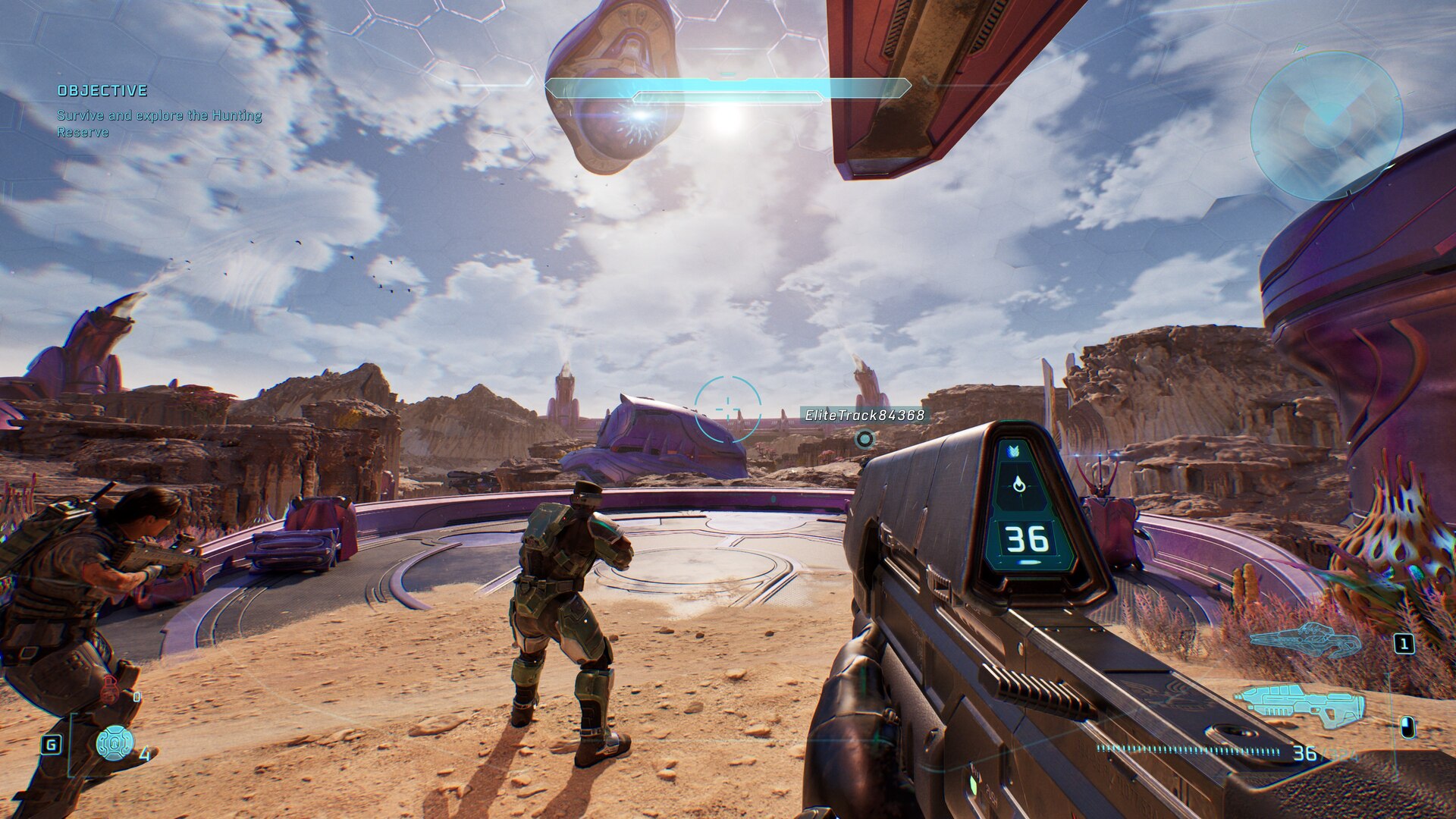
Halo’s story succeeds largely because of what it chooses not to explain. Players begin in the middle of humanity’s war against the Covenant with little understanding of the broader conflict beyond the immediate need to survive. Instead of stopping to deliver lengthy background information, the campaign lets its setting unfold naturally through level progression, environmental details and increasingly unsettling discoveries. The result is a narrative that remains accessible even for newcomers while leaving enough unanswered questions to encourage curiosity.
That gradual escalation is one of the campaign’s greatest strengths. The opening hours present Halo as a straightforward military science fiction adventure before slowly introducing elements that shift both the tone and the player’s expectations. Each major revelation changes the direction of the story without feeling disconnected from what came before. By the time the campaign reaches its final act, the conflict has expanded considerably beyond humanity’s struggle against the Covenant, yet the transition feels surprisingly organic because every twist has been carefully foreshadowed.
The remake wisely avoids interfering with that progression. Cutscenes benefit from modern animation and improved facial detail, but they retain the straightforward presentation that defined the original. Dialogue remains concise, allowing events to speak for themselves rather than explaining every motivation or plot development. In an era where many blockbuster games struggle under the weight of increasingly elaborate mythology, Halo’s relatively restrained storytelling remains refreshing.
The additional narrative content introduced for this version is more difficult to evaluate. While the new missions provide useful context and attempt to strengthen the connection between later Halo titles and the original campaign, they rarely feel essential. They are competently designed and contain several enjoyable firefights, but they lack the sense of discovery that makes the original missions memorable. Rather than introducing genuinely new ideas, they mostly reinforce information longtime fans already understand.
That imbalance becomes particularly noticeable once the familiar campaign begins. The opening mission aboard the Pillar of Autumn immediately establishes a pace that the new material never quite matches. Objectives are clear without becoming repetitive, character introductions are economical, and the game quickly places players in situations where learning through experimentation becomes more important than following instructions. The remake captures this rhythm faithfully, reminding players that strong pacing often depends more on confidence than complexity.
Gameplay and Mechanics
Halo’s combat remains the primary reason the campaign continues to hold up so well. Many shooters released since have become larger, more cinematic or more mechanically dense, yet comparatively few have achieved the same balance between simplicity and depth. The controls are uncomplicated, the weapon selection is modest by modern standards, and progression systems are virtually nonexistent. What gives Halo its longevity is not the number of mechanics available to the player but how naturally those mechanics interact with one another.
The familiar two-weapon limit illustrates this philosophy perfectly. Restricting the player might initially appear limiting, yet it constantly encourages adaptation because every encounter presents different opportunities. Carrying a precision weapon and a close-range firearm may feel ideal until a Hunter pair appears, at which point scavenging a Covenant weapon suddenly becomes the smarter option. The game rarely forces those decisions outright. Instead, it quietly creates situations where changing tactics becomes the obvious response.
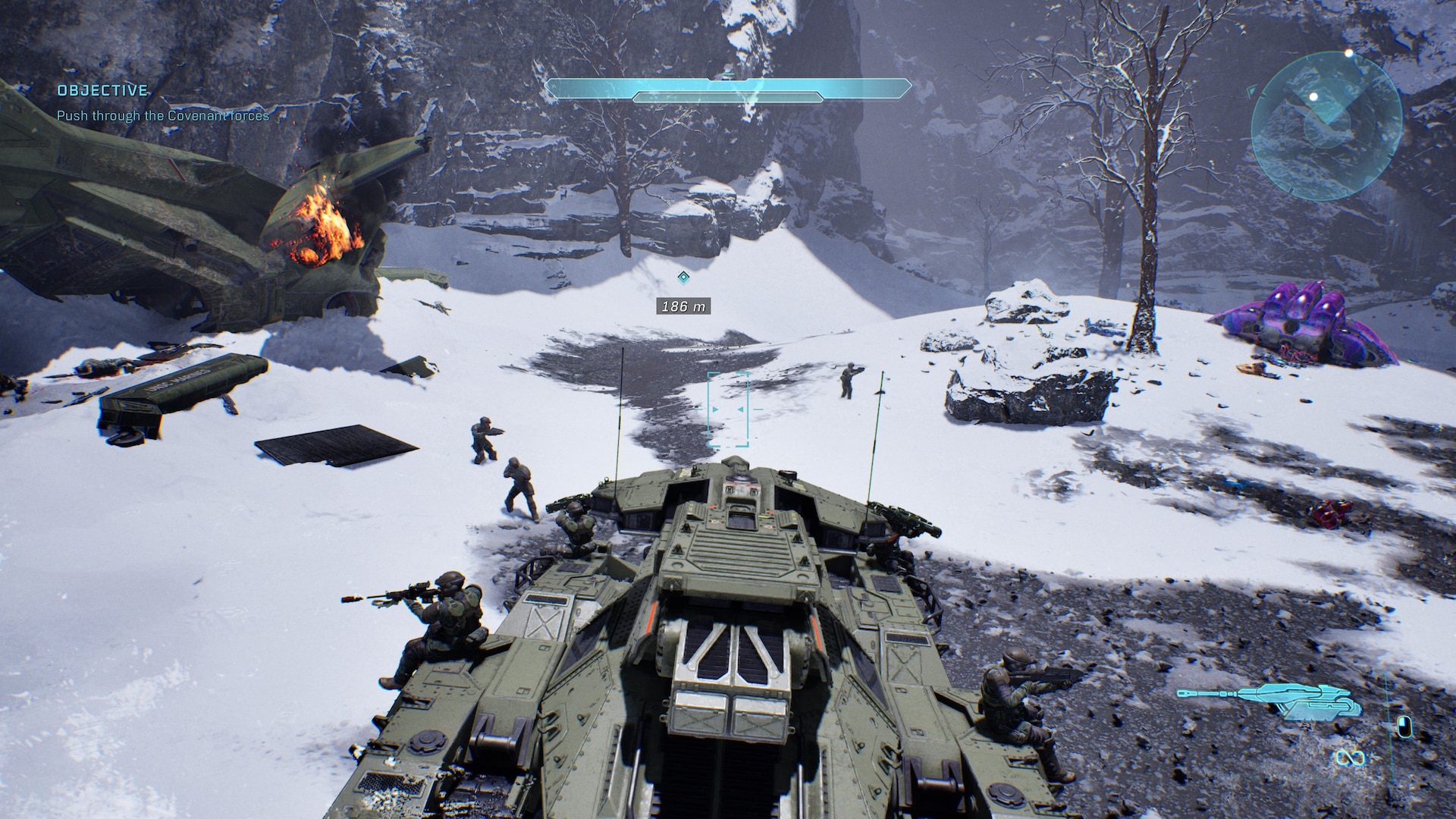
That flexibility extends to nearly every aspect of combat. Grenades are not emergency tools saved for special occasions but integral components of the sandbox. Plasma grenades reward accurate throws by attaching to enemies, making them particularly effective against shielded Elites, while fragmentation grenades excel at clearing clustered Grunts or flushing opponents from cover. Vehicles serve a similarly flexible role. The Warthog can transport Marines, provide mobile firepower or simply allow players to bypass unnecessary confrontations, while heavier vehicles dramatically change the pace of larger battles without making infantry combat feel redundant.
Perhaps the campaign’s most enduring achievement is that it never relies on artificial progression to sustain interest. There are no experience points, weapon upgrades or crafting systems gradually increasing the player’s effectiveness. Instead, improvement comes from understanding the game’s rules. Players become more efficient because they learn how enemy shields behave, recognize which weapons complement one another and develop better positioning during firefights. That sense of mastery feels earned precisely because the game rarely rewards persistence alone. Success comes from making better decisions rather than accumulating better equipment.
The remake’s mechanical improvements are generally subtle but worthwhile. Checkpoints are more forgiving without eliminating tension, menus are easier to navigate, and accessibility options provide welcome flexibility for a broader range of players. None of these additions fundamentally alter the campaign, but they consistently reduce unnecessary frustration without diminishing the original challenge.
Mouse and keyboard support deserves particular praise. Halo has always been closely associated with controllers, yet the transition to PC feels remarkably natural. Precision weapons benefit from the increased accuracy offered by a mouse, movement remains responsive, and vehicle handling has been carefully adjusted to accommodate both control schemes. Extensive rebinding options, adjustable field-of-view settings and support for modern display standards reinforce the impression that this version was designed with PC players in mind rather than adapted as an afterthought.
Combat and Encounters
The strongest evidence of Halo’s enduring quality lies in its enemy design. While many shooters rely on increasing enemy health or introducing larger numbers of opponents to create difficulty, Halo instead asks players to respond to different battlefield roles. Covenant forces function less like isolated targets and more like military units whose effectiveness depends on coordination.
Grunts are the clearest example. Individually they pose little threat, but they become significantly more dangerous when supporting stronger allies with suppressing fire and grenades. Eliminating the Elite leading a squad often causes surviving Grunts to panic, changing the tempo of an encounter without the game drawing attention to the mechanic. Jackals influence combat in a different way. Their energy shields force players to think carefully about positioning and accuracy rather than simply firing continuously, while Elites remain dangerous because they actively adapt to the player’s actions. They retreat to recover depleted shields, dodge incoming fire and aggressively pressure exposed positions instead of waiting to be eliminated.
The result is that encounters rarely unfold identically, even after multiple playthroughs. Entering the same arena with the same equipment does not guarantee the same sequence of events because enemy behavior remains dynamic enough to produce subtle variations. That unpredictability is one reason Halo’s combat has aged more gracefully than many shooters from the same era. Rather than relying on elaborate scripting, it trusts the interaction between enemy AI, player decisions and the surrounding environment to create memorable firefights.
Friendly Marines deserve recognition as well. Although their pathfinding occasionally reveals the game’s age, they are often far more capable than allies in comparable shooters. Giving a Marine a sniper rifle or rocket launcher can dramatically alter an encounter, encouraging players to think of friendly soldiers as useful tactical assets rather than disposable companions. It is a small detail, but one that reinforces Halo’s broader emphasis on experimentation over rigid solutions.
One aspect of the combat sandbox that has sparked debate since the original release is the introduction of the Flood. Their arrival fundamentally changes how Halo is played, shifting the emphasis away from careful exchanges of fire against disciplined Covenant troops toward frantic battles against enemies that overwhelm through speed and numbers. The change is intentionally jarring. After spending several hours learning how Covenant units complement one another, players are suddenly forced to abandon many of those habits.
That tonal shift remains effective because it serves the story as much as the gameplay. The Flood are not meant to replace the Covenant as a more enjoyable enemy faction; they exist to destabilize the campaign. Their ability to resurrect fallen bodies, rush the player’s position and attack from multiple directions creates a constant sense of pressure that contrasts sharply with the more measured rhythm of earlier encounters. At its best, the game uses both factions simultaneously, forcing players to exploit the chaos created when Covenant and Flood forces engage one another before turning their attention toward Master Chief. Those three-way battles remain some of the campaign’s most memorable moments because they feel unscripted despite being carefully designed.
The Flood also expose one of the remake’s biggest limitations. While improved visuals make their environments more atmospheric and easier to read, they cannot completely disguise the repetition that accompanies several late-game missions. The problem is not the enemy design itself but the length of some encounters. The campaign occasionally stretches the same combat scenario for too long, replacing the steady stream of new ideas that characterizes the opening hours with extended battles that begin to blur together. It is one of the few areas where the original game’s age remains difficult to ignore.
Level and Mission Design
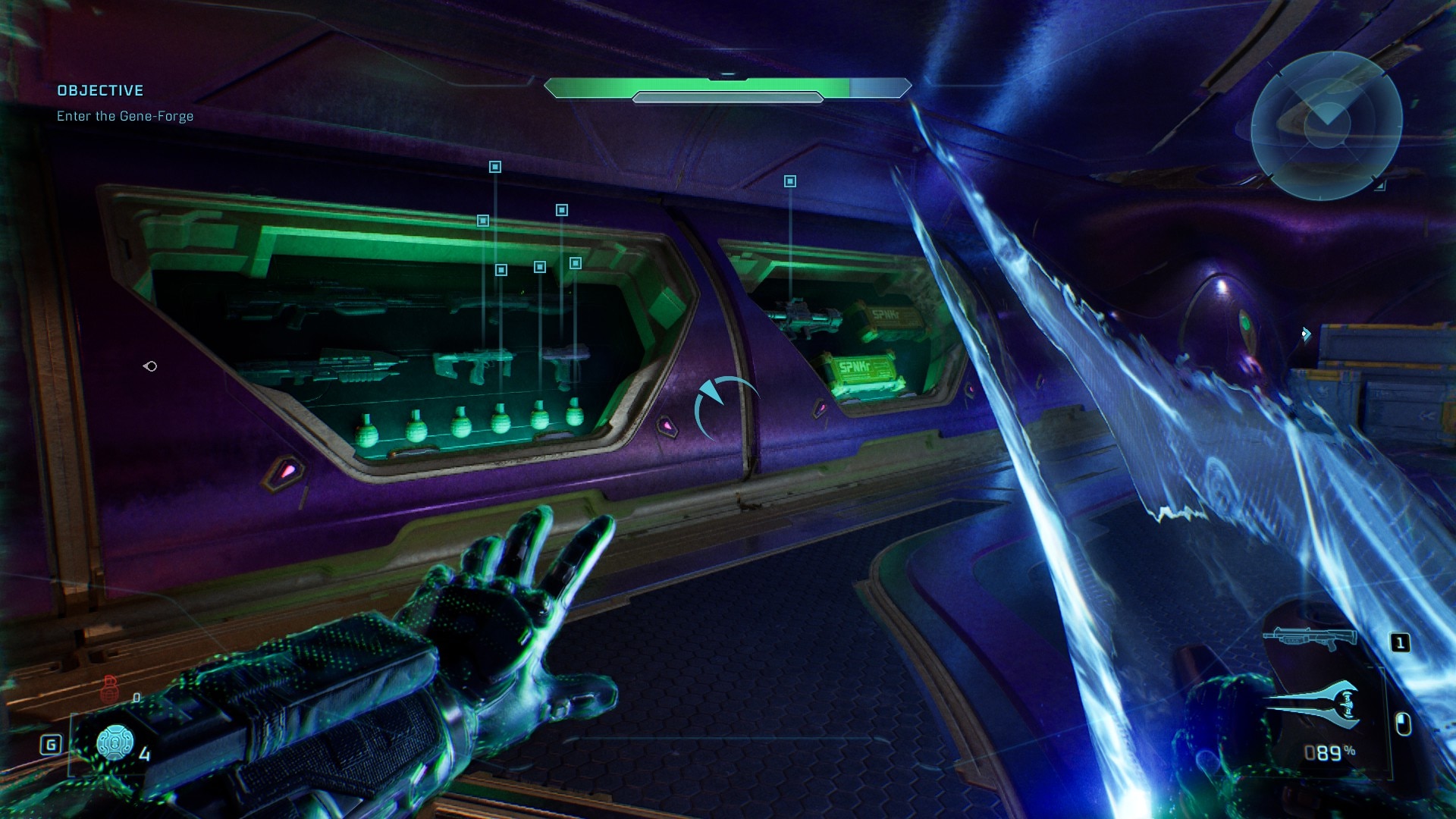
The quality of Halo’s level design becomes even more apparent when viewed through the lens of modern shooters. Many contemporary campaigns prioritize scripted set pieces that deliver memorable spectacle on a first playthrough but lose much of their impact once the surprises are known. Halo takes a different approach. Its most memorable moments usually emerge from player choice rather than cinematic direction.
The game creates spaces that encourage experimentation and then trusts players to solve combat encounters using whatever tactics feel appropriate.
The second mission, “Halo,” remains one of the strongest opening levels in the genre because it teaches almost every fundamental system without feeling like a tutorial. Wide valleys naturally introduce vehicle traversal, Covenant patrols encourage players to experiment with different weapon combinations, and scattered groups of Marines subtly demonstrate that allies can become valuable resources rather than passive followers. Nothing feels forced. The level simply presents opportunities and allows players to discover their usefulness on their own.
“The Silent Cartographer” deserves its enduring reputation for similar reasons. Its island setting provides an ideal balance between open spaces and tightly designed combat arenas, giving players multiple ways to approach objectives without sacrificing pacing. Some encounters reward aggressive pushes supported by grenades and close-range weapons, while others become considerably easier if the player slows down, secures advantageous positions and picks enemies apart with precision fire. The level rarely dictates a single correct strategy, and that freedom remains one of Halo’s defining strengths.
“Assault on the Control Room” offers another example of Bungie’s confidence in its own systems. Long vehicle sections could easily have become repetitive, yet they remain engaging because they constantly alternate between driving, infantry combat and large-scale battles involving tanks and aircraft. The changing scale prevents any one activity from overstaying its welcome, even during one of the campaign’s longest missions.
Not every level demonstrates the same consistency. “Two Betrayals,” while narratively important, revisits familiar environments with enough repeated combat that its strongest ideas begin to lose their impact. Likewise, “The Library” still represents the campaign’s weakest stretch. The issue has never been difficulty. Instead, the mission abandons Halo’s usual variety in favor of an extended sequence of nearly identical corridors populated almost exclusively by Flood enemies. The remake improves visibility through stronger lighting and more detailed environments, making navigation less frustrating than before, but the fundamental pacing problems remain. By the time players reach the mission’s conclusion, exhaustion has largely replaced tension.
What makes these weaker levels easier to forgive is the consistency of everything surrounding them. Even after twenty years, relatively few shooters demonstrate such a clear understanding of encounter pacing. Halo rarely overwhelms the player with constant explosions or uninterrupted combat. Quiet exploration, vehicle travel and story moments create natural pauses that allow firefights to retain their impact. Those transitions may appear subtle, but they play a major role in preventing the campaign from becoming monotonous.
Visuals and Art Direction
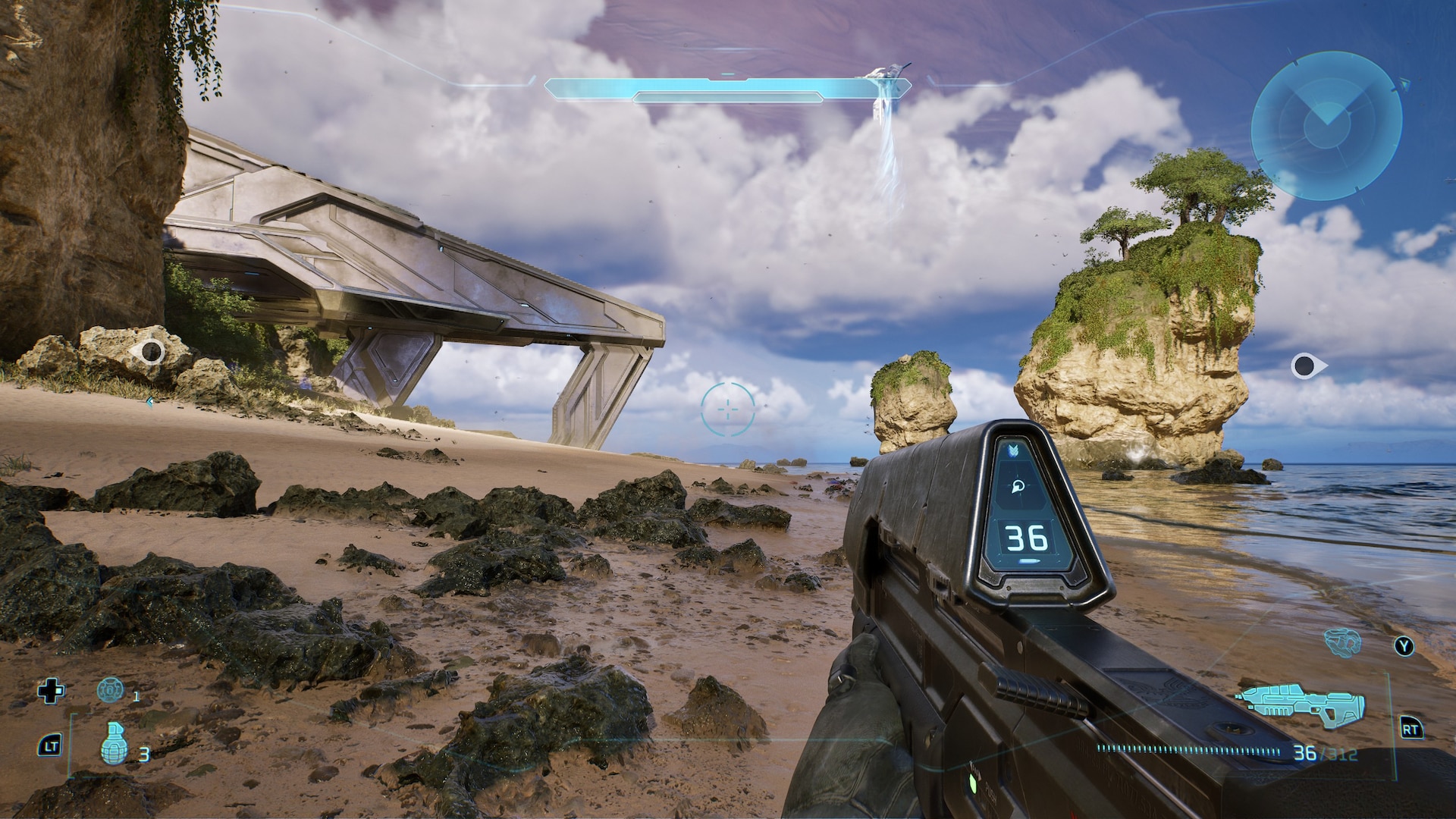
Remaking a visually iconic game presents a unique challenge. Improving fidelity is relatively straightforward; preserving identity is considerably more difficult. Fortunately, Campaign Evolved understands that Halo’s visual appeal never depended solely on technical achievement. The original game stood out because of its clean silhouettes, bold color palette and immediately recognizable environments, qualities that remain intact despite the dramatic increase in detail.
Installation 04 benefits enormously from modern hardware. Dense forests feel more convincing thanks to richer vegetation and improved lighting, while distant mountain ranges and massive Forerunner structures finally convey the immense scale that earlier versions could only imply. Dynamic weather effects and more sophisticated shadows add atmosphere without drawing attention away from gameplay, allowing familiar locations to feel fresh without becoming unrecognizable.
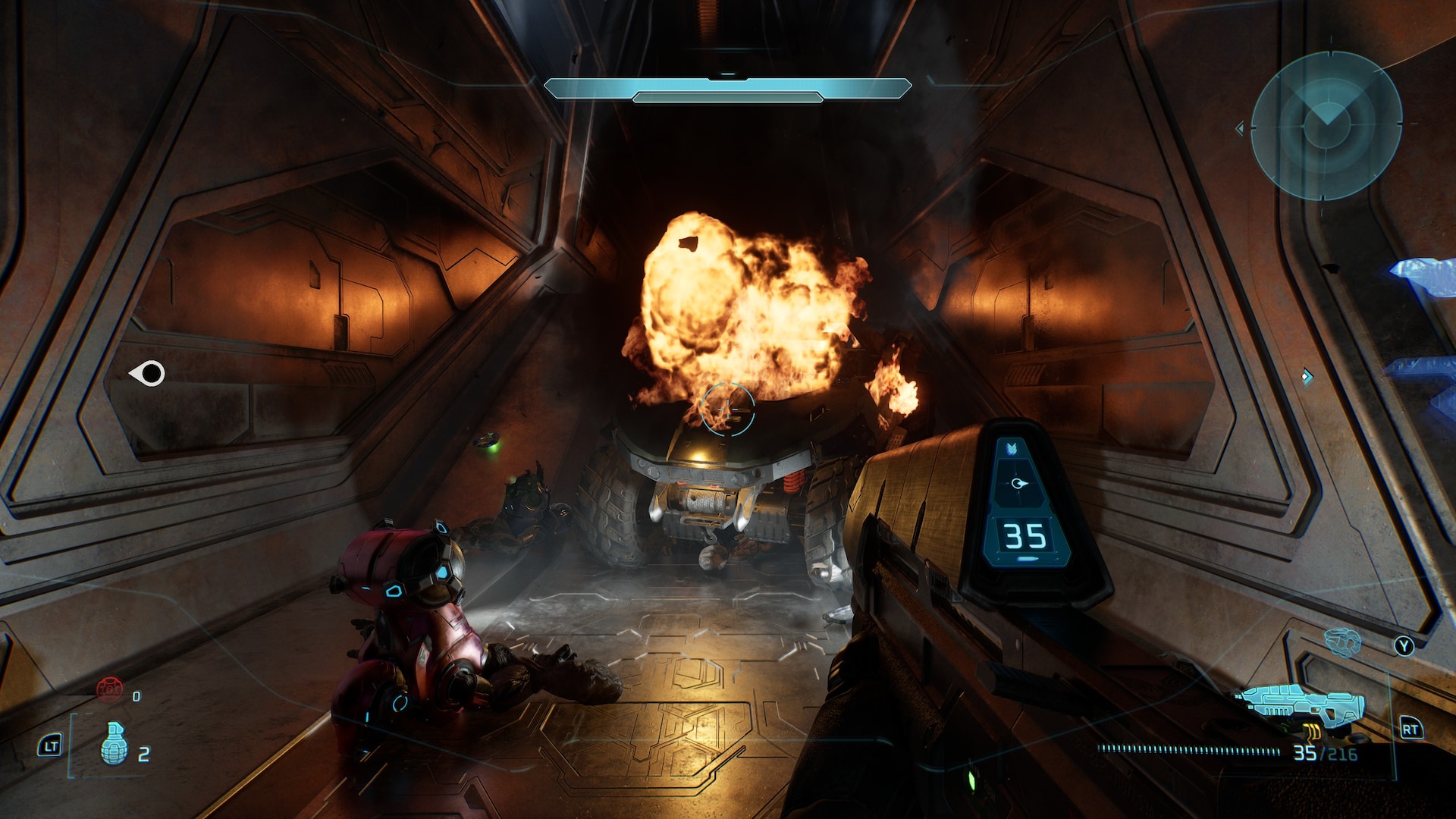
The Forerunner architecture, in particular, gains a stronger sense of purpose. In the original release, repeated metallic corridors occasionally blended together because of technical limitations. The remake addresses this by introducing more varied materials, clearer lighting contrasts and subtle environmental storytelling that suggests centuries of abandonment. The structures still possess the clean geometric design that defines Halo’s visual identity, but they now communicate age and mystery more effectively than before.
Character models have also been carefully updated. Master Chief remains immediately recognizable, avoiding the excessive armor detailing that has affected some later interpretations of the character. His silhouette remains clean and functional, reinforcing the practical military aesthetic that originally distinguished Halo from many science fiction franchises. Covenant species receive similarly restrained updates. Elites appear more physically imposing without losing the expressive movements that communicate both intelligence and aggression, while Grunts retain their exaggerated animations that balance comic relief with genuine battlefield usefulness.
The Flood arguably benefit the most from the visual overhaul. Their infected forms appear more grotesque thanks to higher-quality textures, improved animation and more convincing environmental effects, making encounters noticeably more unsettling without relying on gratuitous gore. Combined with darker lighting and richer ambient effects, these improvements strengthen the campaign’s horror elements while remaining faithful to the original artistic direction.
Perhaps the remake’s greatest visual achievement is knowing when to stop. It would have been easy to overload environments with decorative detail simply because modern hardware allows it, but the developers have shown admirable restraint. Combat readability remains excellent throughout the campaign. Enemy silhouettes stand out clearly against their surroundings, weapon effects communicate useful information without obscuring the action, and environmental detail rarely interferes with the player’s ability to quickly assess a firefight. That balance between spectacle and clarity reflects a mature understanding of what visual design should accomplish in a first-person shooter.
Audio and Music
If Halo’s visual identity helped define the series, its sound design gave it a personality that countless shooters have tried to imitate without matching. The original soundtrack remains one of the medium’s most recognizable, not because every composition strives to be grand, but because it understands when to step back. The score rarely competes with the action. Instead, it reinforces the mood of each mission, shifting almost imperceptibly between quiet exploration, tense anticipation and explosive combat.
The remake wisely resists the temptation to reinvent that formula. Rather than replacing Martin O’Donnell and Michael Salvatori’s compositions with entirely new arrangements, it preserves their structure while giving the recordings greater depth and clarity. The opening chants still create an immediate sense of scale, while quieter ambient tracks continue to transform otherwise simple moments of exploration into something memorable. Driving across an empty valley or stepping into an ancient Forerunner complex would not have the same emotional impact without the soundtrack quietly supporting those scenes.
The dynamic music system deserves particular recognition because it remains remarkably effective. Combat themes build naturally as encounters escalate before fading away once the fighting ends, allowing the campaign to maintain momentum without exhausting the player. Modern shooters often rely on constant orchestral intensity to create excitement, but Halo understands that silence can be just as valuable. Some of the game’s strongest moments occur when little more than environmental ambience accompanies the player’s exploration.
Weapon audio has also aged exceptionally well. Each firearm sounds mechanically distinct, making it easy to identify weapons through audio alone. The Assault Rifle produces the familiar rapid metallic chatter expected from a conventional military weapon, while the Battle Rifle and Magnum deliver crisp, satisfying reports that reinforce their precision-focused roles. Covenant weapons provide an equally distinctive contrast. Plasma pistols and rifles crackle with unstable energy rather than explosive force, immediately communicating that they belong to an entirely different technological culture.
Vehicle audio contributes just as much to the experience. The Warthog’s engine note remains one of the series’ defining sounds, capturing the sensation of driving a powerful but unpredictable military vehicle over uneven terrain. Larger vehicles, particularly the Scorpion tank, convey considerable weight through low-frequency engine rumble and thunderous cannon blasts that never lose their impact, even after repeated use.
Voice acting has stood the test of time remarkably well. Steve Downes continues to define Master Chief through restraint rather than emotional excess. His performance communicates confidence without arrogance and determination without melodrama, making the character memorable despite relatively limited dialogue. Jen Taylor’s Cortana remains equally effective, balancing dry wit with genuine urgency as the campaign unfolds. Their interactions never dominate the story, but they consistently provide an engaging emotional anchor.
The supporting cast is similarly strong. Sergeant Johnson’s dialogue still injects welcome energy into scenes that might otherwise become overly serious, while Marines react to combat with enough personality to make them feel like soldiers under pressure rather than anonymous background characters. Some repetition in incidental dialogue remains unavoidable, particularly during prolonged firefights, but it is a relatively minor reminder of the game’s age rather than a persistent distraction.

Technical Performance on PC
From a technical perspective, Campaign Evolved demonstrates a clear understanding of what players expect from a modern PC release. The experience begins with a comprehensive range of graphics options that allow systems across multiple hardware tiers to find an appropriate balance between image quality and performance. Individual settings can be adjusted without unnecessary complexity, making it easy to prioritize either visual fidelity or higher frame rates depending on personal preference.
Performance remains consistently smooth throughout most of the campaign. Large outdoor environments, vehicle-heavy encounters and effects-intensive firefights maintain stable frame rates without the dramatic slowdowns that often affect ambitious modern releases. Just as importantly, frame pacing remains consistent, preserving the responsive feel that Halo’s combat relies upon. A brief dip in performance during a quiet exploration sequence is far less noticeable than inconsistent responsiveness during a firefight, and the remake generally understands that distinction.
Loading times have also been significantly reduced compared to previous versions. Missions begin quickly, checkpoints reload almost instantly on modern storage devices, and the reduced downtime makes repeated attempts at challenging encounters considerably less frustrating. These improvements may not attract attention during the first playthrough, but they become increasingly valuable over extended sessions.
Mouse and keyboard support feels thoroughly considered rather than merely functional. Precision aiming is responsive without becoming overly sensitive, key rebinding is comprehensive, and menu navigation remains intuitive regardless of whether players prefer a controller or traditional PC controls. Vehicle handling has also been adapted successfully. The Warthog retains its deliberately loose steering characteristics, yet it never feels awkward when controlled with a keyboard and mouse.
Accessibility options represent another welcome improvement. Subtitle customization, interface adjustments and additional control settings allow more players to tailor the experience to their needs without compromising the game’s original design. These features rarely attract headlines, yet they represent meaningful progress over earlier versions and reflect an encouraging industry-wide shift toward broader accessibility.
The remake is not entirely free of technical imperfections. Minor animation glitches occasionally appear, physics interactions can still produce unexpected results, and players may encounter isolated visual oddities depending on hardware configuration. None of these issues significantly affect progression through the campaign, and they occur infrequently enough that they never overshadow the broader impression of polish.
Perhaps the greatest compliment that can be paid to the PC version is how little attention its technical performance demands. Rather than becoming part of the conversation through crashes, severe bugs or inconsistent optimization, it quietly supports the campaign by allowing players to focus entirely on the game itself. In the current landscape of major releases, that reliability should not be taken for granted.
Final Verdict: 7.5/10
Remaking a game as influential as Halo: Combat Evolved was always going to invite scrutiny. Every visual change, mechanical adjustment and narrative addition would inevitably be compared with memories that have only grown stronger over time. Halo: Campaign Evolved succeeds because it approaches that challenge with uncommon restraint. Instead of attempting to modernize Halo by layering it with fashionable mechanics or radically redesigning familiar missions, it recognizes that the original campaign remains compelling for reasons that have very little to do with technological limitations.
Its greatest strength continues to be the combat sandbox. Few first-person shooters, regardless of age, combine intelligent enemy behavior, meaningful weapon variety and open-ended encounter design as confidently as Halo. Every firefight encourages players to adapt rather than simply react, and that flexibility keeps the campaign engaging long after the story’s surprises are known. The remake preserves that foundation while smoothing many of the rough edges that naturally accompany a game designed more than two decades ago.
Not every aspect has aged equally well. A handful of missions still struggle with repetitive environments, particularly once the Flood become the primary focus, and the newly added content lacks the confidence and creativity of Bungie’s original work. These shortcomings are easier to notice precisely because so much of the campaign remains remarkably effective. They are interruptions in an otherwise carefully paced adventure rather than problems that define the experience.
The visual overhaul successfully updates Halo without sacrificing its identity, the audio remains among the strongest in the genre, and the PC version provides the technical polish expected from a modern release. More importantly, the remake reinforces an idea that has become increasingly uncommon within the shooter genre: memorable campaigns are built through consistent mechanical design rather than constant escalation. Halo rarely depends on spectacle alone. It earns its best moments by giving players interesting decisions to make, then trusting them to solve problems using the tools available.
That philosophy is ultimately why the campaign continues to endure. It respects the player’s intelligence, embraces experimentation instead of scripted solutions, and understands that variety comes from the interaction between systems rather than from introducing a new mechanic every fifteen minutes. More than twenty years after its original release, those design principles remain every bit as relevant.
Halo: Campaign Evolved is not a revolutionary remake, nor does it attempt to replace the original in the memories of longtime fans. What it offers instead is something arguably more valuable: a careful restoration that presents one of the most important first-person shooters ever made in a form that feels comfortable on modern hardware while preserving the qualities that earned its reputation in the first place. That restraint may prevent it from feeling transformative, but it also ensures that Halo’s legacy remains intact.