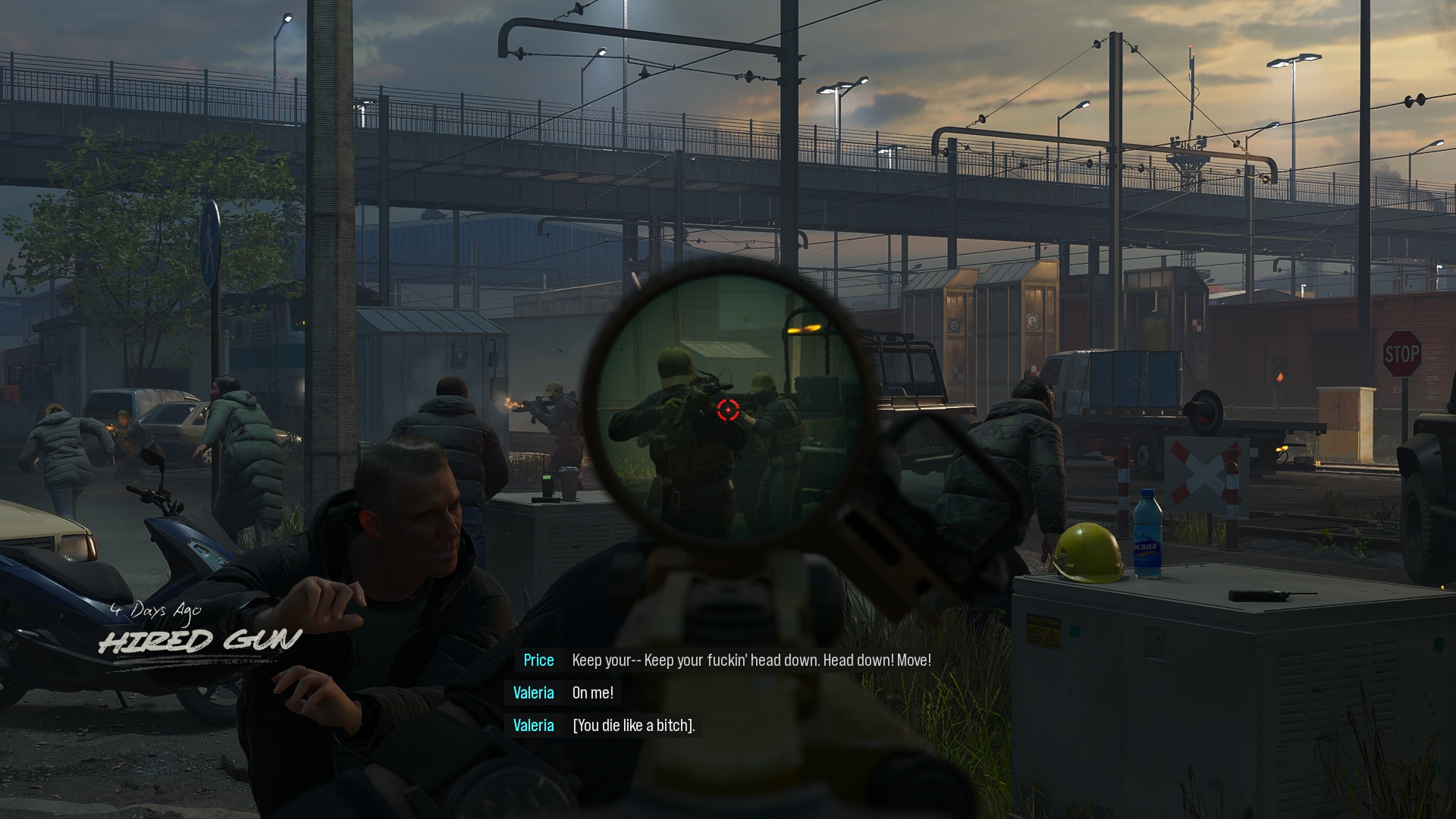
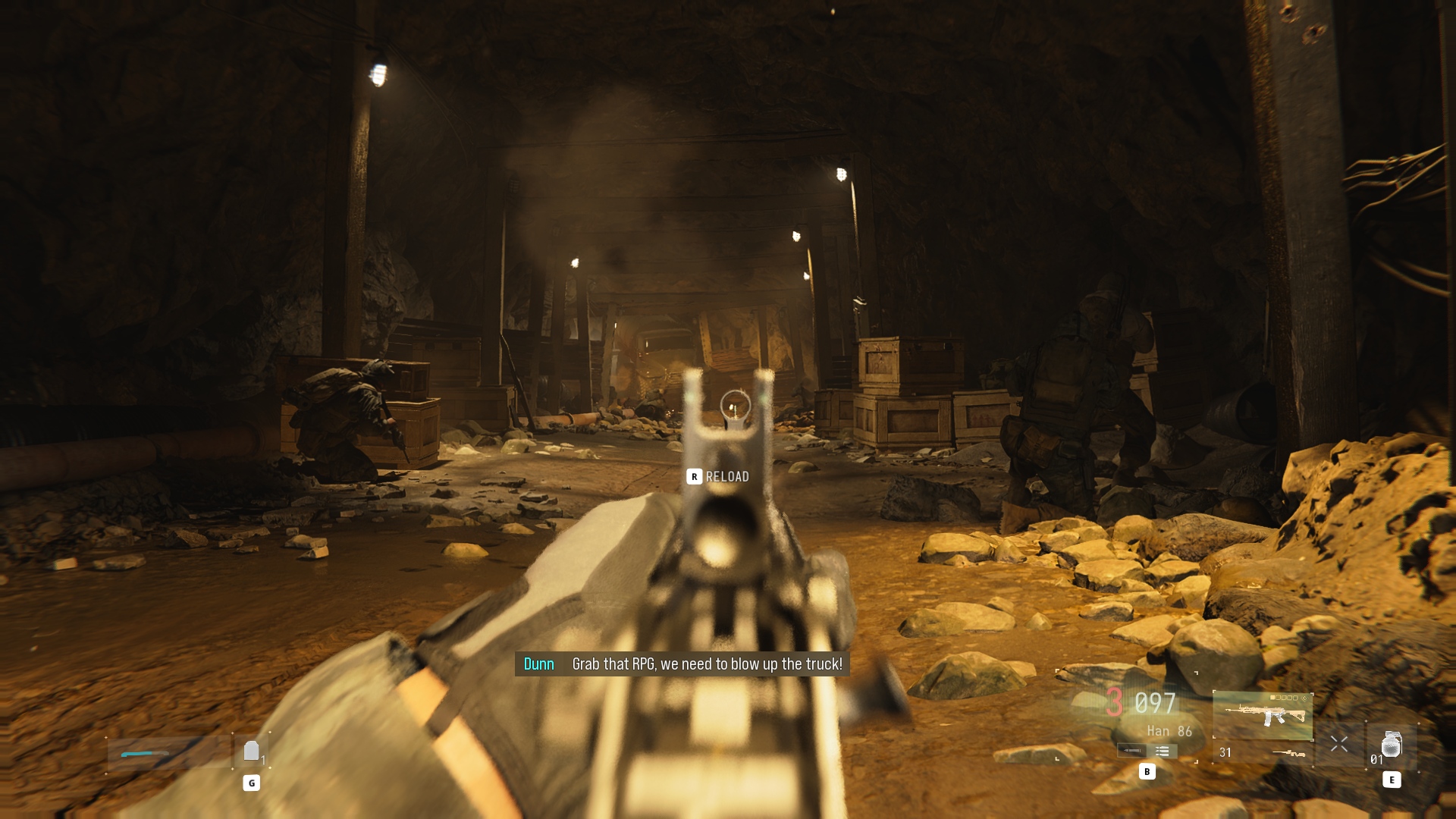
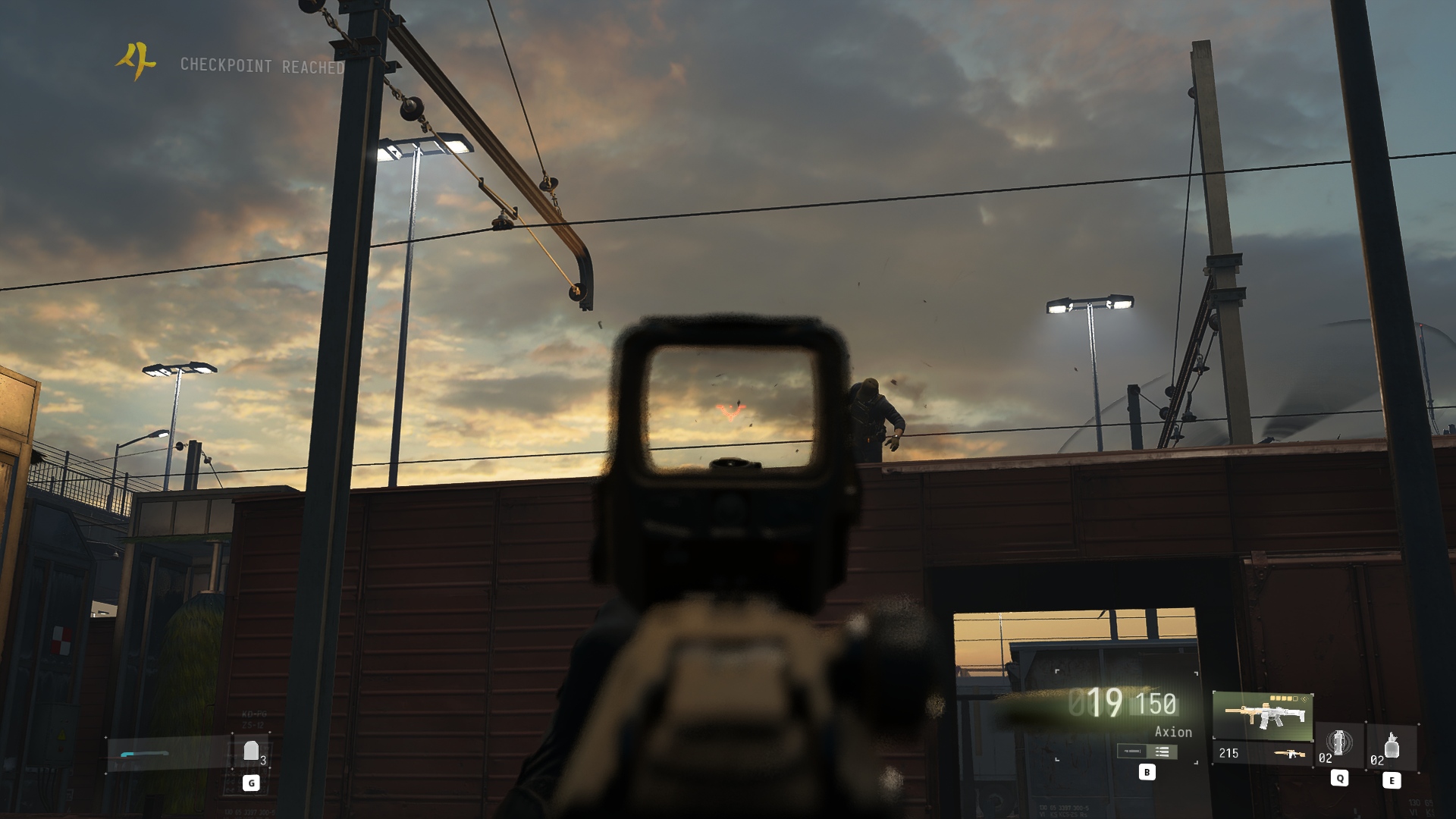
Call of Duty: Modern Warfare 4 is a polished first-person shooter that gets many of the series’ familiar strengths right. Its graphics are impressive, the PC version runs smoothly in my experience, and the single-player campaign delivers plenty of enjoyable action. Yet beneath that technical quality is a game that feels too closely tied to the direction of recent Call of Duty releases. It offers more of what the series already does well, but rarely gives the impression that it is moving forward in a meaningful way.
The campaign follows a North Korean invasion of South Korea, with players experiencing the conflict through a South Korean squad while Captain Price pursues his own objectives elsewhere. The story moves between Korea, New York, Paris, and Mumbai, mixing conventional firefights with large cinematic sequences. Multiplayer and the extraction-based DMZ mode provide additional ways to play, making this a broad package rather than a single-player experience with a few extras attached.
There is plenty to like here. The shooting feels satisfying, the presentation is consistently polished, and the campaign is good enough to hold attention through its major events. My main reservation is how often the game interrupts its own action with cinematics and scripted moments. That approach has long been part of Call of Duty’s identity, but here it can feel excessive, reducing the time spent actually playing and making the experience more familiar than memorable.
For me, the clearest point of comparison is Call of Duty 4: Modern Warfare from 2007. The original remains a far more memorable game, not because it looks better or offers more content, but because of the impression it left. Modern Warfare 4 benefits from years of technical progress, yet it does not reach the same level of impact. It is a good modern shooter, but not the classic the series’ name might lead some players to hope for.
Campaign and Story
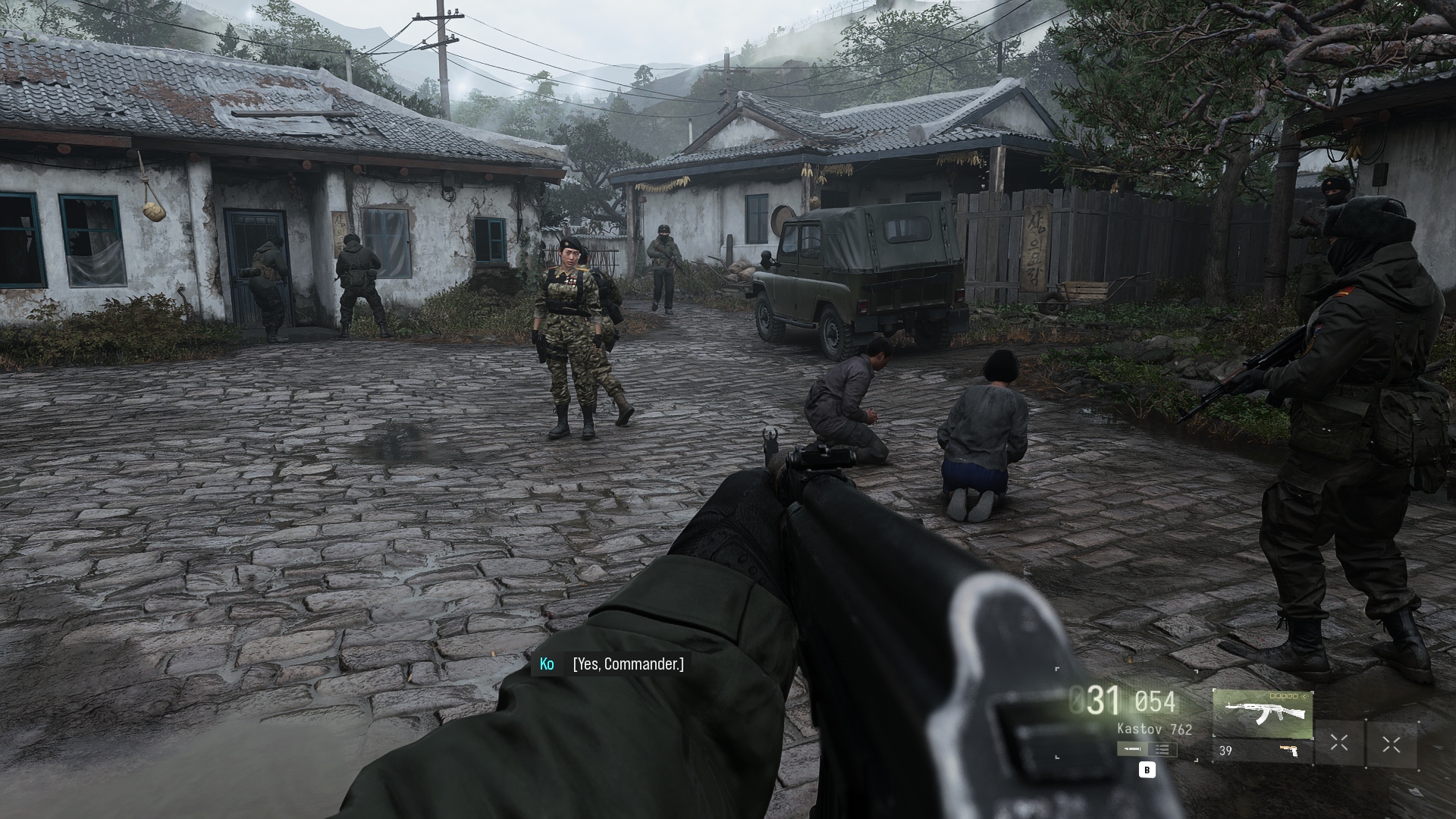
Modern Warfare 4 builds its campaign around North Korea’s invasion of South Korea. The South Korean squad provides a different perspective from the familiar operations involving Captain Price, while Price’s parallel storyline continues the events of the rebooted Modern Warfare series. The two threads give the campaign different points of view, although they do not feel equally compelling.
The South Korean missions are an important part of the game’s identity. Rather than relying entirely on established characters, the campaign introduces a group of soldiers facing a conflict that rapidly grows beyond their immediate surroundings. Their perspective gives the story a more grounded starting point, and the contrast with Price’s familiar operations offers some variety. The wider conflict also allows the campaign to move through several international locations, helping it avoid feeling visually static.
The story is serviceable, and the campaign provides enough momentum to encourage players to continue. It does not need to reinvent military fiction to work. Call of Duty has always been at its most accessible when it gives players a clear objective, places them in the middle of a dangerous situation, and lets the action carry the experience. Modern Warfare 4 understands that appeal, and its stronger sections deliver the kind of straightforward action that fans expect.
The problem is the way the game presents that action. Cinematic sequences appear frequently, and some missions feel so tightly directed that the player has limited opportunity to remain in control for long stretches. Cutscenes can establish character relationships, explain a change in the situation, or build anticipation for an important encounter. But when they repeatedly interrupt the action, they begin to feel like an obstacle rather than an enhancement.
The Price storyline illustrates this unevenness. It draws on familiar elements of the rebooted series, including his status as a fugitive and his continuing pursuit of the people behind the conflict. There are set pieces built around chases and close-quarters confrontations, but the reliance on familiar cinematic beats makes some of these moments less memorable than they should be. The game often seems more interested in recreating the appearance of a dramatic action sequence than in giving every sequence a strong reason to exist.
The South Korean squad is arguably the more interesting part of the campaign, and it is frustrating that the game does not build the entire story around that perspective. The squad’s situation offers a fresh starting point, while Price’s story has to contend with the expectations and baggage of previous entries. The contrast between the two threads is noticeable, and the campaign does not always bring them together in a satisfying way.
Modern Warfare 4 is still an enjoyable campaign, but its presentation is frequently too heavy-handed. The issue is not that it contains cinematics; it is that it relies on them so often that the interactive parts lose some of their impact. The story has enough going for it, but the game would have benefited from allowing its strongest moments more room to develop through play.
Gameplay and Mission Design
Modern Warfare 4 follows a familiar structure, moving between direct firefights, scripted set pieces, and quieter stretches that establish objectives or prepare players for the next encounter. The approach makes the campaign easy to follow and keeps the action moving. Returning players will recognize the rhythm, particularly those familiar with recent entries in the rebooted Modern Warfare series.
Familiarity is not inherently a weakness. A well-designed shooter does not need to reinvent every mechanic or mission structure to remain entertaining. Clear objectives and carefully arranged encounters can be just as effective as more experimental designs. The question is whether the game uses its established formula to create memorable situations or simply repeats it because it works.
Modern Warfare 4 is more convincing when it gives missions a distinct structure. The clearest example is Stranded, a more open-ended campaign mission in which the squad is trapped behind enemy lines in North Korea. Players can tackle several objectives in different orders, explore the surrounding area, search for supplies, and take on optional activities before moving the story forward. This offers a welcome change from the campaign’s more linear missions and gives players greater control over how they approach the situation.

That kind of variation is valuable because the more conventional missions can become predictable after a while. Moving from one firefight to another remains enjoyable for a time, but the rhythm grows less distinctive when the same pattern dominates the campaign. A location change may improve the visual variety and give the action a different backdrop, yet it does not necessarily change how an encounter feels to play. Without more varied objectives or alternative approaches, even visually impressive missions can begin to feel repetitive.
The heavy use of scripted sequences contributes to this problem. When the game repeatedly takes control away from the player to stage another dramatic moment, the mission begins to feel more like a guided presentation than an interactive challenge. There is a place for tightly controlled set pieces, especially when they provide a payoff for the preceding action. Modern Warfare 4 simply leans on them too often.
More missions built around meaningful choices of approach, varied objectives, or different combat situations would have helped the campaign stand out. Stranded shows that the game can offer a change of pace without losing its focus. I would have preferred to see that approach used more consistently, with fewer interruptions and more opportunities to work through the action directly.
Gunplay and Combat
Gunplay remains one of Call of Duty’s most dependable strengths, and Modern Warfare 4 benefits from that established foundation. Combat feels immediate, weapons are central to the experience, and firefights provide the direct feedback that makes the series easy to pick up. The game does not need an elaborate tactical system to make its shooting enjoyable; its appeal comes largely from how quickly it gets players into the action.
The weapons and combat presentation contribute to the game’s overall polish. A shooter built around frequent firefights needs its weapons to feel satisfying, and Modern Warfare 4 makes that part of the experience a priority. The action has the immediacy expected of a modern Call of Duty game, helping the campaign remain entertaining even when the story or mission structure becomes less convincing.
However, good gunplay cannot solve every design problem. Combat needs to be supported by encounters that give players interesting situations to navigate, and the campaign needs enough variation to prevent its action from feeling routine. When a mission offers little beyond another sequence of enemies and another scripted transition, satisfying shooting can only do so much to make it memorable.
That is where Modern Warfare 4 feels too close to recent releases. Its familiar mechanics make the game accessible, but they do not provide much of a sense of discovery on their own. Players who enjoy the current Call of Duty style will find plenty to appreciate. Those looking for a substantial change in the way the series approaches combat may find the experience less exciting.
The shooting is good enough to keep the game enjoyable, and that matters. The disappointment is that the surrounding design does not always do enough to make the most of it.
Multiplayer and DMZ
Multiplayer gives Modern Warfare 4 a competitive side beyond the campaign. The familiar Call of Duty structure remains central, with weapon customization, map-based combat, and short, action-focused matches forming the core experience. Reviews have generally praised the responsive gunplay, but there is less agreement about the maps and the quality of individual modes. That distinction matters: a shooter can feel excellent to control without every map or match type being equally successful.
One of the more interesting additions is Frontline, a team-deathmatch variant in which teams spawn on opposite sides of the map and those spawn locations remain fixed. This gives matches a more predictable flow than modes where teams can end up spawning behind one another. Knowing where opponents are likely to approach from can make engagements feel more deliberate, with a clearer front line to push against or defend.
Some reviewers consider this a substantial improvement over the usual respawn-based structure, arguing that fixed spawns make encounters easier to read and reduce frustrating deaths from behind. Others have been less enthusiastic about the game’s new modes overall. Frontline’s appeal will depend on whether players prefer its more predictable tug-of-war or the faster, less controlled flow of traditional team deathmatch. It is a simple design change, but one that gives the multiplayer a distinct alternative.
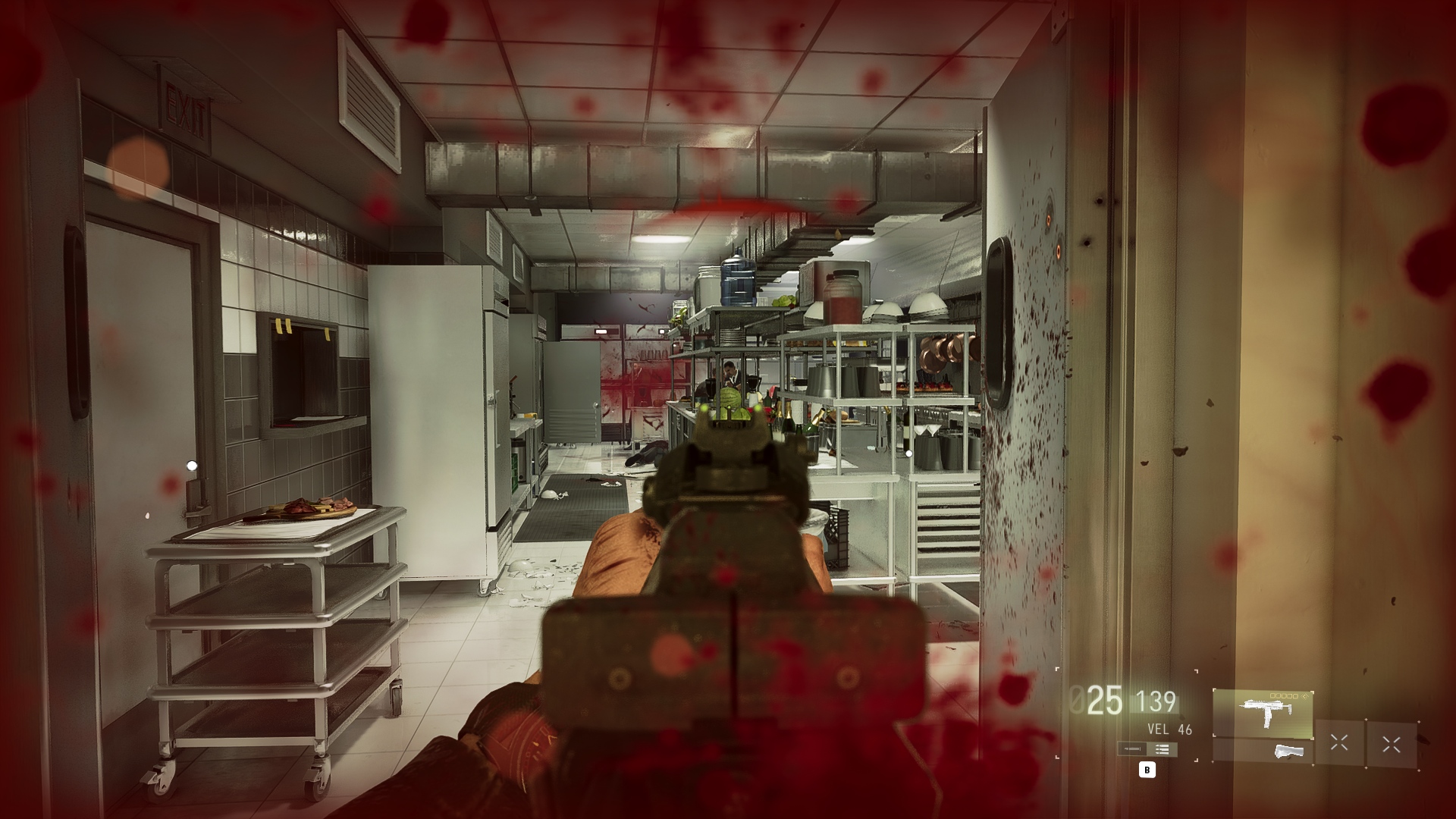
The wider multiplayer experience has more mixed aspects. Criticism of map layouts, recurring spawn frustrations in conventional modes, and the balance of certain weapons and killstreaks suggests that the fundamentals do not always translate into consistently satisfying matches. These are familiar problems for the series, but that does not make them unimportant. Multiplayer depends on more than responsive shooting: maps need to support readable encounters, and players need to feel that the outcome of a firefight is reasonably fair.
DMZ is a more distinct part of the package. Built around extraction-shooter mechanics, it sends players into the large Hajin City combat zone to complete objectives, gather resources, face enemy forces and rival players, and extract with what they have collected. The central decision is whether to leave with the rewards already secured or remain in the field to pursue additional objectives and accept the greater risk of losing progress.
The mode combines this extraction loop with cooperative missions, contracts, equipment progression, crafting, and a customizable base of operations. These systems give players longer-term goals beyond surviving a single deployment. The city provides room for encounters to develop in different ways, while missions and discoveries can give an otherwise routine search for supplies a more specific purpose.
Published coverage has been particularly positive about DMZ’s scale and progression systems. Its structured missions and dynamic objectives offer reasons to explore beyond simply collecting loot, while its approach to progression is less punishing than some other extraction shooters. Players can build up their operators and base over time, making individual deployments part of a broader progression loop. That structure may make the genre more approachable for players who find the loss of equipment and progress in other extraction games too discouraging.
DMZ is not without limitations. Its AI opponents may be less interesting than the threats found in some competing games, and its PvP encounters retain the quick time-to-kill and familiar combat dynamics of Call of Duty. The mode’s long-term appeal will also depend on how much players enjoy repeating the cycle of deploying, completing objectives, gathering equipment, and extracting. It offers a different kind of challenge from a conventional multiplayer match, and it will not suit everyone.
Together, multiplayer and DMZ give Modern Warfare 4 more variety than the campaign alone could provide. Traditional multiplayer stays close to the familiar competitive formula, with some promising adjustments and some divisive design choices; DMZ offers a deeper progression loop built around exploration and risk. They broaden the package, even if they do not completely change my overall impression of the series’ direction.
Graphics and PC Performance
Graphics are among Modern Warfare 4’s clearest strengths. The environments are detailed, the action is presented with considerable visual polish, and the different campaign locations provide variety in the scenery. The game has the high-production appearance expected of a major modern shooter, and its visual presentation helps give the campaign a convincing sense of scale.
The graphics do not need to be revolutionary to be effective. What matters is that they support the action and make the environments engaging to move through. Modern Warfare 4 generally succeeds in that respect. Its visual quality adds to the overall experience, although it cannot compensate for weaknesses in pacing or mission design. A dramatic sequence still needs to be worthwhile to play, not simply impressive to watch.
On PC, performance was smooth in my experience. That made it easier to focus on the action rather than technical distractions, which is especially important in a fast-paced shooter. The PC version also offers a broad range of graphics options and support for modern upscaling technologies, giving players flexibility to adjust settings to their hardware.
The game supports technologies including NVIDIA DLSS 4.5, AMD FSR Redstone, and Intel XeSS 3, alongside ray tracing options. These features give PC players several ways to balance image quality and performance, although the results will vary depending on hardware and settings. The presence of these options is useful, but it does not mean every system will deliver the same experience.
My positive performance impression should not be taken as a guarantee that the game runs identically on every PC. I am not presenting a controlled benchmark or a comprehensive test across different configurations. What I can say is that the game ran smoothly for me and delivered the visual quality I expected from a modern Call of Duty release.
The technical presentation is therefore a genuine positive. Modern Warfare 4 looks good and, in my experience, performs well on PC. The frustration is that these strengths make the creative limitations more apparent: the game feels accomplished as a production, yet less ambitious in the way it uses that production to create a distinctive campaign.
Sound and Presentation
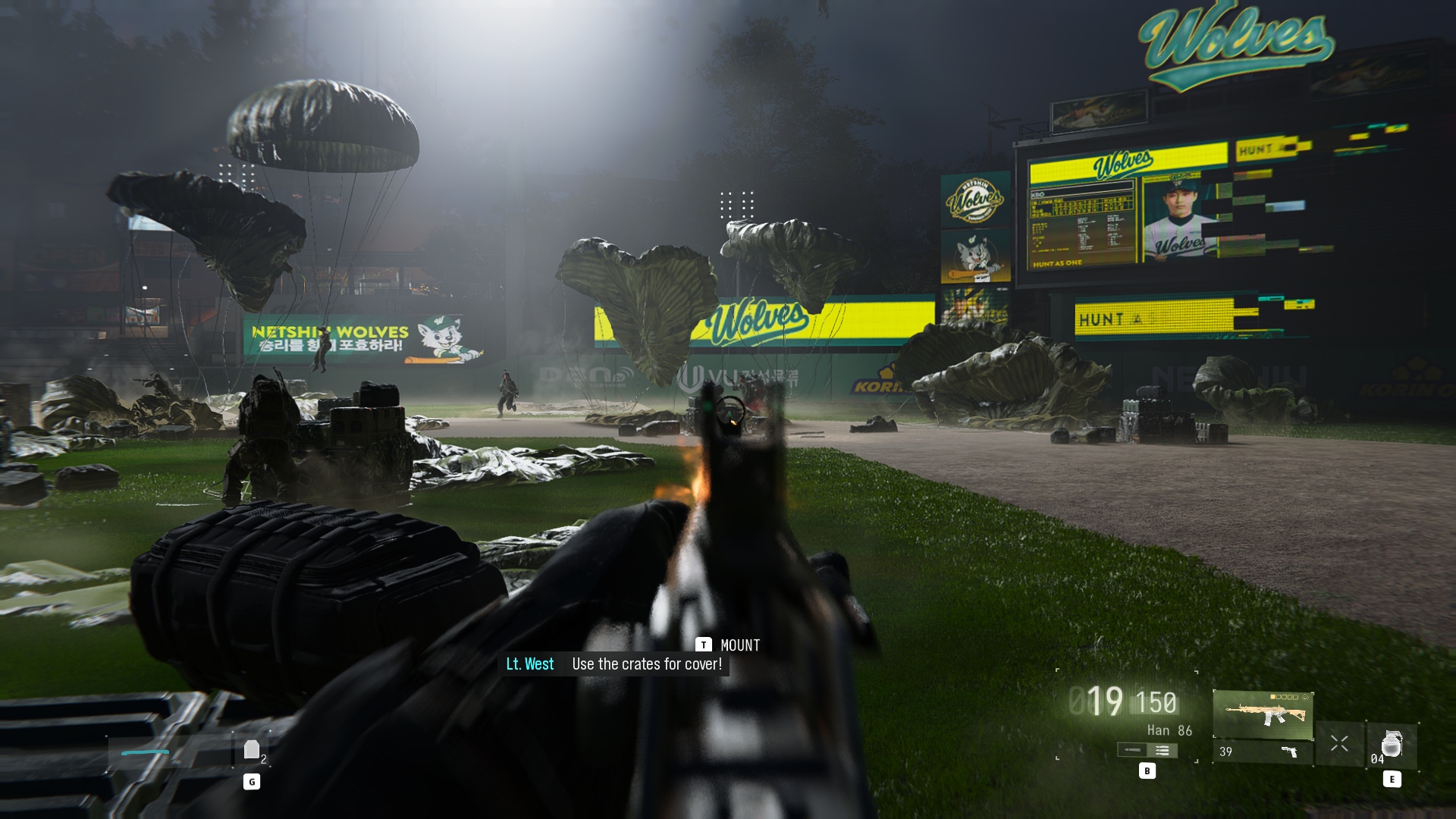
Modern Warfare 4’s audiovisual presentation supports its action-heavy approach. Sound effects and the overall mix help maintain the intensity of firefights, while the visual direction reinforces the scale of the conflict and adds atmosphere to key moments. The detailed environments and convincing weapon sounds further enhance the action, contributing to a polished experience that feels consistent with the series’ modern identity.
Presentation is also where one of the game’s central weaknesses becomes most obvious. The campaign often tries to maintain a cinematic level of intensity, using scripted sequences and dramatic transitions to keep events moving. That approach can work well when used selectively, but it loses some of its effectiveness when the player is repeatedly pulled away from the action.
The result is a campaign that sometimes feels overproduced. It is not a question of whether the game has enough spectacle; it has plenty. The issue is whether each sequence benefits from the time it takes away from gameplay. When a dramatic moment arrives after a long stretch of uninterrupted action, it can feel earned. When the game keeps stopping to stage another moment, the effect becomes less powerful.
A more restrained presentation would have made the strongest sequences stand out. By trusting its combat and mission design to carry more of the experience, Modern Warfare 4 could have created a better balance between cinematic storytelling and player control. Instead, it occasionally confuses a constant stream of dramatic presentation with stronger pacing.
Final Verdict: 7.5/10
Call of Duty: Modern Warfare 4 is a good shooter with impressive graphics, smooth PC performance in my experience, and a single-player campaign that is enjoyable despite its shortcomings. The gunplay remains satisfying, the story provides enough momentum to carry players through the campaign, and the combination of multiplayer and DMZ offers several ways to spend time with the game. It is a polished release, and its strengths should not be dismissed simply because it does not redefine the series.
The main disappointment is how familiar it feels. The campaign relies too heavily on cinematics and scripted sequences, interrupting the action when it could have trusted the gameplay to speak for itself. Its mission design is strongest when it gives players room to approach objectives differently, but those moments do not define the experience as consistently as they could. Multiplayer adds some worthwhile ideas, while DMZ offers a substantial alternative to traditional matches, yet the overall package remains closely tied to the direction established by recent entries.
For me, the 2007 Call of Duty 4: Modern Warfare remains the more memorable game. That comparison is not simply about nostalgia or older graphics. The original left a lasting impression, and its place in the series was earned through the experience it delivered. Modern Warfare 4 is technically more advanced, but it does not leave me with the same feeling that I have played something truly special.
That does not mean fans should avoid it. Anyone who enjoys the current Call of Duty formula will find a polished shooter with an engaging campaign and familiar competitive action. Players looking for a fresh direction, a less interrupted campaign, or a game that matches the impact of the 2007 classic may come away less impressed.
Modern Warfare 4 gets many of the basics right, and that counts for something. But being good at what the series already does is not the same as moving it forward. It is a solid modern Call of Duty, not a new classic.