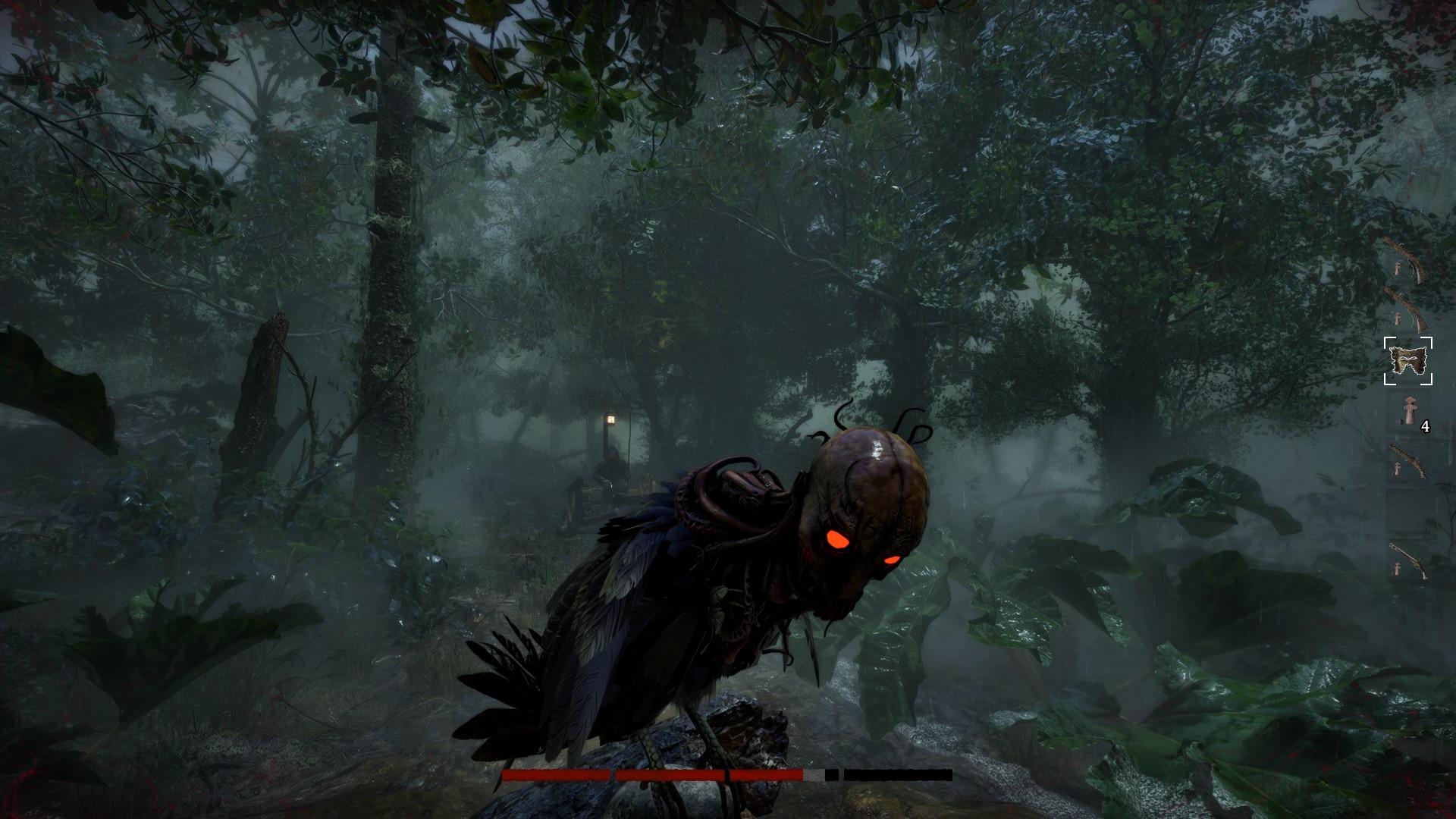
The Mound: Omen of Cthulhu understands that a horror expedition is often more interesting before anything goes wrong. The most effective moments in ACE Team’s cooperative horror game are not necessarily the encounters with its creatures, but the quiet stretches beforehand: walking through an unfamiliar jungle, searching abandoned locations for clues, deciding whether to continue deeper into danger, and wondering whether the strange things happening around you are real or the result of a deteriorating mind.
Set during the age of exploration, The Mound: Omen of Cthulhu follows a group of investigators searching for answers surrounding a lost expedition and a mysterious location connected to ancient forces. Rather than following the structure of a traditional linear survival horror game, it uses an expedition-based format. Players enter dangerous areas, collect discoveries, complete objectives, manage their resources, and attempt to return safely before the situation becomes too dangerous.
The game’s main hook is its approach to psychological horror. Sanity is not simply a health bar that determines how close a character is to failure. It directly affects the way players experience the world. As sanity decreases, perception becomes unreliable, creating moments where players must question what they are seeing and communicate with teammates to determine what is actually happening.
This concept gives The Mound a unique identity, particularly in cooperative play. A horror game can create tension by isolating a player, but this game takes a different approach by making uncertainty something shared between teammates. A strange sight in the distance, an unexpected change in the environment, or a suspicious event becomes more interesting when players have to discuss whether they are experiencing the same thing.

However, the game’s strongest ideas are not always matched by equally strong mechanics. The atmosphere is often excellent, but combat lacks the same level of polish, the expedition structure can become repetitive after extended play, and technical issues occasionally interfere with the experience. The Mound: Omen of Cthulhu is an ambitious horror game with several memorable ideas, but it is also one that clearly shows the difference between having a strong concept and fully realizing it.
Gameplay and Mechanics
The core gameplay loop of The Mound: Omen of Cthulhu revolves around expeditions. Before entering the jungle, players prepare their equipment and decide how they want to approach the next mission. Once inside, the goal is to explore locations, discover useful items and information, complete objectives, and make it back alive.
This structure gives the game a slower pace than many cooperative action titles. Players are not constantly pushed from one fight to another. Instead, much of the tension comes from deciding how far to continue. Finding another clue or searching one more area may provide useful rewards, but every additional minute spent exploring increases the possibility of encountering threats or losing valuable resources.
This risk-and-reward system is one of the strongest parts of the game. A successful expedition is not only about completing objectives; it is about knowing when to stop. The temptation to continue exploring can easily lead to situations where a team becomes overconfident and ends up struggling to escape.
The expedition format also works well with the game’s horror design because it prevents players from becoming completely comfortable. In a traditional horror campaign, players often learn the rules of the world over time. They understand enemy patterns, know when scripted events occur, and gradually become more powerful. The Mound attempts to maintain tension by making the environment less predictable.
Exploration is not only about finding objectives. The jungle and its surrounding areas contain environmental details, hidden discoveries, and clues that help build the mystery. The game rewards players who take their time rather than rushing from one marker to another. This slower approach allows the atmosphere to do much of the work.
The main weakness of the structure is that it does not change dramatically enough throughout the experience. Early expeditions are effective because every location feels unfamiliar and every discovery feels important. After several runs, the general rhythm becomes easier to understand. Players begin to recognize the basic flow of an expedition, which reduces some of the tension that makes the opening hours effective.
The game also does not offer the kind of deep progression systems found in some other cooperative titles. There is no extensive character-building system designed to keep players returning indefinitely. Instead, replay value comes from the unpredictability of each expedition and the situations created by the combination of exploration, sanity effects, and teamwork.
For players who enjoy shorter horror sessions built around atmosphere and experimentation, this structure works well. Those looking for a constantly evolving progression system may find the experience limited.
Story and Setting
The narrative of The Mound: Omen of Cthulhu follows a familiar cosmic horror premise. An expedition enters an unexplored region, discovers evidence of a mysterious ancient presence, and begins uncovering secrets that challenge their understanding of the world.
While the basic setup is familiar, the game uses the setting effectively. The story is less about delivering constant dramatic moments and more about creating a sense of discovery. Players gradually learn more about the expedition, the environment, and the forces connected to the mound through exploration and investigation.
The decision to keep much of the story connected to environmental discoveries works well. The game does not constantly interrupt the player with lengthy conversations or cinematic scenes. Instead, it encourages players to pay attention to their surroundings and piece together information themselves.
This approach suits the subject matter, but it also means the narrative is not the strongest part of the experience. The characters are functional rather than deeply developed, and the personal stakes of the expedition are not always explored in detail. The world itself is more memorable than the individuals moving through it.
The mystery surrounding the location is effective because the game avoids explaining everything too directly. There is a sense that players are uncovering something they do not fully understand, which fits the setting. However, players looking for a complex horror story with strong character development may find the narrative relatively simple.
Ultimately, the story exists to support exploration and atmosphere. It provides enough motivation to continue investigating, but the game’s strongest storytelling comes from the environments and discoveries rather than traditional narrative moments.
Sanity and Psychological Horror
The sanity system is the defining feature of The Mound: Omen of Cthulhu and the main reason the game stands apart from many other cooperative horror experiences. Rather than simply telling players that their character is losing control, the game attempts to make that loss of control part of the gameplay.
As sanity decreases, the player’s experience of the world changes. The environment becomes less trustworthy, and events become harder to interpret. The game uses these effects to create uncertainty without relying entirely on predictable jump scares.
This approach is especially effective because it affects decision-making. When a player notices something unusual, the question is not always “how do I defeat it?” Sometimes the question is “is this actually happening?” That uncertainty changes how players approach exploration and makes them pay closer attention to their surroundings.
The mechanic becomes even more interesting in multiplayer. One player may notice something strange while another sees nothing unusual. A teammate may describe an event that sounds impossible to everyone else. These situations create moments that feel naturally generated rather than scripted, which is one of the game’s biggest strengths.
The cooperative nature of the sanity system also creates a different kind of tension from traditional horror games. Players are not only relying on each other for survival; they are relying on each other to interpret the world. Communication becomes part of the horror experience.
The system does have limitations. The line between intentional confusion and unclear design is not always consistent. Some effects successfully create discomfort and tension, while others can leave players unsure whether they are experiencing a deliberate mechanic or simply struggling to understand what the game expects from them.
This balance is difficult to achieve, and The Mound does not always get it right. However, even when the system is imperfect, it remains the game’s most memorable idea. It influences how players move through the world, how they communicate, and how they react to situations that would feel ordinary in another horror game.
Exploration and Level Design
The jungle environment is one of The Mound: Omen of Cthulhu’s strongest achievements. The game creates a convincing sense of isolation by placing players in large, unfamiliar areas where danger is not always immediately visible.
The environments are designed around discovery rather than speed. Players are encouraged to examine their surroundings, search abandoned locations, and pay attention to details that reveal more about the expedition and the world around it. The setting feels like a place with a history rather than simply a series of levels connected together.
The contrast between the natural environment and the supernatural elements works particularly well. The jungle itself is not frightening because it is hostile in a traditional sense; it becomes unsettling because it contains signs that something ancient and unnatural exists beneath the surface.

Environmental storytelling is also one of the better parts of the game. Documents, objects, ruins, and visual details gradually build the mystery without constantly interrupting the experience with exposition. The player’s curiosity becomes the main reason to continue exploring. The downside is that the activities within these environments do not always match their visual quality. The locations are often impressive to look at, but the actual tasks players perform can become familiar after repeated expeditions.
The world design creates a strong first impression, but the gameplay variety does not always maintain the same level of freshness. Even so, exploration remains the area where The Mound feels closest to its intended vision. The game is at its best when players are simply moving through an unfamiliar location, unsure what they may discover next.
Combat and Survival
Combat is one of the more divisive parts of The Mound: Omen of Cthulhu. The game clearly does not want players to feel like powerful action heroes. Weapons are limited, enemies are dangerous, and many encounters are designed around survival rather than domination. In principle, this fits the game’s approach well. Players are exploring a hostile environment where direct confrontation should feel like a risk.
When combat works, it supports the overall tension. Encountering a creature while low on supplies or already dealing with sanity effects creates pressure because every decision matters. Players need to consider whether they have enough ammunition, whether fighting is worth the risk, or whether escaping is the better option. This makes some encounters feel like genuine survival situations rather than routine combat sequences.
However, the actual combat mechanics do not always provide enough depth or responsiveness to make these moments consistently satisfying. Weapons can feel basic, enemy encounters lack variety compared with the strength of the game’s atmosphere, and some fights become more frustrating than frightening. The intended vulnerability of the player character is understandable, but the mechanics occasionally make the player feel limited rather than threatened.
This is especially noticeable because the rest of the game encourages careful observation and decision-making. Exploration often feels thoughtful, with players weighing risks and rewards. Combat, by comparison, can feel more straightforward and less developed. The game has interesting ideas about avoiding danger, but when fighting becomes unavoidable, it does not always provide the same level of engagement.
Enemy design helps somewhat. The creatures fit the unsettling tone of the setting, and their presence contributes to the feeling that players are entering an environment they do not fully understand. However, the encounters themselves do not always evolve enough over time. Once players become familiar with enemy behavior, some of the tension disappears.
The limited combat system is therefore both a strength and a weakness. It supports the survival-horror atmosphere by preventing players from becoming too comfortable, but it also leaves some encounters feeling underdeveloped. Players who prefer horror games focused on exploration and atmosphere will likely accept this approach, while those expecting a more polished combat experience may find it disappointing.
Multiplayer Experience
Multiplayer is where The Mound: Omen of Cthulhu feels most distinctive. Although the game can be played alone, its mechanics are clearly designed around cooperation, and having other players changes the experience in important ways.
The strongest aspect of cooperative play is how it interacts with the sanity system. In many multiplayer horror games, additional players reduce tension because challenges become easier to manage. In The Mound, teammates introduce a different type of uncertainty. They provide support, but they also become part of the psychological experience.
A player may report seeing something in the environment that another player cannot see. Someone may believe the team is being followed while others think nothing is happening. These moments create conversations that feel like part of the gameplay rather than simple coordination.
This is where the game’s design is most successful. It does not treat cooperation as merely a way to increase firepower or make survival easier. Instead, it makes communication itself important. Players need to share information, compare experiences, and decide how seriously to take what they are seeing.
The expedition structure also benefits from having multiple people involved. Decisions about whether to continue exploring or return to safety become more meaningful when the entire group is affected. A single player’s decision to push forward can put everyone at risk, creating natural tension within the team.
However, the multiplayer experience depends heavily on the group. Players who enjoy slower exploration and unpredictable situations will find more value than those looking for fast-paced cooperative action. The game does not have the immediate accessibility of more traditional multiplayer horror titles.
Solo play highlights this limitation. Without teammates reacting to events or offering different perspectives, some of the most interesting psychological mechanics become less effective. The atmosphere remains, but the unique social tension that defines the experience is reduced.
For players who have a group willing to engage with the game’s slower pace, multiplayer is easily the strongest way to experience The Mound. It allows the game’s best ideas to emerge naturally instead of relying entirely on scripted moments.
Graphics and Sound
Visually, The Mound: Omen of Cthulhu is one of its most impressive elements. The jungle setting provides a strong foundation for horror, combining detailed natural environments with locations that gradually reveal something far more disturbing beneath the surface.
The use of Unreal Engine 5 helps create impressive environments with detailed vegetation, lighting effects, and atmospheric conditions. The jungle often feels dense and difficult to read, which is important because uncertainty about what might be nearby is central to the experience.
The visual contrast between ordinary nature and supernatural elements is handled effectively. Ancient structures, unusual locations, and strange discoveries feel genuinely out of place, reinforcing the idea that players are exploring somewhere that should have remained hidden.
Creature design is also effective. The game does not rely entirely on recognizable horror imagery, instead focusing on unusual forms that feel connected to the larger themes of the setting. Not every enemy encounter is equally memorable, but many creatures contribute to the uncomfortable atmosphere.
Sound design is arguably just as important as the visuals. The jungle is filled with subtle environmental sounds that create tension even when there is no immediate threat. Distant noises, changes in the atmosphere, and carefully placed audio cues encourage players to remain alert.
The presentation is not perfect. Some animations, character models, and smaller details do not reach the same quality level as the strongest environmental work. The game occasionally feels like it has impressive individual pieces that do not always receive the same level of polish.
Despite these inconsistencies, the overall artistic direction is strong. The combination of visuals and audio successfully supports the game’s slower, more psychological approach to horror.

Technical Performance on PC
The PC version of The Mound: Omen of Cthulhu benefits from adjustable settings and the ability to take advantage of modern hardware, but performance is an area where the game shows some unevenness. The detailed environments and Unreal Engine 5 features come with demanding hardware requirements. Players with stronger systems can appreciate the visual quality, while those with older hardware may need to lower settings to maintain smoother performance.
Player feedback has been mixed regarding optimization. Some players have reported acceptable performance, while others have experienced frame-rate issues, bugs, or technical problems that affect immersion. These problems are especially noticeable because the game relies so heavily on atmosphere.
A technical issue during a horror experience can have a larger impact than in many other genres. A sudden performance drop or visual problem can break the tension that the game spends time building. While the issues do not completely undermine the experience, they do prevent the PC version from feeling as polished as it could be.
The overall technical state is functional, but additional optimization and refinement would have strengthened the release. The game has a strong foundation, yet some rough edges remain visible.
Final Verdict: 7/10
The Mound: Omen of Cthulhu is a game built around strong ideas. Its best moments come from the combination of exploration, psychological mechanics, and cooperative tension. The sanity system gives the game a distinctive identity, and the expedition structure creates situations where decisions feel meaningful rather than automatic.
Its weaknesses are mostly found in the areas where the game has less mechanical depth. Combat does not always match the quality of the atmosphere, repeated expeditions can become familiar, and technical issues occasionally interrupt the experience. The solo mode is also less compelling because some of the game’s most interesting ideas rely on player interaction.
Even with these limitations, The Mound succeeds in creating a horror experience with a clear personality. It is not focused on constant action or traditional scares. Instead, it builds tension through exploration, uncertainty, and the difficult decisions that come from entering a dangerous place without fully understanding it.
The result is an imperfect but memorable horror game. It does not completely solve the challenge of turning cosmic horror into interactive gameplay, but it offers a thoughtful interpretation that feels different from many other titles in the genre. Players willing to embrace its slower pace and cooperative focus will find a game with a strong atmosphere and several genuinely effective ideas.