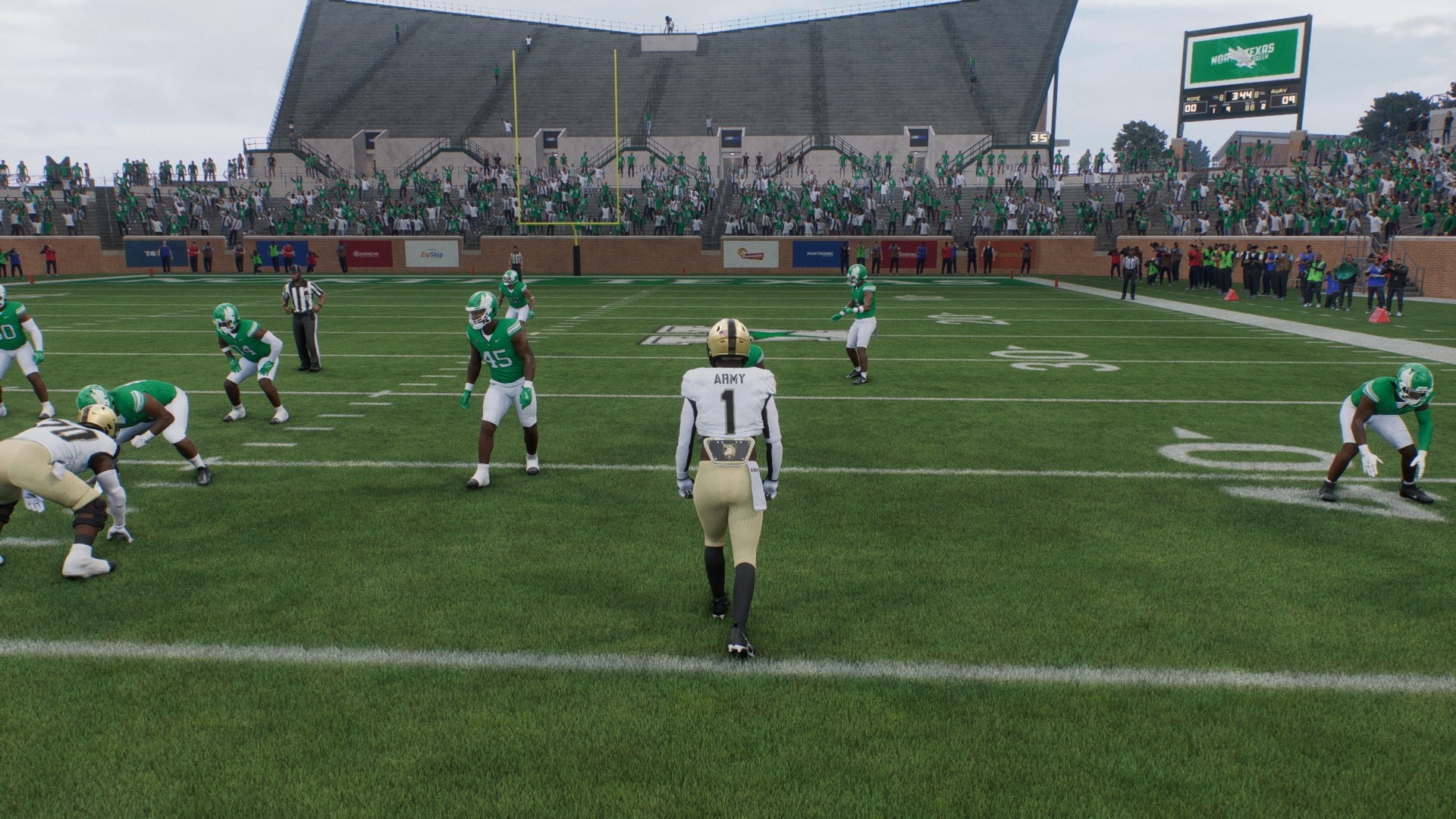
Bringing a dormant sports franchise back to life is one challenge. Convincing players that it deserves to become an annual fixture all over again is another entirely. Last year’s EA Sports College Football 26 succeeded because it understood that recreating the pageantry surrounding college football was only part of the equation. It also delivered a faster, more open style of football than Madden, one that embraced unpredictable offenses, hostile road environments and momentum swings that could completely reshape a game. It was a confident return, although one that left obvious room for improvement in several of its major modes.
College Football 27 no longer carries the burden of proving the series deserves to exist. Instead, it has to justify another yearly release while making good on the areas that felt unfinished twelve months ago. The encouraging news is that this year’s game approaches that challenge in largely the right way. Rather than introducing headline features that dramatically alter the formula, EA has concentrated on refining the systems that players spend the most time with. The result is a game that consistently feels smarter on the field, deeper in Dynasty Mode and more rewarding over the course of a long season, even if some long-standing frustrations remain.
The PC version makes this release particularly noteworthy. For years, PC players watched the series from the sidelines while console owners enjoyed college football’s long-awaited return. That finally changes with College Football 27 launching simultaneously across current platforms, giving PC users access to the same feature set instead of a scaled-back edition. It is a welcome milestone for the franchise, although the quality of the port itself proves more inconsistent than many had hoped.
Like most annual sports games, College Football 27 is unlikely to convince anyone who fundamentally dislikes the formula. The improvements are built on refinement rather than reinvention, and returning players will immediately recognise the foundation established last year. Fortunately, that foundation was already among EA Sports’ strongest in recent memory, and this sequel demonstrates a much clearer understanding of what makes college football distinct from its professional counterpart.
Gameplay and Mechanics
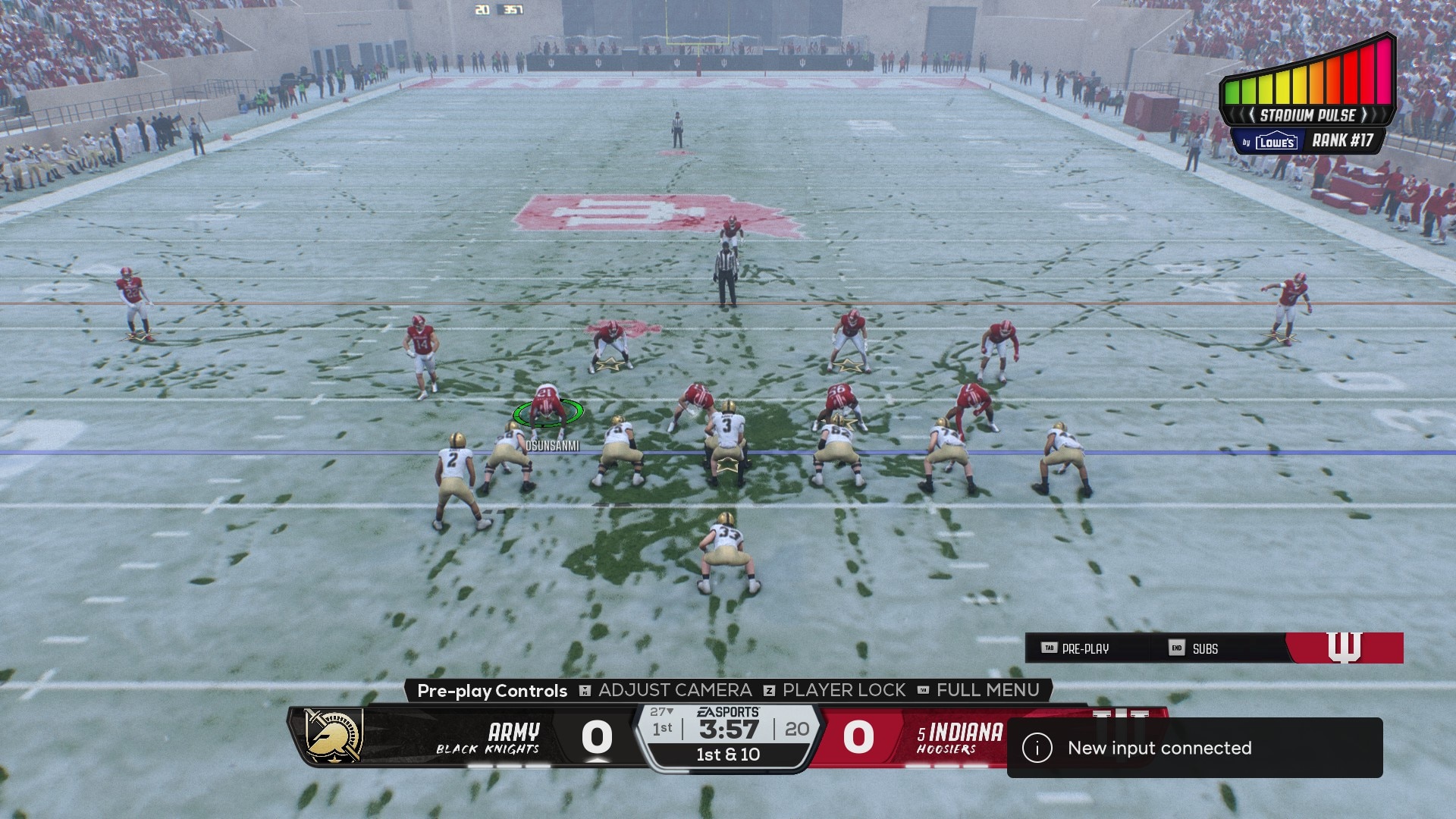
The biggest compliment that can be paid to College Football 27 is that it rarely feels like a game searching for balance through artificial means. Success comes from understanding football rather than discovering which animations or formations happen to overpower the AI. There are still exploits waiting to be uncovered by dedicated online players, as there always are in modern sports games, but the underlying mechanics reward sound decision-making more consistently than they did a year ago.
Running the football remains the heart of the experience, and for good reason. College offenses are built around variety, deception and athletic quarterbacks who threaten defenses in multiple ways. Read options, RPOs, jet sweeps and designed quarterback runs all integrate naturally into offensive game plans instead of feeling like situational gimmicks. Defenders react more intelligently to misdirection than before, forcing players to make genuine reads after the snap rather than relying on the same handful of high-percentage plays every possession. Establishing a successful ground game also opens passing opportunities in believable ways, making offensive drives feel like evolving chess matches instead of isolated play calls.
Quarterback play benefits from several subtler improvements that become increasingly noticeable over the course of a Dynasty season. Pocket movement feels smoother, interior pressure develops more naturally and offensive linemen generally communicate blocking assignments with greater consistency. Elite defensive fronts are capable of collapsing the pocket without relying on exaggerated animation triggers, encouraging quarterbacks to step into throws, climb the pocket or escape outside depending on the situation. Those choices now carry greater weight because defenders recover more effectively when a play begins to break down.
Passing mechanics continue to offer one of the better balances between accessibility and precision found in recent football games. Players who simply want to enjoy a casual season can rely on assisted mechanics without feeling disadvantaged, while experienced players have enough control to place difficult throws into tight coverage. Receivers no longer appear magnetically attached to the football, leading to more believable incompletions, contested catches and pass breakups. A poorly timed throw into double coverage is far less likely to be rescued by an overpowered catch animation, while genuinely talented receivers distinguish themselves through route running, positioning and body control rather than animation priority alone.
Perhaps the most significant improvement comes from the defensive side of the ball, where AI awareness has taken a noticeable step forward. Zone defenders do a better job of recognising developing concepts, linebackers pursue ball carriers with greater discipline and defensive backs react more convincingly to underthrown or contested passes. The improvements are not dramatic enough to make defense effortless, nor should they be, but they create the impression that opposing coordinators are making intelligent adjustments rather than simply responding to scripted triggers. Drives unfold more organically because defensive success is earned through sound positioning and execution instead of random momentum shifts.
That does not mean every lingering issue has disappeared. Animation blending can still produce awkward collisions when multiple players converge around the line of scrimmage, while ball carriers occasionally lose responsiveness after entering certain tackle sequences. Pursuit angles remain inconsistent during broken plays, sometimes allowing runners to escape when defenders appear to have taken perfect positioning moments earlier. These shortcomings are less common than they were previously, but they continue to remind players that even EA’s strongest football engine occasionally struggles when physics, animations and player ratings intersect simultaneously.
The cumulative effect of these improvements is more important than any individual feature. Games develop a natural rhythm that rewards patience instead of constant aggression. Building a drive through efficient running, timely play-action and smart clock management often proves more successful than chasing highlight plays on every snap, and that philosophy ultimately makes victories feel earned rather than manufactured. Few recent football games have captured the tactical flow of the sport this convincingly, and College Football 27 is at its best whenever it trusts players to understand the game instead of overwhelming them with spectacle.
Dynasty Mode
For many players, Dynasty Mode remains the defining reason to buy College Football, and it is also where this year’s improvements have the greatest long-term impact. Last year’s mode established a solid framework, but extended saves eventually exposed repetitive recruiting, limited coach progression and a management layer that often felt streamlined to the point of losing much of the complexity that makes building a college program so satisfying. College Football 27 does not completely reinvent Dynasty, but it meaningfully expands it in ways that encourage players to think beyond the next game on the schedule.
Recruiting is once again the centrepiece, although it now demands considerably more planning than simply allocating recruiting hours to the highest-rated prospects every week. Building relationships has become a more gradual process, with coaching prestige, program stability, conference reputation, recent success and playing opportunities all influencing a recruit’s interest throughout the season. Elite prospects remain difficult to lure away from perennial contenders, but rebuilding a struggling program no longer feels like fighting against invisible restrictions. Success comes from identifying realistic targets, developing players effectively and gradually increasing your school’s reputation over several seasons rather than expecting immediate miracles.
That slower pace greatly benefits long-term saves because roster construction develops its own narrative. A rebuilding program might lean heavily on three-star recruits who develop into conference standouts, while an established powerhouse can afford to chase five-star talent without neglecting depth. Recruiting therefore becomes more than a weekly checklist. It shapes the identity of the entire program and determines whether future seasons are built around experienced veterans, highly rated freshmen or a mixture of both.
Modern college football has also been transformed by the transfer portal, and College Football 27 reflects that reality far better than its predecessor. Roster management extends beyond signing high school talent, requiring coaches to identify experienced players capable of filling immediate needs while balancing scholarship limits and long-term development. The portal creates a level of unpredictability that keeps Dynasty seasons feeling fresh because every offseason presents different opportunities and challenges. A disappointing campaign can result in valuable players leaving the program, while an ambitious rebuild can accelerate dramatically through smart transfer acquisitions. The system captures the constantly shifting landscape of contemporary college football without becoming unnecessarily complicated.
Coaching progression has likewise received welcome attention. Rather than simply unlocking arbitrary bonuses over time, coaches gradually establish an identity through abilities that influence recruiting, player development and game preparation. Choosing where to invest progression points carries enough weight to encourage experimentation across multiple saves, particularly when building smaller schools into national contenders. Different coaching approaches genuinely lead to different roster-building strategies instead of merely altering statistical modifiers hidden beneath the surface.
Preparation between games feels more purposeful as well. Weekly planning allows coaches to emphasise particular areas of development, exploit opponent weaknesses or reinforce existing strengths, giving each matchup a greater sense of context before kickoff. These decisions rarely dominate individual games, but they contribute to the impression that an entire season is unfolding rather than a disconnected series of exhibition matches.
The simulation engine also produces more believable results than before. Upsets still occur with appropriate frequency because unexpected results are part of college football’s appeal, yet powerhouse programs no longer disappear from national relevance for no apparent reason after a single simulated month. Conference standings, playoff races and award winners generally develop in ways that feel authentic, making it easier to become invested in seasons that extend well beyond your own program.
Not every aspect of Dynasty has reached the same level of refinement. The interface remains one of the mode’s weakest components, largely because it buries important information beneath too many menus. Reviewing recruiting battles, player development, transfer activity and coaching progression often requires unnecessary navigation, particularly on PC where mouse support never feels as intuitive as it should. After dozens of in-game weeks, those extra button presses become a recurring irritation rather than a minor inconvenience.
There is also room for considerably deeper program management. Athletic department finances, assistant coaching staffs, facilities and long-term university investment remain simplified compared with dedicated management simulations. That approach undoubtedly makes Dynasty easier to understand for newcomers, but experienced players may still wish for greater influence over the broader direction of their program beyond recruiting and on-field performance.
Even so, Dynasty represents the clearest example of meaningful year-over-year improvement. It consistently rewards patience, strategic planning and intelligent roster construction, making every successful rebuild feel earned rather than handed to the player through generous progression systems. It is difficult to imagine dedicated franchise fans returning to last year’s version after spending significant time with the changes introduced here.
Road to Glory
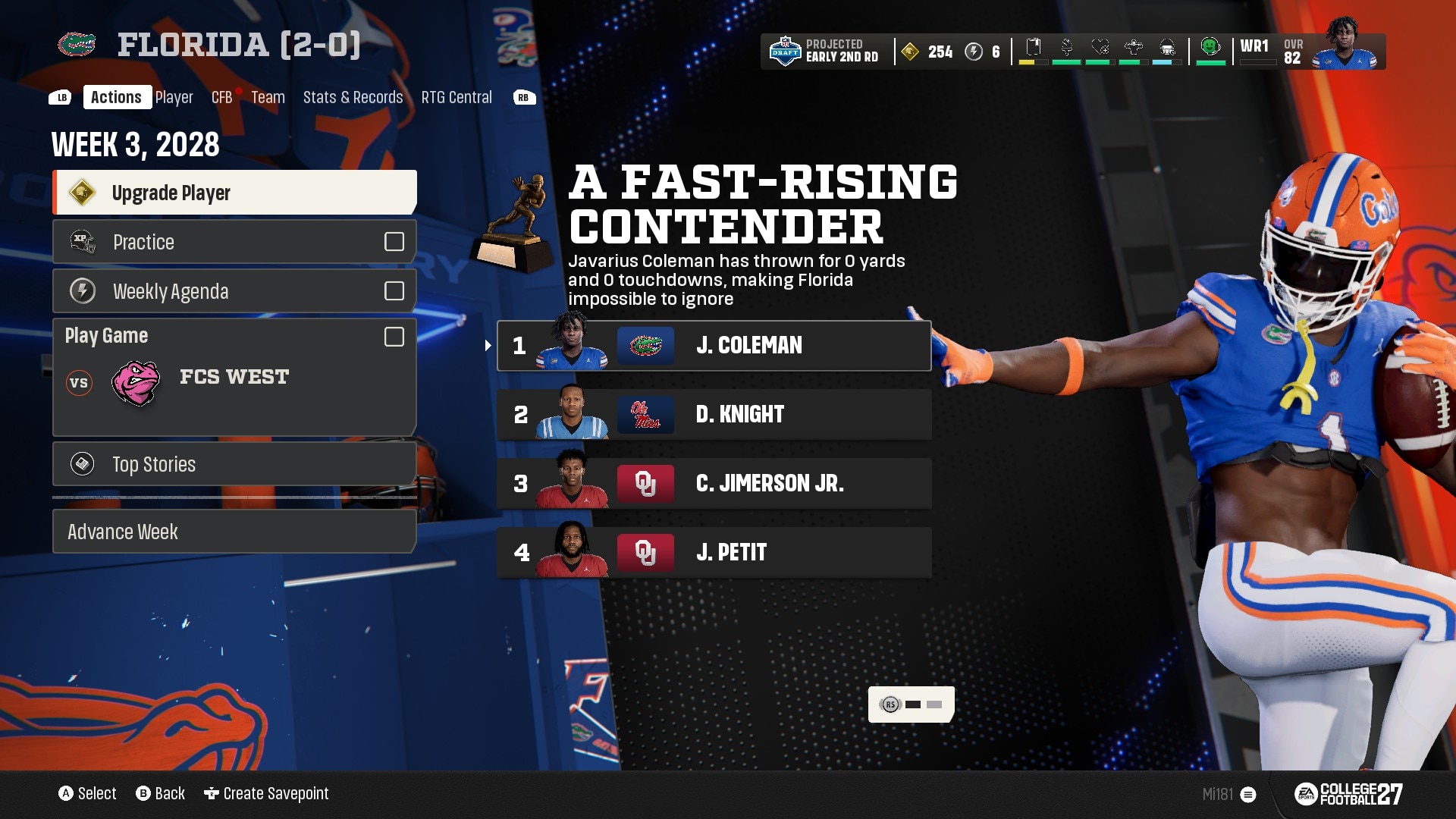
Road to Glory continues to occupy an unusual position within the package because its premise remains immediately appealing while its execution still falls short of its potential. Beginning as a high school recruit, selecting a university and attempting to develop into one of the country’s best players is exactly the kind of fantasy career mode that should naturally complement Dynasty. Unfortunately, the surrounding systems still struggle to create a memorable personal journey.
Player progression is more structured than before, but not always more engaging. Competing for playing time, managing training, balancing academic responsibilities and improving attributes all contribute to a believable collegiate routine, yet those activities quickly settle into a repetitive cycle that changes very little from one week to the next. Once the novelty wears off, too much of the mode revolves around repeating familiar menus and incremental upgrades rather than presenting fresh situations or meaningful decisions.
The underlying football remains enjoyable enough to keep the experience moving, particularly because individual performances genuinely influence your place within the depth chart. Earning a starting position feels satisfying precisely because it is not guaranteed, and performing poorly can still have consequences that affect subsequent weeks. Those systems successfully reinforce the competitive nature of college athletics, where every practice and every game matters to players attempting to establish themselves.
Where Road to Glory continues to disappoint is in its storytelling. Career-defining moments rarely receive the attention they deserve, rivalries seldom develop beyond standard commentary references and your player’s journey often feels surprisingly detached from the wider college football landscape unfolding around them. Major victories, heartbreaking defeats and individual milestones deserve stronger narrative recognition than the relatively restrained presentation currently provides.
Progression pacing has also been the subject of considerable discussion within the community. At launch, criticism intensified after players argued that progression had been deliberately slowed while paid progression options were introduced, creating the impression that the mode encouraged spending money to reduce unnecessary grinding. The backlash was immediate, prompting EA to remove those paid progression purchases shortly after release. While that decision addressed the most controversial aspect of the system, the underlying pace of progression still feels slower than it ideally should, particularly for players who choose lower-rated recruits in search of a longer developmental journey.
Road to Glory therefore remains enjoyable without becoming essential. The football itself is consistently entertaining, and the satisfaction of climbing from backup to campus superstar is still present, but the surrounding framework lacks the personality, variety and narrative payoff necessary to transform the mode into one of the game’s true highlights. After the significant progress made elsewhere in College Football 27, Road to Glory increasingly feels like the next area that deserves a comprehensive overhaul rather than another round of incremental improvements.
Presentation and Atmosphere
College football has always been as much about tradition as athletic excellence, and that remains one of College Football 27’s greatest strengths. EA understands that players are not simply buying a football simulator; they are buying into the rituals, rivalries and personalities that make Saturdays feel fundamentally different from Sundays. More importantly, the presentation rarely feels like a collection of disconnected broadcast elements. Every piece works together to reinforce the identity of the sport, whether you are leading Alabama into a playoff game, attempting to upset a conference favourite on the road or rebuilding a smaller program one season at a time.
The atmosphere inside stadiums continues to set the benchmark for modern sports games. Crowd reactions build naturally as momentum shifts, marching bands and fight songs remain an essential part of the soundscape rather than fading into the background, while school-specific traditions give individual programs an identity that extends beyond their uniforms and ratings. Rivalry games feel louder, conference championship matchups carry greater intensity and difficult road environments create genuine pressure that influences play at the line of scrimmage. The home-field advantage system is particularly effective because it rarely feels arbitrary. Communication becomes more difficult, audibles require greater concentration and hostile crowds gradually influence the rhythm of an offense without making success feel impossible.
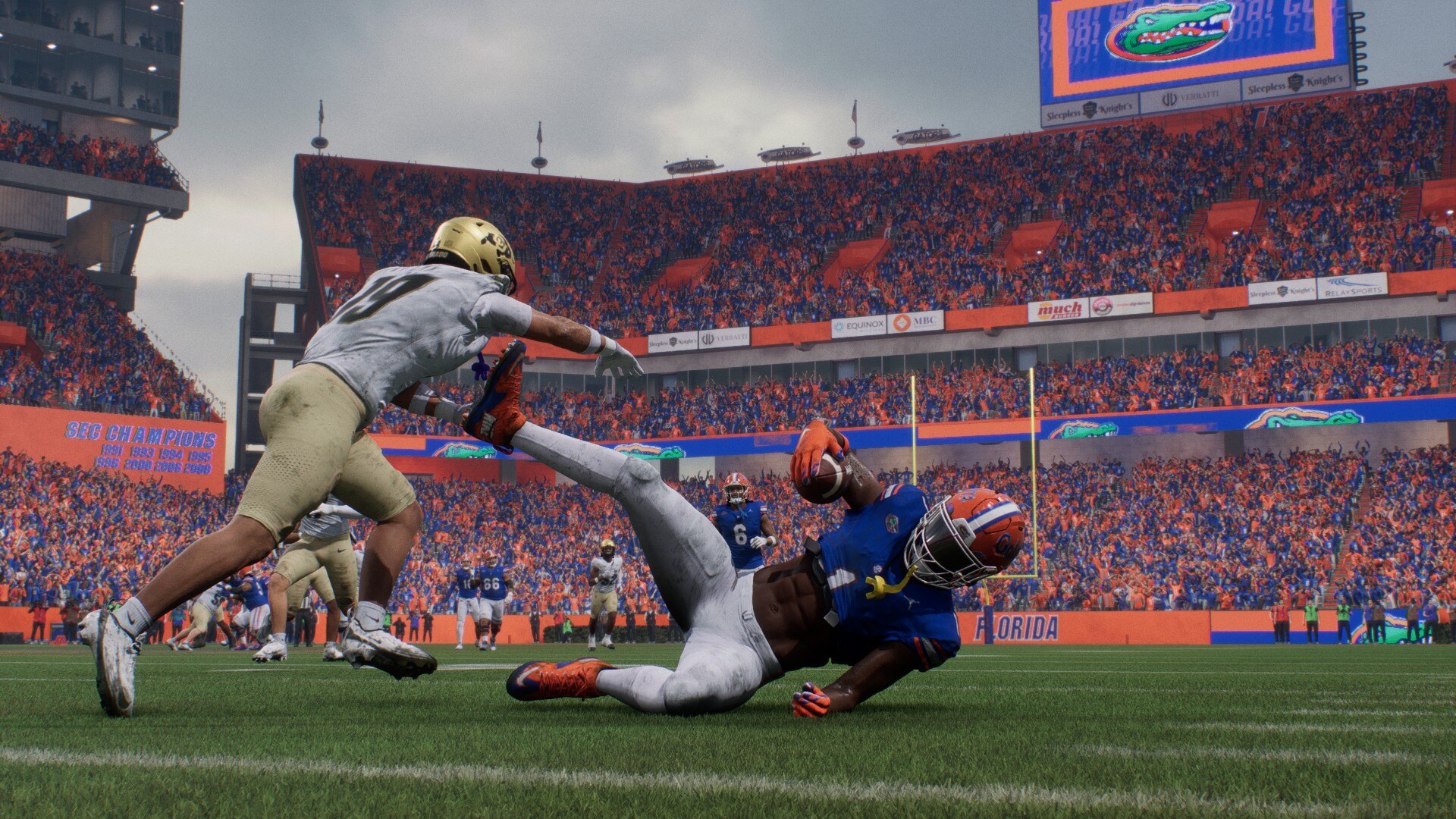
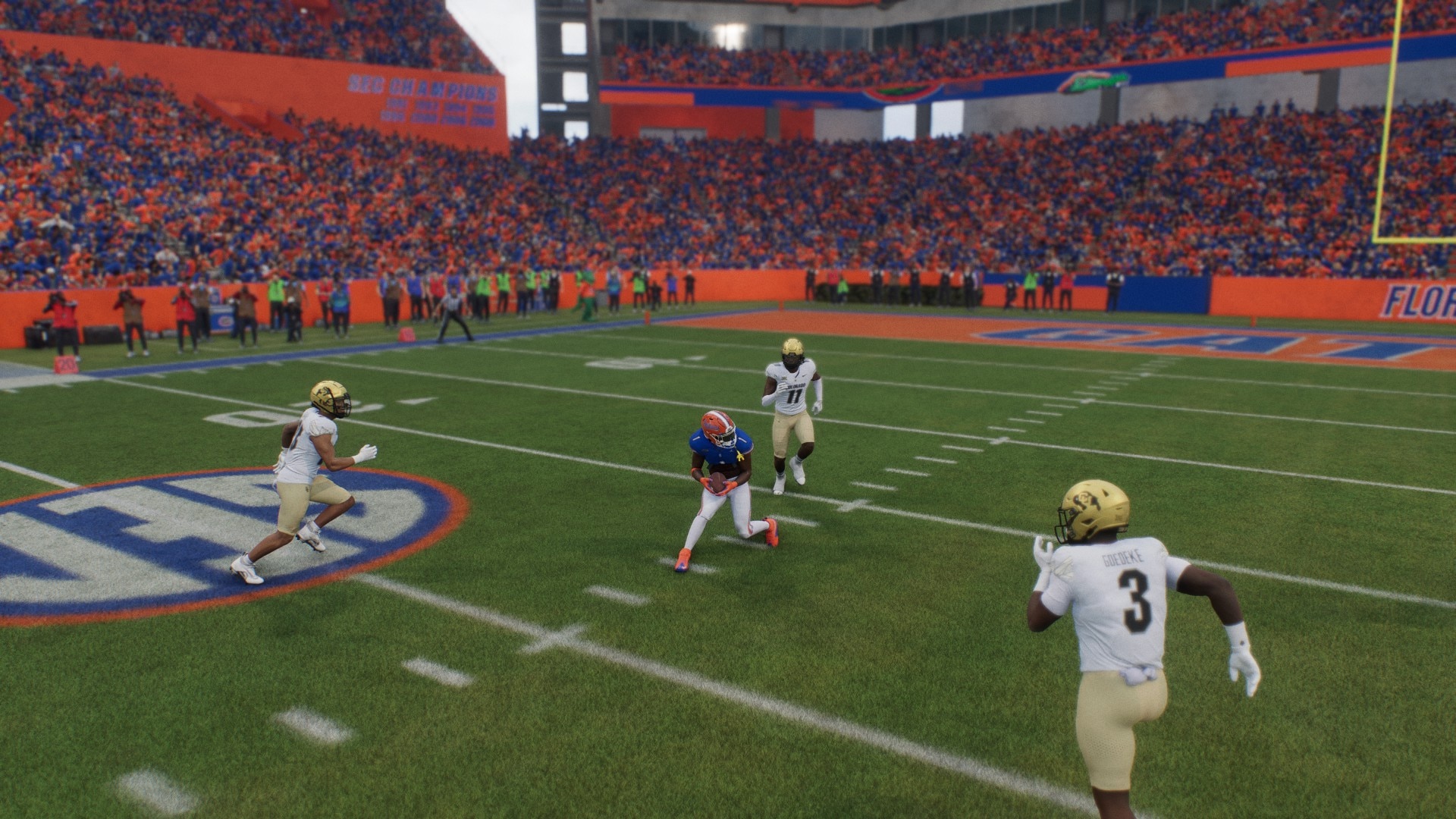
Visually, College Football 27 remains one of EA Sports’ strongest productions. Stadiums are recreated with remarkable attention to detail, lighting transitions convincingly from bright afternoon kickoffs to evening contests under floodlights and player models continue to improve in both accuracy and animation quality. Uniform textures, equipment options and field surfaces all contribute to an authentic television presentation that consistently looks impressive throughout a season. Close-up player animations also demonstrate noticeable improvements over previous entries, particularly during celebrations and replay sequences where facial expressions appear considerably more natural than before.
The broadcast presentation is polished without becoming overly intrusive. Camera work successfully captures the scale of larger stadiums while maintaining a brisk pace between plays, allowing games to retain their energy instead of becoming bogged down by endless cutscenes. Replay packages are used more selectively, helping significant moments stand out instead of interrupting every substantial gain with another cinematic angle. The overall production strikes a satisfying balance between authenticity and convenience, encouraging players to remain immersed without constantly waiting for presentation sequences to conclude.
Commentary, however, continues to be one of the package’s less consistent elements. The broadcast team demonstrates a respectable understanding of the sport, frequently referencing conference races, player performances and recent results, but the delivery inevitably becomes repetitive during lengthy Dynasty saves. Context-sensitive dialogue appears often enough to acknowledge the wider season, yet memorable moments sometimes pass with surprisingly restrained reactions, while certain observations recur frequently enough to lose their impact. It is competent commentary that supports the experience without ever becoming one of its defining strengths.
If there is a broader criticism to level at the presentation, it is that familiarity inevitably reduces its impact over time. Returning players will immediately recognise many of the visual techniques, transitions and broadcast conventions introduced last year. That is not necessarily a flaw, because they were already among the strongest aspects of the series, but players hoping for a dramatic leap in production values may instead find a polished refinement of an already excellent presentation package.
Ultimate Team, Online Play and Longevity
The quality of any modern sports game is ultimately measured over months rather than weeks, and College Football 27 is well equipped to sustain that kind of long-term investment. Dynasty alone is capable of absorbing hundreds of hours, particularly for players who enjoy rebuilding struggling programs or creating fictional coaching careers, but the supporting modes ensure there is always another objective waiting once a single season comes to an end.
Online play benefits enormously from the improvements made to the on-field mechanics. Because running the football, reading coverages and adjusting to defensive looks have all become more rewarding, competitive matches tend to be decided by execution rather than whichever player discovers the latest unstoppable exploit. There will inevitably be formations and concepts that become particularly popular within the online community, and future balance updates will almost certainly reshape the competitive landscape, yet the underlying gameplay feels sturdy enough to support meaningful competition over the course of the season.
Connection quality is generally dependable, although occasional latency issues still appear depending on matchmaking and individual network conditions. Fortunately, the game rarely feels as though it is fighting against the player during online matches. Input responsiveness remains consistent under normal conditions, allowing victories and defeats to feel deserved more often than not. That sense of fairness is crucial for a competitive sports title, and College Football 27 generally succeeds in maintaining it.
Ultimate Team remains the most divisive component of the package, largely because it continues to embody many of the design philosophies that players have grown increasingly frustrated with across EA Sports’ catalogue. From a purely structural perspective, the mode is comprehensive. There are countless objectives to complete, regular live content updates, seasonal progression systems and an enormous collection of players to unlock. Anyone who enjoys gradually assembling a dream roster through challenges and online competition will find no shortage of content here.
The difficulty lies in separating that content from the business model surrounding it. Although EA quickly reversed course by removing the newly introduced paid progression options following widespread criticism from players, the controversy inevitably shaped perceptions of the game during its launch period. Many members of the community argued that progression in Road to Glory and certain Ultimate Team systems felt deliberately slower than necessary, creating the impression that monetisation had influenced game balance rather than merely existing alongside it. Removing those purchases addressed the immediate source of criticism, but it did not entirely eliminate the broader discussion surrounding progression pacing and the role monetisation continues to play within EA’s sports titles.
Fortunately, Ultimate Team no longer defines the overall package in the way it once might have. Dynasty is substantial enough to justify the purchase on its own, Road to Glory remains enjoyable despite its shortcomings and standard online modes provide competitive players with plenty of opportunities to test themselves without engaging with the card-collecting economy. Players who have no interest in Ultimate Team can comfortably ignore it without feeling as though they are missing the heart of the experience, and that represents a healthier balance than some previous EA Sports releases managed to achieve.
What ultimately gives College Football 27 its longevity is not the volume of content, impressive though that may be, but the strength of its underlying systems. Successful recruiting classes naturally lead into another Dynasty season, improved coaching abilities encourage fresh rebuilds at different schools and satisfying gameplay makes even ordinary regular-season matchups enjoyable to play rather than merely simulate. The game consistently creates reasons to return because the football itself remains engaging after the novelty of new features has worn off.
Technical Performance on PC
The arrival of College Football on PC should have been one of the year’s easiest victories for EA Sports. After years of requests from the community, the franchise finally launches simultaneously on current-generation consoles and PC, giving the platform feature parity instead of receiving an outdated version built around previous-generation technology. On paper, that alone represents meaningful progress. In practice, the PC version delivers a noticeably more uneven experience.
When everything works as intended, the game looks excellent. Modern graphics hardware is capable of producing sharp image quality, stable high frame rates and detailed stadium environments that comfortably surpass the console versions in visual fidelity. Support for higher resolutions and refresh rates gives the gameplay an additional level of fluidity that football games naturally benefit from, particularly during fast offensive possessions where smooth animation makes reading defensive movement considerably easier.
Unfortunately, achieving that experience is not always straightforward. Performance inconsistency has become one of the defining discussions surrounding the PC release, and not without reason. Numerous players have reported shader compilation stutter during their opening matches, while others continue to experience intermittent frame-time spikes, hitching during presentation sequences and occasional drops that appear unrelated to GPU performance. The severity varies depending on hardware configuration, making it difficult to predict exactly how the game will perform on any individual system, but the issue has been widespread enough to overshadow what is otherwise a technically ambitious port.
The game also demonstrates unusually demanding CPU behaviour during certain situations, particularly in larger stadiums where crowd simulation, physics calculations and presentation elements all compete for system resources. High-end processors generally minimise these problems, yet even powerful configurations have struggled to eliminate inconsistent frame pacing entirely. That inconsistency is ultimately more distracting than lower average frame rates because football depends heavily on timing, rhythm and responsive player control.
Mouse and keyboard support exists but rarely feels like a priority. While few players are likely to choose keyboard controls over a gamepad during matches, navigating menus with a mouse often feels less refined than expected. Interface elements remain clearly designed around controller navigation, requiring additional inputs and unnecessary cursor movement when managing Dynasty, recruiting or roster screens. It is not a fundamental problem, but it reinforces the impression that the PC version was adapted from its console counterpart rather than designed with the platform in mind from the outset.
Launch stability has likewise proven inconsistent. Community reports have documented crashes, visual glitches and occasional save-related issues, although the frequency appears to vary considerably between different hardware configurations. EA has responded with patches addressing several technical concerns, yet the game still feels as though it would have benefited from additional optimisation before release. That sentiment has been echoed repeatedly throughout user discussions, where praise for the gameplay itself is often accompanied by frustration over performance problems that players expected to be resolved before launch.

The contrast between professional reviews and early Steam user impressions is particularly revealing. Critics generally praised the quality of the football simulation while noting technical shortcomings, whereas many PC players proved far less forgiving because those same issues directly affected their day-to-day experience. Combined with the controversy surrounding launch monetisation, the technical state of the PC version contributed to a significantly harsher user reception than the gameplay alone arguably deserved.
Viewed purely as a football game, College Football 27 represents one of EA Sports’ strongest efforts in years. Viewed specifically as a PC release, however, it is a more qualified recommendation. The excellent gameplay survives the transition intact, but inconsistent optimisation prevents the platform from immediately becoming the definitive place to play.
Final Verdict: 7/10
College Football 27 is not the dramatic leap forward that some players may have expected after the series’ successful revival, but that observation should not be mistaken for criticism. The previous game established an excellent foundation, and this sequel wisely concentrates on improving the areas that matter most instead of chasing headline features that would have added complexity without necessarily improving the overall experience. The result is a more confident football game that better understands its own identity and trusts its strongest ideas to carry the experience.
The improvements to gameplay are subtle in isolation but substantial in combination. Running the football feels more deliberate, defensive intelligence has become noticeably stronger, passing rewards sound decision-making over animation abuse and the overall flow of games better reflects the tactical rhythm of real college football. Rather than constantly searching for spectacular moments, the game finds its greatest successes in the dozens of small interactions that make every possession feel earned. That is precisely the kind of progress an annual sports series should be striving for.
Dynasty Mode benefits the most from this philosophy. Deeper recruiting, more engaging roster management and improved coaching progression transform long-term saves into genuinely compelling projects, while the transfer portal introduces welcome unpredictability that mirrors the realities of modern college football. Although the management layer still stops short of offering the depth found in dedicated sports management simulations, it strikes an effective balance between accessibility and meaningful decision-making that will satisfy the overwhelming majority of players.
Road to Glory remains the weakest of the major modes, not because the football itself disappoints but because the surrounding career structure still struggles to create a memorable personal story. Progression becomes repetitive, player development lacks sufficient variety and the mode rarely capitalises on the emotional highs and lows that naturally accompany a college career. It remains enjoyable, particularly for players who prefer controlling a single athlete, yet it increasingly feels like the area most in need of significant redesign rather than incremental refinement.
The PC version presents a more complicated picture. Feature parity with consoles is an important milestone, visual quality is excellent on capable hardware and support for higher frame rates gives the gameplay an additional level of responsiveness that football games naturally benefit from. At the same time, inconsistent optimisation, shader stutter, uneven frame pacing and interface shortcomings prevent this from becoming the effortless recommendation many PC players had hoped for after waiting so many years for the series to arrive on the platform. Continued post-launch updates should improve the technical experience, but the launch version falls short of the standard established by the gameplay itself.
Even taking those concerns into account, it is difficult not to admire how successfully College Football 27 captures the character of the sport. The atmosphere remains unmatched, the tactical depth has grown in meaningful ways and Dynasty has evolved into one of the strongest franchise modes currently available in a licensed sports game. There are still rough edges to smooth out, and the PC version deserves further optimisation, but neither issue overshadows the quality of the football being played once the ball is snapped.
College Football 27 ultimately succeeds because it focuses on the right priorities. It recognises that authentic atmosphere, satisfying gameplay and rewarding long-term progression matter far more than flashy marketing features or superficial additions. For returning players, it is a worthwhile upgrade that meaningfully improves an already excellent foundation. For PC players experiencing the series for the first time, technical frustrations may occasionally interrupt the experience, but they do not diminish the fact that this is one of the finest football simulations EA Sports has produced in well over a decade.