
When Palworld entered Early Access in January 2024, it became one of the industry’s biggest surprises. The initial fascination was easy to understand. The sight of colourful creatures wielding assault rifles or operating industrial machinery generated endless headlines and social media clips, but that novelty also threatened to overshadow what Pocketpair had actually built. Behind the internet discourse was an ambitious open-world survival game that borrowed ideas from several genres without ever feeling entirely beholden to any one of them. Creature collecting, base management, automation, action combat and traditional survival mechanics were all present, held together by an addictive progression loop that encouraged constant experimentation. Even in its unfinished state, it was obvious there was more substance than the memes suggested.
Version 1.0 is not a dramatic reinvention of that foundation, nor does it need to be. Instead, it is the result of two years of refinement, expansion and rebalancing. Nearly every major system has received meaningful improvements, while the world itself has grown into something that feels considerably more cohesive than it did during Early Access. The new regions, expanded progression systems, additional Pals and stronger narrative framework give players more reasons to keep exploring long after the opening hours, and the game no longer gives the impression that large portions of its design are placeholders waiting to be completed.
That does not mean every lingering issue has disappeared. Companion AI can still make baffling decisions during both combat and base management, technical hiccups occasionally interrupt the flow of exploration, and some activities lose their novelty before the adventure reaches its conclusion. Those shortcomings are easier to accept now because they exist within a game that has finally realised the vast majority of its original ambitions. Rather than asking players to imagine what Palworld might eventually become, version 1.0 presents a complete experience that stands comfortably alongside many of the genre’s strongest releases.
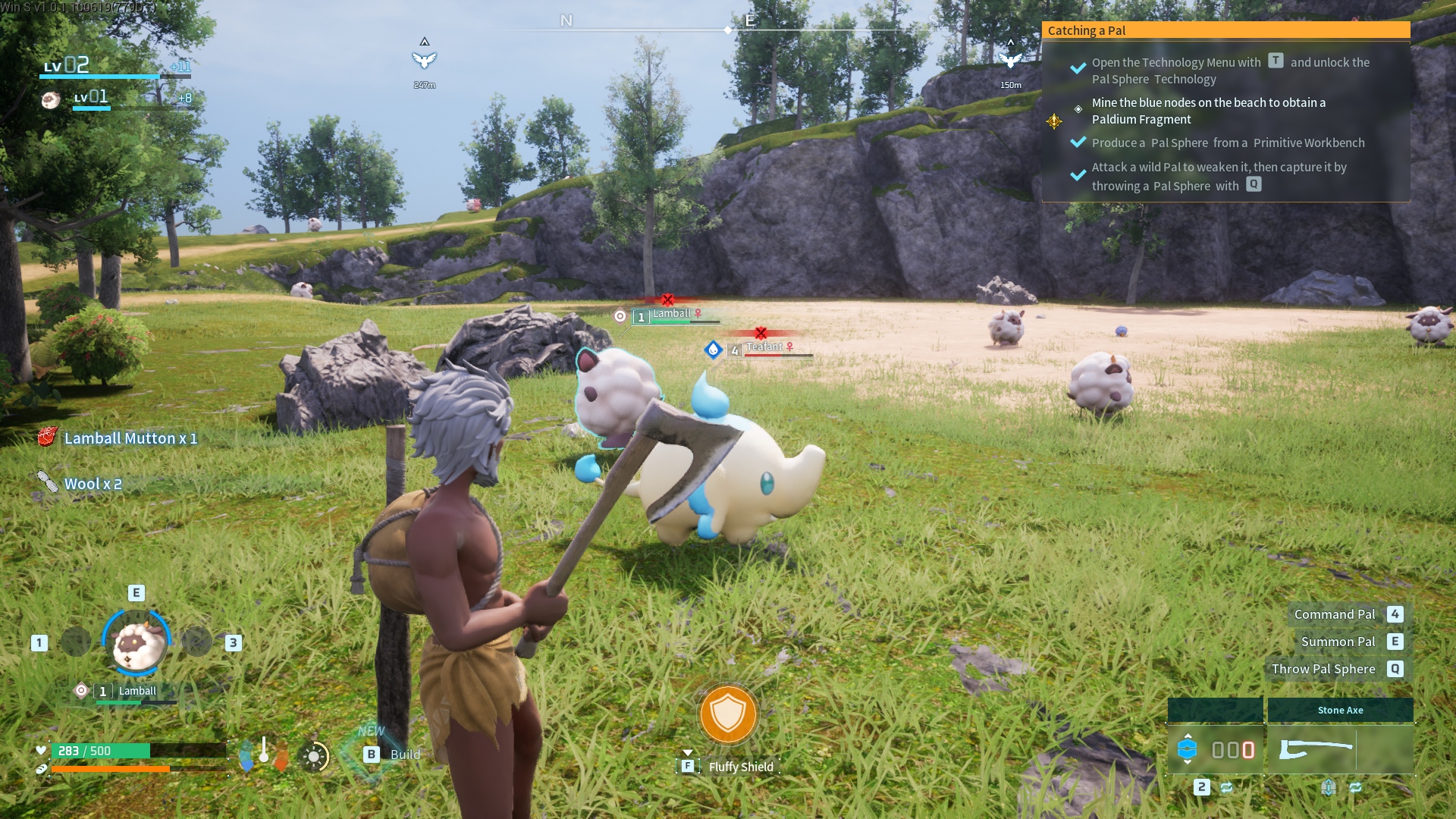
Gameplay and Mechanics
One of Palworld’s greatest strengths has always been its understanding of momentum. Survival games often struggle to balance routine maintenance with meaningful progression, trapping players in repetitive gathering cycles that gradually begin to feel like unpaid labour. Palworld still asks players to chop trees, mine ore, harvest crops and manufacture increasingly sophisticated equipment, but it consistently ensures those tasks feed directly into a tangible sense of advancement rather than becoming the entire experience.
The opening hours establish familiar survival mechanics. Players gather basic materials, craft primitive tools, build a modest shelter and slowly unlock new technologies through a sprawling research tree. On paper, there is very little here that genre veterans have not seen before. The difference lies in how quickly the game begins introducing new possibilities. A successful expedition rarely ends with a single reward. Returning to base might provide enough experience to unlock several technologies, enough resources to improve production, enough Pal Spheres to capture stronger companions and enough rare materials to prepare for the next region. Multiple progression systems are constantly advancing in parallel, making even relatively short play sessions feel productive.
That pacing has improved noticeably in version 1.0. Earlier builds occasionally stalled once players reached certain technological milestones, forcing lengthy periods of resource farming before meaningful progress resumed. Those bottlenecks have largely been smoothed over without eliminating the satisfaction of working towards expensive equipment. High-tier weapons and advanced facilities still require significant investment, but the game is far better at ensuring players are working towards several interconnected goals rather than grinding a single resource simply because the technology tree demands it.
The progression system also deserves credit for respecting player curiosity. New technologies rarely feel like arbitrary upgrades inserted simply to increase numerical power. Unlocking electricity transforms how an entire settlement operates. Acquiring advanced manufacturing opens access to equipment that fundamentally changes combat encounters. Flying mounts alter the relationship players have with exploration, turning previously dangerous mountain ranges into brief aerial journeys while simultaneously revealing locations that were impossible to reach on foot. Each milestone expands the range of available activities rather than merely increasing efficiency within existing ones.
Importantly, Palworld avoids becoming overbearing despite the sheer number of systems operating simultaneously. There are production chains to optimise, breeding projects to pursue, equipment to manufacture, skill trees to unlock, bases to expand and dozens upon dozens of creatures to capture, yet the interface presents information clearly enough that players rarely feel overwhelmed. New mechanics are introduced gradually, allowing the complexity to emerge naturally instead of arriving all at once.
That careful pacing helps explain why the game remains engaging for dozens of hours. Even when one objective begins to lose momentum, another naturally takes its place. A mining expedition uncovers materials needed for stronger armour. Crafting that armour makes a distant biome more approachable. Exploring that biome introduces unfamiliar Pals with abilities that improve automation back at base. Every accomplishment creates another destination rather than serving as a conclusion.
Exploration and World Design
The islands themselves have undergone perhaps the most meaningful transformation since Early Access. While the original world was undeniably impressive in scale, it often relied too heavily on geography alone to sustain exploration. Vast forests, deserts and frozen mountains looked striking from a distance but occasionally lacked enough memorable landmarks or activities to distinguish one journey from the next. Version 1.0 addresses that issue by making exploration feel considerably more deliberate.
The expanded world contains a healthier balance between open wilderness and handcrafted points of interest. Settlements are more substantial, ruins contain stronger environmental storytelling, and newly introduced regions possess clearer identities beyond their visual themes. Rather than simply climbing another mountain in search of better resources, players are increasingly rewarded with unique encounters, new questlines or discoveries that meaningfully contribute to the broader progression.
Movement remains central to why exploration is consistently enjoyable. Travelling on foot during the opening hours encourages players to appreciate the world’s natural hazards and geography. Rivers become genuine obstacles, cliffs require careful navigation and hostile wildlife poses a credible threat. Those limitations gradually disappear as stronger mounts become available, yet the game cleverly transforms that increased mobility into another reward rather than allowing it to trivialise exploration altogether.
Ground mounts significantly reduce travel time while preserving the importance of terrain. Flying Pals eventually remove many geographical restrictions entirely, but they also reveal hidden plateaus, isolated islands and distant landmarks that were impossible to investigate previously. Faster movement never invalidates earlier exploration because every improvement simply broadens the player’s understanding of the world.
Environmental variety also contributes significantly to the sense of progression. Each biome introduces its own collection of wildlife, resources and environmental hazards that encourage players to prepare accordingly rather than carrying identical equipment everywhere. Extreme temperatures require specialised clothing, dangerous creatures demand stronger equipment, and certain materials only appear in specific regions, creating a natural incentive to venture beyond familiar territory instead of endlessly exploiting the same locations.
The world is not without shortcomings. Some dungeons still rely on repetitive layouts that begin blending together after repeated visits, while abandoned camps and smaller ruins occasionally recycle similar visual assets. Exploration remains strongest when it leads towards major landmarks or newly introduced regions rather than optional side locations, many of which offer predictable rewards once players understand the underlying design. These issues never undermine the broader experience, but they do prevent the world from reaching the same level of environmental richness seen in the very best open-world games.
Nevertheless, Palworld consistently understands the importance of rewarding curiosity. Walking towards an unusual rock formation might uncover a hidden cave containing valuable resources. A distant silhouette on the horizon may reveal an Alpha Pal guarding equipment that dramatically improves the next stage of progression. Even routine resource gathering frequently turns into unexpected detours as players discover unfamiliar creatures, rare materials or entirely new locations. That constant sense of possibility remains one of the game’s defining strengths because it encourages exploration through genuine discovery rather than checklist completion.
Combat and Companion Tactics
Combat occupies a fascinating middle ground between creature collection and third-person action, asking players to participate directly rather than issuing commands from a safe distance. That decision gives battles an energy that distinguishes Palworld from many games built around companion creatures. Success depends as much on player movement, positioning and weapon selection as it does on assembling a powerful team.
Firearms inevitably become the primary tools for most encounters, but the gradual expansion of the arsenal ensures combat continues evolving throughout the campaign. Primitive bows and makeshift clubs eventually give way to assault rifles, shotguns, sniper rifles, grenade launchers and increasingly advanced equipment, each introducing distinct tactical considerations instead of simply replacing older weapons through larger damage numbers. Managing ammunition, exploiting enemy weaknesses and coordinating attacks alongside active companions creates engagements that remain engaging even after dozens of hours.

Pals themselves contribute far more than raw damage output. Every species brings different elemental affinities, partner skills and combat behaviours, encouraging experimentation instead of rewarding a single universally optimal team. Some companions specialise in aggressive frontline combat, while others excel at crowd control, defensive support or mobility. Choosing which creatures accompany an expedition becomes an important strategic decision rather than a cosmetic preference, particularly when venturing into unfamiliar regions where elemental matchups can dramatically influence difficult encounters.
Combat does reveal some of the game’s lingering technical weaknesses. Companion AI occasionally struggles with positioning during hectic fights, becoming trapped on environmental objects or hesitating before engaging obvious targets. Enemy behaviour, particularly among human opponents, can also feel simplistic compared to the more dynamic encounters found elsewhere in the game. These moments rarely derail progression, but they remain noticeable enough to remind players that Palworld is still built by a comparatively small studio with ambitions that occasionally exceed its technical execution.
Base Building and Automation
If exploration provides Palworld with its sense of adventure, then base building is what gives the entire experience its staying power. Plenty of survival games ask players to construct increasingly elaborate settlements, but relatively few make those settlements feel genuinely alive. Pocketpair’s most successful idea remains the decision to turn captured Pals into active participants rather than passive resources. They are not simply companions that accompany the player into battle before disappearing into storage. Instead, they become workers with distinct strengths, routines and responsibilities that gradually transform a modest campsite into a bustling industrial complex.
The work suitability system continues to be one of the game’s defining mechanics because it encourages players to think beyond combat effectiveness. A Pal that performs poorly in battle may become indispensable thanks to its ability to mine ore efficiently, transport materials between production stations or keep furnaces operating around the clock. As bases expand, the challenge shifts from simply assigning workers to optimising production by balancing different work specialties, ensuring crops are harvested, manufactured goods are transported and assembly lines never sit idle for long. It creates a surprisingly satisfying management layer that constantly rewards thoughtful planning.
Watching a settlement develop over dozens of hours remains one of the most rewarding aspects of the game. What begins as a handful of wooden structures slowly evolves into an interconnected network of workshops, farms, storage facilities, power generation and automated manufacturing. Returning from a lengthy expedition to find resources processed, crops harvested and ammunition waiting in storage provides a tangible sense that the world continues functioning even while the player is elsewhere. Few survival games capture that feeling quite as effectively.
At the same time, automation is also where Palworld’s remaining frustrations become most apparent. Despite numerous improvements since Early Access, work prioritisation still behaves inconsistently. Pals occasionally abandon important jobs to perform lower-priority tasks, become stuck attempting to reach inaccessible workstations or repeatedly interrupt their own routines without obvious reason. Larger, more complicated settlements expose these issues more frequently because the sheer number of simultaneous tasks increases the chances that something will go wrong. While manual assignment options help mitigate many of these problems, they never eliminate them entirely, and players hoping for perfectly efficient automation will likely spend more time managing workers than expected.
Base construction itself is functional rather than exceptional. The building tools allow for impressive creations in the hands of dedicated players, but snapping can still feel awkward in confined spaces, terrain occasionally limits ambitious designs and decorative options remain less extensive than those offered by some competing survival games. Fortunately, Palworld never expects architectural perfection. Practicality almost always matters more than aesthetics, and the game derives most of its satisfaction from designing efficient production networks rather than elaborate showpieces.
Story and Endgame
Story was never the primary attraction during Early Access, and even after version 1.0 it remains secondary to the sandbox experience. That said, the full release makes a far stronger effort to contextualise the player’s journey and provide a clearer sense of purpose. The expanded narrative surrounding the World Tree, Sunreach and the mysteries of Palpagos gives exploration a welcome layer of direction without overwhelming the freedom that defines the rest of the game.
The writing is serviceable rather than remarkable. Characters are more memorable than before, and the additional quests do a better job of connecting different regions into a coherent adventure, but few conversations leave a lasting emotional impact. The story succeeds because it encourages exploration and provides satisfying milestones rather than because of particularly complex character development or surprising plot twists. Players expecting a deeply narrative-driven RPG may come away disappointed, while those who simply wanted stronger motivation than Early Access provided will likely consider the changes more than sufficient.
The endgame benefits considerably from the expanded progression systems introduced throughout development. Stronger Alpha Pals, additional legendary encounters, high-level crafting projects and advanced character progression ensure there are meaningful goals after the credits roll. Awakening and Mutation systems further encourage players to continue refining their favourite companions instead of immediately replacing them whenever stronger alternatives appear. Completionists can spend dozens of additional hours perfecting teams, breeding ideal traits and optimising production without feeling as though they are merely repeating earlier content.
Even so, the endgame occasionally exposes the limits of the game’s overall structure. Once players possess a highly optimised base, powerful equipment and an experienced collection of Pals, many activities naturally become easier rather than more mechanically demanding. The pursuit of stronger numbers remains satisfying, but some encounters rely more on increased health pools than genuinely new tactical challenges. There is enough content to justify continued investment, yet the late game never quite reaches the same sense of discovery that makes the opening forty or fifty hours so compelling.
Presentation and Performance
From a purely artistic perspective, Palworld strikes an effective balance between charm and practicality. The creatures remain expressive without becoming overly sentimental, environmental design provides strong visual variety across different biomes and the game’s brighter aesthetic helps distinguish it from the increasingly crowded survival genre. It is not attempting photorealism, nor would that approach have suited its playful creature designs. Instead, Pocketpair embraces a colourful style that remains appealing throughout a lengthy campaign.
Creature animation deserves particular praise. Pals communicate a surprising amount of personality through movement alone, whether they are sleeping after a long day of work, enthusiastically carrying supplies across a settlement or reacting to the chaos of combat. These small details strengthen the illusion that bases are inhabited by living creatures rather than automated production units.
The soundtrack serves the adventure well without demanding constant attention. Exploration themes complement the relaxed pace of travelling across the islands, while combat music provides enough energy to elevate major encounters without becoming repetitive. Sound effects are similarly effective, particularly the satisfying feedback from firearms and industrial machinery that reinforces the gradual transition from primitive survival to advanced technology.
On PC, version 1.0 is noticeably more polished than its Early Access predecessor, though it stops short of flawless. General stability has improved, loading is faster and performance is more consistent across lengthy play sessions. Nevertheless, occasional frame-rate drops can still occur in particularly busy settlements filled with automated workers, while isolated animation glitches and pathfinding problems remain part of the experience. None proved severe enough to significantly diminish enjoyment during extended play, but they are frequent enough to remind players that technical refinement still has room to improve through future updates.
Multiplayer Experience
Although Palworld is perfectly enjoyable alone, cooperative multiplayer fundamentally changes the rhythm of the game. Dividing responsibilities between several players dramatically accelerates progression, allowing one person to expand the base while another explores distant regions or hunts powerful Alpha Pals. Shared discoveries naturally generate memorable moments, particularly when a carefully planned expedition descends into complete chaos after encountering an unexpectedly powerful enemy.
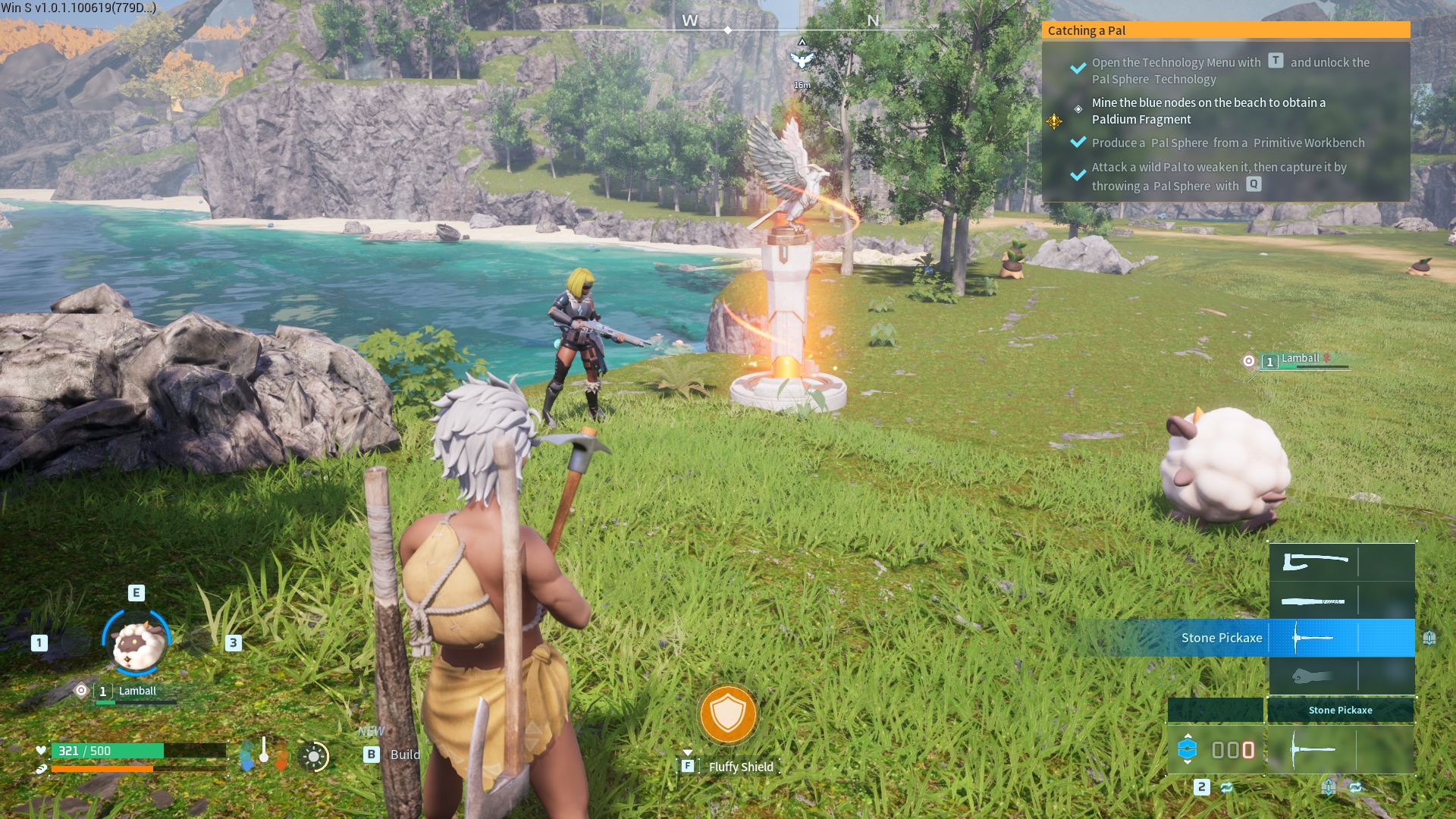
The game’s systems adapt surprisingly well to cooperative play because most objectives already encourage collaboration. Resource gathering becomes faster without feeling trivial, base management becomes less demanding and difficult encounters often require genuine teamwork instead of simply overwhelming opponents with larger numbers. Multiplayer also alleviates some of the repetition associated with large construction projects since responsibilities can be divided naturally among different players.
There are occasional drawbacks. Progression can feel uneven if one player advances significantly faster than others, and larger groups may find that certain challenges lose some of their intended difficulty. These issues are common across the genre rather than unique to Palworld, and they rarely outweigh the simple enjoyment of building and exploring alongside friends.
Final Verdict: 8.5/10
Version 1.0 fulfils the promise that Palworld hinted at from the very beginning. Rather than relying on the novelty of its premise, it succeeds because it combines several familiar genres into a progression loop that is consistently rewarding and surprisingly difficult to step away from. Exploration continually uncovers meaningful discoveries, creature collection serves practical purposes beyond simple completionism, automation transforms routine survival tasks into satisfying management puzzles and combat remains engaging thanks to its active, player-driven design.
The game is not without flaws. Base AI continues to require patience, dungeon design becomes repetitive over time, the story provides competent motivation rather than memorable drama and technical imperfections occasionally interrupt an otherwise smooth experience. None of these criticisms are insignificant, but neither do they overshadow the qualities that make Palworld such a compelling game. More often than not, frustration lasts only until the next expedition uncovers another rare Pal, another valuable resource or another corner of the world worth investigating.
Perhaps the clearest indication of the game’s success is that its original premise is no longer the most interesting thing about it. What initially attracted attention has gradually become one small part of a much larger package. Once the humour of seeing cartoon creatures manufacture assault rifles fades into the background, what remains is a remarkably accomplished survival game with an exceptional sense of progression, a rewarding approach to automation and an open world that consistently encourages exploration through curiosity rather than obligation.
Few games manage to combine so many interconnected systems without collapsing under their own ambition. Palworld occasionally stumbles, but it almost always keeps moving forward, rewarding players who invest time in understanding its many mechanics. Version 1.0 may not perfect every idea Pocketpair introduces, yet it confidently delivers on the experience the studio originally set out to create. It is no longer simply one of the most unusual survival games available on PC. It is one of the best.


