Indie games have a way of sneaking up on you. They arrive quietly, sometimes with a bizarre premise and a name that sounds like a joke, and then—before you realize it—they’ve occupied your entire weekend. Berry Bury Berry is one of those games. On paper, it sounds almost aggressively simple: you grow berries and throw them into a hole. That’s the loop. That’s the pitch. It sounds like a parody of modern progression design.
And yet, over the course of several hours, it becomes clear that Berry Bury Berry is more than a novelty. It’s a cleverly constructed incremental game wrapped in a tactile first-person sandbox, layered with an off-kilter tone that hovers somewhere between cozy and quietly unsettling. It’s not flawless, and it doesn’t pretend to be grand. But it is strangely compelling, and that compulsion is what ultimately defines the experience.
What makes it particularly interesting in the current PC landscape is how unassuming it is. There are no sweeping cinematic trailers, no sprawling open-world maps, no live-service ambitions. It feels closer to a handmade toy than a product engineered for maximum retention metrics. That sense of intimacy—of something designed by a small team with a specific, slightly odd vision—comes through in almost every aspect of the experience.

Visual Design and Atmosphere
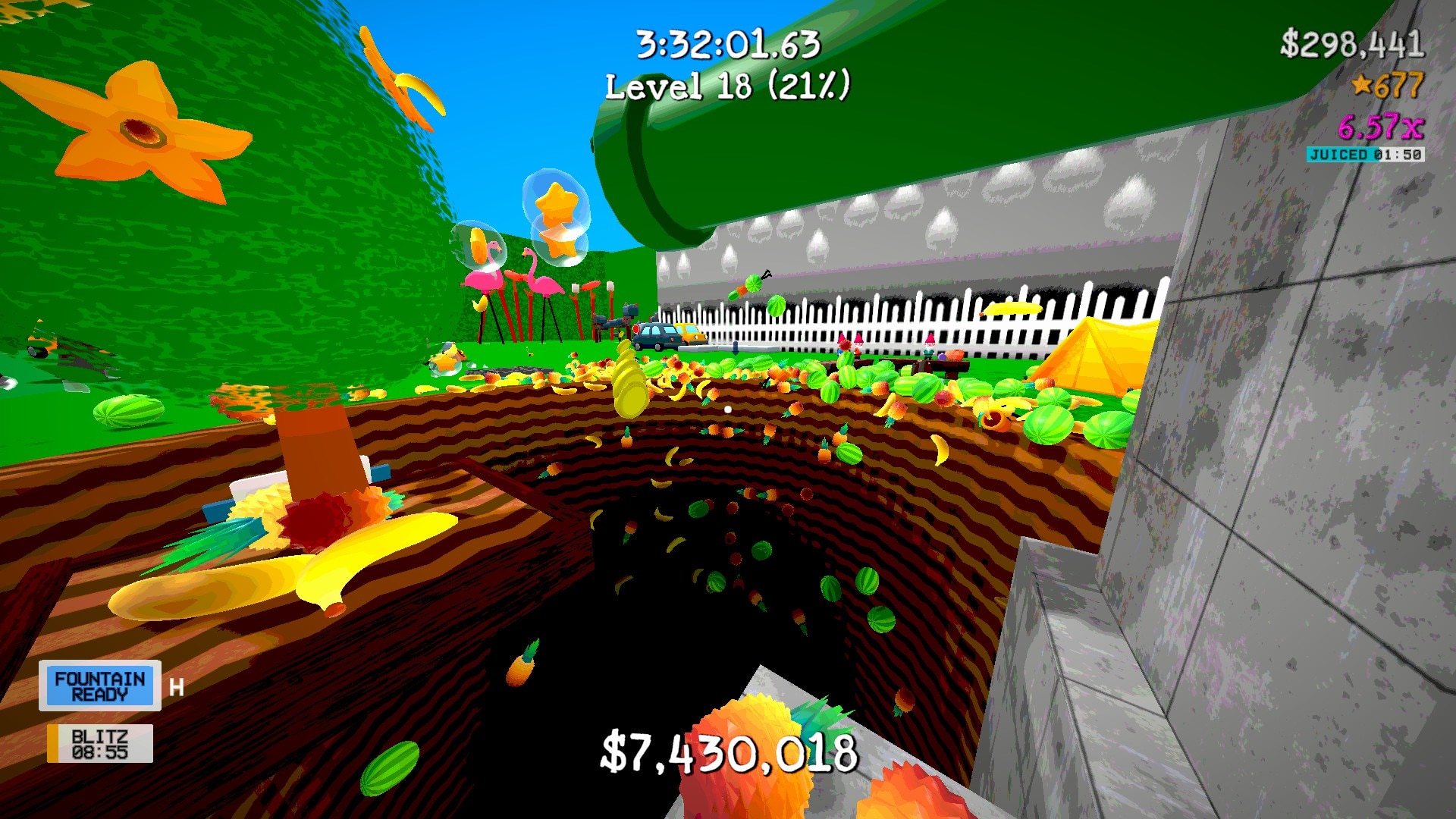
The first thing you notice about Berry Bury Berry is its color. The world is drenched in bold, saturated hues—electric greens, candy reds, sky blues that feel almost synthetic. The garden where you begin is small and toy-like, built with simple geometry and chunky shapes that evoke a handcrafted diorama. The berries themselves are glossy, rounded, and animated with a slight bounce that makes them feel oddly alive.
It’s charming, immediately so. There’s an innocence to the presentation that suggests a lighthearted farming diversion. You plant seeds, watch little sprouts emerge, and soon enough pluck bright fruit from the soil. The sound design reinforces the mood: soft chimes, gentle ambient hums, subtle rustling as plants sway.
Then there’s the hole.
It sits in the center of the garden like a contradiction. Vast, dark, and bottomless, it swallows the bright aesthetic whole. No matter how colorful the garden becomes, that void remains a stark absence—an interruption in the cheerful palette. The contrast isn’t overplayed, but it’s deliberate. It creates a tension that quietly drives the experience forward.
Lighting plays a subtle but important role here. The garden is perpetually bathed in a soft daylight that feels almost artificial, like a set under studio lamps. Shadows are gentle and rounded. But around the hole, the light falls away sharply. The edge is defined, but the interior offers no visual information. There’s no flicker, no glint at the bottom—just blackness. It’s a simple trick, but it’s effective. The hole doesn’t need animation or spectacle; its stillness makes it more unnerving.
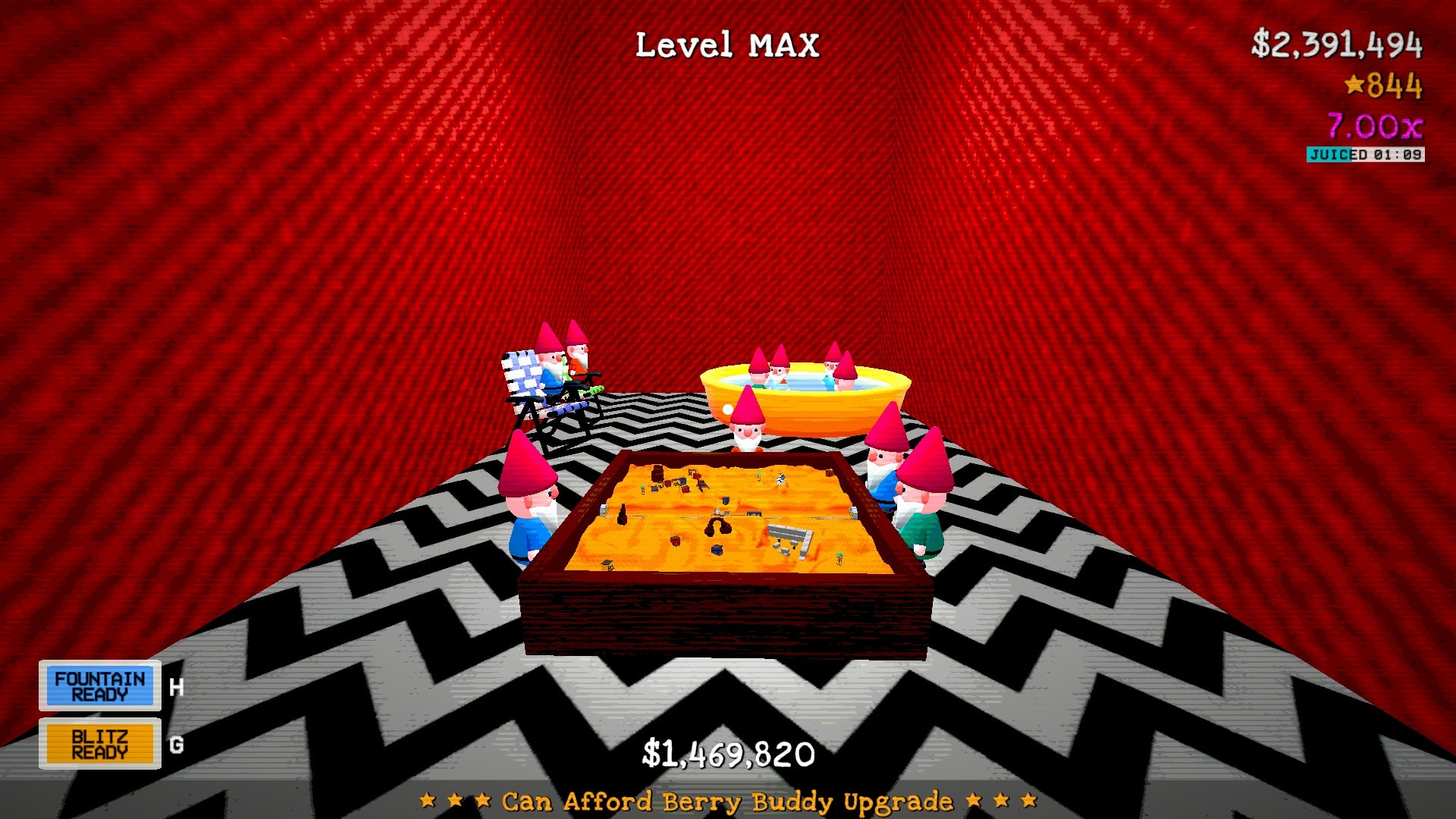
As your farm expands, the visual density increases. More patches of soil, more berry variants in different colors and shapes, more mechanical helpers scurrying about. The once minimal garden grows cluttered and lively. And yet, no matter how busy it becomes, the hole remains the focal point. It’s the gravitational center of the space.
That consistency of visual language gives the game a strong identity. It never abandons its aesthetic for flashy spectacle. Instead, it deepens what’s already there.
Gameplay and Mechanics
At its heart, Berry Bury Berry is an incremental game. The central loop is simple: plant berries, wait for them to grow, harvest them, and throw them into the hole. Each berry earns you currency. That currency funds upgrades, which allow you to grow berries faster, produce more valuable variants, or automate portions of the process.
What sets the game apart from typical idle or clicker experiences is perspective. Instead of managing abstract menus or clicking static icons, you exist physically in the world. You walk between soil patches, aim your throws, and watch the berries arc into the void. The act of tossing fruit isn’t just a button press—it’s a small physical interaction governed by light physics. A berry might bounce against the rim before tumbling in, or overshoot entirely if you’re careless.
That physicality adds a layer of engagement often missing from incremental design. It turns what could have been a passive loop into something tactile. Even after hours of play, there’s a minor but genuine pleasure in lining up a throw and hearing the satisfying plunk as a berry disappears. The slight unpredictability of the physics keeps it from feeling automated too early; you are still present, still participating, even when the numbers begin to climb.
The early game is especially well tuned. Growth times are short enough to maintain constant activity. New upgrades arrive frequently. Each purchase produces an immediate, visible difference. Faster sprouting animations. Additional planting rows. Slightly altered berry models that signal increased value. The feedback loop is tight and rewarding.
There’s also a careful escalation in complexity. You begin with a single berry type and a modest plot of land, but before long you’re juggling multiple strains with different growth rates and yields. Some mature quickly but offer lower returns; others take longer but dramatically increase income. The choice of what to plant and when introduces light strategy without overwhelming the player with spreadsheets or opaque systems.
As you progress, the game introduces additional systems that deepen the loop without overcomplicating it. Fertilizers modify yield. Specialized tools allow batch harvesting. Certain berry strains carry unique properties that alter how they interact with the hole. None of these mechanics are individually groundbreaking, but they layer together cohesively.

Midway through the game, automation systems begin to appear. Helper entities and devices reduce manual labor, shifting the experience from constant harvesting to oversight and optimization. This transition is well-handled, maintaining engagement while preventing fatigue from repetitive actions. Watching small assistants scurry between patches, plucking fruit and delivering it toward the center, gives the garden a sense of life that pure menu-based idle games lack.
Automation also changes your relationship to the space. Early on, you’re constantly moving—planting, plucking, throwing. Later, you find yourself standing back, observing systems operate. The garden begins to feel less like a field you toil in and more like a machine you’ve built. That transformation is subtle but satisfying. It mirrors the classic incremental arc: from manual labor to managerial oversight.
Importantly, the game avoids becoming completely hands-off. Even in the late stages, there are incentives to remain active. Certain upgrades reward manual throwing accuracy. Occasional bonuses trigger when you personally interact with specific berry types. These small nudges prevent the experience from devolving into pure passive waiting.
However, the pacing isn’t perfect. Around the midgame, upgrade costs begin to climb sharply. The thrill of constant improvement slows, and the grind becomes more pronounced. It never fully stalls, but there are stretches where progress feels incremental in the less flattering sense of the word. Players who thrive on constant novelty may find this period testing their patience.
There’s also a slight imbalance between manual skill and statistical progression. While the physics-based throwing remains enjoyable, it ultimately matters less than raw production output. By the late game, efficiency is determined almost entirely by upgrade investments rather than player dexterity. Some may see this as a missed opportunity to deepen mechanical mastery.
That said, the game’s restraint works in its favor. It doesn’t overload the player with convoluted subsystems or artificial complexity. Each new mechanic serves the central loop rather than distracting from it. The satisfaction comes not from mastering intricate controls, but from watching interlocking systems gradually amplify one another.
Still, the loop remains structurally sound. Numbers go up, systems layer on top of each other, and the satisfaction of expansion keeps the experience cohesive. What begins as a simple act—planting a single seed—eventually transforms into a carefully orchestrated cycle of growth, optimization, and surrender to the ever-hungry void at the garden’s center.
Narrative and Tone
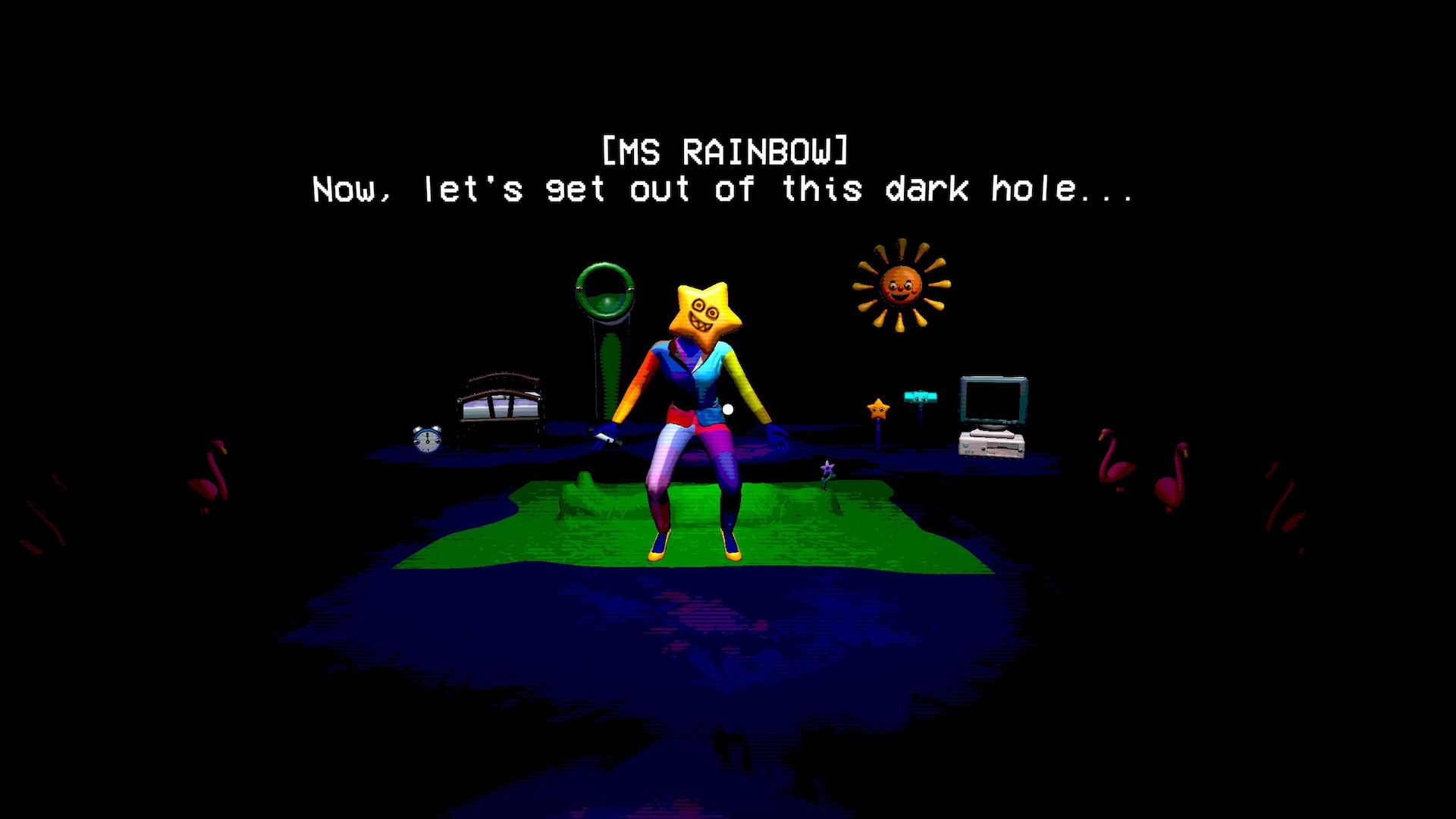
What elevates Berry Bury Berry beyond mechanical novelty is its subtle narrative layer. The story isn’t delivered through traditional cutscenes or heavy exposition. Instead, fragments emerge through environmental cues, scattered audio snippets, and small textual discoveries around the garden.
At first, these elements feel whimsical. The tone borders on absurdist humor. The writing has a dry, slightly offbeat cadence that matches the visual style. But as you continue, hints of something deeper surface. The hole becomes more than a gameplay objective; it feels symbolic. The act of feeding it, of dedicating your labor to this endless void, begins to take on quiet thematic weight.
The game never leans into overt horror, nor does it indulge in heavy philosophical monologues. Instead, it maintains ambiguity. Is the hole a metaphor? Is the garden a memory? Are you building toward something constructive or destructive? The game refuses to provide clear answers, and that restraint works in its favor.
There are moments—small ones—where the tone shifts just enough to unsettle. A line of dialogue that lands a little too close to home. An audio log that suggests prior attempts at the same task. A subtle change in ambient sound that makes the garden feel less secure. These shifts are measured and sparing, which makes them more effective.
Importantly, the narrative layer remains optional. You can ignore most of it and enjoy the incremental mechanics without feeling lost. But if you choose to engage, the story adds texture and resonance that linger beyond the closing credits.
Progression and Replayability
Unlike many incremental games that simply continue indefinitely, Berry Bury Berry builds toward defined endings. Your choices, upgrades, and level of exploration influence how the story resolves. Multiple endings encourage experimentation and replay.
This design choice gives purpose to the grind. Instead of endlessly inflating numbers, you’re working toward a tangible conclusion. The presence of branching outcomes also deepens the mystery, as different paths reveal different narrative fragments.
The structure of these endings is thoughtful. They don’t feel like arbitrary switches flipped at the last moment. Rather, they reflect how you engaged with the systems throughout the game. A player who leans heavily into optimization and maximization may encounter a different resolution than someone who explores more cautiously.
Replay value is further supported by the game’s compact runtime. A single focused playthrough can be completed in a handful of evenings, making the idea of starting again less daunting. Each return feels informed by prior knowledge. You move more efficiently, plan upgrades more strategically, and notice narrative hints you may have overlooked.
For completionists, the game offers a satisfying amount of content without overstaying its welcome. A thorough playthrough can stretch comfortably into double-digit hours, especially if you pursue every upgrade and achievement.

Technical Performance
On PC, performance is generally stable. The art style’s simplicity helps maintain smooth frame rates across a wide range of hardware. Load times are short, and the interface is clean and readable. Control customization is adequate, though not extensive. Keyboard and mouse feel natural for movement and interaction. Controller support exists, but it’s clear the experience was designed primarily with mouse aiming in mind.
There are minor quirks. Movement can feel slightly floaty at first, requiring a brief adjustment period. Occasionally, physics interactions behave unpredictably, though rarely in ways that disrupt progress. These imperfections feel more like the edges of a small indie project than serious flaws.
The user interface deserves mention for its restraint. Upgrade menus are straightforward, with clear cost indicators and concise descriptions. The game avoids cluttering the screen with excessive metrics, instead allowing the world itself to communicate progress visually.
The soundtrack remains understated, looping gently without becoming repetitive or intrusive. The ambient audio around the hole, in particular, subtly reinforces the game’s tonal tension. It’s not a score you’ll necessarily remember track by track, but it supports the experience effectively.
Strengths and Weaknesses
What makes Berry Bury Berry work is cohesion. The mechanics, aesthetic, and narrative all support one another. The game knows exactly what it is: a strange little loop about growth, labor, and feeding a void. It doesn’t inflate itself with grand ambition, nor does it dilute its concept with unnecessary complexity.
Its greatest strength is how tactile and grounded the incremental design feels. Being physically present in the world transforms abstract progression into something concrete.
Another strength lies in tone. The balance between charm and unease is handled with restraint. The game never winks too hard at the player, nor does it collapse into self-seriousness. It trusts its concept.
Its primary weakness lies in pacing. The midgame slowdown risks diminishing momentum, and while automation alleviates some repetition, the grind can occasionally feel pronounced. Additionally, players seeking deep mechanical complexity may find the systems relatively straightforward.
Even so, the game’s brevity and personality offset those shortcomings. It rarely drags long enough to become tedious.
Final Verdict: 7.5/10
Berry Bury Berry is an unusual success. It takes a premise that borders on absurd and turns it into a cohesive, oddly affecting experience. It blends idle progression with physical interaction, wraps it in bright, playful visuals, and anchors it all with a subtle thread of narrative unease.
It won’t appeal to everyone. Players who dislike incremental systems may find its core loop too repetitive. Those seeking fast-paced action will likely look elsewhere. But for anyone curious about how a simple mechanic can be elevated through tone and smart design, Berry Bury Berry is worth attention.
It’s small, strange, occasionally slow, and unexpectedly memorable. Long after you’ve stopped planting and throwing fruit into the void, you may find yourself thinking about that garden—and the quiet satisfaction of watching something grow, only to let it go.