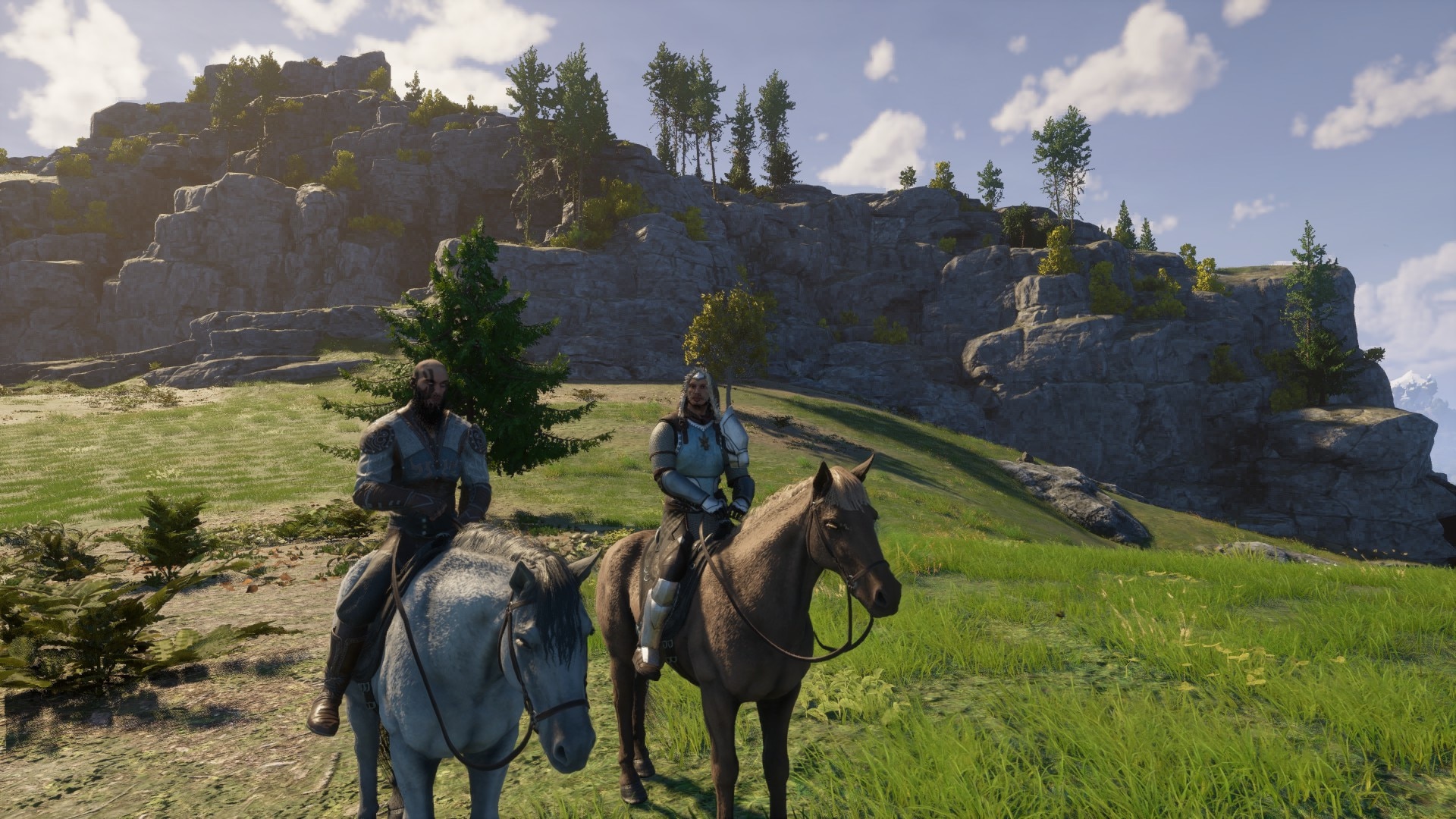
Ashes of Creation is a large-scale MMORPG developed by Intrepid Studios with the explicit goal of reimagining how persistent online worlds function. Rather than adhering to the theme-park conventions that have dominated the genre—where content is static, progression is predictable, and player actions rarely have lasting consequences—the game proposes a systemic alternative built around dynamic world evolution and social interdependence.
At its core, Ashes of Creation is designed as a long-term virtual world rather than a curated experience. Progression is not merely a personal journey but a collective one, shaped by thousands of individual decisions that aggregate into regional development, political hierarchies, and economic ecosystems. The game’s systems encourage players to think beyond efficiency and optimization, instead rewarding organization, cooperation, rivalry, and long-term planning.
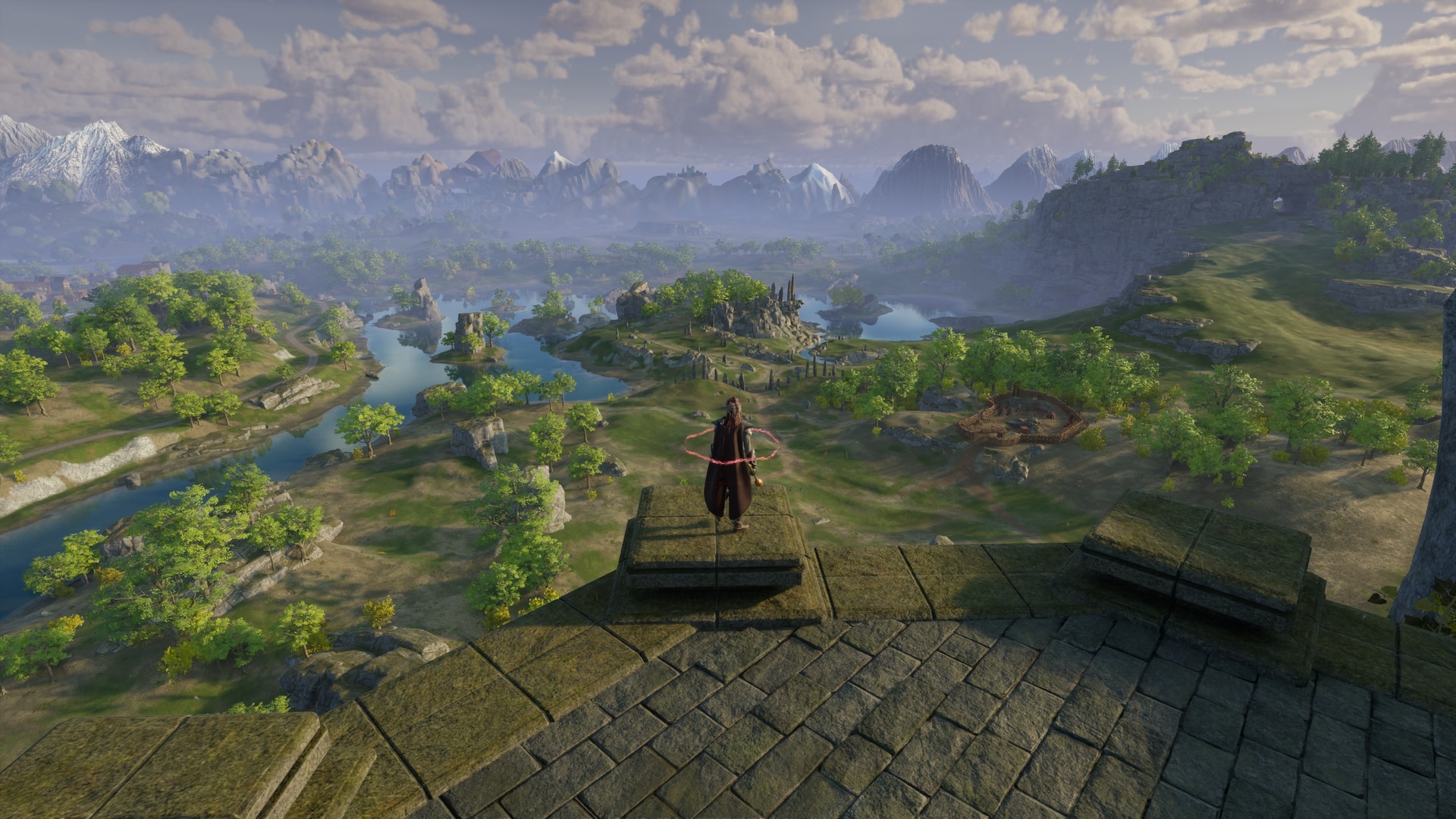
This approach places Ashes of Creation closer to early sandbox MMORPG philosophies than to modern accessibility-driven designs. While this creates a distinctive identity, it also introduces friction—both mechanical and social—that may not appeal to all players. In its current Early Access state, the game exists as a partially realized vision, demonstrating both the strengths of its foundational ideas and the challenges inherent in executing them at scale.
World Design and the Node System
The defining feature of Ashes of Creation is its node system, a world progression framework that governs nearly every aspect of environmental, political, and economic development. The game world is divided into hundreds of nodes, each representing a region capable of evolving through multiple developmental stages—from undeveloped wilderness to thriving metropolis.
Node advancement is driven entirely by player activity within a node’s zone of influence. Combat, questing, crafting, trade, and exploration all contribute to a node’s growth. As nodes progress, they unlock new content and functionality: NPC services expand, housing becomes available, dungeons and raids open, and political systems such as mayoral elections come into play.
A critical aspect of this design is node competition. Nodes do not exist in isolation; the advancement of one node can suppress or even regress neighboring nodes, creating strategic tension across the world map. This ensures that not every server will develop identically, and that meaningful choices must be made regarding where to invest time and resources.
In practice, the node system creates emergent narratives that are largely absent from static MMO worlds. Player-driven alliances, rivalries, and conflicts naturally arise as groups compete for regional dominance. However, the system also introduces balance challenges. Highly organized guilds can exert disproportionate influence, particularly in early development stages, and ensuring that smaller groups retain agency will be a key design challenge moving forward.
Gameplay and Combat
Combat in Ashes of Creation utilizes a hybrid system that blends traditional tab-target mechanics with action-based elements. This design aims to balance strategic clarity with physical engagement, allowing for both deliberate ability usage and more dynamic movement-based interactions.
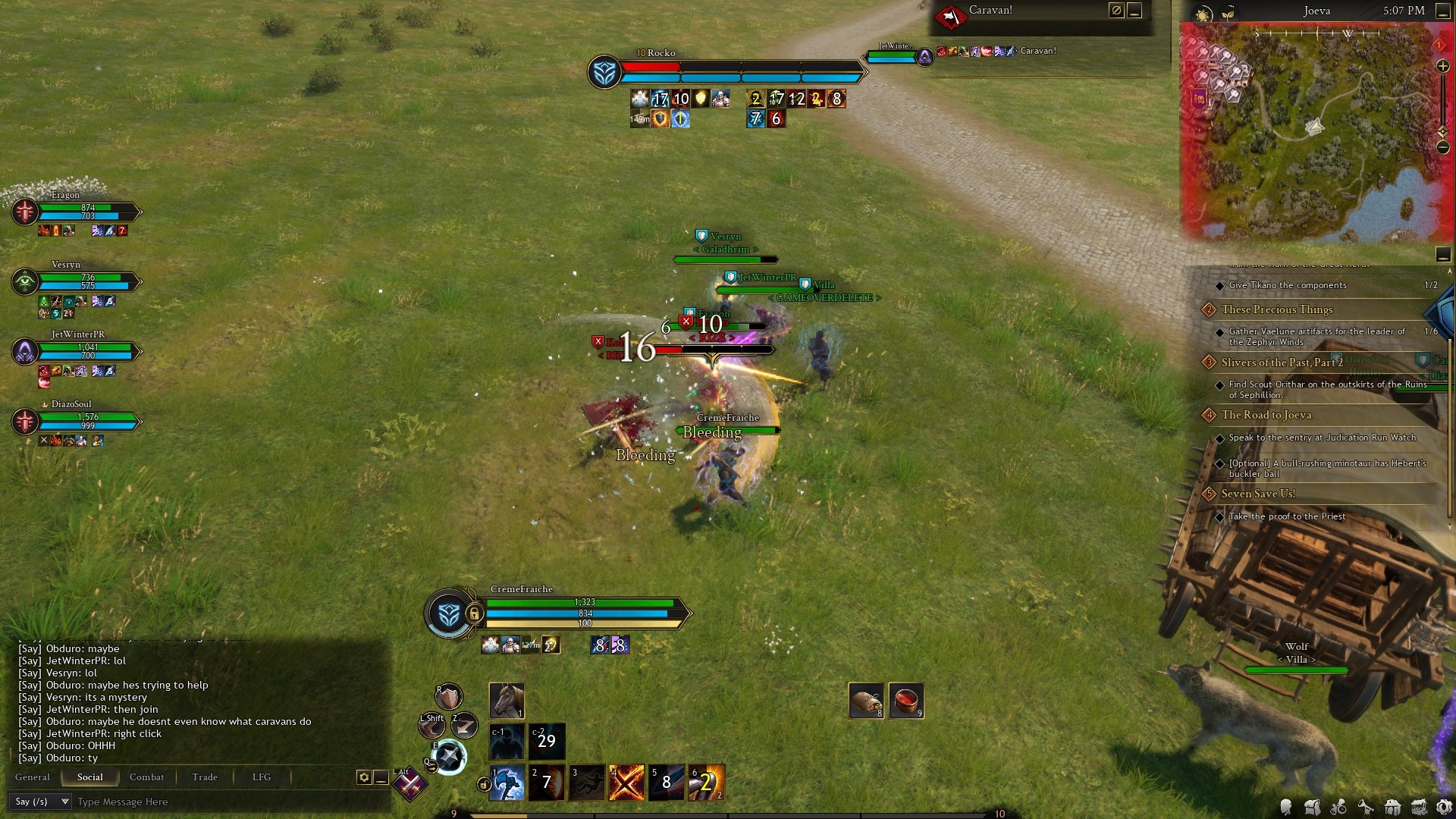
In smaller-scale PvE encounters, combat feels methodical and readable. Ability cooldowns, positioning, and role execution are clearly communicated, reinforcing classic MMORPG combat fundamentals. In contrast, large-scale engagements—particularly PvP-heavy encounters—can become visually dense and mechanically overwhelming, highlighting areas where feedback and responsiveness require further refinement.
Character progression is structured around archetypes, which define a character’s foundational role and abilities. Archetypes are intended to be flexible yet distinct, encouraging specialization without rigidly locking players into narrow playstyles. This system supports experimentation and long-term character development, though balance disparities between archetypes are still evident in the current build.
As with many alpha-stage MMOs, combat tuning remains ongoing. While the core framework is sound, further iteration will be necessary to ensure that combat remains engaging and fair across all scales of play.
PvP, Sieges, and Social Systems
Player conflict is deeply embedded in Ashes of Creation’s design philosophy. PvP is not a side activity but a systemic force that shapes world progression, political control, and economic flow. Open-world PvP, caravan raids, node wars, and large-scale sieges all contribute to a persistent state of tension within the game world.
Sieges represent the apex of this design. These events allow players to challenge developed nodes, potentially overthrowing leadership and altering the political and economic landscape. Unlike instanced PvP modes, sieges have lasting consequences, reinforcing the game’s commitment to meaningful player agency.
These systems succeed in fostering a sense of consequence and investment. Social structures—guilds, alliances, rival factions—become essential tools for survival and success. However, the reliance on collective organization may present accessibility challenges for players who prefer solo or small-group play. Balancing inclusivity with systemic depth will be a critical consideration as development continues.
Economy, Crafting, and Progression
The economy in Ashes of Creation is designed to be fundamentally player-driven. Crafting is not a secondary system but a cornerstone of progression, with high-quality gear, construction projects, and logistical operations all dependent on player production.
Caravans serve as a physical representation of economic risk and reward. Transporting goods between nodes exposes players to potential PvP encounters, creating opportunities for both cooperation and conflict. This system reinforces the game’s emphasis on interdependence and territorial control.
In its current state, the economy is intentionally unstable. Frequent balance changes, system revisions, and wipes limit long-term accumulation. However, the underlying structure suggests a robust framework capable of supporting specialization, trade networks, and economic stratification once the game reaches a more stable phase.
Technical Performance and Presentation
Visually, Ashes of Creation presents a cohesive and expansive world. Environmental design emphasizes scale and variety, with biomes and architecture that evolve alongside node progression. The game’s visual identity supports its thematic focus on civilization-building and conflict, even if it does not push graphical boundaries beyond contemporary standards.
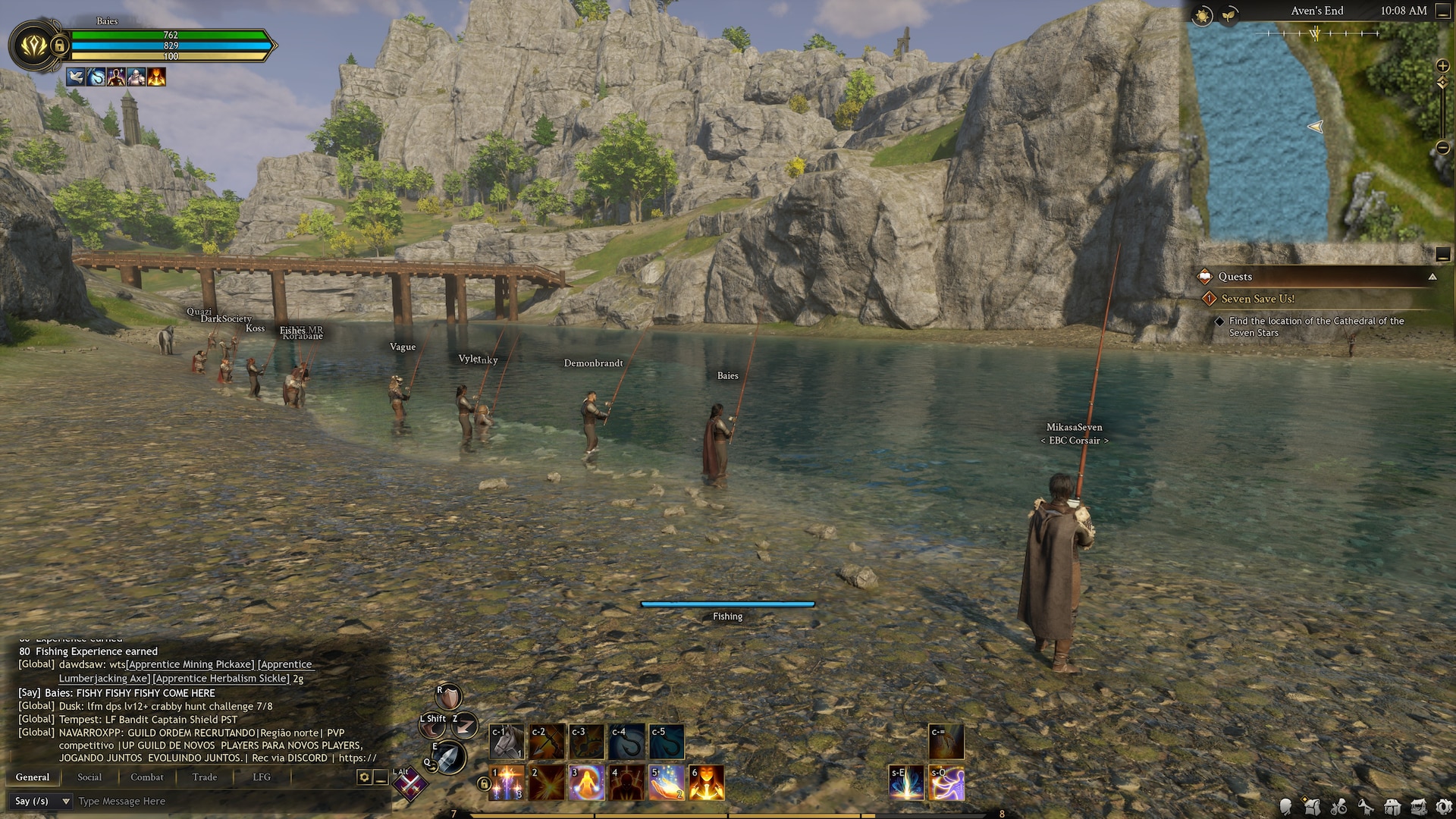
Technical performance remains inconsistent, particularly during large-scale events. Server strain, latency, and bugs are present, reflecting the complexity of simulating a dynamic world with high player density. User interface and quality-of-life features are functional but understated, prioritizing utility over refinement.
These issues are not unexpected given the game’s development stage, but addressing them will be essential as the project moves toward broader testing phases.
Development Approach and Transparency
Intrepid Studios has adopted a notably transparent development approach. Regular livestreams, public testing phases, and detailed patch notes provide insight into both progress and challenges. This openness has cultivated a highly engaged community and allows for iterative refinement based on player feedback. However, transparency also amplifies pressure. The ambitious scope of Ashes of Creation has generated significant expectations, and incremental progress can feel slow when measured against the project’s long-term vision.
Monetization and Long-Term Outlook
The studio has stated that monetization will focus on cosmetic items, avoiding pay-to-win mechanics. This aligns with genre standards and helps preserve competitive integrity. Discussions around cosmetic scope and pricing remain ongoing, reflecting the community’s investment in the game’s long-term health.
A subscription-based model has been discussed for full release, positioning Ashes of Creation alongside traditional MMORPGs rather than free-to-play alternatives. The success of this approach will depend on content cadence, technical stability, and the perceived value of the evolving world.
Final Verdict: 6/10
Ashes of Creation represents one of the most ambitious MMORPG projects currently in development. Its node-based world design, emphasis on emergent gameplay, and integration of PvE and PvP systems reflect a deliberate effort to move beyond static MMO conventions.
In its current Early Access state, the game functions as a foundation rather than a complete experience. Technical instability, balance challenges, and incomplete systems are present, but they coexist with genuinely innovative ideas that distinguish the project from its contemporaries.
If Intrepid Studios succeeds in refining and scaling its core systems, Ashes of Creation has the potential to become a defining title within the MMORPG genre. For now, it stands as a compelling experiment—one that rewards patience, curiosity, and a willingness to engage with an evolving virtual world.