Terminator 2D: No Fate is a retro-inspired action title that adapts Terminator 2: Judgment Day into a 16-bit-style side-scroller. Developed by Bitmap Bureau, the game positions itself as both a nostalgic homage to classic arcade action and a faithful retelling of one of cinema’s most iconic science-fiction films. Rather than attempting to modernize its source material or reinterpret it through contemporary design conventions, No Fate fully commits to its old-school identity, embracing the structure, pacing, and challenge of early 1990s arcade and console games.
This commitment is immediately apparent in how the game frames its objectives and expectations. Players are not guided by extensive tutorials or layered onboarding systems; instead, the design trusts familiarity with genre conventions and rewards experimentation through play. This philosophy aligns closely with the era the game seeks to evoke, where mastery emerged from repetition rather than instruction. As a result, No Fate feels purpose-built for players who appreciate directness and clarity over accessibility-driven handholding.
The game is deliberately compact, mechanically straightforward, and focused on moment-to-moment action. It does not seek to expand the narrative beyond what fans already know, nor does it attempt to layer complex systems on top of its core mechanics. Instead, it aims to deliver a concentrated slice of retro action that feels authentic both to Terminator 2 and to the era of gaming it draws inspiration from. The result is a focused, visually striking, and mechanically disciplined experience that prioritizes authenticity and arcade sensibilities over scale or innovation.
Importantly, this focus gives the game a strong sense of identity. By narrowing its ambitions, No Fate avoids the dilution that often affects retro-inspired titles that attempt to merge too many modern elements into a classic framework. What remains is a clear creative vision that values precision, tone, and respect for its source material.
Presentation and Audio
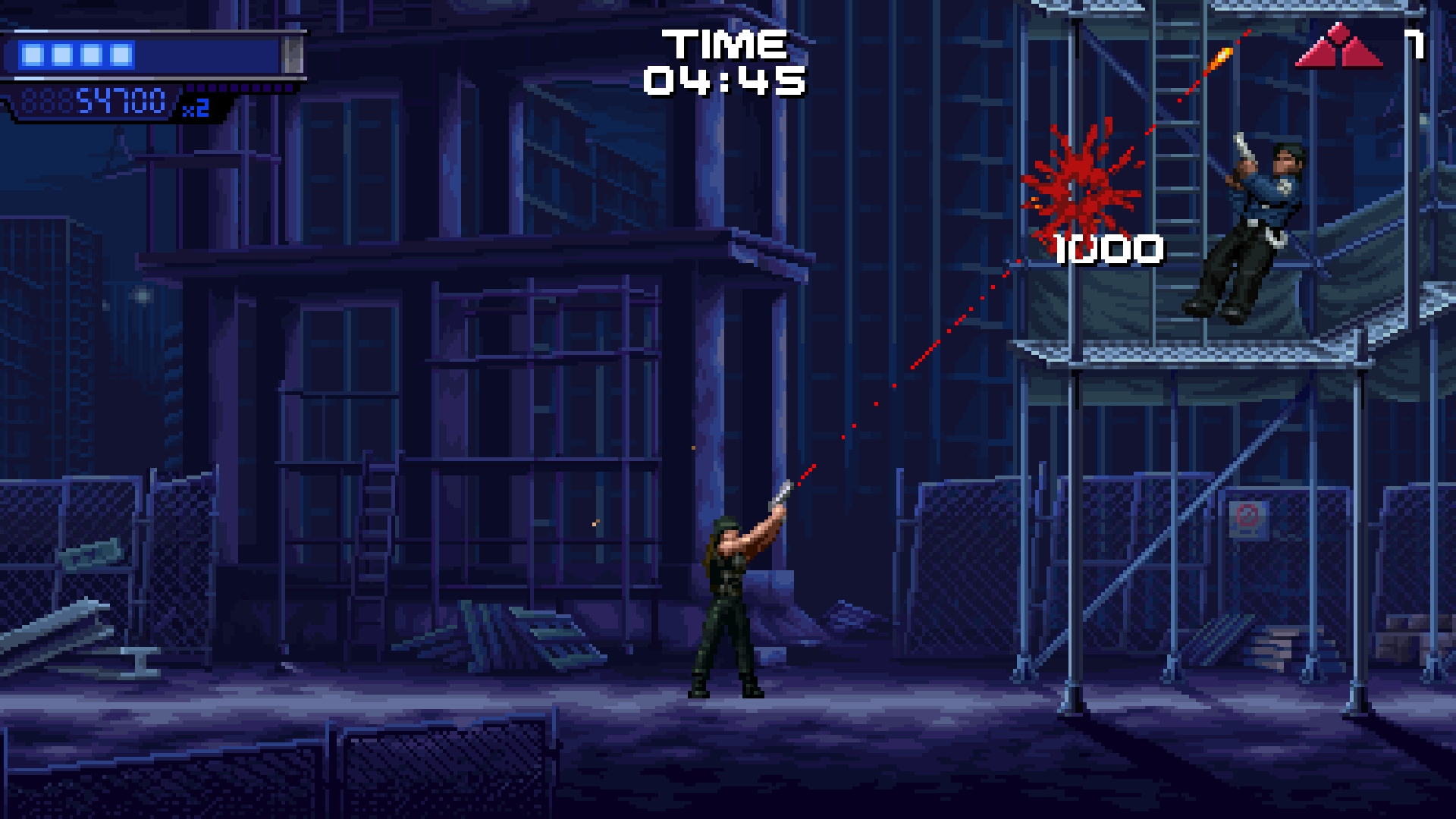
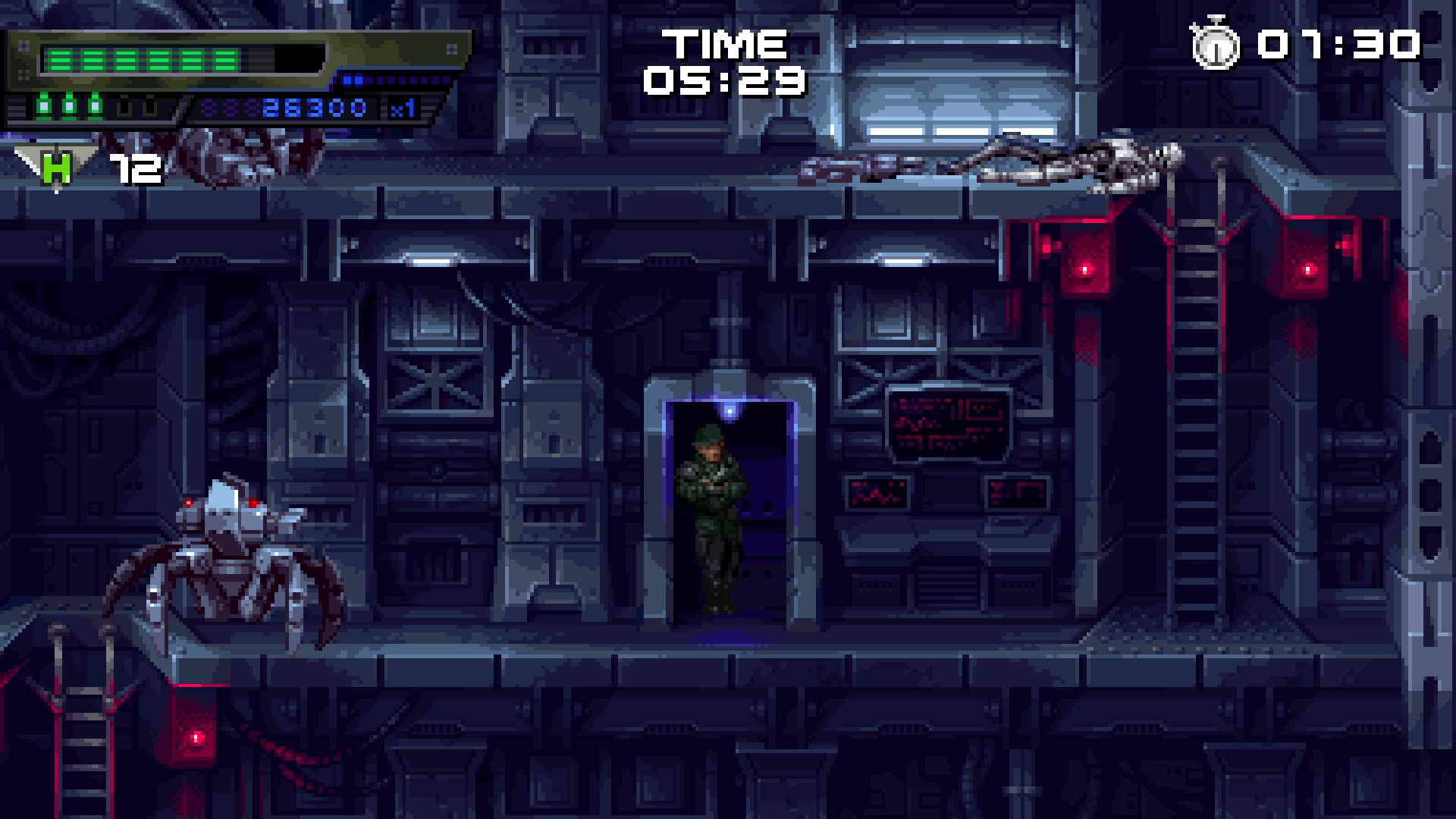
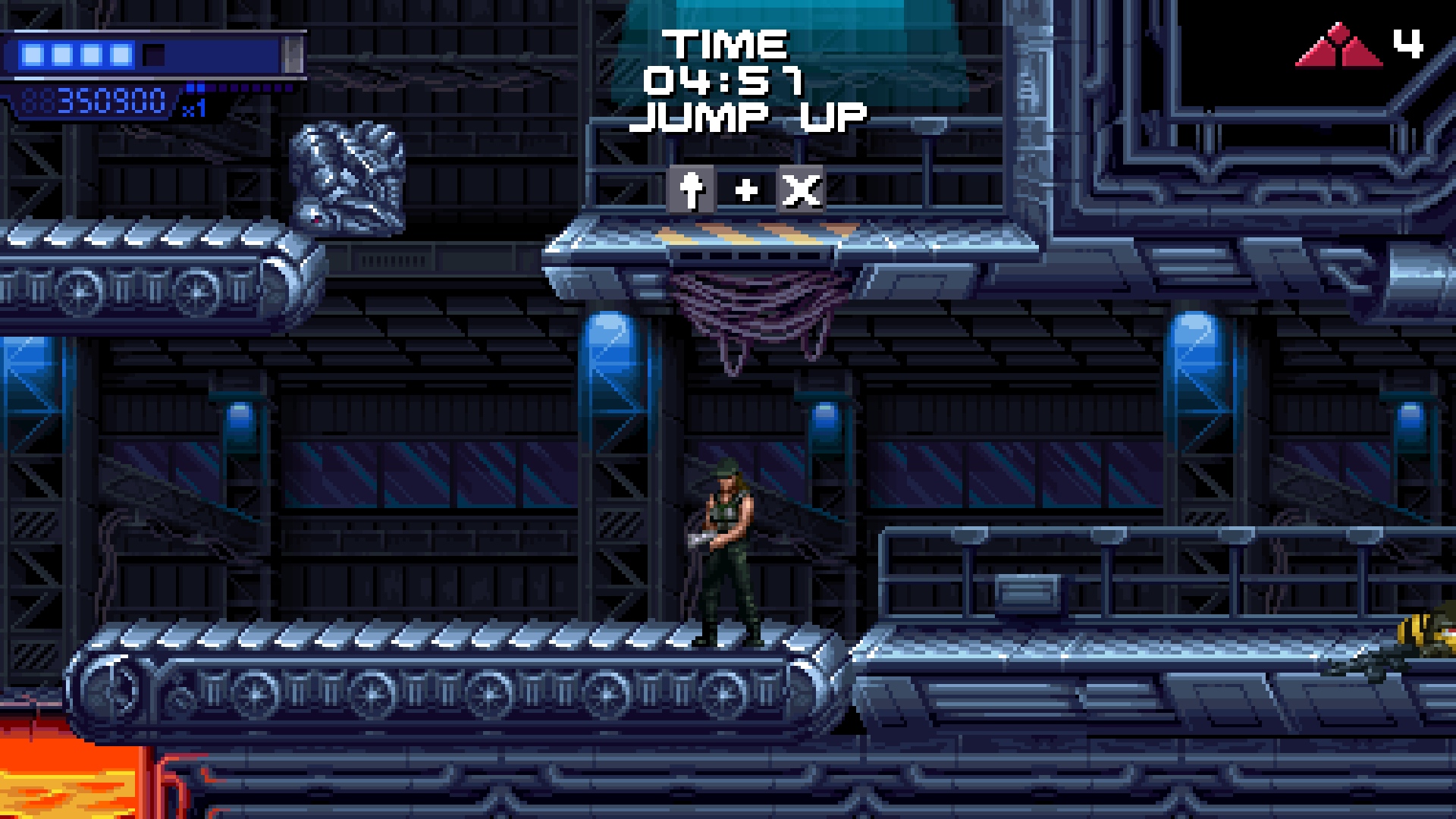
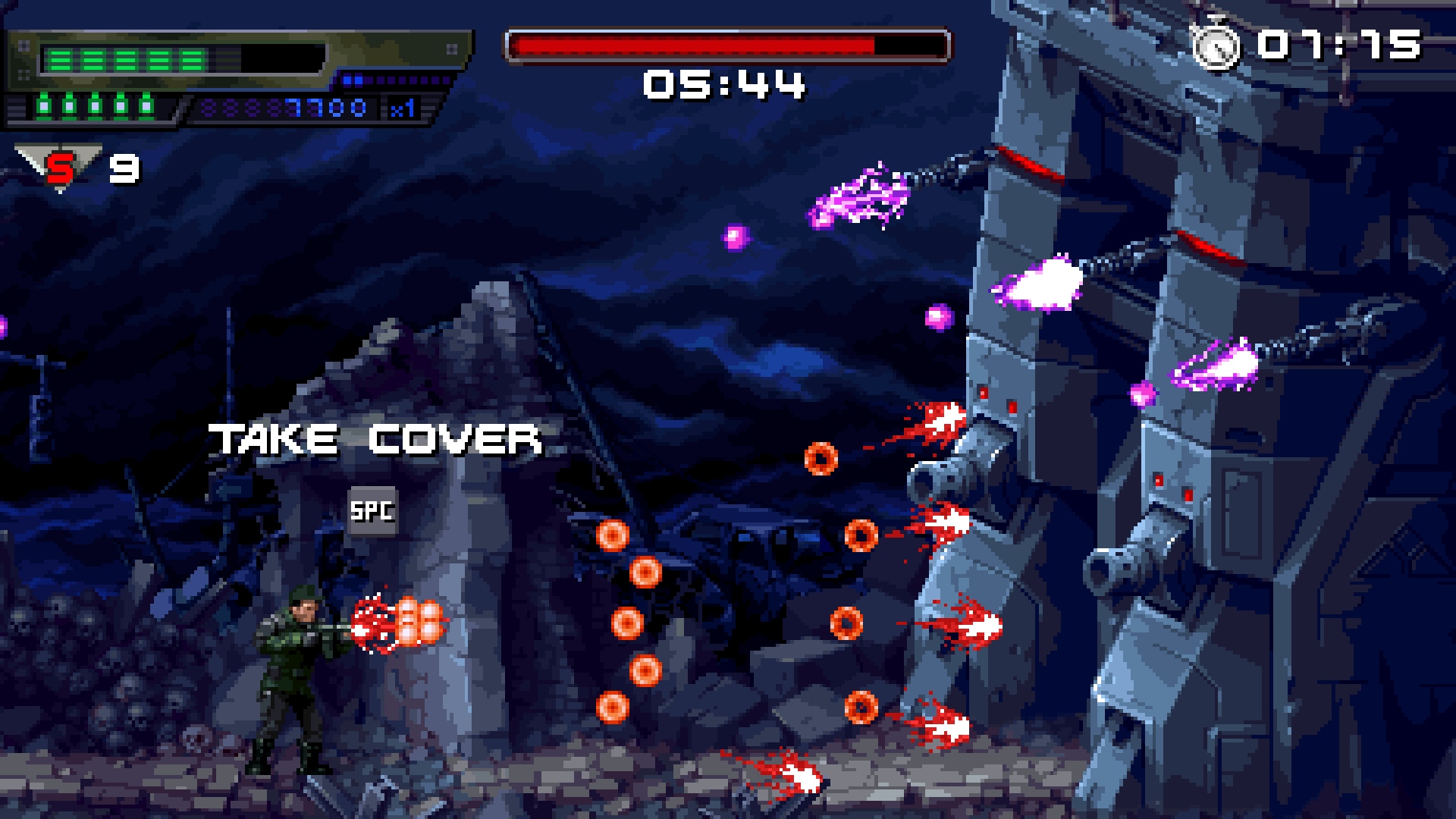
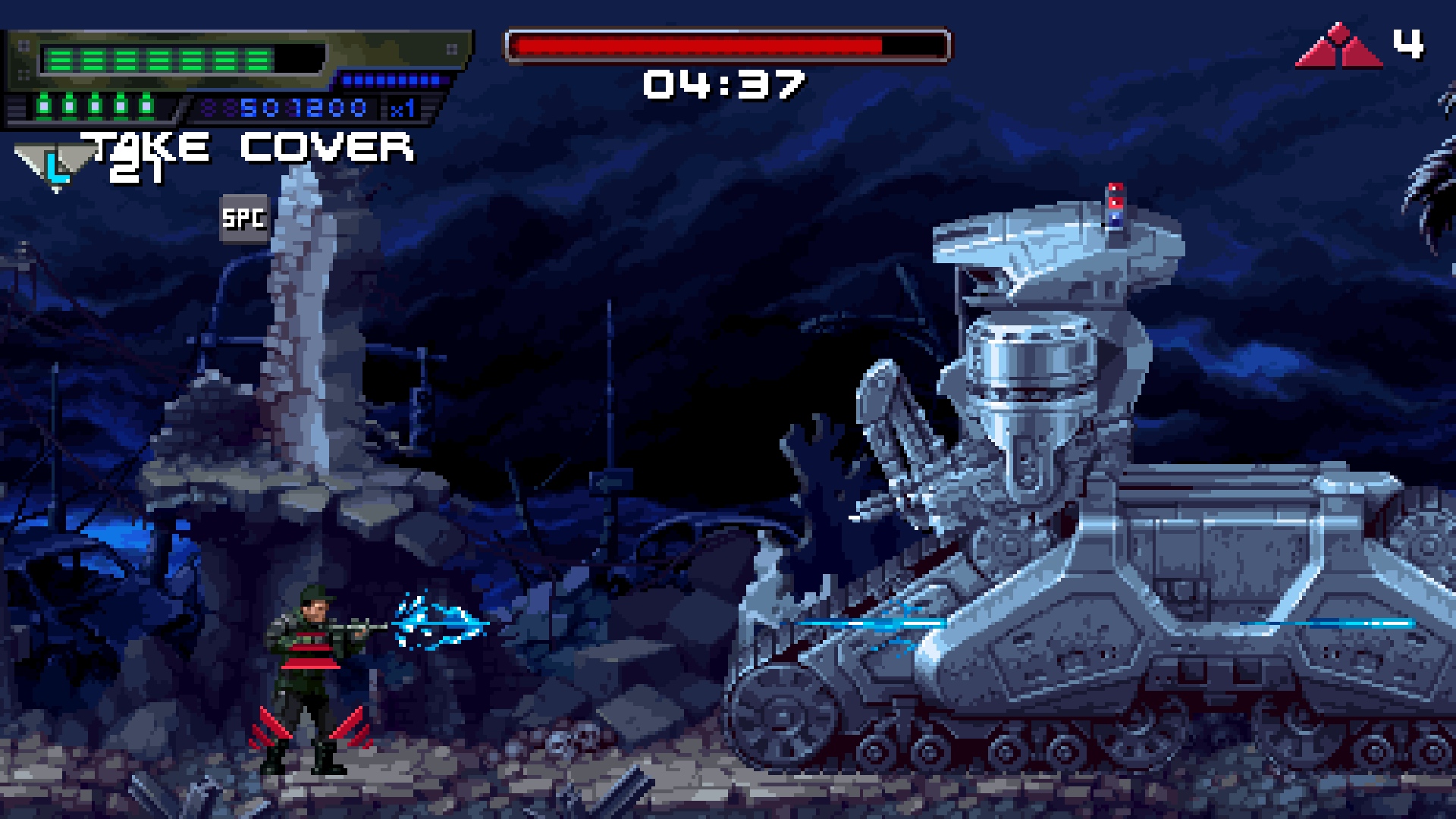
From the moment it begins, No Fate demonstrates a strong command of pixel art and visual composition. The game’s 16-bit aesthetic is not merely a stylistic filter but a carefully executed design choice. Character sprites are detailed and readable, with clear silhouettes that support fast-paced action, while environments are layered with depth and subtle animation that prevents stages from feeling static or flat. Iconic locations from the film are translated effectively into pixel form, maintaining their identity even when viewed from a side-on perspective.
The attention to environmental detail is particularly noteworthy. Background elements frequently move or animate independently of the foreground, lending scenes a sense of life and mechanical momentum. Industrial settings pulse with activity, urban spaces feel convincingly dense, and darker interiors use lighting and contrast to reinforce tension. These visual touches elevate the presentation beyond simple homage and demonstrate a high level of craft.
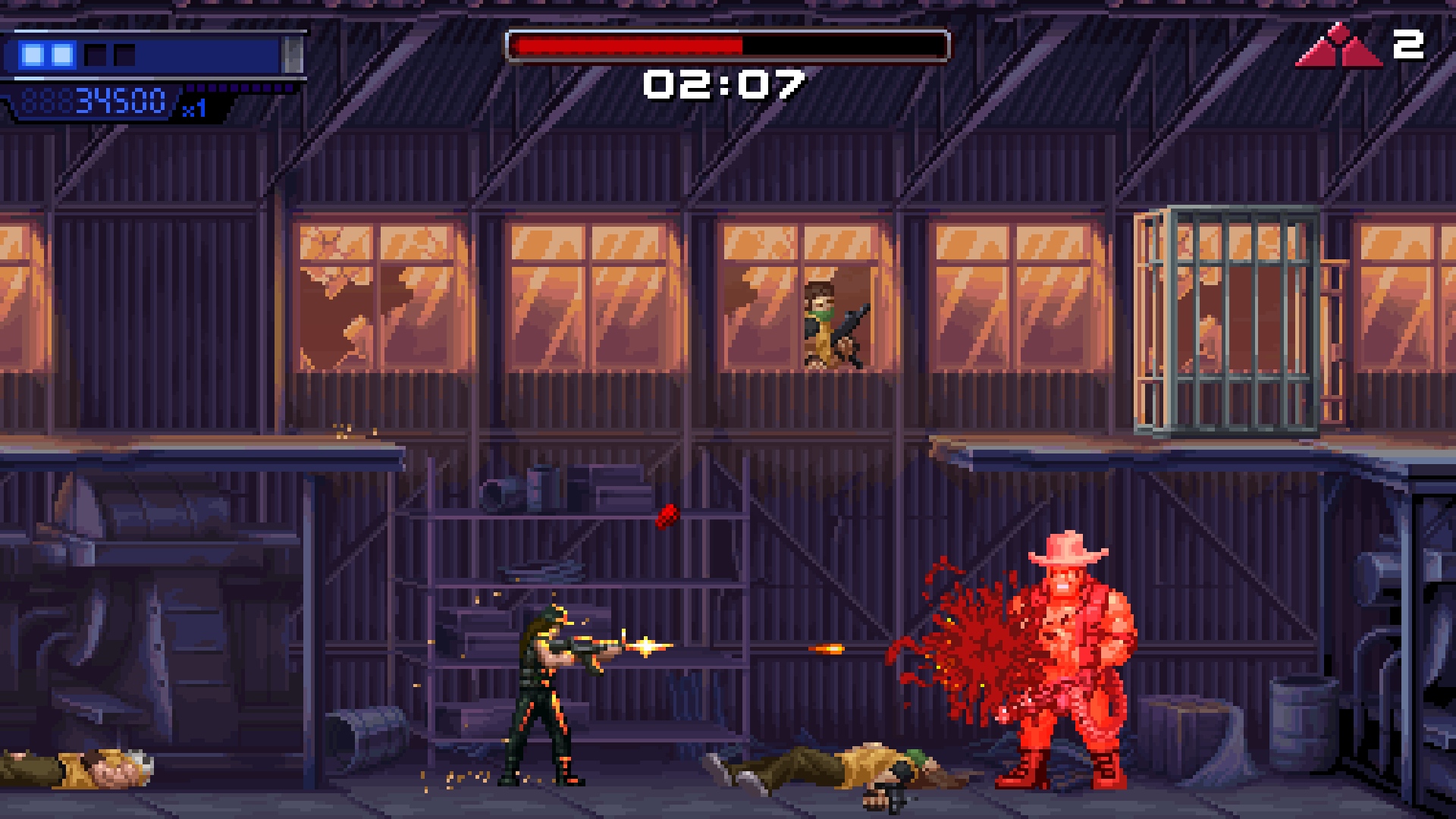
Animation quality is particularly notable. Character movements, weapon recoil, enemy reactions, and environmental effects are smooth and expressive without becoming overly elaborate. This restraint ensures that visuals serve gameplay clarity first, a crucial element in a genre where split-second reactions matter. Visual effects such as muzzle flashes, explosions, and sparks are impactful but never obscure player visibility, reinforcing the game’s disciplined design philosophy.
The audio presentation complements the visuals well. The soundtrack relies heavily on synthesizer-driven compositions that echo the mood and tonal intensity of Brad Fiedel’s original film score without directly reproducing it. These tracks maintain tension during combat and underscore quieter, more suspense-driven moments, helping the game preserve the serious tone of its source material. Sound effects are crisp and satisfying, with weapon fire carrying weight and mechanical enemies producing appropriately metallic impacts. Together, the visuals and audio create a cohesive atmosphere that feels authentic, polished, and respectful of the franchise.
Gameplay
At its core, Terminator 2D: No Fate is a traditional side-scrolling run-and-gun action game. Players take control of key characters such as the T-800 and Sarah Connor, moving horizontally through stages while dispatching enemies, navigating hazards, and reacting to tightly scripted encounters. The fundamental mechanics are immediately familiar to anyone with experience in classic action games, and the controls are responsive from the outset.
Weapon handling feels intentionally weighty, with each firearm offering a distinct rhythm and utility. Ammunition management, while not overly restrictive, encourages situational awareness rather than indiscriminate firing. Enemy behavior reinforces this design, as foes often attack in coordinated patterns that punish careless positioning. This interplay between weapons and enemy design ensures that combat remains engaging even without mechanical complexity.
What prevents the gameplay from becoming monotonous is the way the campaign introduces variety in pacing and structure. While shooting remains the primary interaction, the game frequently shifts emphasis depending on the scenario being portrayed. Certain sections focus more heavily on close-quarters combat, encouraging a beat-’em-up rhythm, while others slow the pace and emphasize careful movement, positioning, and avoidance. Vehicle-based segments further diversify the experience, introducing different control schemes and spatial awareness challenges without overstaying their welcome.
These shifts are integrated smoothly into the overall flow of the campaign. Rather than feeling like disconnected mini-games, they function as extensions of the core mechanics, reinforcing narrative context while maintaining player engagement. This balance between variation and consistency is one of the game’s quiet strengths.
The design of enemy encounters is deliberate and readable. Enemy placement, attack patterns, and environmental hazards are arranged in ways that reward observation and learning rather than brute-force reflexes alone. As the game progresses, challenges escalate naturally, requiring greater precision and familiarity with enemy behavior. Importantly, the game avoids unnecessary complexity. There are no sprawling skill trees or layered upgrade systems; the focus remains squarely on execution, timing, and mastery of the available tools. This adherence to classic design principles reinforces the arcade feel, though it may feel restrictive to players accustomed to modern action frameworks.
Difficulty and Length
No Fate is unapologetically challenging, particularly on higher difficulty settings. Enemy density increases steadily, projectiles demand careful positioning, and mistakes are punished quickly. Checkpoints are placed thoughtfully but sparingly, reinforcing tension and encouraging players to engage with each section deliberately rather than rushing through encounters.
The difficulty curve is consistent and predictable, which is crucial for maintaining player motivation. Early stages introduce mechanics and enemy types gradually, allowing players to build confidence before the game begins to demand tighter execution. Later stages test mastery rather than introducing sudden spikes, ensuring that progression feels earned.
Despite its difficulty, the game is generally fair. Deaths are typically the result of player error rather than unclear design, and the consistent ruleset allows improvement through repetition and memorization. This design ethos will resonate strongly with players who appreciate skill-based challenges and the satisfaction of overcoming demanding sequences.
In terms of length, the campaign is relatively short by modern standards. Experienced players may complete it in a few focused sessions, and even first-time players are unlikely to find it lengthy. While replay value exists through difficulty settings and the pursuit of cleaner runs, there is limited additional content beyond the core campaign. The game is concise, tightly paced, and avoids filler, but those seeking a longer or more expansive experience may find it brief.
Faithfulness to the Film
The adaptation of Terminator 2: Judgment Day is handled with restraint and respect. Story beats are conveyed through concise cutscenes and in-game moments that prioritize pacing over exposition. Key scenes and character dynamics are recognizable without relying heavily on dialogue, allowing the action to carry much of the narrative weight.
Rather than attempting to recreate the film scene-for-scene, the game selectively interprets its most memorable moments in ways that suit the medium. This approach preserves narrative coherence while allowing gameplay to remain the primary focus. Fans of the film will recognize these moments instantly, but the game does not depend on familiarity to remain engaging.
Character portrayals remain faithful to their film counterparts, and the game maintains a serious, grounded tone throughout. Notably, it avoids parody or excessive nostalgia-driven humor, choosing instead to preserve the intensity and thematic weight of the original film. This approach strengthens the adaptation, making it feel like a genuine extension of the T2 universe rather than a novelty tie-in.
Final Verdict: 9/10
Terminator 2D: No Fate is a confident, technically polished retro action game that understands its identity and its audience. It does not attempt to reinvent the genre or expand beyond its arcade roots, nor does it dilute its vision with unnecessary modern systems. Instead, it delivers a compact, challenging, and visually impressive experience that feels authentic to both Terminator 2 and classic 16-bit action design.
Its strengths lie in focus, craftsmanship, and tonal consistency. Every design decision reinforces the game’s core objective: to recreate the feel of a lost-era arcade adaptation while meeting modern expectations for responsiveness and polish. While its brevity and lack of modern progression systems may limit its appeal to a broader audience, these same qualities will resonate strongly with players who value disciplined design and purposeful restraint.
For fans of retro games and the Terminator franchise, this is a strong and respectful adaptation that succeeds through clarity and execution. Players seeking lengthy campaigns, extensive progression systems, or modern action complexity may find it limited, but for those who appreciate arcade-style challenge and faithful presentation, No Fate offers a tightly constructed and memorable experience.