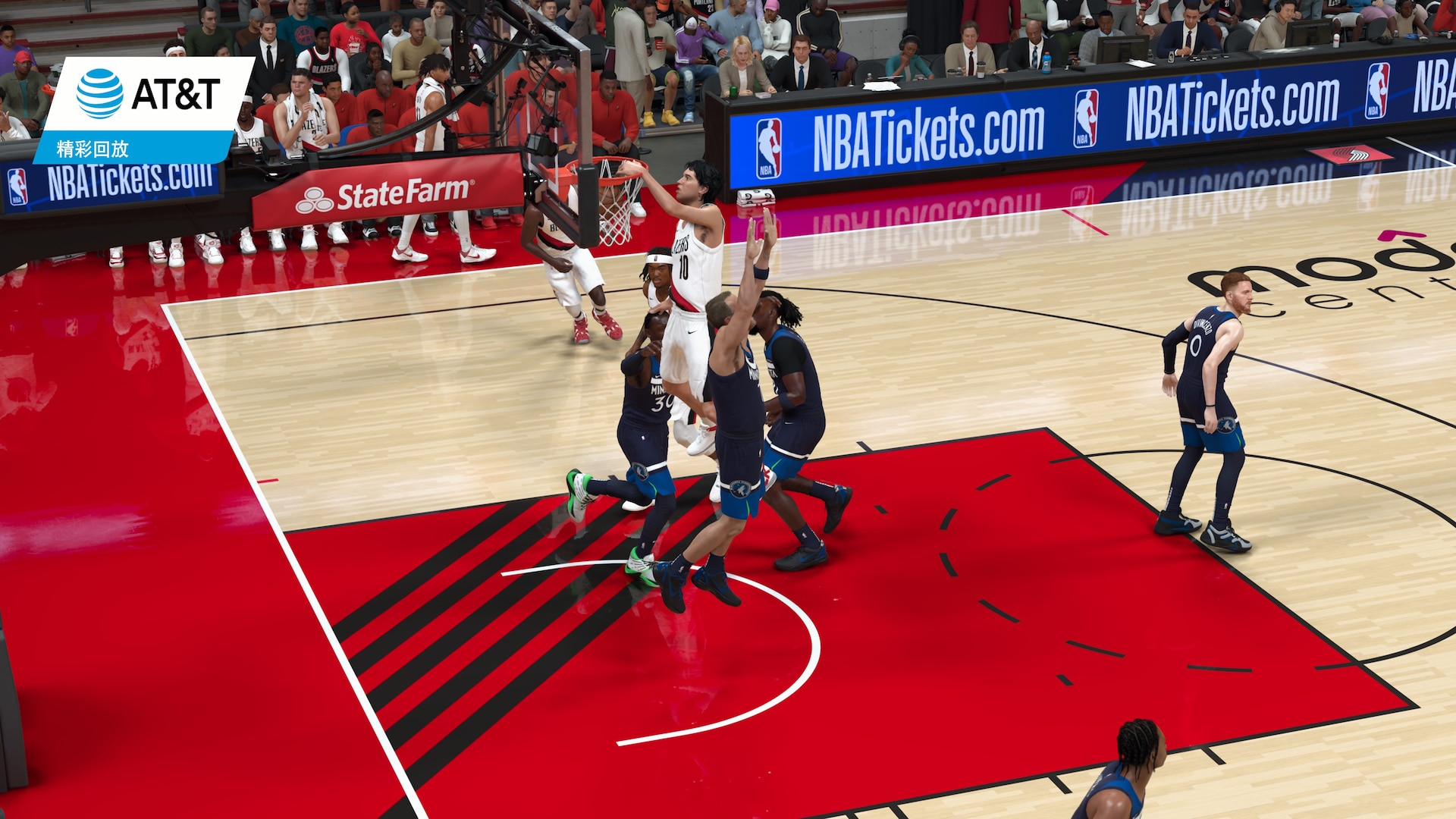
The NBA 2K franchise has always occupied a complicated place in sports gaming. On the one hand, it consistently delivers the most realistic, visually stunning depiction of professional basketball ever committed to code. On the other, its reliance on microtransactions and incremental yearly updates has created an air of cynicism around each release. Fans approach every September with cautious optimism: will this year’s edition finally honor the sport while respecting the player’s time, or will it be another case of brilliant gameplay buried beneath questionable design decisions?
With NBA 2K26, Visual Concepts has attempted something rare for an annualized sports series: a genuine course correction. Rather than layering more systems onto an already bloated foundation, the developers have focused on refining the fundamentals, smoothing out rough edges, and giving players a more rewarding sense of control. The result is the most confident, enjoyable installment the series has seen in years — though the familiar specter of aggressive monetization still keeps it from true greatness.
Presentation and Technical Performance
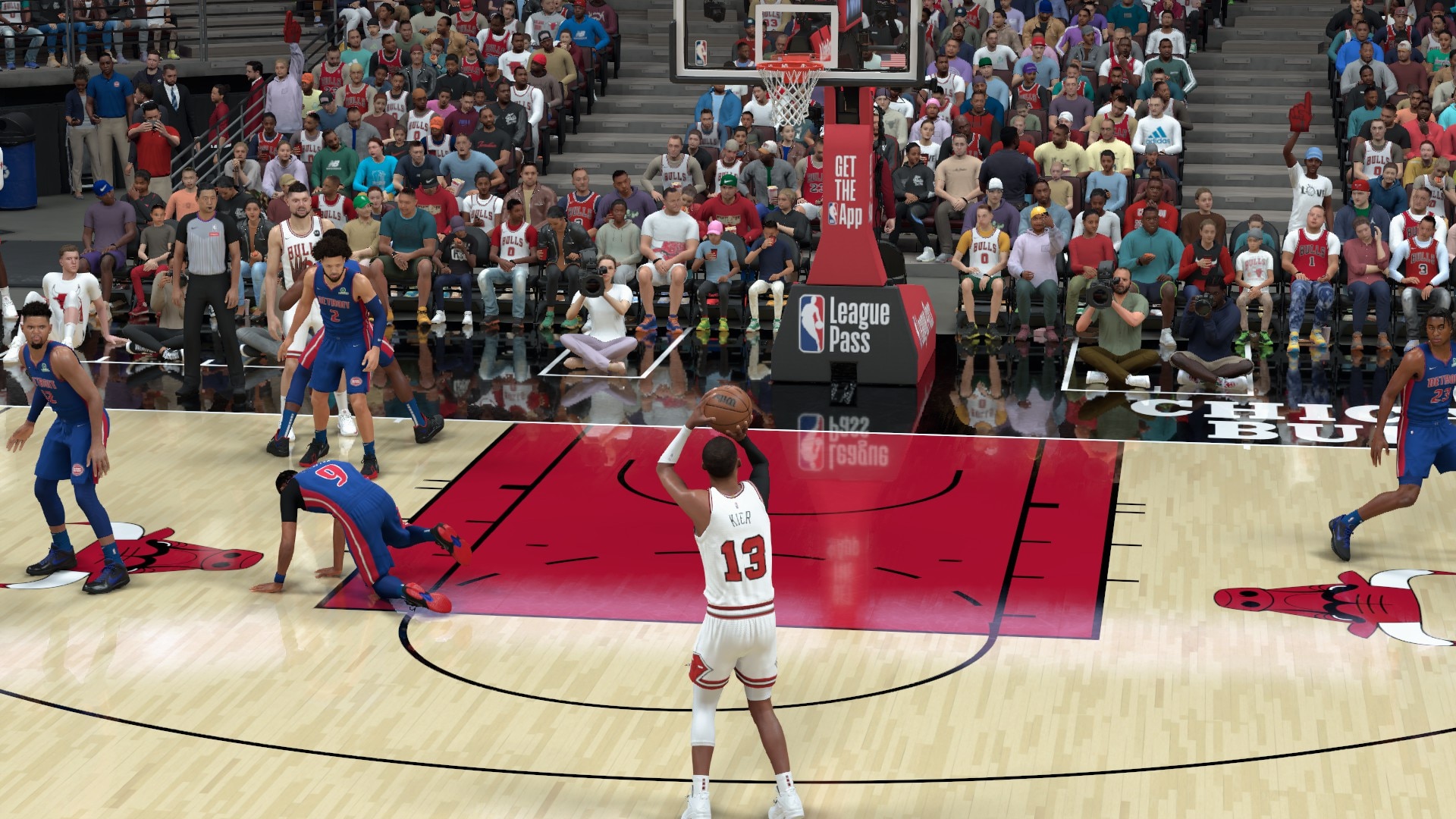
The first thing most players will notice when booting up NBA 2K26 is how much more alive the game feels. From the way arena lights catch on sweat-drenched jerseys to the subtle bounce of sneakers on polished hardwood, every detail contributes to a presentation that edges closer to live television. Camera work is smarter and more dynamic than before, with angles that capture the drama of a breakaway dunk or the tension of a last-second three.
Even halftime shows, often a throwaway in past installments, now feature sharper analysis and slicker broadcast production, further blurring the line between simulation and spectacle.
On PC, the game is demanding but rewarding. Players with modern hardware — a mid-range RTX card, a recent Ryzen or Intel CPU, and at least 16GB of RAM — will enjoy a consistently smooth 60+ frames per second experience at high settings. The enormous install size of roughly 110GB makes an SSD all but mandatory, not just for loading times but for stability as well. Those with older machines can scale settings down, but the experience inevitably suffers; this is a game designed with powerful hardware in mind.
The Feel of the Game
Every sports title lives or dies on the sensation of actually playing the sport it seeks to replicate. In NBA 2K26, that sensation has finally been restored to a level fans have been demanding for years. It is not just that the mechanics are tighter; it is that the entire rhythm of the game feels more authentic, more alive, and more respectful of player input.
Shooting, long a flashpoint for community frustration, has undergone the most dramatic recalibration. Gone are the maddening inconsistencies of recent entries where timing often felt disconnected from results. Instead, there is now a tangible connection between rhythm, release, and outcome. A perfectly timed jumper carries the satisfying weight it deserves, while slightly mistimed shots miss in ways that feel fair and believable. The margin for error is narrower, but not punishingly so; it rewards skill without alienating newcomers. When you green a shot in 2K26, you know it was earned.
Ball-handling has also been refined. Dribbling chains flow more naturally, allowing for expressive control that mirrors the creativity of modern guards like Ja Morant or Kyrie Irving. Crossovers, hesitations, and size-ups no longer feel like canned animations playing out regardless of context. Instead, they respond to subtle adjustments on the stick, creating a freer sense of improvisation. This makes one-on-one situations thrilling: beating a defender off the dribble feels less like gaming the system and more like reading your opponent’s footwork and making the right move at the right moment.
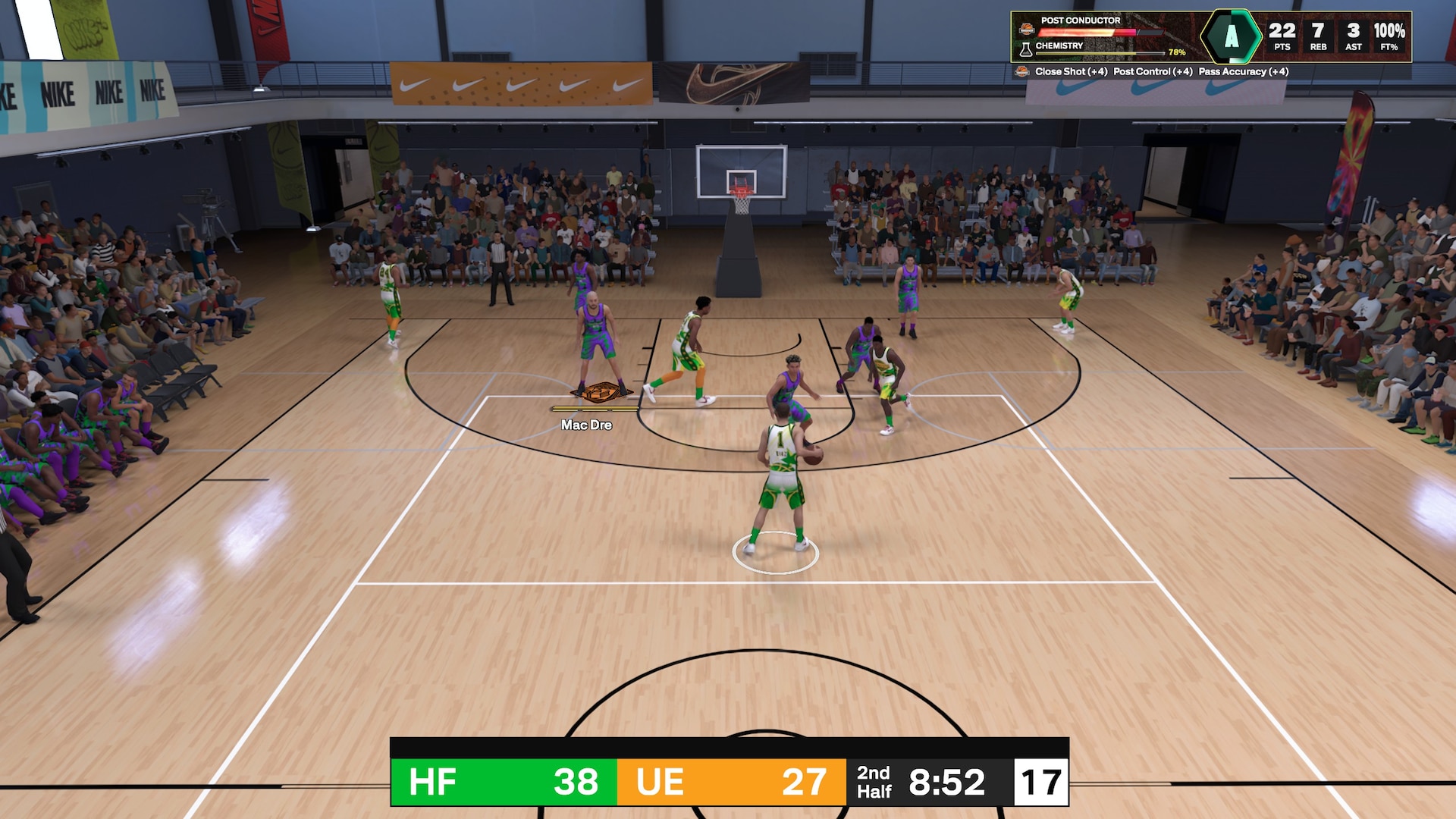
Defense, traditionally the weak link in the series, benefits just as much from these improvements. Lateral quickness feels tighter, contests register more cleanly, and blocks look and feel earned rather than scripted. Importantly, defenders are no longer trapped in sluggish recovery animations that leave them helpless once beaten. With good positioning and anticipation, it is entirely possible to lock down even elite scorers — a testament to how much more balanced the game has become.
The AI deserves mention as well. Offensive teammates cut with purpose, spacing the floor intelligently and taking advantage of mismatches. Defenders react to screens and switches with far greater awareness, reducing the number of cheap baskets that came from obvious lapses in previous games. While not perfect — AI still occasionally overcommits or misses rotations — it is noticeably sharper, creating a more authentic five-on-five flow.
What ties these elements together is pacing. NBA 2K26 simply moves better. Transitions between animations are smoother, possessions unfold at a believable tempo, and the tug-of-war between offense and defense feels organic. Fast breaks actually feel fast, while half-court sets reward patience and execution. The result is a style of basketball that mirrors the real NBA more closely than ever before.
For competitive players, these changes reestablish a crucial sense of trust: input leads to output, skill dictates success, and victory feels earned. For casual fans, the smoother mechanics make the game more inviting, reducing the frustration of feeling powerless against the system. In short, NBA 2K26 restores what had been missing from the series for years — the joy of simply playing basketball.
Modes and Their Evolution
The suite of modes will be familiar to longtime fans, but this year’s refinements lend them renewed vitality. MyCAREER remains the franchise’s signature single-player journey, charting the rise of a custom athlete from rookie to superstar. While its narrative beats still lean on familiar tropes — the overlooked prospect proving critics wrong — the on-court experience feels sharper thanks to gameplay refinements. The City, once criticized for feeling bloated and directionless, has received meaningful quality-of-life improvements. Navigation is smoother, objectives are clearer, and the social hub aspect feels less like a gimmick and more like an organic extension of the player’s career.
MyNBA and MyGM cater to the franchise purists who care less about online competition and more about long-term team-building. Here NBA 2K26 introduces expanded offseason scenarios and customizable historical settings that allow players to reimagine NBA history or chart entirely new futures. Franchise mode has always been one of the series’ most underrated offerings, and this year it feels more robust and replayable than ever.
The most transformative change, however, comes in MyTEAM. For the first time in the series’ history, WNBA players have been added to the card-collecting ecosystem, allowing users to create mixed-gender rosters. This is more than a novelty. It is a historic acknowledgment of women’s basketball, granting stars like Breanna Stewart and A’ja Wilson the same collectible prestige as their NBA counterparts. It also introduces fresh strategic dynamics, as players experiment with lineups that blend different playstyles and strengths. This integration represents a milestone not just for NBA 2K but for sports gaming as a whole.

The Persistent Shadow of Monetization
For all its progress, NBA 2K26 remains deeply intertwined with virtual currency. MyCAREER progression is tied to VC, and while determined players can grind their way forward, the design of the economy continues to favor those willing to spend real money. MyTEAM, despite its exciting new WNBA integration, is still balanced around packs and purchases that test the patience of anyone trying to collect organically.
This tension is perhaps the game’s greatest contradiction. On one hand, Visual Concepts has clearly re-committed to rewarding skill and player agency on the court. On the other, the structure around that gameplay still funnels players toward financial shortcuts. The result is a constant reminder that the path of least resistance has a price tag attached, undercutting some of the goodwill generated by the gameplay refinements.
Online Play and Stability
Online play remains a mixed bag. Early adopters reported instability in The City and frequent disconnects in Pro-Am, issues that threatened to derail the launch experience. To its credit, Visual Concepts has moved quickly, releasing multiple patches within days of release that addressed many of the most pressing problems. Still, the online ecosystem feels fragile. Competitive players, in particular, may encounter hiccups that break immersion, though the developer’s responsiveness is a hopeful sign that stability will improve over time.
Final Verdict: 7/10
NBA 2K26 is a study in contrasts. On the court, it is the most refined and rewarding entry in years, restoring player trust with responsive mechanics, fluid animation, and a skill-based shooting system that finally feels fair. Its presentation is polished, its franchise modes are deeper, and the integration of WNBA players into MyTEAM is nothing short of historic.
And yet, the game cannot entirely escape the gravitational pull of its own monetization model. VC remains omnipresent, progression often feels intentionally sluggish without financial investment, and online stability is not yet ironclad. These issues hold 2K26 back from being the definitive basketball simulation it could be.
For dedicated fans of the sport, however, there is no alternative that matches its authenticity, its breadth of content, or its sheer love for basketball. NBA 2K26 is not perfect, but it is a meaningful step forward — one that suggests the series still has the capacity to evolve, to improve, and to win back the trust of its players.