
Bloober Team has steadily built a reputation as a developer unafraid to experiment within the horror genre. From the painterly psychological spirals of Layers of Fear to the dual-reality puzzles of The Medium, the studio has consistently leaned toward atmospheric storytelling over systemic gameplay. With Cronos: The New Dawn, however, the studio aims to broaden its scope and deliver a survival horror experience with a stronger emphasis on mechanics, pacing, and cinematic presentation. The result is a strikingly ambitious project: a time-travel survival horror title that combines retro-futurist aesthetics with resource-driven tension. It is a game that dazzles with its world-building and mood but occasionally falters when the action becomes the central focus.
Setting and Narrative
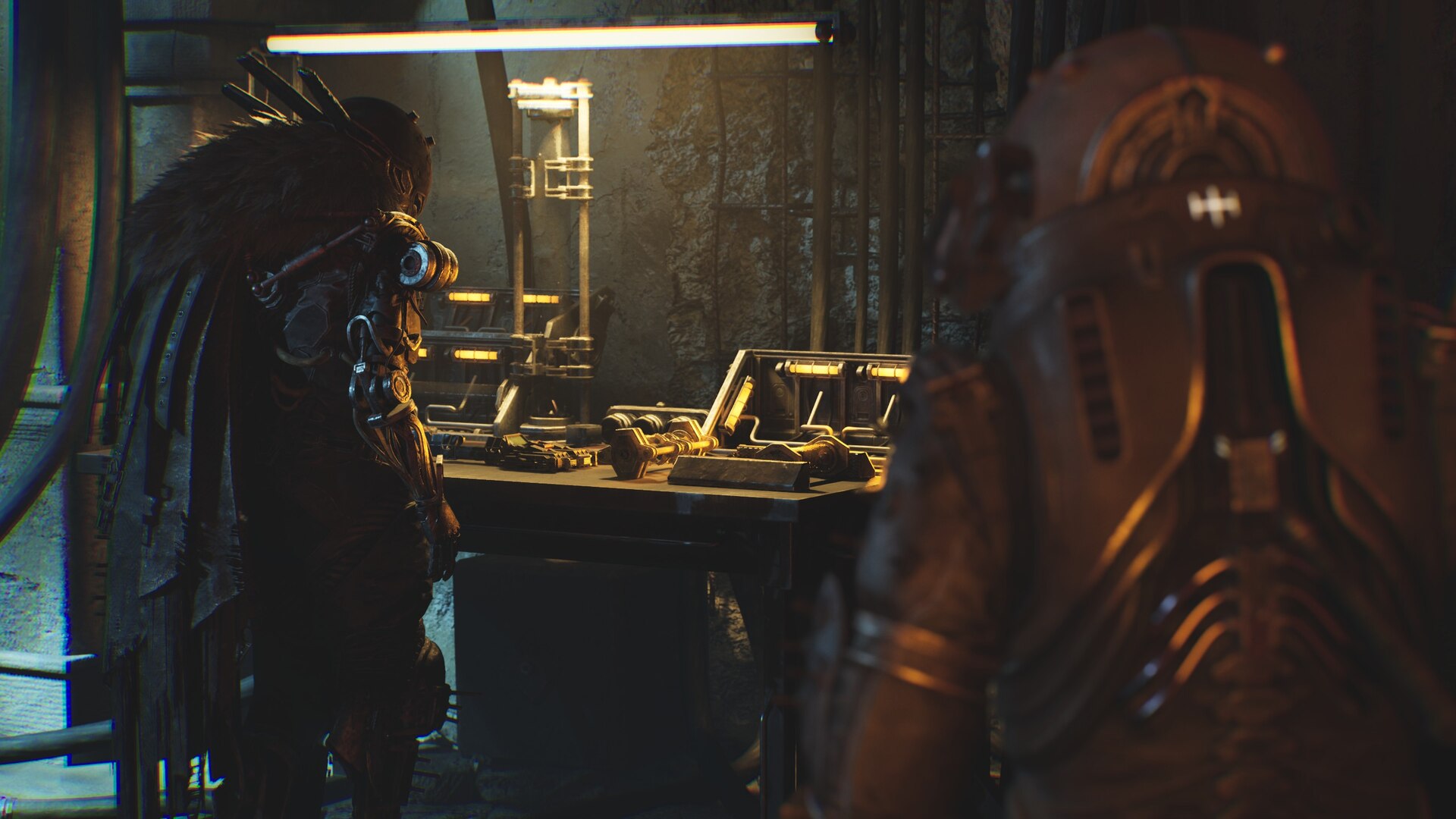
The premise of Cronos: The New Dawn is as bold as its visuals. Players assume the role of the Traveler, a salvager whose mission is to prevent the collapse of humanity by leaping between a devastated future and an alternate version of 1980s Eastern Europe. This dual-timeline conceit is not only visually compelling but also narratively rich. The future is depicted as a bleak wasteland teeming with parasitic mutations, where remnants of humanity cling to survival in industrial ruins. In contrast, the past offers a snapshot of retro-modernist society steeped in Cold War anxieties, defined by imposing brutalist architecture, outdated machinery, and a heavy air of ideological control.
The narrative unfolds through a mixture of direct dialogue, environmental storytelling, and fragments of lore scattered throughout both time periods. Themes of collectivism, sacrifice, and the burden of intervention dominate the story, giving it a weight that resonates well beyond its jump scares. While the writing sometimes drifts into overt exposition, especially during the Traveler’s interactions with key characters, the central conceit of altering the past to reshape the future is both engaging and thematically cohesive. Bloober Team’s psychological fingerprints are evident in the dreamlike distortions and symbolic imagery that accompany the Traveler’s journeys, adding layers of unease to an otherwise linear narrative structure.
Gameplay and Mechanics
Mechanically, Cronos: The New Dawn situates itself firmly within the survival horror tradition, balancing exploration, puzzle-solving, and combat in a cyclical loop. Progress typically begins in the devastated future, where the Traveler searches for rift points that serve as gateways into the past. Once activated, these rifts transport the player into semi-linear levels set in the 1980s, where the objective is to infiltrate environments, solve environmental challenges, and ultimately extract designated individuals whose survival is key to altering the timeline. Returning to the future reveals the consequences of those actions, sometimes subtle and sometimes dramatic, reinforcing the sense of narrative agency.
Scarcity lies at the heart of this design. Ammunition is limited, medical supplies are rare, and crafting materials are carefully rationed. Every resource feels valuable, and players quickly learn that reckless play leads to ruin. Enemies compound this tension by introducing a distinctive merging mechanic: if dispatched improperly, or left unattended, creatures are capable of fusing into stronger, more grotesque abominations. This mechanic forces the player to consider not only how to fight but also when and where, turning each encounter into a strategic decision rather than a reflexive one.

Layered atop this survival framework is the moral dimension of soul extraction. At critical moments, the Traveler is faced with the choice of rescuing individuals or harvesting their souls, decisions that ripple into both narrative outcomes and minor gameplay shifts. Although thematically compelling, the execution of this system feels undercooked. The mechanical impact rarely matches the dramatic weight the story attributes to these decisions, leaving it more as a narrative flourish than a truly integrated gameplay system.
Combat and Encounter Design
Combat is where Cronos: The New Dawn reveals both its strengths and its limitations. At its best, the game delivers encounters that are deliberately tense, where a single misstep can result in overwhelming odds. The design philosophy clearly favors dread over empowerment. Weapons carry satisfying heft, and the act of dispatching enemies feels consequential thanks to the scarcity of resources. The merging mechanic, in particular, heightens urgency, forcing players to think tactically about positioning and target prioritization.
However, the system’s limitations gradually become apparent. Enemy behavior patterns are relatively predictable, and after extended play, encounters can begin to feel repetitive. The variety of weapons, while functional, is limited, and players may find themselves relying on the same handful of tactics for much of the game. Boss fights and scripted set pieces inject much-needed variety, often combining combat with environmental hazards or time pressure to create memorable spikes of intensity. Yet outside of these moments, combat lacks the depth and adaptability found in genre-defining titles such as Resident Evil 4 or Dead Space. Players seeking complex combat systems may find Cronos too restrained, though those who value atmosphere above mechanical depth will likely appreciate its deliberate pacing.
Exploration and Puzzle Design
Where Cronos shines brightest is in its environments and the opportunities it provides for exploration. The contrast between the oppressive ruins of the future and the lived-in, oppressive order of the 1980s past creates a rhythm that keeps the player engaged. Levels are dense with detail, rewarding attentive players who take the time to scour abandoned apartments, derelict hospitals, or forgotten subway stations for lore fragments and supplies.
Puzzles are integrated seamlessly into the world, avoiding the sense of disconnection that can sometimes plague the genre. Rerouting power grids through archaic control panels, manipulating outdated industrial machinery, or piecing together fragmented documents are all challenges that feel appropriate to the setting. These puzzles are never so obtuse as to halt momentum, yet they demand enough observation and logical reasoning to provide genuine satisfaction when solved. In this regard, Cronos successfully balances tension with intellectual engagement, ensuring that exploration is more than just a hunt for resources.

Technical Performance and Presentation
From a technical perspective, Cronos: The New Dawn is one of Bloober Team’s most polished releases to date. On PC, the game runs with impressive stability, offering a range of graphical options that make it scalable across a wide spectrum of hardware. Ray tracing and DLSS support ensure that players with high-end systems can enjoy sharp visuals without sacrificing performance. The lighting system deserves particular praise, as volumetric shadows and dynamic reflections contribute immensely to the game’s oppressive mood.
Character models and creature designs are highly detailed, although animation quality does not always match the visual fidelity of the environments. Certain enemy movements feel stiff, undermining the sense of organic horror that their design otherwise conveys. Sound design, however, is consistently excellent. The game relies on industrial drones, distorted ambient noise, and sudden crescendos to sustain tension. Audio cues play an essential role in gameplay as well, with subtle noises warning players of nearby threats. Voice acting is serviceable, though at times performances stray into melodrama, which can jar with the otherwise serious tone.
Final Verdict: 8/10
Cronos: The New Dawn represents Bloober Team’s most ambitious project to date, a survival horror experience that strives to marry the studio’s established strengths in atmosphere and narrative with the mechanical rigor of a more traditional action-horror title. Its greatest achievements lie in its world-building, its sense of place, and its ability to immerse the player in a haunting vision of past and future. Exploration is richly rewarding, puzzles are well integrated, and the central time-travel conceit offers a compelling framework for both narrative and gameplay.
Yet its weaknesses are equally clear. Combat, though initially tense and effective at evoking dread, lacks the depth and variety needed to sustain long-term engagement. The moral decision-making system, while thematically interesting, fails to deliver the gameplay impact it promises. What remains is a game that excels in atmosphere and vision but falls short of fully realizing its mechanical potential.
For players who prioritize immersion, narrative, and mood, Cronos: The New Dawn offers a gripping and memorable experience that stands out in the crowded survival horror landscape. For those who come seeking intricate combat systems and long-term mechanical depth, its shortcomings will be more apparent.


