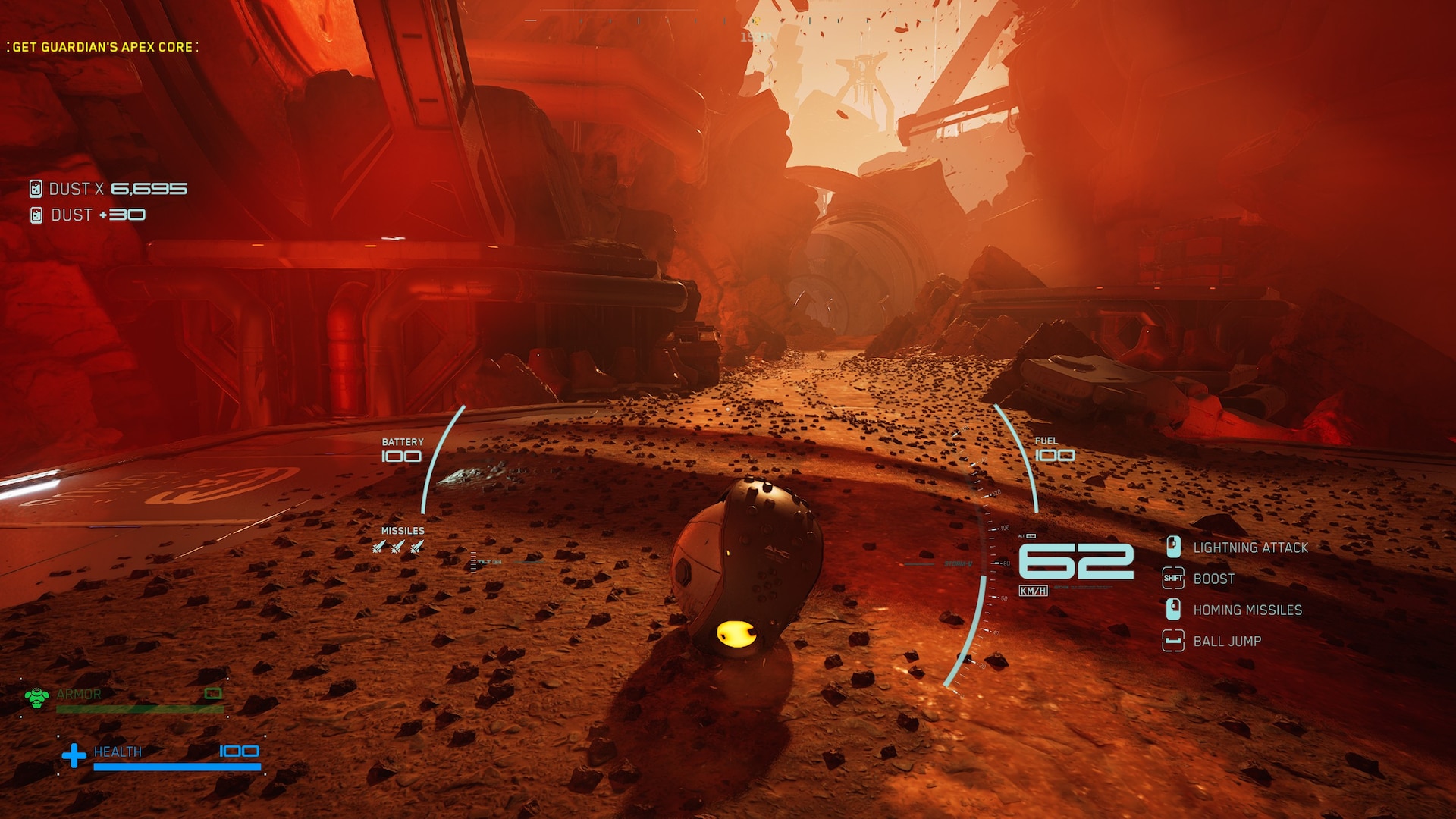
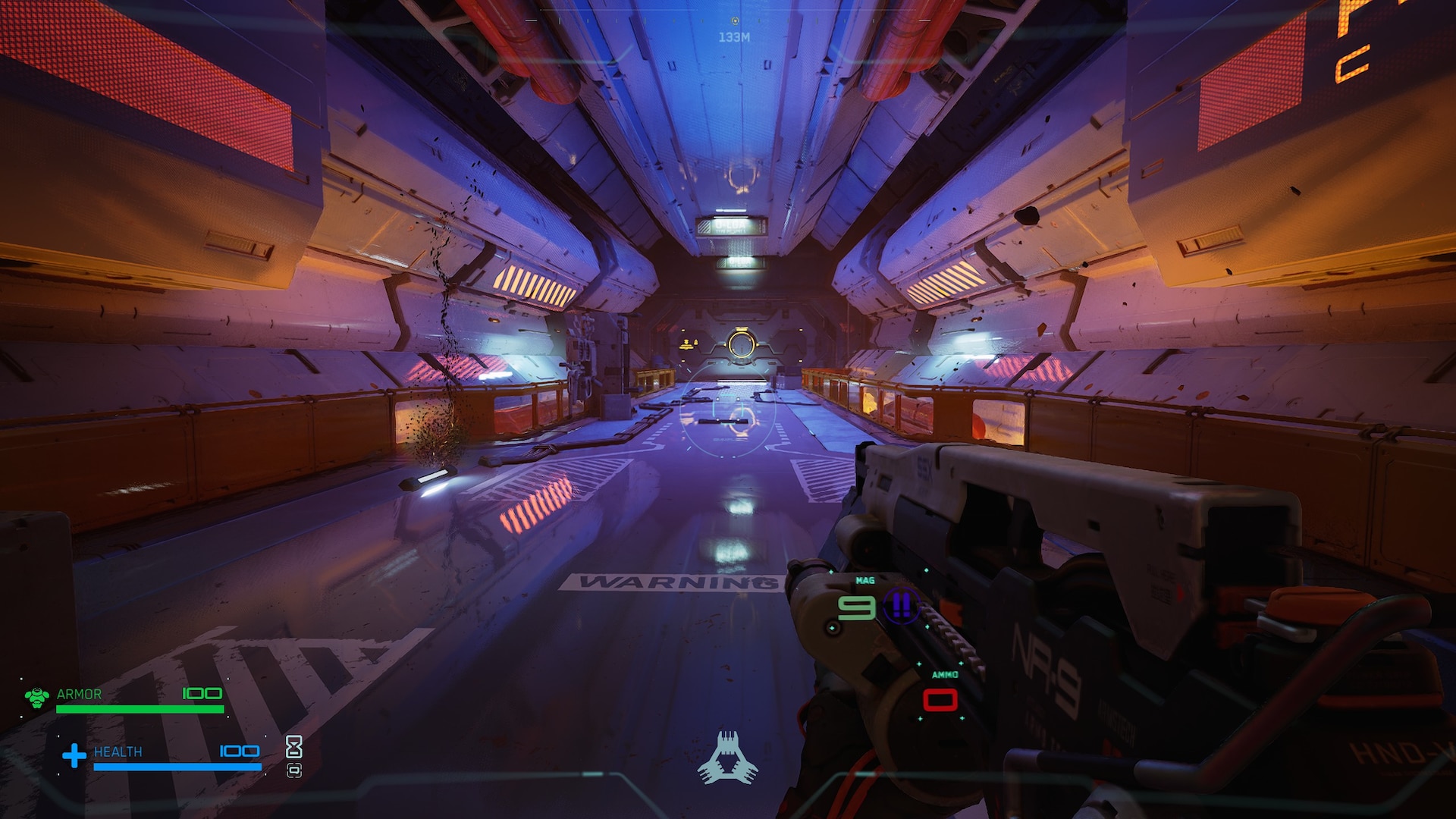
Few games promise the adrenaline rush of Metal Eden, the latest offering from Reikon Games (Ruiner). Set in the colossal orbital city of Moebius, this first-person shooter throws players into the shoes of Aska, a Hyper Unit android sent on a suicide mission to recover the last fragments of humanity. It’s a striking vision of a broken world—equal parts industrial ruin and neon dreamscape—delivered through blistering gunplay, high-speed traversal, and the philosophical musings of a machine.
But while Metal Eden excels at moment-to-moment action, its short campaign, weak narrative, and uneven technical performance prevent it from achieving true greatness. It’s a game that burns bright—and fast.

Gameplay and Mechanics
Metal Eden is defined by its gameplay. Combat is swift, aggressive, and satisfying, combining fast-paced gunfights with fluid movement mechanics. Aska can wall-run, slide, double-jump, and use a grappling tether to traverse Moebius’s vertical arenas. These traversal options aren’t just for show—they’re essential for survival, transforming combat into a dance of precision and momentum.
At the center of the game’s combat system is the inventive Core Ripping mechanic. Each enemy contains a Core that, once exposed, can be violently extracted mid-fight. These Cores act as consumables: they can be thrown like grenades, consumed for stat boosts, or used to fuel Aska’s more powerful abilities. The result is a constant push-and-pull between aggression and tactical resource use.
Weapons range from conventional ballistic firearms to sci-fi energy rifles and experimental melee gear. The gunplay is tight, with excellent feedback and sound design that makes each kill feel weighty. Upgrades come in the form of a modular system where players can enhance weapons and unlock perks across three skill trees—focusing on mobility, Core usage, or combat proficiency.
Resource terminals are scattered across combat zones, replenishing health, ammo, and Core energy on cooldown timers. This design encourages a flowing, rhythmic style of play where risk and reward are constantly in tension.
Level Design and Structure
The game is divided into eight linear missions, each exploring a different district of Moebius. Environments range from decaying industrial zones to sterile, corporate data silos—every one rendered with a painterly eye for detail and scale. Visually, the levels are stunning, evoking comparisons to Ghost in the Shell, Doom Eternal, and Blade Runner.
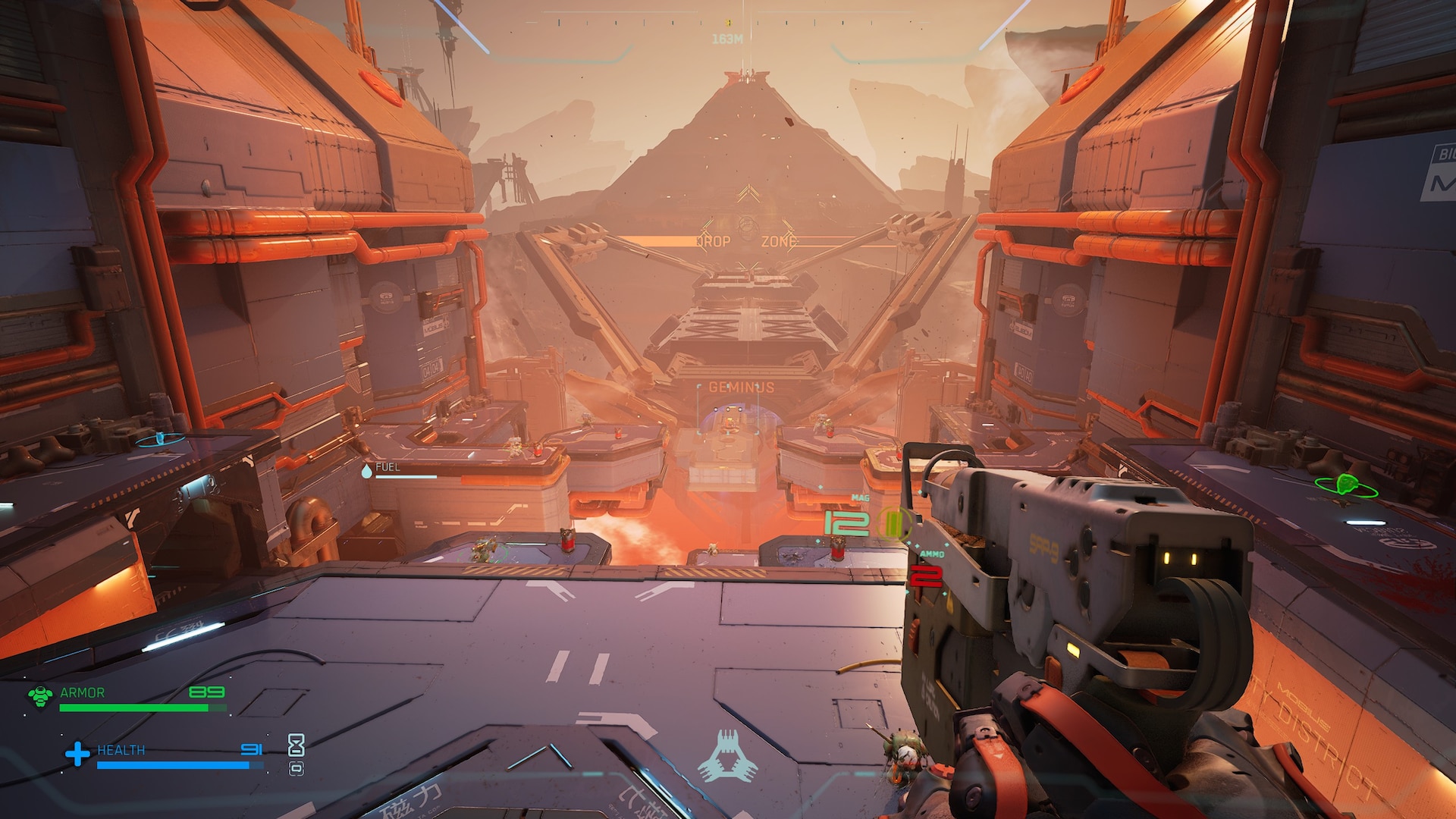
Yet despite the variety in art direction, the level design falls into familiar patterns. Most missions follow a straightforward loop: clear a combat arena, platform to the next, repeat. While the traversal systems keep things feeling fresh, there’s a creeping sense of repetition by the mid-game. Exploration is minimal, with secrets generally limited to upgrade pickups and hidden Dust caches.
That said, Metal Eden shines when it leans into verticality. Several levels are designed like climbing puzzles with combat layered in, encouraging mastery of Aska’s movement toolkit. When the game clicks, it delivers moments of pure mechanical bliss.
Narrative and Atmosphere
The story of Metal Eden is ambitious in theme but clumsy in execution. Aska’s mission—to retrieve humanity’s digitized consciousnesses from rogue AI overlords—serves as a backdrop to the gameplay rather than a compelling emotional arc.
Lore is delivered through voiceovers, logs, and brief cutscenes, but it rarely lands. Supporting characters, particularly a glitchy child-like AI companion, tend to distract more than they enhance. Dialogue is often overwritten or awkward, and key emotional beats fail to resonate.
Still, the world-building itself is impressive. Moebius feels lived-in, with subtle environmental storytelling that hints at the collapse of a once-thriving civilization. The audio design helps carry the mood, with eerie ambient soundscapes and the low mechanical hum of dead technology.
Visual and Technical Presentation
Artistically, Metal Eden is breathtaking. The environments pulse with cyberpunk attitude—monolithic structures, flickering neon, and deep mechanical shadows create a setting that feels oppressive and sublime. Enemy designs are equally strong, blending humanoid robotics with insectoid or industrial aesthetics that reinforce the game’s post-human tone.

Lighting and particle effects are used to great effect, especially during combat. Core explosions ripple across enemies in brilliant bursts of light and color. Weapons crack and boom with impact. The HUD is sleek and unobtrusive.
Performance, however, is mixed. On a high-end PC, the game runs smoothly most of the time, though occasional frame drops occur in complex encounters. Steam Deck users and those with mid-range hardware report more severe slowdowns, even on lower settings. The game’s fast pace means even minor stutters can impact playability.
Length and Replayability
The main campaign clocks in at around 6–8 hours depending on difficulty and playstyle. It’s a tight experience—but perhaps too tight for players expecting something more substantial. Once completed, players can revisit levels to find missed upgrades, experiment with new builds, or attempt speed challenges. However, the linear structure and limited enemy variety diminish the incentive for multiple playthroughs.
That said, players who enjoy mastery—perfecting runs, minimizing damage, or speedrunning—will find a high skill ceiling to climb.
Final Verdict: 7.5/10
Metal Eden is an incredibly stylish and mechanically satisfying shooter that delivers on its core promise: fast, fluid, high-stakes action in a beautifully ruined world. Its traversal mechanics and Core-based combat system offer a refreshing spin on familiar FPS tropes, and when it fires on all cylinders, the game is exhilarating.
Yet for all its strengths, Metal Eden never quite escapes the weight of its narrative shortcomings and limited scope. The story is forgettable, the campaign is short, and the repetition sets in earlier than it should. While fans of Ghostrunner, Ultrakill, or Doom Eternal will feel right at home, those looking for emotional depth or long-term replay value may come away disappointed.
This is a bold and often brilliant shooter—but one that feels like it’s missing a final act.