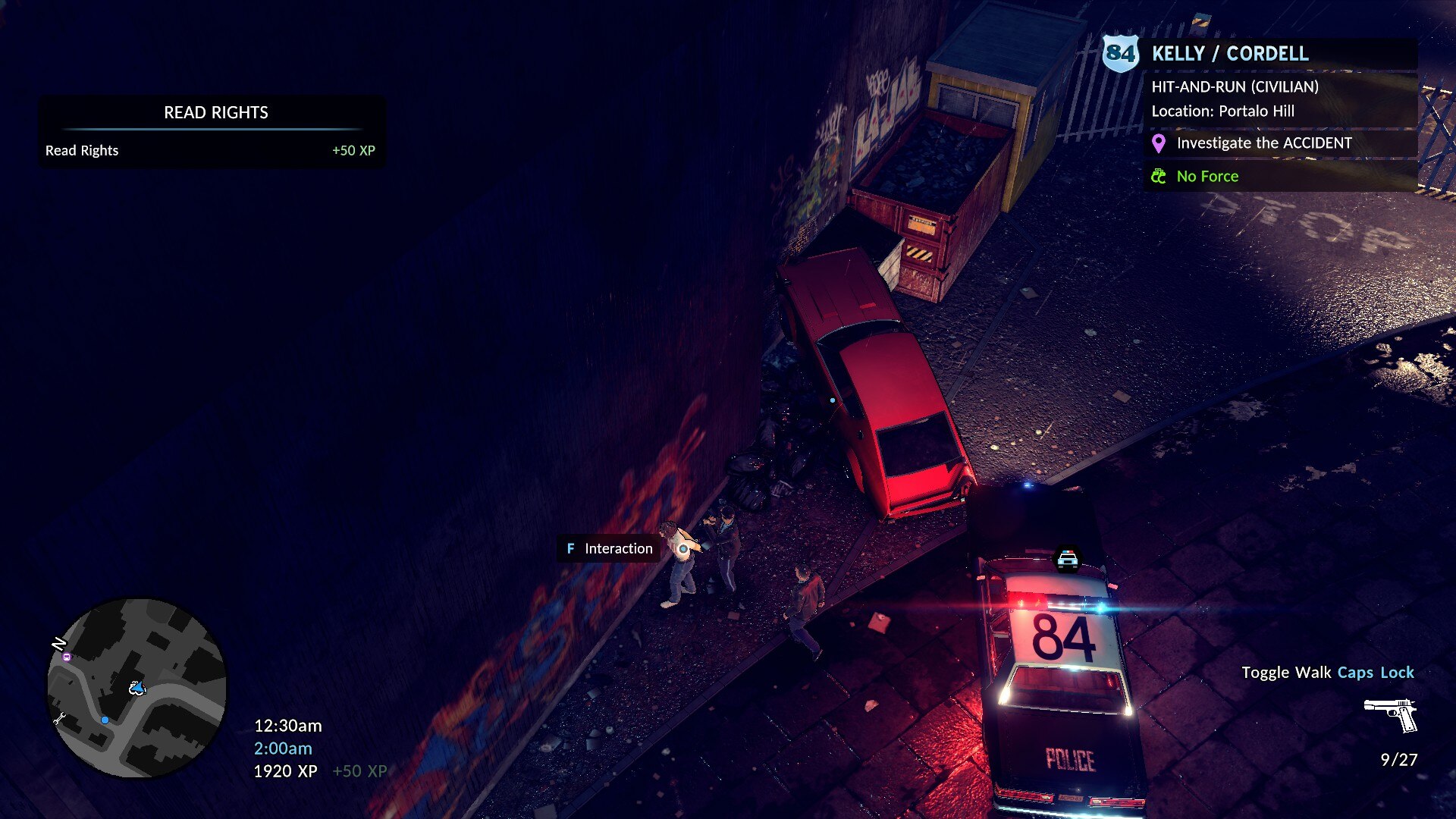
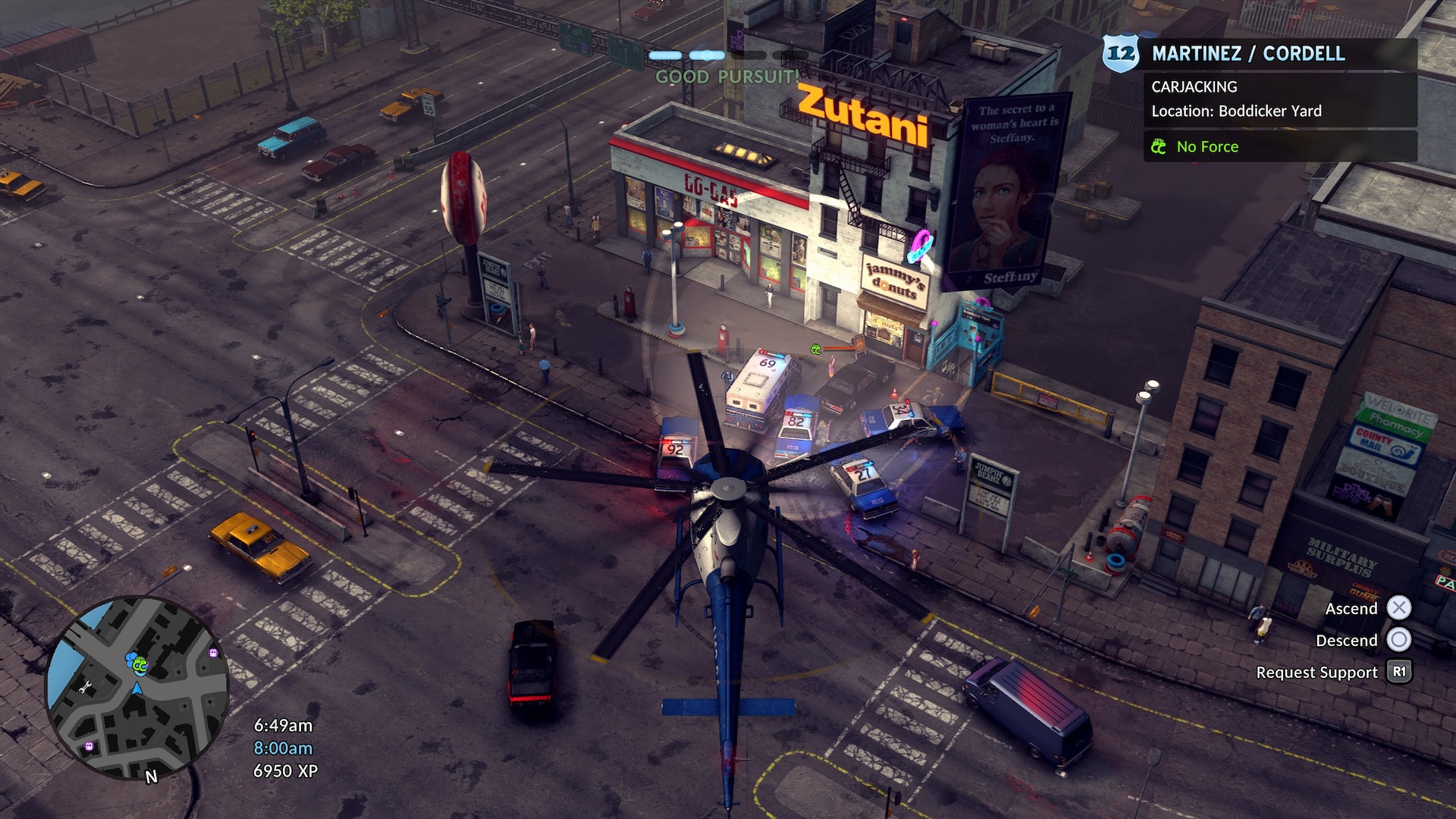
The Precinct is a deliberate, atmospheric twist on the traditional open-world crime formula. Rather than embodying the archetypal outlaw of the genre, players step into the shoes of law enforcement — tasked not with sowing chaos, but with imposing order in a restless, crime-ridden metropolis. This inversion of the typical power fantasy is more than a narrative gimmick; it informs the game’s structure, pacing, and core mechanics. The result is an experience that blends simulation-driven patrol work with bursts of high-stakes action, all wrapped in a lovingly rendered 1980s setting.
On PC, The Precinct makes a strong case for itself through its sharp presentation, procedural variety, and emergent gameplay. However, it is not without its flaws — namely, a tendency towards repetition over extended play sessions, as well as driving and combat systems that occasionally lack polish. These shortcomings do not overshadow the game’s distinctive identity, but they do temper its long-term appeal.

Setting and Narrative
The story unfolds in Averno City, a fictional urban sprawl steeped in the grime, corruption, and neon haze of 1983. Players assume the role of Nick Cordell Jr., a rookie police officer following in his late father’s footsteps. While the premise touches on themes of legacy, justice, and moral compromise, the narrative is intentionally understated. It exists primarily to frame your patrol duties, serving as connective tissue between gameplay segments rather than a cinematic centerpiece.
That said, the setting is vividly realized. Averno is more than just a backdrop — it feels like a breathing city, complete with bustling intersections, seedy alleyways, and pockets of both affluence and decay. Street musicians, corner stores, and the flicker of neon signs all contribute to the sense of place. The art direction is unmistakably rooted in 1980s crime drama, recalling the visual grammar of Hill Street Blues and Miami Vice without lapsing into parody.
Gameplay and Mechanics
At its heart, The Precinct is about shift-based patrols. Each shift begins at the police station, where you’re briefed before heading out into the city. From there, you respond to a wide range of procedurally generated callouts — from the mundane, such as issuing parking citations or investigating noise complaints, to the dangerous, such as pursuing armed suspects or defusing armed robberies.
The procedural call system is the backbone of the game’s structure. What makes it compelling is the unpredictability of escalation: a simple traffic stop can spiral into a vehicle pursuit, foot chase, or armed confrontation depending on suspect behavior and player choices. This gives every shift the potential for unscripted drama.
Unlike many action-driven open-world titles, The Precinct rewards procedural discipline. Gathering evidence, following arrest protocols, and making use of non-lethal tools are not optional role-playing flourishes — they are mechanically rewarded through experience points and performance evaluations. A compliance meter governs suspect behavior, while a backup request system allows you to summon reinforcements, air support, or additional patrol units. Choosing when to escalate force and when to de-escalate becomes a tactical consideration, particularly in crowded urban environments where collateral damage has consequences.

Progression and Long-Term Structure
Progression is built around experience gains from successfully completed calls. These points unlock perks and skill upgrades, ranging from improved pursuit technology to enhanced non-lethal weapon effectiveness. Beyond individual skill development, the game incorporates overarching gang investigations. Evidence collected during routine callouts can unlock missions targeting specific criminal organizations, culminating in more scripted, high-intensity confrontations.
This layered structure — day-to-day policing feeding into broader investigative arcs — is one of the game’s most satisfying design choices. However, after a dozen or more hours, patterns in callouts begin to emerge. While the procedural generator ensures some degree of variety, repeated exposure to similar scenarios can diminish the sense of unpredictability that initially defines the experience.
Presentation and Atmosphere
Visually, The Precinct employs a detailed isometric perspective that captures both the density and the grit of its urban setting. On PC, the game benefits from crisp resolution scaling, sharp textures, and stable performance across a range of hardware. Lighting is used to strong effect — headlights cut through foggy streets, neon reflections ripple across rain-slick pavement, and the occasional flash of a police siren transforms otherwise static street corners into cinematic frames.
The audio design is equally strong. A synthwave-inspired score underpins the entire experience, evoking the tonal palette of the era without becoming intrusive. Environmental audio — the hum of traffic, distant shouts, the crackle of police radio chatter — layers naturally into the mix, further grounding you in the role of an active patrol officer.
Performance and Controls on PC
From a technical standpoint, The Precinct is generally well-optimized for PC. Frame rates are stable, load times are short, and crashes are rare. The control schemes for both keyboard/mouse and gamepad are serviceable, though the latter may offer a smoother experience for driving sequences. That said, vehicle handling remains a sticking point: the weight and responsiveness of cars feel slightly inconsistent, especially during high-speed pursuits, where precise maneuvering is critical.
Combat encounters, while functional, lack the refined feedback of top-tier shooters. Aiming can feel floaty, particularly with mouse input, and weapon recoil is minimal, which can detract from the tension of firefights. While these systems do not undermine the core policing loop, they are less satisfying than the game’s procedural and investigative elements.

Where the Game Falls Short
The game’s most notable weakness is the creeping sense of repetition in its procedural content. While the first hours brim with variety and surprise, familiarity sets in as call structures and suspect behaviors begin to repeat. This issue is compounded by the game’s methodical pacing, which may not appeal to players expecting the adrenaline rush of a Grand Theft Auto–style sandbox.
Additionally, while the emphasis on realism is commendable, it occasionally clashes with player expectations. Following procedure can be rewarding, but it also slows the game’s tempo — which can make certain stretches feel like a grind rather than a thrill.
Replayability and Longevity
For players who appreciate systemic, emergent gameplay, The Precinct offers a solid foundation for replayability. Different tactical approaches, branching investigation outcomes, and the unpredictability of escalation keep the experience fresh for a time. On PC, potential modding support could extend the game’s life significantly, introducing new call types, vehicles, or equipment. However, without such additions, the core experience may feel fully explored after 20–30 hours for most players.
Final Verdict: 7/10
The Precinct succeeds in carving out a space between methodical police simulation and open-world action. Its attention to procedural detail, combined with an evocative 1980s setting, delivers an experience unlike most of its peers. On PC, the crisp presentation, stable performance, and flexible controls make it an accessible yet immersive title for fans of systemic gameplay.
That said, its appeal will depend heavily on the player’s tolerance for repetition and appreciation of slower, more deliberate pacing. Those seeking constant spectacle may find it too restrained, but for those who value structure, atmosphere, and emergent unpredictability, The Precinct is a commendable entry in the open-world genre.