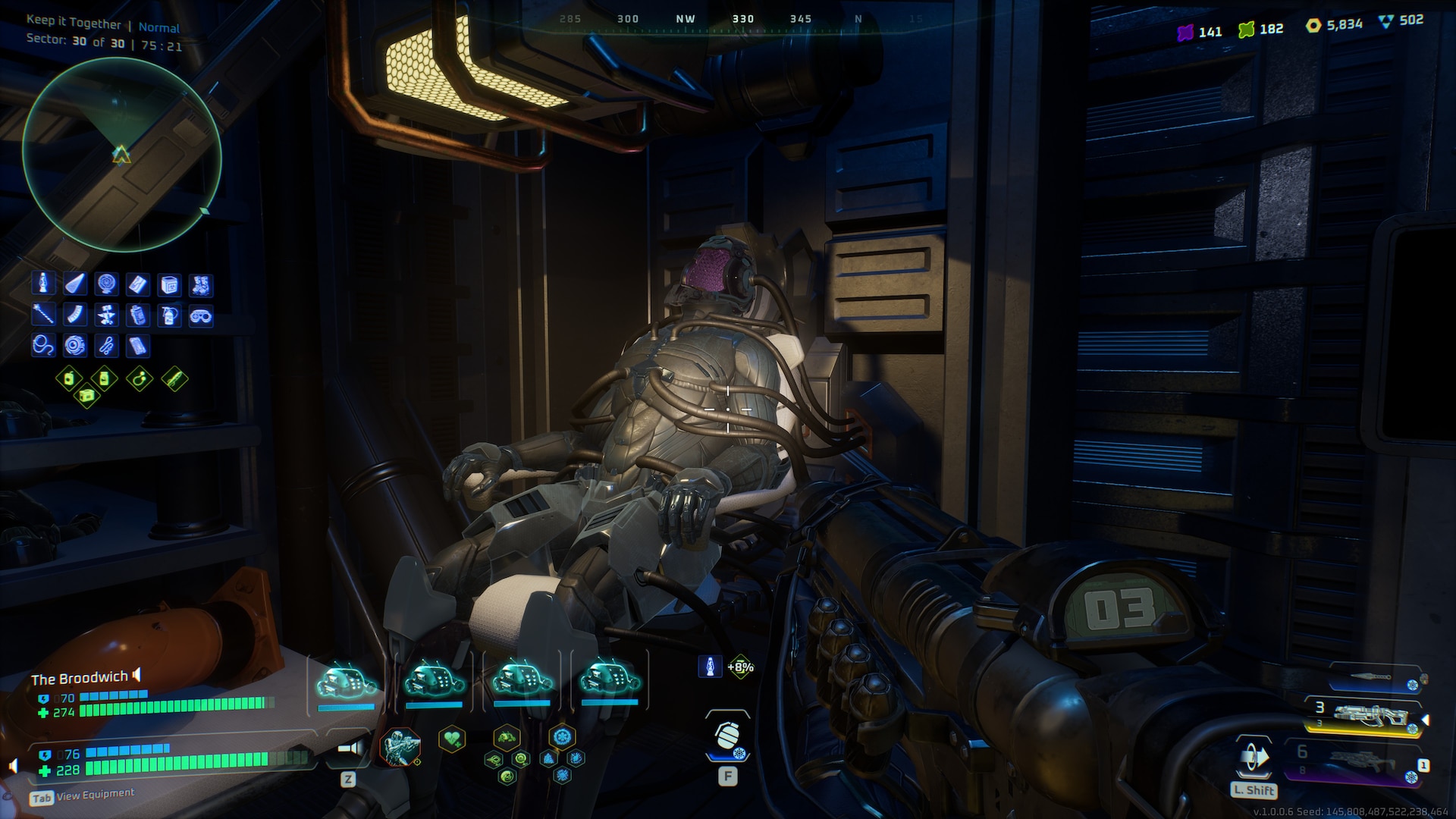
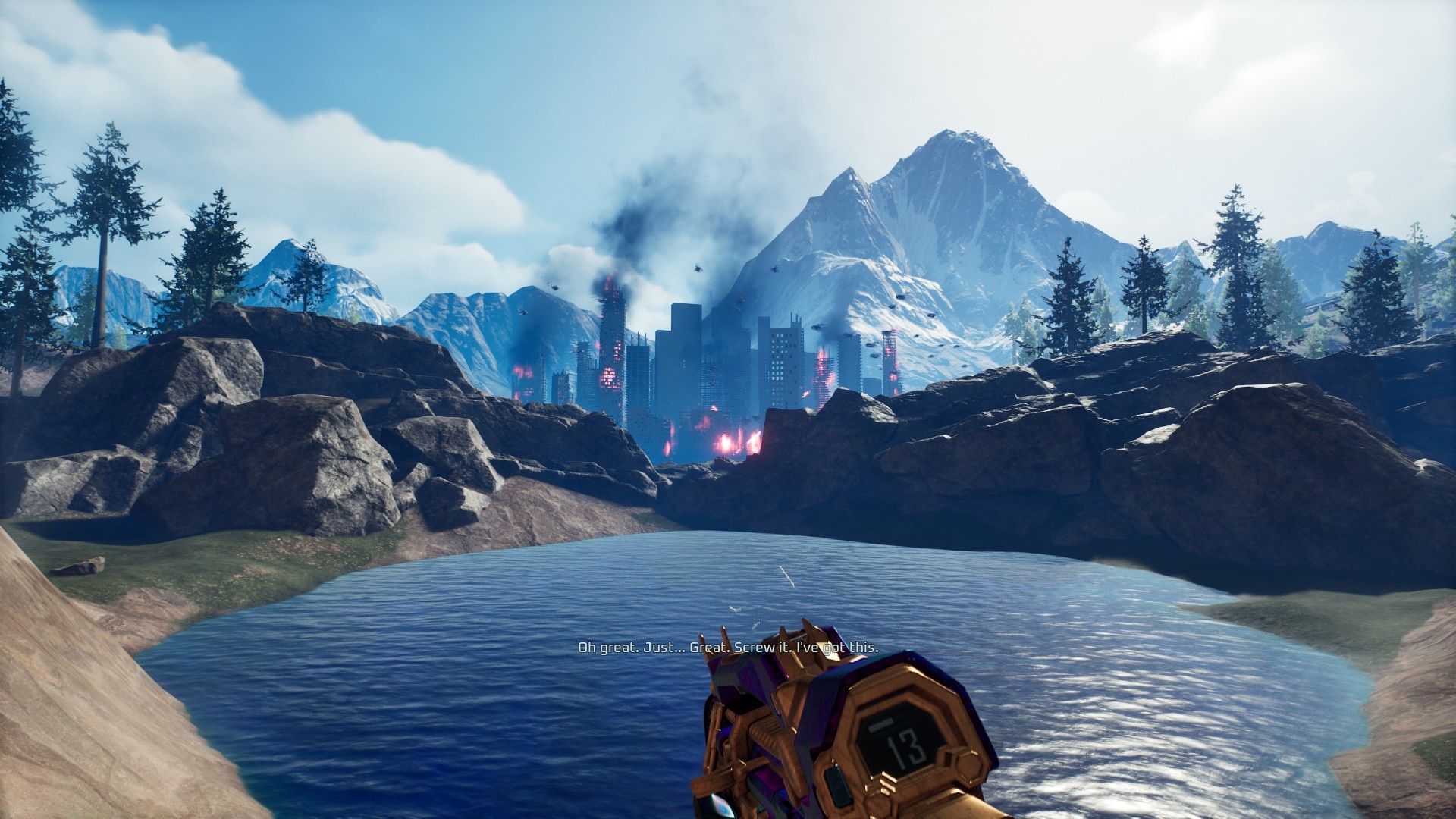
Deadzone: Rogue marks Prophecy Games’ most ambitious project to date—a hybrid of old-school FPS pacing and modern roguelite structure. First appearing in Early Access, the game quickly developed a reputation for its fast tempo, creative augment system, and accessible co-op play. Now, with its full version 1.0 release, Deadzone: Rogue offers a more complete package, adding a third zone, new enemy types, fresh augments, and an expanded progression tree. The result is a lean yet addictive shooter that prioritizes short, intense sessions, strong replay value, and adaptable combat over scripted spectacle.
Gameplay & Combat
Each session in Deadzone: Rogue begins with a procedurally generated map of interconnected rooms aboard a decaying, industrial space station. Players choose a starting loadout—often a conventional ballistic weapon paired with a modest secondary—and enter their first combat encounter. Clearing rooms rewards augments, elemental effects, or currency to invest in between encounters. The branching map structure allows players to choose their path, whether pursuing higher-risk areas with better rewards or safer routes with more predictable enemies.
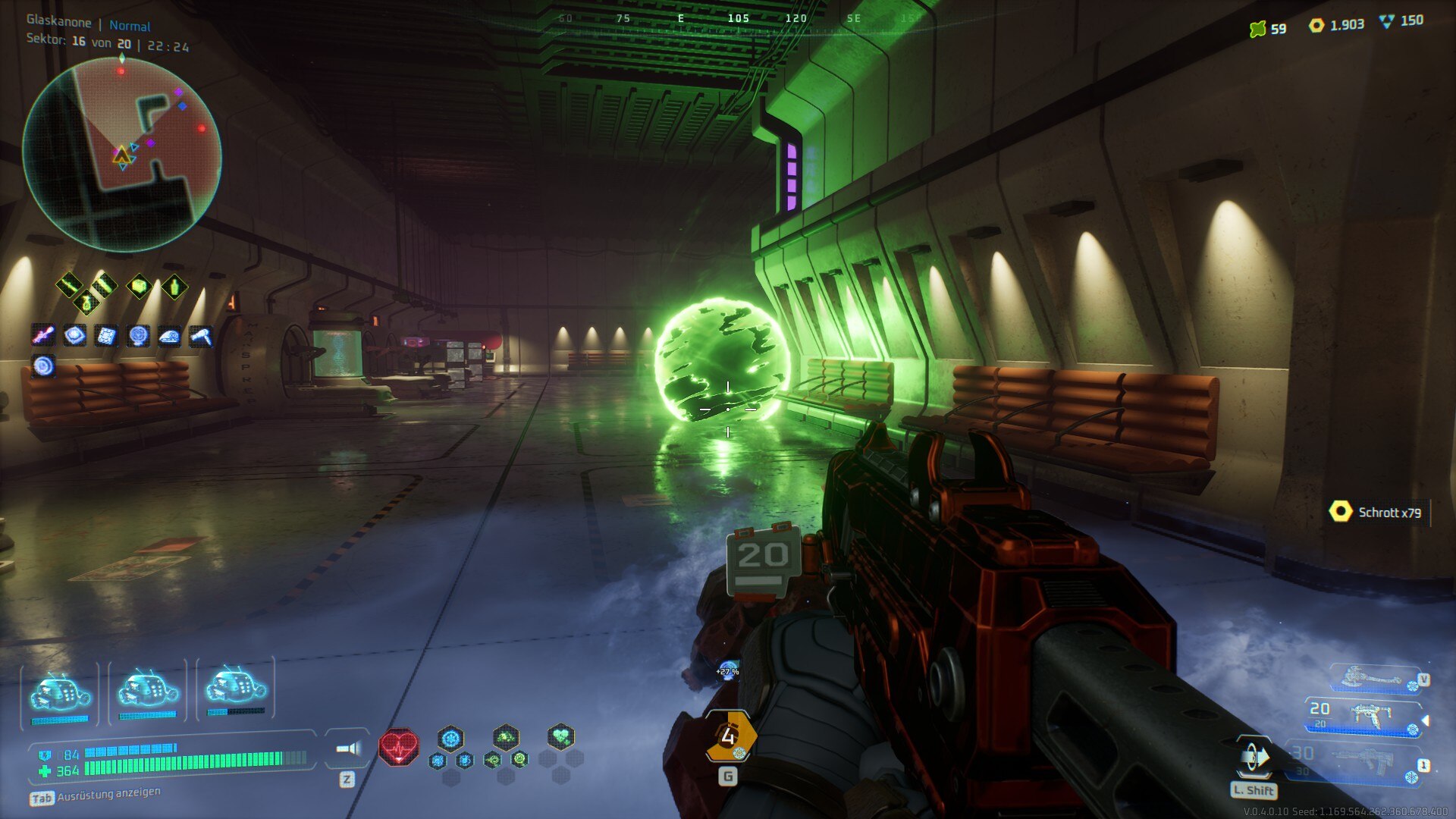
The roguelite nature means that each run is self-contained, with temporary power-ups discarded upon death. What makes Deadzone engaging is its robust augment system. Every augment fundamentally changes how you approach fights—ranging from simple damage boosts to complex mechanics such as chaining elemental effects between enemies or altering projectile physics. Elemental modifiers like shock, burn, and corrosive damage can stack for devastating combos. The synergy between augments and elements often produces wildly different playstyles from run to run.
Cooperative play magnifies this variability. In three-player sessions, augment synergy between teammates can create devastating coordinated effects—one player applying corrosion, another delivering high-voltage follow-up shots, and a third controlling crowds with area denial effects. Runs tend to last between 25 and 45 minutes, striking a balance between intensity and accessibility for both solo and group sessions.
Combat in Deadzone: Rogue is deliberately designed to be fast and responsive. Weapons carry distinct recoil patterns, rates of fire, and reload speeds, making weapon choice a matter of both preference and tactical need. Close-range weapons like shotguns and SMGs encourage aggressive movement, while precision rifles and energy-based arms reward positioning and timing. The feel of each weapon is reinforced by strong sound design—shotguns punch with deep bass, energy rifles hum with a futuristic edge, and melee strikes land with sharp, mechanical impact.
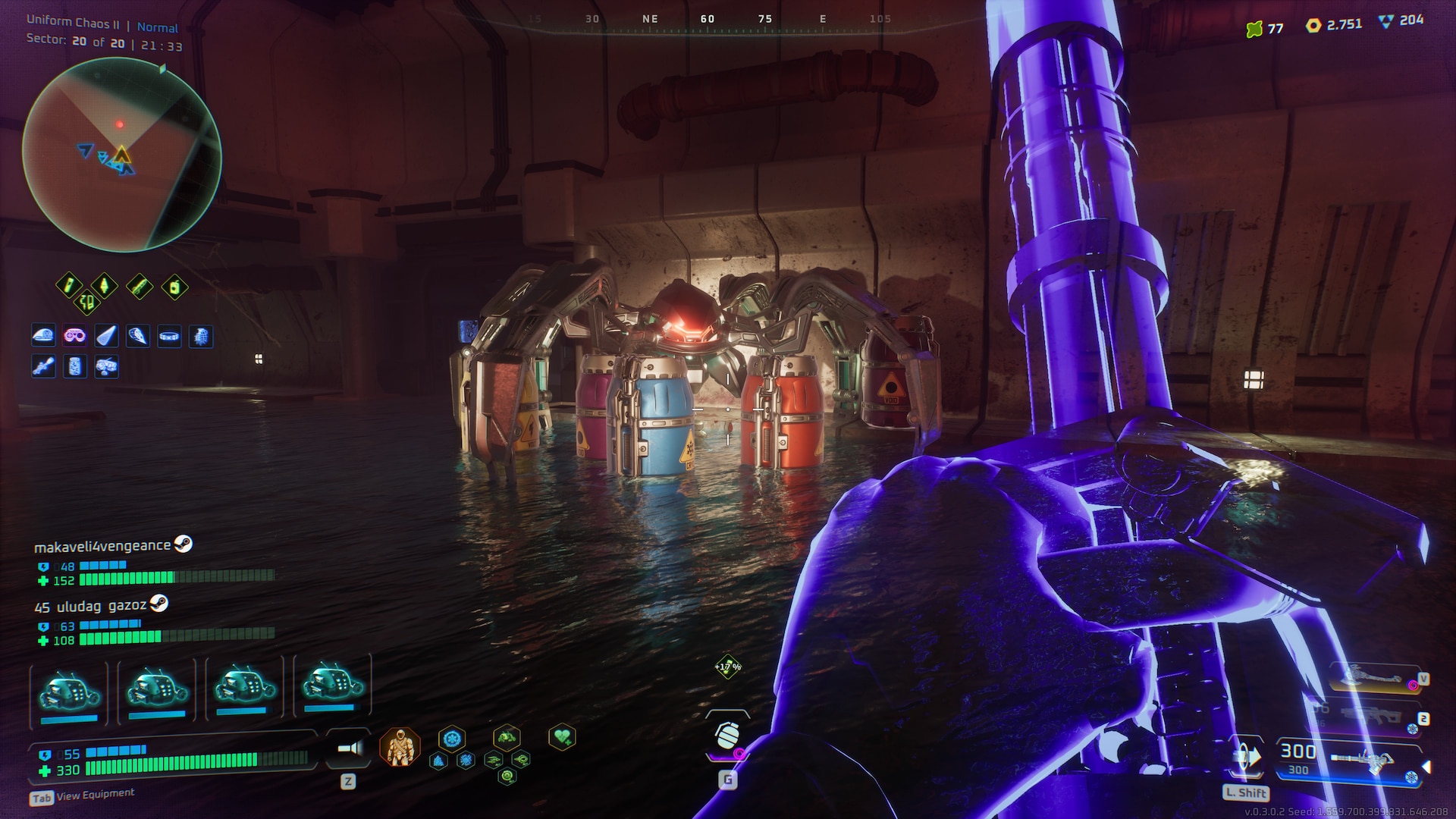
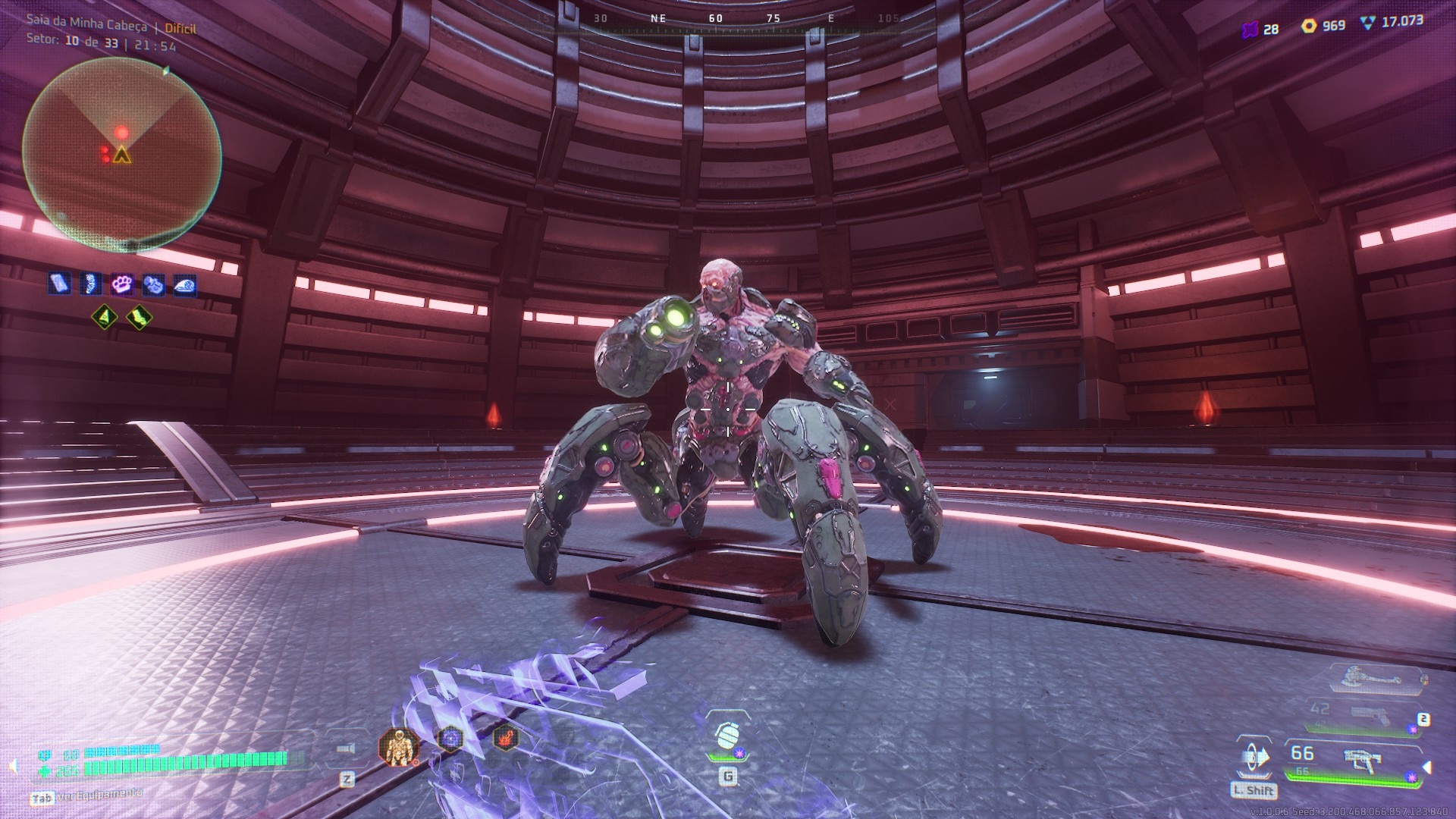
Enemy variety is solid. Early zones throw swarms of small melee creatures to test reflexes, while later areas introduce shielded enemies, ranged snipers, and heavy armor units that require sustained fire or clever elemental exploitation. Mini-boss encounters appear mid-run, forcing players to adapt on the fly—these battles often feature environmental hazards such as collapsing platforms, moving cover, or electrified floors.
Movement mechanics are straightforward but refined, focusing on fluid strafing, quick direction changes, and short dodge bursts. The absence of complex parkour is deliberate; the game emphasizes spatial awareness and crowd control over acrobatic maneuvers.

Progression & Replay Value
Deadzone: Rogue’s progression system operates on two layers. The temporary layer consists of augments and elemental upgrades acquired during each run, which reset upon death. The permanent meta-progression layer unlocks new weapons, augment tiers, and passive buffs that persist across sessions. These permanent upgrades are purchased with resources earned during runs, creating a sense of steady advancement even after failed attempts.
The inclusion of Zone 3 in the 1.0 update meaningfully expands the game’s variety. This zone features a darker, more claustrophobic layout with new biomechanical enemies, environmental hazards like corrosive gas pockets, and more frequent boss-tier opponents. The expanded pool of augments and weapon types also reduces early-game repetition, encouraging experimentation in future runs.
Presentation
Visually, Deadzone: Rogue embraces a gritty industrial sci-fi aesthetic. Environments feel functional rather than ornamental, with metallic corridors, reinforced blast doors, and damaged infrastructure telling the story of a long-abandoned installation. Lighting design plays a practical role—combat readability is prioritized, with clear silhouettes and visual cues to track fast-moving enemies.
Sound design supports gameplay clarity. Weapon audio has weight and distinction, while enemy vocalizations telegraph incoming threats. Ambient audio in quieter moments adds to the tension, though the game rarely gives you more than a few seconds before the next wave arrives.
Performance & Optimization
On modern gaming PCs, Deadzone: Rogue runs smoothly at 1080p and 1440p, typically maintaining 90–120 FPS on high settings with mid-tier GPUs such as the NVIDIA RTX 3060 or AMD RX 6600 XT. Players with high-end systems (RTX 4070/7900 XT) report consistent 144+ FPS at 1440p or 4K, even during large-scale encounters.
CPU utilization is efficient, with the game comfortably running on quad-core processors, though higher clock speeds improve minimum frame rates in heavy firefights. Load times average under 10 seconds on SSDs, and multiplayer connections remain stable with minimal latency spikes in co-op sessions.
The 1.0 release addresses most of the frame pacing and stuttering issues seen in Early Access. Some minor hitching can still occur during the first few seconds after loading into a new room, especially on older hardware, but these instances are brief and rare.
Strengths and Areas for Growth
Deadzone: Rogue’s strongest qualities lie in its tight, satisfying gunplay, its flexible augment and elemental system, and its accessible cooperative design that scales difficulty for multiple players without sacrificing pace. The game’s combat loop encourages replay, and the persistent progression system provides motivation to keep returning.
However, procedural room generation can occasionally lead to a sense of déjà vu, especially after dozens of hours. While the addition of new zones and augment combinations helps, the core room archetypes may begin to feel familiar over time. Additionally, the game’s reliance on RNG for weapon and augment drops can be frustrating for players who prefer predictable progression.
Final Verdict: 8/10
Deadzone: Rogue succeeds in delivering an engaging, high-tempo roguelite FPS that rewards both quick reflexes and strategic buildcrafting. Its 1.0 release feels like a meaningful step forward, polishing technical performance, expanding content, and balancing its systems for both solo and co-op play. While it lacks the handcrafted set pieces and cinematic production of AAA shooters, its focus on pure gameplay, variety through augments, and consistently satisfying combat make it an easy recommendation for fans of the genre.
For players who thrive on adapting to unpredictable scenarios, experimenting with new builds, and tackling short, repeatable runs—whether alone or with friends—Deadzone: Rogue offers a finely tuned experience with strong replay value.