After more than two decades away from the spotlight, Capcom’s Onimusha series returns with Onimusha: Way of the Sword, a new entry that modernizes the franchise without abandoning the samurai action that made it distinctive in the first place. Set in a supernatural version of historical Japan, the game follows Miyamoto Musashi as he becomes caught up in a conflict involving the demonic Genma and a corrupted Kyoto. It is a straightforward premise, but one that gives Capcom plenty of room to combine historical imagery with the dark fantasy that has always been central to Onimusha.
The result is an action game with a surprisingly deep combat system, impressive production values and some excellent boss encounters, but also a number of modern additions that do not always improve the experience. The best parts of Way of the Sword are its tightly designed combat encounters, where timing and observation matter more than simply attacking as quickly as possible. The weaker sections are usually found between those fights, particularly in the larger Kyoto areas where exploration, resource gathering and repeated activities can interrupt the momentum established by the game’s strongest missions. Recent reviews have similarly highlighted the contrast between the excellent combat and the less convincing open-ended and progression systems.
That imbalance prevents Way of the Sword from being a consistently great experience, but it does not stop it from being a very good one. More importantly, Capcom has understood that the series does not need to become a completely different kind of game to return successfully. Beneath the modern presentation and expanded structure is an unusually satisfying sword-fighting system that gives the game a strong identity of its own.
Story and Setting
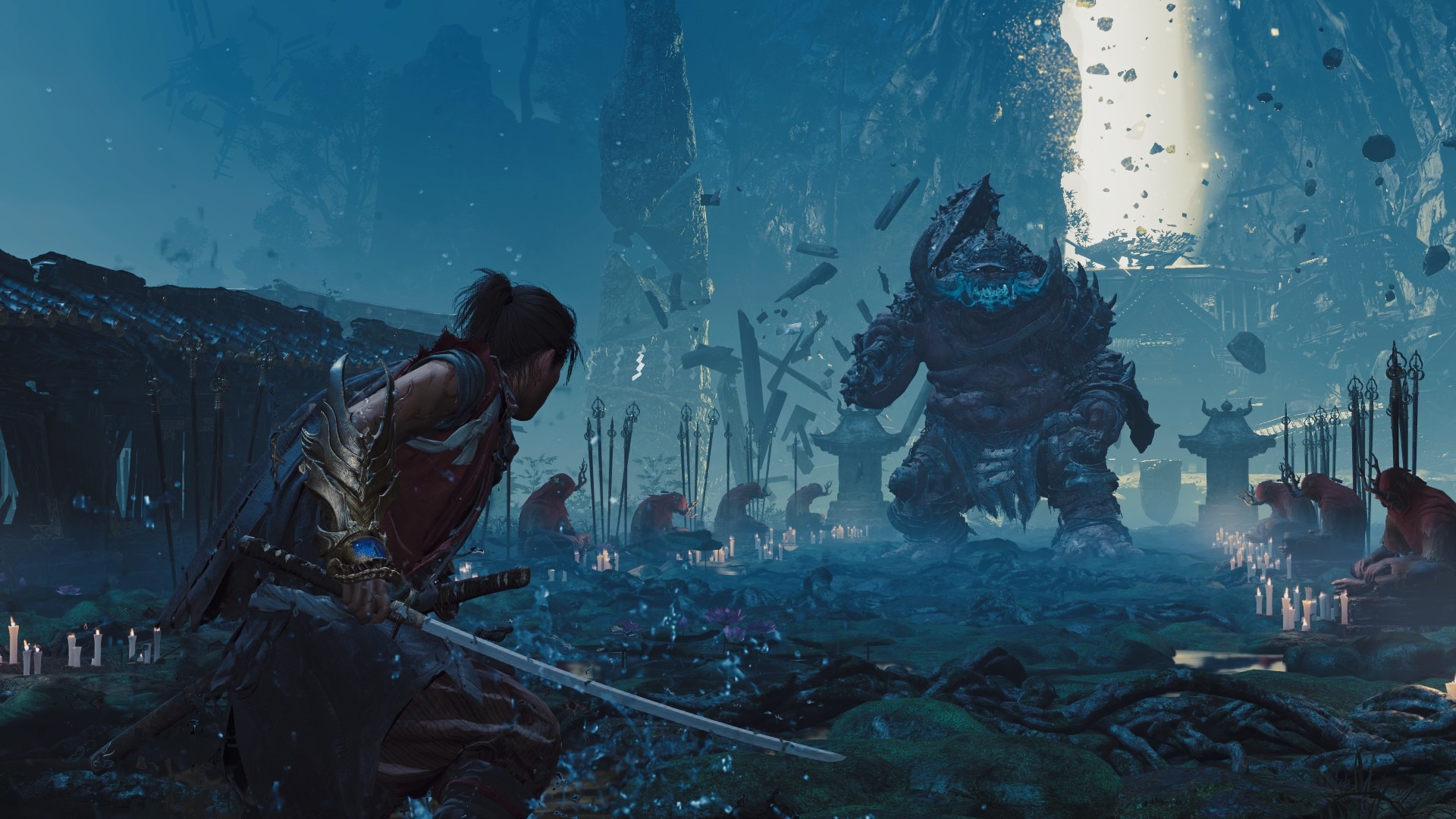
Way of the Sword takes place in a fantastical interpretation of Japan during a period of historical upheaval, with Kyoto serving as the main setting. The city has been corrupted by Malice, allowing Genma demons to invade the human world and transforming familiar temples, streets and other historical locations into dangerous supernatural environments. This combination of recognizable Japanese architecture and grotesque fantasy works particularly well because the game rarely needs to explain why its world looks the way it does; the visual contrast does most of the work.
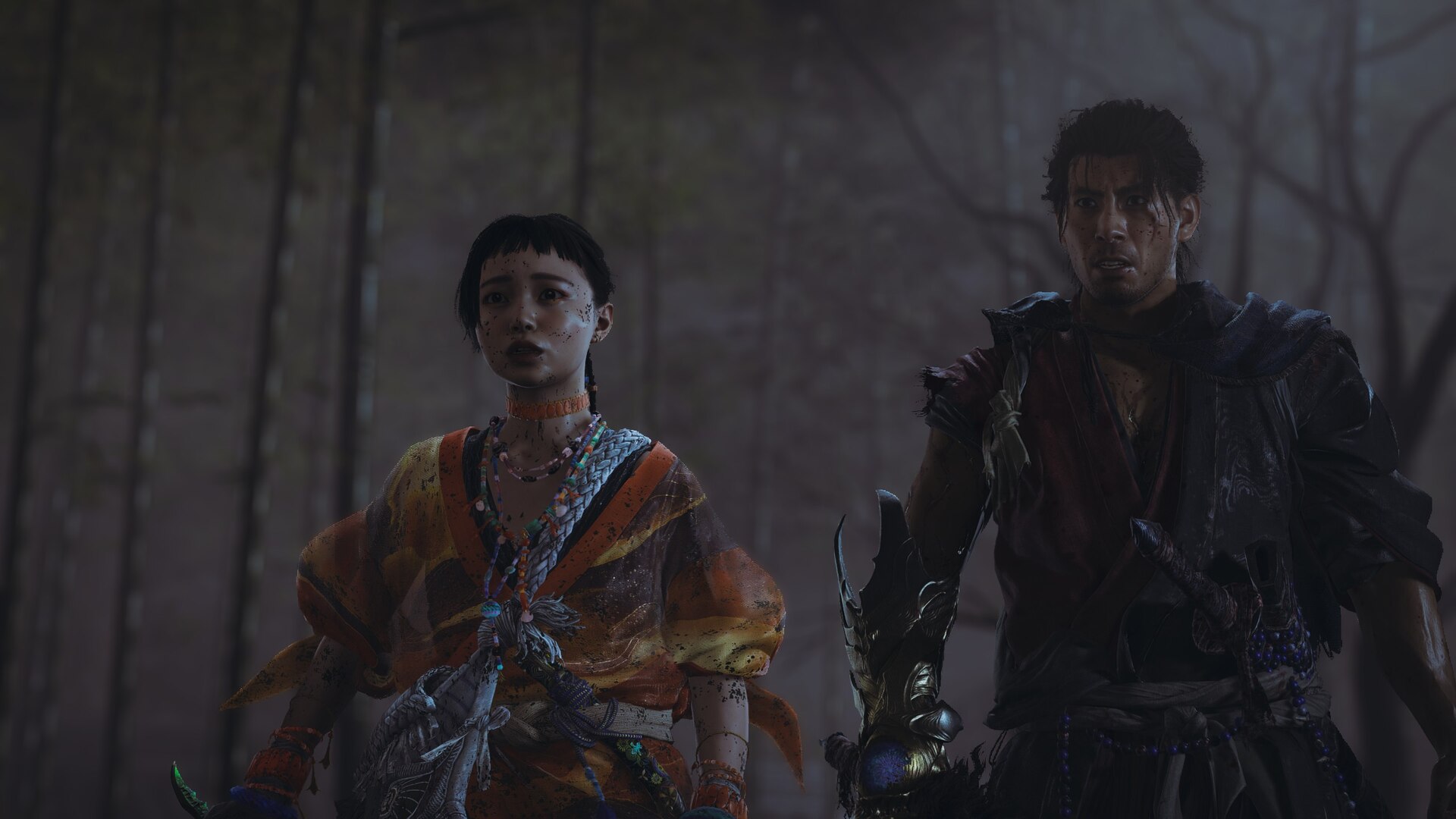
Miyamoto Musashi is a natural protagonist for this setting, although the game presents him less as the legendary figure remembered by history and more as an ambitious young swordsman who is still concerned with proving himself. His confidence can border on arrogance, but that becomes an important part of his character rather than simply making him difficult to like. As the story progresses, Musashi gradually becomes more invested in the people and events surrounding him, giving his journey a conventional but effective character arc. His appearance is based on legendary actor Toshiro Mifune, and the likeness gives him a distinctive screen presence that works particularly well during the game’s close-up dialogue scenes.
The supernatural story is not particularly complicated, and that is mostly an advantage. There are mysteries surrounding the Genma, the Oni Gauntlet and the forces affecting Kyoto, but the game does not require the player to keep track of an enormous mythology before being allowed to enjoy the action. The supporting characters also provide enough personality to keep the narrative from becoming relentlessly grim, with occasional humor providing some welcome contrast to the darker material. The story occasionally takes itself more seriously than the writing can support, but Musashi’s personality and the strength of the presentation carry it through most of its weaker moments.
Gameplay and Mechanics
Combat is easily the strongest aspect of Onimusha: Way of the Sword, and it is substantially more sophisticated than the straightforward hack-and-slash description that might initially come to mind. Musashi has a range of offensive and defensive options, but the game is built around the idea that understanding an enemy’s attack is more valuable than simply attacking first. Blocking, dodging, parrying, deflecting and the powerful Issen counter each have different uses, and the player gradually learns to recognize which response is appropriate for a particular situation. The result is combat that can initially seem simple before revealing considerably more depth as new mechanics are introduced.
Parrying forms the foundation of that system, but it is not the only defensive technique available. A well-timed parry can disrupt an enemy and create an opening, while a poorly timed attempt can leave Musashi in a vulnerable position. Deflecting is particularly important against certain attacks and enemies because it provides another way of disrupting an opponent’s stamina. Dodging, meanwhile, becomes essential when facing attacks that cannot be safely dealt with through a conventional parry or block. This makes defensive play much more interesting than simply waiting for one universal counter opportunity, because the player has to identify what the enemy is actually doing before deciding how to respond.
Issen is the mechanic that gives the combat much of its character. By timing an attack correctly against an incoming strike, Musashi can deliver an extremely powerful counterattack that can turn a difficult exchange in his favor. It is not something that can simply be spammed, and learning the timing takes practice, particularly when fighting enemies with unfamiliar attack patterns. Once the player begins landing Issen counters consistently, however, combat becomes much more satisfying because the game’s most impressive attacks are being produced by player timing rather than by a simple progression unlock. The system’s emphasis on precise reactions has inevitably drawn comparisons to other timing-focused action games, but Way of the Sword retains enough of its own mechanics and rhythm to avoid feeling like a direct imitation.
The combat also becomes more interesting as Musashi gains access to additional abilities and supernatural weapons. The Oni Gauntlet allows him to interact with Genma souls and provides access to the supernatural side of his arsenal, while Oni Armaments add further options to encounters. These abilities are particularly useful when dealing with enemies that have specific defenses or require something beyond conventional sword attacks. The skill tree provides another layer of customization, although its value is somewhat reduced by the game’s resource requirements and the fact that the core combat is already strong before every upgrade has been unlocked.
One of the game’s most satisfying qualities is the way its mechanics encourage players to learn enemies rather than simply become stronger than them. A dangerous opponent may have an attack that needs to be dodged, another that can be parried and another that requires a different defensive response. Armor can create another complication, while sword clashes and other encounters can demand quick reactions at close range. This gives individual enemies a mechanical identity even when their visual designs begin to repeat. The system is at its best when the player stops thinking about individual buttons and starts recognizing attack patterns naturally.
The main problem is that the enemy roster does not always provide enough variety to match the depth of the combat system. Some regular encounters remain enjoyable because the mechanics are so good, but repeated fights against familiar enemies eventually lose some of their impact. The issue is not that the combat becomes bad; rather, the game sometimes asks an excellent combat system to do too much work with the same collection of opponents. The strongest encounters are therefore the ones that introduce a genuinely different attack pattern or force the player to use a part of Musashi’s arsenal that has not been needed for a while.
Level Design and Exploration
The level design is divided between more focused linear areas and a larger Kyoto environment that provides space for exploration and additional activities. The linear sections are generally the better designed of the two because they allow Capcom to control the rhythm between combat, traversal and story events. Encounters are positioned with purpose, environments provide clear routes toward major objectives, and the player rarely has to wonder whether a particular section exists for anything other than delivering the next part of the adventure.
The broader Kyoto areas are more problematic. There is nothing inherently wrong with giving the player a larger area to explore, and the corrupted city provides some attractive scenery and opportunities to discover resources and optional content. The problem is that exploration does not always produce discoveries that justify the extra time spent searching. Fetch-style objectives, repeated activities and resource collection can turn what initially appears to be meaningful exploration into a series of errands between major missions. Multiple reviews have identified these larger sections and their effect on pacing as one of the game’s weaker elements.
The difference becomes especially noticeable when returning from one of the game’s linear missions to Kyoto. The linear sections have a sense of purpose because almost every encounter contributes to the immediate rhythm of the level, whereas the broader areas can feel as though they are asking the player to perform additional tasks simply because there is space available to do them. The city itself is attractive enough to encourage exploration, but the activities found there are not consistently interesting enough to make that exploration rewarding.
This is particularly unfortunate because the game does not actually need a large open structure to work. Its best sequences demonstrate that Capcom understands how effective a tightly controlled action-game level can be. A more focused approach, with Kyoto functioning primarily as a compact hub rather than a place filled with repeated errands, might have produced a more consistent campaign. Instead, the game sometimes sacrifices momentum for additional content that does not provide an equivalent increase in enjoyment.
Boss Battles
Boss encounters are where the combat system reaches its highest level. These fights tend to demand a much better understanding of Musashi’s defensive options than ordinary encounters, forcing the player to recognize attack patterns and react appropriately rather than relying on a familiar combination of attacks. The best bosses feel like tests of everything the player has learned, with their difficulty coming from the need to understand their behavior rather than simply from inflated health bars.

Sword-focused duels are especially effective because they strip away much of the visual noise and emphasize timing. Fighting a skilled opponent becomes a matter of reading subtle movements, recognizing attack cues and deciding when to commit to a counter. Larger Genma encounters provide a different kind of spectacle, but they can still work when their attacks and defensive requirements are sufficiently distinct. Several reviews have singled out the boss battles as one of the game’s strongest aspects, and that assessment is justified.
The weakness is that some major opponents return more than once. Reusing a boss is not necessarily a problem if the rematch introduces meaningful changes, but repeated encounters can reduce the sense of occasion that made the original fight memorable. The same issue affects some of the game’s minibosses and regular enemies, creating a noticeable contrast between the freshness of the combat mechanics and the familiarity of some of the opponents.
Even with that repetition, the best boss encounters are among the strongest reasons to play Way of the Sword. They provide the clearest demonstration of how all the combat systems are supposed to work together, and overcoming a difficult opponent through improved timing feels much more satisfying than simply defeating it because Musashi has accumulated better equipment.
Progression and Upgrades
The progression system provides Musashi with a skill tree and equipment improvements, while resources collected during the campaign can be used to strengthen his abilities and gear. On paper, this fits naturally into the action-adventure structure. Exploring an optional area should have a purpose, and discovering useful materials can give players another reason to investigate corners of the environment that they might otherwise ignore.
In practice, the resource system is one of the game’s more noticeable sources of friction. Materials such as leather, iron and other crafting components can require deliberate collection, and players interested in keeping their equipment upgraded may find themselves paying more attention to resource management than they would prefer. Fortunately, some materials can eventually be purchased from the appropriate shrine, which reduces the need for repeated grinding, but that solution does not completely remove the underlying problem.
The important distinction is that Way of the Sword never becomes completely dependent on character statistics. A stronger Musashi certainly helps, but knowing how to handle an enemy remains more important than simply having better equipment. This keeps the progression from turning the game into a conventional action RPG, and it also means that players who ignore some optional upgrades are not automatically prevented from progressing.
Still, the upgrade structure contributes to the feeling that the campaign is occasionally longer than necessary. When the player is enjoying a sequence of carefully designed battles, stopping to gather another set of materials can feel like an interruption rather than a reward. The progression system is functional, but it is not one of the reasons to play the game, and a more streamlined approach would have allowed the excellent combat to remain the primary focus.
Pacing and Repetition
The game’s pacing is inconsistent largely because its strongest and weakest design ideas are placed next to each other. The opening takes time to establish Musashi and introduce the combat mechanics before the full depth of the system becomes apparent. That deliberate introduction is understandable, but players expecting the game to immediately showcase its best swordplay may find the beginning slower than anticipated. The combat becomes substantially richer as more defensive and offensive tools are introduced, and the game’s later encounters are considerably better at demonstrating what the system can do.
The problem later shifts from a lack of variety to an excess of repetition. Familiar enemies appear frequently, optional objectives can involve returning to previously visited areas, and some activities repeat without introducing enough new mechanical ideas to justify their inclusion. The combat remains enjoyable because the underlying system is so refined, but repetition inevitably reduces the impact of encounters that would have been more impressive if they appeared less often.
The result is a campaign that sometimes feels as though it is deliberately slowing itself down between its best moments. A major boss can provide an excellent test of the player’s abilities, only for the game to follow it with familiar enemies and resource collection before the next meaningful challenge. This does not make the overall experience tedious, but it prevents Way of the Sword from maintaining the same level of quality throughout its runtime. The difference between its excellent combat encounters and its routine activities is simply too pronounced to ignore.
Visuals and Presentation
Visually, Way of the Sword is one of Capcom’s strongest demonstrations of the RE Engine outside its established horror franchises. Kyoto is rendered with a strong sense of atmosphere, combining traditional architecture, forests and temples with the supernatural corruption spreading throughout the city. The environments are often at their best when the historical setting and fantasy elements occupy the same space, allowing familiar locations to become increasingly distorted as Musashi progresses.
The character presentation is equally strong. Musashi’s likeness to Toshiro Mifune gives him a distinctive appearance, while the detailed facial animation helps sell the more expressive side of his personality. The game also makes good use of its cinematic presentation during major encounters, although it generally works best when those visual flourishes support the action rather than interrupting it. The RE Engine’s ability to produce detailed faces and environments is particularly apparent during close-up character scenes.
Combat animation is perhaps even more important than the scenery. Sword strikes have weight, enemies react convincingly to attacks, and the game’s dismemberment system makes the consequences of a successful hit visually clear. Some of the supernatural effects can become busy during larger fights, but the overall presentation remains impressive without requiring the player to overlook obvious compromises.
Sound and Music
The sound design gives the combat an appropriate sense of physical impact. Sword clashes, enemy attacks and successful counters have distinct audio cues, which is particularly useful during more chaotic encounters when visual effects can make it difficult to follow every movement. The audio therefore contributes to the combat system rather than simply decorating it.
The music is similarly effective when it supports the setting without overwhelming it. The soundtrack helps maintain the mixture of historical drama and supernatural danger, while the voice performances give Musashi and the supporting cast enough personality to carry the quieter sections. Players who want the strongest sense of immersion may prefer the Japanese voice track, although the available options make the game accessible to players with different preferences.
Technical Performance on PC
The PC version provides a solid selection of graphics options and supports modern upscaling technologies, including NVIDIA DLSS 4.5 and AMD FSR 3.1. That flexibility is useful because the game’s official requirements make it clear that upscaling is an important part of the intended performance targets. The minimum specification targets 1080p at 30 frames per second on Low with upscaling, while the recommended specification targets 1080p at 60 frames per second on Medium with upscaling. Both configurations require 16GB of memory and an SSD, with Windows 11 listed as the operating system requirement.

This matters because Way of the Sword is a game where consistent performance is more valuable than simply maximizing image quality. The combat relies heavily on timing, so an unstable frame rate can be more noticeable here than it would be in a slower adventure game. Players with stronger PCs have enough settings available to balance visual quality and performance, while those closer to the minimum specification should be prepared to use upscaling and lower settings rather than treating the minimum hardware as a guarantee of maximum visual quality.
The PC version also supports ultrawide displays, including the game’s cutscenes, which is a welcome feature for players using wider monitors. Handheld PC performance is more complicated, with Steam Deck testing indicating that a stable 30 FPS target is more realistic than expecting consistently higher frame rates, particularly in the more demanding Kyoto hub areas.
Overall, the PC release is flexible enough to accommodate a range of hardware, but it is not a lightweight game. The sensible approach is to find a stable configuration rather than simply pushing every setting as high as possible. Given how important reaction timing is to the combat, consistency should take priority over a handful of additional visual effects.
Final Verdict: 8.5/10
Onimusha: Way of the Sword is a strong return for a series that has been absent for far too long, although it is not quite as consistent as its best combat encounters suggest it could have been. Capcom has succeeded where it matters most by creating swordplay that feels precise, weighty and rewarding. Parrying, deflecting, dodging, stamina management and Issen counters work together to create encounters where learning an enemy’s behavior is more important than simply attacking faster. The Oni Gauntlet and Oni Armaments add another layer without completely overwhelming the fundamentals, while the boss fights provide some of the campaign’s most satisfying challenges.
The problems largely come from everything surrounding that combat. The larger Kyoto areas are less convincing than the game’s linear stages, with repeated activities and resource collection sometimes slowing the pace rather than enriching the adventure. The upgrade system is useful but can encourage unnecessary material gathering, while repeated enemies and returning bosses gradually reduce the impact of encounters that were more impressive the first time around. These issues have also been consistently identified in recent critical assessments of the game.
Those weaknesses are significant, but they do not undermine the central achievement. When Way of the Sword focuses on a carefully designed fight, it becomes difficult to put down. A successful parry, perfectly timed Issen or hard-earned boss victory feels satisfying because the game asks the player to improve rather than simply accumulate power. That makes the combat worth engaging with even when the surrounding structure becomes repetitive.
For longtime Onimusha fans, the game provides a convincing modern continuation without simply copying the older titles. For newcomers, it offers a standalone introduction to the series’ combination of samurai action and supernatural fantasy. It is not a perfect revival, and a more focused campaign would have made its strengths considerably more apparent, but the underlying combat is too good to dismiss.
Onimusha: Way of the Sword ultimately succeeds because it understands what the series does best. The modern additions do not always improve the experience, but when Musashi draws his sword and the game puts the emphasis back on timing, positioning and precision, Capcom’s long-dormant samurai series feels completely at home in the present day.