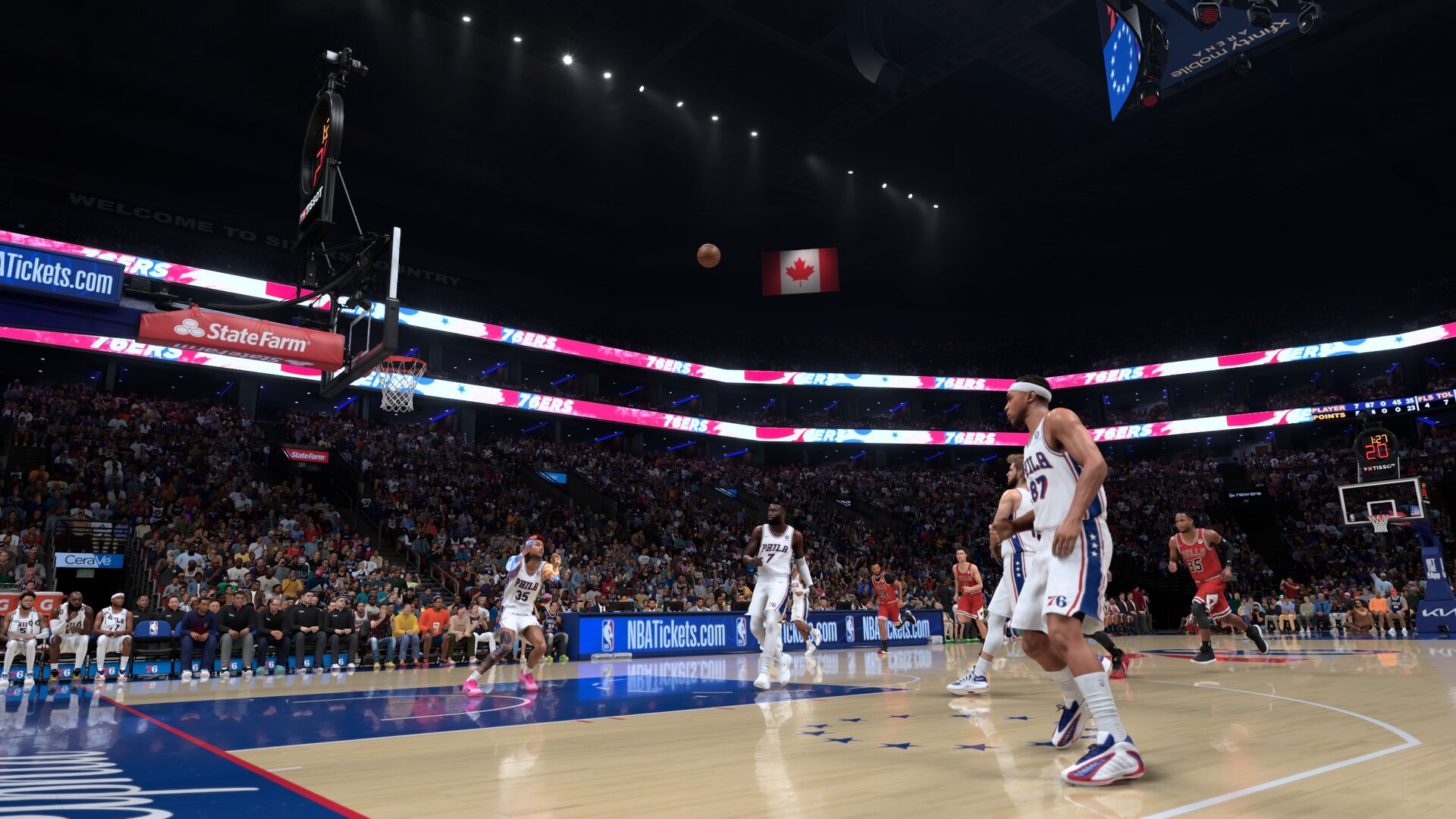
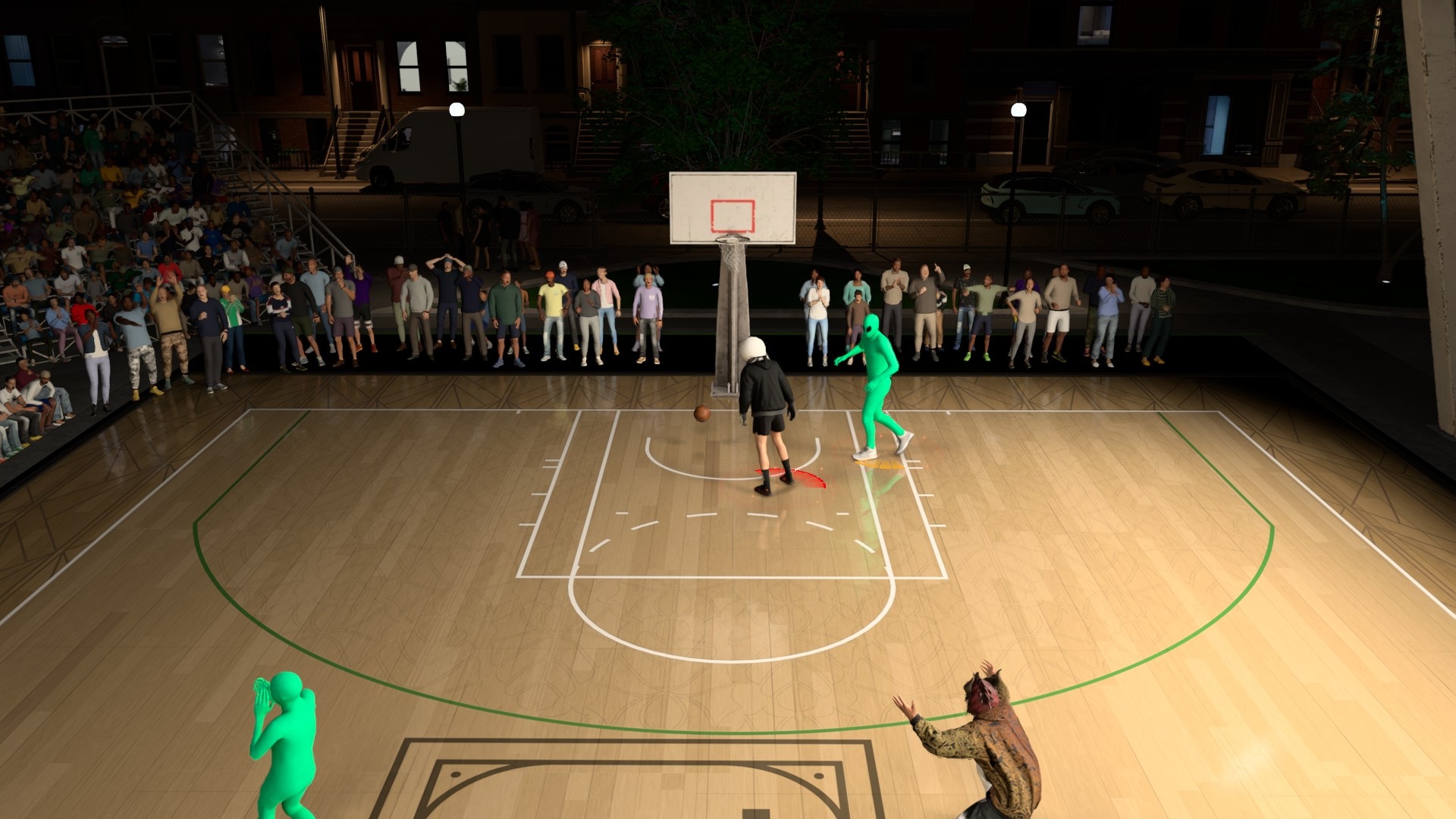
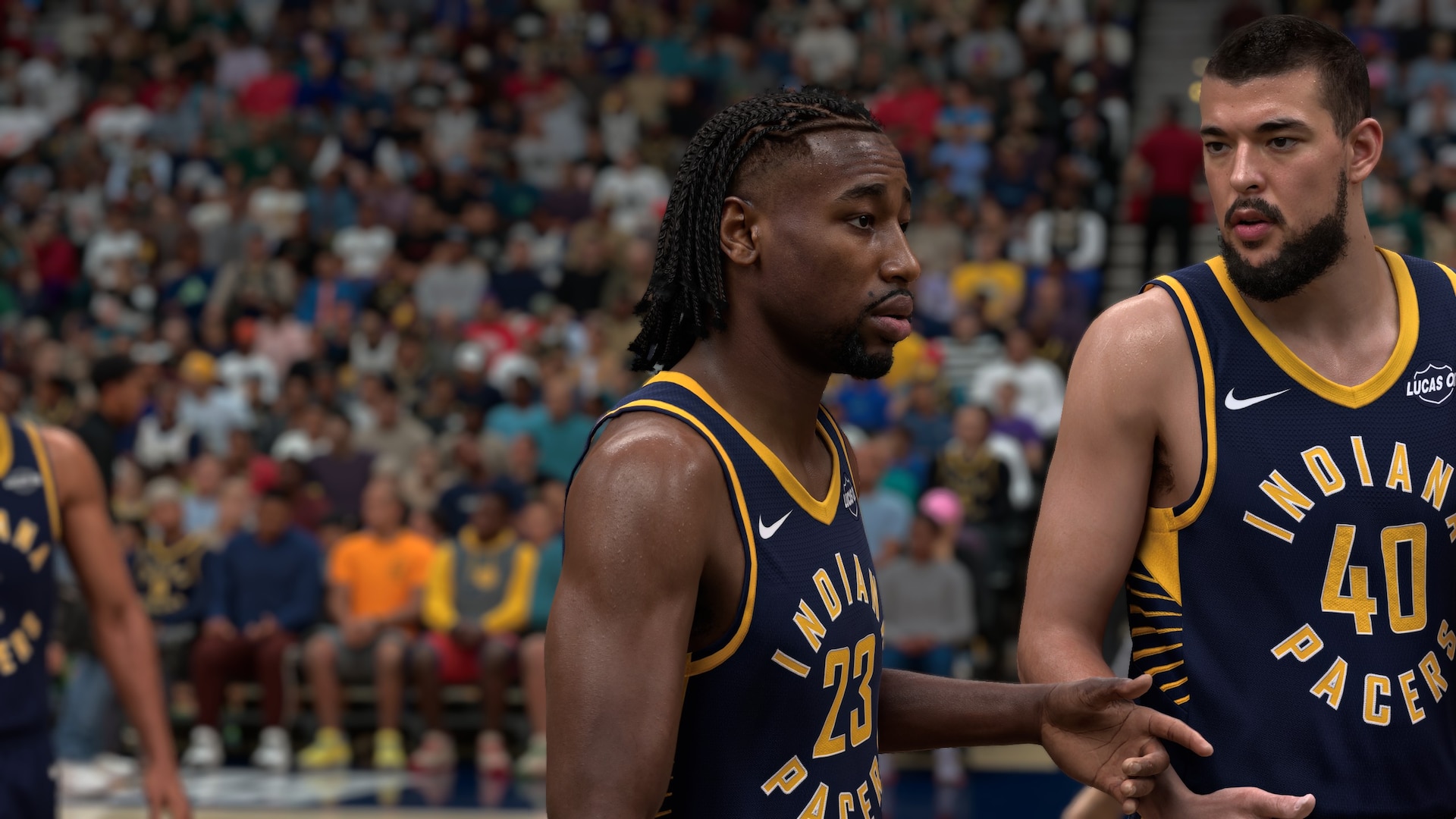
NBA 2K27 gets one of the most important things right: playing basketball is better this year. Visual Concepts has made meaningful changes to defense, shooting, dribbling and finishing, and those changes are noticeable from the first few games. Possessions feel more dependent on positioning and decision-making, while defenders have more ways to influence what happens on the court. For a series that has spent years adding layers around its basketball, it is refreshing to see the actual sport receive this much attention.
Unfortunately, NBA 2K27 is still much more complicated than it needs to be. The same progression systems, virtual currency economy, seasonal content and social spaces that have increasingly defined the series remain firmly in place. MyCAREER continues to surround a basketball career with distractions and expenses, MyTEAM remains tied to an ongoing card-collecting economy, and even the presentation can become excessive after spending enough time with the game.
The PC version adds another layer to that equation. Its baseline requirements are reasonable, but NBA 2K27 is also the first game to officially feature NVIDIA’s DLSS 5, a technology capable of making player models, faces and lighting considerably more realistic. The visual improvement is impressive, but the performance cost can be severe, particularly at higher resolutions, making it difficult to recommend as a default setting even on powerful hardware.
NBA 2K27 is therefore a better basketball game than it is an overall package. Its improvements are genuine, but they are surrounded by enough familiar problems to keep the game from becoming the significant step forward the series needs.
Gameplay and Mechanics
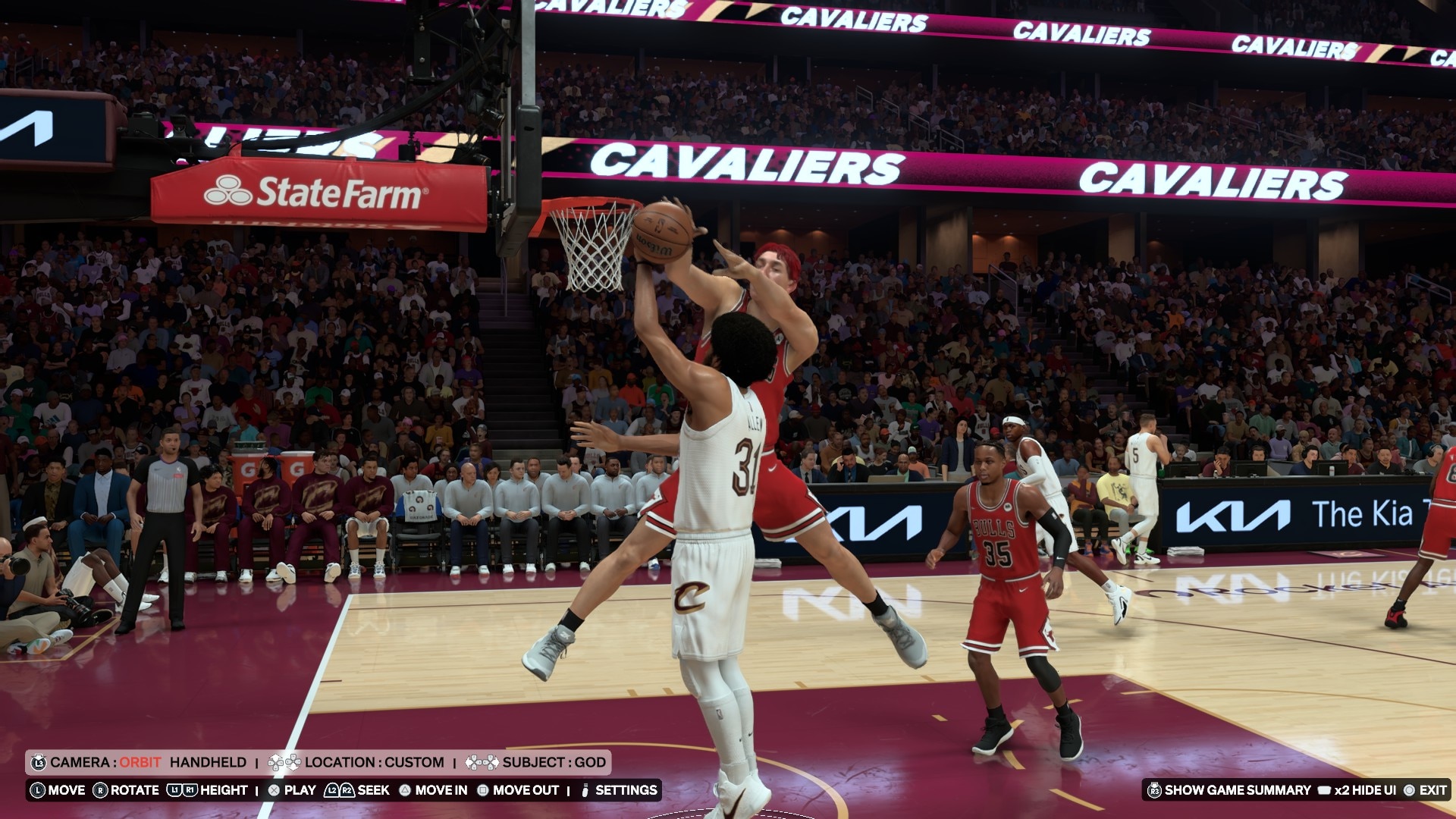
The biggest improvement in NBA 2K27 is the defensive game. Visual Concepts has reworked hands-up defense, shot contests, defensive cutoffs and collisions, while also adding thousands of new animations through ProPLAY. The intention is to make defensive positioning more important and reduce situations where a defender feels like a spectator waiting for an animation to decide the outcome.
For the most part, it works. Staying in front of a ball handler requires more attention, and simply being somewhere near an opponent is no longer enough to consistently produce a useful contest. Closing out on a shooter, protecting the driving lane and anticipating a pass all feel more important than they did previously. A good defensive possession now has a stronger sense of cause and effect.
That change also makes the CPU more interesting. Offensive players are better at recognizing opportunities, while defensive teammates respond more convincingly to movement and passing. The result is a game that asks the player to read the floor rather than constantly correcting obvious problems caused by the AI.
There are still inconsistencies. Contact animations can occasionally take control of an interaction in ways that do not quite match the players’ positions, while loose-ball situations and physical collisions can produce strange results. These moments are less damaging than they have been in the past, but they remain noticeable because the rest of the defensive system is more responsive.
The improved defense also changes the rhythm of a game. Open shots feel more valuable because creating them requires actual work, and driving into a crowded paint is more likely to have consequences. NBA 2K27 does not suddenly become a perfect basketball simulation, but it does a better job of making defensive decisions matter.
Shooting and Ball Handling
Shooting has also been adjusted, with Rhythm Shooting placing greater emphasis on release timing and the circumstances surrounding an attempt. Free throws can use the same approach, giving players who prefer the Pro Stick a more consistent control scheme across different situations.
The system works best when it encourages players to create good shots rather than repeatedly attempting difficult ones. Space matters, defensive pressure matters and timing matters, which makes successful scoring feel more connected to what happened during the possession. The downside is that returning players have to adjust to another set of timing expectations, and that learning process can be frustrating for anyone who has already spent years developing muscle memory around previous entries.
Dribbling has become deeper as well. Signature dribbling packages are now broken into individual movements, giving players more freedom to construct combinations and create a style that suits a particular player. The added control is useful for experienced players and makes the better ball handlers feel appropriately distinctive.
It also demonstrates how complicated NBA 2K has become. Learning basketball and learning NBA 2K are increasingly different things. A new player has to understand controls, animations, badges, timing, player ratings and various contextual systems before they can feel completely comfortable. The depth will appeal to dedicated players, but the series could benefit from occasionally simplifying rather than adding another layer.
Finishing and Interior Play
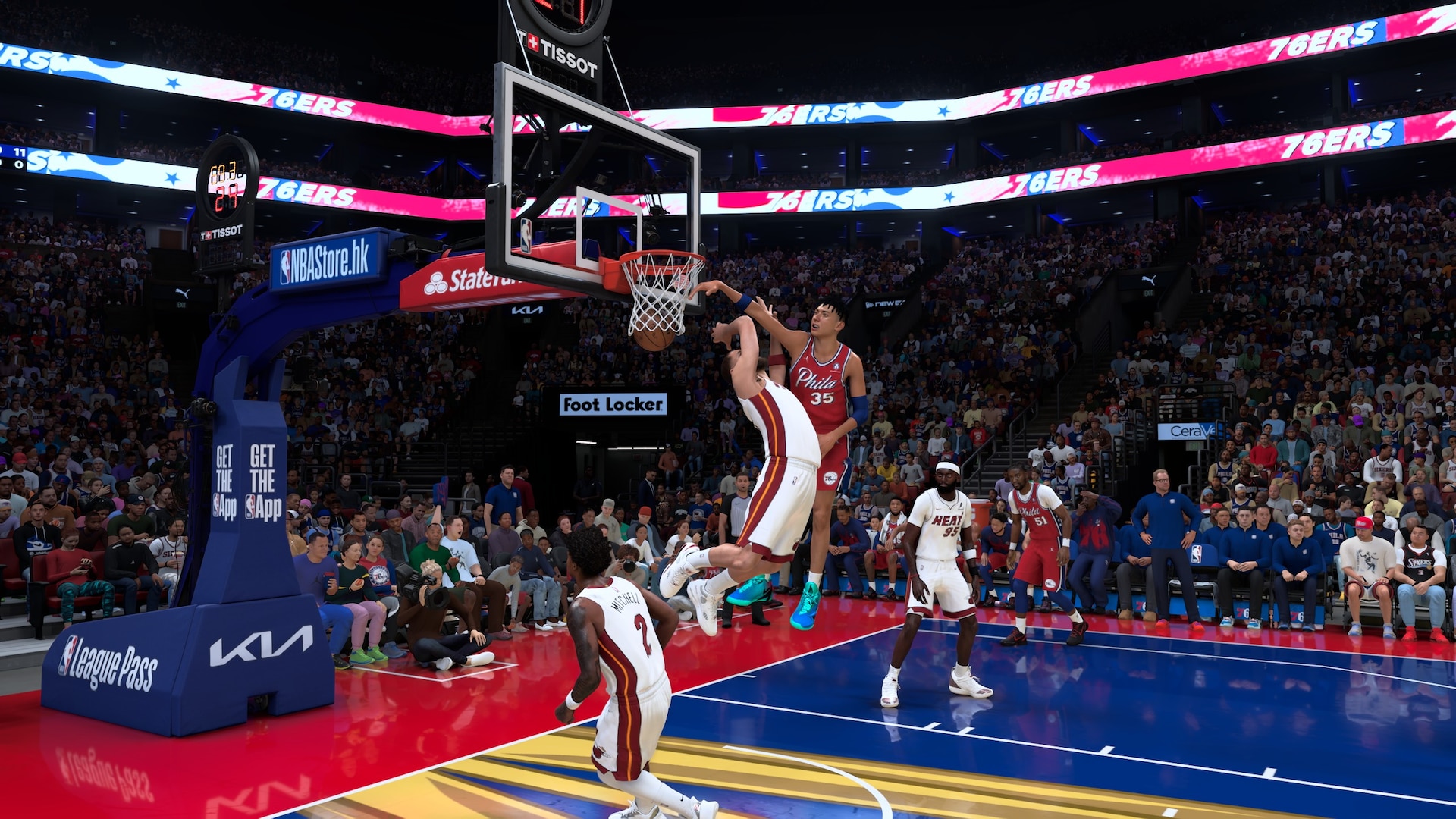
Finishing around the basket receives some welcome attention. The Dynamic Layup Engine provides more contextual movement during layups, while the redesigned Dunk Meter considers defensive positioning during the attempt. The intention is to make finishing less predictable and to give both the attacker and defender more influence over the outcome.
The result is generally positive. Driving against an isolated defender feels different from attacking a crowded paint, and players have more opportunities to adjust their finish according to the situation. The improved defensive positioning also means that reaching the basket is not automatically an invitation to score.
This gives interior play more variety, particularly when using larger players. A well-positioned big man can make life considerably harder for an opponent, while an offensive player has to think about whether a drive is actually worth attempting.
The system still has the occasional problem with animation-driven outcomes. There are possessions where the game appears to have decided what will happen before the player’s input has finished, particularly during heavy contact. Those moments do not invalidate the improvements, but they prevent finishing from feeling as consistently responsive as the rest of the new gameplay systems.
MyCAREER and The City
MyCAREER is where NBA 2K27’s strengths begin to compete directly with its weaknesses. There are more ways to use a created player, including new historical career possibilities and a broader social environment, but the experience remains surrounded by systems that can make simply playing basketball feel unnecessarily complicated.
The City continues to provide a large online hub, with Rucker Park, additional multiplayer activities and skill-based matchmaking intended to make competition more accessible. The co-ed approach also expands the use of created players and gives the mode a broader identity than it has had previously.
The problem is that the size and variety of The City do not necessarily make it more enjoyable. For players who primarily want to develop a character and play NBA games, much of the environment feels like something to navigate rather than something that adds to the career itself. After the initial novelty disappears, travelling between activities and dealing with the various progression systems becomes tiring.
The career story does not completely solve the problem. It provides context for the player’s development, but the writing is rarely strong enough to make the story itself a major reason to continue. NBA 2K is at its best when it lets players create their own basketball stories through what happens on the court, and the scripted material does not consistently reach that level.
Progression is the larger concern. Virtual Currency remains deeply connected to developing a MyPLAYER, and the cost of making a character competitive can become difficult to ignore, particularly for players who want to participate seriously in online modes. Current coverage of the game continues to identify the expense of MyPLAYER progression as one of its major weaknesses.
That undermines what should be one of the most satisfying parts of a career mode. Improving a player should feel like the natural result of playing games and developing skills. NBA 2K27 too often makes it feel like progression is another part of the game’s economy.
MyTEAM
MyTEAM remains a substantial mode for players who enjoy collecting cards and constructing teams that would never exist in a normal NBA season. There is plenty of content, and the continued focus on player progression gives dedicated players reasons to keep experimenting with different lineups.
The problem is that the mode’s strengths are inseparable from its long-term economy. New cards, seasonal progression and competitive rewards create a constant incentive to keep playing and keep improving the collection. That is the basic appeal of this type of mode, but it can become exhausting when the player feels that falling behind means having to spend more time or money to catch up.
For players who already enjoy the MyTEAM formula, these systems will probably be familiar rather than offensive. For everyone else, it is difficult to see the mode as a compelling reason to buy NBA 2K27. It remains a competent card-collecting mode attached to a very good basketball game, but it does little to address the larger concerns surrounding progression and monetization.
MyNBA and Franchise Play
MyNBA continues to be the strongest option for players who want traditional basketball without the pressure of the online economy. The mode allows players to manage teams, control league development and build a long-term NBA experience on their own terms. Its focus on roster management and player development makes it a good choice for those who prefer a more traditional franchise experience.
The historical elements and MyNBA Legacy concept add additional ways to approach the mode, including the opportunity to treat the league as a much longer simulation rather than simply playing through a conventional season. These features fit naturally with the franchise structure and are more useful here than many of the additional systems found elsewhere in the game.
The problem is that MyNBA’s improvements are evolutionary. The mode was already one of NBA 2K’s better features, so additional historical options and refinements do not fundamentally change what it is. That does not make them bad additions, but it means franchise players are unlikely to see NBA 2K27 as a dramatic transformation.
For anyone who mainly plays offline, however, MyNBA remains one of the strongest arguments for buying the game. It provides a relatively clean way to enjoy the improved basketball without forcing players to participate in the broader progression ecosystem.
Presentation and Graphics
NBA 2K27 remains a technically impressive-looking sports game. The player models are detailed, arenas are convincing and the broadcast presentation continues to recreate the appearance of a televised NBA game with considerable care.
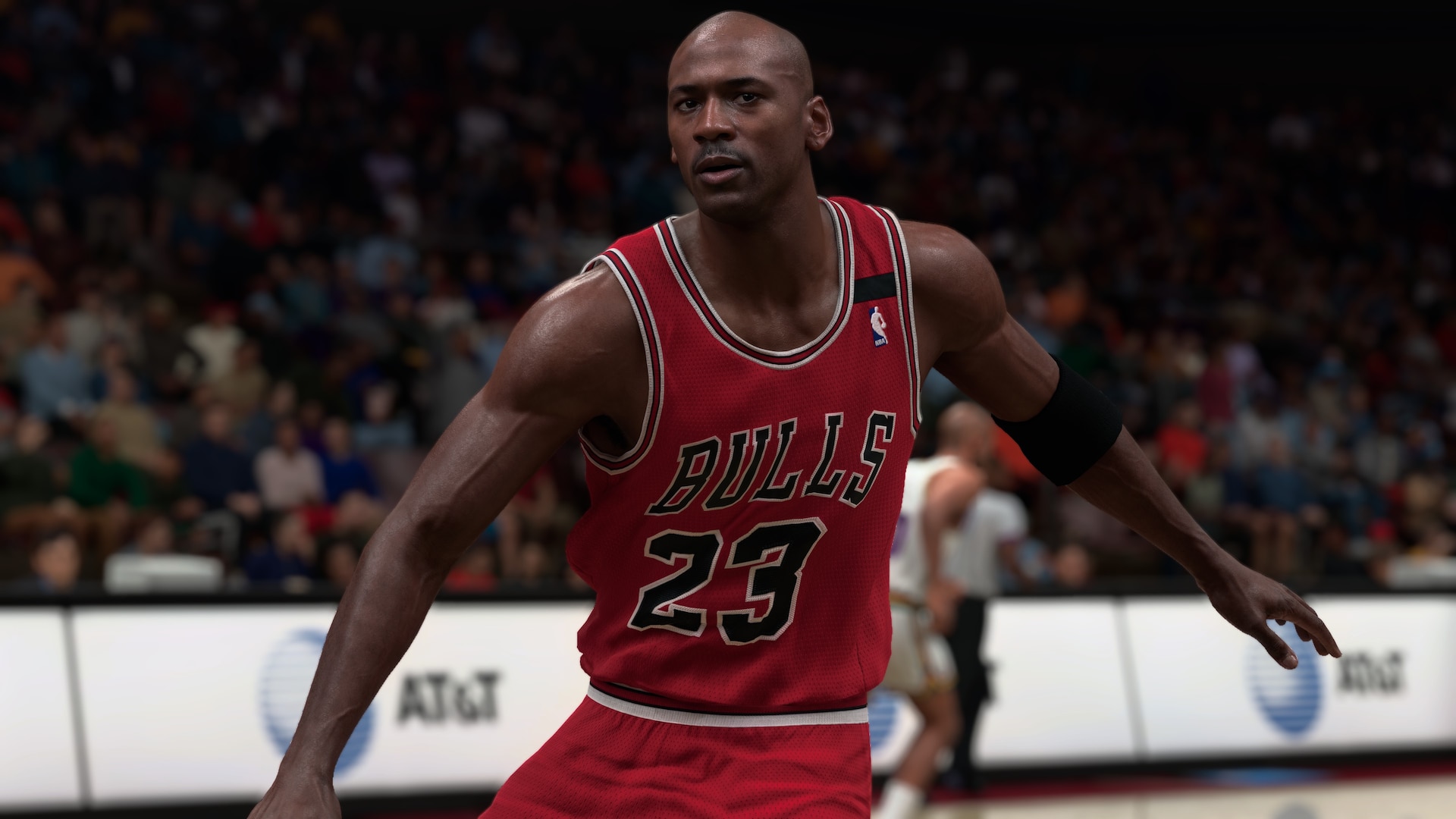
The PC version takes that visual ambition further through DLSS 5. The technology is officially supported on GeForce RTX 50-series hardware and uses neural rendering to increase the apparent realism of materials, lighting and player detail.
When it works well, the results are impressive. Faces, skin, hair and lighting can look noticeably more realistic, particularly during close-ups and slower presentation sequences. It is a convincing demonstration of what the technology can do with a game built around scanned real-world athletes.
The problem is the cost. Testing on an RTX 5080 found performance dropping from 183 frames per second to 49 frames per second at 4K with DLSS 5 enabled, a reduction of roughly 73 percent. Other testing across RTX 50-series hardware has also found substantial performance penalties, although the experience varies considerably according to GPU and resolution.
For a game based around precise control and fast reactions, that trade-off is difficult to justify. DLSS 5 is an impressive optional feature, but a stable frame rate is considerably more important than making a player’s face look slightly more realistic during a replay.
Presentation itself can also become excessive. NBA 2K27 frequently interrupts the simple rhythm of playing a basketball game with broadcasts, celebrations, transitions, advertisements and other sequences. The first few times they look polished; after several hours, they can feel like obstacles between possessions.
Monetization and Progression
The biggest obstacle to NBA 2K27 becoming a genuinely great package is its monetization. The game contains a huge amount of content, but progression systems across its major online modes remain closely connected to currencies, seasonal rewards and optional spending.
MyCAREER is where the problem is most obvious because Virtual Currency affects the development of a player’s created character. The more competitive the player wants to become, the more tempting it is to spend money to accelerate progression. That changes the way the mode feels even for players who never make an additional purchase.
MyTEAM approaches the issue differently, but the underlying pressure remains. The constant introduction of new cards and rewards creates a reason to keep investing time in the mode, while the broader structure makes it difficult to ignore the possibility of spending more.
Optional purchases are not unusual in modern sports games, but NBA 2K27 integrates them deeply enough into its progression that they affect the overall experience. The result is a game that sometimes seems more concerned with maintaining player engagement than simply rewarding players for playing well.
That is especially frustrating because the actual basketball does not need the extra pressure. The improved gameplay is strong enough to provide its own reason to keep playing.
The Annual Problem
NBA 2K27 also has to contend with the basic limitations of an annual sports series. The gameplay improvements are meaningful, but much of the surrounding experience will feel immediately familiar to anyone coming from the previous game.
Annual refinement is not inherently a problem. A sports game does not need to reinvent itself every year, and improving the fundamental mechanics can be enough to justify another entry. The difficulty is that NBA 2K27 has become increasingly elaborate without necessarily becoming more focused.
There are more activities, more progression systems and more ways to spend time in the game, but that does not always make the experience better. In several places, the series would benefit more from removing unnecessary friction than from adding another feature.
This is ultimately why the gameplay improvements do not carry NBA 2K27 into a higher score. The foundation has improved, but too much of the surrounding structure remains unchanged.
Technical Performance on PC
The basic PC requirements are reasonable by modern standards. NBA 2K27 requires a minimum of an Intel Core i5-9400 or AMD Ryzen 5 1400, 8GB of RAM and a GTX 1060, RX 5500 XT or Intel Arc A580. The recommended specification rises to an i5-10600 or Ryzen 5 3600X, 16GB of RAM and a GTX 2070, RX 5700 or Arc A770. The game requires a 110GB SSD installation and supports DirectX 12.
Those requirements are manageable for a modern gaming PC, but the game’s advanced graphical features make hardware choices more important than the minimum specification suggests. DLSS 5 is exclusive to RTX 50-series hardware, so players using older NVIDIA cards or AMD hardware will not have access to the game’s headline neural-rendering feature.
That is not necessarily a criticism of the PC version itself. NBA 2K27 remains attractive without DLSS 5, and the feature is optional. The issue is that the technology’s performance cost makes it less useful than its marketing potential suggests, particularly at 4K.
The PC version therefore feels more like a platform with considerable flexibility than a definitive technical showcase. Players with appropriate hardware can make NBA 2K27 look exceptional, but sensible settings will often produce a better overall experience than simply enabling every available feature.
Final Verdict: 6/10
NBA 2K27 is a frustrating game to score because its best qualities are genuinely good. The rebuilt defensive system makes positioning and anticipation more important, shooting rewards better shot selection, dribbling provides experienced players with more control, and finishing is more contextual than before. When the focus stays on the five-on-five game, NBA 2K27 is often a satisfying basketball simulation.
The problem is everything surrounding it. MyCAREER remains overloaded with progression systems and monetization, The City is larger than necessary without always being more enjoyable, and MyTEAM continues to depend on an ongoing card-collection economy. MyNBA is still excellent for franchise players, but its improvements feel evolutionary rather than transformative.
The PC version is similarly mixed. Its requirements are reasonable, and DLSS 5 can produce some remarkable visual results, but its substantial performance cost means that the feature is better treated as an optional showcase than a standard recommendation.
Most importantly, NBA 2K27 still feels too comfortable with the structure that has defined the series for years. The basketball has moved forward, but the larger experience remains cluttered with systems that do not always make the game more enjoyable.
That makes 6/10 the appropriate score. NBA 2K27 is worth considering for dedicated basketball fans, particularly those who spend most of their time in Play Now or MyNBA and will appreciate the improved gameplay. Players who are already tired of MyCAREER’s economy, The City’s distractions or the annual cycle of incremental changes will find much less reason to return.
There is a better basketball game here than the final score might suggest. The problem is that NBA 2K27 still makes players work through too much of the surrounding product to get to it. The improvements on the court show that Visual Concepts knows where the series can improve; the rest of the game shows that it has not yet decided how much of everything else it is willing to let go.