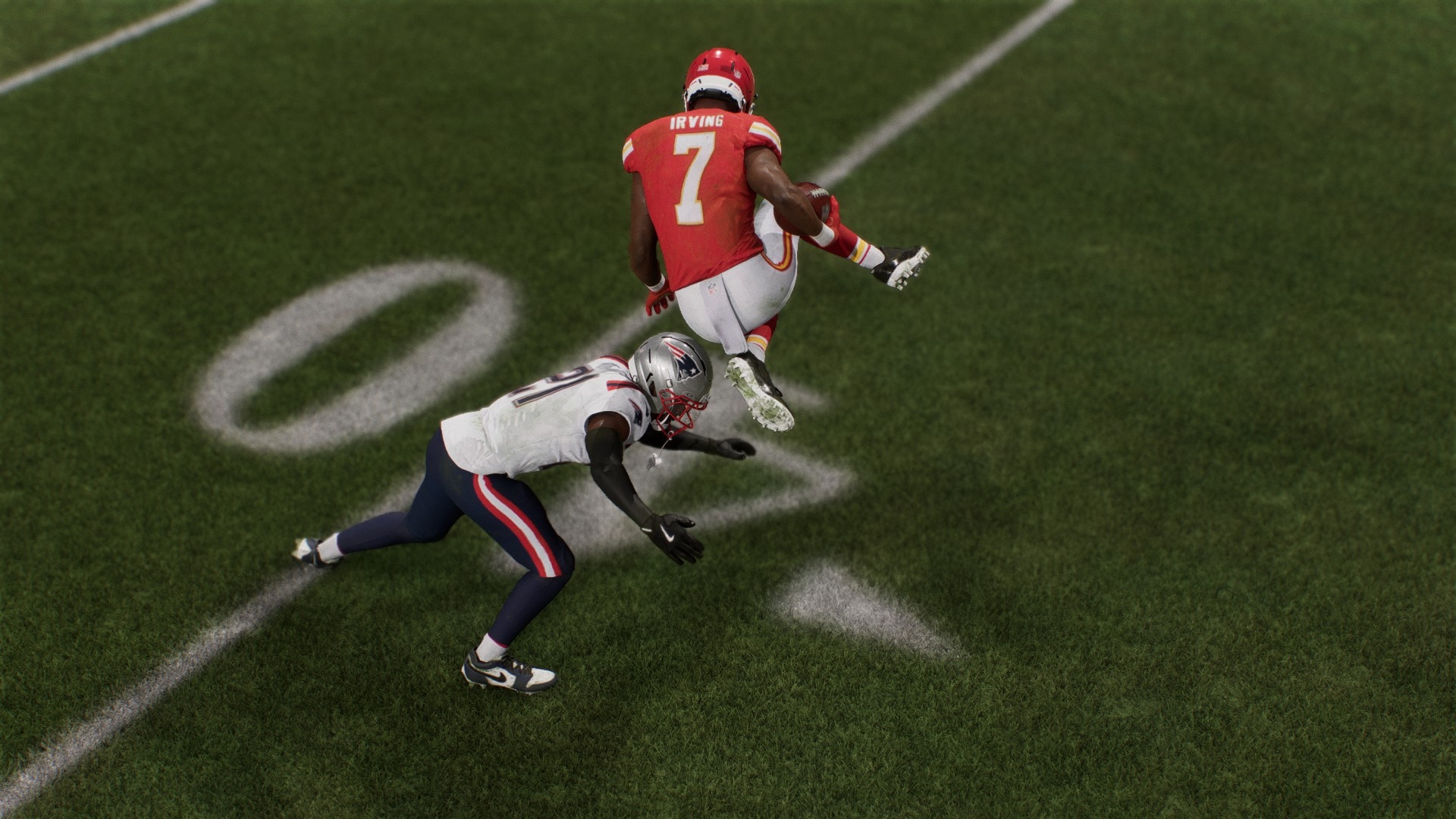
Madden NFL 27 is one of the more meaningful updates the series has received in recent years. Rather than concentrating on another collection of isolated features, EA has made changes that affect both sides of the experience: the football on the field and the way a season develops away from it. The result is a game that feels more responsive during individual plays while also giving Franchise players considerably more to manage.
The most noticeable gameplay changes involve physical receiver-defensive back battles, timing-based catching, short-yardage situations, defensive coverage and player AI. These systems do not completely rebuild Madden, but they make individual matchups more important and give players more control over how a play develops. The CPU also does a better job of making quarterbacks and other players behave according to their tendencies rather than treating every athlete as essentially the same.
Franchise is where Madden NFL 27 makes its biggest structural move. The new Persona Engine gives players individual motivations and personalities that can affect contracts, relationships, free agency and roster decisions. Holdouts and trade demands can develop from those personalities, while a rebuilt news system and more active weekly events make the league feel less static. Not every part of the system works equally well, but the underlying idea is exactly what Franchise has needed.
The PC version brings the same improvements without feeling like a lesser edition of the game. Its hardware requirements are reasonable, although the required EA software and kernel-level anti-cheat will be a concern for some players. Madden NFL 27 still has areas that need work, particularly in CPU roster management and Superstar mode, but its best changes make this much more than another yearly roster update.
Gameplay and Mechanics
Madden NFL 27’s biggest improvement is the way individual players interact with one another. Madden has always been capable of producing impressive-looking collisions and catches, but the outcome of a play could sometimes feel disconnected from the positioning and decisions that preceded it. This year’s emphasis on physicality gives those details greater influence, making individual matchups feel more important and giving players a clearer sense of how positioning and timing can affect the outcome of a play.
The most obvious example is the interaction between wide receivers and defensive backs. Routes are no longer simply about reaching a particular spot on the field while hoping the defender does not react quickly enough. Receivers and defensive backs fight for position through contact, hand fighting and leverage, which makes the matchup itself more important. A receiver who has the physical tools to beat a defender can create separation or fight through contact, while a corner who establishes good position can disrupt the timing of the route before the ball even arrives.
That makes throwing into coverage more interesting. The quarterback has to consider not only whether a receiver appears open but also how the two players are positioned when the ball is released. A receiver who is technically covered can still win a physical battle, while a seemingly open target can become unavailable if the defender closes the gap at the right moment.
Timing-based catching adds another decision to these situations. When the ball approaches the receiver, a timing mechanic gives the user greater control over how the reception is attempted. Good timing can help produce a high-point catch, a contested reception or a catch in stride that creates additional yards after the catch. It is optional, which means players who prefer traditional controls are not forced to learn another system, but there is a genuine advantage to mastering it.
The mechanic is successful because it does not completely override player ratings. A perfectly timed input does not turn an average receiver into an elite pass catcher, and poor positioning can still make a difficult catch nearly impossible. Instead, the system gives the player another opportunity to influence the result. Passing therefore feels less like a sequence in which the quarterback’s decision ends when the ball leaves his hand.
The running game does not receive the same kind of overhaul because Madden NFL 26 already laid much of the groundwork for the series’ improved rushing system. That is not necessarily a problem. Madden NFL 27 is better served by developing those mechanics than by replacing them simply for the sake of having another headline feature.
Short-yardage football does receive considerably more attention. Goal-line plays, fourth-and-short attempts and other situations where the offense needs only a few inches now place greater emphasis on the physical contest at the line. Modern short-yardage concepts such as the tush push are also represented, giving the game a better understanding of how NFL teams actually approach these situations.
The difference is particularly noticeable because short-yardage plays expose the weaknesses of football games. There is almost no room for players to maneuver, so blocking, leverage and momentum have to matter. Madden NFL 27 does not make every goal-line pileup perfectly realistic, but these situations feel less like a simple calculation of whether the ball carrier has reached the necessary point.
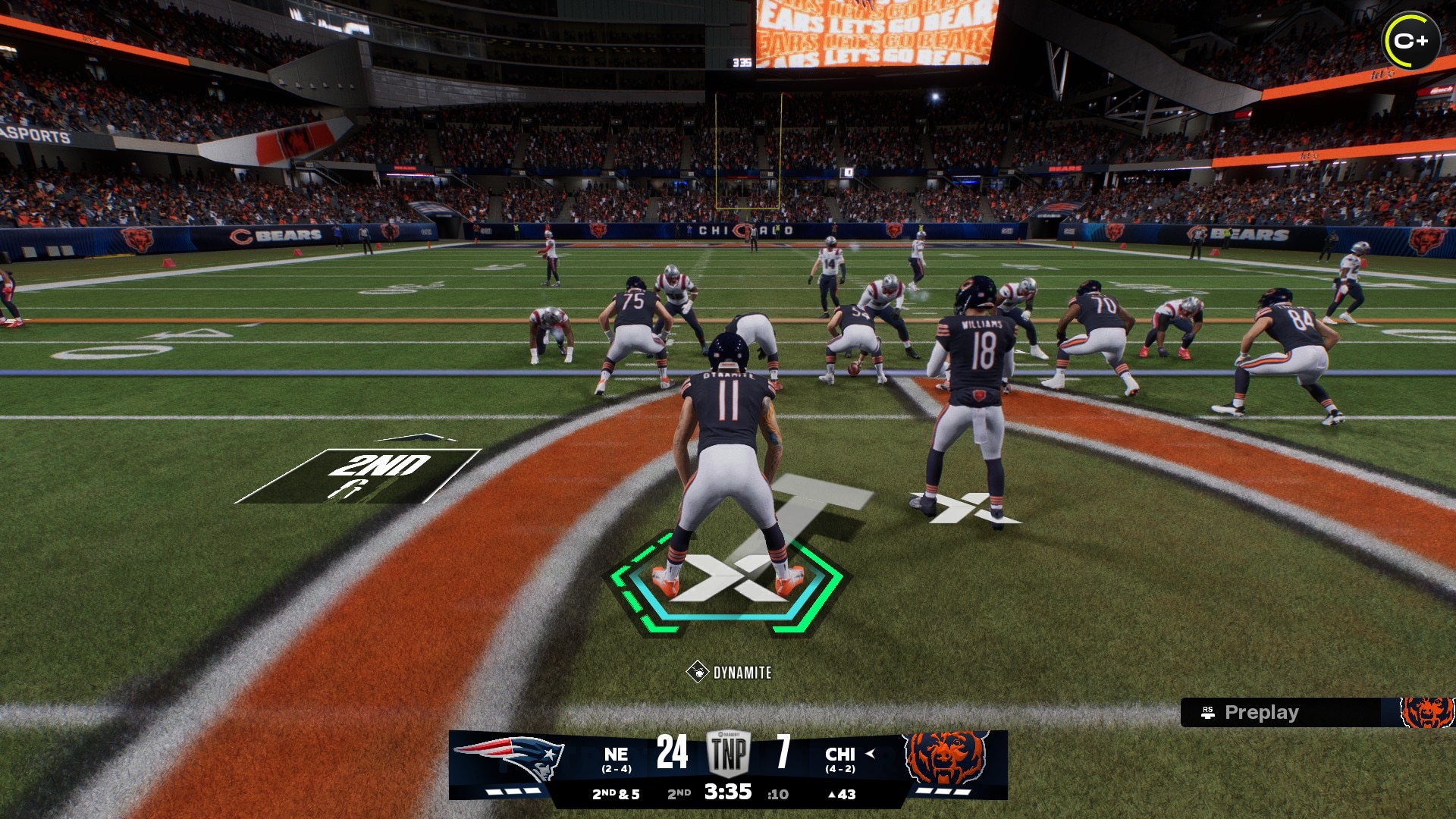
The pre-snap system has also been made easier to use. Experienced players can still make detailed adjustments to coverage and fronts, but suggested changes allow less experienced players to understand what might work against a particular formation. The system can recommend changes such as adjusting the defensive front against a running formation or accounting for a mobile quarterback.
That is a sensible improvement because Madden’s problem has never been a lack of strategic depth. It has been making that depth accessible. A player who understands football can still make detailed adjustments, while someone learning the sport has more guidance instead of having to memorize an intimidating collection of commands.
Player AI and Defensive Play
The improvements to player AI may have an even greater effect on Madden NFL 27 than the new controls. Players now have more recognizable tendencies, which means the opponent matters more than simply knowing the team’s overall rating.
Quarterbacks demonstrate this particularly well. A mobile quarterback can escape pressure and extend plays, forcing the defense to account for his ability to run. Another quarterback may be less dangerous outside the pocket but more willing to attempt difficult throws under pressure. These differences give defensive preparation greater purpose because the same defensive approach should not necessarily be appropriate against every passer.
The effect becomes more noticeable as a game develops. If a quarterback has been under pressure repeatedly, he may begin taking more risks or holding the ball while searching for a larger play. A defender can exploit those tendencies rather than simply relying on the same pressure concept for four quarters.
Receivers and defensive backs also benefit from the improved behavior. Coverage is more convincing, defenders are better at maintaining their assignments and receivers are less likely to behave as though they are following completely predetermined routes. The game still produces occasional oddities, but the overall impression is that the players on the field have become more distinct.
There are limits to the improvement. At higher difficulty levels, defensive players can occasionally react with a speed that feels too precise, particularly when a pass appears to have beaten the coverage. There are also moments when a defender takes an unusual angle or a receiver fails to react as expected. Madden remains a game built around complex animation and AI systems, and those systems will inevitably produce strange results.
The important difference is frequency. These problems no longer dominate the experience to the same extent. Most plays now provide a reasonable connection between the decisions made before the snap, the players involved and the result.
Franchise Mode
Franchise is the defining feature of Madden NFL 27, and the Persona Engine is responsible for most of its improvements. The basic idea is simple: NFL players should behave like individuals with their own motivations instead of existing as ratings attached to contracts.
Every player now has a distinct personality profile that influences how he views his situation. A star who believes he is underpaid can react differently from a veteran who is primarily interested in winning a championship. A young player stuck on a losing team may have different priorities from an established player who already has a long-term contract.
What makes the Persona Engine interesting is that it is not limited to occasional scripted scenarios. Those personalities can influence actual roster-management situations. Players can become unhappy, hold out, demand trades and approach the team about their contracts before the final year of their existing deal. These situations can develop into genuine problems that the user has to solve.
Holdouts are particularly important because they create consequences for poor roster management. A player who believes his contract or role does not match his expectations can refuse to participate until the situation is addressed. The user can attempt to repair the relationship, negotiate a new deal or decide that trading the player is the better solution.
Trade demands take that conflict a step further. If the relationship deteriorates, a player can decide that he wants out. The important part is that these events are not restricted to the user’s team. Similar situations can develop elsewhere in the league, which means the surrounding NFL can produce roster drama without requiring the player to manufacture it.
That makes Franchise more unpredictable in a useful way. A season can begin with a perfectly respectable roster and still develop into something different because of the people on it. The user has to respond to events instead of simply following a predetermined checklist.
Contract negotiations have also been rebuilt. Players now have patience and interest levels that can change during a negotiation, while individual personalities can introduce unexpected demands. Negotiating with different players should therefore require different approaches rather than simply finding the highest amount the team can afford.
The contract system itself is more flexible, with guaranteed money, incentives, void years, no-trade clauses and other structures giving the user more control over deals. Players can also approach the team about new contracts before entering the final year, which makes managing long-term salary commitments more complicated.
Free agency receives a similar overhaul through simultaneous bidding. Instead of approaching each player in isolation, multiple teams can compete for the same free agent, forcing the user to consider when to spend and when to walk away. The addition of undrafted rookie free agents after the draft also provides another opportunity to find developmental players who were overlooked during the main event.
The rebuilt news system ties these features together. A persistent ticker and dedicated News Center make it easier to follow events across the league, while breaking stories can report on trades, unhappy players, contract developments and other situations that are unfolding throughout the season. Weekly recaps featuring Scott Hanson provide another layer of context, giving you a better sense of what is happening beyond your own team and helping individual games feel more connected to the wider season.
SuperSim has also been rebalanced so that roster quality plays a greater role in simulated results. This is important for long-term Franchise saves because a team’s identity should change when its personnel changes. CPU-controlled teams can adapt their approaches as their rosters evolve instead of remaining locked into the same style for years.
This is where the Persona Engine’s ambition becomes clearer. Its value is not simply that individual players have personalities. The goal is to connect those personalities to contracts, news, roster construction, free agency and the way teams develop over time.
It does not always work perfectly. CPU trades can still produce decisions that are difficult to justify, and some of the new interactions can feel more mechanical than organic. A system can generate an unexpected event without necessarily making that event feel completely natural.
Even with those shortcomings, Franchise is considerably more engaging. The mode finally has more of the unpredictability that makes following the real NFL interesting. Players can become dissatisfied, teams can change direction and decisions can create consequences that extend beyond the current week.
Superstar Mode
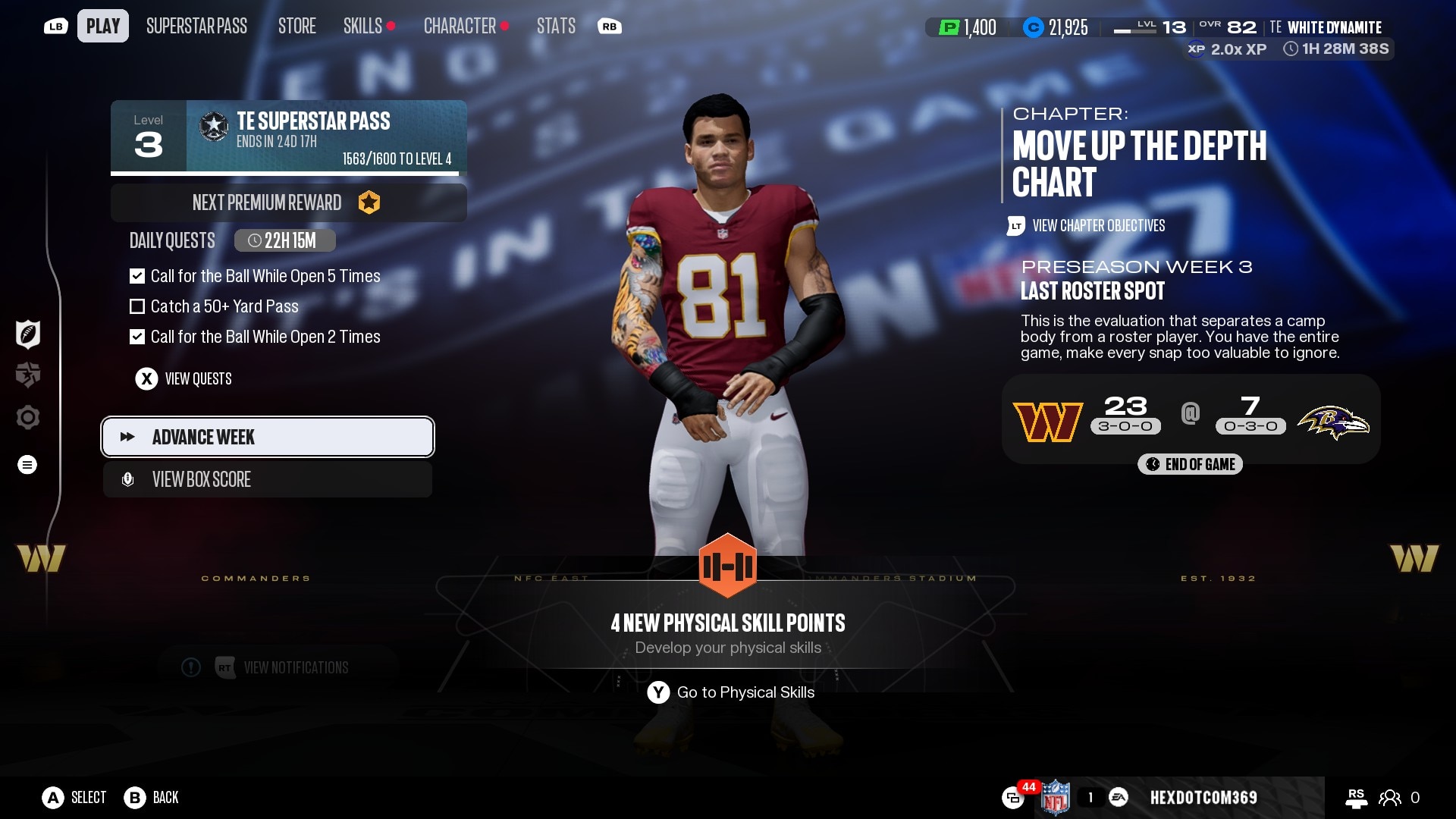
Superstar receives a new G.O.A.T. Career Journey that takes the player from high school toward the Hall of Fame. The mode now has deeper position-based skill trees and expands the playable positions to include tight end, defensive line and safety.
The broader career structure is welcome because Superstar has traditionally struggled to make a player’s journey feel as substantial as Franchise. The new progression system gives development more direction, while career choices and the expanded Sphere of Influence system add more decisions away from the field.
It is still the weaker of Madden’s two major career experiences. Franchise has the advantage of systems that interact with one another over many seasons, while Superstar remains more focused on the fantasy of developing a single athlete. The new G.O.A.T. structure gives it more purpose, but the mode still feels like it has room to grow.
For players who prefer controlling one position rather than an entire organization, however, Superstar is more attractive than it was previously. It is simply not the feature that defines Madden NFL 27.
Presentation and Atmosphere
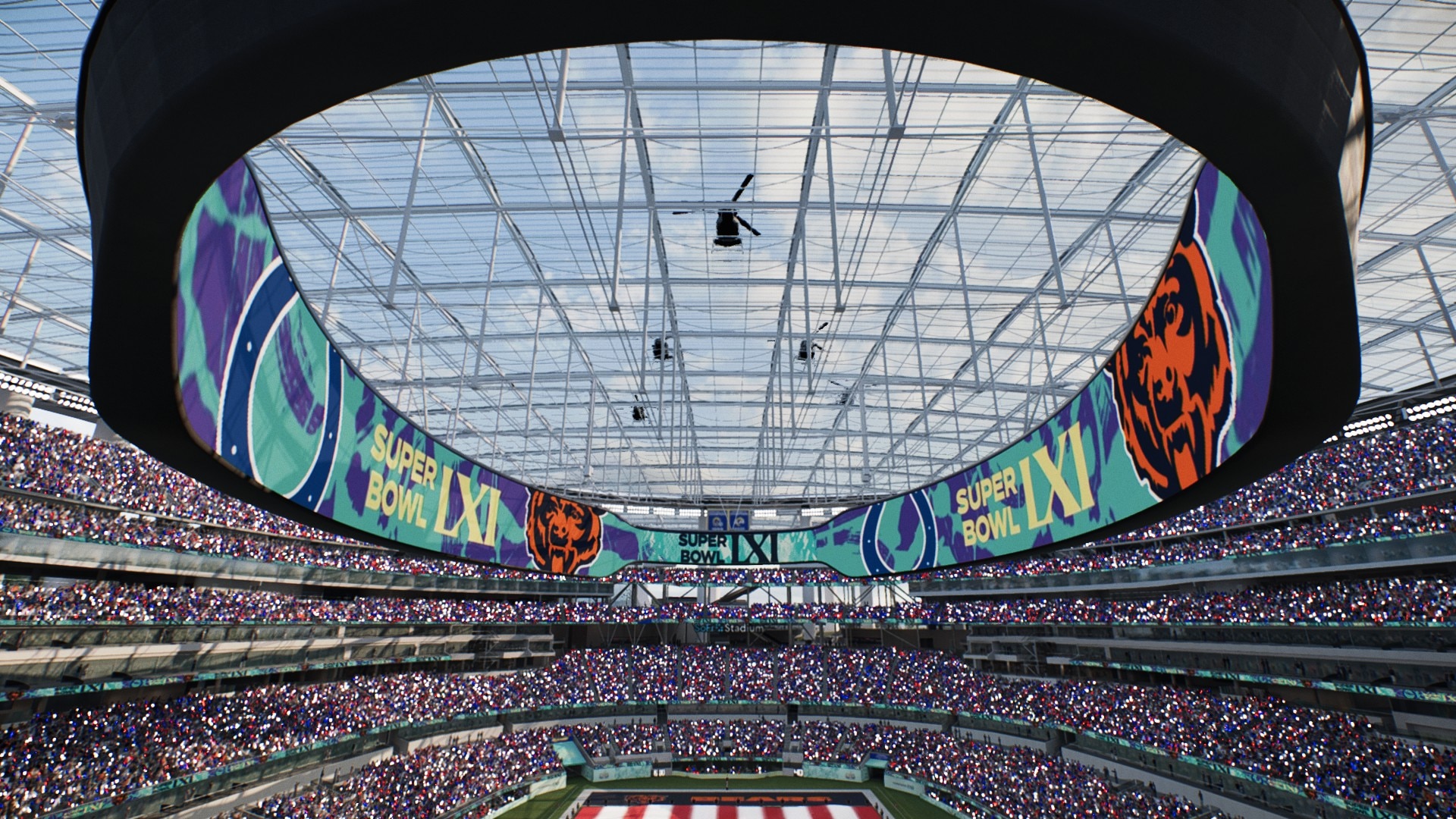
Presentation has become another strength of Madden NFL 27 because EA has concentrated on details that make individual teams feel more distinct. Stadium traditions and pregame sequences receive additional attention, including the recognizable entrances associated with teams such as Jacksonville and Denver.
These moments are not essential to the football itself, but they help break up the sameness that can affect an annual sports game. A game in one stadium should feel somewhat different from a game in another, and Madden is gradually getting better at achieving that.
Dynamic Weather is an especially useful addition. Weather can change during a game rather than remaining fixed from kickoff. Rain can arrive, conditions can improve and the field can change as the game progresses. Snow and wet conditions also have a more noticeable effect on the appearance of the playing surface.
The feature works because it is more than a visual effect. Changing conditions can influence how a game feels, making ball security and movement more important as the environment changes. A clear afternoon can develop into a wet game, forcing the player to adjust rather than simply dealing with whatever conditions were selected before kickoff.
The broadcast presentation has also been improved, particularly within Franchise. Commentary can provide more context about the league, while weekly reports help keep track of what is happening outside the user’s own games.
Repetition remains inevitable. Players who work through several long seasons will eventually hear familiar commentary and see recurring presentation sequences. Madden NFL 27 has more variety, but it cannot completely escape the limitations of an annual sports game’s presentation system.
Ultimate Team
Ultimate Team remains the most familiar component of Madden NFL 27. The mode continues to revolve around collecting player items, upgrading cards and building a competitive roster, while the revamped upgrade system and Evo items provide additional ways to develop selected players.
It remains a substantial mode for players who enjoy that style of progression, but it is also the least interesting part of the package from the perspective of this year’s improvements. Franchise and gameplay have received meaningful structural changes, whereas Ultimate Team remains tied to the established card-based progression and continuing content model.
The mode also retains the broader monetization structure associated with Ultimate Team. Players can spend additional money on the game’s virtual economy, which will continue to be a point of contention for those who would prefer a completely traditional sports-game progression system.
For players who primarily want Franchise, Superstar or standard online games, Ultimate Team is easy enough to treat as an optional part of the package. It does not define Madden NFL 27’s strongest qualities.
Technical Performance on PC
Madden NFL 27 is a considerably better PC release than the series has managed in some previous years. The most important improvement is not a dramatic jump in visual quality, but how much more consistently the game performs across the different parts of the experience. Menus, gameplay and presentation are no longer separated by the same obvious performance differences that have affected earlier PC versions, making the game feel much more polished as a whole.
EA’s official requirements are fairly reasonable for a modern sports game. The minimum specification calls for Windows 11, 12GB of RAM, an Intel Core i3-10300 or AMD Ryzen 5 2600 and an RTX 2060, RX 5600 XT or Intel Arc A580. The recommended specification moves to a Core i7-10700 or Ryzen 7 3700X, 16GB of RAM and an RTX 3060 Ti, RX 6700 XT or Intel Arc B580. The game requires 50GB of storage, with an SSD recommended, while Intel Arc users need Resizable BAR enabled for the expected level of performance.
In practice, the PC version has received encouraging feedback for its performance. Players have reported noticeably smoother menus and fewer of the frame-pacing problems that could make earlier Madden releases feel sluggish outside actual gameplay. The ability to configure graphics settings separately for gameplay and cutscenes is particularly useful because presentation sequences can be more demanding than the action on the field. This allows players with less powerful hardware to reduce the visual quality of cutscenes without unnecessarily sacrificing gameplay performance.
The game also supports DLSS on PC, giving owners of compatible Nvidia hardware another option for increasing performance without simply lowering the overall quality preset. That is useful for players running at 1440p or higher, where maintaining a consistent frame rate becomes more demanding. Reports from PC players indicate that the technology can also help with the menu and cutscene performance that has historically been a weaker part of the PC experience.
The visual settings provide enough flexibility to accommodate a range of hardware, although Madden does not offer the sort of extensive technical customization found in some dedicated PC releases. That is not necessarily a major problem for a sports game, but players who enjoy fine-tuning every aspect of their setup may find the options less comprehensive than expected.
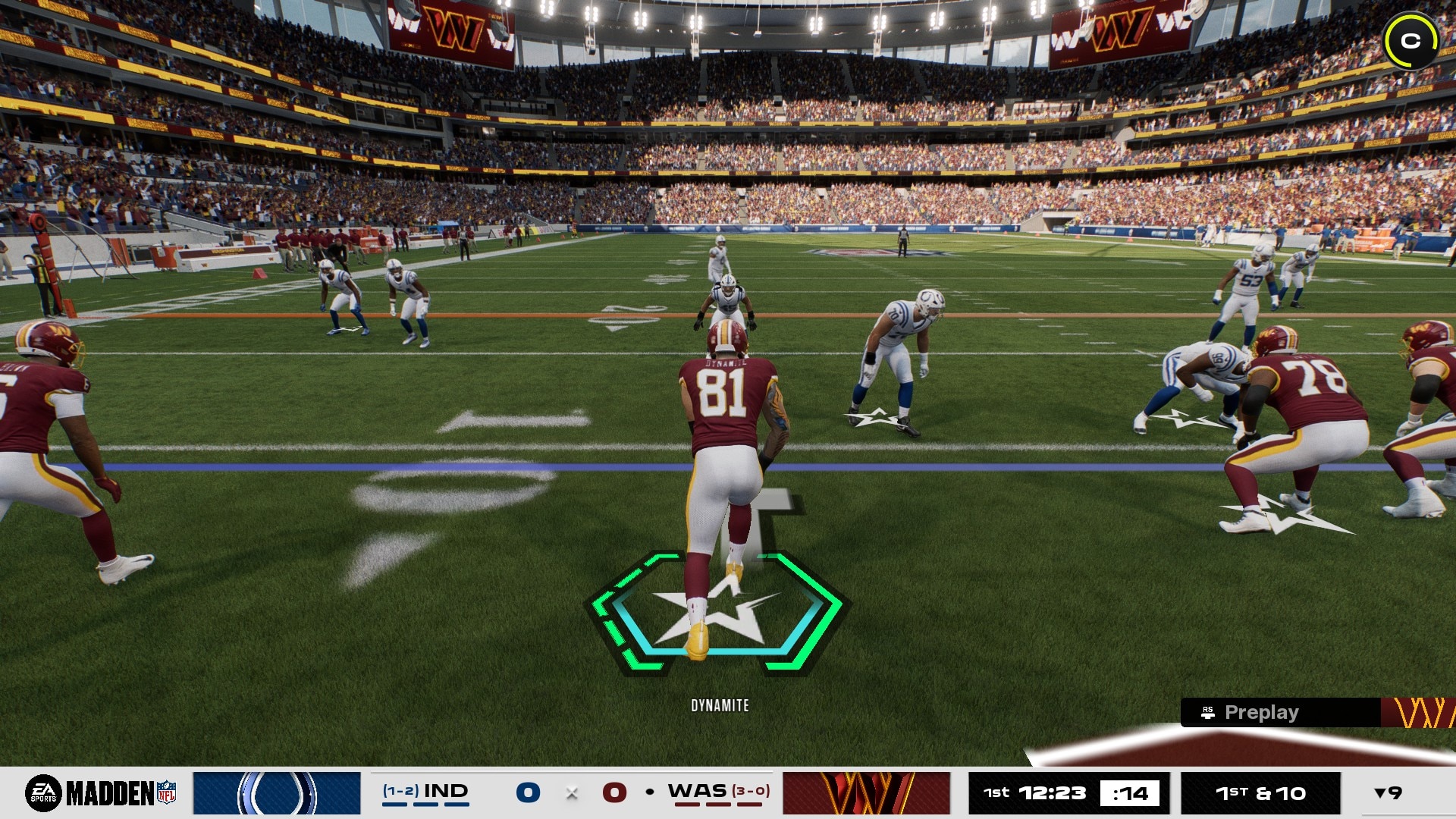
The underlying presentation remains impressive. Stadiums, player models, lighting and weather effects look particularly good at higher settings, and Dynamic Weather adds extra visual variation as conditions change during a game. The important improvement is that the visual presentation does not appear to come at the same performance cost as some previous entries. The game feels more comfortable maintaining a stable frame rate while still looking like a current-generation sports title.
There are still a few technical annoyances. Madden NFL 27 requires EA’s software alongside the PC storefront version, and online functionality requires a broadband connection. It also uses EA Javelin Anti-Cheat, which operates at the kernel level. These requirements are not unusual for a major competitive PC release, but they add another layer between launching the game and actually playing it, and some PC users will understandably object to the anti-cheat software.
Overall, Madden NFL 27 is a solid technical release on PC. It is not a showcase for PC-specific features, nor does it completely eliminate the occasional hitch or presentation-related performance dip, but the underlying experience is much smoother than the series’ reputation on the platform would suggest. For players with hardware around EA’s recommended specification, the game should be capable of delivering a stable and attractive 1440p experience, while the range of settings gives less powerful systems enough room to find a sensible balance between image quality and performance.
For a series that has sometimes treated PC performance as an afterthought, that consistency is significant. Madden NFL 27 does not reinvent what a PC sports game can offer, but it finally feels like a version that was built with PC players in mind rather than simply adapted for them.
Final Verdict: 7/10
Madden NFL 27 is a better football game because it makes individual decisions and matchups matter more. Receiver-defensive back battles have greater physical significance, timing-based catching gives the user more influence over difficult receptions, short-yardage situations are more convincing and player AI does a better job of distinguishing one NFL athlete from another.
The AI is still capable of producing strange moments, particularly at higher difficulty levels, but the overall improvement is substantial. The game increasingly asks the player to think about who is on the field and how those players are likely to behave rather than simply relying on the same successful play repeatedly.
Franchise is the biggest reason to recommend the game. The Persona Engine gives the mode a foundation that connects player personalities to contracts, holdouts, trade demands, free agency and weekly news. The league feels more reactive because players can create problems that require the user to respond, while CPU teams can change their identities as their personnel changes.
There are still weaknesses. CPU roster decisions can occasionally undermine the realism of a league, and some Persona-driven events feel more mechanical than organic. Superstar is also not as deep as Franchise, while Ultimate Team continues to operate within a monetization model that will not appeal to every player.
The PC version is solid and complete. Its hardware requirements are sensible, and there is no major indication that PC players are receiving a stripped-down version of the game. The EA App requirement and kernel-level anti-cheat are less welcome, but they are platform considerations rather than failures in the football itself.
The most important thing about Madden NFL 27 is that its improvements are connected. The Persona Engine is not simply another menu feature, just as timing-based catching is not merely another control option. The best parts of the game work because they change how the player approaches a season or a play.
Madden NFL 27 still has plenty of room to improve, but it is no longer convincing to describe it as merely another annual roster update. The football is more physical, the AI is more distinctive, and Franchise finally has the kind of unpredictable player behavior that can make a long-term save feel different from one season to the next.
For players who skipped Madden NFL 26, the recommendation is straightforward. Existing players have a harder decision, but the new gameplay systems and Franchise overhaul provide enough substance to make the upgrade worthwhile for anyone who spends serious time with those modes.
Madden NFL 27 is not the definitive Madden, but it is one of the series’ strongest recent entries. More importantly, it improves the areas that matter most: the quality of the football and the depth of the league surrounding it.