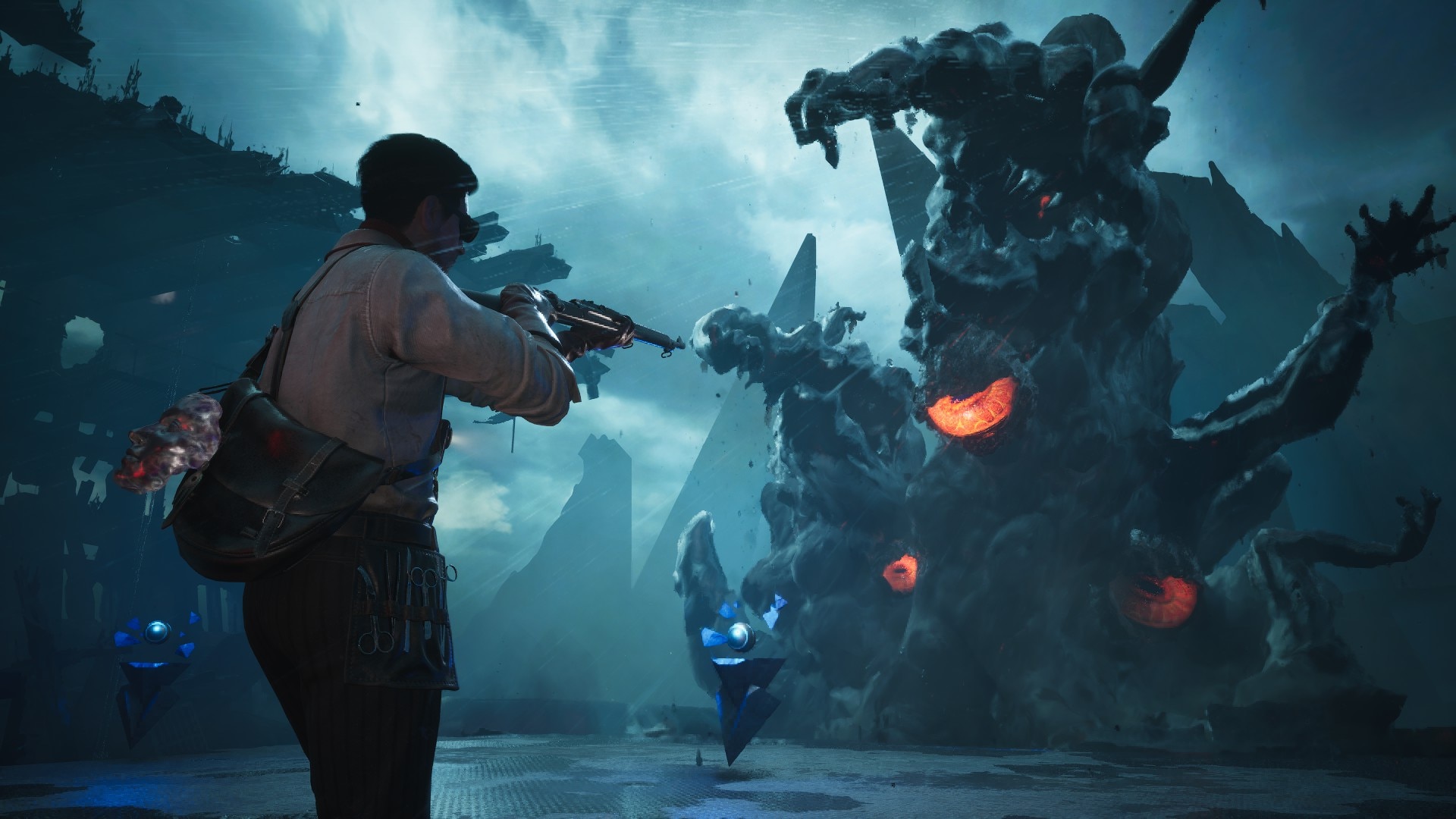
The Sinking City 2 makes one of the more significant changes a sequel can make: it largely abandons the structure that defined its predecessor. The first game was an ambitious open-world detective adventure with horror elements, while its sequel is a much more traditional survival horror game built around exploration, combat, puzzles and resource management. That shift will not appeal to everyone, particularly players who came to the series for Frogwares’ investigative mechanics, but it gives the developer a much stronger foundation for its Lovecraftian setting. The result is a focused and atmospheric horror game that is considerably more successful at what it sets out to do than the original was at balancing its competing ideas.
Story and Setting
Set during the 1920s, The Sinking City 2 takes place in a flooded version of Arkham, Massachusetts. The city has been overtaken by supernatural forces, leaving its streets, buildings and underground spaces in various states of decay while strange creatures roam the increasingly dangerous environment. Rather than returning to Oakmont, Frogwares uses Arkham to give the sequel a different identity while retaining the period setting and Lovecraftian themes that defined the first game. The combination of flooded streets, old architecture and occult imagery gives the setting a strong visual character, and the game makes good use of its locations rather than treating them simply as backdrops for combat.
The protagonist is Calvin Rafferty, an occult adventurer whose journey is driven by the disappearance of Faye Bennett. A ritual has gone wrong, leaving Faye’s soul trapped in the Dreamlands while her body has been taken by hostile supernatural forces. Calvin’s attempt to rescue her becomes the personal motivation behind his journey through flooded Arkham, while the wider mystery gradually reveals what has happened to the city and what lies behind the catastrophe.

That more personal setup is an important distinction from the first game. Charles Reed’s investigation in The Sinking City was deliberately broad, involving numerous characters, factions, cases and competing explanations for the supernatural events surrounding Oakmont. The Sinking City 2 has a much clearer central objective, which fits its survival horror structure better. Calvin is not simply wandering from one mystery to another; there is a reason for him to keep moving deeper into Arkham.
The writing itself is uneven in places, particularly when dialogue becomes more functional than natural, but the overall story benefits from keeping its mysteries relatively focused. Frogwares is at its best when it lets the strange elements speak for themselves rather than explaining every supernatural event. The mythology remains deliberately excessive and occasionally grotesque, but the game generally knows when to leave something unexplained.
The relationship between Calvin and Faye also gives the story an emotional center that the original sometimes lacked. Whether every part of their relationship works equally well is debatable, but having Calvin pursue a specific person rather than simply investigating an increasingly strange city gives the narrative a clearer direction. It also gives his increasingly dangerous decisions a straightforward motivation as he moves further into Arkham’s supernatural crisis.
Gameplay and Mechanics
The fundamental change in The Sinking City 2 is its move toward traditional survival horror. The game uses a third-person perspective and places considerably more emphasis on limited resources, exploration, locked areas, environmental puzzles and combat. The structure will immediately be familiar to anyone who has played modern survival horror, with safe rooms, inventory management, shortcuts and areas that cannot be fully explored until the player discovers the necessary item or solution.
The important difference is that Frogwares does not completely abandon the investigative identity of the series. Investigation is now secondary rather than the central activity, but clues can still be examined, organized and connected through the game’s investigation mechanics. Optional investigations can lead to useful rewards, including resources and upgrades, giving players a practical reason to explore beyond the critical path. The system is no longer responsible for carrying the entire game, which allows it to complement the survival horror mechanics instead of competing with them.
Exploration is consequently more important than it might initially appear. Arkham is not presented as one enormous open-world map in the way Oakmont was, but its individual areas contain interconnected routes, hidden rooms, shortcuts and optional spaces that reward careful examination. The more contained design also makes backtracking less tedious. Returning to an earlier location because you have discovered a new item or solved a puzzle feels like part of the level’s structure rather than another long journey across a largely empty city.
Inventory management plays an important role as well. Ammunition, healing supplies and crafting materials have to be considered, while limited inventory space means that players cannot simply carry everything they find. Safe rooms provide a place to manage equipment and store excess items, making them useful stopping points rather than merely locations where progress is saved.
The game also introduces a Talents system tied to Dream Essence. These abilities allow Calvin to develop useful passive advantages, while equipment can offer additional perks that influence how effectively certain weapons or approaches work. The system is restrained enough that it does not turn the protagonist into an unstoppable action hero, which is important for maintaining the vulnerability that survival horror depends on.
The design is familiar, but familiarity is not necessarily a weakness here. Frogwares clearly understands that the strength of survival horror comes from making the player consider every room, every locked door and every expenditure of ammunition. The result is much more coherent than the first game’s attempt to combine a massive open world with investigation, horror and action.
Combat and Enemy Design
Combat was one of the weakest aspects of the original The Sinking City, so it is encouraging to see how much attention Frogwares has given it in the sequel. Weapons feel considerably more useful, enemies have recognizable weak points and shooting is much more closely integrated with the survival horror structure. The game is still not as mechanically polished as the best examples of the genre, but the improvement is substantial.
Enemy design plays a particularly important role. Several creatures have vulnerable areas that can be targeted to bring them down more efficiently, which makes ammunition management more interesting. Knowing where to shoot can matter just as much as knowing when to shoot. A player who learns an enemy’s weaknesses can conserve resources, while someone who treats every encounter as a conventional third-person shooter will burn through ammunition much faster.
This also means that the game’s resource economy is not simply about making ammunition scarce. The player can generally fight when necessary, but efficiency matters. A well-placed shot can save several rounds, while careless shooting can leave the inventory noticeably thinner later in an area. That creates a useful middle ground between games that expect you to avoid almost every enemy and those that give you so much ammunition that resource management becomes irrelevant.
The problem is that the underlying controls are not always as precise as they could be. Movement can feel somewhat deliberate, and encounters involving several enemies at once can expose limitations in turning and positioning. The shooting is functional and generally satisfying, particularly when targeting weak spots, but it does not have the same level of responsiveness found in the strongest modern survival horror games.
Fortunately, combat is not the entire experience. The game uses fighting as one part of its resource-management system rather than turning every room into an arena. There are situations where ammunition is plentiful enough to encourage aggressive play and others where conserving supplies makes more sense. There are also encounters where retreating is clearly the sensible choice. That variation keeps combat from becoming completely repetitive, even if the shooting mechanics themselves remain one of the game’s less refined elements.
Exploration and Level Design
Level design is where the new structure produces some of its best results. Instead of giving the player a massive city and relying on distance to create a sense of scale, Frogwares concentrates its efforts on individual locations. Buildings, streets and underground areas contain multiple routes, locked rooms, shortcuts and optional spaces, creating environments that feel more carefully constructed than many of the original game’s larger areas.
This also makes returning to previously visited locations more enjoyable. A locked door can remain in the player’s memory because it belongs to a relatively compact area rather than being one of dozens of unexplained obstacles scattered across an enormous map. Once the necessary item or information has been found, going back to open it usually feels worthwhile because the player understands where it leads and why it matters.
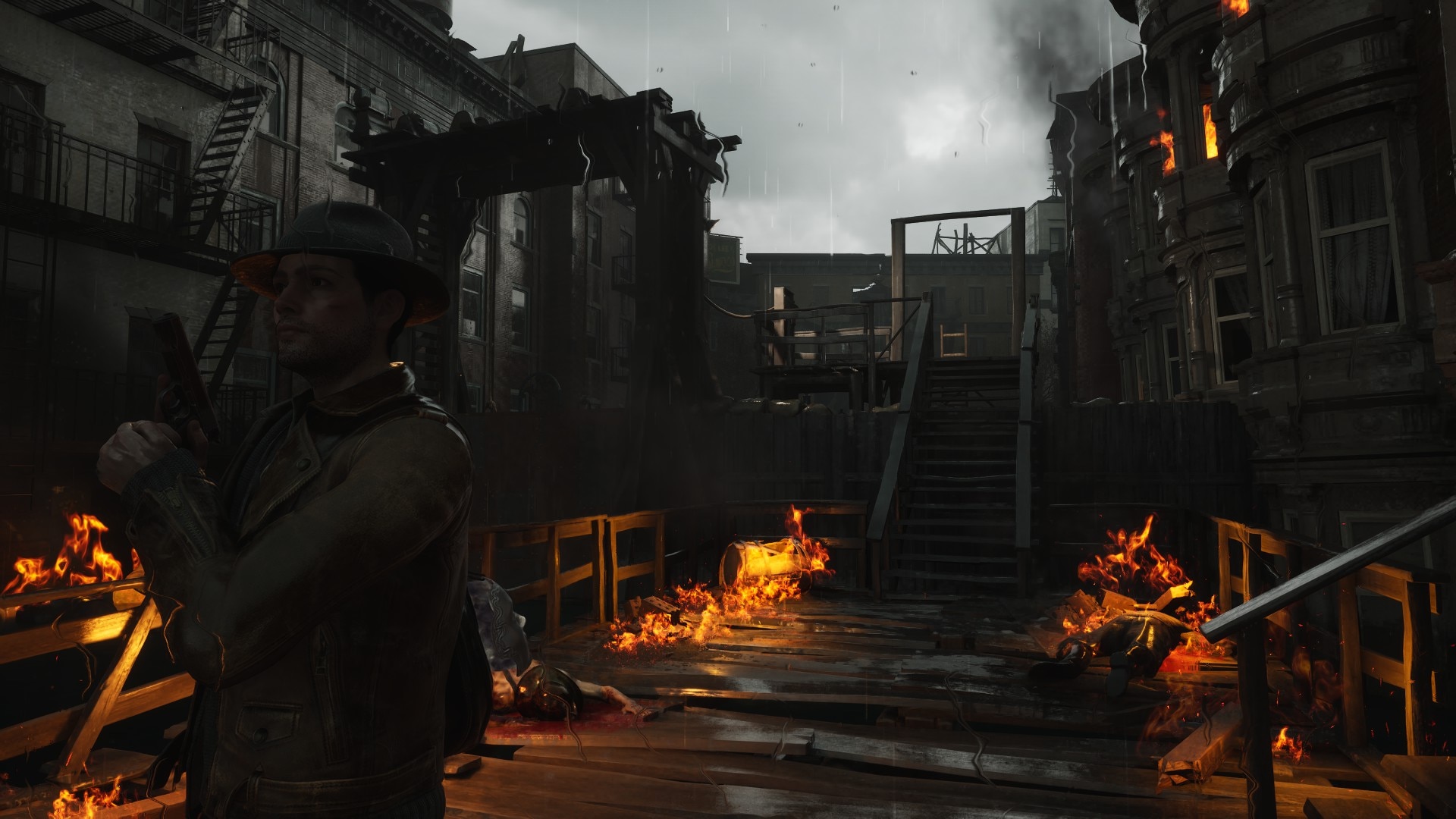
The flooded version of Arkham is particularly effective in this respect. The city has a consistent visual identity, but the game does not rely on the same type of environment throughout the campaign. Interiors, submerged areas, streets and more surreal locations each provide different opportunities for exploration, while the changing environments help keep the journey from feeling repetitive. Travel by skiff also gives the flooded setting a practical purpose instead of making the water purely decorative, allowing it to become a meaningful part of both navigation and the overall atmosphere.
The map and environmental design encourage completion without making it mandatory. Areas can communicate whether there are still items or secrets worth finding, which makes searching rooms more manageable than simply checking every surface and hoping that something has been overlooked. This is especially useful in a game where inventory space is limited and resources are important.
Puzzles are generally straightforward, but they fit the survival horror structure well. Rather than requiring the player to solve complicated detective cases simply to progress, many puzzles involve examining an environment, locating information and working out how different objects or clues relate to one another. The approach is conventional, but it keeps the focus on exploration and discovery.
Optional investigations are also worth completing because they are tied to useful rewards. This is one of the better decisions in the game’s design. Players interested primarily in the horror campaign can concentrate on the main path, while those who enjoy Frogwares’ investigative systems have a reason to search more thoroughly. The result gives both sides of the series’ identity some room without allowing either to overwhelm the other.
Horror and Atmosphere
The atmosphere is one of The Sinking City 2’s strongest qualities. Frogwares has always had a good eye for Lovecraftian environments, but the more controlled structure allows the developer to use that visual strength more effectively. Instead of repeatedly crossing a large open city until its strange sights become familiar, the player is taken through carefully constructed locations where the environment can remain unsettling for longer.
Arkham itself is convincing as a 1920s setting. The flooded streets, damaged buildings and period architecture provide a sense of place, while the supernatural corruption gradually becomes harder to separate from the ordinary world. Art Deco details, water-damaged interiors and abandoned businesses give the city a visual identity that feels appropriate without turning it into a collection of generic gothic horror locations.
The creatures are similarly effective. Frogwares draws from recognizable elements of Lovecraft’s mythology while also introducing its own monsters. The Slither, for example, animates corpses in ways that make it particularly unpleasant to fight, while Deep Ones and other Mythos creatures give the flooded areas their own threats. Some enemies are designed around specific vulnerabilities, which connects their appearance directly to the combat system rather than making creature design purely cosmetic.
The most successful horror moments are not necessarily the largest ones. Quiet sections where the player is allowed to explore an apparently abandoned location can create more tension than an extended fight. The game understands that giving the player time to wonder whether something is actually nearby is more effective than filling every corridor with enemies.
There are certainly conventional horror techniques here, but the Lovecraftian setting gives Frogwares enough material to avoid making the entire experience feel interchangeable. The game’s strongest environments have an unsettling logic of their own, and that is where its atmosphere is most convincing.
Investigation and Puzzles
Reducing the investigative mechanics was always going to be controversial, particularly because detective work was what made the original The Sinking City unusual. The sequel does not attempt to preserve that system at its former scale. Instead, investigations have been incorporated into the survival horror framework, allowing players to gather evidence and make connections without turning the game into a full detective simulator.
This is arguably the right choice for the sequel, even if it means losing some of the first game’s individuality. Evidence and clues can still be important when solving environmental problems, and optional investigations provide another reason to examine the world carefully. Completing these investigations can also reward the player with resources and improvements that make subsequent sections easier to handle.
The puzzles themselves are more conventional than the deduction cases found in the first game. Players will encounter locked doors, combinations, environmental clues and other familiar survival horror obstacles. Some puzzles make better use of the investigative systems than others, but the important thing is that they generally encourage observation rather than stopping the game for lengthy stretches of abstract problem-solving.
The investigation system also works better because it is optional. The player does not have to solve every case in order to understand how to proceed through the main story. Those who enjoy Frogwares’ detective mechanics can spend more time with them and gain useful rewards, while players who simply want to follow Calvin’s journey can continue without turning every room into a crime scene.
The downside is that the sequel can sometimes feel like it is borrowing more heavily from established survival horror conventions than it is developing Frogwares’ own investigative identity. The locked doors, limited inventory, safe rooms and environmental puzzles are all familiar ideas. What makes them worthwhile is the setting and the quality of the individual environments rather than any major mechanical innovation.
That is a reasonable trade-off, but it is still a trade-off. Players expecting a direct continuation of the first game’s detective-focused design should know that The Sinking City 2 is fundamentally a different kind of game.
Sound and Presentation
The audio design complements the environments without constantly trying to tell the player when something is frightening. Water, distant movement, environmental noises and creature sounds help make the locations feel occupied even when there is no immediate threat. This is particularly effective during exploration, where the absence of obvious danger allows smaller sounds to become noticeable.
The soundtrack also contributes to the game’s atmosphere without dominating it. Quieter sections allow environmental sound to carry much of the tension, while more intense encounters use music to increase pressure rather than simply turning every encounter into an action sequence.
The voice acting and dialogue are more mixed. The central characters provide enough personality to carry the story, but some conversations lack the polish found in larger-budget productions. The writing is generally more effective when it is dealing with the strange circumstances surrounding Arkham than when characters are simply explaining the plot to one another.
The presentation nevertheless benefits from a consistent commitment to its period setting. Weapons, architecture, clothing and interiors all contribute to the sense that this is a particular place and time rather than a generic horror game with Lovecraftian monsters added afterward.

Graphics and Performance
Visually, the move to Unreal Engine 5 gives The Sinking City 2 a major advantage over its predecessor. Detailed environments, modern lighting and the game’s extensive use of water help create a convincing version of flooded Arkham. Reflections and lighting are particularly important because so much of the game takes place around wet streets, damaged buildings and dark interiors.
The PC version is technically demanding, however, and players should pay attention to the system requirements. The official minimum specification targets 1080p at 30 frames per second on the Low preset with upscaling technology and requires a GTX 1070 or RX 5700 with 8GB of VRAM, while the recommended specification targets 1440p at 60fps on the Balanced preset and calls for hardware such as an RTX 4070 Ti or RX 7900 XT with 12GB of VRAM. The game also requires Windows 11 and 70GB of storage.
Those requirements are substantial for a game of this scale, and performance can vary considerably depending on hardware and settings. Upscaling is therefore more than an optional extra for many PC players who want to run the game at higher resolutions or maintain a stable frame rate. The visual quality can be impressive, but the cost of that presentation is a relatively demanding PC version.
There are also some technical rough edges. Frogwares used the demo period to fix crashes, camera problems and other issues, which was encouraging, but performance around launch is still not completely consistent on every system. That does not make the PC version fundamentally broken, but players with hardware close to the minimum specification should not expect to run high settings without compromises.
The important point is that the technical ambition is visible in the final product. Arkham benefits from detailed environments and convincing lighting, and the water-heavy setting gives Unreal Engine 5’s rendering features plenty of opportunities to show their strengths. The game looks considerably more sophisticated than the original, even if the hardware requirements and occasional performance problems prevent the presentation from being completely trouble-free.
Final Verdict: 7.5/10
The Sinking City 2 is not a direct continuation of the first game’s formula, and that is probably its greatest strength. Frogwares has recognized that the original’s open-world structure created problems that could not easily be solved by simply making another, larger version of the same game. By moving toward survival horror, the developer has created a much tighter experience in which exploration, combat, puzzles and investigation have clearer relationships with one another.
The change does come at a cost. The original The Sinking City was distinctive because it was an unusually strange combination of detective adventure, open-world exploration and Lovecraftian horror. The sequel is much more recognizable as a modern survival horror game. Players who wanted a larger, deeper investigation system may find the reduced emphasis disappointing, while those who found the first game’s open world cumbersome will likely appreciate the change.
The combat is another area where expectations should be kept in check. It is substantially improved and works well enough to support the game, but it is not the most precise third-person shooting system in the genre. Encounters involving multiple enemies can occasionally become awkward, and the game’s deliberate movement does not always make those situations easier. Fortunately, combat is balanced with exploration and resource management rather than dominating the entire campaign.
What ultimately makes The Sinking City 2 work is the combination of atmosphere and level design. The flooded Arkham is an effective setting, the environments are more thoughtfully constructed than the original’s sprawling spaces, and the Lovecraftian material gives the familiar survival horror framework enough personality to stand on its own. The investigation mechanics also provide just enough of Frogwares’ traditional identity to keep the sequel connected to its predecessor.
The PC version is demanding, and some players may encounter performance issues depending on their hardware, but the underlying presentation is strong enough to make the visual upgrade worthwhile. The game also launches at $49.99 for the standard edition, putting it below the typical $69.99 price of many major new releases. That lower price is particularly welcome given the game’s relatively focused campaign and the fact that its appeal is largely built around a single-player horror experience rather than a collection of additional modes.
The Sinking City 2 does not reinvent survival horror, and its combat and investigation systems are not quite refined enough to do so. What it does accomplish is more practical: it takes Frogwares’ strengths in atmosphere, environmental storytelling and Lovecraftian mystery and places them inside a structure that suits them considerably better. The result is a focused and often very effective horror adventure, even when its familiar mechanics and occasional technical roughness prevent it from reaching the genre’s highest level.