After two years in Early Access, Fields of Mistria has finally reached version 1.0. That distinction matters because NPC Studio’s farming and life simulation game has been unusually substantial for much of its development. The Early Access version already offered farming, mining, fishing, crafting, magic, relationships, town restoration and a large cast of villagers, but several important systems were deliberately incomplete. The full release adds the final stages of the town’s restoration, raises romance progression to ten hearts, introduces marriage and children, expands the mines and dungeon content, adds museum progression, new vendors, achievements and further quality-of-life improvements. More importantly, the main story and major progression systems can now be completed as originally intended.
The finished game is still unmistakably influenced by the modern farming-sim formula established by games such as Stardew Valley. You farm, raise animals, fish, mine, gather resources, improve your property, build relationships and help develop a small community. There is no attempt to hide those similarities, and Fields of Mistria is better for not pretending otherwise. Its identity comes from the details: a fantasy setting built around the return of magic, an unusually attractive pixel-art style, a large and expressive cast, forgiving progression and a collection of quality-of-life decisions that make its daily routine considerably less demanding than that of many games in the genre.
That approach does have limitations. Some mechanics are more functional than deep, particularly combat, while the abundance of progression systems can sometimes make the overall structure feel scattered. The game also rarely asks the player to make difficult choices or deal with serious consequences, which will be a positive for some players and a weakness for others. Even so, version 1.0 demonstrates that NPC Studio understood what made the game appealing in the first place and resisted the temptation to make it unnecessarily complicated. Fields of Mistria is not a reinvention of the farming RPG. It is a particularly polished interpretation of it.
Story and Setting
Mistria is recovering from a devastating earthquake when the player arrives in town and takes ownership of an abandoned farm. The player’s initial responsibility is to help the community rebuild, but the situation gradually becomes more complicated as strange magical phenomena begin appearing and the town’s history starts to come into focus. The player eventually becomes involved with Caldarus, a dragon connected to Mistria’s magical past, giving the otherwise familiar farming setup a fantasy element that runs through the broader story.
The setting works because the fantasy never completely takes over. The player can spend one day dealing with magical mysteries and another worrying about crops, animal care or a villager’s request. Magic gives the world its own identity without turning the game into a conventional fantasy RPG, and the earthquake provides a practical reason for the player’s actions to affect the wider community. Restoring a bridge or improving a town facility is therefore more meaningful than simply unlocking another upgrade on a menu.
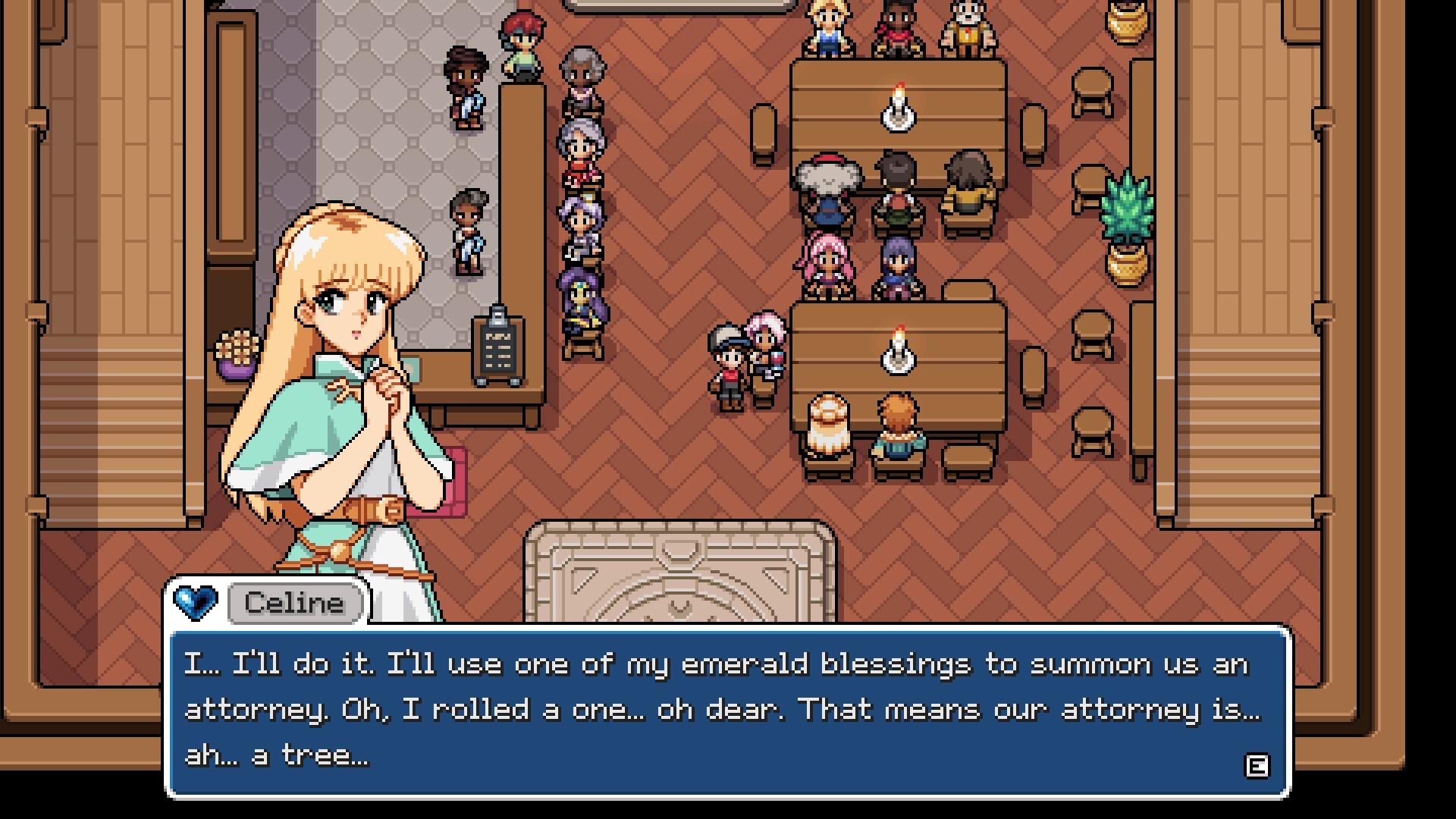
The story is not the game’s strongest writing achievement, and some of its conflicts and character introductions rely on recognizable genre conventions. What works better is the amount of attention given to the people living in Mistria. The developers have built a cast of more than 30 villagers, with changing routines, seasonal clothing, individual stories and thousands of lines of dialogue. That investment makes the town itself more interesting than the central mystery.
Version 1.0 finally brings the town’s main restoration storyline to its intended conclusion. This is one of the most important differences between the finished game and the Early Access version because it gives the player’s long-term work an endpoint. The story remains fairly light, but it no longer feels as though the player is working toward a conclusion that exists somewhere in a future update.
Gameplay and Mechanics
The daily structure is familiar, but Fields of Mistria is particularly good at making that structure flexible. A typical morning might involve watering crops, feeding animals and collecting products before heading into town, but there is no requirement to follow the same routine every day. Players can spend an afternoon mining, devote an entire day to fishing, concentrate on relationships or simply work on decorating their property. Because different activities contribute to different forms of progression, even a day without obvious financial gains can still feel productive.
That flexibility is one of the game’s best design decisions. Farming simulations can become surprisingly stressful when every day is treated as an optimization puzzle, with missed opportunities or inefficient schedules carrying significant consequences. Fields of Mistria is much more forgiving. The passage of time matters, but it rarely creates the feeling that the player has ruined a season by making the wrong decision. Even staying out too late has relatively mild consequences compared with the harsher penalties found in some other games in the genre. Player discussions around the full release have repeatedly pointed to this forgiving structure as one of the game’s strengths.
The downside is that the game sometimes lacks tension. There are many things to work toward, but relatively few situations in which the player must choose between two genuinely conflicting priorities. The skill system, town progression, relationships, collections and farm improvements all advance in parallel, creating a steady stream of rewards, but rarely forcing the player to commit to a particular path. This makes Fields of Mistria extremely approachable, although players who enjoy optimizing an economy or dealing with meaningful limitations may eventually find it too gentle.
The nine skill categories help give routine actions a stronger sense of progression. Farming, mining, fishing and other activities improve as they are used, while perks can make those activities more efficient or convenient. It is a straightforward system, but it is effective because it rewards the player for doing what they already enjoy rather than forcing an artificial progression activity into the daily schedule. The same philosophy applies throughout the game: most systems exist to make ordinary play gradually more rewarding rather than to interrupt it with elaborate mechanics.
Farming and Crafting
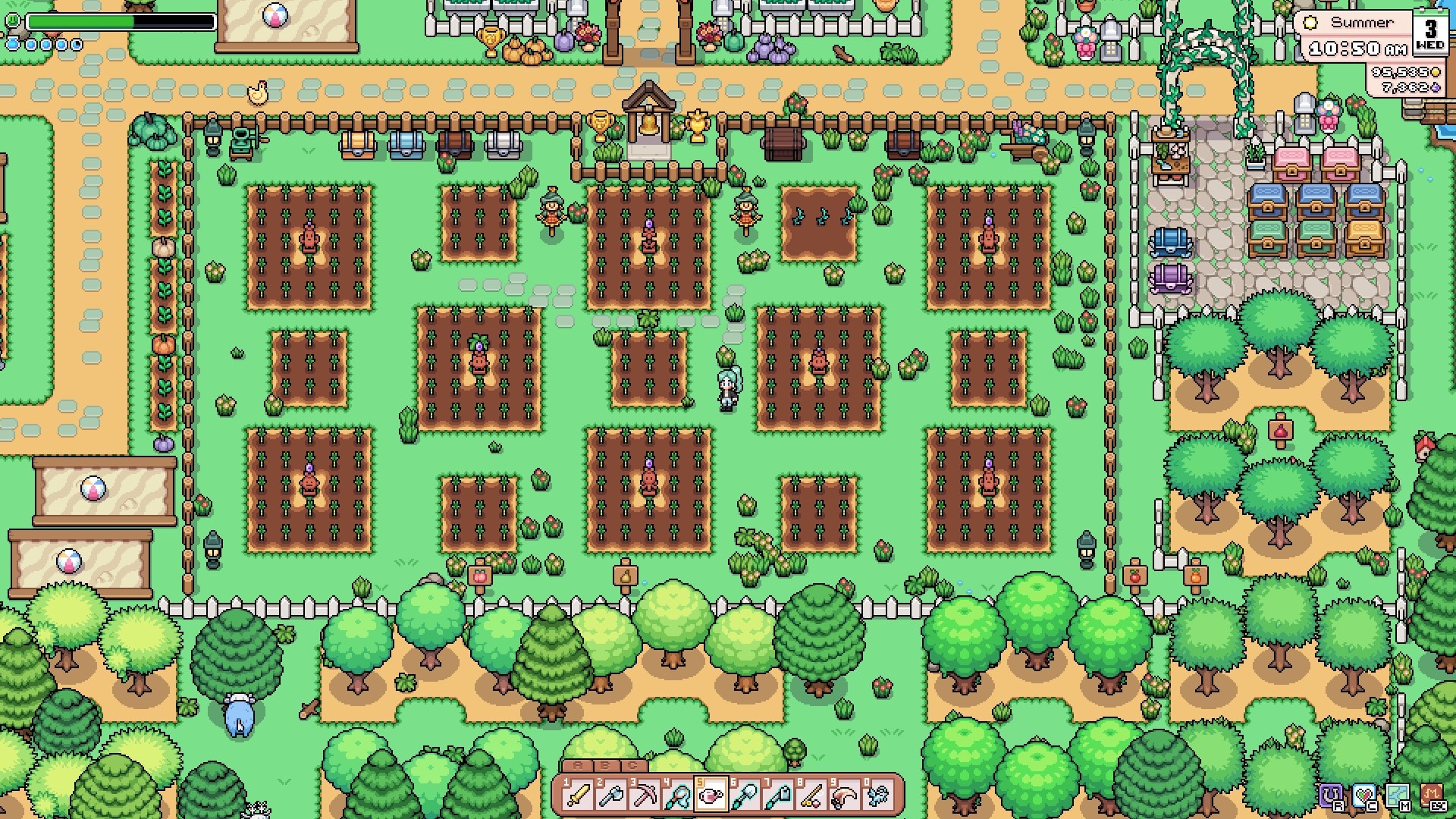
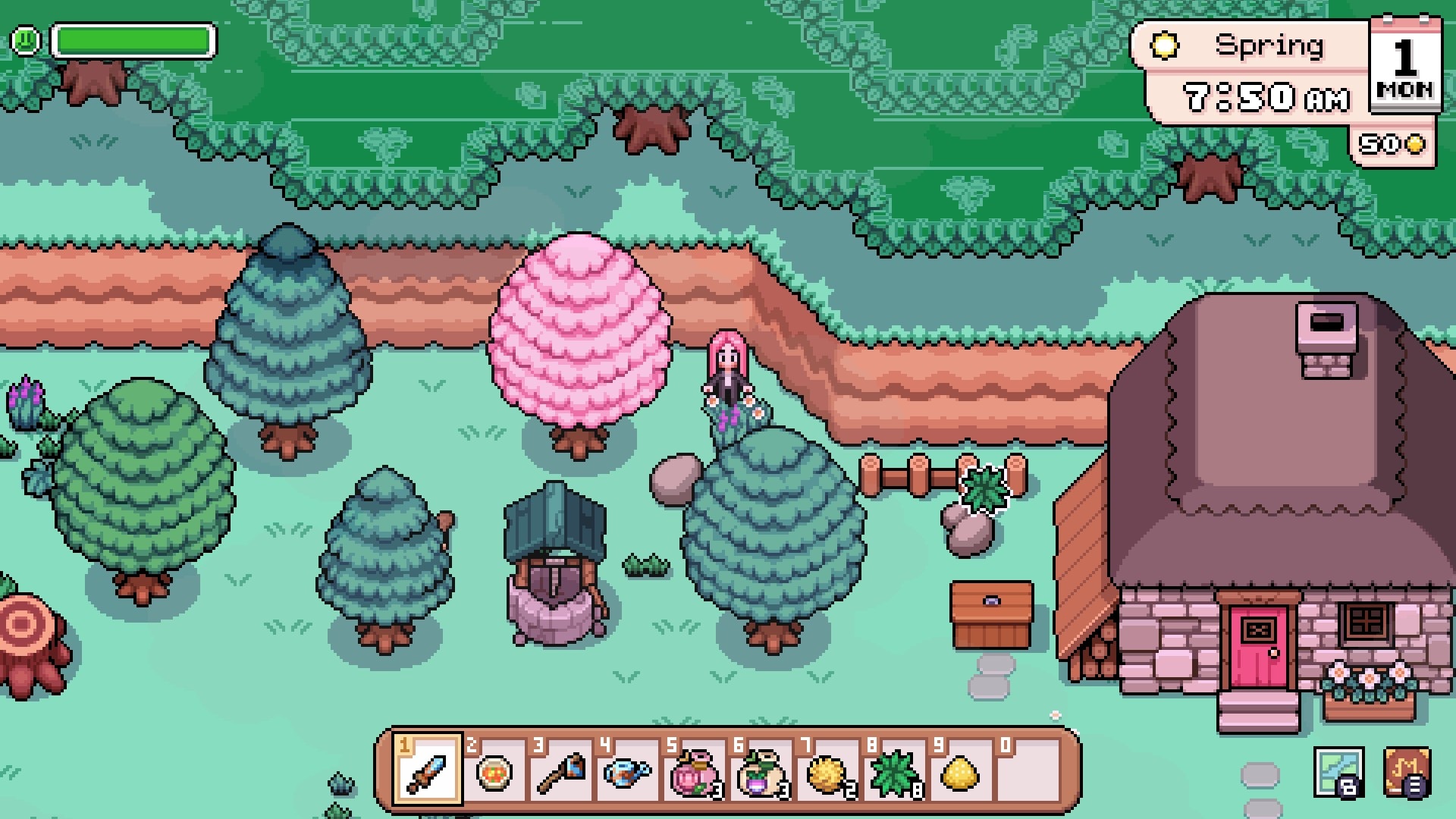
Farming remains the foundation of the experience, and it is satisfying largely because the player’s property develops at a comfortable pace. The initial farm is overgrown and restrictive, but clearing land, expanding production and arranging buildings gradually turns it into something that feels personal. The game gives players plenty of room to care about appearance as well as efficiency, which is important in a genre where the farm eventually becomes as much a creative project as an economic one.
Animal raising follows the same philosophy. Livestock can be cared for and bred, while rare colour variations give players another reason to continue developing their collection. The system is not especially complex, but it does not need to be. Animals provide useful products and another routine to incorporate into the day, while their visual variety adds an element of collection for players who enjoy that side of the genre.
Crafting is considerably broader, covering furniture, cooking, blacksmithing and a large number of other items. The game currently offers more than 700 craftable items, while home customization includes more than 400 available pieces. The sheer quantity is impressive, although not every item has equal mechanical importance. Some recipes are essential to progression, while others exist primarily for decoration or completion.
This is one of the few areas where Fields of Mistria can occasionally mistake breadth for depth. There is always another object to make, but having more recipes does not necessarily make the crafting system more interesting. Its real strength is the way crafting feeds into the broader loop: resources collected while exploring can improve the farm, support town projects or become something useful for the player’s home. The individual mechanics are simple, but their connections are well considered.
Exploration and Combat
Outside the farm, Mistria offers forests, waterways, ruins and other areas filled with resources to gather. Fishing, bug catching and foraging provide simple reasons to explore the surrounding regions, while the changing seasons give these activities some variety throughout the year. The world is not especially large by RPG standards, but it is densely packed with things to discover, and many of those discoveries feed back into other systems. A new plant might become a cooking ingredient, an unusual fish can contribute to a museum collection, and materials gathered while exploring can eventually become part of a farm upgrade or crafting recipe. This interconnected approach makes exploration feel worthwhile even when there is no specific quest sending the player into the wilderness.
The mines provide the game’s most substantial alternative to farming. Rather than simply functioning as resource deposits, they introduce enemies, environmental hazards and increasingly valuable materials as the player progresses deeper. Mining also ties directly into equipment upgrades, crafting and town restoration, giving players a practical reason to keep returning. The deeper sections are more dangerous and require better preparation, but the game never turns the mines into a particularly punishing experience. Like most of Fields of Mistria, they are designed to provide another activity to pursue rather than another source of pressure.
There is also a satisfying sense of discovery in the way exploration gradually expands the player’s knowledge of Mistria. New areas, resources and collectibles become more useful as other systems develop, and returning to previously visited locations can reveal things that were not immediately relevant earlier in the game. The museum reinforces this particularly well. Fish, insects, archaeological finds and other discoveries are not merely sellable items; keeping track of them gives completion-minded players a reason to revisit areas and pay closer attention to what they encounter.
Version 1.0 strengthens this side of the game by completing the dungeon progression and adding further quests and rewards. That matters because the mines were one of the areas that felt most obviously like an Early Access work in progress. The additional content gives players who enjoy exploration a clearer long-term objective rather than leaving the dungeon as simply another source of ore and combat experience.
Combat, however, remains the weakest major component of the experience. The basic encounters are functional, and different weapons and abilities provide enough variety to keep the mines from becoming completely repetitive, but the system lacks the depth found in games where combat is a central design pillar. Enemy encounters tend to be straightforward, and there is relatively little tactical complexity involved in dealing with them. The combat does its job, but rarely becomes something the player looks forward to for its own sake.
That limitation is particularly noticeable because the rest of Fields of Mistria is so polished. Farming, relationships, customization and town development all have enough personality to make them memorable, while combat feels more like a supporting mechanic that exists because an underground dungeon needs something to fight. The rewards are usually the stronger motivation for entering the mines: valuable resources, collectibles, progression materials and access to new areas provide a better incentive than the fighting itself.
That is not necessarily a major flaw. Fields of Mistria is fundamentally a farming and life-simulation RPG, and the mines succeed at their primary purpose of breaking up the slower pace of farm and town activities. Players who enjoy action-heavy dungeon crawling may find the combat underwhelming, but those looking for a change of pace rather than a second full-fledged RPG system will find enough here to make exploration worthwhile. The important distinction is that the game uses combat to support exploration rather than building its exploration around combat, and version 1.0 is strongest when viewed from that perspective.
Town Restoration and Progression
Town restoration is one of the game’s most successful systems because it gives the player’s work a purpose beyond personal wealth. Resources gathered through farming, mining and other activities contribute toward improving Mistria, while requests encourage the player to interact with villagers and explore areas that might otherwise be ignored. The town therefore develops alongside the player’s farm, creating a useful sense of shared progress.
The 1.0 release expands that progression considerably. Town Renown can now reach 100, the main restoration storyline is complete, and additional requests and rewards give established players more reasons to continue working on the community. The museum has also been expanded, with more than 50 sets covering activities such as fishing, farming, mining, bug catching and archaeology.
The weakness is that there can be too many progression tracks competing for attention. At any given point, the player may be working toward a farm upgrade, a skill perk, a museum collection, a relationship event and a town project. The game rarely tells players which one matters most, because its philosophy is to let them choose. That works for a relaxed experience, but it can also make the larger progression feel less focused.
The museum is particularly effective because it turns activities that might otherwise be ignored into worthwhile long-term goals. Catching an unusual fish or insect is no longer simply an opportunity to make money; it can contribute to a collection that gradually fills out the museum. These smaller systems do not transform the game, but they give the player more reasons to engage with its world.
Characters and Relationships
The villagers are the strongest part of Fields of Mistria. Their designs are distinctive, their routines change with seasons and events, and their dialogue gives them enough individuality to avoid feeling like functional NPCs placed around a farming game. The player can learn about their relationships with one another as well as their relationship with the protagonist, which helps Mistria feel like an actual community.
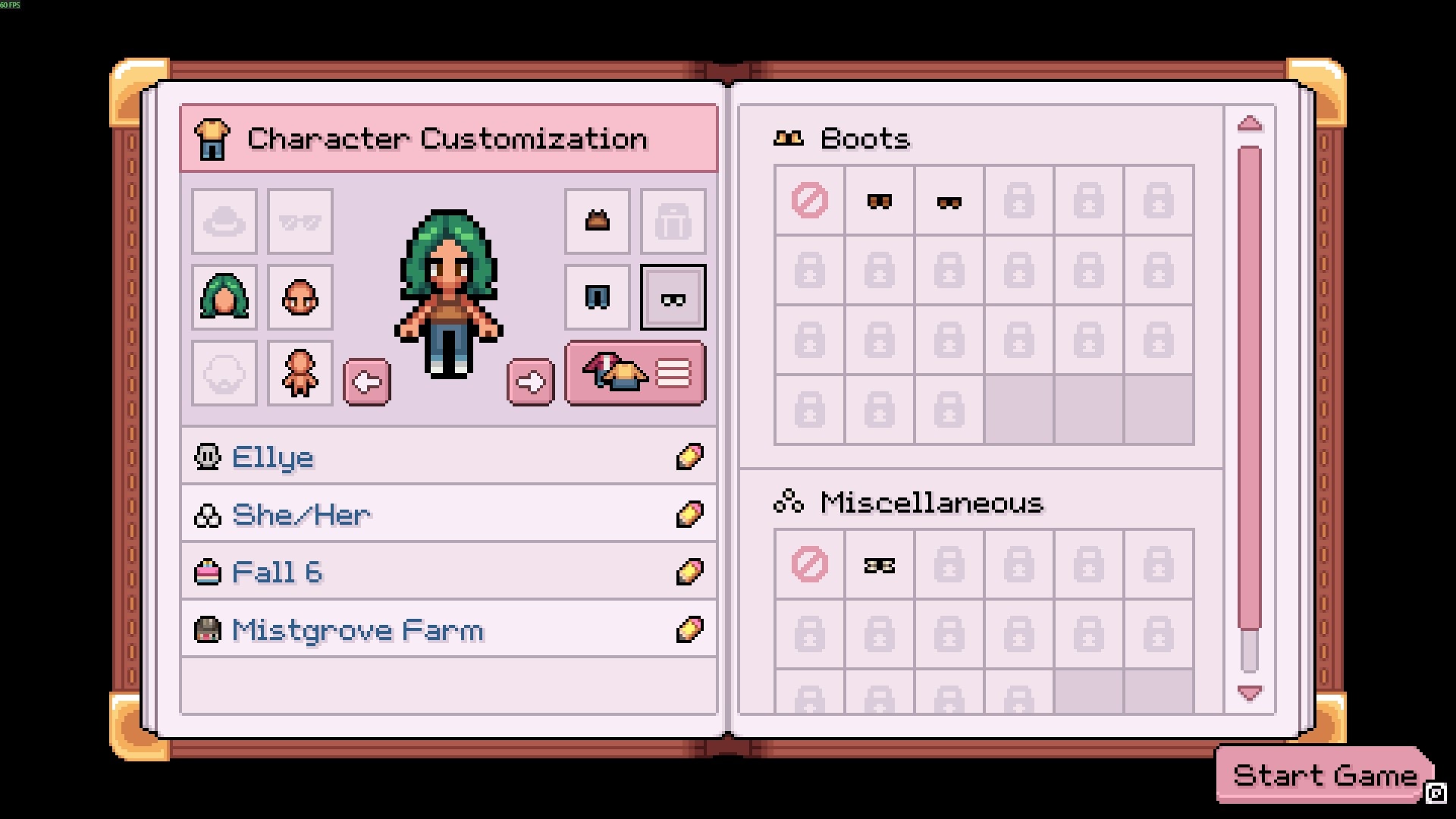
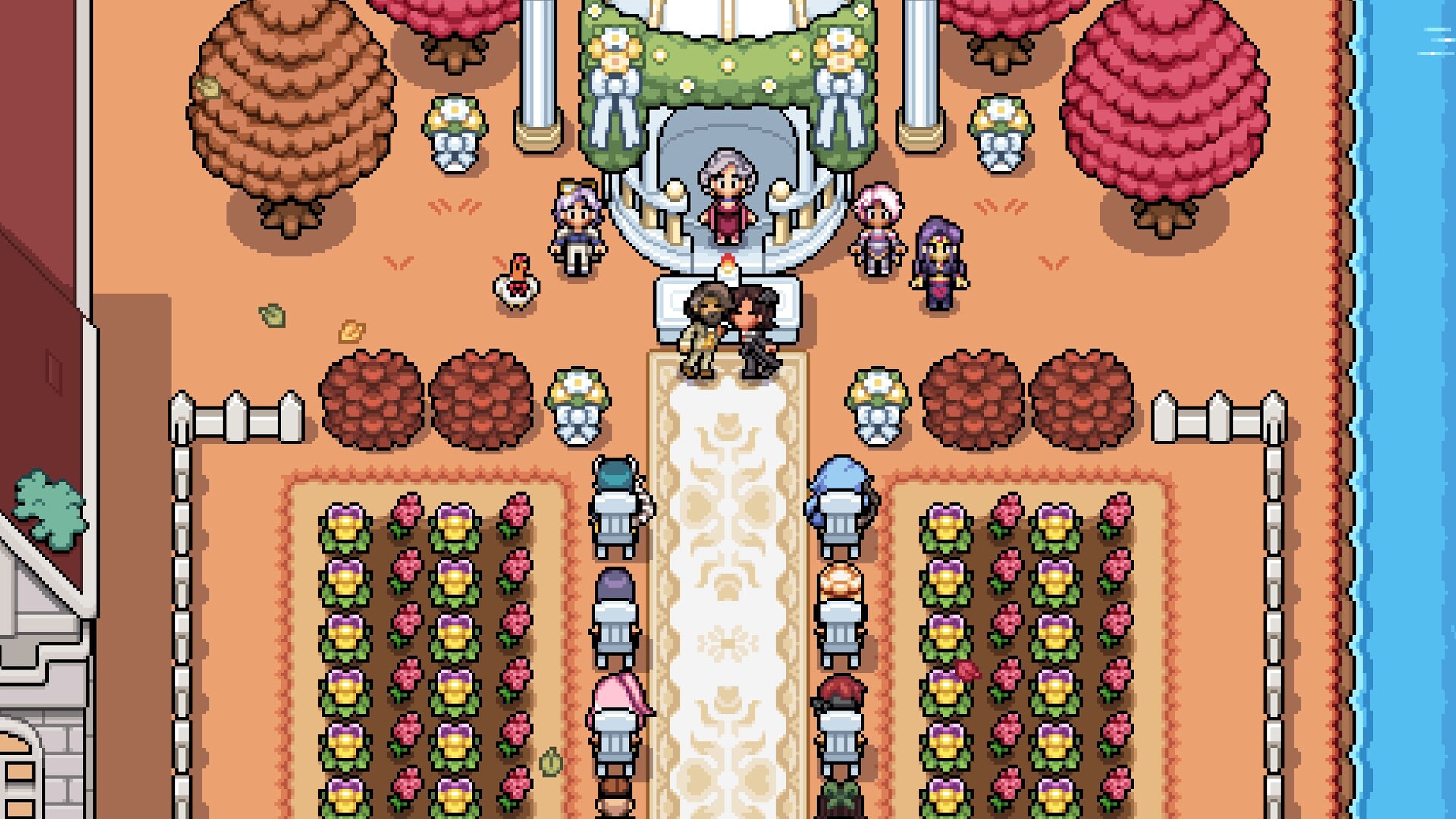
Romance is naturally an important part of that system, and 1.0 finally completes the progression that was previously capped at eight hearts. Romanceable characters now have ten-heart events, followed by proposal and wedding events, while marriage and children are available in the finished game. The game also allows players to choose their pronouns and does not restrict marriage candidates according to the player’s gender.
The new relationship content matters because it changes the way the social system feels over a long playthrough. Before 1.0, relationships could become highly developed while still having an obvious ceiling imposed by Early Access. The full release removes that ceiling and gives players a reason to continue investing in relationships beyond the point at which they had already seen most of a character’s major events.
Not every villager is equally compelling, and some characters rely on familiar archetypes before revealing more personality later. The important thing is that the game gives them enough dialogue and context to develop beyond their initial impressions. That makes social interaction feel like a genuine part of the experience rather than an efficient method of acquiring useful rewards.
Festivals and Daily Life
The smaller community activities help give Mistria’s calendar a sense of purpose. Seasonal festivals provide events to anticipate, while the Saturday Market offers another reason to visit town regularly. Version 1.0 adds Stillwell and Zorel to the market, expanding the available vendors and giving players more reasons to spend time there.
These activities are not particularly deep, but their value comes from the rhythm they add to the year. A farming game needs more than crops changing with the seasons; it needs the feeling that the community itself is changing with them. Fields of Mistria generally succeeds at that, particularly through seasonal character outfits, events and changing routines.
The game is at its best when these small activities overlap. A player might go into town to deliver a request, discover a new conversation, check the market, complete a museum donation and then return home with enough time to work on the farm. None of those activities would necessarily sustain the game on its own, but together they create the relaxed routine that defines the experience.
Visuals and Presentation
The pixel art is one of Fields of Mistria’s clearest strengths. Its visual style draws from classic Japanese role-playing games and anime-inspired character design, but the presentation is detailed enough to feel contemporary rather than simply nostalgic. Character portraits are particularly expressive, with animation and changing expressions giving conversations more personality than the relatively simple environments might suggest.
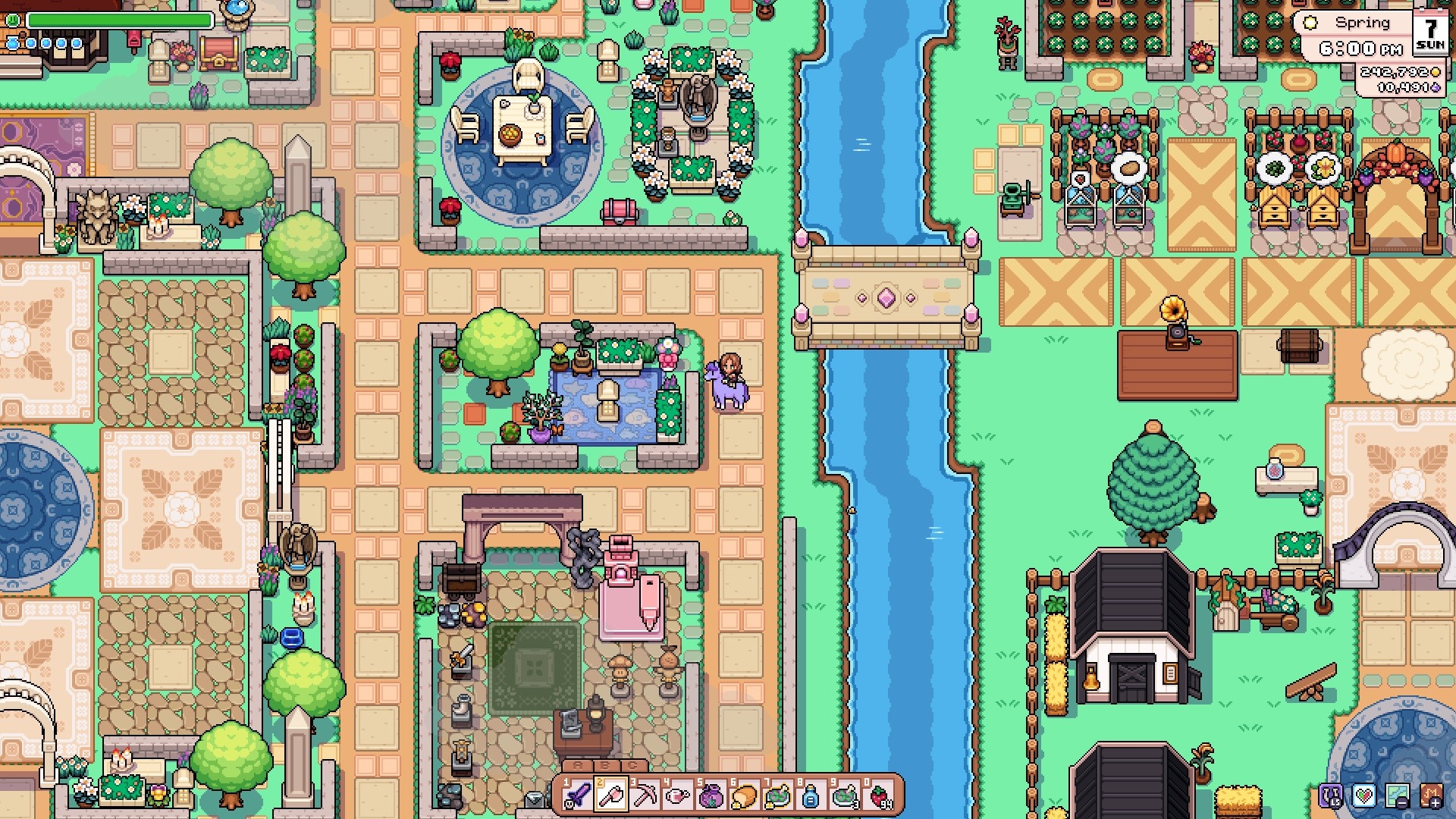
The visual consistency extends to the world itself. Buildings, farmland, forests, interiors and seasonal decorations all share the same style, while the large amount of furniture and customization allows players to make their farm and home visually distinct. The 1.0 update adds further cosmetic content and visual improvements, including dynamic cloud shadows.
More importantly, the presentation remains readable. Objects are generally easy to distinguish, characters stand out clearly against their surroundings, and the game’s relatively compact environments do not become visually confusing. It is a good example of art direction doing more than making a game attractive; it also supports navigation and interaction.
Technical Performance on PC
The PC version has benefited from extensive technical work during the final stages of development. In July, NPC Studio migrated the game to its own internal engine in an update specifically intended to improve performance and stability, including better support for Intel graphics and Steam Deck. The update also addressed several crash scenarios and was designed to reduce the game’s memory footprint on Steam Deck.
That work makes the final PC version considerably more convincing than an Early Access build that simply accumulated content. The game supports Windows PC and Steam Deck, with the developers currently focused on PC rather than presenting 1.0 as a simultaneous console release. Existing saves also carry forward into 1.0, and achievements can be awarded retroactively, which is an especially welcome decision for players who have already invested significant time in their farms.
There have been some launch reports of stuttering and other performance problems, including reports from Steam Deck users, so the release is not entirely free of technical concerns. Those reports appear to be relatively isolated rather than evidence of a universally unstable PC version, but they are still worth acknowledging for a game where players may spend hundreds of hours with a single save.
Overall, the technical state is considerably easier to recommend than the Early Access label might suggest. The engine migration, stability work and ongoing bug fixes demonstrate that technical polish was treated as part of the 1.0 process rather than left behind once the new content was finished.
Final Verdict: 9/10
Fields of Mistria succeeds because it understands that a farming RPG does not need to make every individual system extraordinary. Its farming is familiar, crafting is broad rather than particularly deep, the economy is forgiving and combat is clearly the weakest of its major mechanics. What matters is how those systems fit together, and on that level the game is remarkably consistent.
The strongest reason to spend time in Mistria is the combination of its characters and its flexible daily routine. There is enough to do that the player rarely runs out of objectives, but not so much pressure that those objectives become chores. The farm can be approached as an economic project or a creative one, the mines provide a change of pace, the museum gives collectors long-term goals and the villagers provide reasons to keep returning to town even after the practical rewards of doing so have diminished.
Version 1.0 makes the experience substantially more complete. The finished Town Repair storyline gives the central progression a conclusion, ten-heart relationships finally lead to marriage and children, the mines receive additional content, museum progression is expanded, new market vendors arrive and achievements provide another layer of long-term completion. These additions do not fundamentally change Fields of Mistria, but they do remove the sense that some of its most important systems are waiting for another update.
There are legitimate reasons not to give the game a perfect score. The combat is underdeveloped, the large number of parallel progression systems can make the overall structure feel unfocused, and the relaxed design means there is little pressure for players who prefer more demanding simulations. None of those shortcomings are hidden by the 1.0 release. They are simply part of the game’s design, and whether they matter depends largely on what the player wants from the genre.
For everyone else, Fields of Mistria is an exceptionally easy game to settle into. It borrows heavily from established farming-sim conventions, but it has enough personality in its setting, characters, presentation and quality-of-life design to stand apart from being merely another imitation. It is not trying to replace the games that inspired it. Instead, it takes the familiar formula and makes many of its rough edges less intrusive.
The result is a polished and welcoming farming RPG that is at its best when nothing particularly dramatic is happening: when a farm is slowly taking shape, a familiar villager has new dialogue, a museum collection gets another entry, a town improvement changes the landscape or another ordinary day ends with enough progress to make tomorrow worth playing. Those moments are hardly revolutionary, but Fields of Mistria understands how to make them satisfying.
After two years in Early Access, version 1.0 finally delivers the complete experience the game was building toward. Its ambitions remain modest in individual areas, but the overall package is unusually cohesive, attractive and enjoyable. For PC players who want a farming-life RPG with strong characters, extensive customization and very little unnecessary friction, Fields of Mistria is one of the genre’s better choices.