The extraction shooter has become one of PC gaming’s most competitive genres, making it increasingly difficult for newcomers to stand out. Most rely on familiar settings and recognizable mechanics, asking players to scavenge for loot, survive encounters with AI and rival players, then escape before losing everything. SAND: Raiders of Sophie takes a different approach. Developed by Hologryph and TowerHaus, it builds its entire identity around gigantic walking fortresses known as Tramplers, turning every expedition into a moving siege rather than another race through abandoned military compounds. It is an immediately compelling premise, and more importantly, one that influences almost every aspect of the experience instead of existing as little more than a visual gimmick.
Set on the alternate-history planet of Sophie, where dried oceans have left enormous ships stranded across endless deserts, SAND blends PvPvE combat, vehicle management, base building and extraction mechanics into a multiplayer sandbox that feels refreshingly different. Even in its current Early Access form, the game already delivers memorable moments that few competitors can replicate. At the same time, its ambition frequently outpaces its execution. Combat still needs refinement, the progression system begins to lose momentum after extended play, and technical issues remain difficult to ignore. Despite those shortcomings, the foundations are surprisingly solid, making SAND one of the more intriguing Early Access releases of the year.

Gameplay and Mechanics
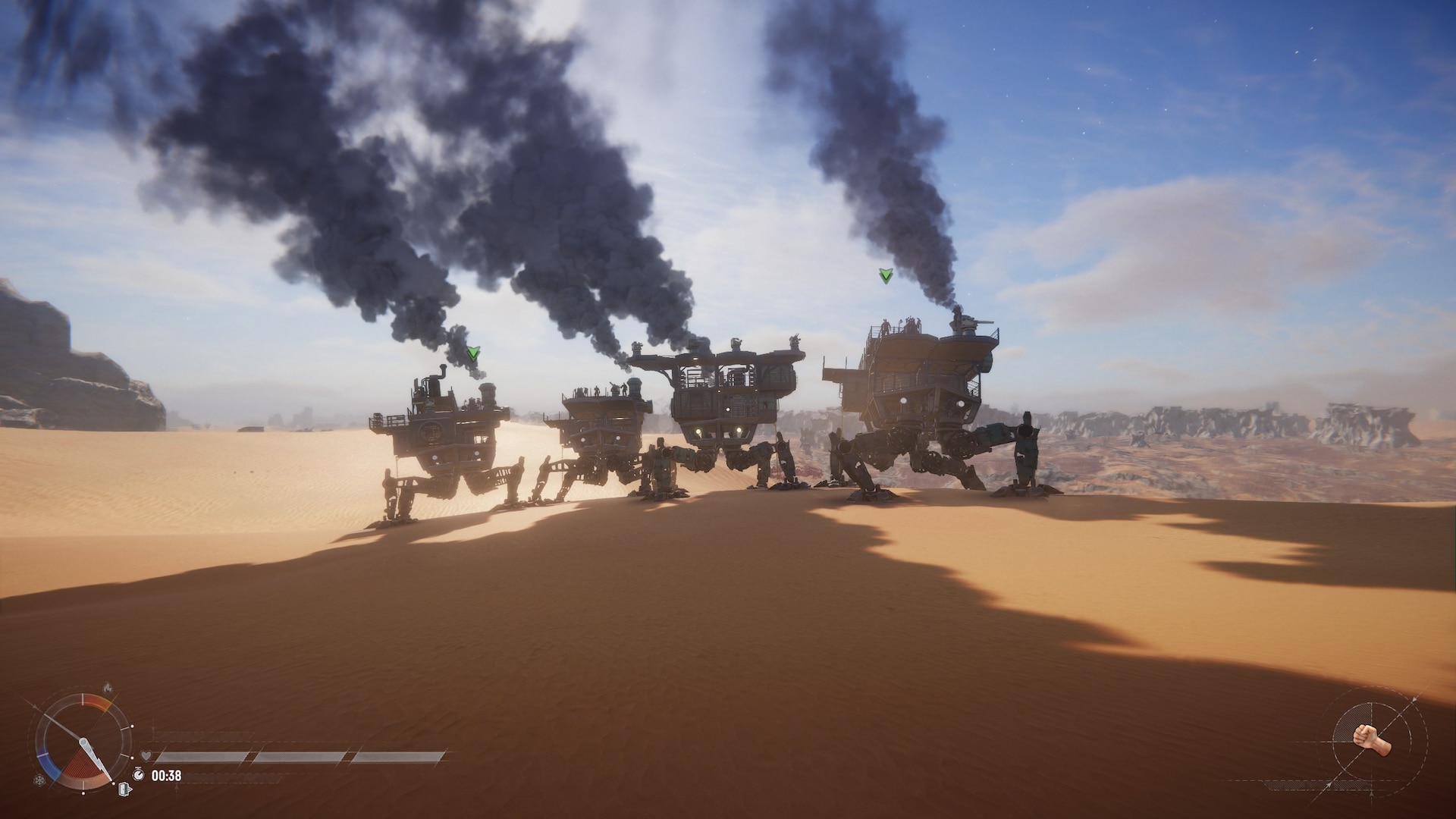
The Trampler defines almost everything about SAND. Rather than functioning as a simple vehicle, it serves as transportation, mobile headquarters, crafting station, storage facility and perhaps most importantly, something worth protecting. That single design decision fundamentally changes the structure of an expedition. Instead of rushing directly from one objective to another, crews spend considerable time maintaining their machine, discussing where to travel next and deciding whether a distant Trampler represents an opportunity or a threat.
This slower pace works in the game’s favour. Moments of relative calm build anticipation before combat eventually erupts, giving every encounter greater weight than if firefights occurred every few minutes. It also encourages teamwork in a way that feels natural. One player may remain behind the controls while another repairs damaged components, another organizes newly collected resources into storage and another keeps watch from the deck for approaching enemies. Everyone has a role without the game explicitly assigning one.
The extraction loop itself follows familiar conventions. Valuable resources collected during expeditions are safely banked only if players successfully extract, while dying usually means losing carried equipment and supplies. That risk remains high throughout every session because returning home is rarely guaranteed. Deciding whether to continue exploring one more location or head for safety often becomes the most difficult choice an expedition presents.
Where the game currently struggles is variety. After ten or fifteen hours, expeditions begin settling into a predictable rhythm. Explore a landmark, gather resources, defeat AI enemies, watch for rival crews and return to extract. The Trampler remains engaging enough to keep those activities enjoyable, but the objectives surrounding it could benefit from greater diversity. More dynamic world events, additional mission types and a broader range of locations would go a long way toward making successive expeditions feel less familiar.
World Design
Sophie is one of the most distinctive multiplayer settings released in recent years. Rather than presenting another post-apocalyptic wasteland dominated by ruined cities and military installations, SAND imagines a dried ocean floor littered with enormous shipwrecks, abandoned ports and collapsing industrial settlements. The result is a world that immediately captures attention without relying on elaborate storytelling.
Exploration consistently rewards curiosity because the environment itself communicates the planet’s history. Massive ships sit half-buried beneath shifting dunes, towering cranes stand motionless above empty harbours and forgotten settlements hint at lives abruptly interrupted by catastrophe. The developers resist explaining every detail through dialogue or written logs, allowing the landscape to speak for itself.
The map also benefits from its sense of scale. Travelling between locations aboard a Trampler reinforces the impression that civilization has collapsed into isolated pockets separated by vast stretches of inhospitable desert. Distant landmarks gradually emerge through the dust, creating a genuine sense of anticipation as crews debate whether the potential rewards justify the risks of investigating.
The downside is that environmental variety remains somewhat limited in the current build. While the art direction is consistently impressive, later expeditions can begin to blur together once players become familiar with the available locations. This is less a criticism of the visual design than the amount of content currently available, and it is precisely the sort of issue Early Access updates are expected to address.
Combat and PvPvE
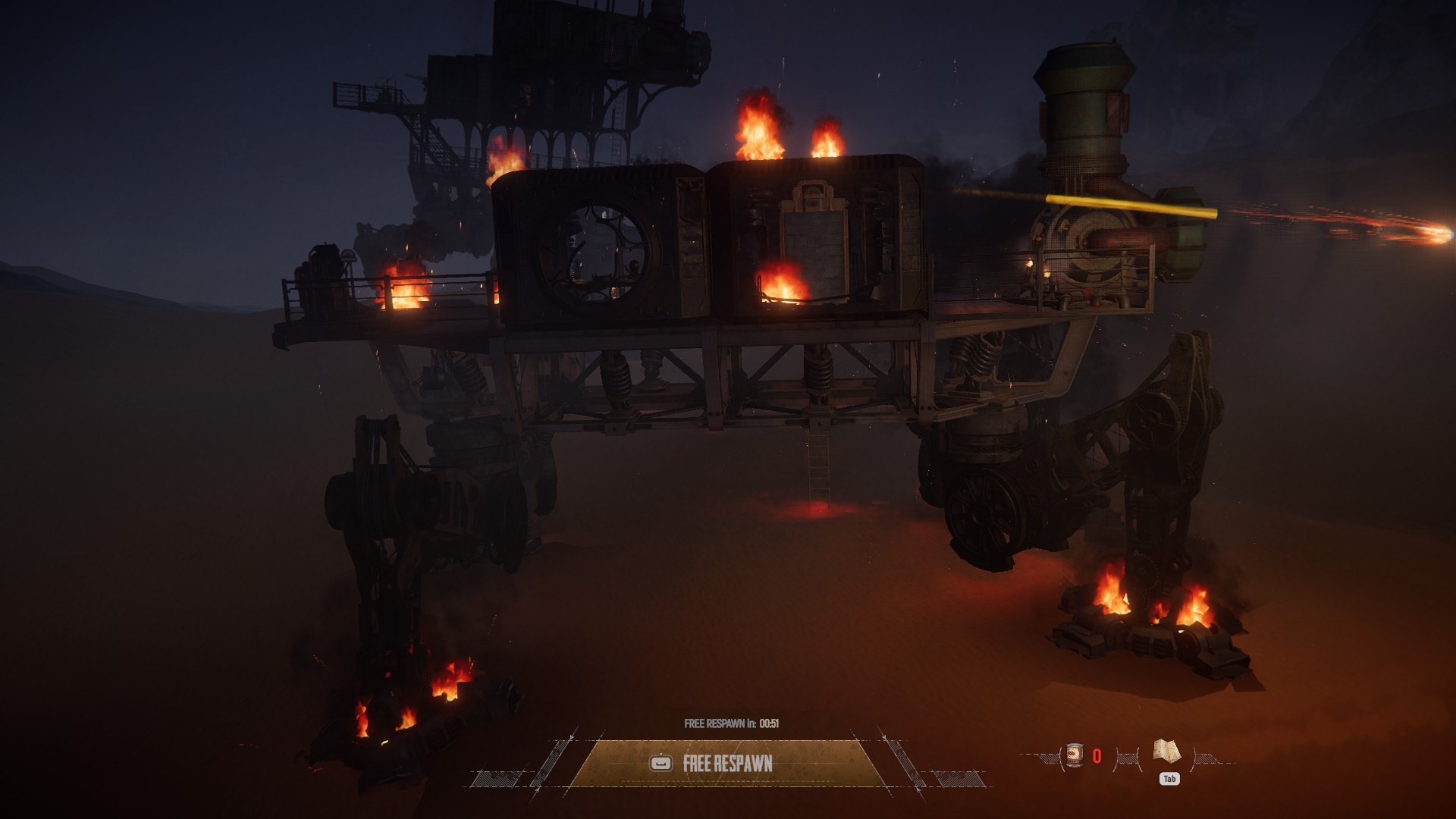
Combat produces SAND’s highest highs and some of its most noticeable frustrations. The game’s defining encounters rarely begin with players exchanging rifle fire. Instead, rival Tramplers first spot each other across the horizon, close the distance cautiously, exchange artillery fire and eventually transition into frantic boarding actions where attackers attempt to seize control while defenders desperately protect their mobile fortress.

These multi-stage battles are outstanding. Every decision matters, from where the Trampler is positioned to whether valuable supplies should be risked during the engagement. Boarding another crew’s machine feels especially tense because neither side enjoys a guaranteed advantage. Defenders know the layout of their fortress, but attackers often gain momentum simply through aggression and numbers. The result is a type of encounter that feels remarkably different from traditional extraction shooters.
The underlying gunplay, however, is considerably less distinctive. Weapons are functional and responsive, but they rarely feel particularly satisfying to use. Individual firearms perform their intended roles, yet few leave a lasting impression, and discovering new weapons seldom changes how combat unfolds. Compared with the creativity displayed elsewhere, the shooting mechanics feel comparatively conventional.
Combat also suffers from occasional technical inconsistencies. Community feedback during the Early Access launch has highlighted issues with hit registration, desynchronization and inconsistent server performance during firefights. While these problems do not affect every encounter, they appear often enough to undermine confidence during competitive matches where precision matters.
Enemy AI performs adequately without becoming a highlight. Hostile NPCs create enough pressure to ensure that scavenging valuable locations always consumes resources, but experienced players quickly learn their behaviour patterns. Most of the excitement comes from unpredictable player encounters rather than fighting computer-controlled enemies, making stronger AI behaviour an obvious area for future improvement.
Progression and Customization
SAND’s progression system succeeds because it focuses on improving the Trampler rather than the player. Resources gathered during expeditions unlock additional storage, improved crafting stations, defensive modules and other upgrades that remain visible every time the crew embarks on another journey. Watching a once-basic machine gradually evolve into a well-equipped fortress creates a stronger sense of ownership than unlocking passive bonuses through conventional skill trees.
Customization also introduces meaningful choices. Expanding storage allows crews to bring home more valuable resources, while investing in defensive upgrades better prepares them for boarding encounters. There is enough flexibility to encourage experimentation, even if the number of available modules remains relatively modest at this stage of development.
Character progression is noticeably less rewarding. Better armour and weapons certainly improve survivability, but equipment upgrades rarely transform the experience in the same way Trampler upgrades do. Crafting is functional but lacks complexity, with recipes primarily serving as straightforward resource sinks instead of encouraging experimentation or specialized builds.
The economy likewise begins to reveal its limitations after extended play. Resource gathering remains satisfying because every successful extraction contributes toward future upgrades, yet the overall progression loop could benefit from additional long-term goals beyond improving the Trampler. As the current content stands, experienced crews may eventually find themselves accumulating resources faster than they have meaningful ways to spend them.
Graphics and Audio
Although SAND does not push graphical technology to its limits, its art direction consistently leaves a stronger impression than raw visual fidelity alone. The towering silhouettes of Tramplers crossing endless deserts immediately establish a memorable identity, while weathered shipwrecks and abandoned settlements reinforce the alternate-history setting without feeling overly theatrical.
Character models and animations occasionally lack polish, particularly during close-quarters combat, but environmental design remains consistently strong. Lighting deserves particular praise for capturing the harsh atmosphere of Sophie’s dried seabed, with bright sunlight, blowing dust and long shadows giving the world a distinctive appearance throughout different areas of the map.
Audio design complements the visuals well. The heavy mechanical groans of a moving Trampler, the echo of distant artillery and the constant clanking of machinery all reinforce the feeling of travelling inside an enormous steam-powered fortress. Weapons could deliver greater impact, particularly during close-range firefights, but the environmental soundscape does an excellent job of maintaining immersion. The restrained soundtrack also proves effective, allowing natural ambience to create tension instead of relying on dramatic musical cues.

Technical Performance on PC
Like many multiplayer Early Access launches, SAND has experienced technical growing pains. Server instability during release week prevented some players from reliably connecting to matches, while occasional disconnects and matchmaking problems interrupted longer sessions. Although post-launch patches have already begun addressing some of these issues, they remain an important consideration for prospective players.
General PC performance is similarly inconsistent. Frame rate fluctuations, sporadic stuttering and minor visual bugs appear often enough to remind players that optimization is still ongoing. None of these problems make the game unplayable, but they can become frustrating during boarding encounters where smooth performance is particularly important.
The encouraging aspect is that most technical shortcomings appear to be polish issues rather than fundamental design problems. The game’s strongest systems remain enjoyable despite occasional instability, suggesting that continued optimization could significantly improve the overall experience without requiring major redesigns.
Final Verdict: 6/10
SAND enters Early Access with a stronger identity than most multiplayer games manage even after launch. Its Trampler system transforms familiar extraction mechanics into something genuinely distinctive, while Sophie’s desolate setting provides an atmospheric backdrop for memorable player-driven encounters. The combination of exploration, vehicle management and large-scale PvPvE combat regularly produces situations that feel unique to SAND rather than borrowed from better-known competitors.
That originality does not excuse its shortcomings. Combat lacks the consistency needed to match the quality of its larger ideas, progression outside the Trampler could use greater depth and the current amount of content makes repetition inevitable after extended play. Technical issues further reinforce the reality that this is a work in progress rather than a finished product.
Even so, few Early Access games launch with such a clear understanding of what makes them different. SAND already knows that its walking fortresses are the heart of the experience, and nearly every memorable moment grows naturally from that central idea. If Hologryph can continue expanding the world, refining combat and improving technical stability without losing sight of that identity, SAND has every opportunity to become one of the most distinctive extraction shooters available on PC. In its current state, it is an easy recommendation for players who enjoy multiplayer sandbox experiences and understand the compromises that come with Early Access, while more cautious players may prefer to wait until the game grows into the ambitious vision it already hints at.