
Since the release of Genshin Impact and Honkai: Star Rail, HoYoverse has built a reputation for producing polished live-service RPGs that combine high production values with gacha mechanics. While both games target broad audiences through expansive worlds or traditional turn-based combat, Zenless Zone Zero takes a noticeably different direction. Rather than attempting another massive open-world adventure, it focuses on fast-paced action, stylish presentation, and a much more compact setting built around urban life and repeated combat missions.
Released initially in 2024 and continuously expanded through regular updates, Zenless Zone Zero places players in the role of a Proxy, someone who guides teams of specialists through mysterious dimensional disasters known as Hollows. Humanity has adapted to these supernatural anomalies by constructing New Eridu, the last major city standing, where everyday life continues despite the constant threat posed by creatures emerging from these unstable dimensions. It is a setting that mixes modern city life, retro technology, anime aesthetics, and science fiction into something that feels surprisingly distinctive despite drawing inspiration from familiar genres.
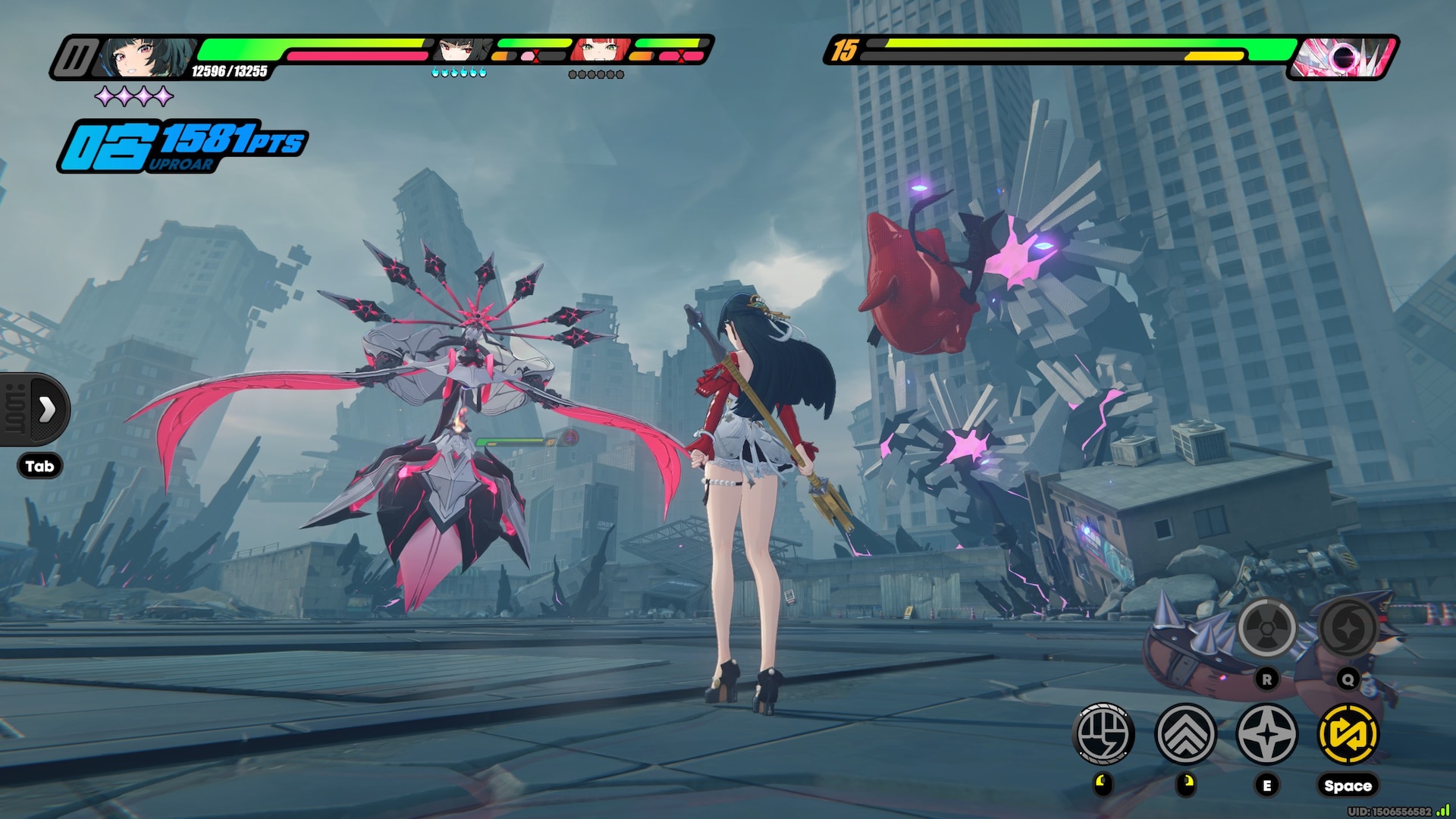
Unlike HoYoverse’s previous RPGs, Zenless Zone Zero is structured around smaller combat stages rather than an interconnected open world. Missions are selected from menus, combat encounters are self-contained, and downtime is spent exploring neighborhoods, talking with residents, managing businesses, and developing relationships with playable characters. It creates a rhythm that feels closer to action games than traditional RPGs, even if progression still relies heavily on leveling systems, equipment upgrades, and randomized character acquisition.
That difference in structure is one of the game’s greatest strengths. Instead of asking players to spend dozens of hours crossing enormous maps filled with collectibles, Zenless Zone Zero concentrates almost entirely on combat quality and character interactions. The result is a game that often feels leaner and more focused than its predecessors, although it also introduces compromises that become increasingly apparent over extended play.
After numerous updates, the PC version has grown into a substantial package. The roster continues to expand, new story chapters have strengthened the narrative, and quality-of-life improvements have addressed several launch complaints. At the same time, the game’s reliance on familiar free-to-play systems remains impossible to ignore. Whether those systems become an obstacle depends largely on how someone chooses to engage with the game.
Gameplay and Mechanics
Combat is unquestionably the centerpiece of Zenless Zone Zero, and it succeeds because it emphasizes responsiveness rather than excessive complexity. On the surface, individual controls appear relatively simple. Characters possess standard attacks, special skills, ultimate abilities, evasive maneuvers, and assist mechanics. The depth comes not from memorizing enormous move lists, but from learning timing, team composition, enemy behavior, and the constant rhythm of switching between party members.
Each squad consists of three characters who can be swapped instantly during battle. Successful dodges often create opportunities for powerful counterattacks, while stunning enemies allows teammates to chain together devastating follow-up attacks that deal massive damage. Instead of treating character switching as a utility feature, the entire combat system revolves around it. Every encounter encourages players to rotate constantly between fighters rather than relying on a single favorite.
This creates battles that remain energetic throughout lengthy play sessions. Successful encounters resemble carefully choreographed exchanges rather than chaotic button mashing. Enemy attacks are clearly telegraphed through visual and audio cues, rewarding players who learn proper timing instead of simply maximizing numerical stats. While higher-level equipment certainly improves performance, mechanical skill consistently plays an important role.
The stun system deserves particular praise because it introduces another strategic layer beyond dealing raw damage. Certain characters specialize in rapidly filling an enemy’s stun meter, temporarily incapacitating powerful opponents and opening lengthy damage windows. Deciding whether to prioritize stunning, supporting teammates, or maximizing direct damage becomes increasingly important against tougher bosses.
Each character also fills distinct combat roles. Attack-oriented agents naturally focus on sustained damage, while Stun characters specialize in disabling opponents. Support characters provide buffs and resource generation, Defense characters improve survivability, and Anomaly specialists apply status effects that trigger powerful elemental reactions. Although these categories resemble traditional RPG classes, their interactions feel far more active because every role participates directly in combat instead of standing passively in the background.
The game’s elemental system also avoids becoming unnecessarily complicated. Fire, Ice, Electric, Ether, and Physical attacks interact with enemy weaknesses, while repeated application of specific elements gradually builds status effects that can dramatically increase damage output. These mechanics reward thoughtful team building without overwhelming newcomers with endless combinations.
Boss encounters showcase the combat system at its best. Larger enemies feature multiple attack patterns, environmental hazards, and increasingly aggressive phases that demand consistent attention. Success depends on reading animations, managing cooldowns, and recognizing the appropriate moments to dodge, counter, or unleash coordinated team attacks. Several later bosses become genuine tests of execution rather than simple damage checks, making victories feel earned.
Difficulty generally scales well throughout the main campaign. Early missions introduce mechanics gradually, while optional endgame activities demand significantly greater mastery. Players who simply wish to experience the story rarely encounter frustrating roadblocks, whereas those seeking optimization can spend countless hours refining rotations and experimenting with increasingly efficient team compositions.
The game also deserves credit for avoiding excessive mechanical clutter. Many action RPGs eventually overwhelm players with dozens of overlapping systems that constantly compete for attention. Zenless Zone Zero instead keeps its primary combat loop remarkably clean. Battles emphasize movement, timing, positioning, and coordinated character switching above everything else. New mechanics are introduced steadily but rarely disrupt the core formula.

That accessibility, however, occasionally works against the game. Outside higher-level content, standard encounters often become repetitive because normal enemies rarely survive long enough to fully utilize the combat system’s potential. Experienced players can eliminate entire groups within seconds, reducing many routine missions to repetitive execution rather than meaningful tactical decisions. Combat remains visually satisfying, but its depth is easier to appreciate during difficult boss fights than ordinary farming stages.
Another limitation comes from mission variety. Although enemy behaviors evolve throughout the campaign, the basic objective structure remains largely unchanged. Players repeatedly enter combat arenas, defeat enemies, collect rewards, and return to menus before selecting another mission. The excellent combat mechanics carry much of this repetition, but they cannot entirely disguise how familiar the overall gameplay loop eventually becomes.
Fortunately, regular updates continue introducing additional enemy types, challenge modes, and combat scenarios that help maintain variety. While the fundamental structure remains consistent, new content regularly provides fresh opportunities to experiment with recently released characters and evolving team strategies.
Exploration and World Design
One of the biggest surprises in Zenless Zone Zero is how effectively it creates a believable city despite being far smaller than traditional open-world RPGs. New Eridu is not enormous, but it feels lived-in because nearly every location serves a purpose beyond simply existing as scenery.
Instead of endless wilderness or sprawling fantasy landscapes, exploration centers on compact districts filled with shops, restaurants, arcades, apartment buildings, video rental stores, and countless pedestrians following their daily routines. The game encourages players to slow down between combat missions, interact with familiar faces, complete side activities, and observe how neighborhoods evolve as the story progresses.
The video rental store operated by the protagonists functions as the central hub for much of the experience. Here players manage commissions, interact with visitors, organize daily activities, and gradually expand relationships with numerous characters. It transforms what could have been a simple menu interface into a location that develops alongside the narrative.
Individual neighborhoods possess distinct personalities through architecture, music, lighting, and population. Commercial streets feel lively during the daytime, while evening visits present noticeably different atmospheres. Shops open and close according to the in-game clock, NPC dialogue changes regularly, and recurring characters gradually develop through optional conversations. These details contribute significantly to making New Eridu feel like an actual place rather than merely a collection of quest locations.
Exploration itself remains relatively straightforward. Players walk between important landmarks, collect occasional hidden items, speak with NPCs, complete side commissions, and discover optional interactions that flesh out the setting. It lacks the freedom associated with open-world games, but it also avoids overwhelming players with enormous maps filled primarily with repetitive collectibles.
Earlier versions of Zenless Zone Zero relied heavily on a television-board navigation system that represented Hollow exploration through abstract puzzle sequences. While visually creative, this mechanic divided player opinion because it interrupted combat pacing and often slowed progression. Subsequent updates dramatically reduced its prominence, replacing much of it with more direct level exploration and traditional mission design. The result is a noticeably smoother experience that better emphasizes the game’s strongest qualities.
Mission environments inside Hollows remain more linear than the city itself, generally consisting of interconnected arenas linked by straightforward pathways. Environmental storytelling exists through abandoned infrastructure, corrupted landscapes, and occasional scripted events, but these locations primarily function as combat spaces rather than destinations for extended exploration.
This narrower scope ultimately works in the game’s favor. Instead of spreading resources across a massive open world, HoYoverse concentrates on creating highly polished environments that are dense with visual detail. Streets feel busy, interiors are carefully decorated, and every district reflects the game’s distinctive combination of retro technology and futuristic design.
That said, players expecting the freedom offered by Genshin Impact may initially find the structure restrictive. Exploration is intentionally limited, with most progression directed through menus, mission selection, and scheduled story chapters. There is little opportunity to simply wander for hours discovering unexpected locations or hidden quests. The emphasis instead remains on providing focused activities within smaller, handcrafted spaces.
For many players, this approach ultimately proves refreshing. Sessions feel easier to manage because objectives remain clear, travel time is minimal, and meaningful progress can be made in relatively short periods. Rather than asking players to dedicate entire evenings to exploration alone, Zenless Zone Zero consistently respects their time while still delivering a setting rich enough to support its characters and story.
Characters and Progression
One area where Zenless Zone Zero immediately stands out is its cast. HoYoverse has always been strong at creating memorable playable characters, but this game arguably features some of the studio’s most natural writing to date. Rather than introducing dozens of heroes who exist primarily to promote limited-time banners, the game takes its time developing individual personalities through story chapters, side commissions, trust events, and everyday interactions around New Eridu. Even characters who receive relatively little screen time often leave a lasting impression because they feel grounded within the setting rather than existing solely as combat units.
The factions help enormously in this regard. Instead of presenting every playable character as an independent adventurer, agents belong to organizations with their own goals, internal dynamics, rivalries, and workplace relationships. Whether it is the resourceful Cunning Hares, the disciplined Criminal Investigation Special Response Team, Victoria Housekeeping’s unusual staff, Sons of Calydon’s rough-and-ready biker culture, or the many groups introduced through later updates, every faction has its own identity. Conversations between members rarely feel like exposition dumps. They resemble co-workers, friends, rivals, or family members who have known each other for years.
This approach gives the narrative a stronger sense of continuity. Characters continue appearing long after their introductory chapters conclude, reacting to ongoing events and maintaining relationships that evolve over time. The game spends surprisingly little effort convincing players that every character is the most important person in the world. Instead, it portrays them as ordinary people with jobs, responsibilities, flaws, and ambitions, even when they possess extraordinary combat abilities.
The protagonists, siblings Belle and Wise, also deserve recognition. Unlike silent protagonists common throughout the genre, both possess clearly defined personalities, regularly participate in conversations, and contribute meaningfully to the narrative. Their interactions with one another feel believable, often balancing humor with genuine concern for each other’s safety. Because players select only one sibling while the other remains actively involved in the story, the relationship never disappears after character creation. This decision adds warmth to the game’s dialogue and gives the narrative an emotional anchor beyond the broader conflict surrounding the Hollows.
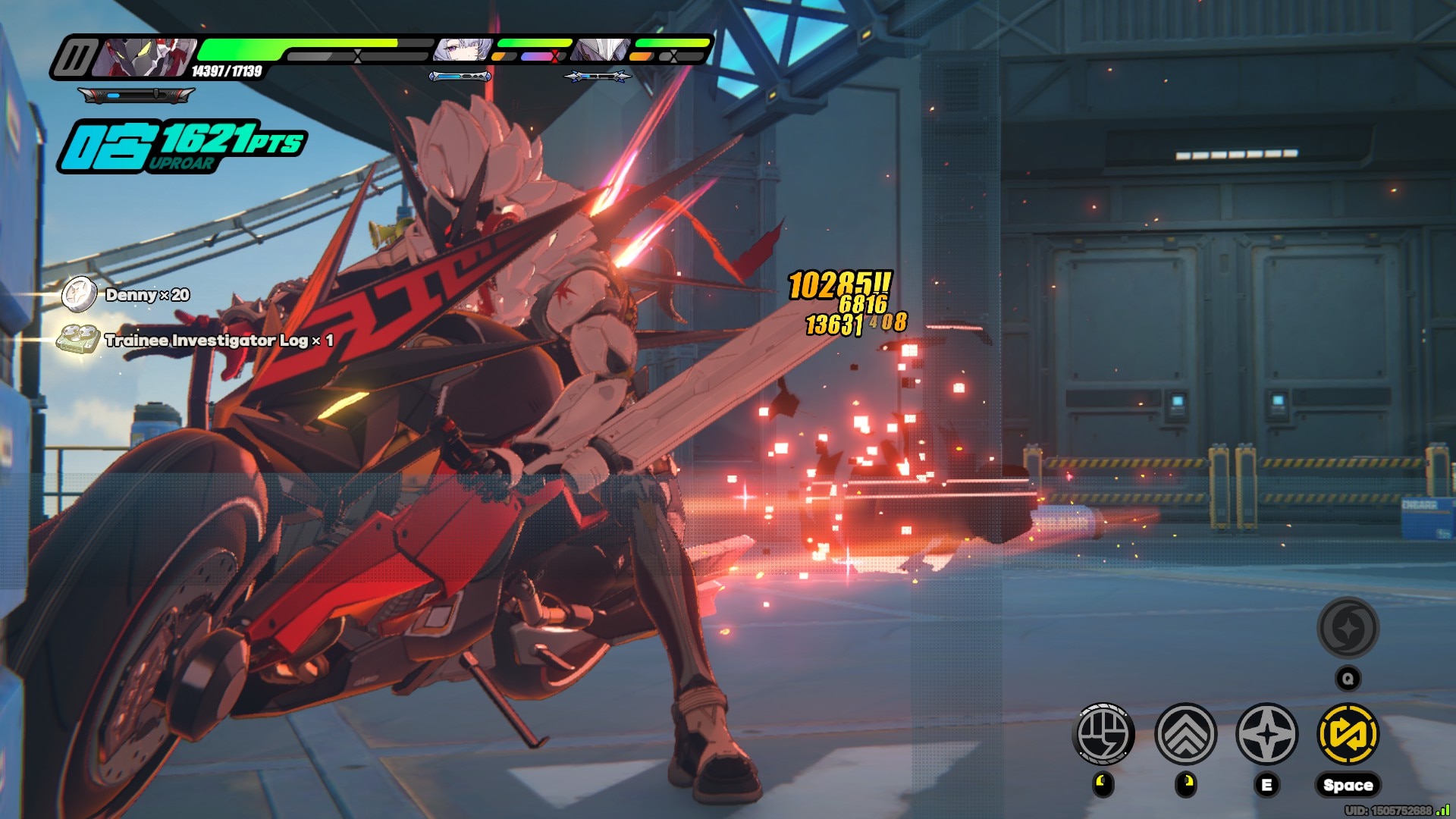
Character design is another undeniable strength. Every playable agent is visually distinctive without relying entirely on extravagant costumes or exaggerated proportions. Clothing often reflects occupations, personal tastes, or faction affiliations. Animations further reinforce personality through unique idle behaviors, movement styles, and combat techniques. A confident fighter carries themselves differently than an anxious technician or an experienced law enforcement officer, and these differences remain consistent throughout gameplay.
Combat animations contribute just as much to characterization. Weapons vary dramatically, ranging from swords and firearms to oversized construction equipment, martial arts techniques, chainsaws, and increasingly unconventional gadgets introduced through updates. Every character moves differently, making team composition feel visually engaging in addition to mechanically rewarding. Even after dozens of hours, unlocking a new character often feels exciting because it introduces an entirely different combat rhythm rather than a slightly modified version of an existing moveset.
Progression revolves around several interconnected systems that will feel familiar to anyone who has played modern gacha RPGs. Characters gain experience levels, ascend using specific materials, upgrade individual skills, improve equipment known as W-Engines, and equip Drive Discs that function similarly to armor sets or artifact systems found in comparable games. Each layer provides incremental statistical improvements while encouraging players to revisit earlier content for necessary resources.
Individually, none of these systems are especially complicated. Collectively, however, they create a substantial investment of time. Building a single character into endgame readiness requires numerous currencies, boss materials, upgrade items, and equipment farming. Raising multiple teams simultaneously quickly becomes resource-intensive, particularly for players who prefer experimenting with different playstyles rather than committing to one primary squad.
Fortunately, the game generally communicates progression clearly. Required materials are easy to locate, farming activities become accessible through straightforward menus, and quality-of-life improvements introduced after launch have significantly reduced unnecessary friction. Resource tracking is convenient, navigation between upgrade systems is intuitive, and daily tasks rarely require excessive effort.
Drive Disc farming remains the most randomized element of progression. Like artifact systems in many RPGs, obtaining ideal equipment involves repeated attempts with no guarantee of perfect results. Primary attributes, secondary statistics, and set bonuses all contribute to overall effectiveness, meaning dedicated players can spend weeks optimizing a single character. Thankfully, the game does not require perfect equipment for ordinary story progression. High-end optimization primarily benefits challenging endgame modes where every percentage point matters.
The Trust system adds another welcome layer outside combat. Spending time with playable characters through optional events gradually strengthens relationships, unlocking conversations, personal stories, and various cosmetic rewards. These interactions help develop personalities beyond battlefield performance and often provide some of the game’s strongest writing. Instead of relying entirely on dramatic plot developments, many memorable moments emerge from simple conversations over coffee, shopping trips, arcade visits, or casual evenings around the city.
Not every progression mechanic is equally successful, however. The stamina system naturally limits daily farming efficiency, encouraging gradual advancement rather than marathon sessions. This design supports long-term engagement but inevitably frustrates players eager to develop newly acquired characters immediately. Resource bottlenecks become particularly noticeable after obtaining multiple characters in quick succession, forcing difficult decisions regarding which upgrades deserve priority.
The gacha system itself remains one of the game’s most divisive aspects. New characters and high-tier W-Engines are primarily acquired through randomized banners using premium currency earned through gameplay or purchased with real money. While generous events, story rewards, and pity systems make obtaining desired characters more realistic than pure chance alone would suggest, the underlying monetization model never disappears. Players willing to remain patient can build capable teams without spending money, but collecting every character or maximizing their potential quickly becomes expensive.
To HoYoverse’s credit, game balance generally avoids making older characters immediately obsolete whenever new banners arrive. Newly released agents frequently introduce alternative strategies rather than outright replacing existing favorites. Strong team composition, mechanical skill, and sensible resource management usually matter more than constantly chasing the latest release, although naturally some characters occupy stronger positions within the evolving endgame meta.
Story and Writing
Although Zenless Zone Zero presents itself as an action-focused experience, its narrative gradually becomes one of its strongest qualities. Rather than immediately throwing players into universe-ending conflicts, the story begins on a much smaller scale. The protagonists are simply trying to earn a living by operating their video rental store while secretly working as Proxies who guide exploration teams through dangerous Hollows. This modest introduction gives players time to become familiar with New Eridu before the broader mysteries surrounding the city begin unfolding.
The pacing benefits significantly from this restraint. Early chapters devote considerable attention to establishing the world, introducing recurring factions, and allowing players to understand how ordinary citizens coexist with constant supernatural threats. Everyday life occupies just as much narrative space as large-scale action sequences. Characters worry about paying bills, maintaining businesses, organizing events, and navigating workplace relationships alongside more dramatic Hollow expeditions. These quieter moments make later developments considerably more effective because the city feels worth protecting.
As the campaign progresses, the central mystery surrounding the Hollows gradually expands without becoming incomprehensible. Questions regarding their origins, the true history of New Eridu, and the motivations of various organizations develop steadily across multiple story arcs. Rather than resolving major mysteries quickly, the narrative embraces the long-form structure expected from an ongoing live-service title while still ensuring that individual chapters tell satisfying self-contained stories.
Dialogue consistently ranks among the game’s greatest strengths. Conversations rarely sound overly formal or artificially dramatic. Characters interrupt one another, joke naturally, misunderstand situations, and occasionally argue over relatively trivial matters. This casual writing style helps distinguish Zenless Zone Zero from many anime-inspired RPGs that frequently rely on lengthy exposition or exaggerated emotional speeches.
Humor is similarly well handled. The game embraces absurd situations without undermining its more serious moments. Running jokes emerge organically from character personalities rather than repeated memes or forced comedic interruptions. Even the Bangboo mascots, which could easily have become irritating mascot characters, generally remain charming because they are integrated naturally into the setting and rarely dominate scenes unnecessarily.
The narrative also demonstrates surprising confidence in allowing secondary characters to drive individual story arcs. The protagonists often function as observers or facilitators while other agents confront personal conflicts, professional challenges, or faction-specific problems. This structure prevents the world from revolving entirely around the player and gives supporting characters meaningful opportunities for development.
Not every storyline reaches the same standard. Some event narratives understandably prioritize introducing newly released characters over advancing the overarching plot, and occasional pacing issues arise when live-service scheduling interrupts narrative momentum. There are also moments where terminology surrounding Hollows, technology, and various organizations becomes denser than necessary, particularly during exposition-heavy chapters.
Nevertheless, the overall quality of the writing has steadily improved through post-launch updates. Later chapters display greater confidence in balancing action, mystery, comedy, and character development without allowing any single element to dominate the experience. Emotional scenes generally succeed because they emerge naturally from established relationships rather than relying on sudden tragedy for impact.
Perhaps most importantly, Zenless Zone Zero remembers that not every memorable story requires constant world-ending stakes. Many of its best moments involve ordinary conversations, neighborhood events, or personal dilemmas that strengthen players’ attachment to New Eridu and its residents. Those smaller stories give the larger conflicts emotional weight, creating a setting that feels inhabited rather than simply constructed to support combat encounters.
Visuals and Presentation
Few studios have developed a visual identity as recognizable as HoYoverse, and Zenless Zone Zero may be the company’s most cohesive artistic achievement so far. Rather than chasing realism or building another sprawling fantasy world, it embraces a stylized urban aesthetic that blends contemporary city life with retro technology, comic-book influences, graffiti culture, anime character design, and futuristic science fiction. The result feels immediately distinctive. Even after dozens of hours, New Eridu remains one of the most visually memorable settings in the genre.
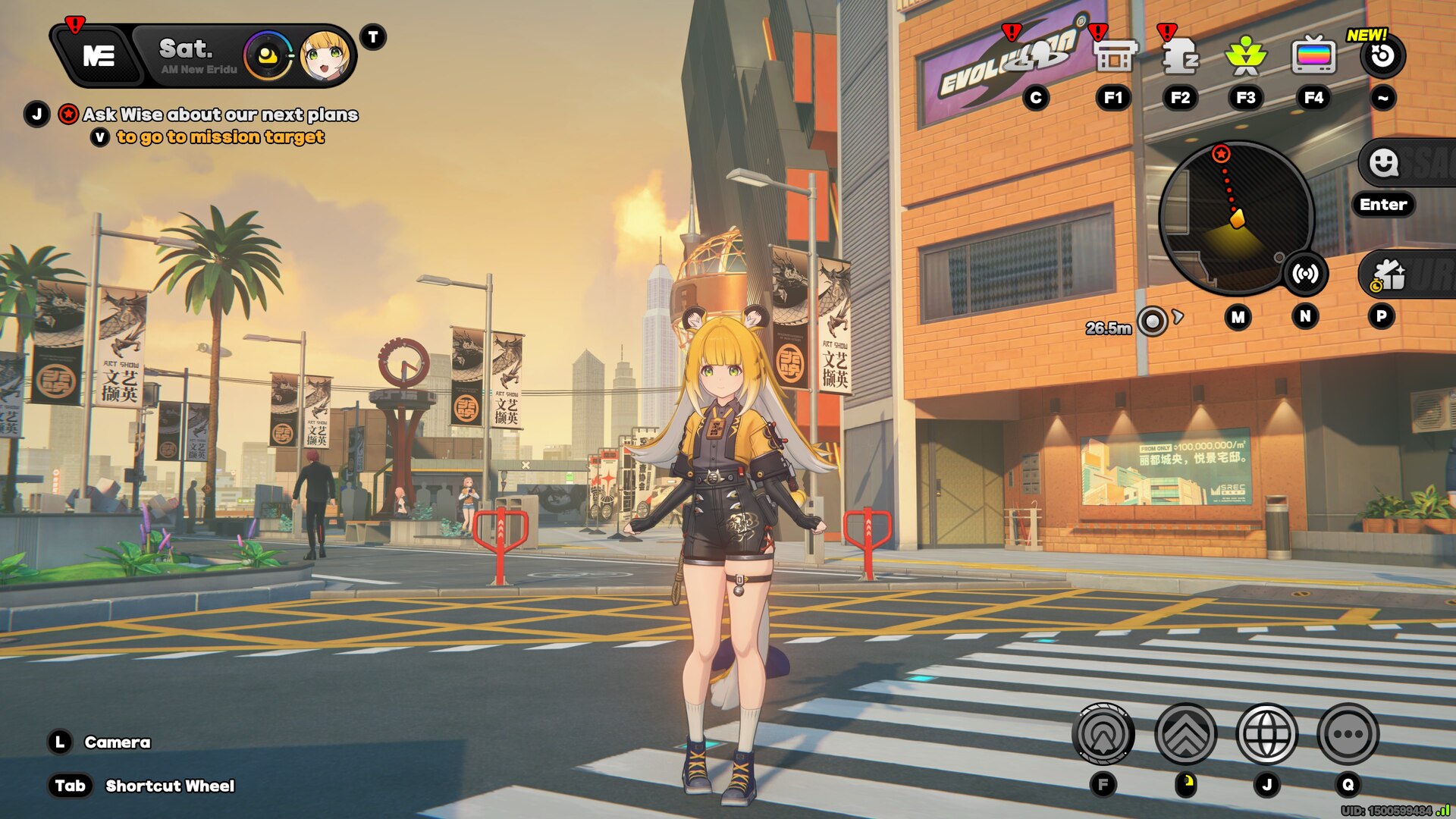
The city itself is filled with personality. Streets are lined with colorful storefronts, apartment buildings, cafés, convenience stores, arcades, and advertising that collectively create the impression of a functioning metropolis rather than a collection of quest hubs. Environmental details reward close observation. Posters change during story events, shops decorate for seasonal occasions, pedestrians follow believable routines, and districts subtly evolve as new chapters become available. These touches help New Eridu feel inhabited without requiring an enormous map.
Color plays a major role in establishing the game’s identity. Bright storefronts and neon lighting contrast sharply with the darker, distorted environments found inside the Hollows. The transition between everyday urban life and surreal combat zones reinforces the game’s central premise while ensuring that neither setting becomes visually repetitive. Hollow environments often feature fragmented architecture, impossible geometry, corrupted infrastructure, and shifting landscapes that communicate their instability without becoming visually confusing during combat.
Character models are equally impressive. Every playable agent possesses a unique silhouette, expressive facial animations, and clothing that reflects their occupation, faction, or personality. While many anime-inspired games lean heavily on elaborate fantasy costumes, Zenless Zone Zero generally grounds its designs in recognizable fashion before layering in more stylized elements. This makes the cast feel surprisingly cohesive despite the considerable variety in appearances.
Animation quality is arguably where the game excels most. Combat movements are exceptionally fluid, with every attack flowing naturally into the next. Dodges, counters, assists, and ultimate abilities transition seamlessly without sacrificing readability. Even routine attacks carry a satisfying sense of momentum thanks to strong animation timing and impactful visual effects.
The game’s use of comic-book presentation also deserves praise. Story scenes frequently employ stylized panels, dynamic camera angles, graphic transitions, and illustrated sequences instead of relying exclusively on traditional cutscenes. This approach not only reinforces the game’s artistic identity but also allows conversations to remain visually engaging without requiring fully animated cinematics for every interaction. It creates a presentation style that feels both efficient and distinctive.
Menus continue this commitment to visual consistency. User interfaces incorporate animated typography, bold iconography, cassette tape motifs, retro televisions, and colorful overlays without becoming difficult to navigate. Many live-service games prioritize functionality at the expense of personality, but Zenless Zone Zero manages to achieve both. Even routine activities such as upgrading equipment or collecting rewards benefit from responsive animations and thoughtful interface design.
The game also makes excellent use of lighting throughout New Eridu. Different times of day noticeably affect the atmosphere of each district, with evening lighting transforming familiar streets into entirely different environments. Reflections, signage, and ambient effects add depth without overwhelming the visual composition.
If there is one minor criticism, it is that the game’s heavy reliance on stylization occasionally results in visual clutter during particularly chaotic battles. Multiple ultimate abilities, elemental reactions, assist attacks, and enemy effects can briefly obscure the battlefield, especially when fighting large groups. Fortunately, enemy telegraphs remain clear enough that experienced players rarely lose track of incoming attacks, and the overall readability remains stronger than in many comparable action RPGs.
Overall, Zenless Zone Zero is an exceptionally polished visual experience. Rather than attempting to impress through sheer scale, it succeeds through consistency, confident art direction, and remarkable attention to detail. It is a game that understands exactly what aesthetic it wants to achieve and rarely compromises that vision.
Audio and Sound Design
The presentation would not be nearly as effective without equally strong audio design. From the opening hours onward, Zenless Zone Zero establishes a clear musical identity that differs noticeably from HoYoverse’s previous games. Instead of orchestral fantasy scores or sweeping science-fiction compositions, the soundtrack draws heavily from electronic music, hip-hop, jazz, rock, funk, and modern pop influences. This urban sound fits naturally with New Eridu while giving combat encounters a distinct energy.
Battle themes are consistently excellent. Tracks build momentum without becoming repetitive, supporting the fast-paced combat while remaining enjoyable outside the game. Boss encounters often receive unique compositions that reinforce the intensity of major fights without overwhelming the action.
Outside combat, quieter pieces create a relaxed atmosphere during exploration. Walking through Sixth Street, visiting cafés, browsing shops, or managing the video rental store is accompanied by music that reflects the rhythm of everyday city life rather than constantly reminding players that catastrophe lurks nearby. This contrast strengthens both halves of the experience.
Sound effects are equally polished. Every weapon type carries distinct impact sounds that reinforce the weight of attacks. Heavy weapons produce satisfying metallic crashes, firearms deliver crisp reports, and martial arts strikes feel appropriately sharp without becoming exaggerated. Dodge counters, stun activations, chain attacks, and ultimate abilities all receive strong audio feedback that makes successful execution feel rewarding.
Voice acting represents another major strength. The English cast delivers consistently natural performances, avoiding the exaggerated delivery that occasionally affects localized anime games. Characters possess recognizable speech patterns without becoming caricatures, and relationships feel believable thanks to strong chemistry between performers. Emotional scenes generally succeed because conversations sound authentic rather than melodramatic.
The Japanese voice option is similarly excellent for players who prefer the original performances, and both language tracks maintain a high level of quality throughout the campaign. The localization also deserves credit for preserving humor and personality without sounding overly literal or awkward.
Ambient audio contributes quietly but effectively to immersion. City districts feature conversations between pedestrians, distant traffic, shop announcements, and environmental sounds that make New Eridu feel active even during quieter moments. These details rarely draw attention to themselves individually, but collectively they reinforce the illusion of a functioning city.
Technical Performance on PC
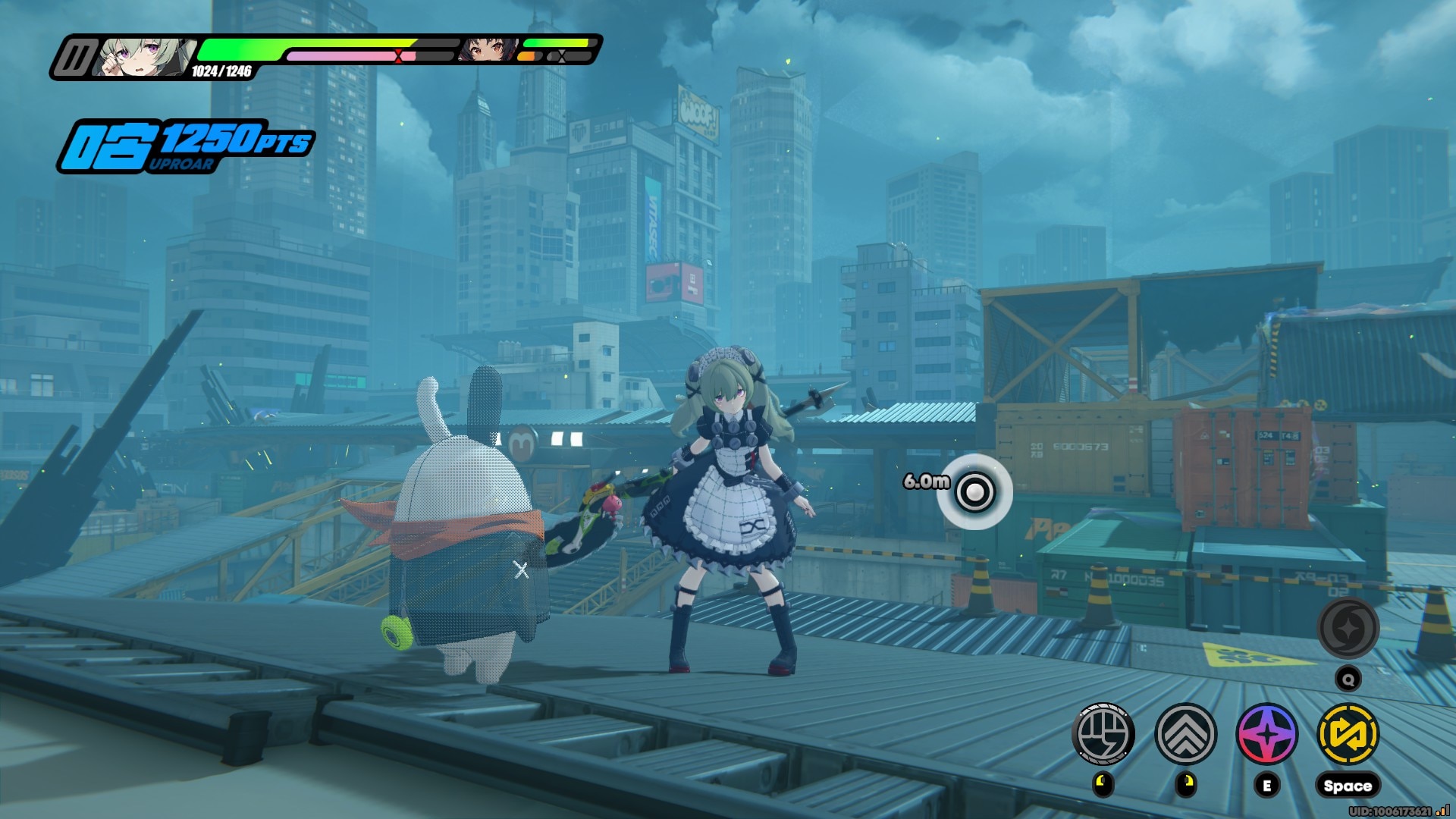
From a technical standpoint, Zenless Zone Zero is one of HoYoverse’s strongest PC releases. The game launches quickly, scales well across a wide range of hardware, and offers enough graphical options to accommodate both modest and high-end systems. Performance is consistently smooth during ordinary gameplay. Frame rates remain stable even during effects-heavy combat encounters, provided the hardware meets recommended specifications.
Loading times are brief, particularly when installed on an SSD, helping maintain the game’s brisk pacing between missions. Fast transitions between New Eridu, combat stages, menus, and story sequences minimize downtime, allowing players to quickly return to the action instead of spending unnecessary time waiting for areas to load.
The PC version supports high resolutions, ultrawide monitors, customizable graphics settings, adjustable frame-rate limits, and multiple input methods. Mouse-and-keyboard controls are perfectly functional, with responsive camera movement and fully rebindable controls. Nevertheless, the game clearly feels designed with controllers in mind.
Character movement, camera behavior, and combat inputs all translate exceptionally well to modern gamepads. Switching between characters, executing dodge counters, and performing chain attacks simply feels more natural with analog movement and dedicated face buttons. Keyboard and mouse players can certainly enjoy the game without issue, but controller support remains the preferred way to experience combat.
Visual optimization is another highlight. Despite its high-quality character models and detailed environments, Zenless Zone Zero remains surprisingly efficient. The stylized art direction allows the game to look impressive without demanding cutting-edge hardware, making it accessible to a much broader audience.
Network stability has also improved significantly since launch. As an always-online title, server connectivity naturally remains essential, but routine gameplay generally proceeds without interruption outside occasional maintenance periods or large update launches.
Minor technical issues still exist. Camera positioning can occasionally become awkward in confined environments, particularly against larger bosses pressed into corners. Some clipping and animation glitches appear from time to time, although they rarely affect gameplay. These are relatively small issues within an otherwise polished package.
Perhaps the game’s greatest technical achievement is how responsive everything feels. Menus open instantly, combat inputs register reliably, transitions between gameplay systems are fast, and the overall experience demonstrates a level of polish that many live-service titles only achieve years after release.
Monetization
Like every HoYoverse game, Zenless Zone Zero cannot be discussed without addressing its monetization. At its core, it remains a free-to-play gacha RPG built around randomized character acquisition and recurring limited-time banners. That business model inevitably shapes progression, long-term engagement, and player expectations.
The good news is that the game is remarkably generous with playable content. The entire main story, exploration, events, and nearly every gameplay system are accessible without spending money. Free players receive a steady supply of premium currency through story progression, achievements, events, and routine gameplay, making it entirely possible to build capable teams over time.
The pity system also provides a degree of predictability absent from many older gacha games. Players who save resources carefully can realistically target specific characters instead of relying entirely on luck. Planning ahead becomes more important than constant spending.
However, the monetization model still encourages patience above all else. Character progression takes time, premium currency accumulates gradually, and missing a limited banner may require waiting months for another opportunity. Players hoping to collect every character or maximize duplicate upgrades will quickly encounter significant costs.
Fortunately, Zenless Zone Zero avoids tying story progression to purchases. Challenging endgame content certainly rewards optimized teams, but the main campaign remains comfortably achievable using free characters supplemented by careful resource management. Mechanical skill also plays a larger role than raw statistics during difficult encounters, reducing the pressure to constantly chase stronger units.
Ultimately, the monetization is neither unusually aggressive nor unusually generous compared to its direct competitors. Players familiar with modern gacha RPGs will recognize nearly every system immediately. Those entirely new to the genre should understand that enjoying the game for free is realistic, but completing every collection or obtaining every new release is not.
Final Verdict: 7.5/10
Zenless Zone Zero succeeds because it understands exactly what kind of game it wants to be. Instead of competing directly with massive open-world RPGs, it delivers a focused action experience built around excellent combat, memorable characters, and one of the most stylish urban settings in recent years. Every major system reinforces that identity, from the responsive team-based battles to the lively neighborhoods of New Eridu and the confident presentation that ties the entire package together.
Its greatest strength is consistency. Combat remains engaging throughout the campaign thanks to fluid animation, satisfying character switching, and well-designed boss encounters. The cast benefits from unusually natural writing, the city feels genuinely lived-in, and the game’s audiovisual presentation ranks among the strongest in the genre. HoYoverse has steadily refined the experience through post-launch updates, addressing many early criticisms while expanding both the narrative and gameplay systems in meaningful ways.
That does not mean the game is without shortcomings. Mission structures eventually become repetitive, progression requires substantial resource farming, and the familiar limitations of a live-service gacha remain impossible to ignore. Players expecting unrestricted exploration comparable to traditional open-world RPGs may also find the more structured design limiting. Yet these compromises rarely overshadow what the game does exceptionally well.
Perhaps Zenless Zone Zero’s biggest achievement is that it avoids feeling like a collection of monetization systems wrapped around combat. While those systems certainly exist, the core experience remains genuinely enjoyable on its own merits. The city invites exploration not because it is enormous, but because it feels authentic. Characters become memorable through strong writing rather than banner advertisements. Combat remains satisfying because it rewards timing and coordination instead of simply chasing larger damage numbers.
In an increasingly crowded live-service market, Zenless Zone Zero stands out through polish rather than scale. It delivers one of the most refined action combat systems available in a free-to-play RPG while surrounding it with exceptional presentation, engaging storytelling, and a world players are likely to enjoy returning to long after the opening chapters conclude. It may not reinvent either the action RPG or gacha formula, but it demonstrates how effective those familiar ideas can be when executed with confidence, restraint, and remarkable attention to detail.


