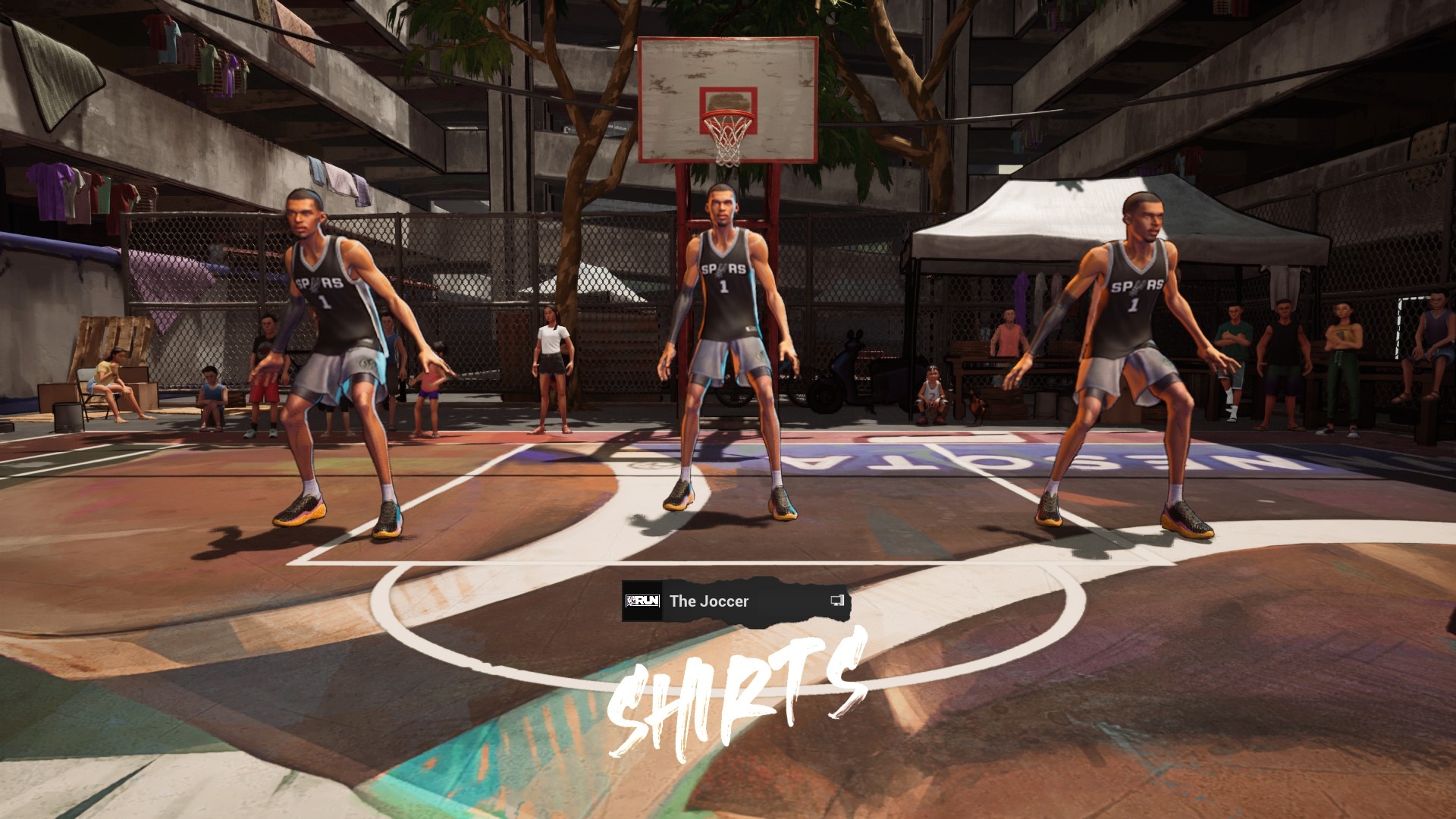
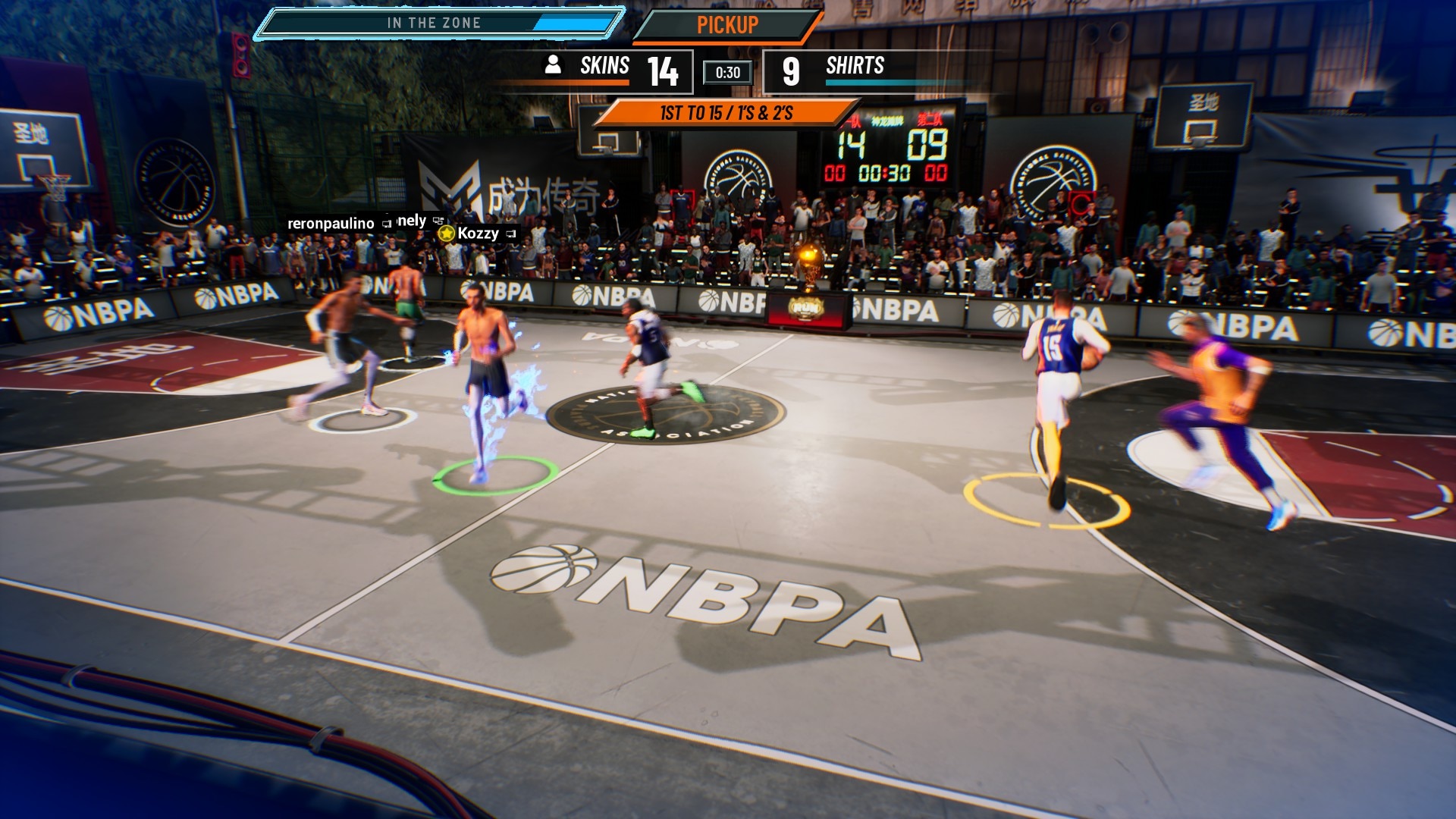
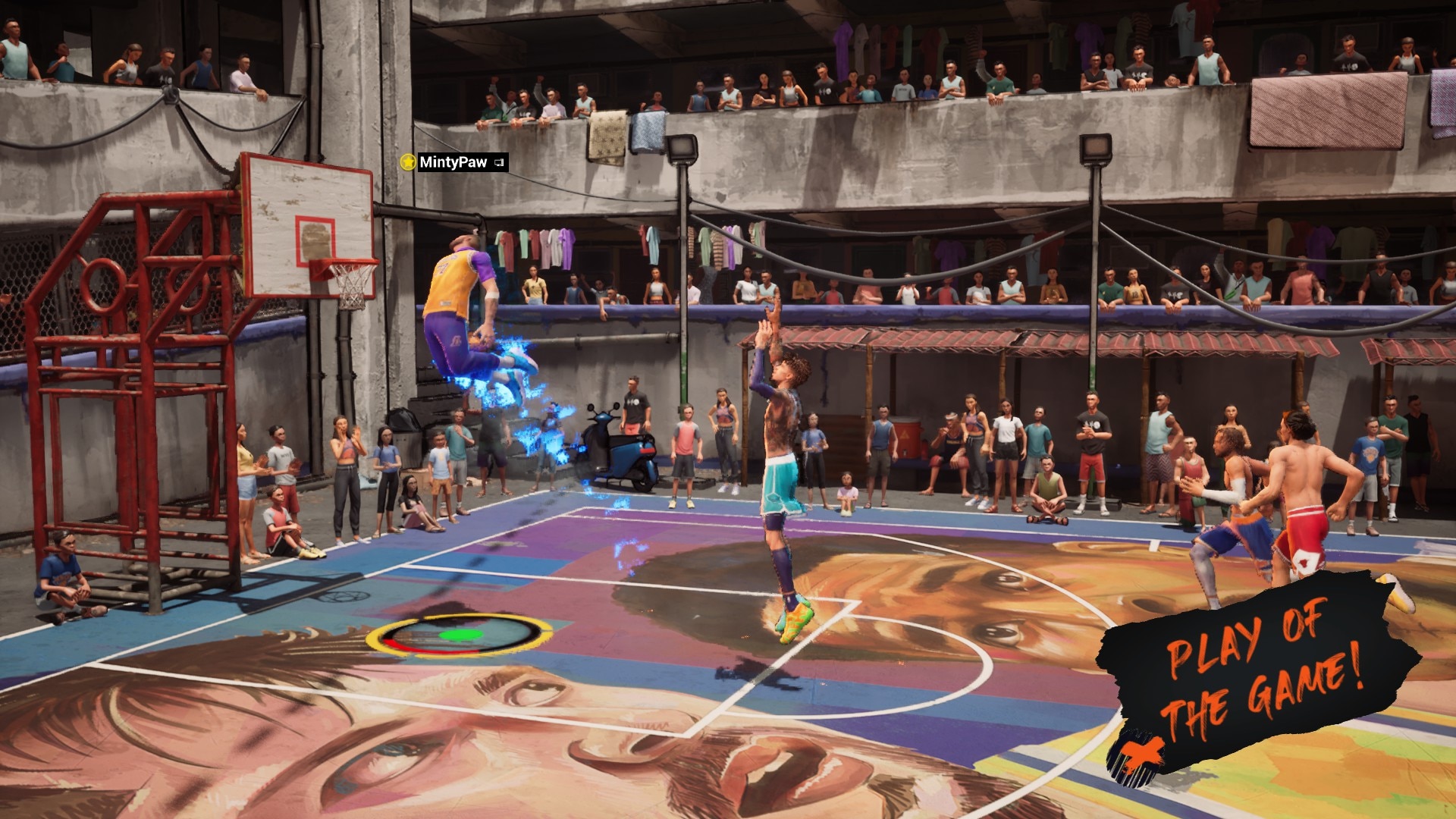
NBA The Run arrives at a moment when arcade sports games have been largely absent from the mainstream conversation. The genre that once thrived on exaggerated physics, quick-fire matches, and accessible mechanics has, for years, been overshadowed by simulation-heavy alternatives that prioritize realism and long-form progression systems over immediate playability. This game attempts to step directly into that gap by re-establishing a modern version of street basketball that is fast, competitive, and built around short-session online play rather than structured offline modes or narrative-driven career systems.
From its opening moments, NBA The Run communicates a very specific design philosophy. It is not interested in simulating professional basketball in the traditional sense, nor does it attempt to replicate the broadcast-style presentation of modern sports titles. Instead, it leans fully into a condensed version of basketball that strips the sport down to its most reactive and expressive elements: quick possessions, momentum swings, individual highlight plays, and immediate feedback loops between offense and defense. The entire structure of the game is built to support this philosophy, from match length to control responsiveness to how progression is handled over time.
The result is a game that feels confident in its identity but also narrowly focused in its scope. It does not try to appeal to every type of sports game player. Instead, it commits fully to a specific interpretation of arcade basketball and builds everything around sustaining that experience in an online competitive environment.
Gameplay and Mechanics
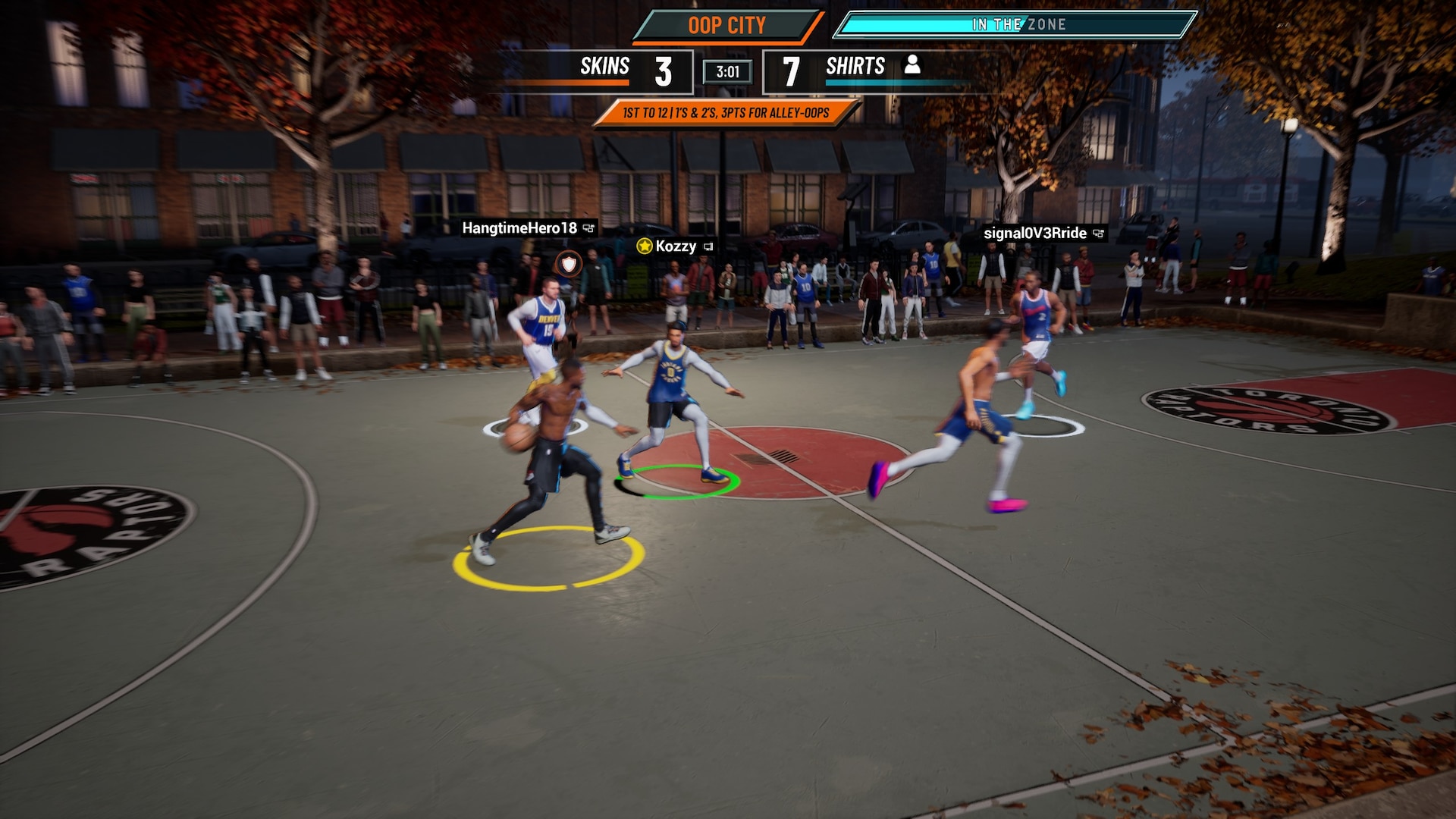
NBA The Run is fundamentally a game about speed, reaction, and momentum rather than structured playmaking or long-term tactical planning. Matches are designed to move quickly, with minimal downtime between actions and a constant emphasis on transition play. The pacing ensures that players are rarely static for more than a few seconds at a time, and this creates a rhythm that feels closer to competitive action games than traditional sports simulations.
The control system reinforces this philosophy by keeping inputs relatively streamlined. Shooting is timing-based, passing is context-sensitive, and dribbling is intentionally simplified compared to more complex sports titles. Rather than offering deep mechanical layering, the game focuses on clarity and responsiveness. Every action is designed to be readable, and the learning curve is deliberately shallow in order to allow players to engage with competitive play quickly.
This approach makes the game highly accessible, but it also defines its limitations. As players become more experienced, the range of viable offensive strategies begins to narrow. The most efficient approaches tend to revolve around fast scoring opportunities, transition-based plays, and predictable spacing patterns. While there is some variation depending on character attributes and team composition, the system does not introduce enough mechanical depth to significantly diversify long-term strategy.
Defense, however, adds more complexity than expected for an arcade-focused sports game. Rather than being a secondary system, it is fully integrated into the core flow of matches. Well-timed defensive actions such as steals, shot contests, and blocks can immediately shift possession and create scoring opportunities. This creates a sense of constant tension, where no lead feels completely safe and momentum can shift rapidly based on a single decision.
What makes this particularly effective is how closely tied defensive success is to timing rather than passive positioning. Players who understand spacing and anticipation are rewarded significantly more than those relying on reactive inputs alone. However, even this system eventually reaches a plateau in terms of depth, as advanced play largely becomes an exercise in consistency rather than strategic expansion.
Match Structure and Online Experience
The entire structure of NBA The Run is built around online competitive play, and this design decision shapes nearly every aspect of the experience. There is no meaningful offline campaign or long-form narrative mode, and progression is instead tied to a tournament-based system that functions as the game’s primary loop. Players enter structured runs consisting of multiple matches, with each victory advancing them closer to a final stage while losses end the run entirely.
This structure works effectively in short bursts because it creates immediate stakes for each match. Every game carries weight, and even early rounds feel meaningful due to the risk of elimination. The tournament format also provides a clear sense of progression within each session, which helps maintain engagement across multiple matches.
However, over longer periods, the repetition of this structure becomes more noticeable. While environments and opponents change, the underlying format remains consistent. There are no major systemic variations that significantly alter how matches play from one run to the next. This lack of structural evolution means that long-term engagement depends heavily on the core gameplay loop rather than any broader system complexity.
Matchmaking introduces additional variability into the experience. Because players frequently enter solo queues or partially coordinated teams, the quality of matches can vary significantly. Some games feature coordinated movement, spacing awareness, and structured play, while others devolve into fragmented individual efforts with little team cohesion. The game does not provide strong tools for communication or coordination, which means that team consistency is largely dependent on player behavior rather than system support.
This inconsistency becomes one of the defining characteristics of the online experience. When coordination works, matches feel dynamic and engaging. When it does not, the game’s structural simplicity becomes more apparent.
Progression and Customization
Progression in NBA The Run is built around a deliberately restrained philosophy that prioritizes competitive fairness and immediate gameplay clarity over long-term statistical growth or character development systems. Instead of building toward a traditional sports career structure, the game focuses on short-session reward loops tied to match participation and performance. Players earn in-game currency through regular play, which is then used to unlock cosmetic items such as jerseys, character outfits, animations, emotes, and stylistic variations that allow for personal expression within matches. This keeps progression visually meaningful while ensuring that no gameplay advantages are locked behind grind-heavy systems or monetary investment.
This approach places NBA The Run closer to modern competitive multiplayer design than older arcade sports titles, where progression often included unlockable abilities, stat boosts, or gameplay-altering upgrades. By removing those systems entirely, the game ensures that every match begins on an equal mechanical footing. Skill expression, timing, positioning, and decision-making remain the only meaningful differentiators between players, which supports the game’s focus on competitive integrity. It also avoids one of the most common pitfalls in sports games with progression systems, where long-term imbalance can emerge when stronger players are simply those with more upgraded characters rather than better in-game performance.
However, this design choice also significantly narrows the sense of long-term player development. Without persistent gameplay evolution systems, such as skill trees, attribute progression, or role specialization that develops over time, the game lacks a traditional sense of character growth. Players are not building toward a defined athletic identity beyond cosmetic representation, and as a result, the emotional investment tied to progression becomes more limited. Unlocking new visual elements provides short-term satisfaction, but it does not fundamentally change how the game is played or how a player’s identity evolves within the system.
Customization itself is one of the more engaging elements of this structure. The game offers a range of aesthetic options that allow players to personalize their presence on the court, from clothing and visual flair to animation styles that influence how certain actions are presented. These systems reinforce the arcade identity of the game, where style and expression are as important as mechanical performance. In practice, customization becomes a form of identity signaling within online matches, allowing players to differentiate themselves visually even when gameplay mechanics remain standardized.
Despite this, the customization system is still bounded by the same structural limitations as the broader progression model. While there is variety in cosmetic options, there is no deeper layering of unlockable systems that significantly alter player engagement over time. Once a substantial portion of available cosmetics has been unlocked, progression tends to plateau into repetition, with rewards becoming incremental rather than transformative. This creates a loop where continued play is driven more by competitive engagement than by a sense of evolving personalization.
Ultimately, the progression and customization structure reflects the game’s broader design philosophy: a focus on fairness, accessibility, and competitive clarity at the cost of long-term developmental depth. It is a system that works well within short competitive sessions, where immediate playability matters more than long-term accumulation, but it offers less incentive for extended engagement beyond mastery of the core gameplay loop.
Visual Design and Presentation
NBA The Run adopts a stylized visual identity that prioritizes clarity, motion readability, and expressive animation over realism. Player models are based on real-world athletes but are intentionally adapted to fit an arcade aesthetic that emphasizes exaggeration in movement and physical interaction. This approach ensures that gameplay remains readable even in visually dense moments, particularly during fast breaks or contested plays near the basket.
Animation work is one of the most consistently strong aspects of the presentation. Physical interactions such as dunks, blocks, and collisions are exaggerated to enhance impact, creating a sense of weight and momentum that supports the overall design philosophy of the game.
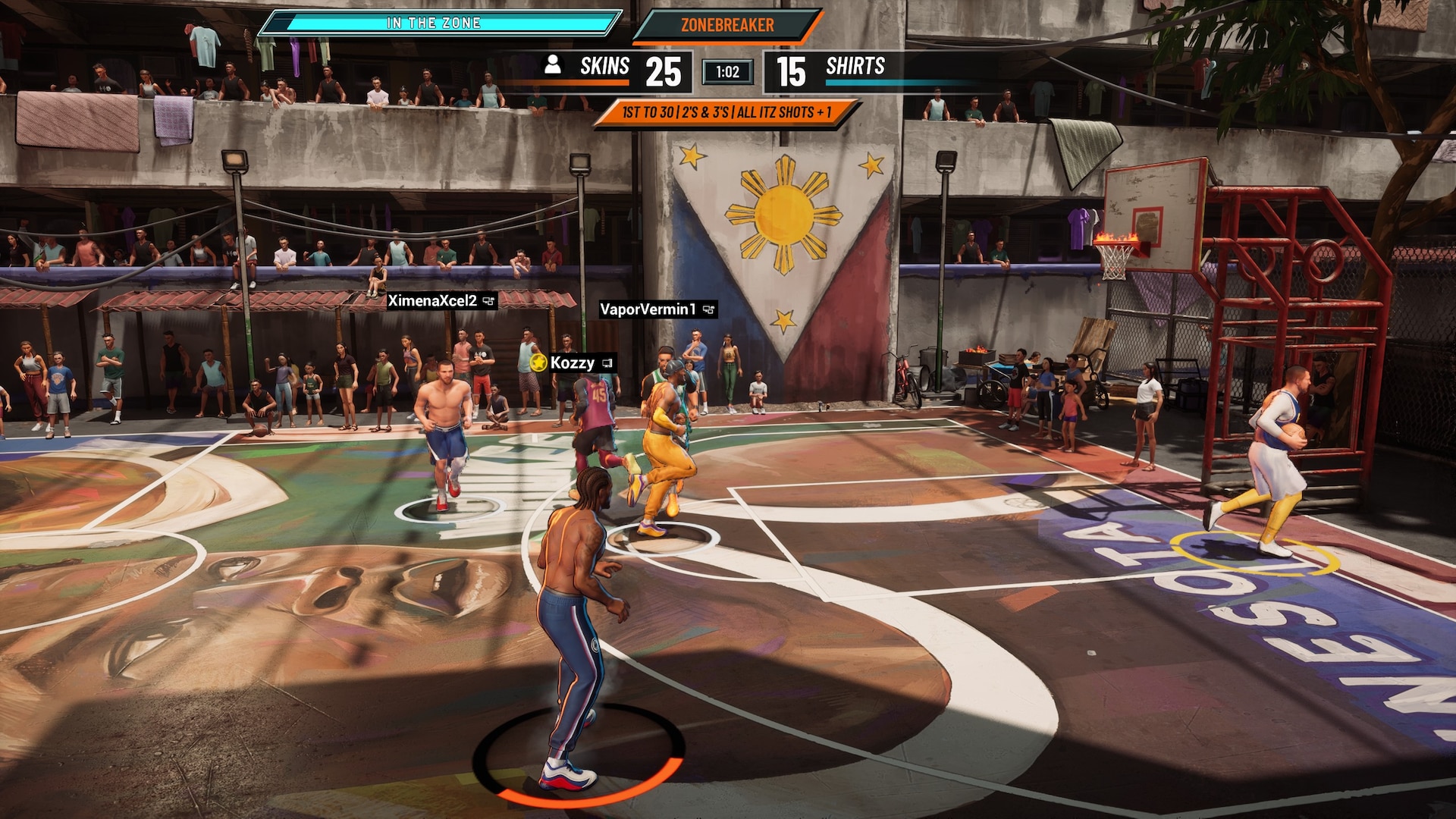
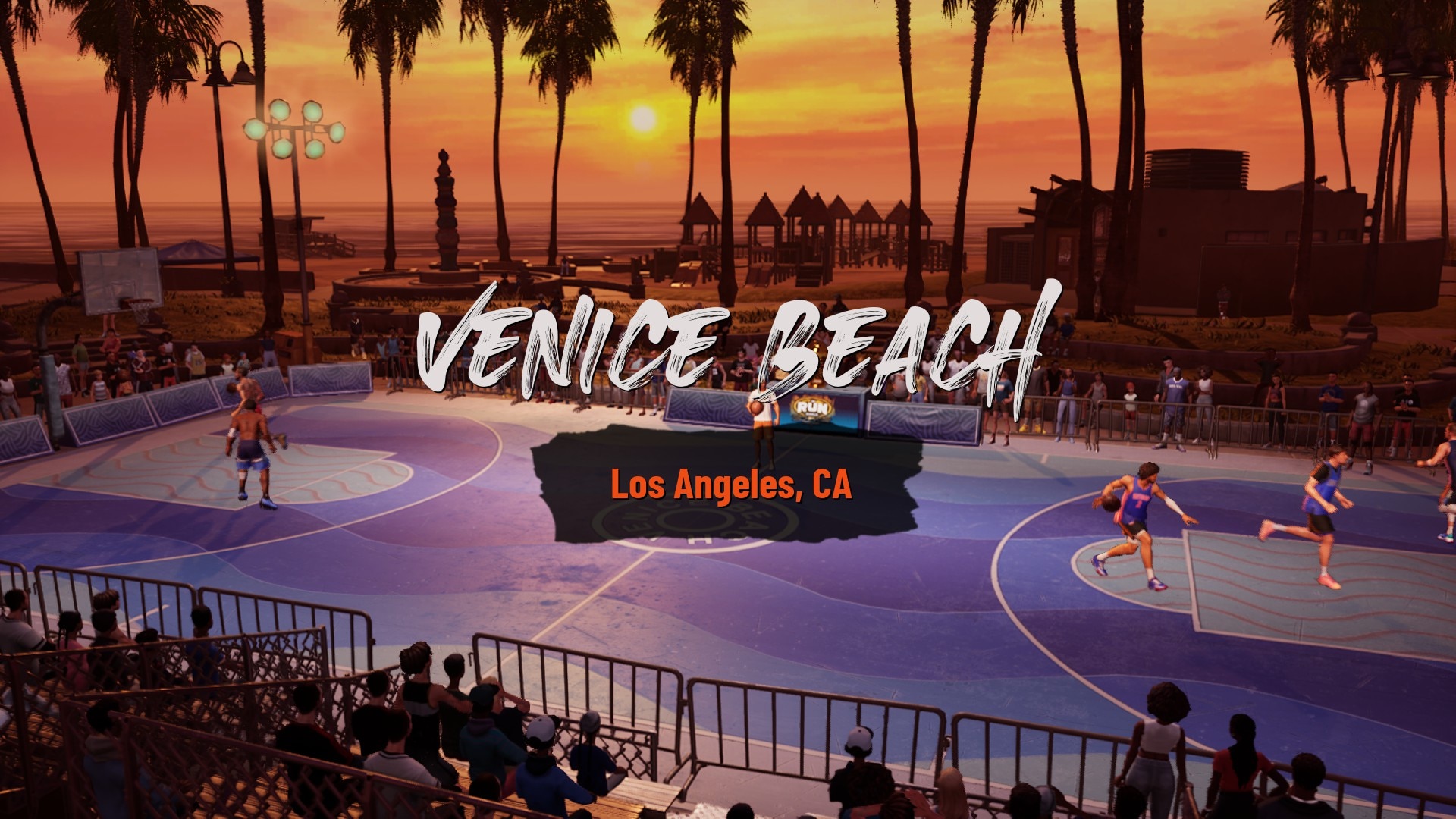
Court environments contribute significantly to visual variety, featuring globally inspired street basketball locations that draw from different urban and cultural influences. Each court has distinct lighting conditions, color palettes, and environmental details that help differentiate them visually. However, because gameplay structure remains unchanged regardless of location, environmental variation eventually becomes more aesthetic than functional over extended play sessions.
Sound Design and Responsiveness
Audio design in NBA The Run serves primarily as a functional feedback system rather than a cinematic or atmospheric layer. Sound cues are tightly integrated into gameplay, providing immediate auditory feedback for key actions such as successful shots, defensive stops, and momentum shifts. This ensures that players can interpret match flow even without relying heavily on visual indicators.
Crowd audio dynamically responds to in-game performance, increasing in intensity during scoring runs or defensive sequences that shift momentum. This reinforces the core design philosophy of the game, where momentum is the central structural element of matches.
The soundtrack supports this pacing with rhythm-driven tracks designed to maintain energy during gameplay. While effective in maintaining engagement during matches, it does not stand out as a defining feature outside of active play sessions.
Technical Performance on PC
On PC, NBA The Run delivers generally stable performance across a wide range of hardware configurations. The game is not visually demanding, and its stylized presentation prioritizes clarity and animation readability over realism or high-end graphical fidelity. This ensures that performance remains consistent even during fast-paced sequences involving multiple players and rapid transitions between offensive and defensive states.
One of the most significant technical features is the implementation of rollback netcode, which plays a crucial role in maintaining responsiveness during online matches. This system reduces the impact of latency by predicting and reconciling player inputs in real time, ensuring that timing-based actions remain consistent even under less-than-ideal network conditions. In a game where reaction speed and precision are central to gameplay, this is an essential component of the overall experience.
Despite this strength, the online infrastructure is not entirely without issues. Some players experience occasional matchmaking delays, particularly during peak hours, and there are reports of intermittent server instability that can affect match consistency. While these issues are not frequent enough to undermine the game entirely, they do introduce variability into competitive play that can affect fairness in certain situations.
Because the game is entirely online-dependent, technical performance becomes a core part of the gameplay experience rather than a supporting layer. When servers are stable, the game feels smooth and responsive. When they are not, the limitations become immediately visible in match flow and input consistency.
Replay Value and Structural Depth
NBA The Run is a tightly focused arcade experience that prioritizes clarity of design over systemic breadth. Its core gameplay loop is strong, responsive, and engaging in short sessions, but it does not significantly evolve over time. This creates a situation where the game’s long-term longevity is heavily dependent on external updates, community engagement, and potential expansion of its systems.
The absence of structural variety in modes, limited progression depth, and repetitive tournament framework all contribute to a ceiling in long-term engagement. While the gameplay itself remains enjoyable, it does not introduce enough systemic variation to sustain extended play without external motivation.
As a result, the game’s success is likely to be determined not by its launch state alone, but by how actively it is supported and expanded in the future.
Final Verdict: 7/10
NBA The Run succeeds in establishing a clear and confident identity as a modern arcade basketball game. It delivers fast-paced, responsive gameplay built around momentum, timing, and accessible controls, supported by strong defensive mechanics and a technically competent online infrastructure. Its visual and audio design reinforce its arcade philosophy effectively, ensuring that matches remain readable and engaging even during high-intensity moments.
However, its limitations are structural rather than mechanical. The lack of offline content, limited progression systems, and repetitive long-term loop restrict its depth beyond initial engagement. While it performs well as a competitive arcade experience on PC, its long-term sustainability will depend heavily on continued development and content expansion.
In its current form, NBA The Run stands as a focused and well-executed revival of arcade basketball design, even if it has yet to fully evolve that foundation into a broader or more enduring long-term experience.