
Creature-collecting games tend to fall into familiar patterns. Whether they borrow heavily from Pokémon, emphasize automation and survival mechanics, or focus on managing teams through turn-based encounters, most remain recognizably tied to conventions that have existed for decades. Voidling Bound approaches the genre from a different direction. Rather than placing players in the role of a trainer issuing commands from the sidelines, it turns the creatures themselves into the stars of the experience and builds a third-person action RPG around them.
Developed by Hatchery Games, Voidling Bound combines creature collection, action combat, character progression, exploration, breeding systems, and customization into a surprisingly cohesive package. The premise revolves around humanity’s attempt to fight back against a parasitic corruption spreading across alien worlds. To do so, players form bonds with creatures known as Voidlings and take direct control of them during missions across multiple planets. At first glance, the feature list sounds almost excessively ambitious for an independent project, and while the game occasionally stretches itself thin and some systems are more successful than others, it ultimately succeeds by keeping most of its mechanics tied to a single central goal: making the process of raising and improving creatures feel meaningful.
While the game occasionally stretches itself thin and some systems are more successful than others, it delivers a refreshing interpretation of a genre that often struggles to move beyond its established formula.
Gameplay and Mechanics
The biggest surprise in Voidling Bound is how much of the experience revolves around action combat. The creature-collecting elements may be what initially attract attention, but combat is what occupies the majority of the player’s time.
Instead of commanding creatures indirectly, players control a selected Voidling in real time. Combat combines shooting, melee attacks, dodging, sprinting, jumping, parrying, ultimate abilities, and cooldown-based skills. The result feels closer to an action RPG or third-person shooter than a traditional monster-taming game.
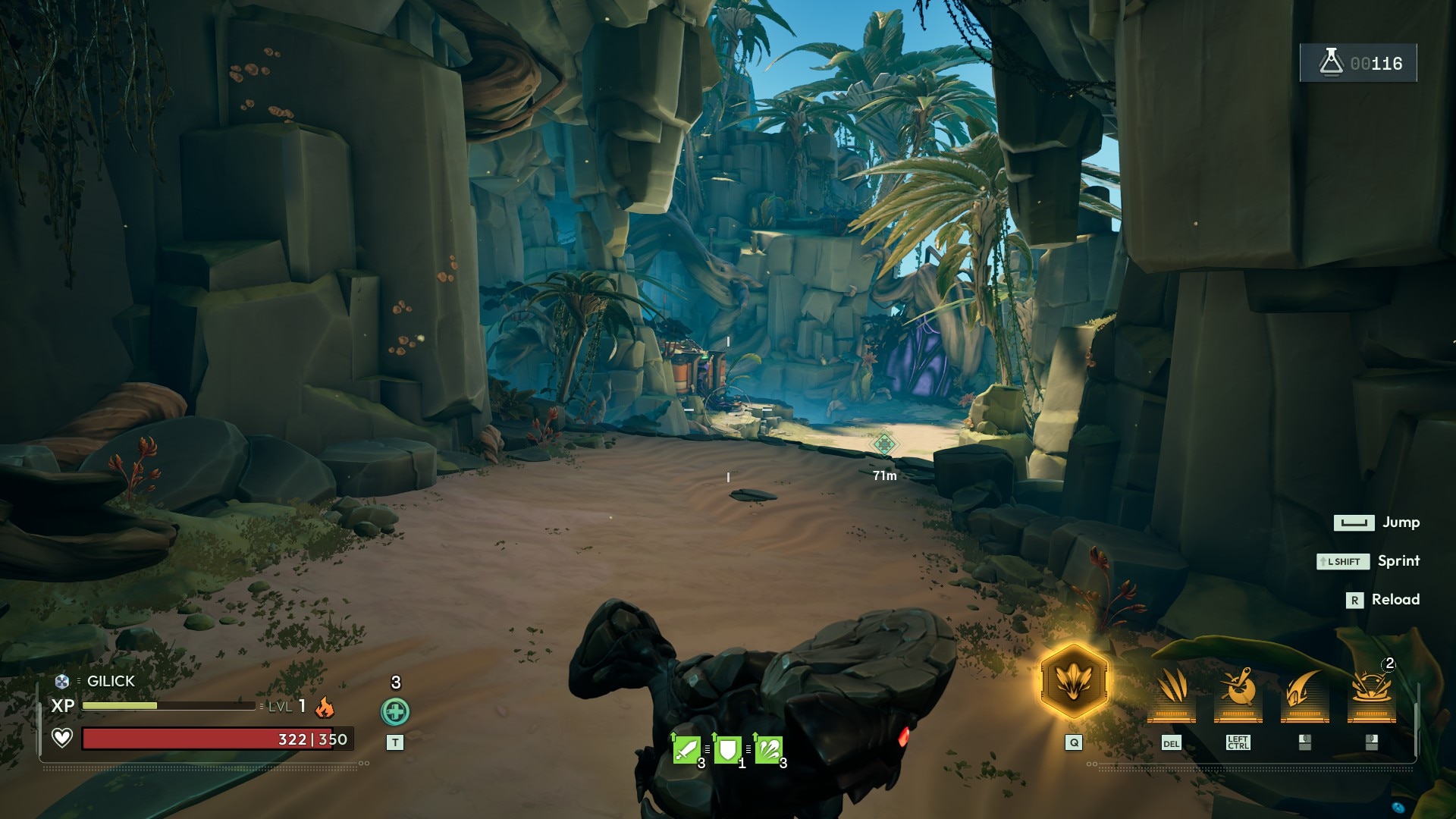
The controls are easy to grasp early on. Basic attacks and movement mechanics are immediately responsive, and the game does a good job introducing additional complexity gradually. New abilities arrive at a steady pace, encouraging players to experiment without overwhelming them from the outset. As encounters become more demanding, movement and positioning become increasingly important. Dodging attacks, managing cooldowns, and timing defensive actions often matter more than simply having higher statistics.
What helps the combat remain engaging is the way different Voidlings approach encounters. The game’s creature roster is not merely a collection of statistical variations. Individual species and evolution paths can dramatically alter how combat unfolds. Some creatures are naturally suited to close-range aggression, while others are better equipped for ranged engagements or ability-focused playstyles. This variety gives progression genuine gameplay value, as unlocking a new creature is exciting because it introduces a new way to interact with the combat system rather than simply providing a stronger version of an existing character.
The combat is not without shortcomings. Larger encounters can become visually busy, particularly when multiple enemies, environmental hazards, and ability effects occupy the screen simultaneously. During these moments, visual clarity occasionally suffers. Certain enemy groups also rely more on numbers than on interesting behavioral design, leading to encounters that feel somewhat repetitive during longer play sessions.
Still, the combat remains one of the game’s strongest qualities. It consistently reinforces the idea that player skill matters alongside progression, which helps prevent the experience from becoming a simple grind for better statistics.
Creature Collection and Evolution
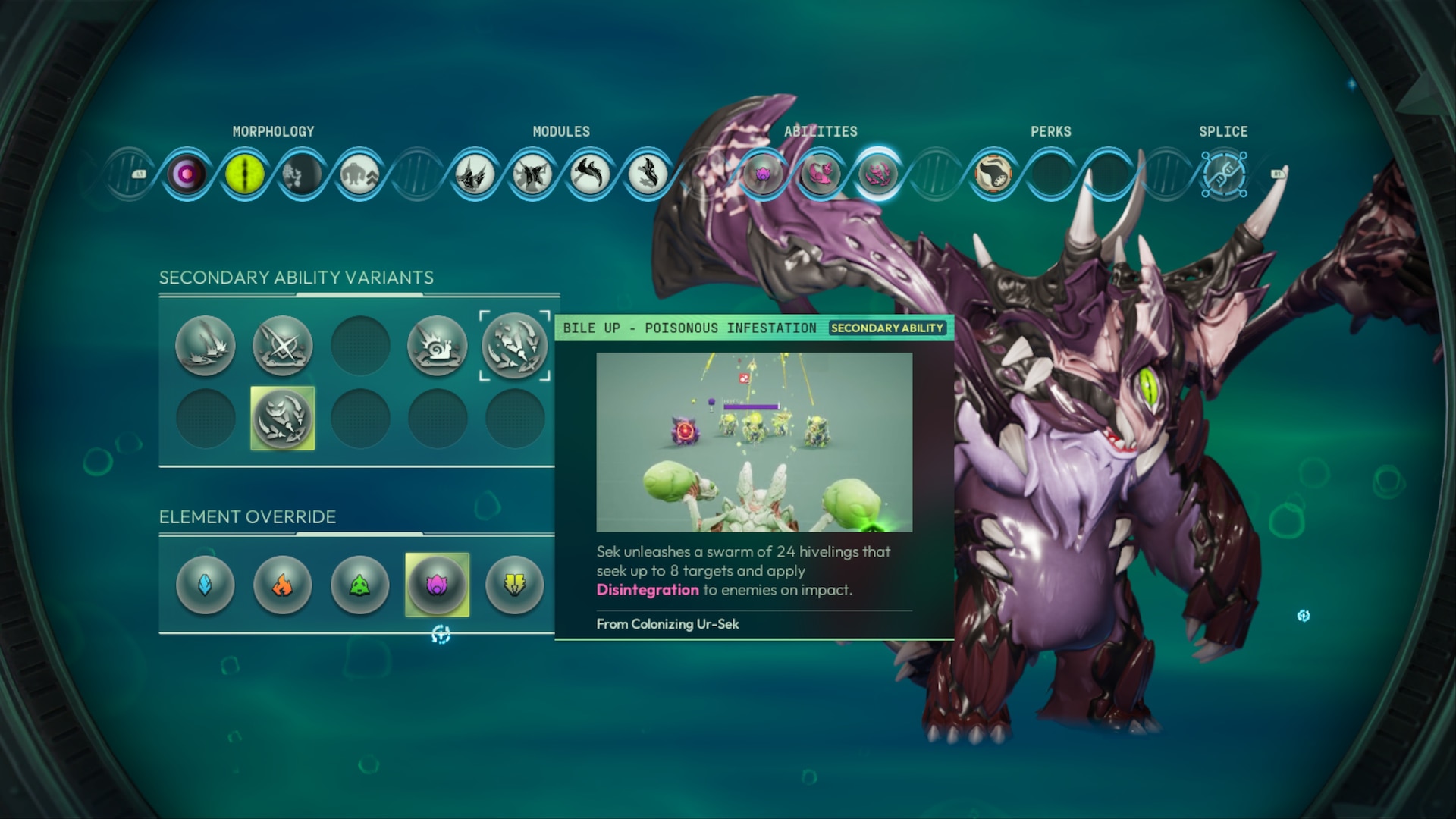
If combat forms the foundation of Voidling Bound, creature progression serves as its primary motivation. The game features multiple Voidling species that can be discovered, hatched, evolved, customized, and eventually bred. While many creature collectors rely on linear evolution chains, Voidling Bound emphasizes branching progression. Evolution choices influence abilities, elemental alignment, appearance, and combat style, giving players meaningful decisions rather than straightforward upgrades.
This system works particularly well because evolution paths often encourage experimentation. Rather than finding a single optimal creature and abandoning the rest of the roster, players are incentivized to explore different possibilities and discover which builds best suit their preferred playstyle.
Customization extends beyond evolution. Voidlings can be modified through various progression systems involving mutations, genes, perks, and attributes. The game places considerable emphasis on building creatures rather than simply collecting them. This depth is both a strength and a weakness, as it creates a progression system that remains interesting long after the basics have been learned, but also introduces a large number of systems during the opening hours that can feel intimidating.
On one hand, there is almost always another upgrade path to investigate or another combination to test. On the other hand, players are expected to learn about attributes, evolution branches, mutagens, research upgrades, breeding mechanics, and various customization options within a relatively short timeframe. Fortunately, once the different systems begin interacting with one another, the complexity starts feeling rewarding rather than overwhelming.
Breeding represents another notable component of progression. While not the primary focus of the experience, it provides long-term goals for players interested in optimizing creatures and experimenting with inherited traits. Community discussions since launch suggest that breeding becomes particularly relevant for endgame optimization rather than simply completing the main campaign.
The overall result is a progression system that offers significantly more depth than many games in the genre without becoming completely inaccessible.
Story and Characters
Narrative is clearly not Voidling Bound’s primary focus, and the game rarely attempts to compete with story-driven RPGs in that regard. The central premise revolves around humanity’s efforts to combat a spreading corruption through partnerships with Voidlings, providing a framework that supports exploration, progression, and combat without demanding constant attention. The story is functional rather than ambitious, establishing enough context to justify the player’s journey while generally staying out of the way of the systems that form the heart of the experience.
The writing itself is competent, even if it rarely becomes memorable. Most characters fulfill practical roles within the broader narrative, serving as guides, quest-givers, or sources of information about the world and its creatures. While few leave a lasting impression, the game benefits from not overextending itself. Dialogue sequences are usually concise, and story scenes rarely interrupt the flow of progression for extended periods.
As a result, the pacing remains focused on gameplay rather than exposition. The worldbuilding ultimately proves more engaging than the individual character arcs, particularly the relationship between humans, Voidlings, and the corruption threatening various ecosystems. Players searching for a deeply narrative-driven RPG may find the story somewhat limited, but those primarily interested in creature collection and progression are unlikely to view that as a significant drawback.
Exploration and World Design
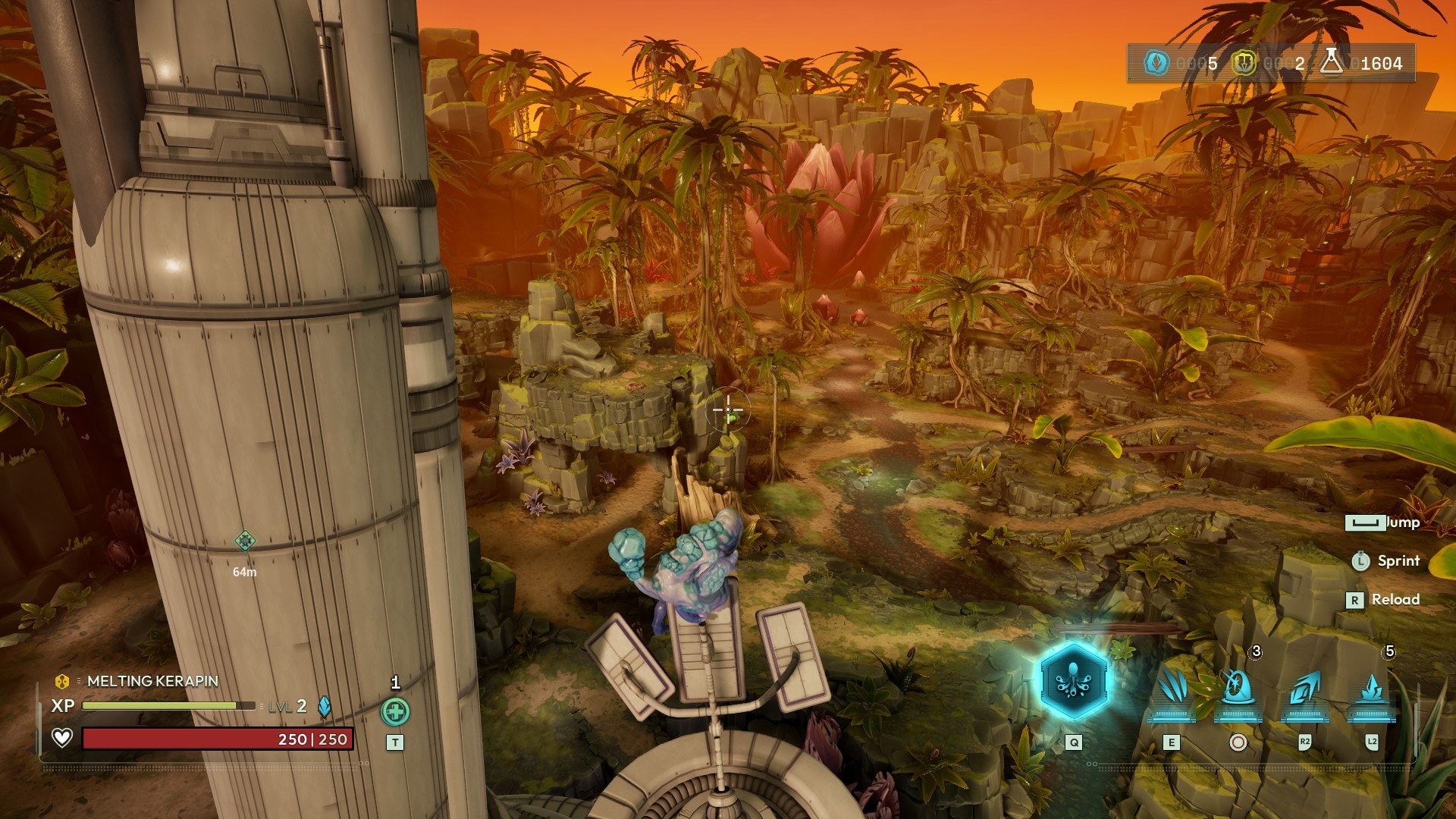
Voidling Bound takes place across multiple handcrafted environments rather than relying on procedural generation. Exploration plays an important role throughout the experience, as players search for resources, eggs, upgrades, and mission objectives scattered throughout corrupted alien worlds.
The environments themselves are visually appealing and sufficiently varied. Different locations possess distinct identities, helping maintain a sense of progression as players move through the campaign. The worlds are not enormous open environments, but they are large enough to reward exploration without creating excessive downtime between objectives.
Platforming mechanics also contribute to traversal. Jumping, sprinting, and dashing are integrated naturally into movement, allowing exploration to feel active rather than passive. These mechanics never reach the complexity of dedicated platformers, but they provide welcome variety between combat encounters.
Mission design is somewhat less impressive. While exploration remains enjoyable, objective structures occasionally become repetitive, with players spending significant time cleansing corruption, gathering resources, defeating enemies, and completing similar tasks across different environments. The changing locations help alleviate repetition, but the underlying structure remains relatively consistent throughout much of the campaign. This does not significantly harm the experience because the progression systems remain compelling enough to keep players invested, but it is one area where the game occasionally feels constrained by its budget and scope.
Progression Beyond Levels
One of Voidling Bound’s more interesting qualities is the way progression extends beyond traditional leveling. Voidlings gain experience and attribute points, but much of the game’s depth comes from additional systems layered on top of those fundamentals. Research upgrades unlock new capabilities, mutations modify playstyles, and breeding introduces opportunities for further optimization.
This layered approach creates a satisfying sense of long-term growth. Players are rarely improving their creatures through a single system; instead, progress occurs simultaneously across multiple interconnected mechanics. The benefit of this structure is that upgrades usually feel meaningful, as new research options, evolution branches, or inherited traits often influence gameplay in noticeable ways, but the downside is that some players may struggle to determine which systems deserve attention first.
The game occasionally assumes a greater level of familiarity with its mechanics than some players will possess during the opening hours, and a few additional explanations or onboarding tools could have made the early progression experience smoother. Even so, the complexity ultimately works in the game’s favor, as by the midpoint of the campaign the various progression systems begin reinforcing one another in ways that make experimentation genuinely rewarding.
Visuals and Presentation
Visually, Voidling Bound is one of the more appealing independent releases in its genre. The game adopts a colorful, stylized art direction rather than pursuing realism, a decision that suits the subject matter well. Creature designs are expressive and memorable, while environments maintain a vibrant science-fiction aesthetic that remains visually engaging throughout the campaign.
The Voidlings themselves are easily the stars of the presentation, with designs that strike a strong balance between charm and personality, making collection feel rewarding even before gameplay considerations enter the equation.
Animation quality is generally solid. Creatures move naturally, abilities provide satisfying visual feedback, and combat remains readable for most encounters. The visual style also benefits longevity, since the game is not attempting photorealism and is therefore likely to age more gracefully than many technically ambitious but artistically conservative releases. The overall presentation occasionally lacks the polish associated with larger-budget productions, particularly in some interface elements and environmental interactions, but the art direction consistently compensates for those limitations.
Audio and Sound Design
The audio presentation complements the game’s visual style effectively, even if it is rarely the center of attention. The soundtrack leans heavily into atmospheric science-fiction themes, providing a steady musical backdrop for exploration and combat without constantly demanding the player’s focus. Rather than relying on a handful of standout tracks, the music succeeds by reinforcing the mood of individual environments and supporting the sense of adventure across alien worlds.
Sound effects make a stronger impression than the soundtrack itself. Attacks carry satisfying impact, abilities produce distinct audio cues, and creature actions are accompanied by effects that help reinforce their identities. This is particularly important during combat, where audio feedback contributes significantly to readability and responsiveness by clearly communicating successful attacks, ability activations, and incoming threats.
Voice acting is relatively limited compared to larger-budget RPGs, which is understandable given the scope of the project, but what is present serves its purpose adequately and rarely distracts from the experience. Overall, the audio package may not be especially memorable in isolation, but it consistently supports the gameplay and presentation in ways that strengthen the experience as a whole.
Endgame and Longevity
Voidling Bound includes several systems designed to encourage continued play after the main campaign concludes. Collecting additional species, pursuing optimized breeding outcomes, refining creature builds, and tackling increasingly difficult combat challenges all provide reasons to continue engaging with the game’s progression systems. The Abyss and related challenge-oriented activities serve as the primary endgame destination, offering higher difficulty encounters and further opportunities to strengthen creatures beyond what is required to complete the main storyline.
The effectiveness of this content ultimately depends on what players hope to get out of the experience. Those who enjoy experimentation, optimization, and collection-focused progression are likely to find considerably more value in the endgame than players who are primarily interested in finishing the campaign. At launch, the amount of content feels respectable rather than exhaustive, and some players may reach a natural stopping point once they have explored most of the available systems. Even so, the desire for additional content often stems from the strength of the underlying mechanics rather than dissatisfaction with what is already present, and Voidling Bound leaves the impression that future expansions or updates could build upon a solid foundation.
Technical Performance on PC
From a technical perspective, Voidling Bound appears to have launched in relatively strong condition, particularly within the context of similarly sized independent projects. Performance reports from players have generally been positive, and the game offers a respectable range of graphical settings, display options, and controller support features. Hardware requirements are also relatively approachable, allowing the game to reach a broader audience without demanding cutting-edge components.
During combat, performance remains stable for the majority of encounters, even when multiple enemies and visual effects occupy the screen. The stylized art direction likely contributes to this consistency, enabling attractive environments and creature designs without pushing hardware requirements excessively high. Reports from Steam Deck users have also been encouraging, suggesting good adaptability to portable hardware.
That said, the experience is not entirely free of technical issues. Camera behavior can occasionally become awkward in confined spaces or during chaotic encounters, making it harder to track enemy movements. Minor interface frustrations also appear throughout the experience, particularly when navigating complex progression systems. These issues are generally inconveniences rather than serious problems, but they are noticeable enough to merit mention. Still, the shortcomings rarely interfere with the game’s strongest qualities, and there are no widespread reports of severe stability problems or game-breaking bugs.
Final Verdict: 8/10
Voidling Bound succeeds because it approaches creature collection from a direction that feels refreshingly different from many of its contemporaries. Instead of focusing primarily on team management or turn-based encounters, it builds a fast-paced action RPG around the process of discovering, evolving, and customizing creatures. That decision gives the game a distinct identity and helps it stand apart within an increasingly crowded genre.
Its strengths are easy to identify. Combat is responsive and engaging, progression systems provide meaningful depth, and creature customization creates compelling reasons to continue experimenting long after the fundamentals have been understood. The world is visually appealing, exploration remains rewarding throughout much of the campaign, and the interconnected progression systems consistently encourage players to think about how individual choices influence long-term development. While the story rarely rises above functional worldbuilding and mission variety can become repetitive over time, neither issue significantly undermines the experience.
Most importantly, Voidling Bound feels confident in what it wants to be. It borrows ideas from multiple genres without becoming overly dependent on any one influence, creating an experience that feels more interested in building its own identity than imitating established competitors. For players seeking a creature-collection game that places action, experimentation, and customization at the forefront, Voidling Bound delivers an enjoyable and surprisingly deep adventure that demonstrates considerable promise for both its present and future.


