
The life simulation genre has existed in a strange state for years. It remains popular, commercially successful, and deeply important to a dedicated audience, yet it has also become increasingly stagnant. Major competitors have struggled to establish themselves, ambitious projects have been cancelled before release, and many players have spent years waiting for a serious alternative capable of offering a different interpretation of the virtual life formula. Paralives enters that environment carrying a considerable amount of attention, not because it promised to reinvent the genre entirely, but because it focused on solving many of the frustrations players had accumulated over time. Extensive building tools, detailed character customization, open-world exploration, modding support, and a commitment to free future updates helped position the game as one of the most closely watched life simulators in development.
Now that Paralives has launched in Early Access on PC, the conversation can finally move away from feature demonstrations and development roadmaps toward the experience itself. What becomes immediately clear after spending significant time with the current version is that Paralives succeeds most convincingly as a creative platform. Its building systems, customization tools, and overall flexibility are already among the strongest features available in the genre. The simulation side of the experience is more complicated. The foundations are present, the intended direction is easy to understand, and there are moments where the game’s ambitions become visible, but many of the systems responsible for creating memorable stories and believable characters still require considerably more development before they reach the same standard as the creative tools surrounding them.
That does not make Paralives a disappointing Early Access release. On the contrary, there is a substantial amount of content already available, including careers, relationships, skills, aging, children, emotions, character needs, public venues, collections, and an open-world town without loading screens between lots. The issue is not a lack of features. The issue is that some systems currently feel much more mature than others, creating a game that can appear remarkably polished in one moment and noticeably unfinished in the next. As a result, Paralives is best understood not as a finished competitor arriving to challenge the genre’s established leaders immediately, but as a promising foundation that already excels in several areas while still searching for consistency in others.

Gameplay and Mechanics
The central appeal of any life simulation game ultimately depends on the quality of its daily routines. Building houses and creating characters may attract players initially, but long-term engagement depends on whether the simulation itself can generate interesting stories, relationships, conflicts, and unexpected situations. Paralives already contains many of the systems necessary to support that type of experience.
Characters possess needs, emotions, wants, personality traits, careers, relationships, skills, and autonomous behaviors that collectively form the foundation of the simulation. Players can guide households through different life stages, develop careers over time, form friendships, pursue romantic relationships, raise children, and manage the ongoing demands of everyday responsibilities while also exploring the surrounding town and its public spaces. These systems are designed to interact with one another, creating a framework where character behaviour is meant to feel shaped by both internal states and external circumstances. On paper, the feature set is surprisingly extensive for an Early Access launch, covering most of the core pillars expected from a modern life simulation, even if the depth and consistency of those systems still vary in practice.
The game’s open-world structure contributes positively to this experience. Being able to move through public spaces without frequent loading screens creates a stronger sense of continuity than many competing life simulators currently offer. Shops, restaurants, museums, and other community locations help establish the feeling that characters exist within a broader environment rather than inside isolated lots. The town itself is not enormous, but it is designed with enough variety to encourage exploration, and the decision to integrate public venues directly into everyday routines helps the world feel more cohesive.
Where Paralives currently struggles is in transforming these systems into consistently engaging stories. Many interactions function correctly from a mechanical perspective, but they do not always produce the level of personality or unpredictability that life simulation enthusiasts often seek. Conversations can become repetitive, emotional reactions sometimes feel limited, and character autonomy remains one of the least convincing aspects of the current build. There are situations where Parafolks appear surprisingly intelligent and responsive, but there are just as many moments where their decision-making exposes the unfinished state of the simulation. Community feedback following launch has frequently focused on autonomy, personality depth, and behavioral variety, and those concerns are understandable after extended play sessions.
The result is a game that occasionally struggles to create the illusion that its residents possess lives beyond player direction. Many successful life simulators eventually reach a point where players become invested in households because the characters themselves feel distinct. Paralives has not fully achieved that level of depth yet. Traits, wants, and emotional systems provide structure, but they do not always combine in ways that generate especially memorable behavior. Characters often feel more defined by player-created narratives than by the simulation’s own emergent storytelling systems.
At the same time, it would be unfair to ignore how much room remains for growth. Several major features planned for Early Access, including expanded personality systems, story progression, additional wants, emotions, and social mechanics, directly target areas where the simulation currently feels limited. Whether those additions ultimately solve the problem remains impossible to know at this stage, but the roadmap at least demonstrates that the developers recognize where expansion is needed. For now, the life simulation works well enough to support long-term play, but it does not yet possess the depth necessary to become the game’s strongest feature.
Build Mode
If the simulation represents Paralives at its most unfinished, Build Mode represents the opposite. This is easily the most polished and impressive component of the current release, and it immediately demonstrates why the game attracted so much attention long before players could experience it firsthand.
The core philosophy behind the building tools revolves around flexibility. Rather than forcing players to adapt their ideas around strict construction rules, Paralives attempts to remove as many restrictions as possible. Curved walls, angled walls, split-level platforms, object resizing, movable structures, multi-floor construction, and optional grid placement all contribute to a system that feels remarkably accommodating. Even players with limited architectural experience can create distinctive homes relatively quickly because the tools encourage experimentation rather than punishment.
One of the most significant improvements comes from the way walls and rooms can be adjusted after construction. In many building-focused games, major structural changes often require partial reconstruction or awkward workarounds. Paralives allows players to modify existing designs with considerably less friction, making the entire process feel more intuitive. Small quality-of-life improvements accumulate throughout longer building sessions and gradually reveal how much time is normally spent fighting restrictive interfaces elsewhere.
The color wheel deserves equal praise because it fundamentally changes the decorating process. Nearly every customizable object can be recolored, eliminating much of the frustration associated with searching for matching furniture variations. Interior design becomes more creative because players spend less time hunting for specific swatches and more time focusing on the overall appearance of a room. Combined with extensive object placement controls, the system encourages personalization at a level rarely seen in the genre.
Perhaps the most impressive aspect of Build Mode is how complete it already feels despite several planned additions remaining absent. Pools, advanced roof tools, basement systems, and expanded structural options are still scheduled for future updates, yet the current toolset already provides enough flexibility to support extremely ambitious projects. It is difficult to overstate how important this is for a life simulation game. Many players spend the majority of their time designing houses, creating neighborhoods, and experimenting with architecture. Paralives understands that audience exceptionally well, and the result is a construction system that frequently feels ahead of its direct competition.
Character Creation and Customization
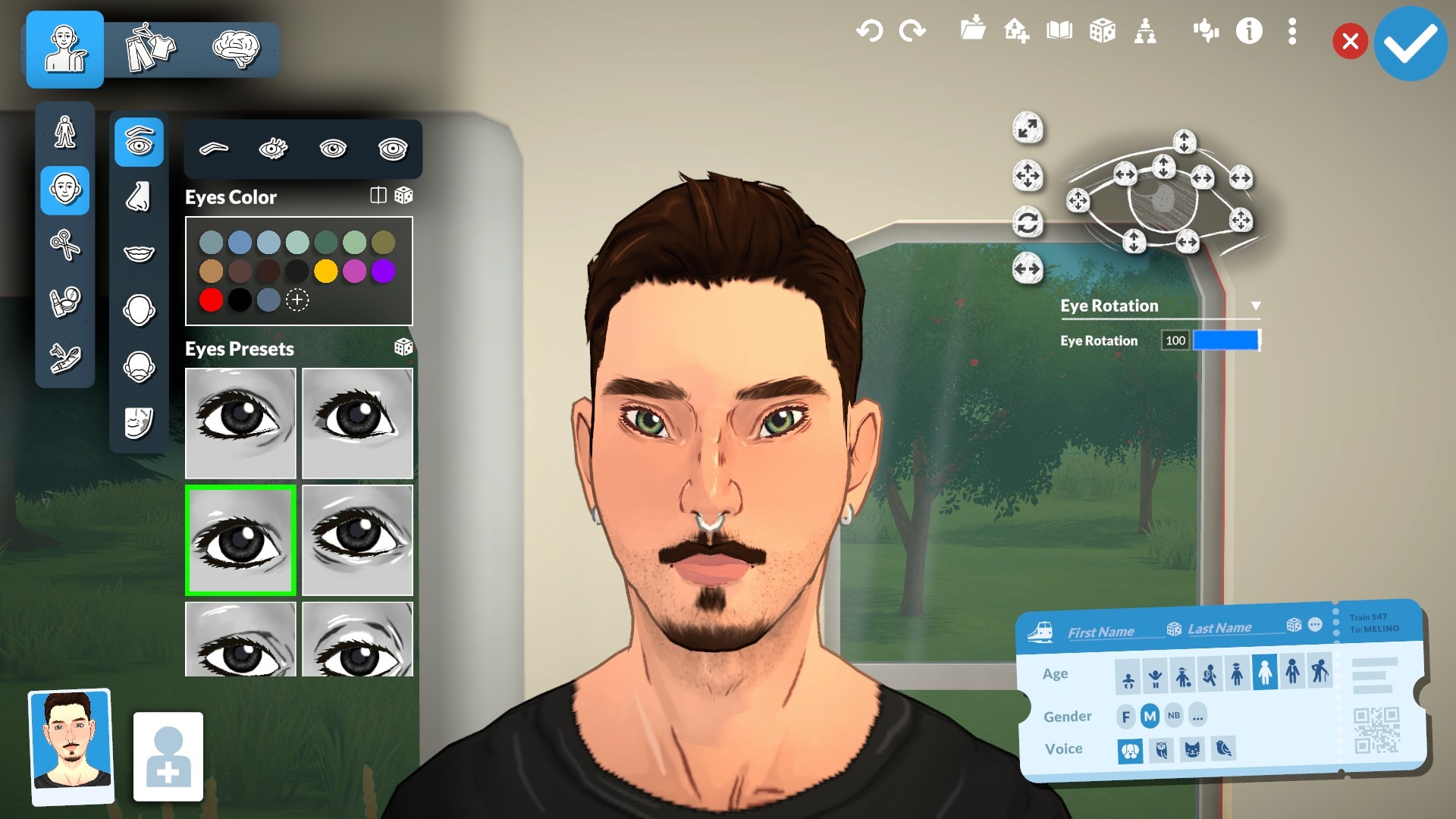
Character creation in Paralives is one of the clearest examples of the game’s design philosophy at work, prioritising flexibility and expressive control over rigid systems or preset outcomes. The Paramaker, as the character creator is called, is built around the idea that players should be able to shape characters in a tactile, iterative way rather than through fixed templates. In practice, this results in a toolset that is both accessible to casual users and deep enough for highly detailed character design without overwhelming the player with complexity.
One of the most immediately noticeable features is the inclusion of a height slider, which may seem like a small addition on paper but has a significant impact on how characters feel within the world. It introduces a level of physical variety that most life simulation games either simplify or ignore entirely, and it affects not only visual presentation but also the sense of identity between characters in a household. Families no longer feel like they are built from identical proportions, and social interactions gain subtle variation simply through differences in scale and posture. Combined with a wide range of body and facial sliders, the system allows for characters who feel genuinely distinct rather than lightly modified versions of the same base model.
The customization options extend beyond physical structure into clothing, styling, and personal expression, with a layering system that allows outfits to be constructed rather than simply selected. This approach gives players more control over how characters present themselves in different contexts, although the current Early Access build still reflects some limitations in overall asset variety. Clothing and hairstyle options are solid for a launch version of an Early Access title, but they are not yet extensive enough to support the near-infinite variety that long-term players of the genre tend to expect. As a result, repetition becomes noticeable after extended use, particularly when creating multiple households or attempting to differentiate large families.
Despite that limitation, the system’s flexibility helps mitigate the issue to some extent. Even with a relatively modest pool of assets, the ability to adjust colours, layer clothing pieces, and fine-tune proportions allows for a surprising amount of variation in character design. The colour system in particular plays a major role in extending the usefulness of existing content, since it removes the need to rely on pre-made variations and instead allows players to define their own visual identity for each character. This not only improves creative freedom but also reinforces the game’s broader emphasis on user-driven expression.
The Paramaker also benefits from a visual style that avoids realism in favour of clarity and readability. Characters are stylised without becoming overly exaggerated, which helps the customization tools feel more approachable while still leaving room for personality. Facial features are expressive enough to convey identity without requiring hyper-detailed sculpting, and the overall aesthetic ensures that even highly customised characters remain visually cohesive within the game’s world. This is an important design decision, because it allows the system to remain functional and visually consistent even as additional content is added over time.
There are still areas where the system clearly reflects its Early Access status. Some categories of customization feel more fully developed than others, and certain combinations of features can occasionally produce minor visual inconsistencies. However, these issues do not significantly undermine the experience of character creation itself. Instead, they highlight the fact that the system is already structurally strong enough to support expansion rather than requiring fundamental redesign.
Ultimately, Character Creation and Customization stands as one of Paralives’ most complete and confident systems at launch. It is not simply a feature set designed to impress in isolation, but a foundational tool that supports the rest of the game’s identity. Even in its current state, it already encourages experimentation, personalisation, and long-term engagement in a way that many life simulation games struggle to achieve at a similar stage of development.
World Design and Presentation
Paralives benefits enormously from a cohesive artistic vision. Even when individual systems reveal technical roughness, the game’s visual identity remains appealing and consistent. The town is colorful without becoming overly stylized, and environmental design emphasizes warmth and personality rather than realism.
Public locations play an important role in supporting this atmosphere. Restaurants, museums, community spaces, and recreational areas help create the impression of a functioning town rather than a collection of disconnected lots. The museum system is particularly interesting because it provides tangible gameplay incentives through collections, donations, and progression rewards. Town events also contribute additional structure to daily life, encouraging players to engage with the broader environment instead of remaining confined to home lots.
Despite these strengths, the world occasionally feels less alive than its presentation suggests. Population density can seem inconsistent, environmental activity sometimes feels sparse, and certain locations lack the sense of energy necessary to sell the illusion of a thriving community. Earlier concerns raised during preview footage regarding atmosphere and liveliness have not disappeared entirely in the launch build. The town is pleasant to explore, but it does not always feel as dynamic as the game’s visual design implies.
Audio design contributes positively overall, though it rarely becomes a defining strength. Ambient sounds, environmental effects, and musical selections support the game’s relaxed tone effectively enough, but they do not leave a particularly lasting impression. The soundtrack serves its purpose without demanding attention, which is often the correct approach for a life simulator built around long play sessions.
PC Performance and Technical Aspects
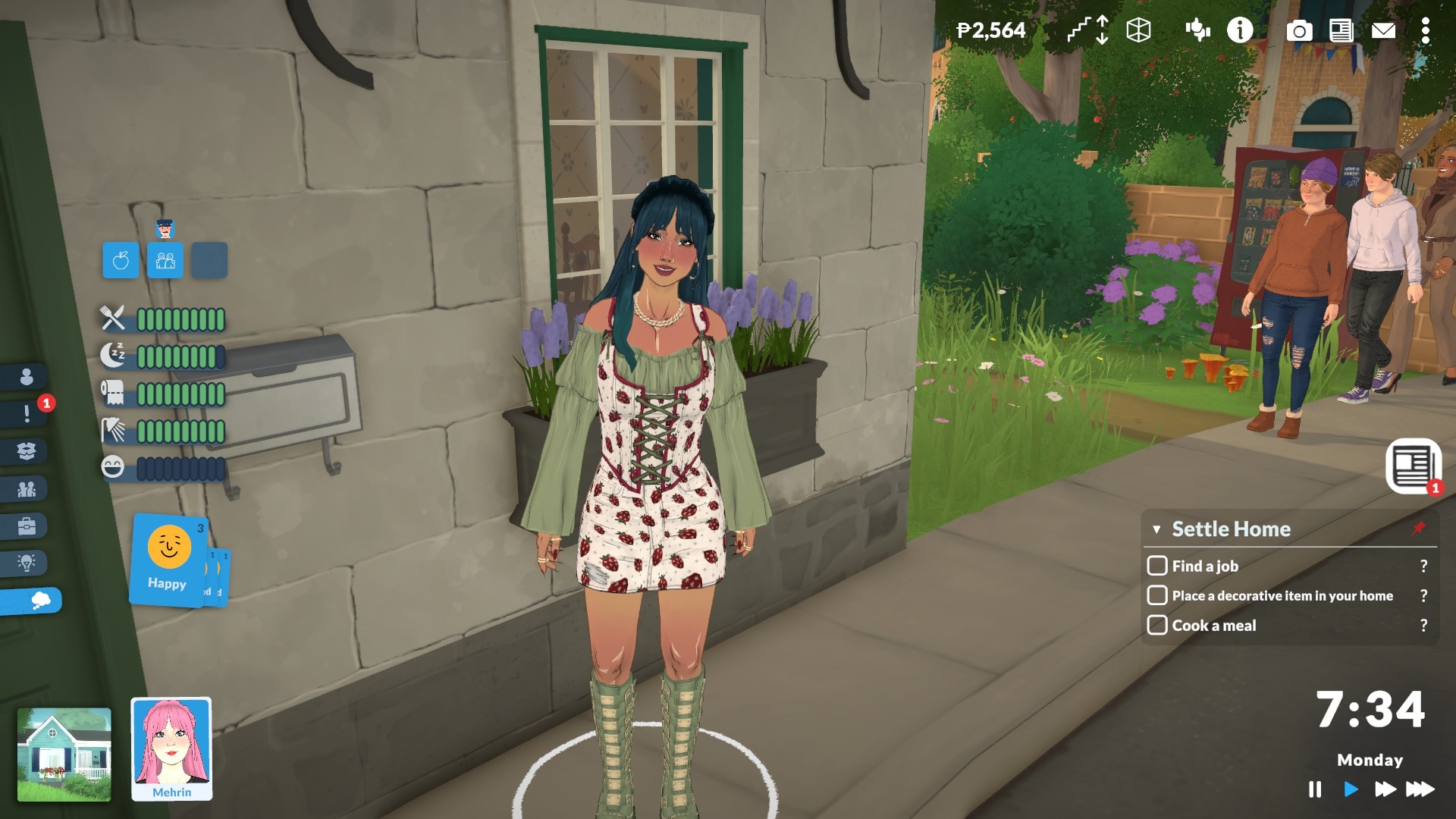
Any discussion of Paralives has to account for its Early Access state, the game is functional in the sense that it is fully playable from start to finish, but it is also clearly a work in progress where stability, optimization, and feature completeness vary depending on what the player is doing at any given moment. That inconsistency becomes one of the most noticeable aspects of extended play, especially once households become larger and player-made environments grow more complex.
Performance is uneven in a way that feels closely tied to simulation load rather than raw graphical demand. In smaller households or simple builds, the game can run smoothly with stable frame pacing and relatively fast transitions between actions. As soon as more characters are introduced or heavily customized environments are loaded, however, the simulation begins to show strain. This does not manifest as constant crashes or unplayability, but rather as intermittent stuttering, delayed responses, and occasional pauses during routine actions. Pathfinding in particular can contribute to these slowdowns when multiple Parafolks are attempting to navigate crowded spaces or interact with objects simultaneously. The result is a game that often feels fine in isolation but less consistent under long-term simulation pressure.
Bugs are present throughout the experience, although their severity varies considerably. Some are minor visual issues such as clipping, animation desynchronization, or objects briefly behaving unpredictably before correcting themselves. Others affect interactions more directly, such as characters failing to complete actions, becoming temporarily unresponsive, or behaving in ways that break immersion. These issues are not constant enough to make the game feel unstable in a strict sense, but they occur frequently enough that players will notice them during normal play sessions rather than only in edge cases. In some situations, these glitches even become part of the experience, especially when they are harmless or easily reset, but they still contribute to the impression of a game that has not yet reached full technical maturity.
There are also structural limitations that go beyond traditional bugs and reflect the Early Access scope of the project. Certain systems feel incomplete not because they are broken, but because they have not yet been fully expanded. Social interactions, for example, function reliably on a mechanical level, but lack the variety and depth needed to consistently produce emergent storytelling. Similarly, autonomy systems allow characters to act independently, but their decision-making logic is still too predictable or simplistic to convincingly simulate complex personalities over long periods of time. These gaps are not unusual for Early Access life simulation games, but they become more noticeable here because other parts of the game, particularly Build Mode, feel comparatively polished.
Long-term play also exposes additional friction points that are less visible in shorter sessions. Save management, for instance, is stable in most cases, but the lack of long-term system refinement means that extended households with multiple generations can produce unexpected inconsistencies. UI responsiveness can also fluctuate slightly depending on how many systems are active at once, particularly when switching between building, live mode, and character management in quick succession. None of these issues fundamentally prevent progression, but they do reinforce the sense that the game is still being actively assembled rather than fully tuned.
What ultimately defines the Early Access experience is not the presence of these issues individually, but the way they interact with the game’s ambition. Paralives is attempting to simulate a large number of systems at once, and while many of those systems already function correctly in isolation, they do not always scale smoothly when combined. That creates a clear contrast between intention and execution, where the design vision is easy to understand but not yet consistently supported by technical stability.
At the same time, it is also important to note that nothing in the current state suggests foundational failure. The problems present themselves more as issues of refinement than structural collapse. Systems generally behave as expected, even when they occasionally break down under stress, and performance issues tend to appear gradually rather than catastrophically. In the context of Early Access development, this places Paralives in a relatively common but manageable category of release: ambitious, playable, imperfect, and clearly still evolving toward a more stable long-term state.
Final Verdict: 7.5/10
Paralives arrives in Early Access with a clearer identity than many games at a similar stage of development. Its strengths are immediately visible, its weaknesses are relatively easy to identify, and its future direction is supported by a roadmap that directly addresses many of the current shortcomings. The building tools are exceptional, character customization is among the best available in the genre, and the overall artistic presentation gives the game a distinctive personality that helps separate it from competitors. These elements already feel mature enough to support dozens of hours of creative play.
The simulation itself remains the area most in need of growth. While careers, relationships, emotions, wants, and character progression provide a functional framework, they do not yet combine into the deeply reactive and unpredictable experience that defines the strongest life simulators. Character autonomy, personality expression, and social variety still require significant development, and technical issues occasionally undermine immersion even when the underlying ideas show promise.
Even with those criticisms, Paralives represents one of the most promising life simulation releases in years because its strongest systems are not superficial additions. They are foundational components that influence every aspect of play. It is easier to imagine additional content, expanded personalities, and improved AI strengthening an already excellent creative framework than it is to imagine a weaker foundation supporting long-term success. As a result, Paralives succeeds not because it already delivers the complete vision many players imagined during development, but because it demonstrates that vision is genuinely achievable.


