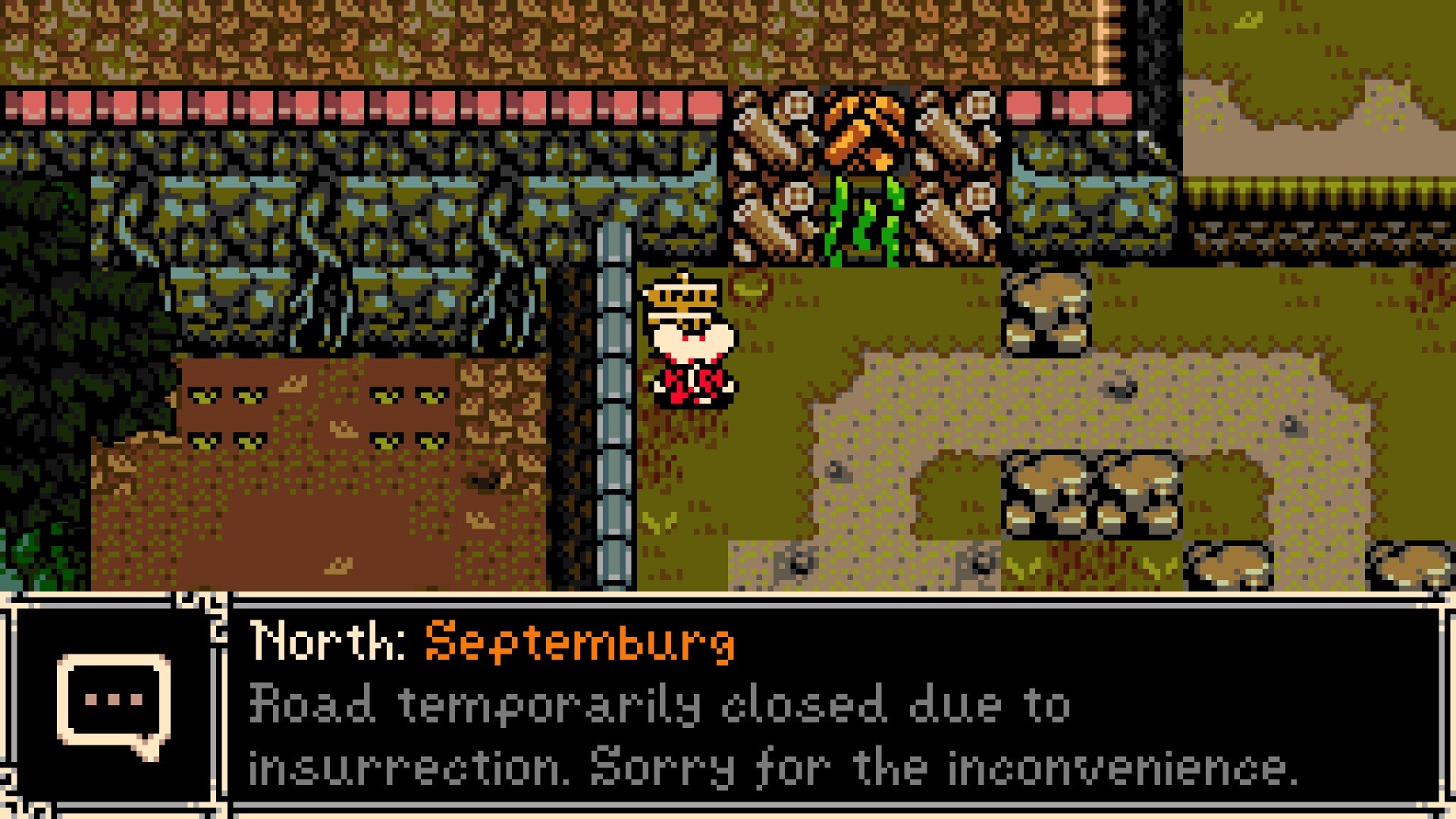
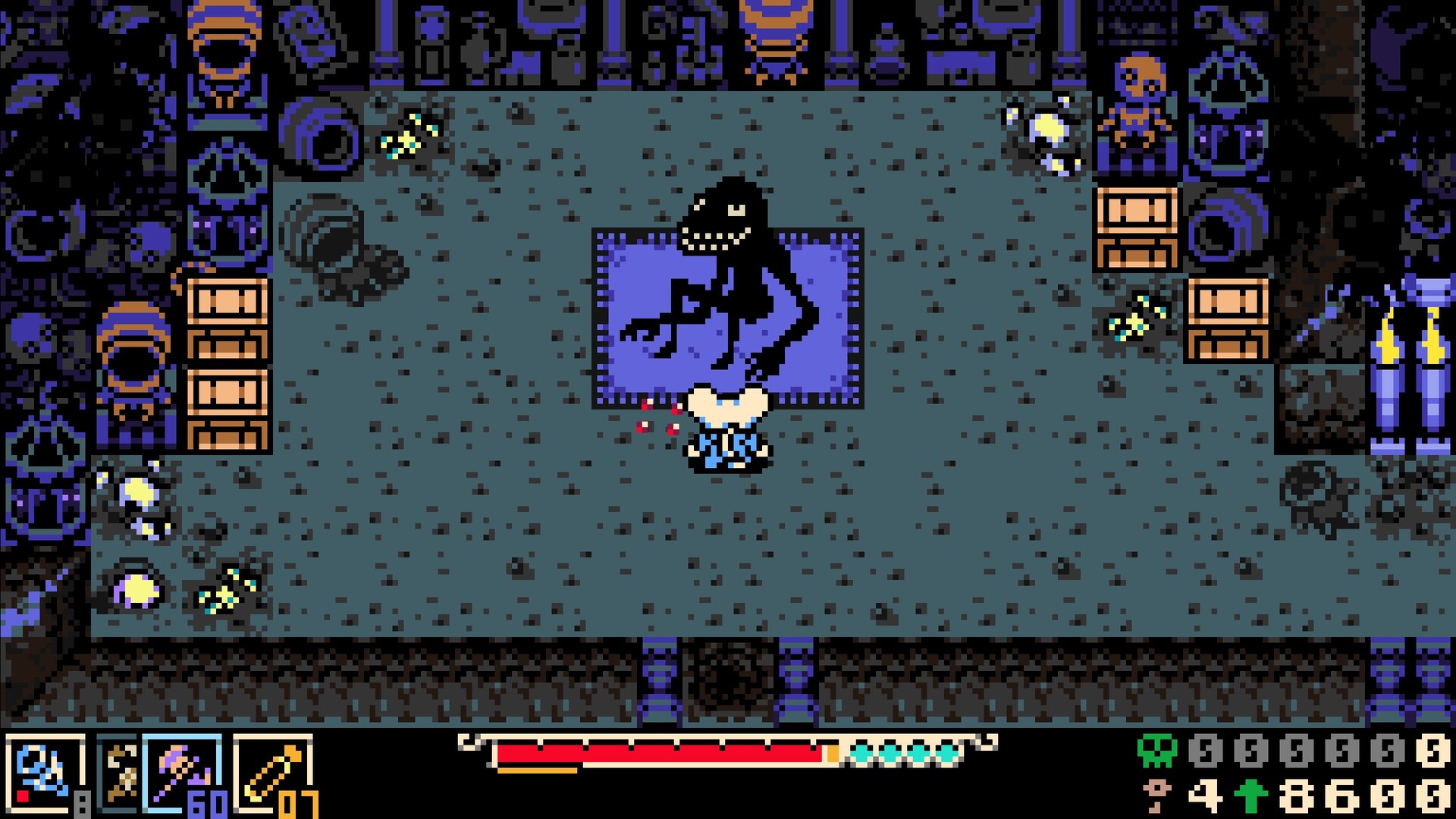
For more than a decade, Yacht Club Games has been closely associated with Shovel Knight, a game that successfully translated the appeal of classic 8-bit platformers into a modern package without reducing itself to simple nostalgia. The studio’s reputation was built on its ability to identify what made older games compelling and reinterpret those strengths for contemporary audiences. Mina the Hollower arrives carrying the weight of those expectations while attempting something considerably different. Rather than returning to platforming, Yacht Club Games turns its attention toward top-down action-adventure design, drawing inspiration from classic handheld adventures while incorporating ideas from action RPGs, gothic horror games, and more modern combat-focused experiences.
At first glance, the game’s influences are immediately recognizable. The visual presentation evokes memories of the Game Boy Color era, the perspective recalls classic top-down adventures, and the structure encourages exploration through an interconnected world filled with secrets and optional discoveries. Yet Mina the Hollower quickly establishes that it is interested in far more than revisiting familiar ideas. The game consistently builds upon its influences rather than merely imitating them, introducing mechanics and design philosophies that allow it to stand comfortably on its own merits.

Set on the troubled Tenebrous Isle, the story follows Mina, a renowned Hollower tasked with investigating the mysterious failures of the Spark Towers that once protected the island from darkness. What begins as a relatively straightforward mission gradually expands into a larger adventure involving corruption, forgotten histories, dangerous creatures, and the unraveling of long-buried secrets. Although the narrative provides the framework for the journey, the true appeal of Mina the Hollower lies in the experience of exploring its world and mastering the systems that govern it.
Throughout the adventure, Yacht Club Games demonstrates a level of confidence that has become increasingly uncommon within the genre. Rather than constantly directing players toward objectives or explaining every mechanic in exhaustive detail, the game encourages experimentation, observation, and curiosity. The result is an experience that feels rewarding not because it constantly provides rewards, but because it allows players to earn them through engagement with the world itself.
Gameplay and Mechanics
The defining feature of Mina the Hollower is Mina’s ability to burrow beneath the ground, a mechanic that serves as the foundation upon which much of the game is built. While initially presented as a simple movement tool, burrowing gradually reveals itself to be one of the most versatile mechanics introduced in a modern action-adventure game. Mina can dive beneath the surface to avoid enemy attacks, traverse obstacles, discover hidden routes, interact with environmental puzzles, and gain tactical advantages during combat encounters. As new environments and situations are introduced, the game continuously finds creative ways to expand the utility of the mechanic without overcomplicating its basic function.
What makes the burrowing system particularly effective is the way it evolves naturally throughout the adventure. New applications emerge through level design rather than lengthy tutorials, encouraging players to think creatively about how the ability can be used. Different terrain types, environmental hazards, and puzzle scenarios all interact with burrowing in meaningful ways, ensuring that the mechanic remains relevant long after its introduction. By the later stages of the game, players are likely to be using the ability in ways they never anticipated during the opening hours, which speaks to the strength of its underlying design.
Combat is built around Mina’s whip, a weapon that immediately distinguishes her from many protagonists in comparable games. The whip provides useful range and demands a greater emphasis on positioning than many melee weapons, creating encounters that feel deliberate without becoming slow. Timing, spacing, and movement are consistently important, particularly when dealing with larger groups of enemies or more aggressive opponents. While the whip remains central to the experience, additional weapons and secondary tools gradually expand the available combat options, allowing players to adapt their approach according to personal preference.
The progression systems support this flexibility without becoming overly complex. Equipment, upgrades, and collectible enhancements provide meaningful opportunities for customization while avoiding the excessive numerical focus that often accompanies role-playing mechanics. Players are encouraged to experiment with different combinations and strategies, but the game never loses sight of its action-adventure foundations. Mechanical skill remains more important than character statistics, ensuring that success feels tied to player improvement rather than simple progression.
Enemy design consistently reinforces the strengths of the combat system. Individual opponents are usually easy to understand, but the combinations in which they appear create increasingly demanding encounters. Enemies frequently occupy complementary roles, forcing players to manage multiple threats simultaneously while remaining aware of their surroundings. Encounters reward observation and patience, but they also leave room for aggressive play once enemy behaviors have been mastered.
Boss battles represent some of the strongest moments in the entire game. Yacht Club Games has clearly invested significant effort into creating encounters that feel distinct from one another while remaining consistent with the mechanics established throughout the adventure. Each major boss introduces unique attack patterns, movement requirements, and tactical considerations that challenge players to apply their understanding of the game’s systems. These battles are rarely easy, but they generally feel fair, with success resulting from learning and adaptation rather than trial and error alone. The sense of accomplishment that follows victory is substantial, particularly during the later stages of the game when encounters become increasingly elaborate.
World Design and Exploration
The quality of Mina the Hollower’s exploration is arguably its greatest achievement. Tenebrous Isle is not merely a backdrop for combat encounters and story events but a carefully constructed world that consistently rewards curiosity. From the earliest moments of the adventure, players are encouraged to investigate suspicious landmarks, search for hidden passages, and revisit previously explored locations in search of new opportunities. The game embraces a philosophy of discovery that places considerable trust in the player, creating a sense of adventure that feels increasingly rare within the modern gaming landscape.
The world is structured as a network of interconnected regions that gradually reveal their relationships over time. New abilities, items, and pieces of knowledge frequently transform the significance of earlier locations, creating moments where previously overlooked details suddenly become important. This approach gives the island a strong sense of cohesion and helps establish the impression that it exists as a genuine place rather than a collection of separate levels connected by loading screens.
Environmental design plays a crucial role in supporting exploration. Distinct landmarks, memorable layouts, and careful visual communication help players navigate the world without excessive reliance on objective markers. Although the game provides enough guidance to prevent complete confusion, it often expects players to pay attention to their surroundings and remember information for future use. This old-school approach occasionally results in periods of uncertainty, particularly when determining the next objective after completing a major milestone. Some players may find these moments frustrating, especially if they prefer a more directed experience.
However, the occasional uncertainty is closely tied to the game’s most rewarding qualities. Discoveries feel genuinely earned because they are often the result of observation, experimentation, and persistence rather than explicit instruction. Hidden upgrades, optional areas, and secret encounters possess a greater sense of value because the player actively participates in uncovering them. The game repeatedly demonstrates that exploration is not simply about moving through space but about engaging with the world and learning its intricacies.
The density of meaningful content further enhances the experience. Exploration rarely feels like a search for collectibles scattered across empty environments. Instead, nearly every discovery contributes something worthwhile, whether it is a useful upgrade, a new piece of lore, an optional challenge, or a shortcut that reshapes understanding of the surrounding area. This careful balance ensures that curiosity remains rewarding throughout the adventure.

Story and Characters
Although gameplay and exploration remain the primary focus, Mina the Hollower’s narrative provides a strong foundation for the adventure. The story revolves around the collapse of the Spark Towers and the growing corruption spreading across Tenebrous Isle, but much of its appeal comes from the way it gradually reveals the island’s history through exploration and character interactions.
Rather than relying heavily on lengthy cutscenes or exposition dumps, the game allows players to piece together information through observation and conversation.
The writing strikes an effective balance between gothic atmosphere and lighthearted charm. Dark themes are present throughout the narrative, but the game avoids becoming relentlessly grim. Moments of humor emerge naturally through character interactions, helping create tonal variety without undermining the seriousness of the central conflict. This balance contributes significantly to the game’s overall personality and prevents the story from feeling one-dimensional.
Supporting characters are often memorable despite relatively limited screen time. Many possess distinct voices, personal motivations, and connections to the world that extend beyond their immediate role in the plot. Their presence helps reinforce the sense that Tenebrous Isle is inhabited by people whose lives have been shaped by the events unfolding around them. Even minor interactions frequently contribute to worldbuilding, adding texture and context to the broader narrative.
The story itself does not attempt to redefine storytelling within the medium, nor does it rely on complex twists or philosophical ambitions. Instead, it succeeds by providing a compelling framework that complements the strengths of the gameplay. The narrative supports exploration, enriches the atmosphere, and provides meaningful context for the player’s actions without distracting from the core experience.
Visuals and Art Direction
Mina the Hollower’s visual presentation demonstrates a sophisticated understanding of retro-inspired design. Although the game draws obvious influence from late-1990s handheld hardware, Yacht Club Games avoids treating those limitations as restrictions. Instead, the studio uses them as aesthetic inspiration while incorporating modern animation techniques, greater environmental detail, and a level of visual expressiveness that would have been impossible on the hardware that inspired the art style.
Character animation is particularly impressive. Mina’s movements communicate personality and responsiveness, while enemies and non-player characters benefit from similarly expressive animation work. Combat remains easy to read even during chaotic encounters, ensuring that visual clarity supports gameplay rather than competing with it. This attention to readability is especially important in a game that demands precise movement and careful observation.
The environmental art consistently reinforces the game’s gothic atmosphere. Forests, ruins, settlements, laboratories, and coastal regions each possess distinct visual identities while remaining part of a cohesive world. The variety of locations helps maintain a strong sense of progression and discovery, ensuring that exploration remains visually engaging throughout the adventure. Color palettes are used effectively to distinguish different regions and establish mood without sacrificing clarity or readability.
Environmental storytelling further strengthens the presentation. Architectural details, environmental damage, abandoned structures, and subtle visual cues communicate aspects of the world’s history without requiring explicit explanation. These details reward attentive players and contribute to a stronger sense of immersion. Rather than relying solely on nostalgia, the visual design succeeds because it supports the broader goals of the game while maintaining a distinctive artistic identity.
Audio and Music
Music plays a crucial role in shaping the atmosphere of Mina the Hollower, and the soundtrack consistently strengthens the game’s identity throughout the adventure. Rather than serving as simple background accompaniment, the score actively contributes to the tone of each location, helping establish emotional context and reinforcing the distinctive personality of Tenebrous Isle. Exploration themes emphasize mystery and curiosity, encouraging players to linger in unfamiliar environments, while combat tracks increase tension without becoming overwhelming or distracting from the action itself. The soundtrack demonstrates a strong understanding of pacing, allowing quieter moments to breathe before escalating appropriately during more intense sequences.
The quality of the compositions remains consistently high across the entire game. Different regions are given memorable musical identities that help distinguish them from one another, making exploration feel more meaningful and ensuring that new locations leave lasting impressions. Boss encounters benefit particularly from the music, as major battles are accompanied by energetic tracks that heighten the sense of danger and excitement without relying on excessive theatricality. Long after individual areas have been completed, many of the game’s themes remain surprisingly easy to recall, a testament to the strength of the overall composition.
Sound design complements the music equally well. Weapon strikes feel appropriately impactful, enemy attacks communicate important gameplay information clearly, and environmental effects add subtle layers of immersion that help bring the world to life. The audio presentation rarely draws attention to itself, but its contribution becomes obvious when considering how effectively it supports exploration, combat, and storytelling. Together, the soundtrack and sound effects create a cohesive audio experience that matches the quality of the game’s visual design and mechanical systems.
Technical Performance on PC
The PC version of Mina the Hollower reflects the same level of polish that characterizes the rest of the project. Despite its retro-inspired visual style, the game benefits from modern technical standards, resulting in an experience that feels smooth, responsive, and reliable throughout the entire adventure. Performance remains stable across a wide range of hardware configurations, with frame rates staying consistently high even during more demanding combat encounters or larger environmental transitions. The game’s modest system requirements also make it accessible to players using older hardware, an increasingly welcome quality at a time when many releases demand significant technical resources.

Load times are minimal and rarely interrupt the flow of exploration. Moving between regions feels seamless, allowing the interconnected world design to function without unnecessary friction. Technical issues are similarly uncommon. During extended play sessions, the game maintains a high degree of stability, avoiding the crashes, visual glitches, and performance inconsistencies that can undermine otherwise excellent experiences. While no modern release is entirely immune to minor bugs, Mina the Hollower arrives in a notably polished state.
Control responsiveness represents another major strength. Movement, combat actions, item usage, and menu navigation all feel immediate and precise, which is particularly important given the game’s emphasis on timing and positioning. Keyboard and mouse controls are fully functional, but the adventure feels especially comfortable with a controller, where analog movement allows for greater precision during exploration and combat. User interface design is similarly effective, presenting information clearly without cluttering the screen or distracting from the game world. Menus are intuitive, inventory management remains straightforward, and essential gameplay information is communicated efficiently. The result is a technical package that rarely calls attention to itself because it consistently performs exactly as intended.
Final Verdict: 8.5/10
Mina the Hollower represents an important step forward for Yacht Club Games. Although the studio’s reputation was established through Shovel Knight, this new project demonstrates that its strengths extend far beyond a single franchise or design formula. By combining the exploratory appeal of classic action adventures with modern combat sensibilities and an exceptionally versatile movement mechanic, the game succeeds in creating an experience that feels both familiar and distinct. Its influences are easy to identify, but they never overshadow its own identity.
The strongest aspect of the adventure is the way its various systems reinforce one another. Exploration benefits from the burrowing mechanic, which in turn enhances puzzle-solving, traversal, and combat. The interconnected world encourages curiosity, while progression systems provide meaningful rewards for players willing to investigate every corner of the island. Strong environmental design, memorable boss encounters, excellent audiovisual presentation, and impressive technical polish further strengthen an already compelling foundation. The game trusts players to engage with its world actively rather than passively following objective markers, and that confidence contributes significantly to the satisfaction of discovery.
Not every design decision will appeal equally to every player. The intentionally old-school approach to navigation occasionally leads to moments of uncertainty, and some sections require a greater degree of observation and backtracking than modern audiences may expect. Nevertheless, these elements feel like deliberate creative choices rather than shortcomings, and they contribute directly to the sense of adventure that defines the experience. The occasional frustration associated with becoming lost is often outweighed by the satisfaction of finding a solution independently.
What ultimately distinguishes Mina the Hollower from many other retro-inspired releases is its refusal to rely solely on nostalgia. While the game clearly draws inspiration from beloved classics, it consistently seeks ways to expand upon those foundations rather than simply recreate them. The result is an adventure that respects the past without becoming trapped by it, delivering a world that feels rewarding to explore, combat that remains engaging throughout, and a sense of discovery that becomes increasingly rare in contemporary game design. For players who appreciate thoughtful world design, rewarding exploration, and mechanically rich action-adventure gameplay, Mina the Hollower stands as one of Yacht Club Games’ finest accomplishments and one of the strongest examples of the genre in recent years.