Reviving a long-dormant strategy series is rarely just about restoring mechanics; it is about reestablishing a way of thinking that players have struggled to find elsewhere. Heroes of Might and Magic has always occupied a specific space within turn-based strategy, combining methodical planning with a sense of exploration that feels closer to an adventure game than a traditional war simulation, while constantly balancing long-term positioning against short-term tactical compromises. Olden Era demonstrates a clear understanding of that identity, and instead of chasing modern conventions or layering on unnecessary complexity, it focuses on strengthening what already works while carefully introducing refinements that feel purposeful rather than intrusive.
What ultimately defines this entry is not bold reinvention, but confidence in restraint. Many legacy revivals attempt to justify their existence through dramatic changes, often losing sight of what made the original experience compelling. Olden Era takes a different approach, expanding systems where needed, smoothing friction points, and modernizing presentation without diluting the core loop. That approach does not eliminate every issue, but it results in a game that feels coherent, deliberate, and consistently engaging over extended sessions.
Gameplay and Mechanics
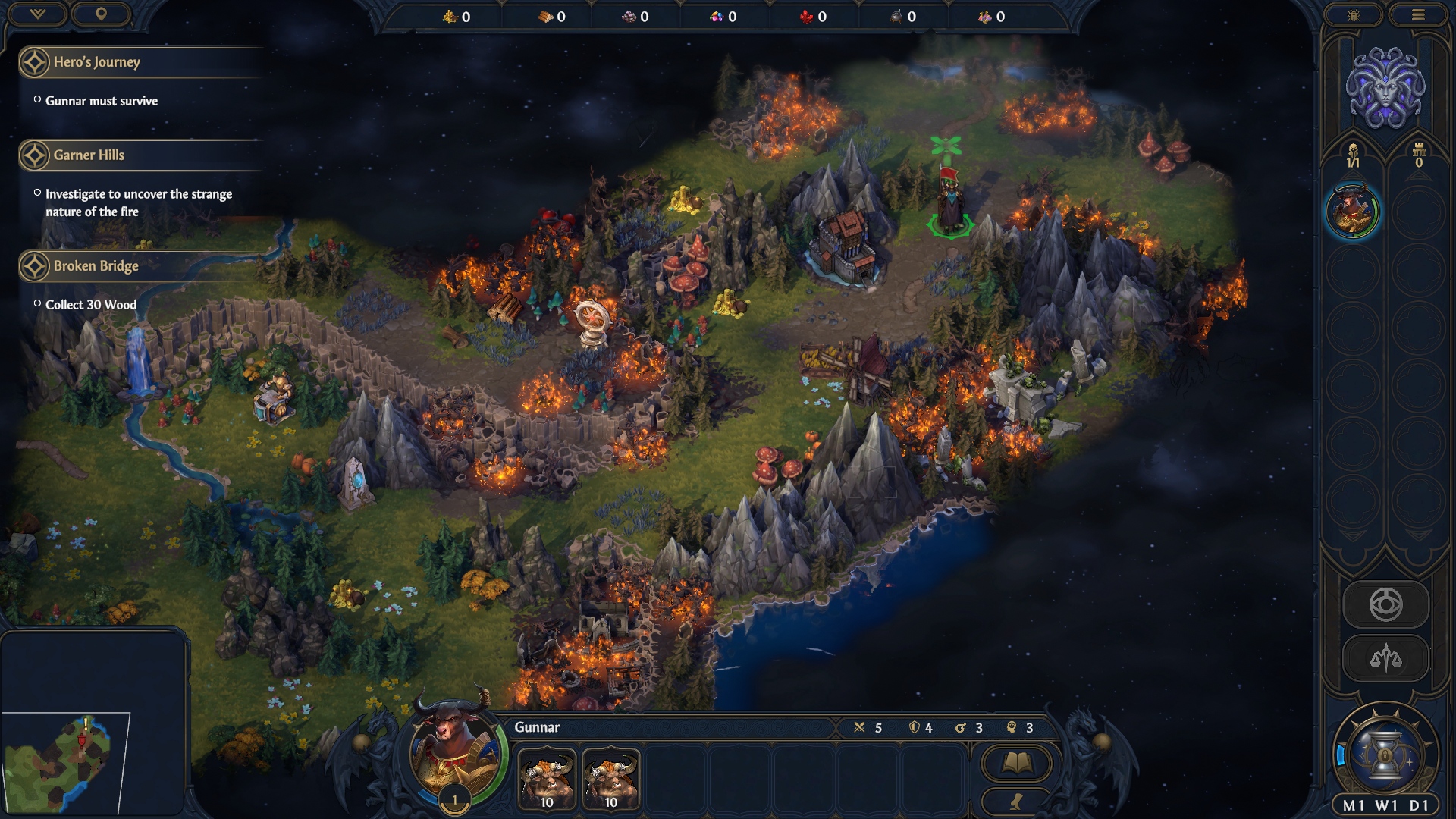
At its foundation, Olden Era preserves the structure that has defined the series for decades, yet it refines the moment-to-moment experience in ways that make the familiar loop feel fresh rather than repetitive. Players guide heroes across large, resource-rich maps, capturing mines, recruiting units, collecting artifacts, and navigating an environment filled with both opportunity and risk. Every decision carries weight, as time functions as a limiting resource that cannot be recovered, and inefficient turns can have consequences that only become apparent much later in a scenario.
Exploration is paced in a way that encourages both curiosity and caution. The fog of war ensures that even experienced players cannot rely solely on pattern recognition, while terrain and map design introduce subtle constraints that influence movement and planning. Expanding too aggressively can expose vulnerabilities, yet excessive caution can leave valuable resources uncontested, and the tension between these approaches remains one of the game’s defining strengths.
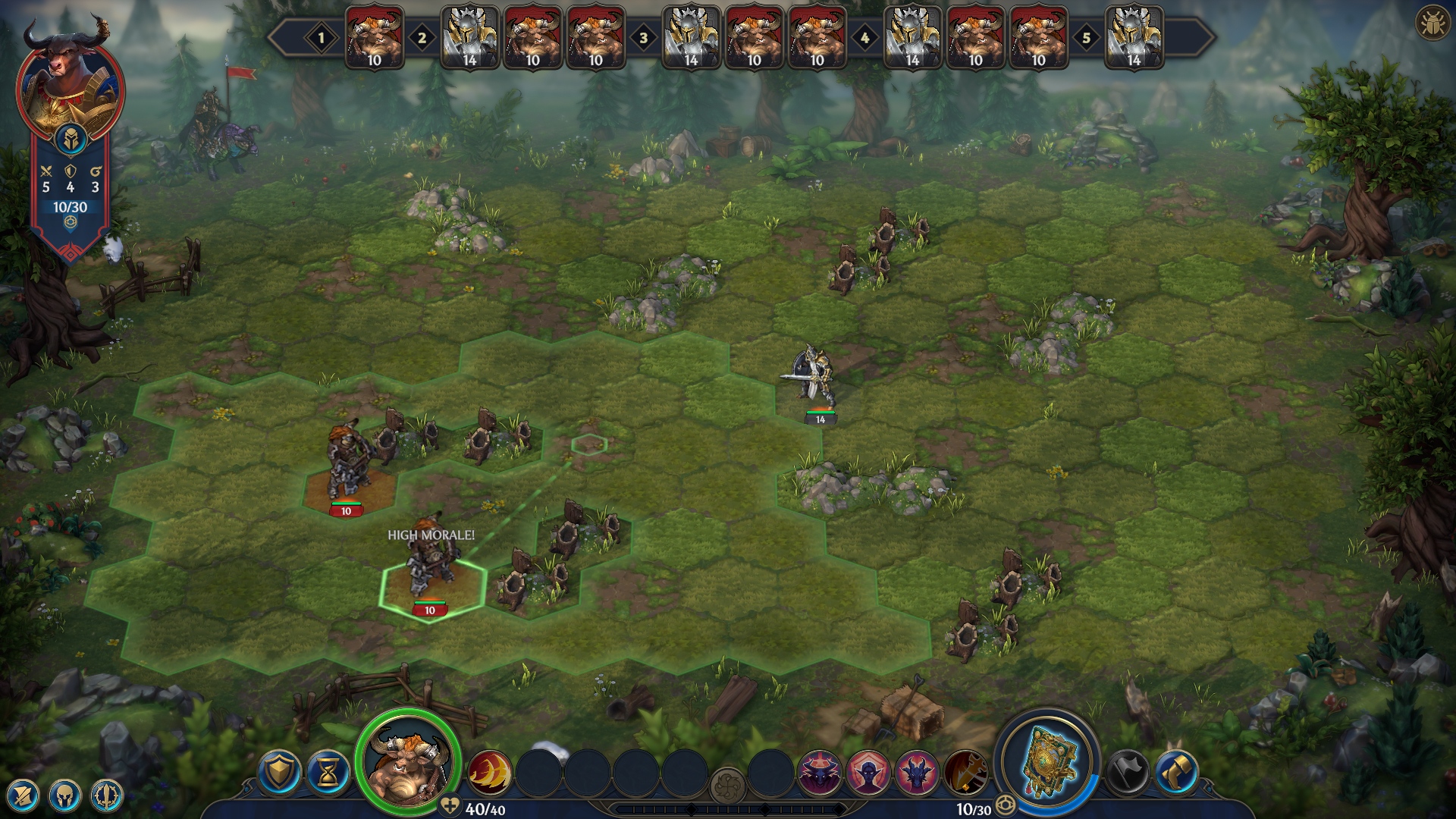
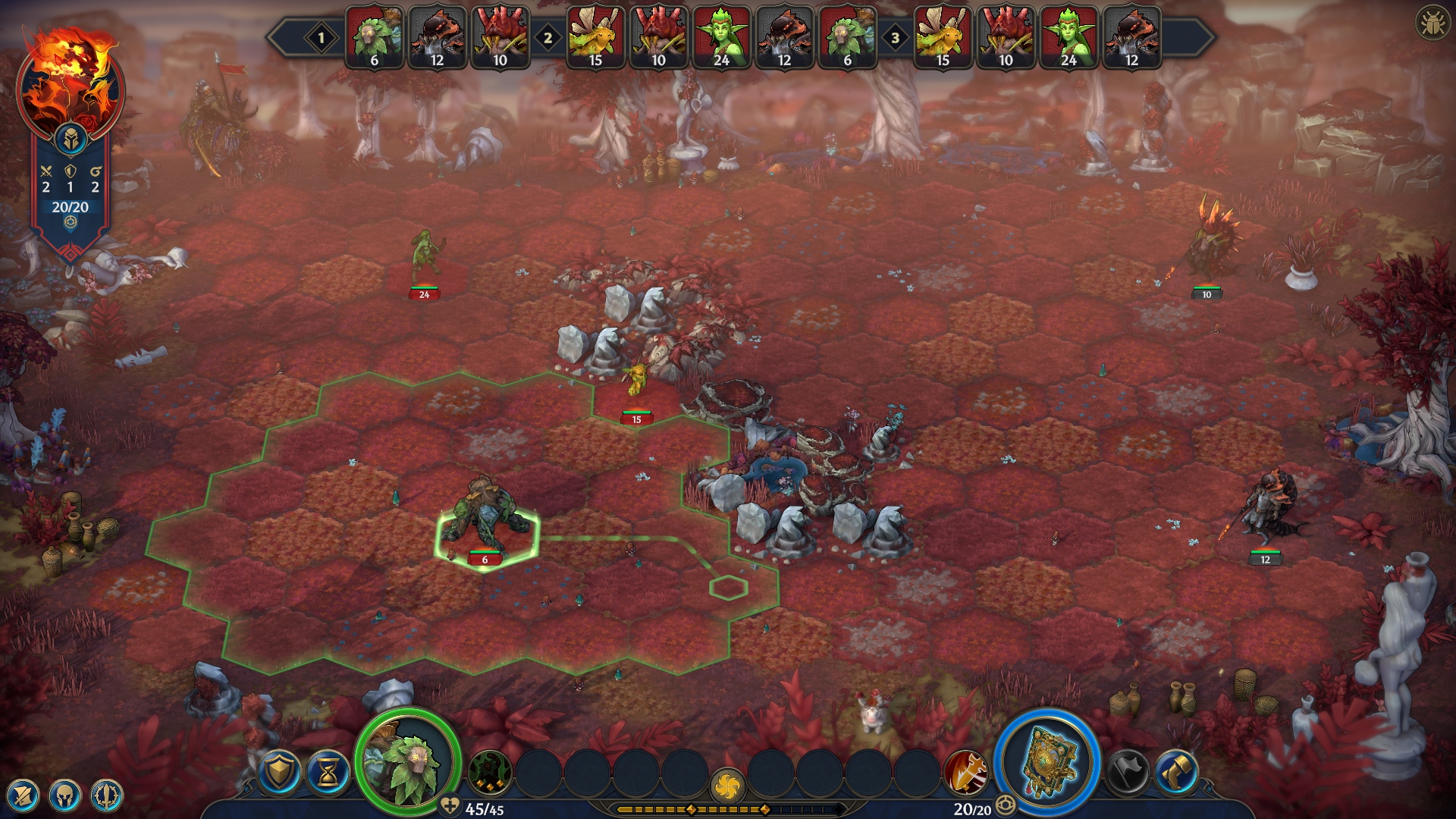
Combat continues to rely on a hex-based system that emphasizes positioning, initiative, and unit interaction rather than simple numerical superiority. Battles unfold as layered exchanges in which each decision contributes to a broader tactical picture, and even small mistakes can cascade into significant disadvantages. The pacing of combat rewards patience, as players who take the time to evaluate positioning, anticipate enemy actions, and manage ability timing are consistently more successful than those who rely on brute force.
A particularly notable improvement lies in the increased viability of tactical recovery. Situations that appear unfavorable at first glance can often be salvaged through careful positioning, spell usage, and timing, which reduces the number of encounters that feel predetermined. This shift enhances engagement by ensuring that more battles require active participation rather than serving as routine confirmations of superiority.
Strategic Depth and System Design
Beneath its accessible structure, Olden Era introduces a range of systems that deepen strategic decision-making without overwhelming the player. Faction design is a central pillar of this depth, as each faction offers distinct strengths, weaknesses, and economic considerations that influence both early and late-game strategies. These differences are meaningful rather than cosmetic, encouraging players to adapt their approach rather than relying on a universal formula.
Hero progression reinforces this emphasis on specialization. Leveling decisions shape not only combat effectiveness but also broader strategic options, as different skill paths support different playstyles. Magic-focused heroes can alter the flow of battles through spellcasting, while combat-oriented heroes provide consistent frontline advantages, and the interaction between these roles creates a dynamic that rewards long-term planning.
Additional progression systems introduce another layer of customization, although their impact varies. Some mechanics enhance strategic flexibility by providing incremental advantages that accumulate over time, while others feel less essential, occasionally overlapping with existing systems in ways that add complexity without significantly expanding decision-making. These elements do not undermine the experience, but they highlight areas where further refinement could improve cohesion.
The overall balance between depth and accessibility remains one of the game’s strongest qualities. While there is enough complexity to sustain long-term engagement, the core loop remains understandable, allowing new players to gradually build familiarity without feeling excluded by the game’s systems.
Modes, Content, and Replayability
Even in its current Early Access state, Heroes of Might and Magic: Olden Era offers a surprisingly substantial range of modes that support different playstyles, pacing preferences, and levels of engagement, which is particularly notable for a strategy title still actively in development. The traditional scenario-based structure remains the centerpiece of the experience, providing expansive maps, multiple competing heroes, layered resource systems, and extended sessions that naturally emphasize long-term strategic planning, gradual territorial expansion, and the careful buildup of armies and economic infrastructure over time. These scenarios capture the essence of the series with particular fidelity, delivering a sense of scale and progression that unfolds organically over hours rather than minutes, where early decisions continue to echo far into the later stages of a match and where momentum is built incrementally through consistent planning rather than sudden shifts in power.
Alternative modes introduce meaningful variations on this core structure by adjusting the focus of gameplay toward more specific aspects of the overall design, offering streamlined experiences that isolate particular systems such as tactical combat encounters or simplified strategic management layers. These modes do not merely reduce complexity for its own sake, but instead reframe the experience to highlight individual components of the game’s design, making them especially useful as entry points for newer players who may benefit from reduced cognitive load while learning the fundamentals. At the same time, they also provide experienced players with opportunities to engage in shorter, more focused sessions that emphasize particular skills or decision-making scenarios without requiring the full time investment of a traditional scenario.

Random map generation plays a crucial and foundational role in sustaining long-term replayability, as it ensures that no two sessions unfold in exactly the same configuration, forcing players to continuously adapt their strategies to new terrain layouts, resource distributions, and opponent positioning. When combined with the inherent diversity of factions, each with distinct strengths, weaknesses, and strategic identities, as well as a flexible difficulty system that allows players to tailor challenge levels to their comfort and experience, this creates a robust framework that remains engaging over extended periods of play.
The interplay between procedural variation and systemic depth encourages experimentation with different tactical and strategic approaches, rewarding players who are willing to adjust their methods rather than relying on a single optimal path.
Multiplayer and hotseat options further extend the longevity and social dimension of the experience, continuing a tradition that has long been central to the identity and cultural appeal of the Heroes of Might and Magic series. The turn-based structure naturally lends itself to shared play environments, whether online or local, where players can engage in competitive or cooperative scenarios that emphasize planning, prediction, and adaptation over real-time reflexes. The inclusion of map editing tools, even in their current developing state, reinforces this long-term vision by signaling a clear commitment to community-driven content creation, which has historically played a significant role in sustaining interest and extending the lifespan of earlier entries in the series through custom scenarios, balance experimentation, and player-generated campaigns that often rival official content in complexity and creativity.
AI and Difficulty
The approach to artificial intelligence in Olden Era reflects a deliberate effort to balance competence with unpredictability, resulting in opponents that feel active rather than mechanical. Instead of pursuing perfect efficiency, the AI exhibits behavior that can be both opportunistic and occasionally risky, which helps prevent encounters from becoming overly predictable.
This design choice contributes to a more dynamic experience, particularly in longer scenarios where static behavior could otherwise lead to repetition. The AI is capable of capitalizing on player mistakes, yet it also creates openings through its own decisions, maintaining a balance that encourages adaptation rather than reliance on fixed strategies.
Difficulty scaling is handled with care, offering a range of options that accommodate different levels of experience. While the game can be demanding, particularly for players unfamiliar with the genre, it generally provides enough feedback to make failures feel instructive rather than arbitrary.
Visual Design and Presentation
The visual identity of Heroes of Might and Magic: Olden Era reflects a careful balance between nostalgia and modern clarity, aiming to preserve the recognizable charm of the series while updating it for contemporary expectations. The stylized art direction draws clear inspiration from earlier entries, particularly in its creature designs, color palette, and overall fantasy tone, while also incorporating contemporary rendering techniques that enhance readability, depth, and environmental detail without drifting into a level of realism that would feel at odds with the series’ established visual language.
Lighting, texture work, and subtle animation improvements contribute to a world that feels more dynamic and alive, yet still firmly grounded in the expressive, slightly illustrative style that has always defined the franchise. These enhancements are applied with noticeable restraint, ensuring that visual upgrades support the experience rather than overpower it, and maintaining a consistent tone across both the strategic world map and the more focused combat encounters. This consistency is especially important in a game where clarity of information is as important as aesthetic appeal, and the presentation succeeds in keeping both priorities in balance.
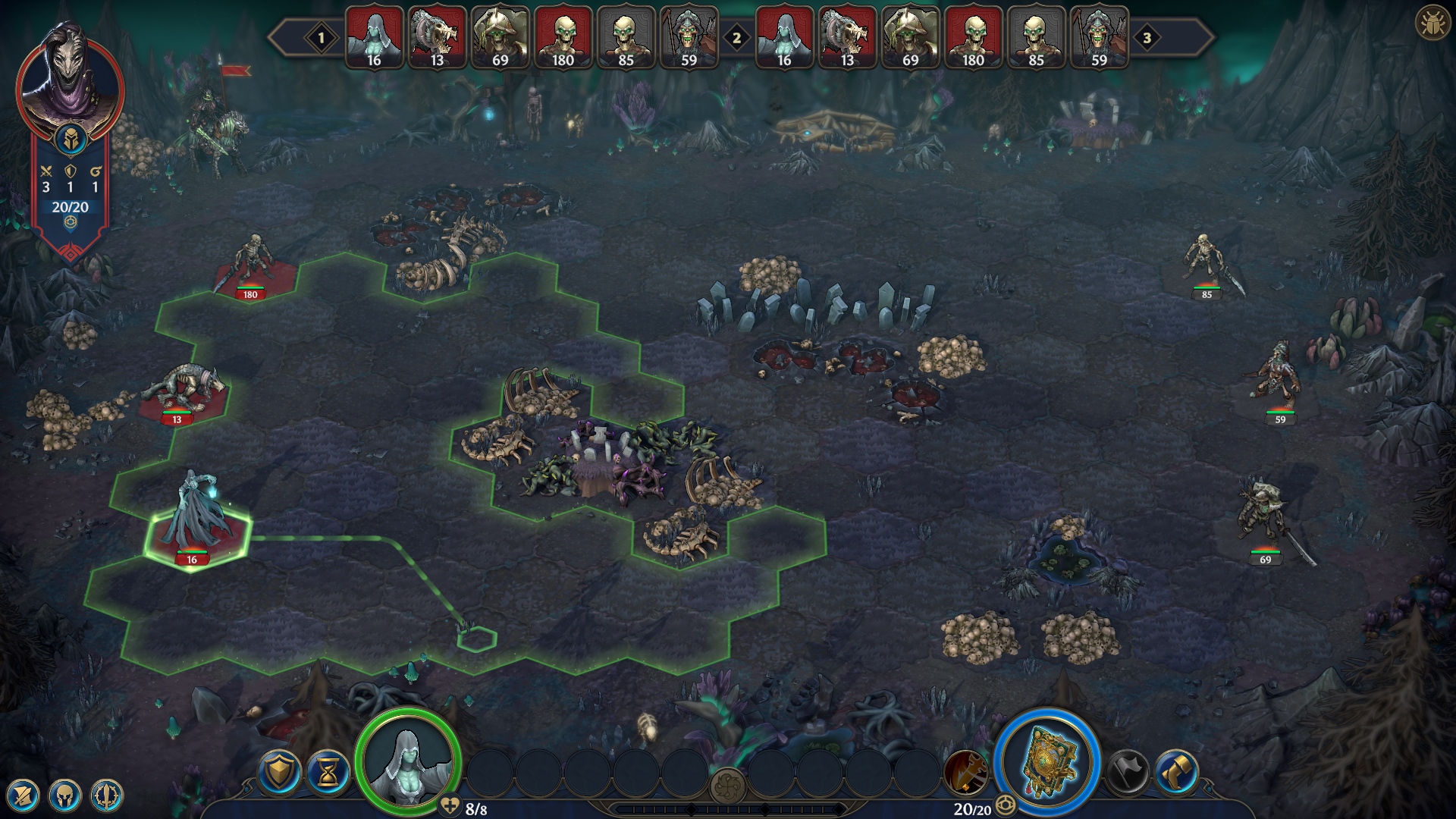
Unit design remains one of the game’s strongest visual pillars, as each creature is not only distinct in appearance but also communicates its role and identity at a glance, allowing players to quickly interpret battlefield conditions without hesitation. Animations are intentionally restrained and functional, prioritizing readability and timing over spectacle, which helps preserve the strategic flow of combat and ensures that visual effects never obscure critical information during fast-moving engagements.
The world map, by contrast, is vibrant and richly populated with points of interest, resource nodes, and environmental details that contribute to a strong sense of scale and presence, reinforcing the feeling of a living, reactive world. However, this density occasionally introduces moments of visual clutter, particularly in later stages of a scenario when multiple factions, structures, and effects overlap within the same regions of the map. While this rarely interferes with core gameplay, it can slightly reduce immediate readability in high-activity areas, making it a point where additional refinement could further improve usability without sacrificing detail.
City screens stand out as one of the most polished and visually cohesive aspects of the presentation, offering richly detailed representations of faction identity and progression that evolve meaningfully as development advances. These screens effectively reinforce the connection between strategic decisions and their long-term outcomes, transforming abstract resource investment into tangible visual growth that enhances the sense of progression and ownership over time.
Audio and Sound Design
The audio design of Olden Era is built around consistency and longevity, two qualities that are essential for a strategy game intended to be played in extended sessions. The soundtrack draws from the orchestral traditions associated with the series, delivering compositions that emphasize atmosphere and continuity rather than immediate impact. Exploration themes maintain a measured tone that complements the pacing of the game, while combat tracks introduce a subtle increase in intensity without overwhelming the player or disrupting concentration.
What distinguishes the soundtrack is its restraint. Rather than attempting to dominate the experience, it operates as a supporting layer that gradually becomes more noticeable over time, particularly during longer sessions where less carefully constructed music might become repetitive. This approach aligns well with the game’s overall design philosophy, which prioritizes cohesion over spectacle.
Sound effects contribute to the clarity of interactions, providing distinct cues for unit actions, environmental elements, and interface feedback. While these effects are not especially elaborate, they are precise and reliable, ensuring that players receive the information they need without unnecessary distraction.
One aspect that stands out, however, is the absence of voice acting in dialogue sequences. All narrative content is presented through text, which, while functional, limits the emotional impact of story moments and character interactions. In a genre where narrative often plays a secondary role, this omission may not be critical, but it does affect the overall sense of immersion and production value. The addition of even partial voice acting would significantly enhance the presentation, adding depth to characters and making narrative elements more engaging.
Performance and Technical Aspects
From a technical perspective, Heroes of Might and Magic: Olden Era delivers a generally stable and consistently playable experience, especially when viewed through the lens of an Early Access release, though it is equally evident that additional optimization work will be required to fully unlock its potential across a broader range of hardware configurations and late-game conditions. In typical gameplay scenarios, performance remains steady, with smooth turn transitions, responsive inputs, and stable frame pacing during exploration and standard combat encounters, allowing the strategic flow of the game to remain largely uninterrupted.

However, as maps increase in size and scenarios grow more complex, particularly in situations where multiple armies, environmental effects, and extended AI calculations begin to overlap, occasional slowdowns become more noticeable, and these performance dips can subtly affect pacing, especially during longer sessions where sustained fluidity is important to maintaining immersion. While these fluctuations are not usually severe enough to disrupt gameplay or cause meaningful frustration, they do introduce a degree of inconsistency that becomes more apparent the longer a session continues or the more demanding a scenario becomes.
These issues, while manageable, also highlight a broader tension between the game’s relatively stylized visual presentation and the underlying computational demands of its systems, suggesting that certain aspects of the engine may still require refinement in how they handle large-scale interactions and resource processing. As a result, players on mid-range systems in particular may find that achieving a consistently smooth experience requires some level of graphical adjustment, especially when aiming to maintain stable performance during more demanding late-game situations or densely populated maps.
Despite these technical considerations, the game notably avoids more serious problems such as frequent crashes, major desynchronization issues, or progression-breaking bugs, which is an encouraging sign for a title still actively in development and receiving ongoing updates. The majority of issues encountered tend to fall into the category of optimization and polish rather than structural instability, indicating that the core systems and underlying architecture are fundamentally sound even if they are not yet fully refined.
The absence of controller support further reinforces the game’s commitment to traditional PC-focused design, aligning it closely with the historical identity of the series, which has always been rooted in mouse-and-keyboard interaction and precise, turn-based control schemes. While this approach preserves the integrity of the experience for its core audience, it does introduce a limitation in terms of accessibility, particularly for players who prefer or require alternative input methods, and expanding control options in the future could meaningfully broaden usability without compromising the strategic depth or pacing that defines the game.
User Interface and Accessibility
The user interface in Heroes of Might and Magic: Olden Era is fundamentally functional and generally dependable in moment-to-moment play, successfully supporting the game’s core loop of exploration, combat, and town management without introducing unnecessary friction once its structure becomes familiar, yet it does not always achieve the level of clarity or communicative precision required to fully express the breadth and interdependence of its systems.
Core interactions such as moving heroes across the map, managing armies, navigating towns, and initiating combat are intuitive in a mechanical sense and tend to become second nature after a relatively short acclimation period, but the process of reaching that level of fluency can feel less guided than it ideally should be, particularly for players who are new to the series or to turn-based strategy more broadly. The fundamentals are present and logically arranged, yet the onboarding experience relies more on player discovery than structured escalation of understanding, which can make the early hours feel slightly uneven in terms of clarity.
Information delivery is where these limitations become most apparent, as key systems are sometimes communicated in a way that requires active interpretation rather than immediate comprehension, especially in situations where multiple mechanics overlap and influence one another simultaneously. Elements such as faction bonuses, terrain modifiers, hero skills, resource adjustments, and combat interactions all function coherently at a systemic level, but their presentation does not consistently make those relationships transparent during active play. This can lead to situations where the player understands individual mechanics in isolation but must infer how they combine through experience and repetition rather than receiving clear, contextual explanation in the moment, subtly increasing cognitive load during tactical decision-making.
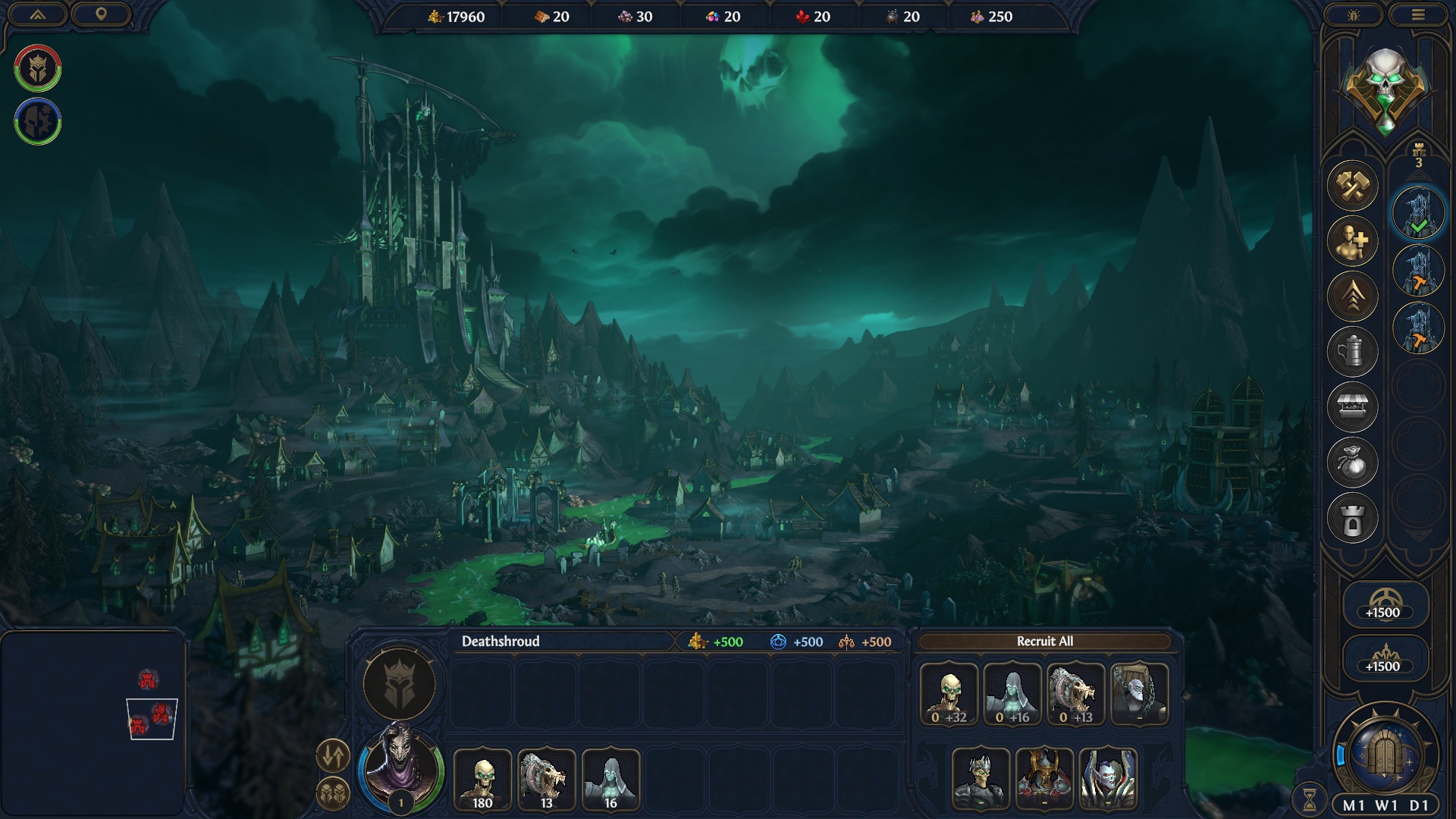
As a result, the learning curve feels somewhat steeper than the underlying mechanical complexity would naturally justify, not because the systems themselves are overly complicated or unintuitive in their design, but because the interface does not always surface the relationships between those systems in a way that supports immediate and effortless comprehension during play. This becomes especially noticeable in mid-to-late game scenarios, where overlapping mechanics are more frequent and the absence of explicit clarity can introduce hesitation or second-guessing in situations that should ideally feel more instinctively readable to the player.
Tooltips and tutorial elements do provide a solid foundational layer of instruction, effectively covering essential concepts such as movement rules, combat structure, and basic resource management, and they generally succeed in helping players establish a working understanding of the game’s core systems. However, they would benefit considerably from greater depth, contextual awareness, and stronger integration with evolving gameplay situations, as they often stop short of explaining how systems interact in more advanced or compound scenarios. Expanding these features to respond more dynamically to player actions and to offer clearer breakdowns of interdependent mechanics as they arise would significantly improve accessibility while reducing reliance on trial-and-error learning without diminishing the game’s strategic depth.
Accessibility options, meanwhile, remain relatively limited in scope, which indicates an area where future updates could meaningfully enhance the experience without compromising its identity. Improvements in text readability, interface scaling, control customization, and broader quality-of-life features would help make the game more inclusive for a wider range of players, particularly those with different visual, cognitive, or input needs, while still preserving the deliberate pacing and strategic complexity that define the overall experience.
Length, Structure, and Progression
The overall structure of Olden Era supports extended engagement, with scenarios that can span several hours and a broader experience that encourages repeated playthroughs. The pacing is deliberate, allowing players to gradually build their position through exploration, development, and strategic conflict.
The campaign, while still in progress, provides a narrative framework that adds context without overshadowing the gameplay. Story elements are present but restrained, serving to connect scenarios rather than define them.
Progression is steady and cumulative, with each decision contributing to a broader sense of advancement. Expanding territory, strengthening armies, and developing heroes all feed into a loop that rewards careful planning and long-term thinking. This structure creates a sense of momentum that sustains interest over extended sessions.
Strengths and Weaknesses
The primary strength of Olden Era lies in its disciplined approach to design, as it builds on a proven formula while introducing refinements that enhance rather than disrupt the core experience. Its strategic depth, variety of modes, and strong replayability ensure that it remains engaging across multiple playthroughs.
At the same time, the game’s Early Access status is evident in areas such as interface clarity, performance optimization, and presentation elements, including the absence of voice acting. Some systems could benefit from further refinement to improve cohesion and reduce unnecessary complexity.
These weaknesses do not overshadow the game’s strengths, but they highlight areas where continued development could significantly enhance the overall experience.
Final Verdict: 7.5/10
Heroes of Might and Magic: Olden Era succeeds because it understands the enduring appeal of the series and builds upon it with care and intention. It delivers a strategy experience that emphasizes thoughtful decision-making, long-term planning, and meaningful progression, all within a framework that feels both familiar and refreshed.
While it is not yet a fully realized product, the foundation it establishes is strong, offering a compelling experience that already stands out within the genre. With continued refinement in areas such as performance, interface design, and presentation, including the potential addition of voice acting, it has the potential to become one of the most notable entries in the series.
For longtime fans, it represents a return that feels authentic and respectful, capturing the essence of what made earlier titles memorable. For newcomers, it offers a rich and rewarding introduction to a style of strategy that remains deeply satisfying when executed well.