When a small indie studio releases a co-op shooter into Early Access and immediately racks up hundreds of thousands of sales with an “Overwhelmingly Positive” rating, it usually means one of two things: either it has stumbled onto something genuinely special, or it has landed on a formula that resonates at exactly the right moment. In the case of Far Far West, it manages to do both without feeling accidental.
Developed by Evil Raptor and published by Fireshine Games, this unusual blend of roguelite shooter, cooperative extraction design, and chaotic spell-driven combat drops players into a strange frontier where robot cowboys hunt supernatural threats. On paper, it sounds like a mash-up assembled from mismatched ideas, but in practice, it forms a surprisingly cohesive identity that rarely feels gimmicky. The game knows exactly what it wants to be, and more importantly, it understands what players are here for.
At this stage, Far Far West is still firmly an Early Access release. There are gaps in content, uneven systems, and moments where the seams show. However, what stands out almost immediately is how confident the core experience already feels. This is not a prototype searching for direction, but a game with a clear foundation that is actively being built upon.
The result is a title that can be easy to underestimate at first glance, yet increasingly difficult to put down once its loop begins to click.
Gameplay and Core Loop
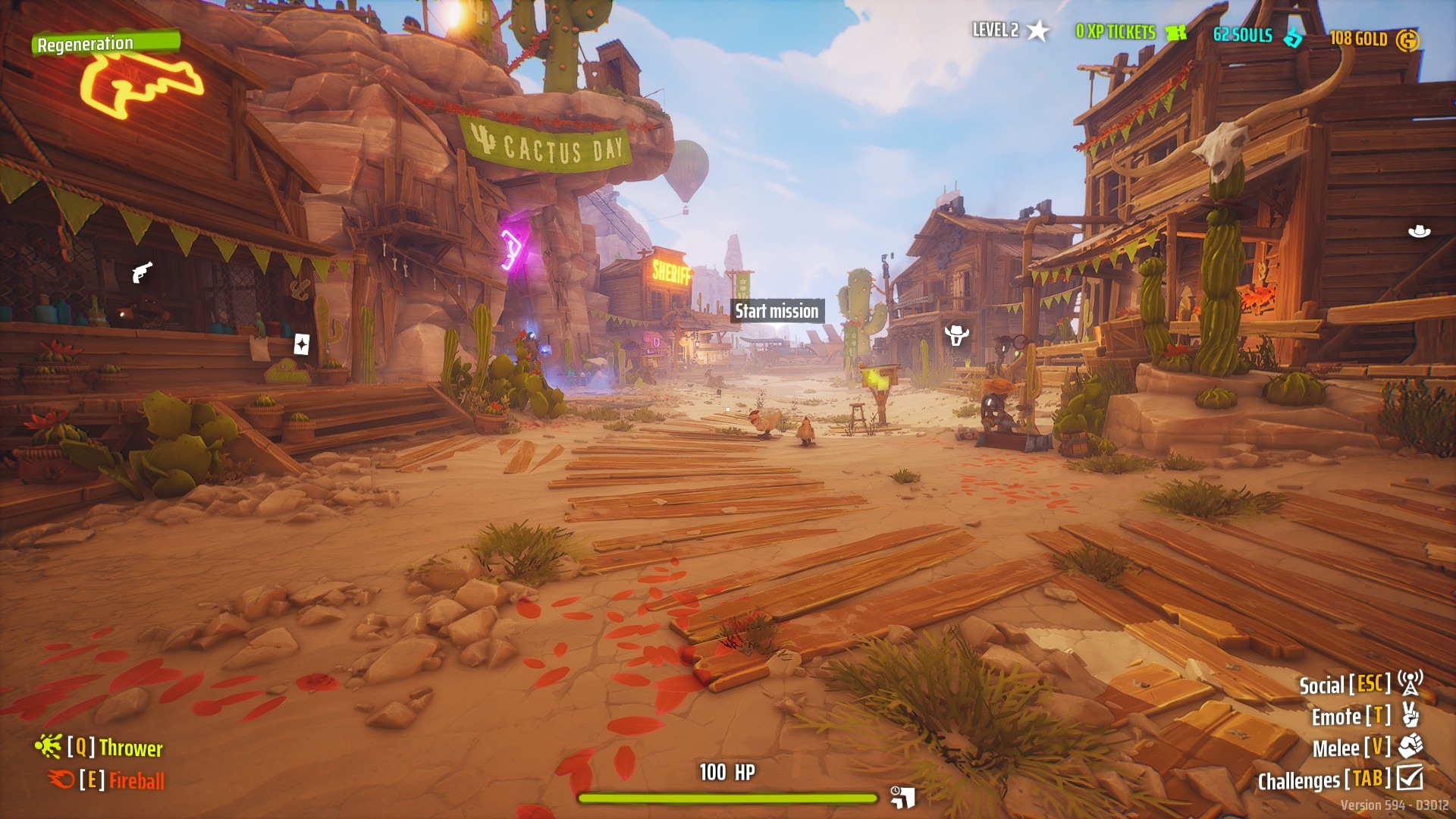
At its core, Far Far West is structured around repeatable, session-based missions that lean heavily into roguelite design principles. Players operate out of a central hub where they select contracts, prepare their loadouts, and then deploy into hostile regions filled with enemies, objectives, and escalating danger.
Each run follows a rhythm that will feel familiar to anyone who has spent time with modern co-op shooters, but it is executed with a level of efficiency that keeps it engaging. You enter a map, begin exploring, encounter resistance almost immediately, and gradually build momentum as you complete objectives and collect upgrades. As the run progresses, difficulty ramps up in a way that feels organic rather than artificially gated, culminating in a boss encounter that acts as both a mechanical test and a pacing reset.
What gives this loop its staying power is the constant tension between risk and reward. Players are rarely forced to extract early, but staying longer increases both the potential payoff and the likelihood of failure. This creates a subtle but persistent pressure that shapes every decision, from how aggressively you engage enemies to how much of the map you choose to explore before heading out.
Importantly, the game avoids overcomplicating this structure. Objectives are clear, progression is easy to understand, and the feedback loop is immediate. You always know what you are doing and why, which helps maintain a strong sense of flow even during chaotic encounters.
There is also a notable emphasis on pacing. Runs are designed to be relatively short, which makes the game easy to pick up in short sessions, but they are dense enough that they never feel disposable. Even unsuccessful runs tend to provide some form of progression, ensuring that time spent in the game rarely feels wasted.
Over time, however, the limits of the current content pool begin to show. The structure itself remains engaging, but the repetition of mission types and environmental layouts becomes more noticeable after extended play. This does not break the experience, but it highlights the importance of future updates in sustaining long-term interest.
Combat and Mechanics
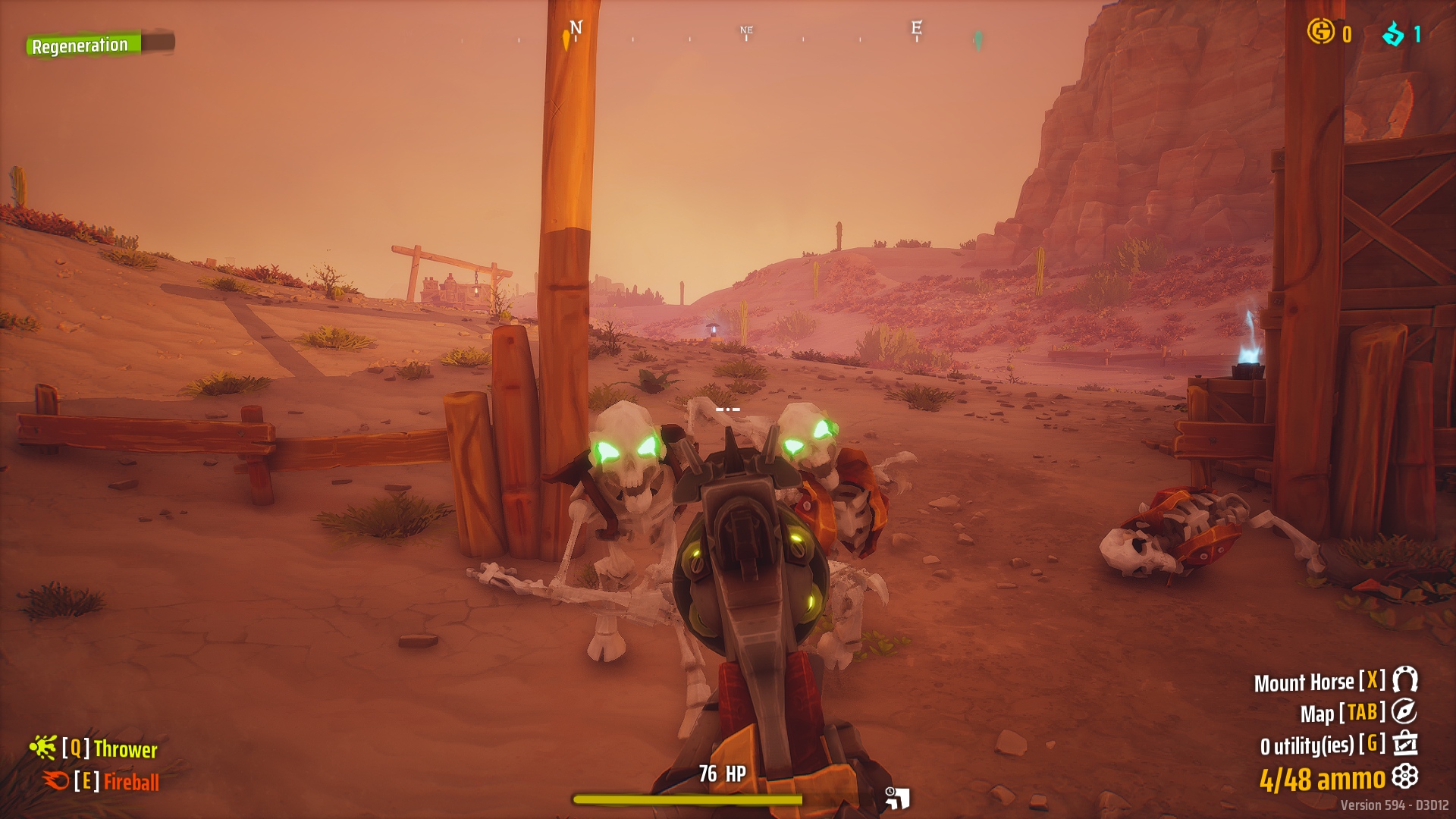
Combat is where Far Far West establishes most of its personality. Instead of relying solely on traditional gunplay, the game introduces a hybrid system that blends firearms with magical abilities, creating encounters that feel fast, unpredictable, and often chaotic in a controlled way.
Weapons handle with a clear emphasis on responsiveness rather than realism. Shooting feels immediate, with strong audiovisual feedback that reinforces every hit. There is little in the way of simulation or weighty ballistics; instead, the focus is on keeping players in constant motion and encouraging aggressive playstyles.
The addition of spells significantly expands what would otherwise be a fairly standard shooter foundation. Abilities can be used for offense, crowd control, mobility, or utility, and they integrate seamlessly into the moment-to-moment flow of combat. Rather than feeling like separate systems, gunplay and spellcasting feed into each other, allowing players to chain actions together in ways that feel fluid and intuitive.
This design encourages experimentation. Different combinations of weapons, perks, and abilities can dramatically alter how a run plays out, and discovering these interactions becomes part of the appeal. Some builds lean heavily into raw damage output, while others focus on mobility or area control, creating a level of variety that extends beyond simple stat upgrades.
Movement is equally important. The game expects players to stay active, reposition frequently, and react quickly to changing situations. Standing still is rarely viable, especially in later stages of a run where enemy density increases and encounters become more chaotic.
That said, the system is not without its shortcomings. Enemy variety, in particular, feels somewhat limited in the current build. While individual encounters remain enjoyable thanks to the strength of the combat mechanics, the lack of diversity in enemy behaviors and designs can lead to a sense of familiarity that sets in sooner than it should.
Balancing is another area that continues to evolve. Some builds feel significantly stronger than others, and certain abilities can trivialize encounters when used effectively. This is not unusual for an Early Access title, but it does affect how consistently engaging the combat remains over longer sessions.

Co-op Design and Multiplayer Experience
Although Far Far West can technically be played solo, it is clearly built around cooperative play, and that focus shapes nearly every aspect of the experience. The difference between playing alone and with a full team is not just noticeable, but transformative, fundamentally changing both the pace and the feel of each run. In solo play, encounters tend to feel more methodical and, at times, more punishing, as the player is responsible for every objective, every enemy wave, and every recovery decision without support.
In contrast, a full team introduces a natural rhythm of shared responsibility, where players can split objectives, revive each other in critical moments, and combine abilities in ways that create a far more dynamic and forgiving flow. Combat becomes less about survival at all costs and more about controlled chaos, with overlapping skills and coordinated movement turning overwhelming situations into memorable highlights. This shift not only makes the game more accessible, but also significantly more expressive, as the underlying systems reveal their full potential when multiple players are actively interacting with them.
In co-op, the game comes into its own. The chaos of combat becomes something that can be managed rather than endured, as players coordinate their abilities, revive each other, and divide responsibilities during objectives. This creates moments of emergent gameplay that feel unscripted and often memorable, whether it is a narrowly successful extraction or a last-second rescue during an overwhelming fight.
The design of missions reinforces this cooperative emphasis. Objectives often benefit from being tackled simultaneously, and the ability to split up and regroup adds a layer of strategy that is largely absent in solo play. Communication, even at a basic level, enhances the experience significantly.
Solo play, by contrast, can feel like a compromise. While it is entirely possible to complete missions alone, the balance does not always adjust in a way that makes this feel equally satisfying. Encounters can become more punishing, and the absence of team dynamics removes a large part of what makes the game engaging.
This does not make solo play unviable, but it does make it less appealing. Players who prefer single-player experiences may find that the game lacks the depth or balance needed to sustain long-term interest in that mode.
On the technical side, multiplayer performance is generally stable, with only occasional issues arising during high-activity sessions. Early server strain appears to have been addressed, and the overall experience is reliable enough that it rarely interferes with gameplay.
Progression and Replayability
Progression in Far Far West is structured around both long-term upgrades and run-specific modifiers, creating a layered system that supports repeated play. Completing missions rewards players with resources that can be used to unlock new weapons, abilities, and enhancements, gradually expanding the range of available playstyles.
This long-term progression is complemented by temporary upgrades acquired during individual runs. These modifiers can have a significant impact on gameplay, sometimes reinforcing an existing build and other times pushing it in unexpected directions. The result is a system that keeps runs feeling dynamic, even when the underlying structure remains consistent.
One of the more effective aspects of this design is how it encourages experimentation. Players are not locked into a single approach, and the game rewards those who are willing to try different combinations and adapt to what they find during a run.
However, the overall sense of progression is somewhat constrained by the current scope of the game. Unlocks are meaningful, but the pool of content they draw from is still limited. After a certain point, players may find that they have seen most of what the game has to offer, even if they continue to enjoy the core loop.
Replayability, therefore, is driven more by the inherent fun of the gameplay than by the breadth of content. This works well in the short term, but it places pressure on future updates to expand the game in ways that maintain player interest over time.
World Design and Atmosphere
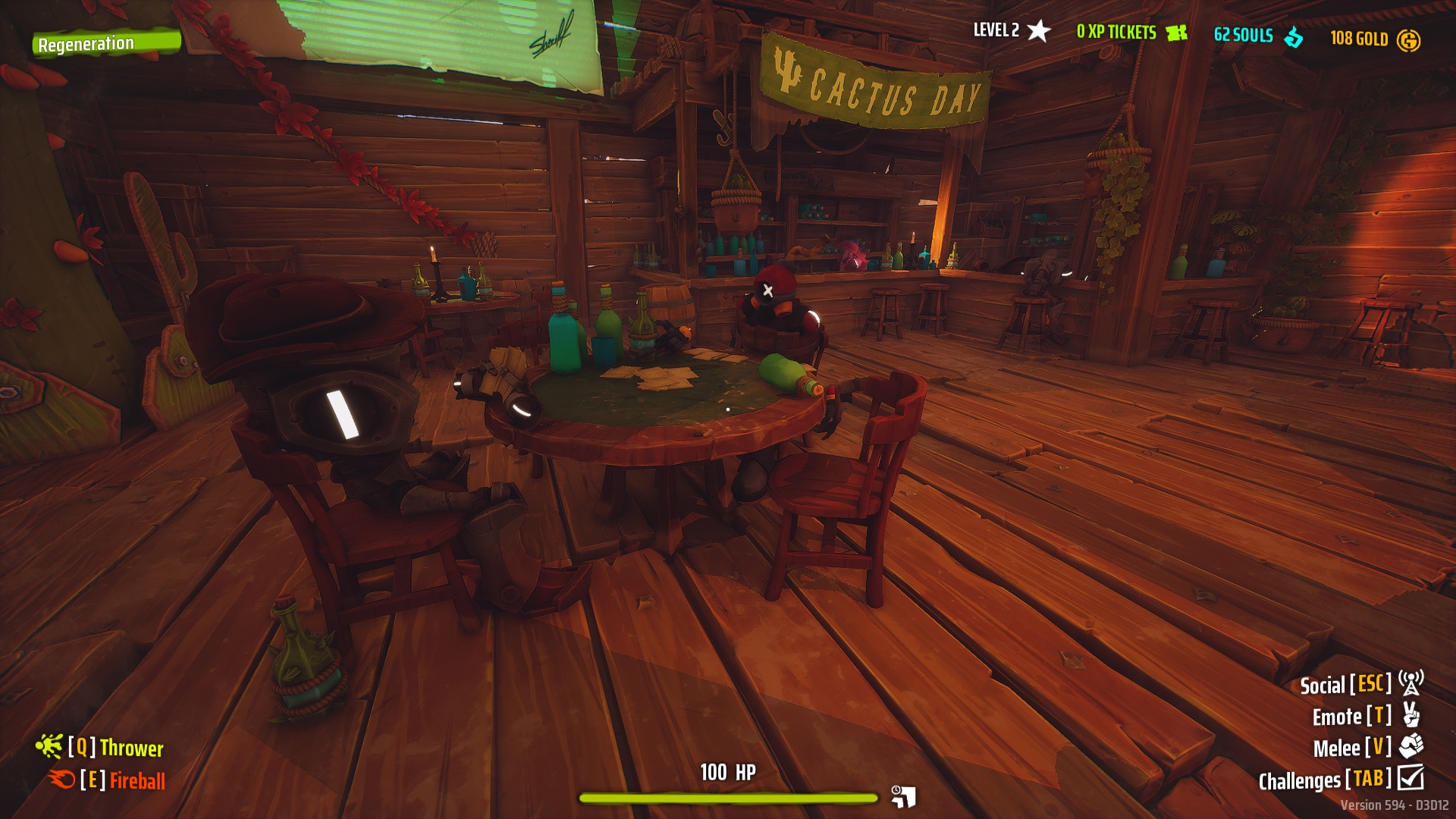
The setting of Far Far West is one of its most distinctive elements, blending Western iconography with science fiction and supernatural themes in a way that feels playful rather than forced. Robot cowboys, strange creatures, and surreal environments combine to create a world that is immediately recognizable yet consistently surprising.
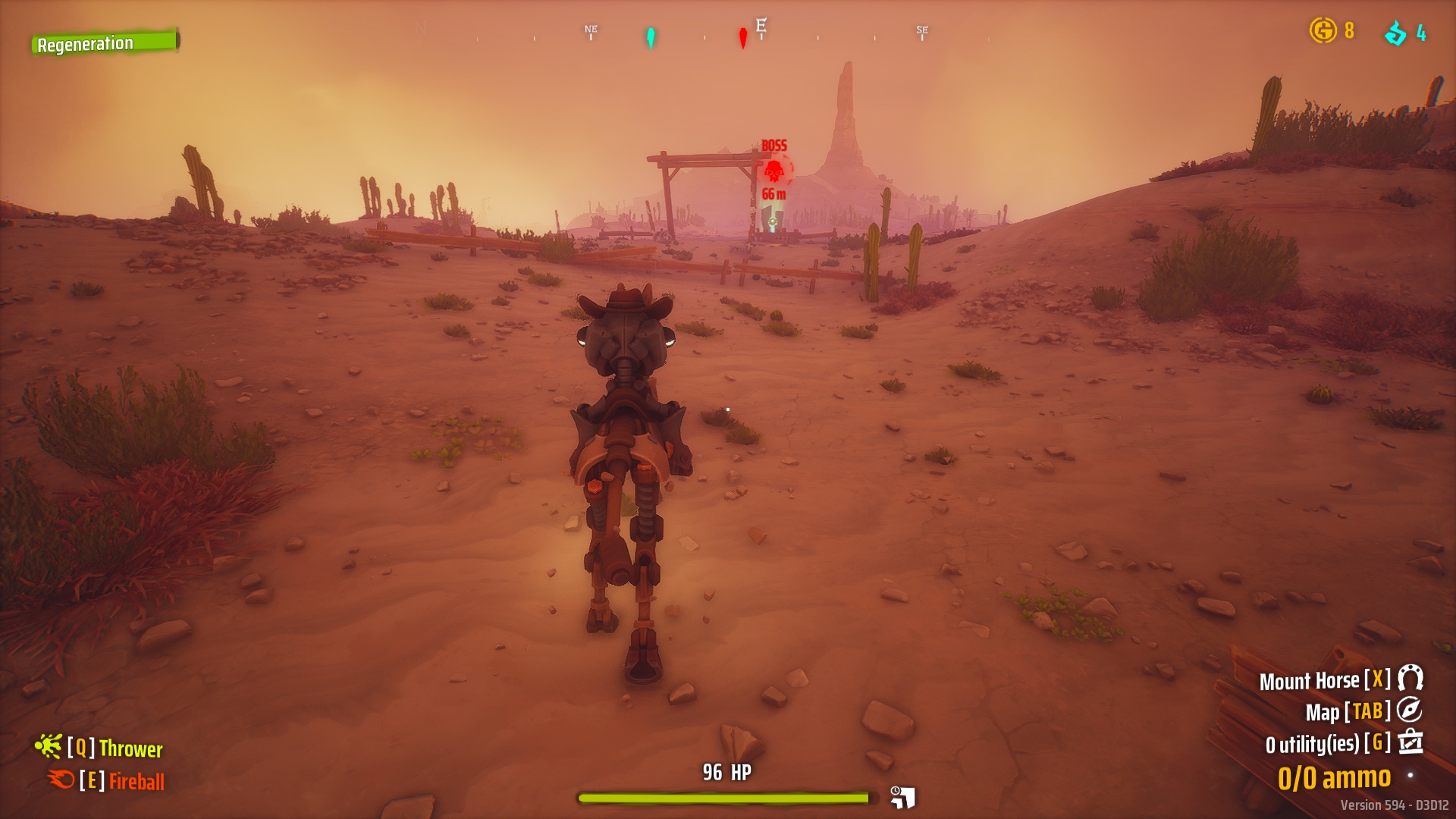
What makes this setting work is the game’s willingness to fully commit to its tone. It does not attempt to justify its more unusual elements or ground them in realism. Instead, it embraces the absurdity of its premise and builds a consistent aesthetic around it. Environments are varied enough to provide visual interest, though they are not yet as diverse as they could be. Each region has its own identity, but the number of distinct biomes is currently limited, which contributes to the sense of repetition that emerges over time.
The hub area serves as a functional space for managing progression and preparing for missions. While it lacks the depth or interactivity of more narrative-driven games, it fulfills its role effectively without becoming a distraction.
Storytelling is intentionally minimal. There is little in the way of a traditional narrative, and what exists is conveyed through environmental details and light contextual elements. This approach aligns with the game’s focus on gameplay, but it also means that players looking for a deeper narrative experience may find it lacking.
Visuals and Presentation
Visually, Far Far West strikes a balance between stylization and modern graphical fidelity. The art direction leans into bold colors, exaggerated designs, and strong contrasts, creating a look that complements the game’s energetic gameplay.
Character models, particularly the robotic protagonists, are expressive and distinct, with animations that emphasize movement and personality. Enemy designs are varied enough to remain visually interesting, even if their mechanical diversity is more limited.
Effects play a central role in the presentation. Explosions, spell effects, and weapon fire are all designed to be visually impactful, contributing to the sense of chaos that defines combat encounters. At times, however, this can become overwhelming, especially in larger co-op sessions where multiple players are triggering abilities simultaneously.
Environmental design is solid, with attention to lighting and atmosphere that helps bring each location to life. While not groundbreaking, it is more than sufficient to support the game’s overall tone.
Performance is generally stable, though not entirely consistent. On well-equipped systems, the game runs smoothly even during intense encounters, but less powerful setups may experience occasional drops in frame rate, particularly when the screen is filled with effects.
Audio and Sound Design
The audio design in Far Far West is effective without being particularly standout. Weapons sound appropriately impactful, with clear differentiation between different types of firearms. Spell effects add another layer of variety, reinforcing the hybrid nature of the combat system.
The soundtrack draws on Western influences while incorporating elements that match the game’s more fantastical aspects. It fits the tone well, even if it does not leave a lasting impression outside of gameplay.
One area where the game feels somewhat sparse is voice work. The lack of voice acting contributes to the minimalist approach to storytelling, but it also makes the world feel slightly less alive than it could be. Additional audio elements in this area could help enhance immersion without detracting from the game’s focus on gameplay.
Length, Replayability, and Longevity
In its current form, Far Far West offers a moderate amount of content that can sustain several hours of play before repetition becomes more apparent. The core loop remains enjoyable beyond that point, but the lack of variety in missions, enemies, and environments begins to limit long-term engagement.
Replayability is driven primarily by the strength of the gameplay systems rather than by a wide range of content. This works well for players who enjoy refining their skills and experimenting with different builds, but it may not be enough to retain those looking for a more expansive experience.
The long-term success of the game will depend heavily on how it evolves. Additional content, expanded systems, and continued balancing will be essential in maintaining player interest and building on the strong foundation that already exists.
PC Performance and Technical Aspects
From a technical standpoint, Far Far West lands in a fairly solid position for an Early Access release, but it is also where some of the game’s rough edges are easiest to notice. On a basic level, the game is accessible across a wide range of PC hardware, with a settings menu that provides enough flexibility to scale performance without overly compromising visual clarity. Players on mid-range systems should be able to achieve stable frame rates with some adjustments, while higher-end configurations can push the game comfortably into smoother territory with most settings maxed out.

Performance in moment-to-moment gameplay is generally stable during quieter sections, particularly in the early stages of a run where enemy density and visual effects are still relatively limited. Movement, aiming, and general responsiveness feel consistent, which is essential for a game that relies so heavily on fast reactions and constant repositioning. Input latency is low enough that it rarely becomes a concern, and the overall feel of the controls supports the game’s emphasis on fluid combat.
However, the picture becomes more mixed once the action intensifies. In later stages of a run—especially in full four-player co-op sessions—the combination of enemy swarms, overlapping particle effects, and environmental interactions can begin to strain performance. Frame rate dips are not constant, but they are noticeable enough to disrupt the otherwise smooth flow of combat, particularly on mid-tier hardware. This is compounded by the visual density of the game, where multiple abilities, explosions, and status effects can fill the screen simultaneously, making both performance and readability take a hit at the same time.
Optimization, then, feels functional but not fully matured. The game clearly prioritizes delivering its visual identity and gameplay responsiveness, sometimes at the expense of consistency under heavy load. This is not unusual for an Early Access title, but it does highlight an area where further refinement will have a meaningful impact on the overall experience. Continued optimization passes, especially targeting large-scale encounters, would go a long way in smoothing out these inconsistencies.
The game’s technical stability is otherwise commendable. Crashes and major bugs appear to be relatively rare, and most systems behave as expected. Minor issues do surface occasionally—such as brief stutters, UI inconsistencies, or small glitches during interactions—but they tend to be isolated rather than systemic. Importantly, none of these issues significantly undermine the core gameplay loop, though they do serve as reminders of the game’s in-progress state.
Multiplayer performance is another key component, given the game’s strong co-op focus. Here, Far Far West performs reliably in most situations. Matchmaking is straightforward, connections are generally stable, and sessions can be completed without major interruptions. Early launch periods saw some strain due to player demand, but the current experience feels far more consistent. Network latency is usually low enough that it does not interfere with combat responsiveness, which is critical for a game that depends on precise timing and coordination between players.
The game also demonstrates a degree of forward-looking support in terms of features. Controller compatibility is solid, making it viable not only on traditional PC setups but also on handheld devices. Performance on portable systems can vary, but with the right settings, the game remains playable, which speaks to a level of scalability in its design. This flexibility adds to its appeal, particularly for players who value the option to play across different types of hardware.
Another positive aspect is the visible pace of post-launch support. Updates have already begun addressing performance concerns, fixing bugs, and introducing incremental improvements to stability and features. This ongoing development is crucial for an Early Access title, and in this case, it suggests an active effort to refine the technical side of the experience alongside content expansion.
Overall, Far Far West delivers a technically competent experience that meets expectations for its current stage, even if it does not consistently exceed them. It provides a stable foundation with good baseline performance, but it also shows clear signs of needing further optimization, particularly in high-intensity scenarios. For most players, these issues will be manageable rather than prohibitive, but they remain an important factor in assessing the game as it continues to evolve.
Strengths and Weaknesses
One of the most striking strengths of Far Far West is how confidently its core systems interlock. The combination of responsive gunplay, flexible spellcasting, and a tightly structured roguelite loop creates a gameplay foundation that feels immediately satisfying and easy to understand, yet capable of sustaining longer sessions without losing momentum. There is a clarity to the design that works in the game’s favor; it rarely burdens the player with unnecessary complexity, instead focusing on delivering a fast, readable, and consistently engaging experience. This approachability makes it easy to jump in, but it is the underlying depth—particularly in how abilities and builds interact—that keeps players coming back.
The combat system deserves particular emphasis as a defining strength. The decision to merge traditional firearms with magical abilities is not just a stylistic flourish, but a mechanical one that meaningfully expands player expression. Encounters feel dynamic because players are constantly shifting between different tools, reacting to enemy behavior, and improvising based on the upgrades they acquire mid-run. This creates a sense of momentum that carries through entire sessions, where even familiar encounters can play out differently depending on the build. The game is at its best when it leans into this chaos, allowing players to experiment and discover combinations that feel powerful without being overly restrictive.
Equally important is the strength of the cooperative experience. Far Far West understands the appeal of co-op shooters at a fundamental level and builds around it with clear intent. Playing with others introduces a layer of emergent gameplay that elevates the entire experience, from coordinating abilities to recovering from near-failures in ways that feel organic rather than scripted. The game naturally generates memorable moments, whether through narrowly successful extractions or unexpected synergies between players’ builds. This sense of shared unpredictability is one of its most compelling qualities and a major reason why it resonates so strongly with its audience.
Another notable strength is the game’s pacing. Runs are structured in a way that respects the player’s time without feeling shallow. Sessions are compact but dense, delivering a satisfying arc of escalation, climax, and resolution within a relatively short timeframe. This makes the game particularly well-suited to repeat play, as it avoids the fatigue that can come from longer, more drawn-out experiences. Even when a run ends in failure, the sense of progression—both in terms of unlocks and player skill—helps maintain engagement.
At the same time, the game’s weaknesses are difficult to ignore, and most of them stem from its current stage of development rather than fundamental design flaws. The most immediate issue is the limited variety in content. While the core loop remains enjoyable, the relatively small pool of mission types, enemy variants, and environmental layouts begins to show its limits after extended play. Encounters that initially feel fresh can start to blur together, and the sense of discovery diminishes as players become familiar with the available content.
Balance is another area that remains uneven. Some builds and abilities feel significantly more effective than others, which can reduce the incentive to experiment once players identify particularly strong combinations. This is not uncommon in a roguelite, especially in Early Access, but it does affect the long-term depth of the system. Ideally, a wider range of viable builds would encourage continued experimentation rather than subtle optimization around a few dominant strategies.
The solo experience also stands out as a relative weakness. While it is functional and can be rewarding in its own way, it lacks the dynamism and flexibility of co-op play. The absence of teammates removes a key layer of interaction, and the balance does not always compensate in a way that makes solo runs feel equally engaging. As a result, players who approach the game as a primarily single-player experience may find it less compelling over time.
There are also smaller technical and presentation-related issues that, while not game-breaking, contribute to the sense that the game is still evolving. Performance can fluctuate during more chaotic encounters, and the visual intensity of combat occasionally impacts readability, particularly in full co-op sessions where effects overlap heavily. Additionally, the minimalist approach to storytelling, while consistent with the game’s priorities, may leave some players wanting a stronger sense of context or progression beyond the mechanical systems.
Ultimately, the strengths of Far Far West lie in its core design: a fast, cooperative, and highly replayable shooter that delivers consistent moment-to-moment enjoyment. Its weaknesses, by contrast, are largely tied to scope and refinement, areas that can—and likely will—improve over time. What exists now is a strong foundation that already succeeds in what it sets out to do, even if it has not yet reached its full potential.
Final Verdict: 7/10
Far Far West is an Early Access game that already feels more complete than many fully released titles in the same space. Its core loop is strong, its combat is engaging, and its cooperative design delivers exactly the kind of chaotic, rewarding experience it sets out to create.
At the same time, it is clearly a work in progress. Content limitations and balance issues are present, and the solo experience does not reach the same level as co-op play. These are important considerations, particularly for players deciding whether to jump in now or wait for future updates.
Even so, what is here already is easy to recommend, especially for those who enjoy cooperative shooters. The game provides a compelling foundation that, with continued support, has the potential to grow into something significantly more substantial.
For now, it stands as a confident and enjoyable entry into the genre—one that may not yet be fully realized, but is already well worth experiencing.