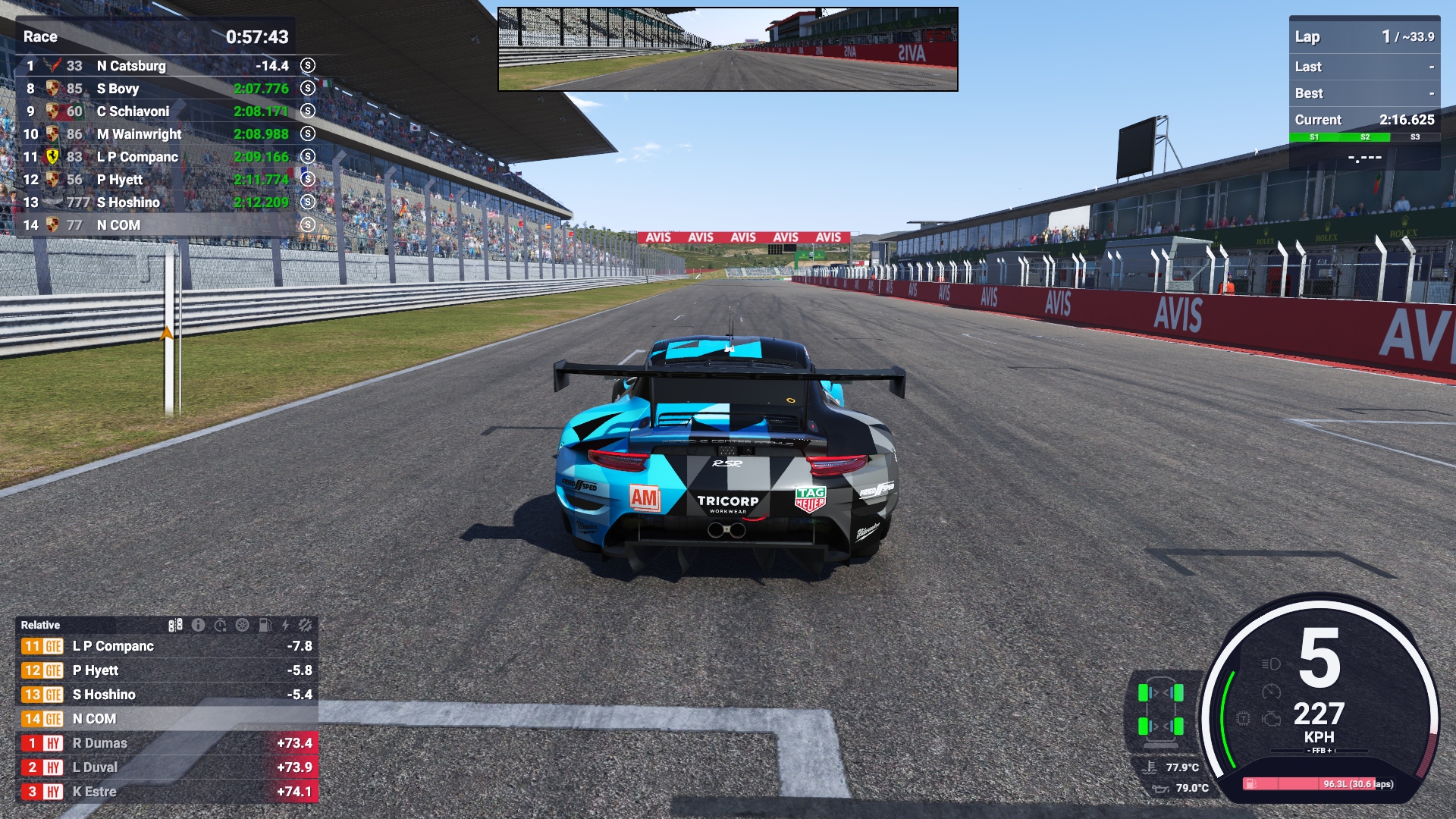
Le Mans Ultimate arrives with a clearly defined purpose and a very specific audience in mind, because it does not attempt to be a broad celebration of motorsport but instead focuses almost entirely on recreating the modern FIA World Endurance Championship with as much fidelity as possible. Developed by Studio 397, whose technical lineage can be traced back through rFactor 2, the game positions itself as a serious simulation rather than an accessible racing title, which immediately shapes expectations around what it offers and what it deliberately leaves out.
That focus results in a product that feels unusually confident in some areas while being noticeably underdeveloped in others, because the developers have clearly prioritized the driving experience above all else, even when that comes at the expense of structure, accessibility, and overall completeness. The result is a game that can feel exceptional when judged purely on how it drives, while simultaneously feeling frustrating when evaluated as a long-term platform that players are expected to invest time and money into.
Gameplay and Mechanics
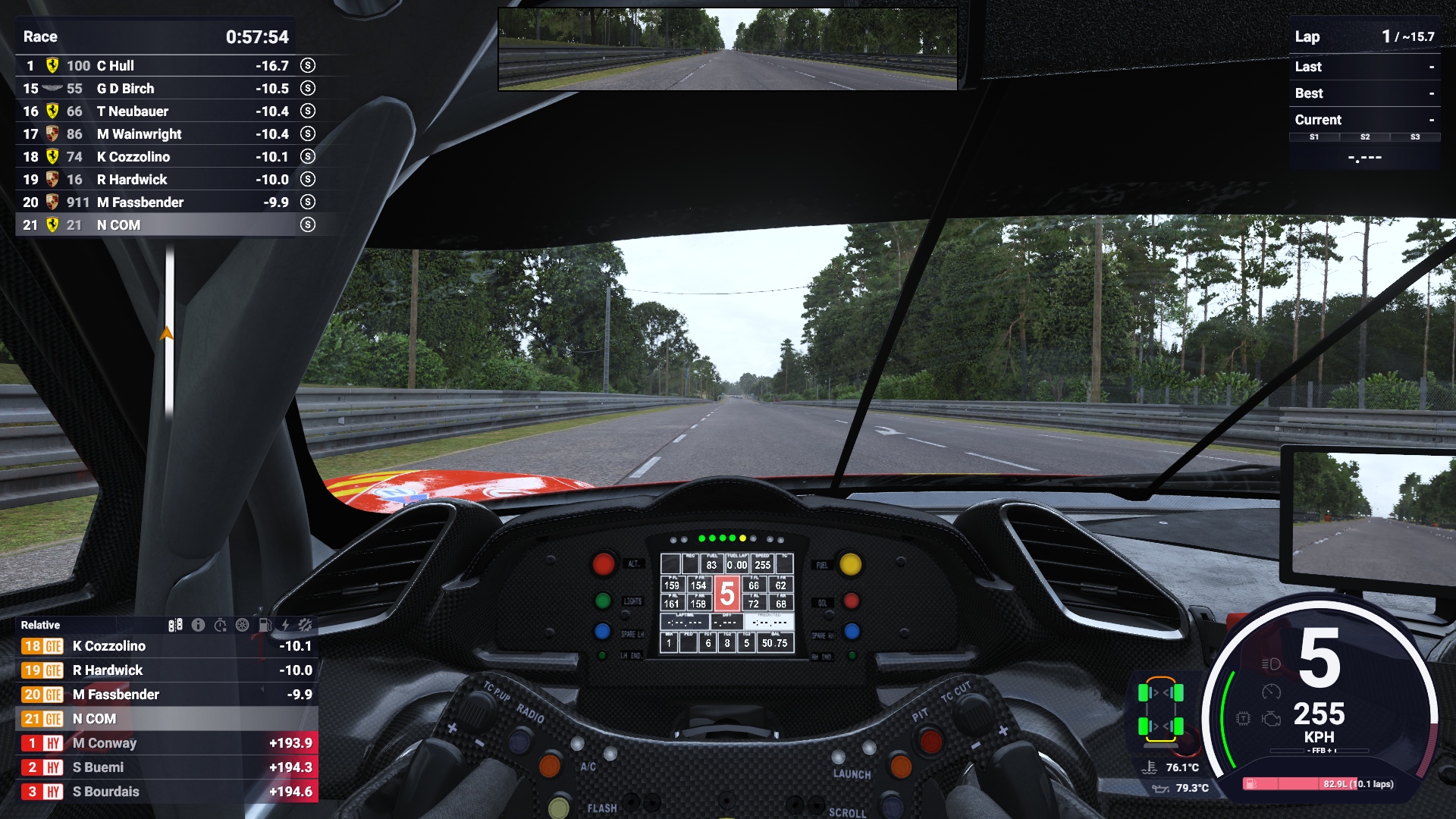
The core of Le Mans Ultimate is its driving model, which delivers a level of precision and nuance that stands out even within the simulation racing genre, because it captures the complex interplay between tire grip, suspension movement, and weight transfer in a way that feels both believable and consistently readable. The physics system emphasizes gradual transitions rather than abrupt changes, allowing players to sense when a car is approaching its limits and make small corrections before losing control entirely, which creates a driving experience that rewards patience and technical understanding rather than aggressive inputs.
This becomes particularly evident when driving high-performance Hypercars at circuits such as Circuit de la Sarthe, where stability at high speed must be balanced against the constant risk of overstepping grip under braking or corner entry, resulting in a driving rhythm that feels tense without becoming unpredictable. The feedback provided through a force feedback wheel is detailed enough to communicate subtle variations in surface conditions and tire behavior, which transforms the act of driving into something that feels physically engaging rather than purely visual.
At the same time, this level of fidelity introduces a clear divide between players using dedicated simulation hardware and those relying on controllers, because while controller support is present, it does not deliver the same level of precision or feedback, which makes the experience feel less intuitive and more difficult to interpret. The game does little to bridge this gap, reinforcing the impression that it is designed primarily for enthusiasts who are already comfortable with simulation racing conventions.
The learning curve reflects this philosophy as well, because even with assists enabled, the underlying systems remain complex enough that players must invest time in understanding how the cars behave across different conditions, which makes the experience deeply rewarding for those who commit to it but potentially alienating for those expecting a smoother introduction.
Monetization and DLC Structure
One of the most contentious aspects of Le Mans Ultimate is not the quality of its content but the way that content is structured and sold, because while the base game provides a foundation built around a specific WEC season, a significant portion of additional cars and circuits is locked behind paid downloadable content. This would not be unusual on its own, as post-launch expansions are common in racing games, but the scale and fragmentation of the DLC offering creates a very different perception.
Instead of feeling like occasional expansions that build on a complete base, the additional content can feel like essential pieces of the overall experience that have been separated and monetized individually, which becomes particularly noticeable when players realize that certain manufacturers, classes, or updated season content require separate purchases. This structure can give the impression that the base game is only a partial representation of the championship it aims to simulate, with the full experience effectively gated behind a growing list of paid additions.
For players who want to stay current with the evolving real-world championship, this model introduces an ongoing financial commitment that goes beyond the initial purchase, which can be difficult to justify when compared to other simulation titles that offer broader content packages within a single purchase or more traditional expansion structures. The issue is not simply the existence of DLC, but the cumulative effect of how much is locked away and how integral that content feels to the identity of the game.
This approach risks fragmenting the player base as well, particularly in multiplayer environments where access to certain cars or tracks may depend on individual ownership, which can complicate participation in events and reduce the sense of a unified community.
Content and Authenticity
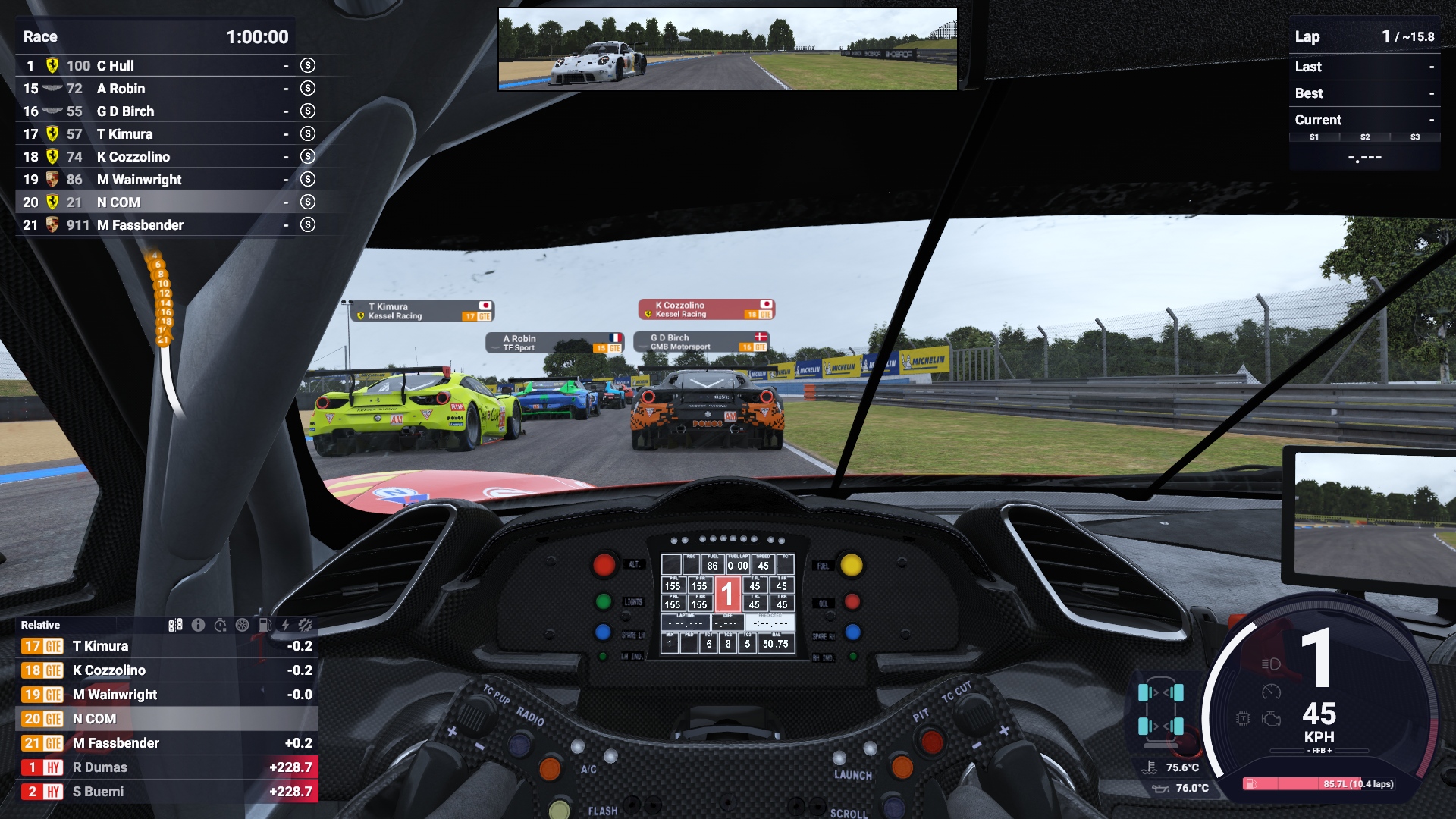
Despite the concerns surrounding its monetization, the actual content that Le Mans Ultimate delivers is undeniably strong in terms of authenticity, because it focuses on recreating the FIA World Endurance Championship with a level of detail that few racing games attempt. The inclusion of multiple classes, ranging from Hypercars to GT machinery, creates a racing environment defined by constant interaction between vehicles of different speeds, which introduces strategic and situational complexity that goes far beyond simple lap time optimization.
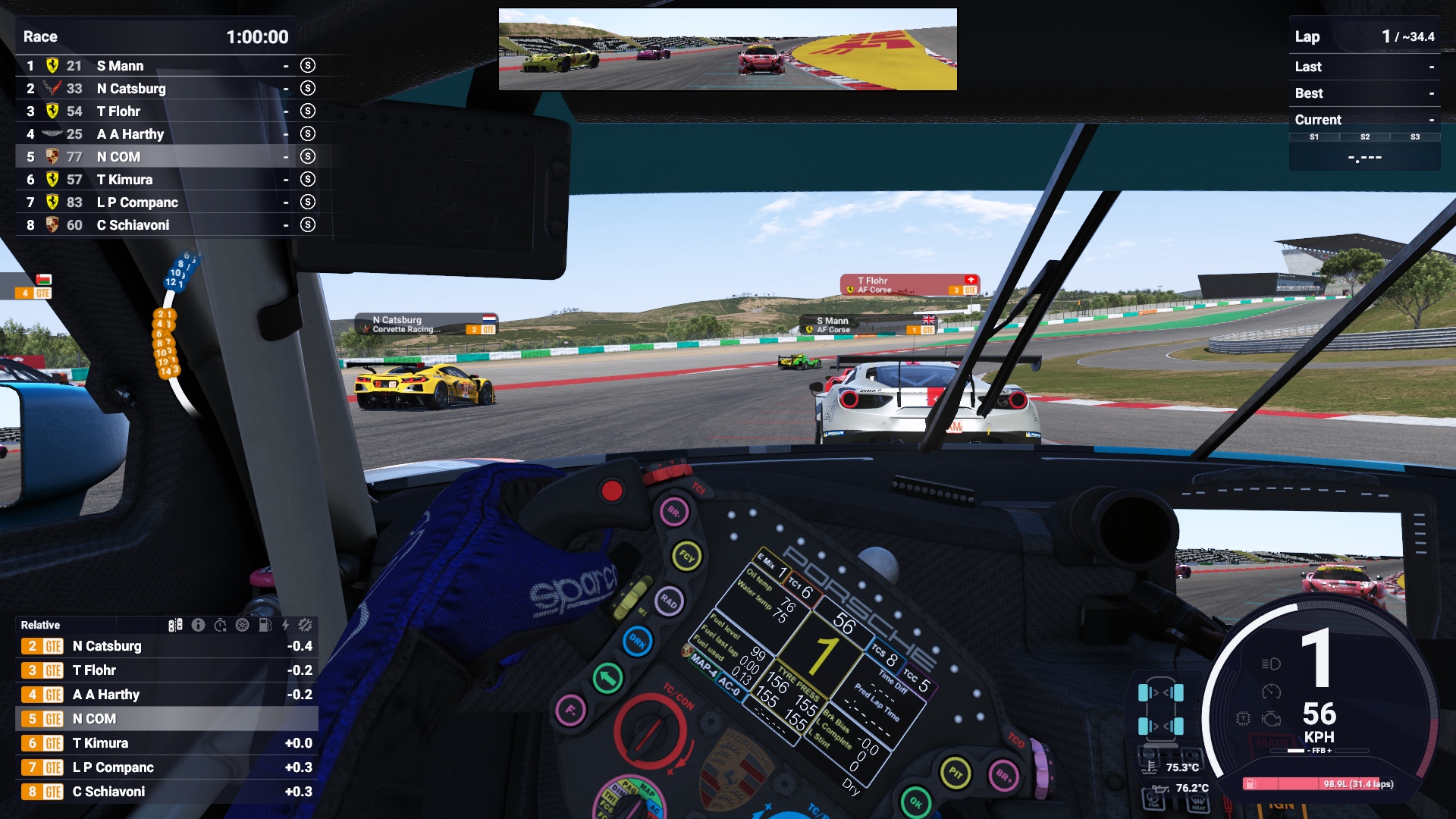
This multi-class structure is central to the experience, as faster cars must navigate slower traffic without compromising their pace, while slower classes must maintain predictable lines to avoid incidents, which results in races that feel dynamic and unpredictable in a way that single-class racing often cannot replicate. The circuits themselves are recreated with a strong emphasis on accuracy, and the use of track evolution systems ensures that grip levels change over time as rubber builds along the racing line, which directly affects braking distances and cornering behavior.
Dynamic weather and day-night transitions further enhance this sense of realism, as races evolve not only in terms of competition but also in terms of environmental conditions, with visibility, temperature, and surface grip shifting throughout an event. These elements combine to create an experience that feels cohesive and grounded in the realities of endurance racing, even if the surrounding structure does not always support it as effectively as it could.
Game Modes and Structure
The structural limitations of Le Mans Ultimate become increasingly apparent over extended play sessions, because the game does not provide a traditional career mode or championship progression system that would give players a sense of direction and long-term purpose. The primary single-player option is a customizable Race Weekend format, which allows for detailed configuration of sessions but ultimately functions as a sandbox rather than a guided experience.
This lack of progression has a noticeable impact on engagement, because even well-executed races can begin to feel disconnected from one another when there is no overarching framework tying them together, which reduces the incentive to continue playing beyond isolated sessions. While experienced simulation players may be comfortable creating their own challenges, the absence of structured goals makes it harder for the game to sustain interest over time.
Multiplayer provides a more developed framework, with ranked systems and organized events that can deliver highly competitive racing when conditions are right, although the experience remains dependent on player behavior and matchmaking consistency. The emphasis on multiplayer as the primary long-term mode reinforces the idea that the game is still evolving, because it feels as though its identity is being shaped around online competition rather than a balanced combination of online and offline experiences.
AI and Single-Player Experience
The artificial intelligence in Le Mans Ultimate is built on a foundation that understands the basic demands of endurance racing, particularly when it comes to multi-class awareness and maintaining consistent racing lines, which allows it to function reliably in structured scenarios where variables remain relatively predictable. AI-controlled cars are generally capable of navigating traffic without constant incidents, and they demonstrate an understanding of when to yield or hold position, which is essential in a discipline where different classes share the same track space.
However, the limitations of the system become increasingly apparent over longer sessions, because while the AI can behave convincingly in isolated moments, it lacks the adaptability and variation needed to create a dynamic racing environment over time. Drivers tend to follow similar patterns lap after lap, which reduces the sense of unpredictability that defines real-world endurance racing, and their responses to changing conditions such as weather shifts or evolving track grip can feel inconsistent or overly conservative.
These shortcomings are amplified by the absence of a structured single-player framework, because without a career mode or championship progression, there is little context to elevate individual races into something more meaningful. As a result, even when the AI delivers technically competent racing, the experience often feels like a series of disconnected simulations rather than a cohesive journey, which ultimately limits the long-term appeal for players who prefer offline play.
Multiplayer Experience
Multiplayer in Le Mans Ultimate represents both one of its most promising features and one of its most uneven, particularly for players who are not deeply embedded in the simulation racing ecosystem. While the underlying systems are clearly designed to support structured, competitive racing, the experience can vary significantly depending on timing, player population, and the consistency of matchmaking.
At its best, the ranked multiplayer environment delivers races that closely resemble organized endurance events, with players demonstrating a level of discipline and awareness that aligns with the game’s simulation-first design. The inclusion of safety ratings and driver rankings helps encourage cleaner racing, and when matched with similarly skilled participants, the result can be tense, strategic competition that makes full use of the game’s multi-class structure. In these scenarios, traffic management, consistency, and long-term decision-making become just as important as outright pace, reinforcing the authenticity the game aims to achieve.
However, this ideal experience is not always guaranteed. The player base, while dedicated, is relatively niche, which can lead to limited session availability depending on region and time of day. This sometimes results in smaller grids or mismatched skill levels, which undermines the consistency of competitive racing. Additionally, because access to certain content is tied to DLC ownership, not all players have access to the same cars or tracks, which can further fragment the multiplayer ecosystem and restrict participation in specific events.
There are also moments where racecraft breaks down, particularly in lower-ranked sessions, where incidents and inconsistent driving standards can disrupt races that would otherwise benefit from the game’s strong mechanical foundation. While this is not uncommon in online racing, the impact feels more pronounced here due to the precision required by the physics model, where even minor contact can have significant consequences.
Technical stability in multiplayer is generally solid, but not flawless, with occasional issues related to synchronization, session management, or connectivity that can interrupt the flow of events. These problems are not constant, but they contribute to the broader sense that the multiplayer component, like much of the game, is still evolving rather than fully matured.
Ultimately, multiplayer has the potential to serve as the long-term backbone of Le Mans Ultimate, offering the kind of structured, competitive environment that the single-player experience currently lacks. When everything aligns, it delivers some of the most engaging racing the game can offer, but its reliance on a relatively small, highly specific audience and its fragmented content structure prevent it from consistently reaching that level.
Graphics and Presentation
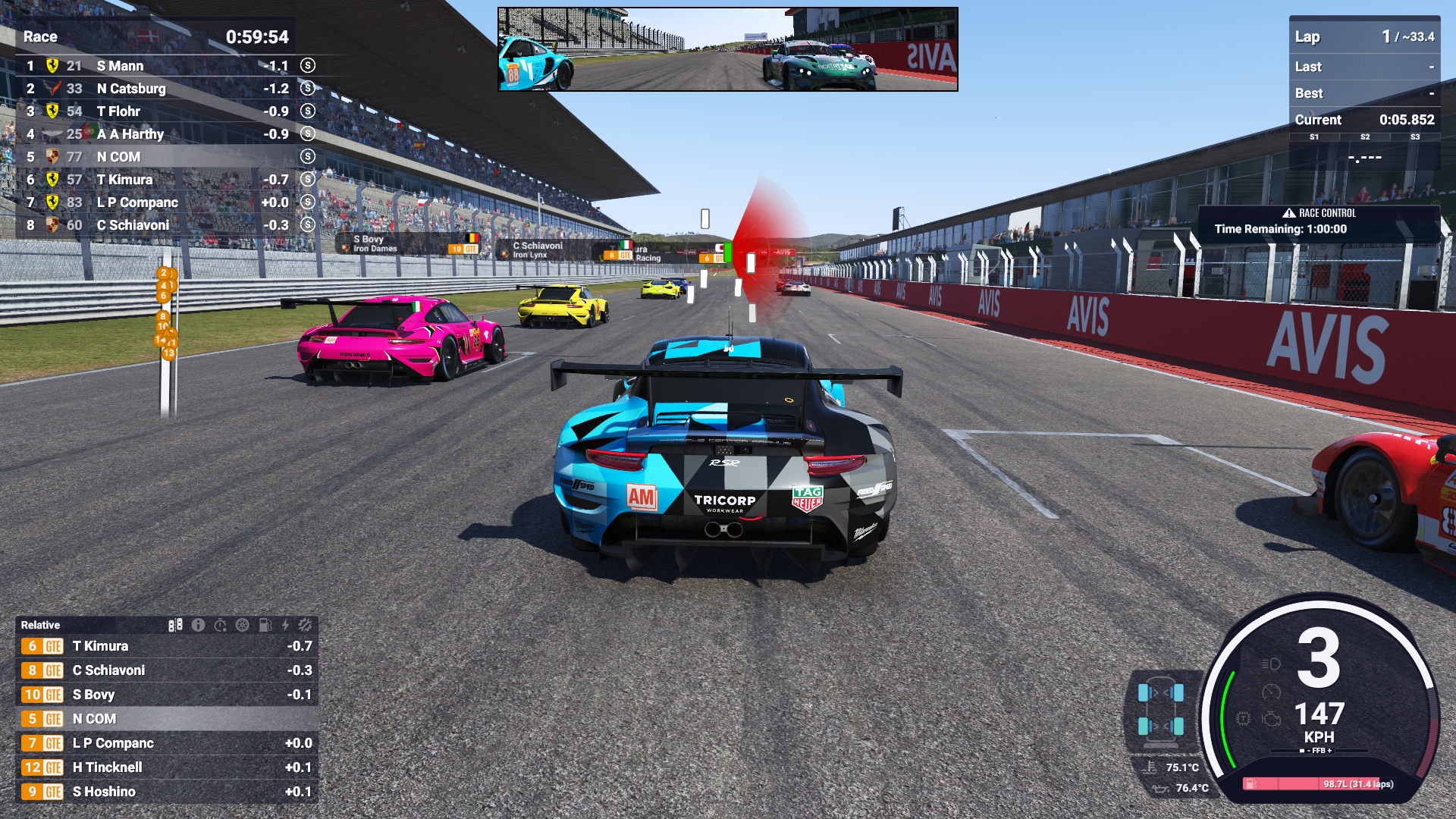
While Le Mans Ultimate does not attempt to compete with the most visually advanced racing titles on the market, its presentation is built around clarity and consistency, which aligns with its simulation-focused design philosophy. The lighting system is particularly effective, as it captures the gradual transitions between different times of day with a level of subtlety that enhances immersion without drawing attention away from the driving itself.
This becomes especially noticeable during endurance events that span multiple hours, where the shift from daylight to dusk and eventually to full darkness creates a natural sense of progression, reinforcing the passage of time in a way that feels integral to the experience rather than purely aesthetic. Night racing introduces additional challenges, as reduced visibility and reliance on headlights change how players approach braking points and corner entries, which adds another layer of complexity to already demanding driving conditions.
Weather effects further contribute to the overall presentation, as rain is not simply a visual overlay but an active element that alters track conditions, reduces grip, and forces adjustments in driving style. The accumulation of water on the racing surface and the resulting changes in handling create a convincing sense of interaction between environment and vehicle, even if the visual fidelity of these effects does not reach the same level as more graphically focused titles.
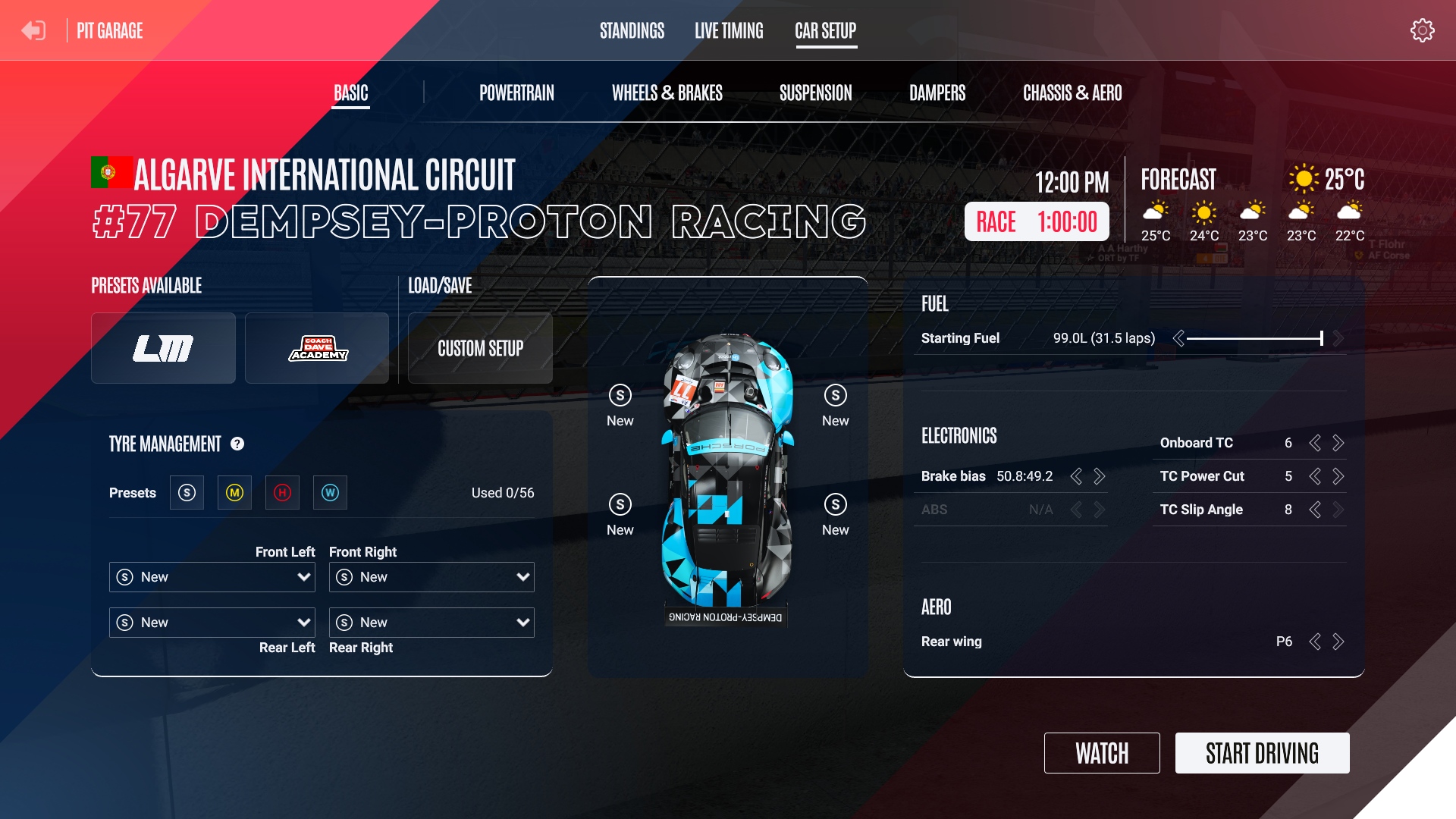
Despite these strengths, the presentation is held back by a user interface that lacks refinement, because menus can feel unintuitive and cumbersome to navigate, particularly when setting up race sessions or managing configurations. This disconnect between the quality of the on-track experience and the usability of the surrounding systems reinforces the impression that the game’s priorities are heavily weighted toward simulation accuracy at the expense of overall polish.
Audio Design
The audio design in Le Mans Ultimate plays a crucial supporting role in reinforcing the sense of immersion, because it provides a detailed and responsive soundscape that reflects the mechanical complexity of the cars without resorting to exaggerated or overly dramatic effects. Engine sounds are differentiated across classes in a way that makes each category feel distinct, with Hypercars delivering sharper, more aggressive tones while GT machinery produces a heavier and more grounded acoustic presence.
These differences are not merely cosmetic, as they contribute to situational awareness during races, particularly in multi-class scenarios where identifying the type of car approaching from behind can influence decision-making. The way engine notes respond to throttle input, gear changes, and load conditions adds another layer of feedback, allowing players to gauge performance and traction even without relying solely on visual cues.
Environmental audio elements, including tire noise, wind resistance, and the sound of contact with curbs or track surfaces, are integrated with a level of restraint that ensures they remain informative rather than distracting. This balance is important in a simulation context, where excessive or unrealistic audio design can undermine immersion, and in this regard, the game succeeds in maintaining a cohesive and believable auditory experience.
Over extended sessions, the consistency of the audio design helps sustain immersion, even if it does not aim to deliver the kind of dramatic flair found in more arcade-oriented racing games, because its primary function is to support the driving experience rather than dominate it.
Technical Performance on PC
Technical performance remains one of the more problematic aspects of Le Mans Ultimate, not because it fails outright, but because it lacks the level of consistency and optimization that players have come to expect from modern PC titles, particularly within a genre where precision and responsiveness are so important. While the game is capable of running smoothly under the right conditions, performance can fluctuate depending on factors such as grid size, weather effects, and time-of-day transitions, which introduces a degree of unpredictability that can be difficult to manage without careful adjustment of settings.
The most persistent and widely noticeable issue, however, is the length of loading times, which remain significantly longer than expected even on high-end systems equipped with solid-state drives, fast processors, and ample memory. These delays are not limited to initial startup but occur frequently when transitioning between sessions, loading into races, or even restarting events, which disrupts the overall pacing of the experience and makes repeated play sessions feel more laborious than they should.
This becomes particularly frustrating in a game that encourages experimentation with setups, race formats, and conditions, because the time required to load each scenario discourages players from engaging with these systems as freely as they might otherwise. Over time, the cumulative effect of these delays can erode the sense of immersion that the game works so hard to build through its driving mechanics and environmental systems.
In addition to loading times, occasional technical issues such as minor stutters, interface slowdowns, or inconsistencies in performance further contribute to the impression that the game is still in the process of being refined, rather than representing a fully optimized final product. While ongoing updates have addressed some of these concerns, the underlying issues have not been entirely resolved, which means that technical performance remains an important consideration for anyone evaluating the game as a long-term investment.
Final Verdict: 6.5/10
Le Mans Ultimate delivers an exceptional driving experience that stands as its defining achievement, because its physics model, force feedback, and approach to multi-class racing create moments that feel genuinely authentic and deeply engaging for players who are willing to invest the time required to understand its systems. At its best, it captures the essence of endurance racing in a way that few other games manage, offering a level of immersion that is rooted in mechanical accuracy rather than presentation.
At the same time, the game is held back by a combination of structural and practical issues, including the lack of meaningful single-player progression, the heavy reliance on DLC to access a complete version of its content, and technical shortcomings such as persistent long loading times that affect even high-end systems. These factors create a disconnect between the quality of the core driving experience and the overall usability of the product, making it difficult to recommend without reservations.
For dedicated simulation enthusiasts who prioritize driving feel above all else, the game offers a compelling and often rewarding experience that continues to improve over time, but for players seeking a more complete, polished, and accessible racing title, it remains a work in progress that has yet to fully realize its potential.