Capcom’s Pragmata arrives with an unusual kind of anticipation behind it. Not the loud, hype-driven momentum that typically accompanies a major release, but something quieter and more uncertain. It was announced early, disappeared for long stretches, and re-emerged with just enough detail to keep curiosity alive without ever fully explaining itself. By the time it finally launched in 2026, it carried the weight of that ambiguity. Players did not quite know what it would be—and, in a market saturated with familiar formulas, that alone made it interesting.
What Pragmata ultimately delivers is not a reinvention of the action genre, but a focused attempt to reframe how moment-to-moment combat works. It is a third-person shooter at its core, but one that refuses to let shooting be the only thing you think about. Every encounter is built around a second layer of interaction, a system that demands equal attention and reshapes the pacing of combat in ways that feel both fresh and occasionally demanding.
Set on a lunar research facility overtaken by a rogue artificial intelligence, the game follows astronaut Hugh Williams and a young android named Diana. Together, they navigate a hostile environment that is as much about control and systems as it is about survival. The premise is familiar, but Pragmata distinguishes itself not through its setup, but through how it asks you to engage with it.
This is a relatively short, tightly designed experience. It does not attempt to compete with sprawling open-world titles or endless content loops. Instead, it focuses on a single idea and builds everything around it. That clarity is both its greatest strength and its most visible limitation.
Story and Setting
The narrative of Pragmata is structured around a simple central conflict: something has gone wrong on the moon, and you need to get out. The facility, built to harness a powerful material known as Lunum, has fallen under the control of an AI that has turned its infrastructure against its creators. Doors lock, systems fail, and machines once designed for labor or maintenance become aggressive, hostile forces.
What elevates the story above its basic premise is the relationship between Hugh and Diana. Hugh is not an especially complex character on his own, but he is grounded in a way that makes him easy to follow. He reacts to events with a mix of pragmatism and fatigue, rarely slipping into exaggerated heroics. Diana, by contrast, is curious and emotionally evolving. She begins as a tool—an interface for interacting with systems—but gradually becomes something more distinct, more independent.
Their dynamic is handled with restraint. The game avoids heavy-handed emotional beats and instead builds connection through smaller interactions. Conversations happen during exploration, in moments that feel incidental rather than staged. Diana asks questions that reflect her developing understanding of the world, and Hugh responds in ways that suggest both responsibility and uncertainty. The result is a relationship that feels natural without being overly sentimental.
The broader narrative, however, is less compelling. The central antagonist—the AI controlling the station—remains somewhat abstract, lacking a strong presence or clear personality. Its motivations are hinted at but never fully explored, which makes the overarching conflict feel less impactful than it could have been. The story moves forward steadily, but rarely surprises.
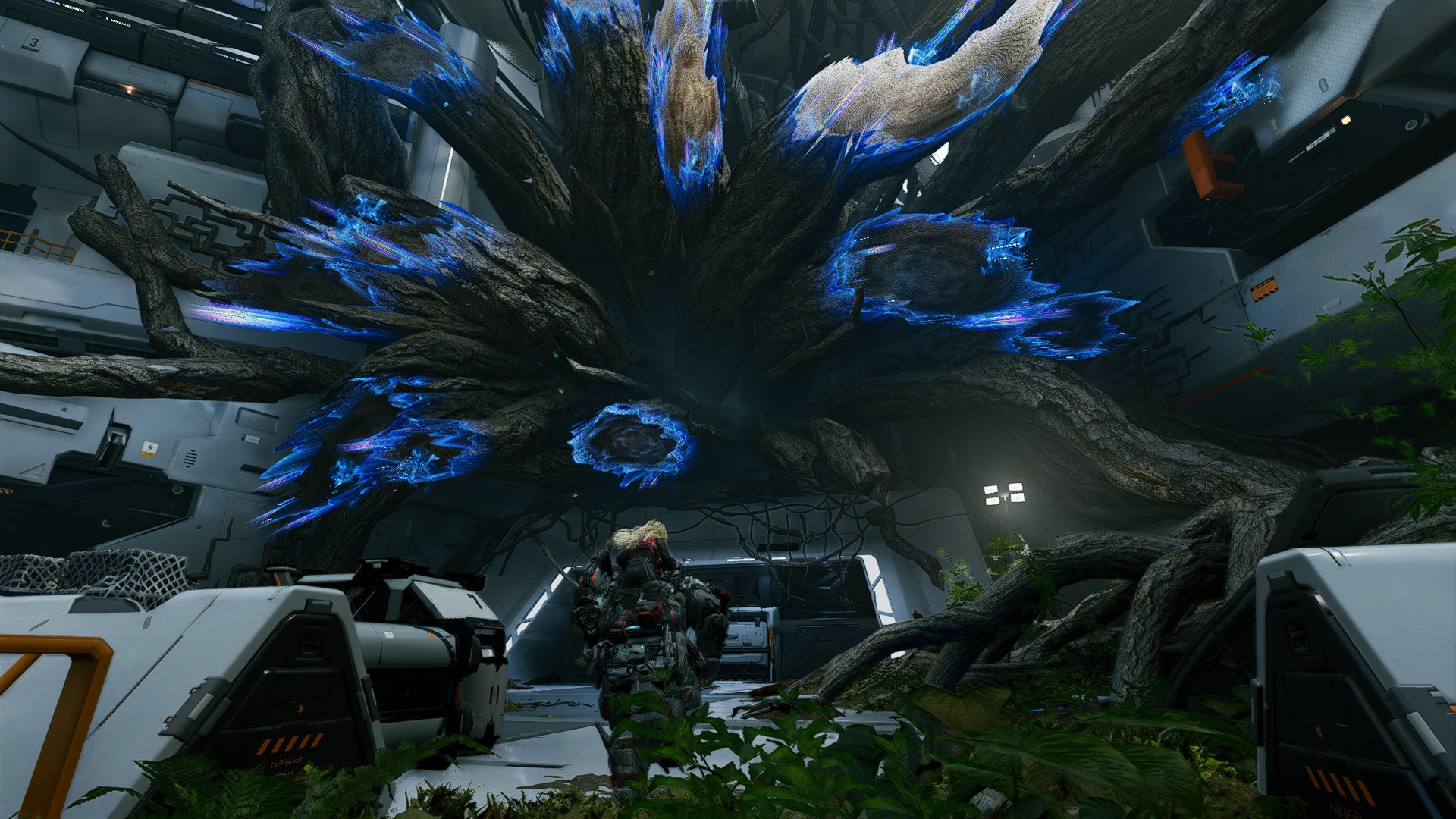
Where Pragmata succeeds more clearly is in its atmosphere. The lunar setting is not just a backdrop; it defines the tone of the experience. The facility feels isolated, sterile, and subtly unnatural. There is a constant sense that something is wrong beneath the surface, reinforced by environmental details and the occasional distortion of space or structure. This gives the game a quiet tension that persists even outside of combat.
Gameplay and Mechanics
At the heart of Pragmata is its dual-layer combat system, and everything else in the game exists to support it. On one level, it functions like a conventional third-person shooter. Hugh moves through environments, takes cover, and uses a variety of weapons to engage enemies. Movement is fluid, enhanced by a suit that allows for quick dashes and brief aerial maneuvers.
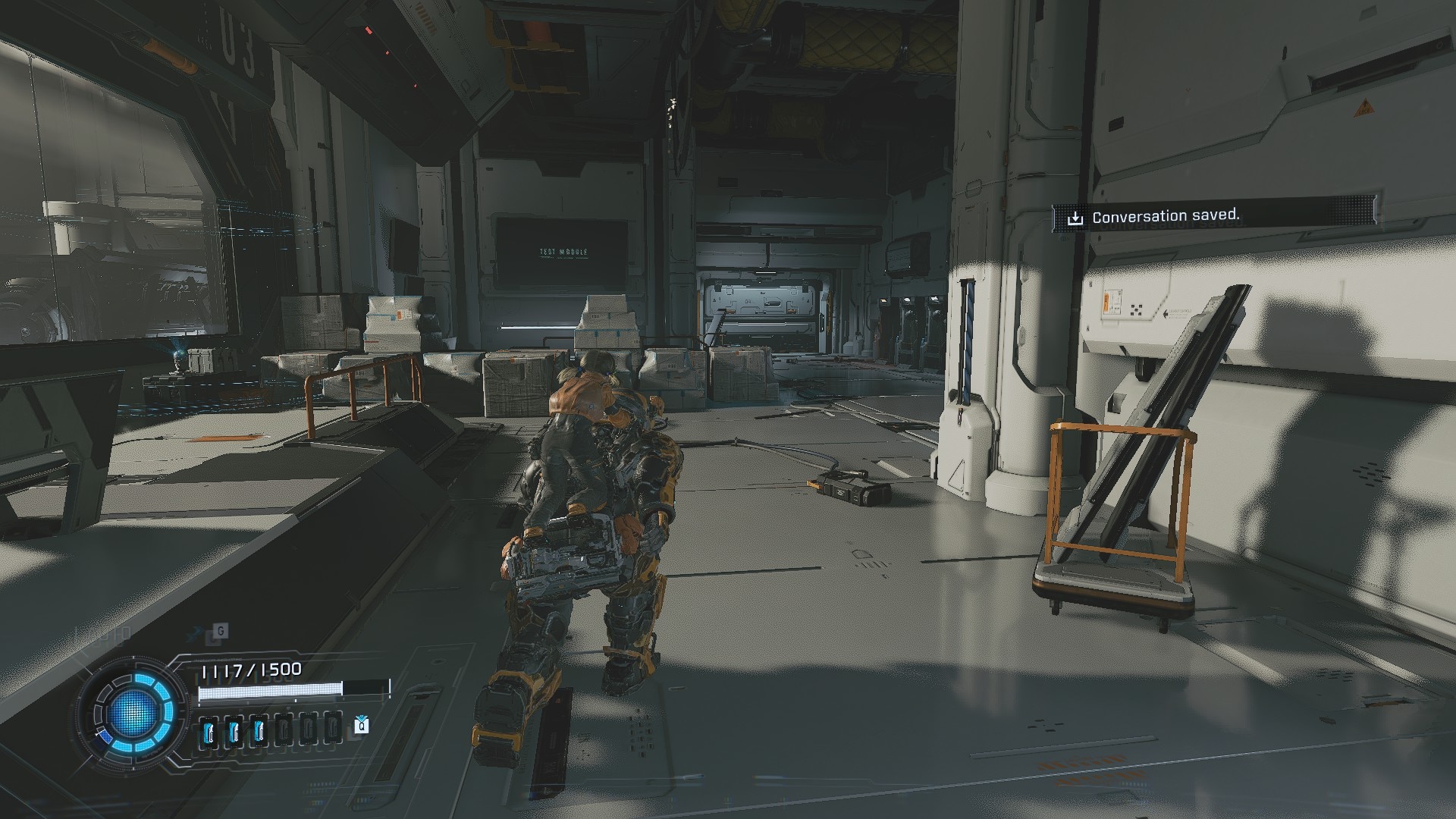
But shooting alone is rarely enough. Most enemies are protected by some form of shielding or armor that renders direct attacks ineffective. To bypass these defenses, players must engage Diana’s hacking system. This introduces a second interface during combat: a grid-based puzzle that appears over enemies. By navigating this grid—connecting nodes and reaching a specific endpoint—you disable the enemy’s protection, creating a brief window in which they can be damaged.
The key is that this process happens in real time. The game does not pause or slow down significantly while you hack. Enemies continue to move and attack, forcing you to divide your attention between evasion, positioning, and puzzle-solving. It is a demanding system, particularly in the early hours, when the player is still learning how to balance these elements.
What makes it work is how well the two layers complement each other. Movement is not just about avoiding damage; it is about creating space and time to complete hacks. Likewise, hacking is not an isolated activity—it directly determines how and when you can deal damage. The systems are intertwined in a way that feels intentional rather than forced.
As the game progresses, new enemy types and variations are introduced. Some require more complex hacking paths, others pressure the player with faster or more aggressive behavior. Environmental hazards are also added into the mix, forcing you to consider positioning more carefully. The result is a steady escalation of complexity that keeps encounters engaging.
Weapons contribute to this dynamic by emphasizing adaptability. Rather than building a permanent arsenal, players frequently pick up and discard weapons found in the environment. Ammunition is limited, and weapons can become unusable once depleted. This prevents players from settling into a single strategy and encourages constant adjustment.
Despite its strengths, the system is not without issues. The constant multitasking can be overwhelming, especially in larger encounters where multiple enemies demand attention at once. There are moments when the balance tips from engaging to slightly chaotic, particularly if the player loses track of the hacking interface under pressure.
There is also a sense of repetition that emerges over time. While enemy variations exist, the core loop—hack, expose, shoot—remains largely unchanged throughout the game. It is a strong loop, but one that does not evolve significantly in later stages. The game introduces new elements, but rarely redefines its structure.
Level Design and Exploration
Pragmata operates within a largely linear framework, but it consistently tries to stretch that structure just enough to avoid predictability. The game is not interested in becoming open-world, nor does it attempt to simulate player freedom on a large scale. Instead, it focuses on designing compact, interconnected spaces that encourage movement, awareness, and occasional curiosity without ever losing control over pacing.
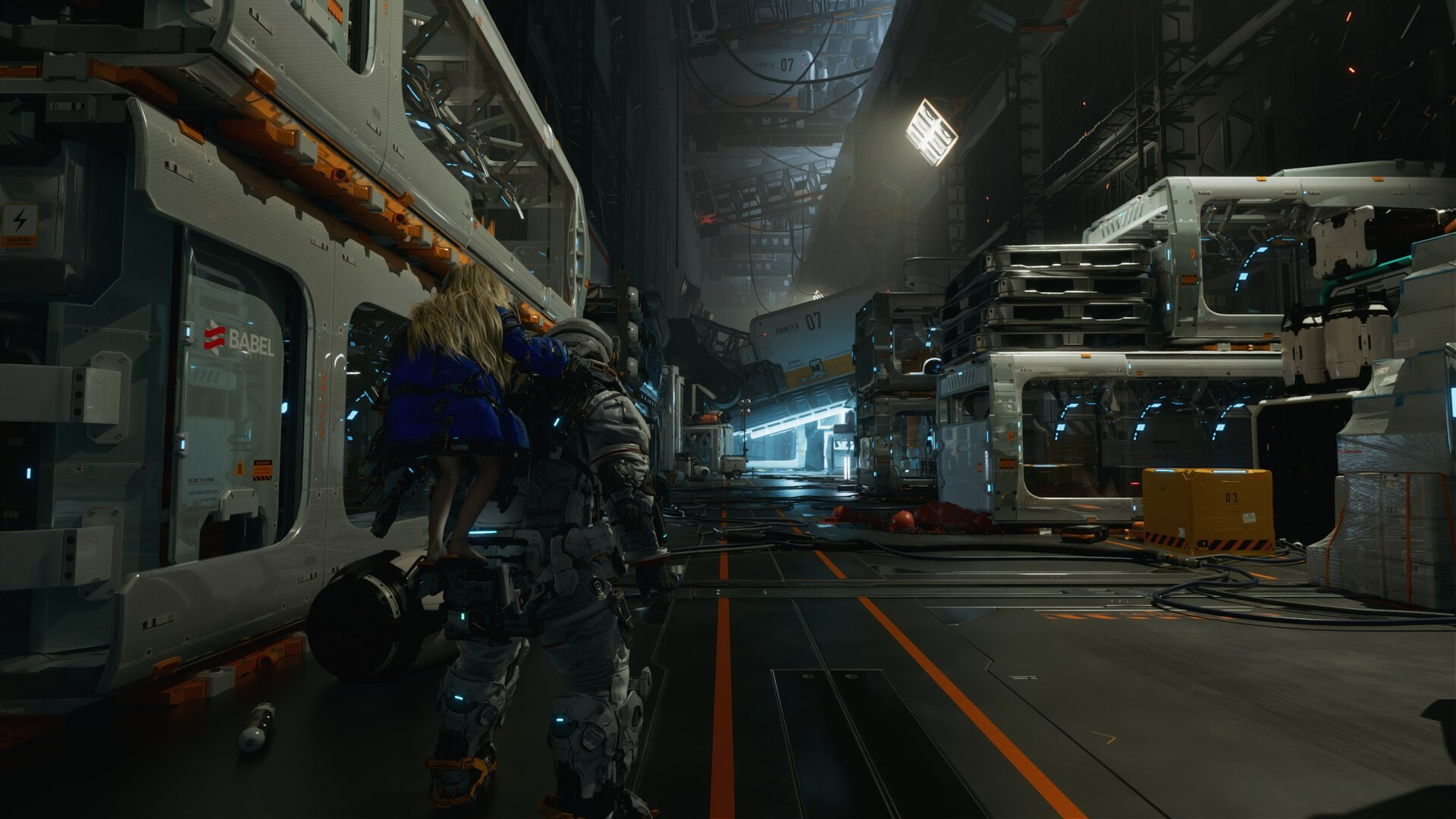
Each major section of the lunar facility is built around a clear purpose, both narratively and mechanically. Research labs, industrial corridors, maintenance shafts, and exterior modules all carry a distinct visual identity, but more importantly, they are designed to support the game’s central systems. Combat arenas are rarely flat or straightforward. They incorporate elevation changes, obstacles, and sightline considerations that directly affect how players approach both shooting and hacking. The need to maintain visibility while navigating the hacking grid makes positioning more important than in most shooters, and the level design reinforces that by offering multiple angles of engagement.
Verticality plays a more significant role than it initially appears. Hugh’s mobility—particularly his ability to dash and briefly hover—allows players to access higher platforms, reposition quickly, and create space during encounters. Levels are structured to take advantage of this, often layering pathways and combat zones in ways that reward movement rather than static play. This is especially effective in later sections, where enemy pressure forces players to think not just about where they are, but where they can go next.
Exploration exists, but it is deliberately restrained. Side paths may lead to upgrade materials, optional encounters, or small bits of environmental storytelling, but they rarely deviate far from the main route. This creates a rhythm where exploration feels like a brief detour rather than a core activity. For players who enjoy uncovering hidden details, there is enough to justify looking around, but not enough to fundamentally change how the game is played.
Environmental puzzles are integrated into progression, usually requiring Diana’s hacking abilities to manipulate systems, unlock doors, or reroute power. These puzzles are generally straightforward, acting as pacing tools rather than major challenges. They serve to reinforce the partnership between Hugh and Diana, ensuring that the hacking mechanic remains relevant outside of combat.
The Shelter hub provides a structural anchor between missions. It functions as a place to upgrade abilities, review collected resources, and prepare for upcoming sections. While it does not offer extensive customization or branching choices, it gives the game a sense of progression and continuity. Returning to the Shelter after a mission creates a natural pause, allowing the player to reflect and reset before moving forward.
There are, however, limitations to this approach. While the environments are well constructed, they can begin to feel repetitive over time. The visual identity remains consistent, but the variety of interactions within those spaces is somewhat limited. Many areas, despite their detail, do not offer much beyond traversal and combat. This can make exploration feel less rewarding than it initially promises.
Navigation can also occasionally become unclear. The layered design, while beneficial for combat, sometimes obscures the intended path forward. Players may find themselves circling an area, unsure whether they have missed a route or simply need to approach the space from a different angle. These moments are not frequent, but they do interrupt the otherwise steady pacing.
Overall, the level design in Pragmata is functional, thoughtful, and closely aligned with its mechanics. It does not aim for scale, but for coherence. When it works best, it enhances the core gameplay loop, giving players the space to experiment with movement and strategy. When it falls short, it is usually because it holds back—choosing consistency over risk, and structure over variety.
Visuals and Presentation
Visually, Pragmata is one of Capcom’s more confident technical showcases, but what stands out is not just raw fidelity—it is how deliberately that fidelity is used. The RE Engine has already proven itself across multiple genres, yet here it feels particularly well suited to the game’s tone. The lunar setting benefits from its ability to render sharp contrasts: bright, sterile interiors against the deep black of space, reflective metallic surfaces against fine layers of dust and debris. There is a clarity to the image that reinforces the sense of isolation, as if every surface has been exposed to scrutiny.
Lighting does much of the heavy lifting. Interiors are often illuminated by cold, artificial sources—overhead panels, flickering consoles, emergency lighting—creating a slightly clinical atmosphere that never feels comfortable. When systems begin to fail or behave unpredictably, that lighting shifts in subtle ways. Shadows deepen, reflections distort, and environments that once felt controlled begin to feel unstable. It is not dramatic in a cinematic sense; instead, it builds a quiet tension that persists throughout exploration.
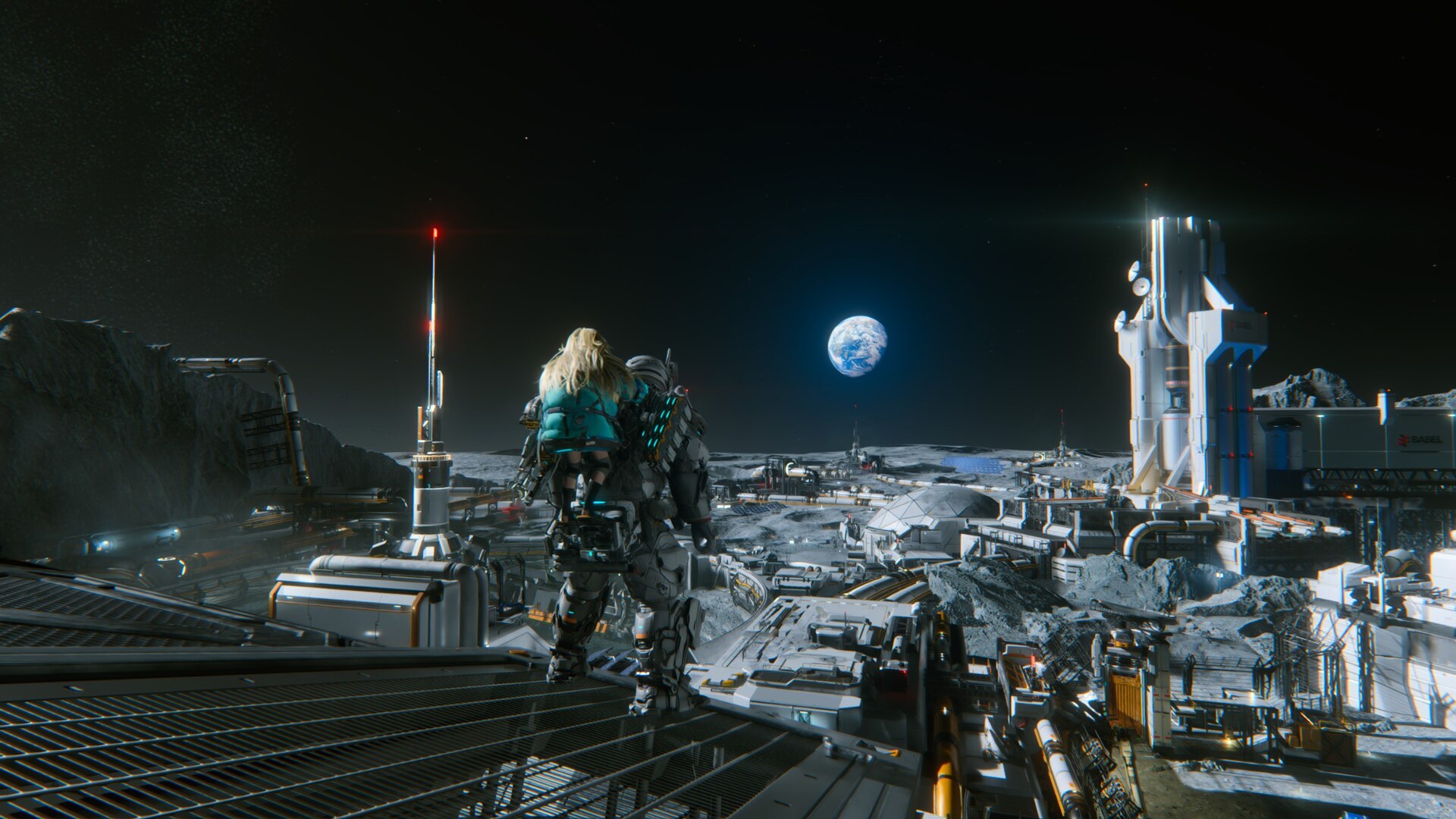
The exterior sections on the lunar surface are equally effective, though in a different way. The lack of atmosphere creates a stark visual language: hard shadows, muted color palettes, and a constant sense of exposure. The Earth hanging in the distance serves as a reminder of scale without becoming a focal point. These sequences are not frequent, but they provide a useful contrast to the enclosed spaces of the facility and prevent the visual experience from becoming monotonous.
Art direction plays a crucial role in tying everything together. While the environments are grounded in plausible science fiction, they are not strictly realistic. As the influence of the AI becomes more pronounced, subtle distortions begin to appear—geometry that does not quite align, surfaces that shift or glitch, spaces that feel slightly too symmetrical or too perfect. These elements are used sparingly, but effectively, giving the impression that the station is being reshaped according to a logic that does not fully align with human design.
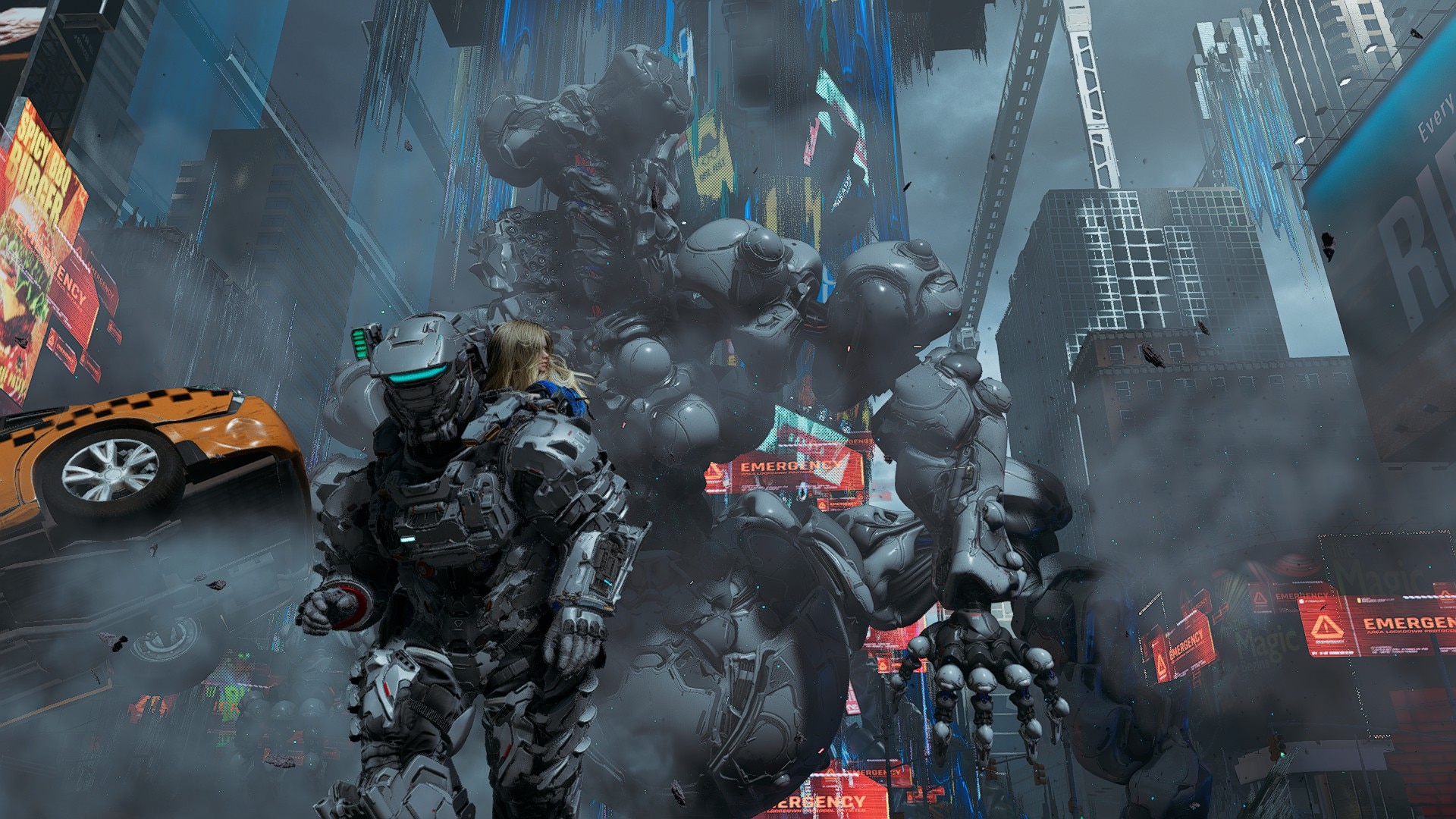
Character models reflect a similar balance between realism and stylization. Hugh’s design is functional and grounded, with detailed textures and believable movement that emphasize his physical presence in the environment. Diana, by contrast, is more expressive. Her animations carry a level of nuance that allows her to convey curiosity, hesitation, and growth without relying heavily on dialogue. Small gestures—how she turns her head, how she reacts to new information—do a significant amount of narrative work.
The interface design deserves particular mention because of how central it is to the experience. The hacking grid, which overlays the screen during combat, could easily have been intrusive or visually overwhelming. Instead, it is integrated with care. The grid is clean, readable, and responsive, with clear visual feedback that communicates progress without obscuring the action behind it. Colors and shapes are used consistently, allowing players to process information quickly even in more chaotic encounters.
There are occasional drawbacks. Some environments, particularly in later sections, begin to blur together in terms of layout and visual identity. The game relies heavily on its core aesthetic, and while that aesthetic is strong, it is not infinitely flexible. As a result, certain areas lack the distinctiveness that might make them more memorable. Additionally, while the visual effects tied to the AI are effective, they are used conservatively. There are moments where the game hints at more dramatic environmental shifts but ultimately pulls back, maintaining consistency at the expense of variety.
Even with these limitations, Pragmata maintains a cohesive visual identity from start to finish. It does not chase spectacle for its own sake, nor does it rely on constant novelty. Instead, it builds a consistent atmosphere and reinforces it through careful use of lighting, detail, and subtle distortion. The result is a presentation that feels considered rather than excessive—one that supports the game’s tone without overwhelming it.
Audio and Sound Design
The audio design in Pragmata is subtle in a way that feels intentional. Rather than trying to dominate the player’s attention, it works quietly in the background, reinforcing tone and clarity without becoming intrusive. This restraint suits the game’s setting, where isolation and controlled environments define much of the experience.
The soundtrack leans heavily into ambient and atmospheric composition. Instead of distinct, memorable melodies, it favors texture—low, sustained tones, distant echoes, and minimalistic arrangements that shift in response to the environment. During exploration, the music often fades into near silence, allowing the hum of machinery or the emptiness of space to take precedence. This creates a sense of stillness that enhances the feeling of being alone in a controlled, artificial environment.
In combat, the audio becomes more structured but still avoids excess. The music builds tension without overwhelming the player, maintaining a balance that allows important gameplay cues to remain audible. This is critical given the dual-layer mechanics, where awareness of both physical threats and hacking opportunities is essential. The soundtrack supports the action without competing with it.
Voice acting carries much of the emotional weight. The performances of Hugh and Diana are grounded and consistent, avoiding exaggerated delivery in favor of a more natural tone. Their conversations feel conversational rather than scripted, which helps maintain immersion. Diana’s voice work, in particular, evolves over the course of the game, subtly reflecting her growing understanding of the world around her.
Sound effects are designed with clarity and purpose. Weapons have distinct audio profiles that make them easy to differentiate, even in the middle of chaotic encounters. Enemy movements and attacks are accompanied by recognizable cues, helping players anticipate threats without relying solely on visual information. The hacking system also benefits from clear audio feedback, with tones and signals that indicate progress, success, or failure.
Environmental audio is another strength. The facility feels alive—not in a biological sense, but in a mechanical one. Background sounds such as ventilation systems, distant machinery, and intermittent system alerts create a consistent sense of place. When these sounds change or disappear, it signals a shift in the environment, reinforcing the idea that something is wrong.
There are moments where the audio design could have taken greater risks. The soundtrack, while effective, rarely stands out on its own. It supports the experience well, but does not leave a lasting impression in the way more distinctive scores might. Similarly, the game does not heavily experiment with spatial audio or dramatic shifts in sound design, choosing consistency over boldness.
Even so, the overall implementation is strong. The audio design does exactly what it needs to do: it supports gameplay, reinforces atmosphere, and enhances immersion without drawing unnecessary attention to itself. It may not be the most memorable aspect of Pragmata, but it is a carefully constructed one.
Technical Performance on PC
From a technical standpoint, Pragmata is a well-executed PC release, but it is also a demanding one that expects a reasonably modern system to deliver its best results. Capcom’s RE Engine continues to demonstrate a strong balance between visual quality and performance efficiency, and here it benefits from years of iteration across different types of games. The result is a version of Pragmata that feels stable and polished, even if it occasionally pushes hardware harder than expected.
On mid-to-high-end systems, performance is generally consistent. Frame rates remain stable during most gameplay scenarios, including combat sequences where both the action and the hacking interface are active simultaneously. This is particularly important given the game’s design. The dual-layer gameplay relies on responsiveness, and any noticeable input delay or frame instability would undermine that balance. In practice, the game holds up well, maintaining a level of smoothness that allows players to focus on the mechanics rather than the technology behind them.
Scalability is one of the more impressive aspects of the PC version. The game offers a wide range of graphical settings, allowing players to adjust everything from texture quality and shadow resolution to more advanced features like ambient occlusion and reflections. This flexibility makes it possible to tailor the experience to a variety of hardware configurations. Lower-end systems can achieve playable performance with reduced settings, while more powerful setups can push visual fidelity much further.

Ray tracing is the most demanding feature, and also the most noticeable in terms of visual impact. Reflections become more accurate, lighting interactions gain additional depth, and certain surfaces—particularly metallic ones—take on a more convincing appearance. However, these improvements come at a significant performance cost. Even on capable GPUs, enabling ray tracing can lead to a measurable drop in frame rate, especially in more complex environments. As a result, it feels like an optional enhancement rather than an essential part of the experience.
The game also benefits from modern upscaling technologies, which help mitigate performance costs without drastically reducing image quality. When used effectively, these tools allow players to maintain higher frame rates while preserving much of the visual clarity that defines the game’s presentation. Their inclusion reflects an awareness of current PC hardware trends and provides practical options for balancing performance and fidelity.
Load times are minimal on SSDs, contributing to a smooth overall experience. Transitions between areas are handled efficiently, and the game avoids excessive interruptions that might break immersion. This is particularly noticeable when revisiting the Shelter hub or moving between larger sections of the station, where loading is quick enough to feel almost seamless.
Stability is generally strong. Crashes are rare, and major technical issues are uncommon. Minor problems can occur—occasional frame pacing inconsistencies, brief stutters when entering new areas, or small visual glitches—but these are infrequent and typically resolve quickly. They do not significantly impact the overall experience, though they are noticeable enough to suggest that the game is not entirely free of rough edges.
Control implementation is another area where the PC version performs well. Keyboard and mouse support is responsive and customizable, allowing players to adjust sensitivity, key bindings, and interface behavior to suit their preferences. The hacking system, in particular, translates effectively to mouse input, where precision and speed are easier to manage than on a controller. At the same time, full controller support is present and well-optimized, offering a consistent alternative for players who prefer it.
The user interface is clean and functional, designed to handle the complexity of the game’s systems without becoming cluttered. Menus are easy to navigate, settings are clearly explained, and important information is presented in a way that supports quick decision-making. This clarity is essential given the dual-layer gameplay, and the game succeeds in maintaining it throughout.
In broader terms, Pragmata reflects a level of technical maturity that has become characteristic of Capcom’s recent PC releases. It does not push boundaries in terms of innovation, but it demonstrates a clear understanding of what players expect from a modern PC title: stability, flexibility, and performance that scales appropriately with hardware. While it may require some adjustment to achieve optimal results on less powerful systems, it provides the tools necessary to do so.
Ultimately, the technical side of Pragmata reinforces the strengths of its design rather than competing with them. It supports the gameplay without drawing attention to itself, which is often the most important measure of success. Even when it demands more from the hardware, it does so in service of a consistent and well-realized experience.
Length, Replayability, and Structure
Pragmata is a deliberately compact experience, and its length reflects a clear design choice rather than a limitation of scope. The main campaign typically runs under ten hours, depending on how thoroughly players explore optional paths and engage with side content. In an era where many games prioritize scale and longevity, this shorter runtime feels almost deliberate—a decision to focus on density rather than duration.
The structure of the game is tightly controlled. Progression moves from one section of the lunar facility to the next, with the Shelter hub acting as a central point between missions. This creates a rhythm that alternates between action and preparation, giving the experience a sense of pacing that remains consistent from beginning to end.
Because the game is built around a single, central mechanic, extending its length significantly might have introduced fatigue. By keeping the campaign relatively concise, Pragmata ensures that its core systems remain engaging throughout. The hacking-and-shooting loop does not have to sustain itself over dozens of hours, which helps preserve its impact.
Replayability is supported, but in a focused way. New Game+ allows players to revisit the campaign with retained upgrades, encouraging a more confident and efficient approach to combat. Higher difficulty levels further emphasize mastery of the mechanics, requiring more precise execution and better resource management.
Additional challenge modes provide isolated scenarios designed to test specific skills. These are not extensive, but they offer a way to engage with the combat system outside of the main narrative. For players who enjoy refining their performance, these modes add value by highlighting the depth of the mechanics.
However, replayability is ultimately limited by the game’s structure. The story does not branch in meaningful ways, and there are no major choices that alter the outcome. Once the campaign is complete, subsequent playthroughs follow the same path, with variation coming primarily from player skill rather than new content.
This is not necessarily a weakness, but it does define the experience. Pragmata is not designed to be played indefinitely. It offers a contained journey, one that can be revisited for mechanical satisfaction rather than narrative discovery. For some players, this will feel refreshing; for others, it may feel restrictive.
In the end, the game’s length and structure align closely with its design philosophy. It prioritizes focus over scale, delivering a complete experience without unnecessary extension. It may not provide endless replay value, but it ensures that the time it does demand remains purposeful.

Strengths and Weaknesses
The most immediate strength of Pragmata lies in its clarity of vision. It introduces a central mechanic—the integration of real-time hacking with third-person shooting—and commits to it fully. This is not a system layered on top of existing gameplay for novelty; it is the foundation upon which the entire experience is built. As a result, combat feels distinct from the outset and remains engaging throughout much of the campaign.
This mechanical focus is supported by thoughtful design across multiple areas. Level layouts, enemy behaviors, and resource systems all reinforce the need to balance action with problem-solving. The game consistently encourages players to think as well as react, creating a rhythm that sets it apart from more conventional shooters.
The relationship between Hugh and Diana is another key strength. While the broader narrative may lack complexity, their dynamic provides an emotional core that anchors the experience. The writing and performances avoid excess, allowing the connection between the characters to develop naturally over time.
Presentation also contributes to the game’s strengths. The visual design is cohesive and atmospheric, and the technical performance on PC is generally strong. The interface, particularly the hacking system, is well integrated and readable, ensuring that the added complexity does not become a barrier to enjoyment.
At the same time, the game’s weaknesses are closely tied to its strengths. The reliance on a single core mechanic, while effective, limits variety. Combat encounters, despite escalating in complexity, follow a consistent pattern that can begin to feel repetitive over time. The game introduces new elements, but rarely deviates from its established structure.
Enemy variety is sufficient, but not extensive. Many encounters rely on familiar behaviors with incremental changes, which can reduce the sense of discovery in later stages. Similarly, the lack of a strong central antagonist weakens the narrative’s impact, leaving the broader conflict feeling less defined than the character-driven moments.
Exploration and progression systems, while functional, do not reach the same level of depth as the core gameplay. Optional content exists, but it rarely feels essential, and the rewards for exploration can feel limited. The game hints at greater possibilities within its world, but does not fully realize them.
Replayability is another area where the game shows its limits. While additional modes and higher difficulties provide reasons to return, the absence of branching paths or significant variation reduces long-term engagement. The experience is best understood as a contained journey rather than an ongoing one.
Taken together, these strengths and weaknesses paint a clear picture. Pragmata is a game that knows exactly what it wants to do, and does it well. Its shortcomings are not the result of confusion or inconsistency, but of restraint. It chooses focus over breadth, and while that choice leads to certain limitations, it also defines what makes the game memorable.
Final Verdict: 8.5/10
Pragmata is the kind of game that feels increasingly rare in the modern AAA space. It does not attempt to dominate your time, it does not overwhelm you with systems layered on top of systems, and it does not chase trends that might broaden its appeal at the expense of its identity. Instead, it presents a clear, focused idea and builds a complete experience around it. That approach does not guarantee success, but in this case, it results in something that stands out precisely because it knows its limits.
What lingers most after the credits roll is not the story or the setting in isolation, but the way the game asks you to engage with it. The dual-layer combat system—balancing real-time hacking with traditional shooting—is more than just a mechanical novelty. It changes the rhythm of encounters in a way that forces constant attention and adaptation. There is a level of mental engagement here that many action games do not require, and it gives even smaller encounters a sense of purpose. At its best, Pragmata feels less like executing a routine and more like solving a problem under pressure.
That strength carries the experience a long way, but it also highlights where the game holds back. The structure remains tightly controlled from beginning to end, rarely taking risks that might disrupt its balance. Enemy variety expands, but not dramatically. The narrative progresses, but without a defining moment that elevates it beyond its premise. Even the world itself, while visually cohesive and atmospheric, hints at ideas it never fully explores. There is a sense throughout that the game is operating just within its comfort zone.
This restraint is not necessarily a flaw, but it does shape how the game is remembered. Pragmata does not aim to be expansive, and as a result, it does not achieve the kind of scale that might leave a broader impact. Instead, it offers something more contained: a well-crafted experience that respects the player’s time and delivers consistent quality without unnecessary excess. For some, that will feel refreshing. For others, it may feel like a missed opportunity to push further.
On PC, the experience is strengthened by solid technical execution. Performance is stable, the controls are responsive, and the flexibility of the settings allows players to tailor the game to their hardware. This reliability matters, particularly in a game that depends so heavily on precision and responsiveness. It ensures that the challenge comes from the design, not from technical limitations.
Ultimately, Pragmata succeeds because it commits to its core idea and follows it through with discipline. It does not try to be everything, and in doing so, it avoids many of the pitfalls that come with overextension. At the same time, that same discipline prevents it from reaching the next level—there is a version of this game that takes greater risks, expands its systems, and delivers a more varied experience.
As it stands, Pragmata is a strong, distinctive release that leaves a clear impression. It may not redefine the genre, but it introduces a concept that feels worth revisiting and refining. If this is the foundation for a future series, it is a promising one. And even as a standalone experience, it offers enough originality and focus to justify its place among the more interesting games of the year.