Survival crafting games have reached a point where familiarity defines much of the genre’s identity. Over the years, players have come to expect a familiar loop of gathering resources, building shelter, crafting tools, and slowly expanding their presence within a hostile world. While this formula remains compelling, it has also become increasingly predictable, making it difficult for new entries to carve out a distinct identity without introducing meaningful innovations.
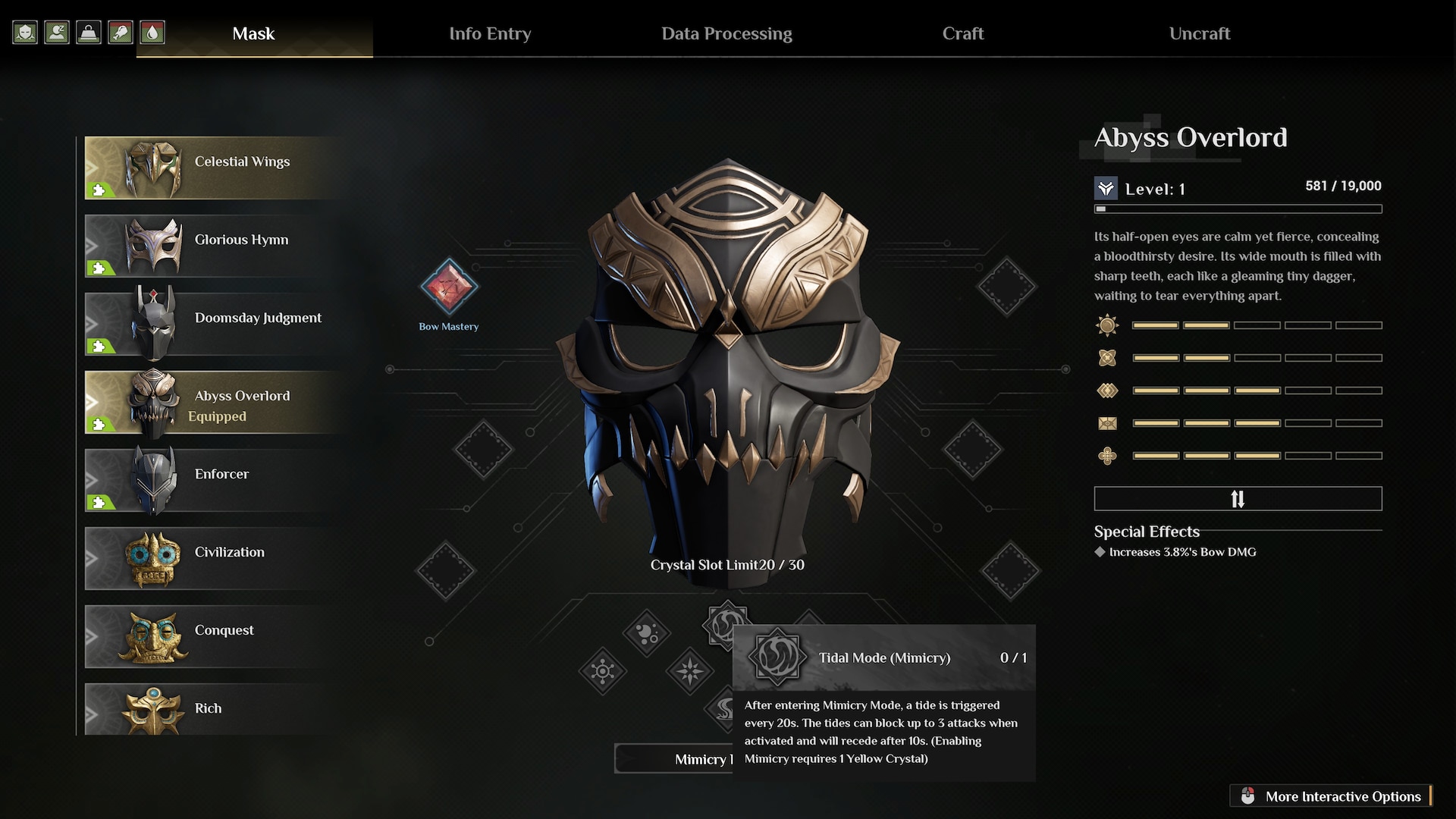
Soulmask enters this space with a clear ambition to challenge those expectations. Rather than focusing solely on individual survival, it attempts to broaden the scope of the experience by placing the player at the center of a developing tribe. From the very beginning, the game establishes that it is not just about staying alive, but about building something larger and more sustainable over time. This shift in perspective is reinforced by the introduction of the titular mask, a mysterious artifact that allows the player to inhabit and control different characters, effectively transforming the traditional survival model into something more fluid and dynamic.
This combination of survival mechanics, tribal management, and character-switching systems gives Soulmask a unique identity within the genre. However, that ambition comes with a trade-off. The game is dense with interconnected systems, many of which are introduced with minimal guidance, creating an experience that can feel overwhelming during its early hours. It is a game that demands patience and a willingness to experiment, rewarding players who invest the time to understand its mechanics while potentially alienating those who prefer a more accessible approach.
Ultimately, Soulmask positions itself as a large-scale sandbox that prioritizes depth over immediacy. It offers a wealth of possibilities, but realizing its full potential requires navigating a steep learning curve and accepting that not every system is as refined as it could be.
Gameplay and Mechanics
At its core, Soulmask builds upon the established foundations of survival gameplay, placing players in a dangerous environment where they must gather resources, craft tools, and establish a base of operations. These early moments feel familiar, as players learn to hunt for food, collect materials, and protect themselves from environmental threats. However, it quickly becomes apparent that the game is less interested in replicating the traditional survival loop and more focused on expanding it into something broader and more systemic.
The introduction of the mask mechanic fundamentally changes how the game is played. Rather than being confined to a single character, players can take control of different individuals within their tribe, each with their own attributes, strengths, and limitations. This creates a level of flexibility that is rarely seen in the genre, allowing players to adapt to different situations without being locked into a specific build. For example, one character may excel at combat, while another is better suited for crafting or resource gathering, encouraging players to think strategically about how they allocate their time and effort.
This system is closely tied to the game’s tribe mechanics, which represent one of its most distinctive features. As players progress, they can recruit NPCs who become part of their settlement, contributing to its growth and functionality. These characters are not simply background elements; they can be assigned tasks, trained, and equipped, effectively turning the player’s base into a living, functioning community. This introduces a management layer that significantly alters the pacing of the game, shifting the focus from individual survival to collective efficiency.
Over time, the gameplay loop evolves into a balancing act between exploration, resource management, and strategic planning. Players must decide how to allocate their resources, which technologies to pursue, and how to develop their tribe in a way that supports long-term growth. This creates a sense of progression that feels meaningful, as each decision contributes to the overall development of the settlement.
However, this depth comes at the cost of accessibility. The game provides limited guidance, leaving players to navigate its systems largely on their own. Menus can feel dense and unintuitive, and understanding how different mechanics interact often requires trial and error. While this approach can be rewarding for players who enjoy experimentation, it can also create frustration, particularly in the early stages when the game’s systems have yet to fully reveal themselves.

Combat and Progression
Combat in Soulmask is an integral part of the experience, but it is also one of its more uneven elements. The game offers a variety of weapons and combat styles, each with its own strengths and weaknesses, encouraging players to experiment and find an approach that suits their preferred playstyle. There is an emphasis on timing and positioning, with mechanics such as blocking, dodging, and counterattacking playing a key role in determining the outcome of encounters.
In principle, this creates a system that rewards skill and awareness, allowing players to overcome stronger opponents through careful play. In practice, however, the execution can feel inconsistent. Animations do not always flow as smoothly as they should, and there are moments where attacks fail to connect in a way that feels natural. This can make combat feel less responsive than expected, particularly during more intense encounters where precision is crucial.
The progression system, by contrast, is extensive and deeply layered. Players can unlock new crafting recipes, develop skills, and improve their tribe’s capabilities over time. This creates a strong sense of long-term investment, as each upgrade contributes to a broader network of systems that support the player’s growth. The game encourages experimentation, allowing players to pursue different paths and tailor their experience to their preferences.
At the same time, progression can feel slow, especially during the early stages. Unlocking new technologies often requires a significant investment of time and resources, which can make the experience feel grind-heavy. While this approach reinforces the sense of achievement that comes with advancement, it may also test the patience of players who prefer a faster pace.
World Design and Exploration
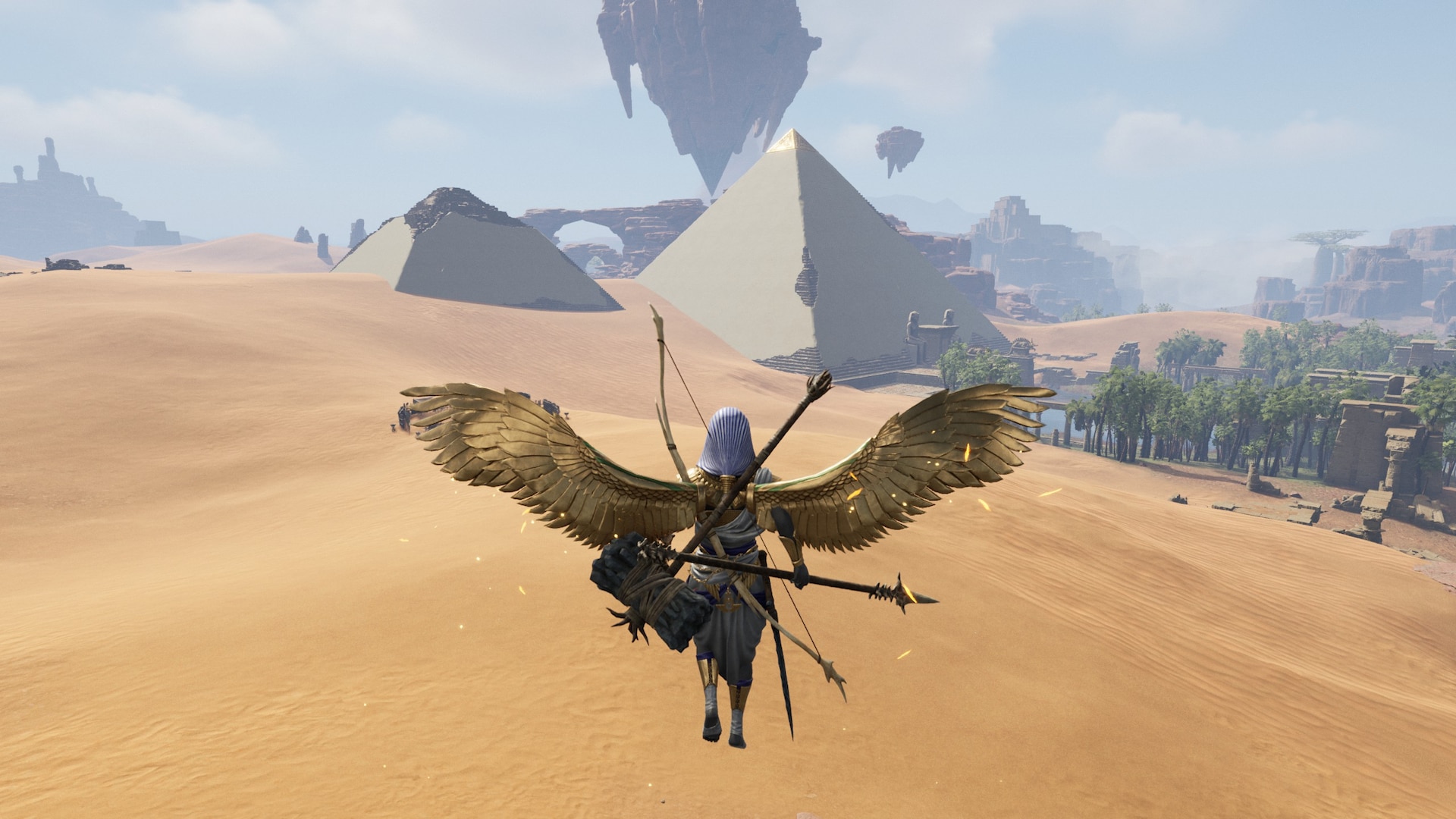
The world of Soulmask is expansive and designed to encourage exploration, offering a variety of environments that range from dense jungles to more open and rugged landscapes. These areas are populated with wildlife, hostile factions, and remnants of ancient civilizations, creating a setting that feels both dangerous and intriguing.
Exploration is a key component of the experience, as players venture beyond their base to gather resources, discover new locations, and uncover hidden secrets. The presence of ruins and relics adds a sense of mystery, hinting at a deeper lore that is gradually revealed through environmental storytelling.
Visually, the game adopts a distinct aesthetic that blends primitive and fantastical elements. While it may not push technical boundaries, it maintains a consistent style that supports its atmosphere. Lighting and environmental effects contribute to the sense of immersion, particularly during transitions between day and night.
However, the world is not without its shortcomings. Some areas lack the level of detail and variety needed to sustain long-term interest, leading to moments where exploration feels repetitive. While there are highlights that stand out, they are not always evenly distributed, which can affect the overall pacing of discovery.
Visuals, Audio and Presentation
From a visual standpoint, Soulmask strikes a balance between style and technical ambition, opting for a cohesive aesthetic rather than pushing cutting-edge graphical fidelity. The game’s “techno-tribal” identity is reflected in its environments, character designs, and overall art direction, blending primitive survival elements with subtle hints of something more mysterious and advanced. This combination gives the world a distinct personality, even if it does not always reach the level of visual detail seen in higher-budget titles.
Environmental design is one of the stronger aspects of the presentation. Dense forests, open plains, and scattered ruins are all constructed with a clear sense of atmosphere, supported by dynamic lighting that shifts naturally throughout the day-night cycle. Sunlight filtering through foliage, shadows stretching across the terrain, and the gradual transition into darker, more dangerous nighttime conditions all contribute to a world that feels alive. While some areas can appear visually repetitive over extended play sessions, there is enough variation to maintain a sense of immersion, particularly during early exploration.

Character models and animations, however, are more uneven. While the overall designs are fitting for the setting, animations can sometimes lack fluidity, particularly during combat or when multiple NPCs are active at once. Facial expressions are limited, and interactions between characters can occasionally feel stiff, which slightly detracts from the sense of realism the game aims to achieve. These shortcomings are not constant, but they are noticeable enough to prevent the presentation from feeling fully polished.
Audio design plays a subtle but important role in reinforcing the game’s atmosphere. Ambient sounds, such as wildlife, wind, and environmental effects, help ground the player in the world, creating a sense of place that complements the visual design. The soundtrack tends to remain understated, often fading into the background rather than dominating the experience, which suits the slow-paced, exploratory nature of the game. During moments of tension, such as combat or exploration of dangerous areas, the audio becomes more pronounced, adding weight to those encounters without feeling overwhelming.
Sound effects are generally effective, particularly when it comes to environmental interactions and crafting activities, though combat audio can sometimes feel less impactful than expected. Hits and weapon clashes do not always carry the sense of force that would make encounters feel more satisfying, which aligns with some of the mechanical shortcomings in combat itself.
Overall, the presentation of Soulmask is consistent and functional, even if it falls short of being exceptional. It succeeds in creating an atmosphere that supports its core gameplay loop, but its technical and animation limitations prevent it from fully standing out in a genre where visual and audio polish can significantly enhance immersion.
Tribe Management and Base Building
The tribe management system is where Soulmask truly distinguishes itself, transforming base building from a functional necessity into a central pillar of the experience. Players are not just constructing shelters; they are creating a community that evolves over time, with each member contributing to its growth.
Base building is flexible and detailed, allowing players to design their settlements according to their preferences. Structures can be arranged to optimize efficiency, with different areas dedicated to crafting, storage, and production. As the settlement expands, it begins to feel more like a living space rather than a static collection of buildings.
Managing the tribe adds a layer of strategy that extends beyond construction. Players must assign tasks, monitor productivity, and ensure that their workers are properly equipped and supported. This creates a dynamic system where the success of the settlement depends on careful planning and resource management.
While this depth is one of the game’s greatest strengths, it can also become overwhelming. Managing multiple systems simultaneously requires constant attention, and the interface does not always make this process as intuitive as it could be. For players who enjoy complex management mechanics, this will likely be a highlight, but others may find it demanding.
Multiplayer Experience and Cooperative Play
Multiplayer adds another dimension to Soulmask, allowing players to share their experiences with others in a persistent world that feels far less predictable than its single-player counterpart. Cooperative play enhances the tribe management system in meaningful ways, as players can divide responsibilities, specialize in different roles, and work together to build and expand their settlements more efficiently than would be possible alone. This collaborative structure fits naturally with the game’s core design, reinforcing the idea that survival is not just about individual effort but about collective progress.
The presence of other players also introduces elements of competition and unpredictability that can significantly alter how the game unfolds. Encounters in the open world are not scripted, which means that every interaction carries a degree of uncertainty. Players may choose to cooperate, trade resources, or assist each other in combat, but they may just as easily come into conflict over territory or valuable materials. This tension creates a layer of emergent storytelling that gives multiplayer sessions a distinct identity, often leading to memorable moments that do not occur in solo play.
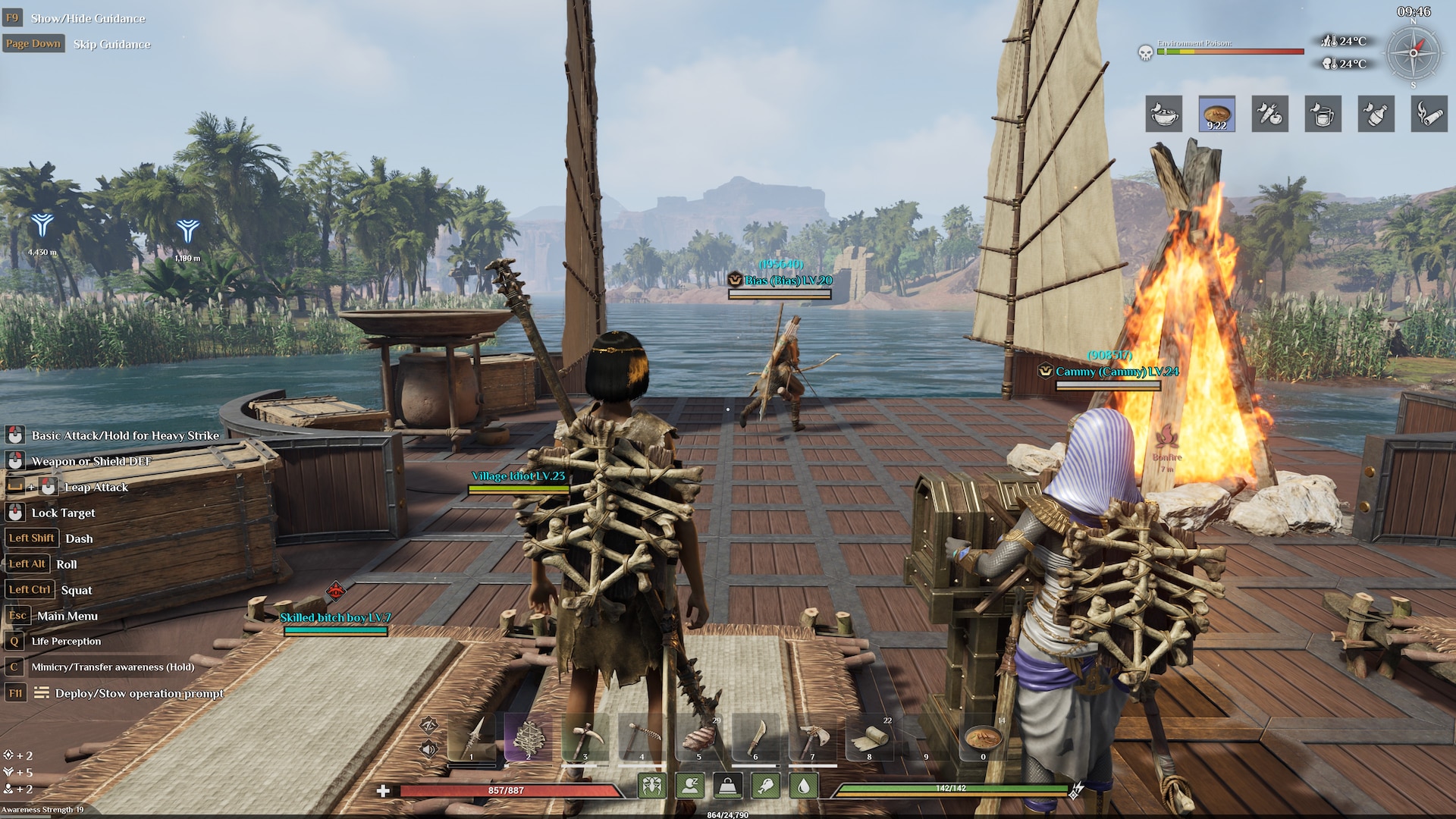
As tribes grow larger in a multiplayer environment, the sense of scale becomes more pronounced. Settlements can evolve into complex hubs of activity, with multiple players contributing to their development and organization. This not only accelerates progression but also makes the world feel more alive, as the impact of player actions becomes visible on a larger scale. Watching a settlement expand through shared effort adds a level of satisfaction that is difficult to replicate when playing alone.
However, the multiplayer experience is not without its limitations. Performance can vary depending on server quality and player count, with larger sessions occasionally introducing latency or stability issues that affect moment-to-moment gameplay. These technical inconsistencies can be particularly noticeable during combat or when multiple systems are active simultaneously. While private servers often provide a smoother and more controlled experience, the overall reliability of multiplayer still depends heavily on the environment in which it is played.
Despite these challenges, multiplayer remains one of the more compelling aspects of Soulmask. It amplifies the game’s core systems, turning tribe management into a shared responsibility and exploration into a collaborative effort, while also introducing a level of unpredictability that keeps the experience fresh over time.
Technical Performance on PC
From a technical standpoint, Soulmask delivers a reasonably stable experience, particularly when considering the scale of its systems and the complexity of its mechanics. The game performs well on a range of hardware configurations, with consistent frame rates during most standard gameplay scenarios. Movement, interaction, and general traversal feel responsive enough to support the core survival loop, and the overall stability allows players to engage with the game without constant interruption.
Load times are generally manageable, especially when running the game on modern hardware, and transitions between different areas of the world occur without major disruptions. The game’s visual settings also provide a degree of flexibility, allowing players to adjust performance based on their system capabilities. This ensures that the experience remains accessible to a wider audience, even if it does not always achieve the same level of polish across all configurations.
That said, technical imperfections are still present and become more noticeable as the scope of gameplay increases. Larger settlements, more active NPCs, and complex environments can introduce performance drops, particularly during moments when multiple systems are interacting simultaneously. These slowdowns are not constant, but they can interrupt the flow of gameplay, especially during more demanding scenarios.
The interface is another area where technical design could be improved. Navigating menus and managing multiple systems can feel cumbersome, with certain functions requiring more steps than necessary. This does not prevent players from engaging with the game, but it does add friction to an experience that is already dense with mechanics. Combined with occasional bugs and AI inconsistencies, these issues contribute to a sense that the game, while ambitious, is still refining its technical foundation.
Final Verdict: 7/10
Soulmask is a game defined by ambition, offering a survival experience that goes beyond the traditional formula to incorporate elements of management, strategy, and character flexibility. It succeeds in creating a world that feels alive and systems that encourage long-term investment, providing a depth that is rarely seen in the genre.
At the same time, that ambition introduces challenges. The game’s complexity can be overwhelming, its combat lacks consistency, and its technical issues, while not severe, are noticeable enough to affect immersion. These factors combine to create an experience that is both rewarding and demanding, requiring a level of patience that may not appeal to all players.
For those willing to invest the time, Soulmask offers a unique and engaging experience that stands out in a crowded genre. For others, it may feel like a game that is still in the process of finding its balance.