When Milestone decided to bring Screamer back, it did not take the expected route of modernizing a classic arcade racer while keeping its identity intact. Instead, the studio rebuilt the concept almost from scratch, using the name as a foundation for something far more experimental. This is not a throwback, nor is it trying to compete directly with simulation-focused racers. It positions itself somewhere in between genres, borrowing ideas from arcade driving, character-driven storytelling, and even fighting games, and then attempting to make those pieces work together as a cohesive whole.
That approach immediately sets a different tone compared to most modern racers, which tend to refine established formulas rather than challenge them. Here, the focus is not on recreating a familiar feel, but on reshaping expectations of what a racing game can include, even if that means sacrificing some accessibility along the way. It is a direction that gives the game a clear identity early on, while also hinting at the friction that comes from combining so many different ideas under one structure.

That ambition defines the experience from the opening minutes. Screamer (2026) immediately signals that it is not interested in easing players into familiar territory. It introduces its world, its characters, and its mechanics with a confidence that borders on stubbornness, expecting players to meet it halfway rather than adapting itself to their expectations. The result is a game that feels distinctive from the start, but also one that demands patience before its ideas begin to settle into something that feels intentional rather than overwhelming.
Gameplay and Mechanics
The driving model in Screamer is the most important and most divisive part of the game, especially on PC where input precision tends to define the overall experience. Instead of following the established arcade formula, the game uses a twin-stick system that separates steering from drifting. On a controller, this means constantly coordinating both sticks to maintain control through corners, while on keyboard it translates into a less natural, more fragmented set of inputs that never quite achieves the same fluidity.
The immediate impression is awkwardness. The car does not behave in a way that aligns with instinct, and the game does not offer much in the way of gradual onboarding. Early races feel less like a test of racing skill and more like a process of deciphering how the controls translate into movement. The relationship between drift angle, speed, and recovery lacks clarity at first, and mistakes often feel difficult to correct once they begin.
With time, the system reveals a certain internal logic. It becomes possible to chain drifts with intention, maintain speed through corners, and develop a rhythm that feels distinct from other racers. There is a tactile quality to successful runs that makes the effort worthwhile, particularly when everything aligns and the car responds exactly as expected. However, that sense of control is never completely consistent. Even after extended play, there are moments where the handling feels slightly detached, as if the game is smoothing or interpreting inputs in ways that reduce precision.
On PC, this inconsistency is more noticeable depending on the control method. With a controller, the system feels demanding but workable, clearly designed around analog input and gradual adjustments. Keyboard controls, while supported, feel like a compromise. The lack of analog nuance makes it harder to manage drift transitions and fine steering corrections, turning an already demanding system into something that can feel unnecessarily rigid. Players who prefer keyboard driving will likely struggle to reach the same level of control that the game seems to expect.
Combat and Race Dynamics
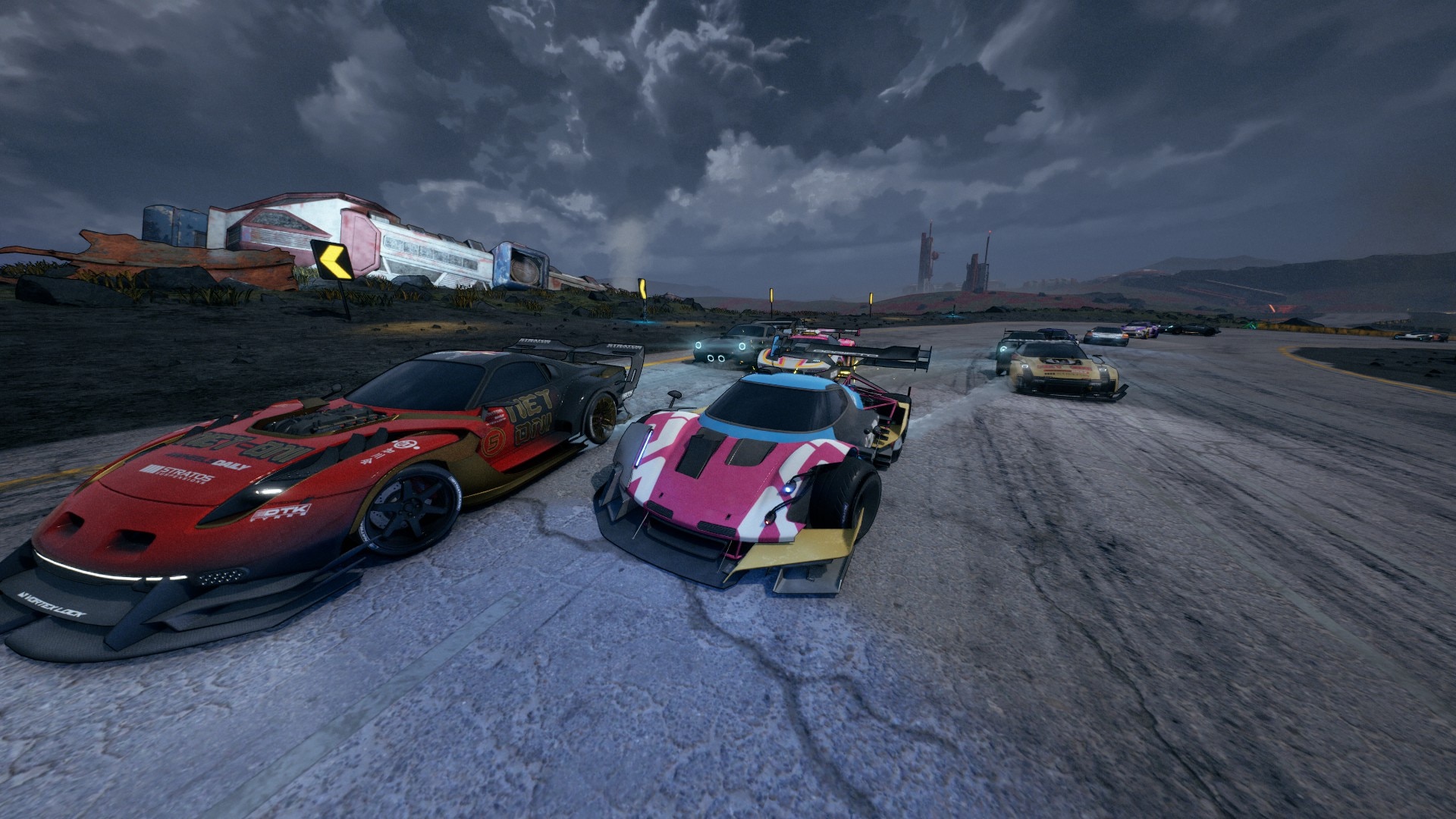
Layered on top of the driving mechanics is a combat system that changes the nature of racing in fundamental ways. Cars are not just competing for position; they are actively interfering with each other through attacks, defensive abilities, and resource-driven powers that can shift the outcome of a race in seconds.
This system introduces a level of interaction that most racing games avoid. Positioning is no longer just about finding the optimal racing line, but also about managing threats from opponents who can disrupt your progress at any moment. Leading the race becomes a risk, as it places you directly in the line of fire, while staying in the pack exposes you to chaotic exchanges that are difficult to predict.
When the system works as intended, it creates moments of tension that feel unique. Successfully defending against an incoming attack while maintaining speed, or timing an offensive ability to disrupt a rival at a critical moment, can add a layer of strategy that complements the driving mechanics. These moments give races a sense of unpredictability that keeps them engaging even after repeated attempts.
At the same time, the balance between skill and disruption is not always stable. There are races where outcomes feel heavily influenced by ability timing rather than driving performance, and situations where losing control is less about player error and more about being caught in an unavoidable chain of attacks. This can lead to frustration, particularly in longer events where consistency is expected to matter more.
The system does not undermine the entire experience, but it does shift the focus away from pure racing in a way that will not appeal to everyone. It asks players to accept a level of chaos as part of the design, rather than something to be minimized.
Progression, Modes, and Structure
The structure of Screamer revolves around its central tournament mode, which combines racing events with narrative progression. This mode serves as the primary way to experience the game, introducing new teams, tracks, and mechanics while advancing the story. It is clearly designed to be the main attraction, but it is also where some of the pacing issues become most apparent.
Races are frequently interrupted by dialogue sequences and cutscenes that expand on character relationships and motivations. While these elements add personality to the world, they also disrupt the flow of gameplay. The transition from high-speed racing to extended conversations can feel abrupt, especially when the narrative lingers longer than necessary on certain points.
Outside of the campaign, the game offers more traditional modes that allow players to engage with its mechanics without narrative interruptions, and this is where Screamer often feels more focused. Arcade races provide a straightforward experience built around pure competition, stripping away story elements and letting the driving and combat systems take center stage. This mode is particularly useful for getting comfortable with the handling, since it removes distractions and allows you to experiment with drifting, timing, and ability usage at your own pace.

Time-based challenges shift the emphasis toward precision and consistency, asking players to refine their lines and maintain control over longer stretches without relying too heavily on combat mechanics. These events highlight the underlying strengths of the driving system when it works well, as small improvements in execution can make a noticeable difference in results. They also expose its weaknesses more clearly, since any inconsistency in handling becomes harder to ignore when the focus is entirely on performance rather than survival.
Multiplayer modes, both local and online, lean heavily into the game’s chaotic identity. Racing against other players tends to amplify the unpredictability of the combat system, as human opponents are far less predictable than AI drivers and often more aggressive in how they use abilities. This can lead to races that feel dynamic and intense, but also more volatile, where positions change rapidly and maintaining control becomes just as important as maintaining speed. At its best, multiplayer captures what makes Screamer stand out, but it also reinforces the same balance issues present in single-player, making it clear that the game’s core design remains consistent across all modes.
On PC, online multiplayer performance is generally stable, though it depends heavily on connection quality. When it works well, it brings out the best in the combat system, as human opponents tend to use abilities in more varied and unpredictable ways than AI drivers. However, the same balance issues that appear in single-player can become more pronounced in multiplayer, where coordinated attacks and aggressive playstyles can dominate races.
Visual Design and Presentation
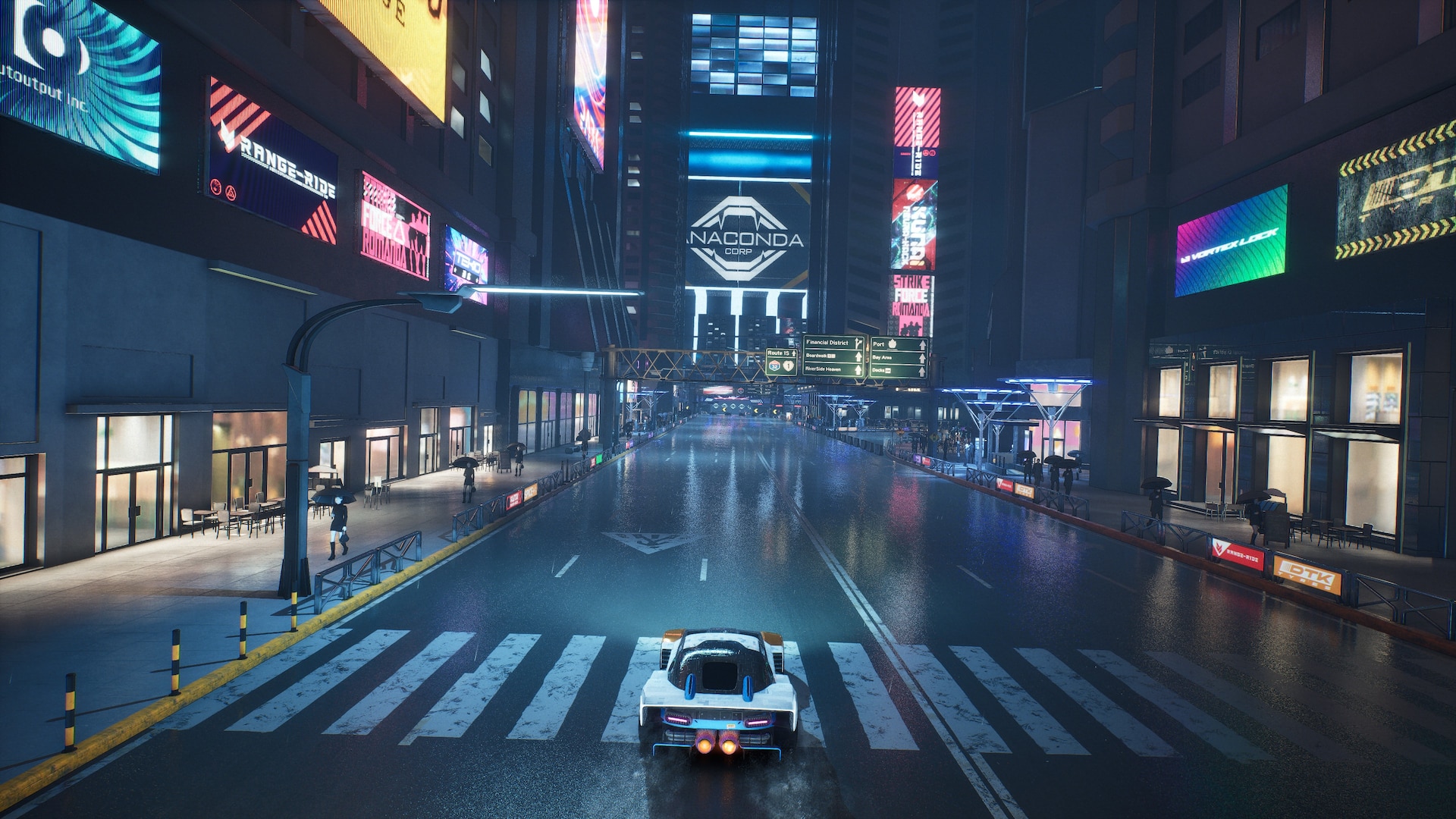
From a technical and artistic perspective, Screamer makes a strong impression. Built on Unreal Engine 5, the game uses modern rendering techniques to create a world that feels stylized rather than realistic. Lighting plays a major role, with neon reflections and high-contrast environments giving races a distinctive look that sets them apart from more grounded competitors.
The character and vehicle designs reinforce this identity. Cars are exaggerated and expressive, often reflecting the personalities of their drivers, while environments are constructed to support the game’s dramatic tone rather than replicate real-world locations. This approach gives the game a cohesive visual language, even when the action becomes chaotic.
There is, however, a trade-off. The visual intensity can sometimes make it harder to read the track, especially during busy moments where multiple effects overlap. Explosions, boosts, and environmental details can crowd the screen, creating brief moments where clarity takes a back seat to spectacle. It does not happen constantly, but it is noticeable enough to affect certain races.
On PC, the graphical options provide a reasonable level of customization, allowing players to balance performance and visual fidelity. The game scales well across different hardware configurations, though achieving a consistently high frame rate during the most demanding scenes may require some adjustments.
Sound Design and Audio Direction
The audio design in Screamer supports its overall tone without drawing excessive attention to itself. The soundtrack relies on high-energy electronic music that complements the pace of the races, maintaining momentum without becoming repetitive. It is effective in context, though it does not leave a particularly strong impression outside of gameplay.
Voice acting plays a more prominent role due to the game’s narrative focus. Characters speak in multiple languages, adding a layer of authenticity to the world, but also introducing some inconsistency in delivery. Certain performances stand out, while others feel less convincing, creating an uneven overall impression.
Sound effects during races are impactful, particularly in relation to combat. Attacks and collisions carry a sense of weight that reinforces their importance, while engine sounds, though less realistic than in simulation-focused games, fit the stylized approach. The main issue arises during chaotic moments, where the accumulation of audio cues can become overwhelming, making it harder to distinguish between important signals and background noise.
Difficulty and Learning Curve
Screamer is not designed to be immediately accessible, and it does not attempt to hide that fact. The combination of unconventional controls, layered systems, and combat mechanics creates a steep learning curve that can be discouraging during the early hours.
The game expects players to adapt rather than providing extensive guidance, which can make initial progress feel slow and inconsistent. Mistakes are often punished harshly, and the lack of clear feedback in certain situations makes it harder to understand what went wrong.
Over time, the systems begin to align, and the experience becomes more coherent. Players who persist will find depth in the mechanics, as well as opportunities for skill expression that go beyond simple racing performance. However, the effort required to reach that point is significant, and not all players will be willing to invest the necessary time.
Technical Performance on PC
On PC, Screamer delivers a generally solid technical experience, though it is not entirely free of issues. The game benefits from modern hardware, with stable performance during most races and relatively fast loading times. It supports a range of graphical settings, allowing players to adjust the experience based on their system capabilities. Resolution scaling, frame rate caps, and upscaling options help smooth out performance on mid-range systems, making it reasonably accessible without requiring top-tier hardware.

Performance dips tend to occur during visually complex moments, particularly when multiple effects and combat interactions overlap. These drops are not constant, but they are noticeable enough to affect gameplay, especially given how reliant the game is on timing and precision. Even small inconsistencies can have a noticeable impact when navigating tight corners or responding to sudden attacks. In longer sessions, these fluctuations become more apparent, suggesting that optimization is generally good but not entirely consistent across all scenarios.
Input responsiveness is another area where minor issues become more significant due to the control scheme. The game requires precise input to function well, and any delay or inconsistency can make the handling feel less reliable. While these issues do not render the game unplayable, they contribute to an overall sense that the mechanics are not as refined as they could be. This is particularly noticeable when making quick corrections mid-drift, where responsiveness should feel immediate but occasionally falls just short.
Controller support is clearly the preferred way to play on PC, offering a smoother and more consistent experience than keyboard input. While the game does not restrict players from using a keyboard, it does little to optimize the experience for that control method, making it a less appealing option for those who prefer it. Button remapping is available, but it does not fully compensate for the limitations of digital input in a system designed around analog control.
Stability is otherwise reliable, with no major crashes or game-breaking bugs during extended play. Minor visual glitches and occasional animation hiccups do appear, but they are infrequent and do not significantly disrupt the experience. Overall, the PC version feels technically competent, even if it lacks the level of polish that would make its more demanding mechanics feel consistently precise.
Final Verdict: 7.5/10
Screamer is a game that prioritizes originality over refinement, and that choice defines both its strengths and its weaknesses. It introduces ideas that feel genuinely different within the racing genre, but it does not always execute them with the level of polish needed to make them universally appealing.
What it achieves is a sense of identity that is difficult to ignore. Even when it struggles with balance, pacing, or control precision, it remains distinct in a way that many games are not. It is willing to take risks, and while those risks do not always pay off, they make the experience more memorable than a safer, more conventional approach would have been.
For PC players, the experience is at its best with a controller and a willingness to adapt to the game’s demands. Those who approach it expecting a traditional racer may find it frustrating, while those open to its hybrid design will likely appreciate what it is trying to do, even if they do not fully agree with every decision it makes.