Dragonkin: The Banished arrives in a genre that has become increasingly difficult to stand out in, as modern action RPGs are shaped by years of iteration, refinement, and rising expectations around combat feel, progression depth, and long-term engagement. Against that backdrop, Eko Software’s project makes a clear attempt to distinguish itself, combining familiar loot-driven gameplay with more experimental systems such as the Ancestral Grid and a persistent, upgradeable city hub.
The premise is straightforward yet effective, placing players in a world corrupted by dragon blood, where those altered by that same power now wield it as a weapon against the creatures it spawned. Players take on the role of these enhanced heroes, gradually hunting down powerful Dragon Lords in an effort to restore balance to a fractured land. While the setup leans heavily on genre conventions, it provides a solid foundation for the systems that drive the experience forward.
At the same time, the game reflects its development history quite clearly. After an extended period in Early Access before reaching its full release, Dragonkin feels like a project that benefited from iteration but did not fully resolve every rough edge. The result is a game that is ambitious and occasionally inventive, yet not always consistent in how effectively it delivers on its ideas.
Gameplay and Mechanics
At its foundation, Dragonkin: The Banished follows a well-established action RPG loop in which players select a class, venture into enemy-filled areas, defeat increasingly powerful foes, and collect loot to improve their character over time. This structure is immediately recognizable, providing a stable and accessible framework that requires little explanation for genre veterans.

The class roster includes the Barbarian, Oracle, Knight, and Tracker, each built around a distinct combat identity that initially encourages different approaches to encounters. The Barbarian emphasizes raw physical strength, the Oracle channels elemental magic, the Knight balances durability and offense, and the Tracker focuses on mobility and ranged precision. While these roles are clearly defined early on, the game gradually introduces flexibility, allowing builds to evolve beyond their initial archetypes.
As players engage more deeply with progression systems, the boundaries between classes begin to blur, enabling hybrid playstyles that combine melee, ranged, and ability-driven combat. This flexibility is one of the game’s stronger design choices, as it promotes experimentation and reduces the sense of being locked into a single role.
Combat itself is functional and occasionally engaging, but it struggles to consistently deliver the level of impact expected from the genre. Abilities trigger reliably, and encounters scale in complexity over time, yet the tactile feedback often feels lacking. Attacks do not always carry the weight they should, and enemy reactions can feel subdued, which weakens the overall sense of responsiveness.
This creates a noticeable disconnect between presentation and interaction, where battles may appear visually intense while feeling mechanically underwhelming. Over longer sessions, this lack of feedback becomes more pronounced, gradually diminishing the excitement that should accompany repeated encounters.
Enemy variety does help maintain engagement, as different elemental types and behaviors require players to adjust their tactics, while boss encounters introduce mechanics that go beyond simple damage output. Even so, pacing remains uneven, with some encounters extending longer than necessary while others end before they fully develop.
The result is a combat system that supports the overall structure but rarely elevates it, remaining competent without becoming a defining strength.
The Ancestral Grid and Build Customization
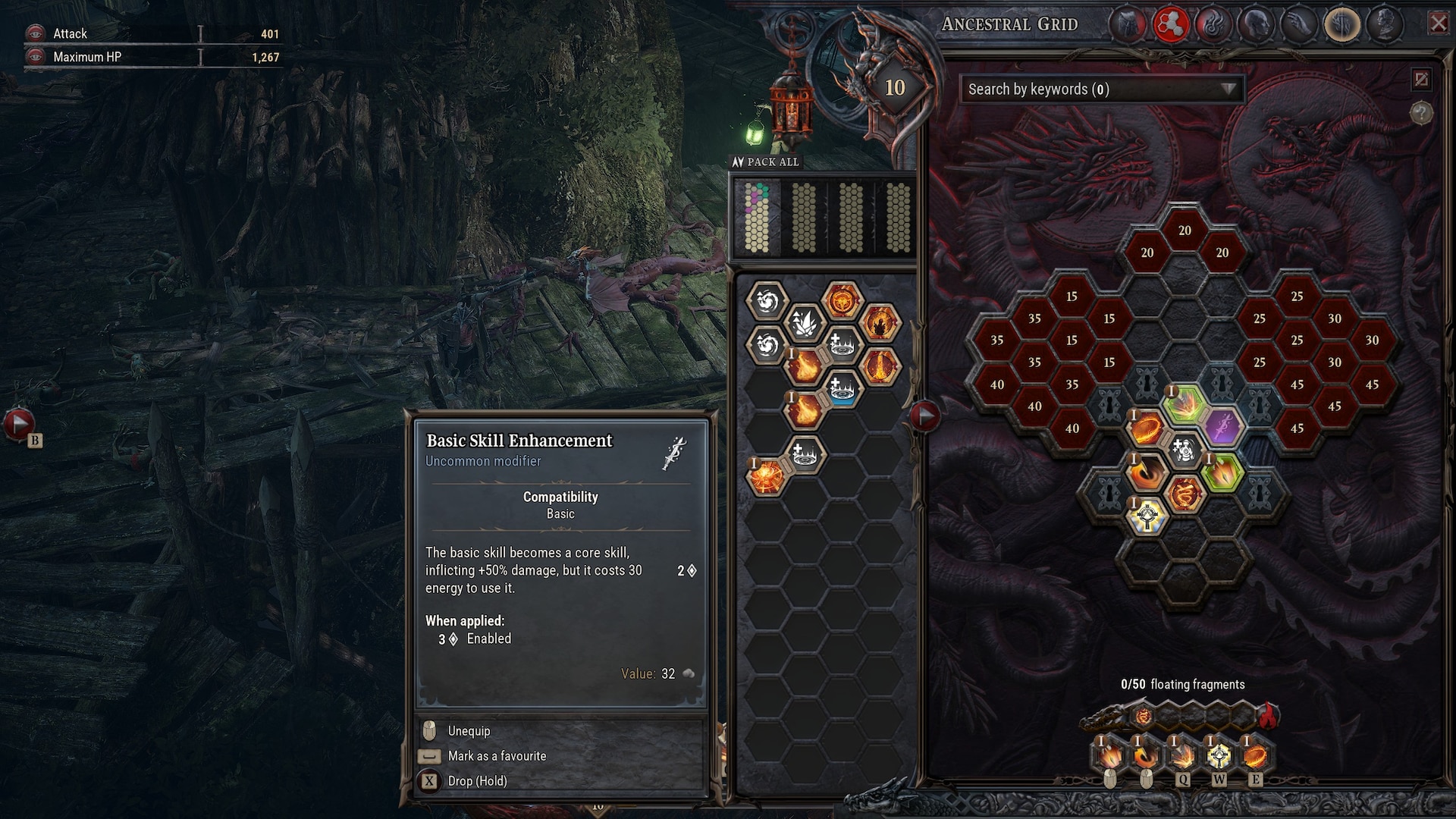
The Ancestral Grid is the most distinctive system in Dragonkin: The Banished, replacing traditional skill trees with a modular layout that emphasizes positioning and interaction between abilities. Instead of unlocking skills along a fixed progression path, players acquire them as loot and arrange them within a grid, where placement directly influences how they function and interact.
This system introduces a high degree of customization, allowing players to experiment with different combinations and develop builds that reflect their preferred playstyle. It is designed to reward creativity, offering the potential for layered synergies that go beyond simple stat increases.
However, this ambition comes with a level of complexity that can be difficult to navigate, particularly in the early stages. The game provides limited onboarding, often presenting information in dense layers that can be challenging to interpret. As more elements are introduced, the interface can become cluttered, making it harder to track how different components interact.
Engaging with the grid can therefore feel less like intuitive experimentation and more like managing an intricate system that requires careful organization. Players who enjoy theorycrafting will likely appreciate the depth on offer, but others may find the process overwhelming or unnecessarily demanding.
There is also a pacing concern, as multiple mechanics are introduced in relatively quick succession, leaving little room for players to fully understand one system before another is added. This can create a sense of overload that detracts from the enjoyment of building and refining a character.
Despite these challenges, the Ancestral Grid remains one of the game’s most compelling features, providing a level of flexibility and individuality that helps Dragonkin stand apart from more conventional action RPGs.
World Design and Exploration
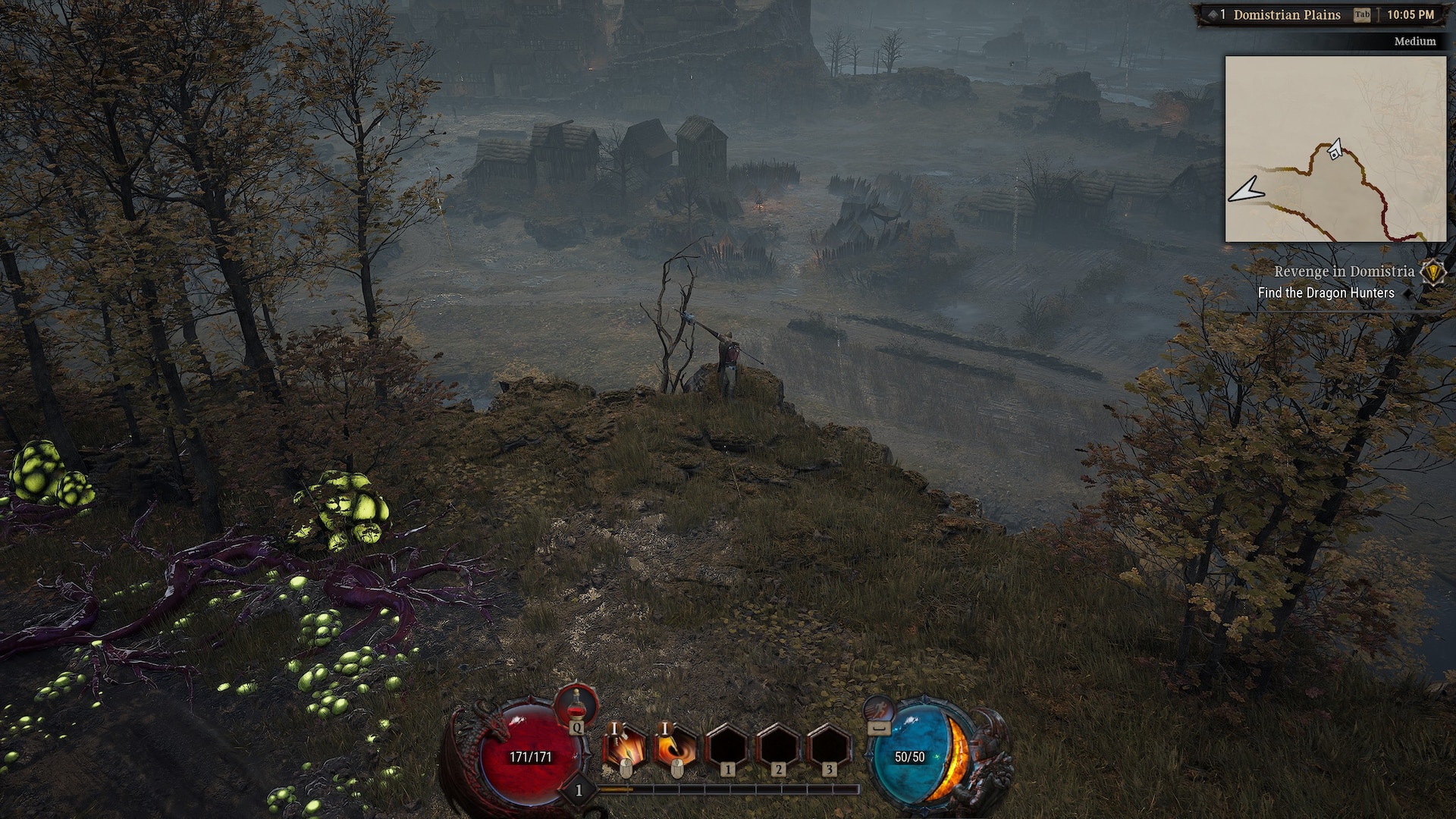
The world of Dragonkin: The Banished spans a variety of environments, including jungles, swamps, volcanic regions, glaciers, and open plains, each populated by distinct enemy types and visual elements that reinforce a sense of progression. This environmental variety contributes to the game’s presentation, ensuring that new areas feel visually different even as the core gameplay loop remains consistent.
From a technical standpoint, the environments are often impressive, with detailed textures, dynamic lighting, and layered effects that create a visually rich experience. Larger encounters benefit particularly from this presentation, as the combination of environmental detail and combat effects can produce striking moments.
However, exploration does not always match the strength of the visuals. While levels are designed with branching paths and optional routes, the rewards for deviating from the main objective are often limited. Side paths frequently lead to encounters or loot that do not justify the time spent reaching them.
This imbalance can gradually discourage exploration, as players begin to favor efficiency over curiosity. When the incentive to explore is weak, it becomes a secondary consideration rather than a meaningful part of the experience.
Additionally, structural similarities between areas become more noticeable over time. Although visual themes change, the underlying layout and encounter design often follow familiar patterns, contributing to a sense of repetition that can diminish the impact of new environments.
The world itself is visually appealing and varied in concept, but it does not consistently deliver the sense of discovery needed to make exploration a standout feature.
City Building and Long-Term Progression
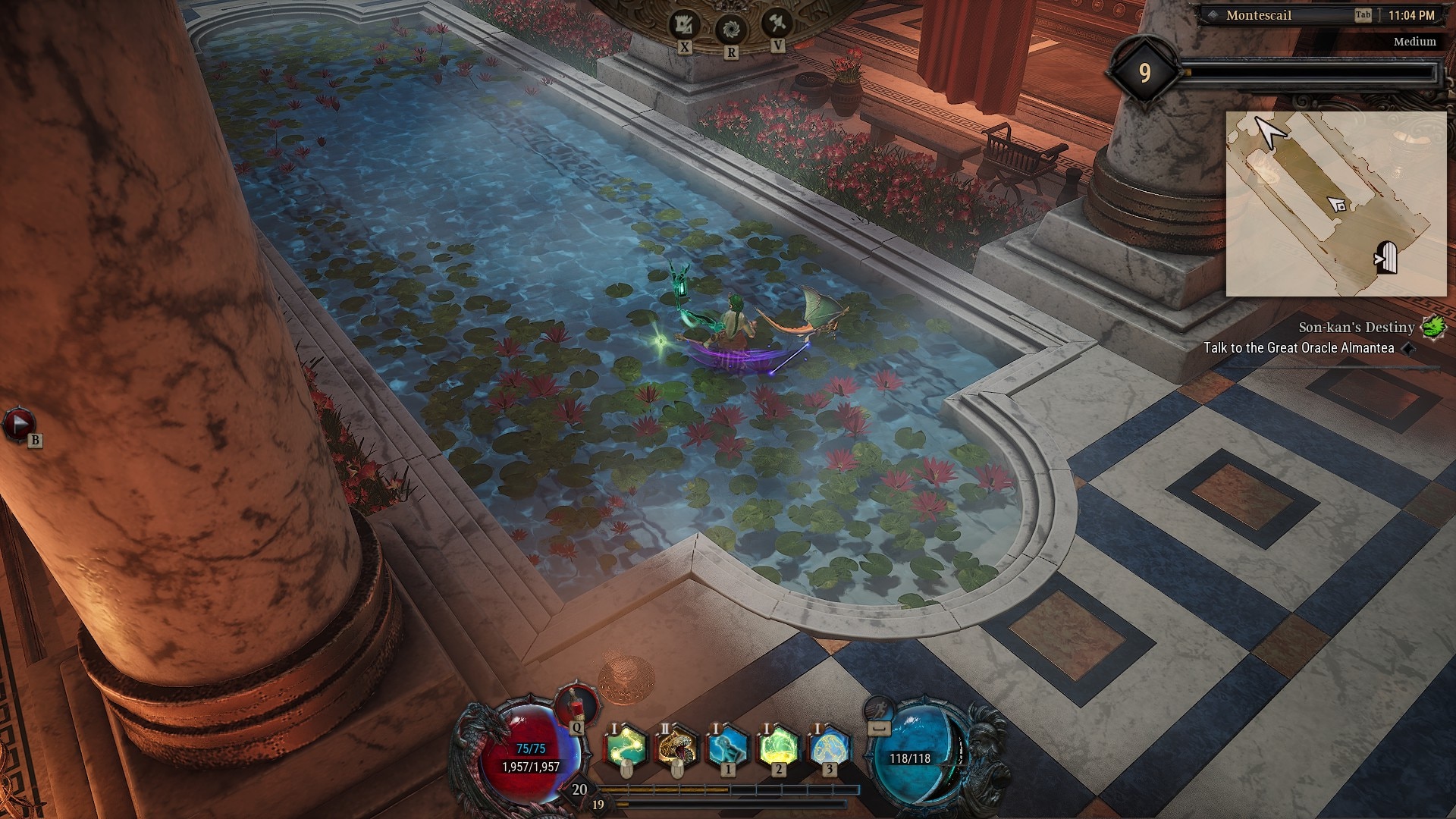
Montescail, the central hub, introduces a city-building element that expands progression beyond individual character development. Between missions, players return to this location to upgrade buildings, unlock new services, and influence broader gameplay systems tied to long-term progression.
The concept adds structure and continuity, creating the impression that the player’s actions contribute to something larger than individual missions. As the city evolves, it provides access to additional features that support character growth and resource management.
Despite this strong foundation, the system does not always feel as impactful as it could be. Many upgrades offer incremental benefits that, while useful, do not significantly change how the game is played. The connection between city development and moment-to-moment gameplay can feel indirect, making it harder to appreciate the full importance of these upgrades.
There is also a degree of abstraction in how the city is presented, as most interactions occur through menus rather than through a fully realized, interactive space. This limits immersion and reduces the emotional connection to the progression taking place.
Even so, Montescail adds an additional layer of depth that helps differentiate Dragonkin from more traditional ARPGs, even if it does not fully realize its potential.
Story, Tone, and Writing
The narrative in Dragonkin: The Banished primarily serves as a framework for gameplay, offering enough context to support the player’s actions without becoming a central focus. The concept of characters empowered and altered by dragon blood introduces an interesting thematic element, hinting at a balance between power and corruption.
In practice, the story follows familiar genre conventions without pushing them in particularly new directions. Dialogue is generally functional, delivering necessary information without leaving a lasting impression, while the overall narrative remains secondary to progression systems and combat.
Voice acting is uneven, with some performances capturing the intended tone while others feel less convincing. This inconsistency affects the pacing of narrative sequences, making it harder for the story to maintain momentum.
There are occasional glimpses of deeper world-building, often conveyed through environmental details or optional lore, but these elements are not emphasized strongly enough to elevate the overall narrative experience.
As a result, the story fulfills its role without becoming a defining feature, remaining firmly in the background.
Multiplayer and Co-op
The inclusion of cooperative play allows up to four players to experience the campaign together, integrating seamlessly with the main progression structure. This provides an alternative way to engage with the game, particularly for players who prefer shared experiences.
Playing in a group adds energy to combat encounters, as the presence of multiple players creates a more dynamic and unpredictable environment. This can help offset some of the repetition found in solo play, making extended sessions feel more engaging.
However, co-op does not fundamentally change the core experience. The same strengths and weaknesses remain present, and issues related to combat feel and system complexity persist regardless of player count.
Cooperative play is a valuable addition that broadens the game’s appeal, but it functions more as a complementary feature than a defining one.
Technical Performance on PC
From a technical perspective, Dragonkin: The Banished delivers a generally stable experience on PC, although it stops short of feeling fully optimized or consistently polished. On modern mid-range systems, the game is capable of maintaining a steady 60 frames per second at 1080p with high settings, and it scales reasonably well across a range of hardware configurations. Higher-end systems can push beyond that comfortably, particularly when targeting higher resolutions, although the gains are not always as consistent as expected.

The game includes a standard suite of graphical options, allowing players to adjust texture quality, shadows, effects, and post-processing settings. While these options provide enough flexibility to tailor performance, the differences between certain presets are not always dramatic, and some settings appear to have a heavier impact on performance than their visual improvement would suggest. As a result, fine-tuning the experience can require some manual adjustment rather than relying on presets alone.
In terms of overall performance stability, Dragonkin holds up reasonably well during standard gameplay, but it begins to show strain during more demanding scenarios. Larger encounters, especially those involving multiple enemies and layered visual effects, can lead to noticeable frame rate dips, even on otherwise capable systems. These moments are not constant, but they occur often enough to be worth noting, particularly in a genre where smooth performance is closely tied to responsiveness and player control.
Loading times on PC are generally acceptable, especially when running the game on an SSD, with transitions between areas remaining relatively brief. However, there are occasional inconsistencies, including minor stutters when entering new zones or triggering larger encounters. These do not significantly disrupt gameplay, but they contribute to an overall sense that the experience lacks final polish.
Animation quality remains one of the more uneven aspects of the presentation. While certain abilities and enemy behaviors are animated with a reasonable level of fluidity, other movements appear stiff or lack smooth transitions, which becomes more noticeable during extended play sessions. This inconsistency extends to combat feedback, where visual effects may suggest impact, but animation and enemy reactions do not always reinforce it convincingly.
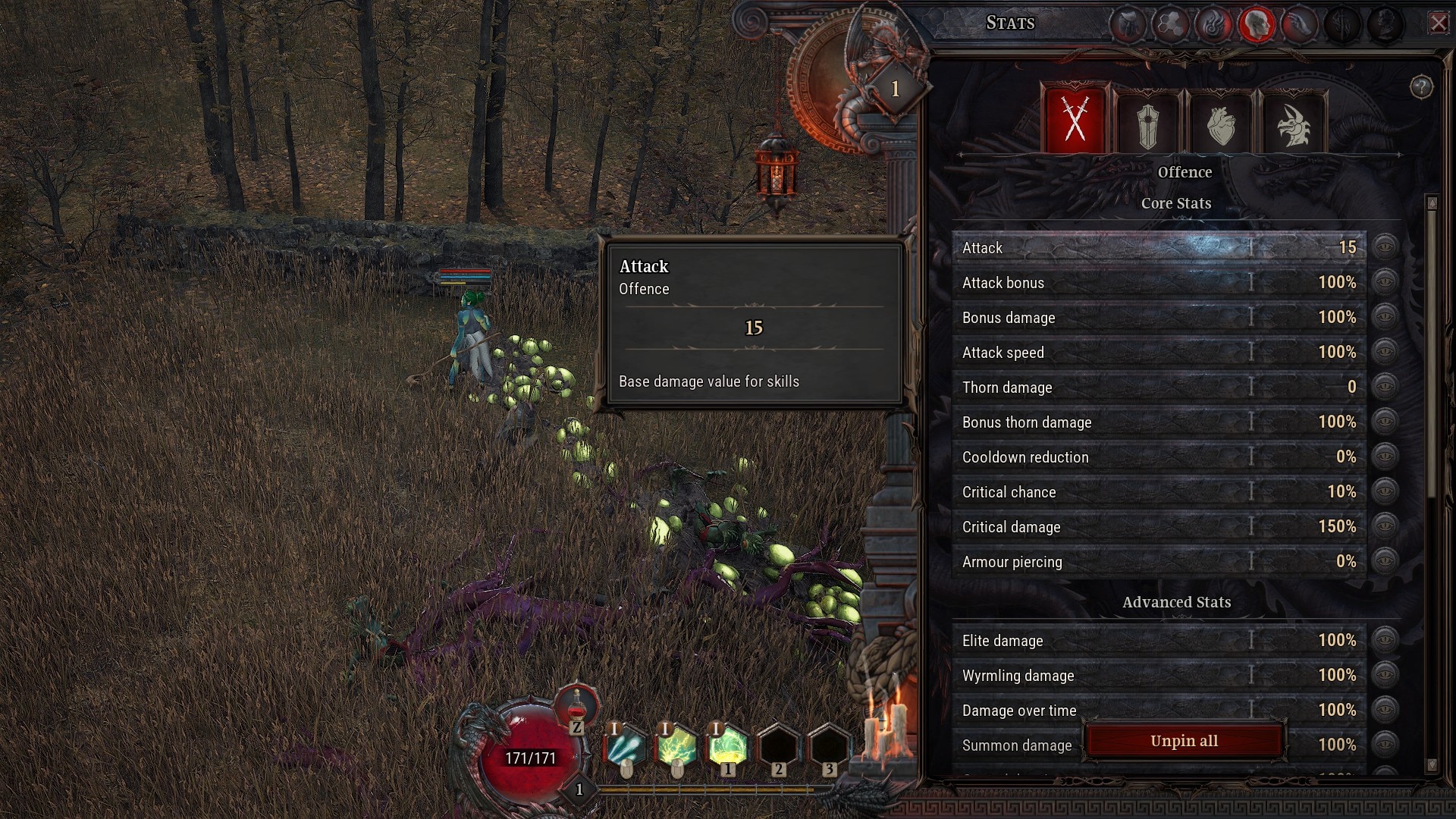
The user interface, particularly on PC, presents its own challenges. While functional, it is clearly designed around managing complex systems, which can result in cluttered menus and a lack of intuitive navigation. Interacting with the Ancestral Grid in particular can feel cumbersome at times, requiring multiple inputs and careful cursor management that does not always feel as smooth as it should with mouse and keyboard controls. Tooltips and information layers are present, but they can overwhelm rather than assist, especially when dealing with more advanced builds.
There are also minor technical issues that persist throughout the experience, including occasional UI lag, small visual glitches, and inconsistent responsiveness when navigating menus. None of these problems are severe enough to break the game, but their cumulative effect reinforces the impression of a product that has not been fully refined.
Overall, the PC version of Dragonkin: The Banished is stable and playable across a wide range of hardware, but it lacks the level of optimization and polish expected from top-tier releases in the genre. It performs reliably most of the time, yet struggles to maintain consistency under pressure, and its technical shortcomings, while not game-breaking, are noticeable enough to impact the overall experience.
Final Verdict: 7/10
Dragonkin: The Banished is a game defined as much by its ambitions as by its limitations, offering a range of ideas that aim to expand the traditional action RPG formula without always fully realizing their potential. Its most distinctive systems, particularly the Ancestral Grid and the integration of city-building mechanics, provide a strong foundation for customization and long-term engagement.
At the same time, the experience is held back by inconsistent combat feedback, uneven pacing, and a level of complexity that can feel overwhelming rather than rewarding. While the game succeeds in creating opportunities for experimentation, it does not consistently deliver the satisfaction needed to sustain that engagement over extended play.
This is not a game that lacks direction, but rather one that struggles to refine and fully integrate its ideas into a cohesive whole. It offers enough depth to appeal to players willing to invest time in understanding its systems, but it may feel less accessible to those looking for a more immediately engaging experience.