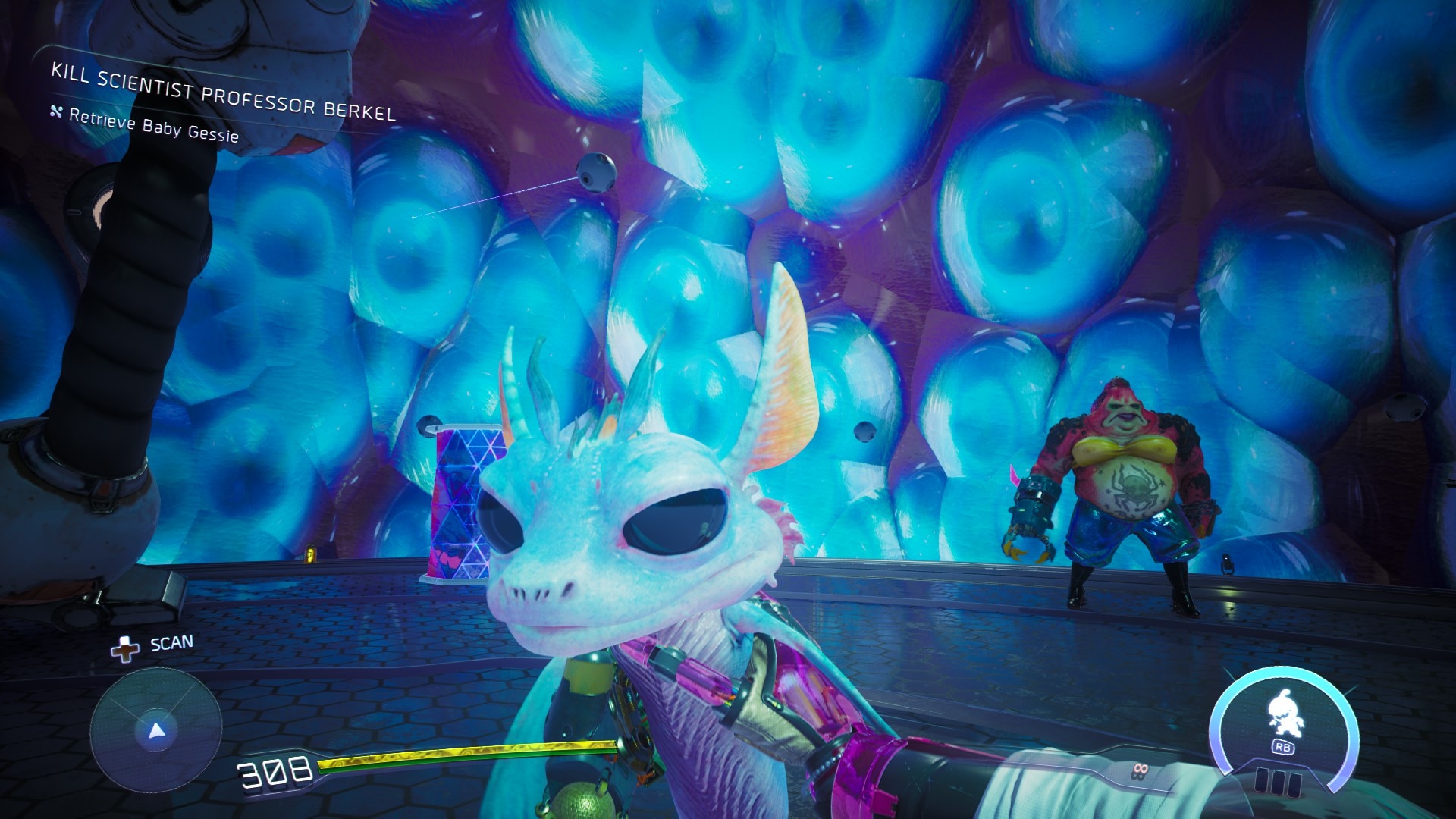
With its sequel, the team at Squanch Games expands a concept that already stood apart from most first-person shooters. The original game built its identity around talking weapons, absurd alien humor, and deliberately chaotic storytelling. High on Life 2 preserves those foundations while aiming for a broader scope, more elaborate level design, and new traversal mechanics that significantly change how players move through its worlds.
On PC, the game delivers moments of genuine creativity alongside noticeable rough edges. It succeeds through personality and imagination more than mechanical depth or technical polish. The experience feels larger and more ambitious than its predecessor, yet it also exposes the limitations of the core gameplay formula when stretched across a longer campaign. There is a clear attempt to evolve the franchise rather than simply repeat it, and that ambition is visible in both its strengths and weaknesses.
High on Life 2 ultimately occupies an unusual space. It is neither a traditional shooter focused on precision mechanics nor a purely narrative-driven adventure. Instead, it blends humor, exploration, platforming, and action into a hybrid that can feel refreshing at times and uneven at others. For players willing to accept its eccentricities, it offers a memorable journey that stands apart from more conventional releases.

Story and Narrative Design
The sequel begins with the protagonist already established as a well-known bounty hunter with a reputation across the galaxy. This shift changes the narrative tone immediately. Rather than focusing on a rise-to-hero journey, the story centers on maintaining that status while confronting threats connected to the protagonist’s past and personal relationships. Fame and responsibility become subtle thematic elements, though the game rarely explores them in depth.
The central conflict involves an organization exploiting humans in grotesque ways, fitting neatly into the franchise’s blend of body horror and comedy. The narrative attempts to introduce more emotional stakes than before, adding moments meant to feel personal rather than purely absurd. Characters occasionally reference prior events and relationships, creating a stronger sense of continuity with the original game.
This approach works in certain scenes, particularly when dialogue slows down enough to allow characters to interact beyond constant jokes. Conversations occasionally reveal motivations and vulnerabilities that add dimension to the cast. However, the emotional arc never fully develops into something compelling. Dramatic moments often transition quickly back into humor, which weakens their impact and prevents tension from building naturally.
Pacing is also inconsistent. Some missions introduce creative storytelling scenarios that temporarily alter gameplay expectations or explore unusual concepts. These segments stand out because they demonstrate a willingness to experiment beyond the basic structure. At the same time, the overarching plot lacks cohesion, and the main antagonist does not leave a strong impression despite having an interesting conceptual premise.
Ultimately, the story works best as a framework for humor and worldbuilding rather than as a deeply engaging narrative. It provides context and momentum without becoming the primary reason to play.
Gameplay and Mechanics
High on Life 2 remains fundamentally a first-person shooter with light puzzle solving and platforming. Combat revolves around the series’ defining mechanic: sentient weapons that function as both tools and characters. Each weapon offers distinct abilities, creating variety in how encounters can be approached. Some emphasize rapid-fire damage, others focus on crowd control, and certain tools double as traversal mechanics, encouraging experimentation.
The most significant gameplay addition is the new movement system built around a high-speed board used for traversal. This replaces traditional sprinting with a more fluid sense of motion, allowing players to chain jumps, slides, and momentum boosts across environments. Movement feels faster and more dynamic than in the original game, particularly during combat arenas where mobility becomes essential for avoiding damage. Traversal between objectives also becomes more enjoyable, reducing downtime and improving pacing across larger maps.
Despite this improvement, combat depth remains limited. Enemy behavior is generally straightforward, often relying on predictable attack patterns. Encounters frequently involve waves of opponents rather than carefully structured tactical scenarios. While weapon abilities are imaginative, they rarely require advanced strategy beyond selecting the most effective tool for a given enemy type.
The game does attempt to introduce variety through enemy design. Certain foes encourage vertical movement, others require timing-based attacks, and some introduce environmental hazards. These elements help prevent monotony, but they do not fully compensate for the relatively shallow core mechanics.
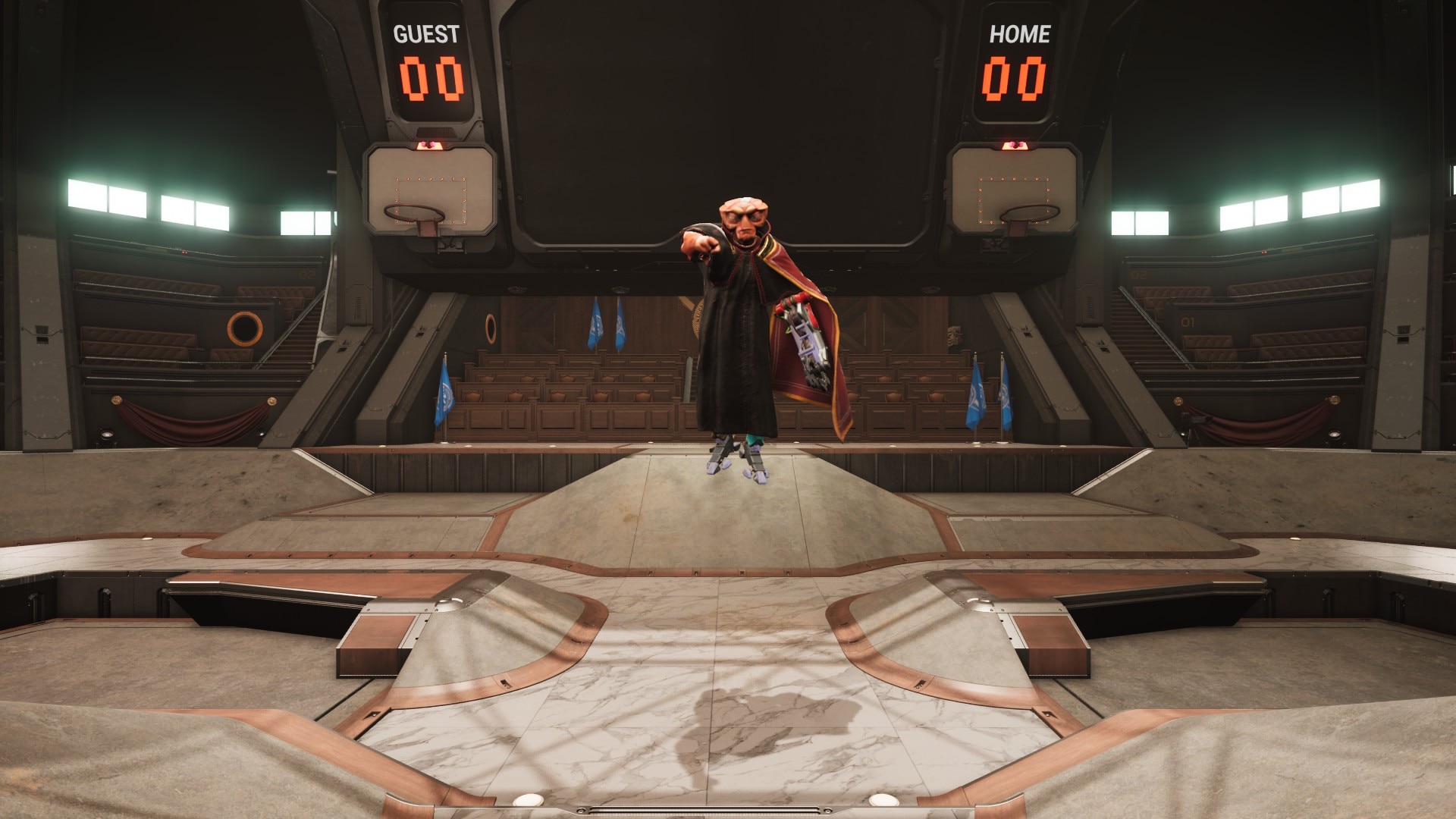
Boss encounters are more successful because they introduce unique mechanics or scripted elements that break away from standard shooting. These battles often feel memorable due to their creativity and presentation rather than difficulty. They highlight the potential of the game when it leans into experimentation and spectacle.
Overall, gameplay is enjoyable in short bursts and benefits significantly from improved movement, but it rarely reaches the mechanical depth expected from top-tier shooters. The experience prioritizes fun and personality over precision or mastery.
Weapon Design and Progression
Weapons remain central to both gameplay and storytelling. Each sentient gun has its own personality, dialogue style, and mechanical function, reinforcing the sense that equipment is part of the narrative rather than merely a toolset. Upgrades allow players to enhance abilities, modify attacks, or improve utility functions.
The progression system is straightforward. Players collect currency through missions and exploration, then spend it on upgrades that improve combat efficiency or traversal options. While functional, progression lacks complexity. There are few meaningful trade-offs or build customization options, meaning players often end up unlocking everything rather than specializing.
This simplicity is not necessarily negative. It keeps the game accessible and avoids overwhelming players with systems. However, it does limit replayability and reduces the sense of long-term character development.
Level Design and Worldbuilding
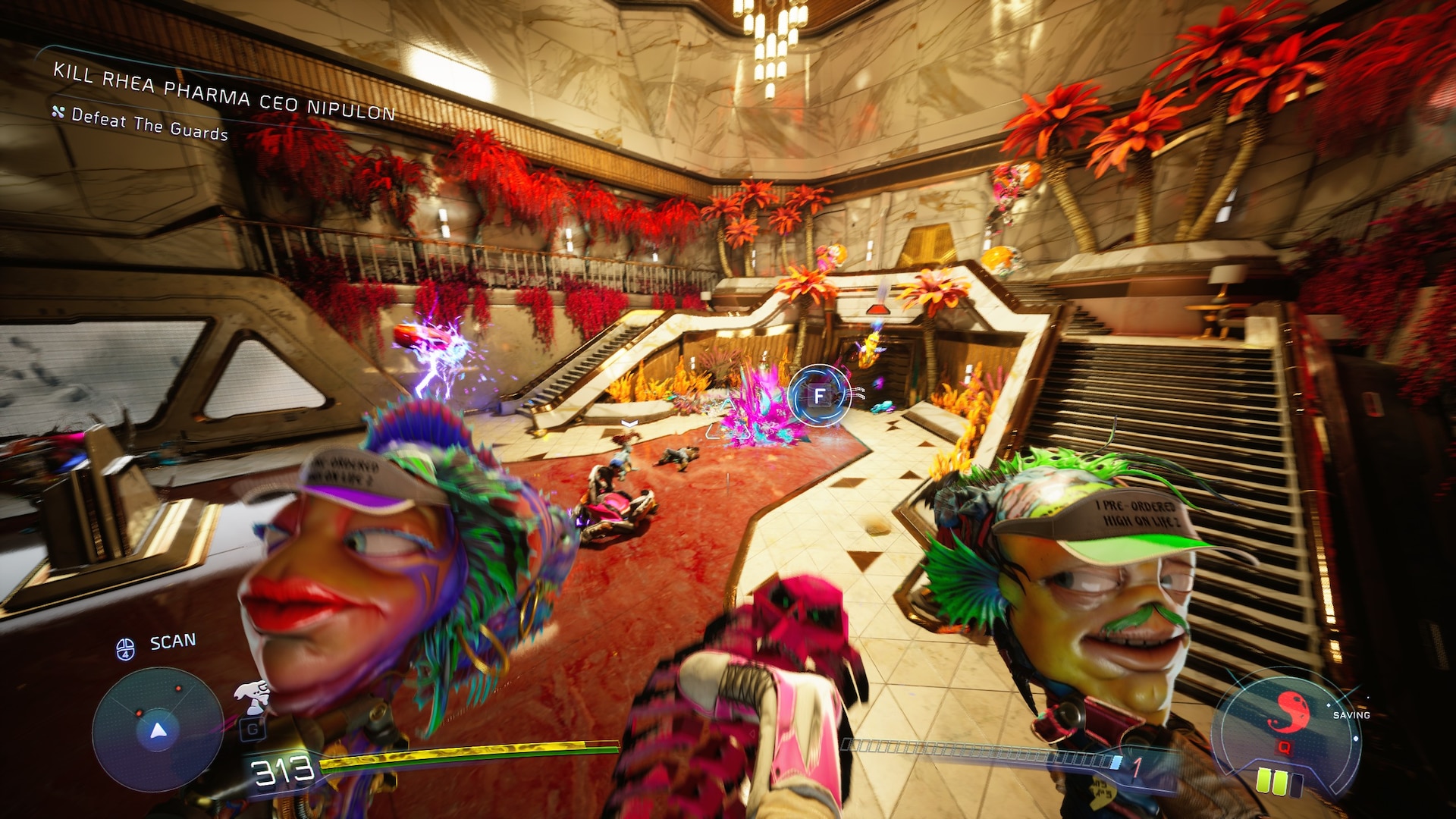
One of the strongest aspects of High on Life 2 is its level design. Environments are visually diverse and imaginative, ranging from industrial alien facilities to surreal organic landscapes that appear almost alive. Each location maintains a clear identity, helping preserve a sense of discovery throughout the campaign. Levels are more open than before, offering multiple paths, vertical exploration opportunities, and optional areas containing collectibles or hidden dialogue.
This design encourages curiosity and rewards players who take time to explore beyond the main objectives. Environmental storytelling adds depth, with background details revealing aspects of alien cultures and societies.
Puzzle elements are integrated through weapon abilities, requiring players to use tools creatively to navigate obstacles or unlock paths. These moments help break up combat sequences and provide pacing variety. Some missions experiment with entirely different gameplay structures, temporarily shifting genre conventions to create memorable experiences that stand apart from the rest of the campaign.
However, repetition does appear over time. While environments look different, encounter patterns can feel familiar, particularly in later stages. This becomes more noticeable as the novelty of the mechanics fades. A greater variety of mission objectives could have strengthened the overall experience.
Humor and Dialogue
Humor remains the defining characteristic of the franchise. High on Life 2 continues to rely heavily on comedic dialogue, absurd scenarios, and exaggerated personalities. The talking weapons once again serve as companions and sources of constant commentary, reacting to events in ways that range from sarcastic to nonsensical.
The sequel shows slightly more restraint compared to its predecessor. Dialogue feels more structured, and jokes are often delivered with improved timing. This change helps prevent fatigue during longer play sessions. Visual humor and environmental gags also play a larger role, adding variety beyond spoken dialogue and creating moments that rely on player discovery rather than scripted jokes.
Enjoyment of the humor remains highly subjective. Players who appreciate irreverent and chaotic comedy will likely find the writing entertaining throughout. Others may find the tone repetitive or immature, especially when jokes rely more on shock value than wit.
The game is at its best when humor emerges naturally from character interactions rather than constant commentary during gameplay. When dialogue aligns with the situation instead of overwhelming it, the experience feels more cohesive and engaging.
Visuals and Art Direction
The visual style embraces exaggerated alien absurdity with colorful environments and grotesque character designs. Lighting effects and environmental detail create strong atmosphere, while the art direction consistently reinforces the game’s identity. The use of bold colors and unusual textures helps distinguish each location, ensuring that environments remain memorable even when gameplay objectives are similar.
Animation quality contributes significantly to personality. Facial expressions and movements on the sentient weapons help sell their comedic identities, making them feel more alive than typical equipment in shooters. Environmental animations also add immersion, with alien creatures and background elements reacting dynamically to player actions.
During intense combat scenarios, visual clarity can suffer due to heavy particle effects and lighting. Enemies occasionally blend into the chaos, which can affect readability and moment-to-moment responsiveness. Despite this, the overall artistic presentation remains a major strength and one of the most consistent elements of the experience.
PC Performance and Technical State
The PC version delivers inconsistent technical results. Performance varies depending on hardware, with some systems running smoothly while others experience frame rate drops or stuttering. Optimization inconsistencies are most noticeable in densely detailed environments or large combat encounters where multiple effects are active simultaneously.
Crashes and minor bugs appear occasionally, including physics glitches, animation issues, or scripting interruptions. These problems rarely make the game unplayable, but they contribute to a sense that the experience could have benefited from additional polish before release.
Graphical settings allow flexibility, including resolution scaling and performance adjustments. Achieving stable performance at higher settings may require compromises even on capable hardware, particularly at higher resolutions.
Over time, patches may improve stability, but at launch the technical state feels uneven compared to more polished PC releases.
Audio and Voice Acting
Voice acting plays a central role in the experience, and performances generally succeed in bringing characters to life. The energy and comedic timing of the cast support the game’s tone and help dialogue feel spontaneous rather than scripted.

Sound design during combat is effective, with distinct weapon audio and satisfying impact feedback. Environmental audio contributes to immersion, particularly in alien locations that feel active and alive. Background sounds, creature noises, and ambient effects help reinforce the world’s strange atmosphere. The soundtrack complements the setting with experimental electronic elements suited to the sci-fi tone. Occasionally, audio balance issues arise when dialogue competes with environmental noise but these aren’t frequent to impact the experience.
Length, Difficulty, and Replay Value
The main campaign typically lasts between ten and fourteen hours depending on exploration, difficulty selection, and optional content. Difficulty settings allow players to tailor the experience to their preferred level of challenge, though even higher settings rarely transform combat into a deeply tactical experience.
Optional collectibles, hidden interactions, and upgrade opportunities provide additional incentives to explore, though they do not dramatically extend playtime. Replay value depends largely on appreciation for the humor and world. Players who enjoy discovering new dialogue variations may find reasons to revisit missions, while those focused mainly on gameplay mechanics may feel less incentive to replay once the story concludes.
The absence of multiplayer or substantial post-campaign systems reinforces the game’s identity as a single-player experience designed primarily for one complete run rather than long-term engagement.
Final Verdict: 7/10
High on Life 2 succeeds through creativity, personality, and willingness to experiment. Its worlds are imaginative, its humor is distinctive, and its movement system adds energy that the original sometimes lacked. Moments of genuine originality appear throughout the campaign, particularly in unique missions and boss encounters that demonstrate the developers’ creative ambitions.
At the same time, the game struggles to achieve consistent excellence. Combat lacks depth, narrative cohesion is uneven, and PC performance can be inconsistent. These issues prevent it from standing alongside the most polished shooters in the genre, even though it stands out for originality and style.
Nevertheless, the experience remains entertaining and memorable, especially for players who enjoy unconventional humor and imaginative sci-fi settings. It may not redefine the genre, but it offers enough creativity to justify the journey.