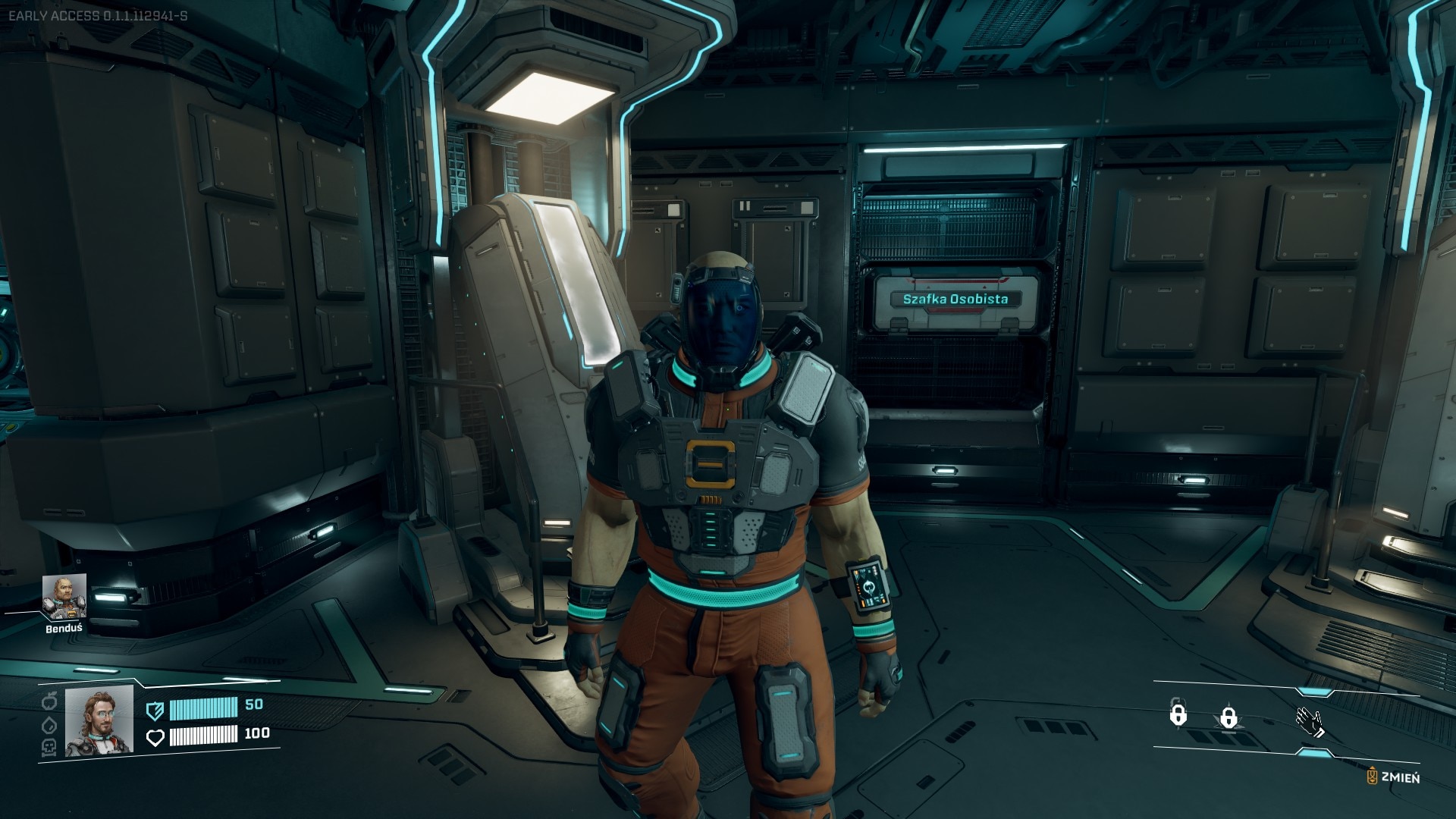
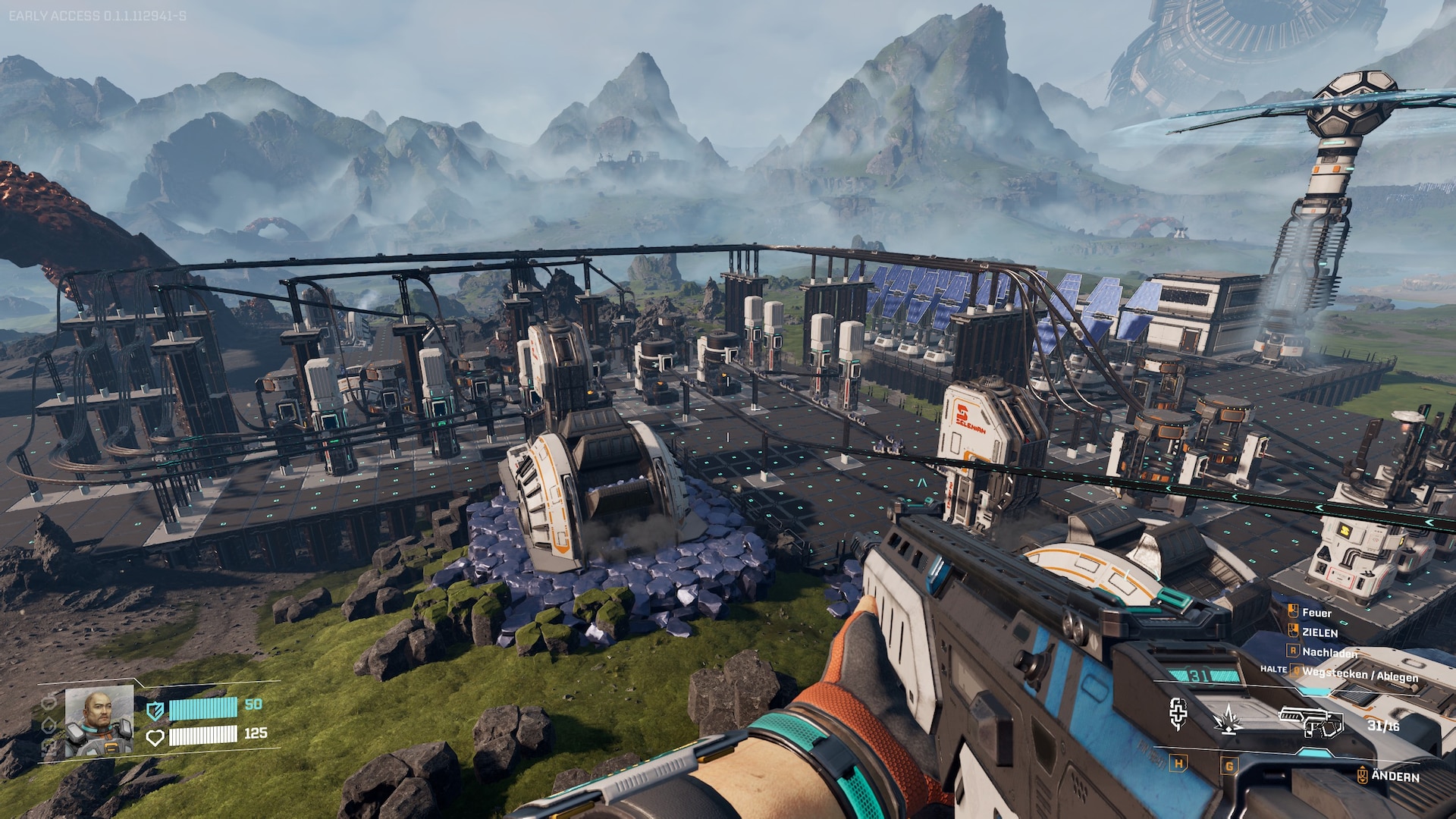
StarRupture is an ambitious Early Access title that blends survival gameplay, open-world exploration, and large-scale factory automation into a single cohesive experience. Developed by Creepy Jar, the studio best known for the punishing jungle survival game Green Hell, this project represents a notable shift in scope and design philosophy. Rather than focusing solely on physical survival, StarRupture expands the concept into industrial survival, tasking players with building and maintaining massive production systems under constant environmental and hostile pressure.
Set on the volatile alien planet Arcadia-7, the game frames the player as a disposable laborer working off a corporate sentence. This narrative backdrop, while not heavily foregrounded, provides thematic justification for the game’s harsh systems and relentless demands. Every resource extracted, every structure built, and every expedition beyond the safety of your base reinforces the idea that survival is inseparable from productivity.
While the automation systems draw clear inspiration from genre staples such as Satisfactory and Factorio, StarRupture differentiates itself through a stronger emphasis on combat, exploration, and environmental danger. Rather than functioning as a purely logistical sandbox, it positions factory-building as one pillar within a broader survival framework, creating a more physically demanding and occasionally stressful experience.

Survival and Exploration
Survival mechanics form the foundation upon which all other systems are built. Players must actively manage hydration, health, and exposure to environmental hazards, particularly as they venture into more dangerous biomes. Unlike some survival games where these systems fade into the background over time, StarRupture keeps them relevant throughout progression, especially during extended exploration runs.
Exploration is tightly woven into progression. Key blueprints, upgrades, and narrative fragments are located in abandoned outposts and facilities scattered across the world. These locations are often guarded by hostile creatures or environmental threats, forcing players to balance preparation, risk, and reward. The result is a sense of genuine tension when leaving the safety of a well-defended base.
The game offers minimal hand-holding, with few tutorials and limited onboarding. This design choice reinforces immersion and discovery, but it can also create friction, particularly for players unfamiliar with survival or automation hybrids. Systems are logical once understood, yet the learning curve is undeniably steep in the opening hours.
Factory Building and Automation
Factory construction and automation are the heart of StarRupture, and the area in which the game is most confident. Players begin with manual extraction and basic processing, gradually unlocking increasingly complex production chains that demand careful planning and spatial awareness. Power generation, resource refinement, and component assembly must all be interconnected, turning the landscape into a growing web of industrial infrastructure.
Progression is steady and satisfying, with each new automated process reducing manual workload and reinforcing a sense of mastery. Watching a once-chaotic operation evolve into a streamlined production network is consistently rewarding, particularly as power demands and logistical complexity increase.
That said, the building system shows its Early Access limitations. Placement and alignment can feel imprecise, especially when constructing larger or more intricate layouts. The lack of advanced planning tools, blueprint systems, or detailed production analytics makes optimization more labor-intensive than necessary. While none of these issues fundamentally break the experience, they introduce friction that becomes more noticeable as factories expand.
Combat and Threats
Combat plays a far more prominent role in StarRupture than in most factory-building games. Alien creatures roam the planet and frequently threaten both the player and their infrastructure, particularly during exploration or when expanding into new territory. This constant danger adds urgency to decision-making and prevents the experience from becoming overly passive.
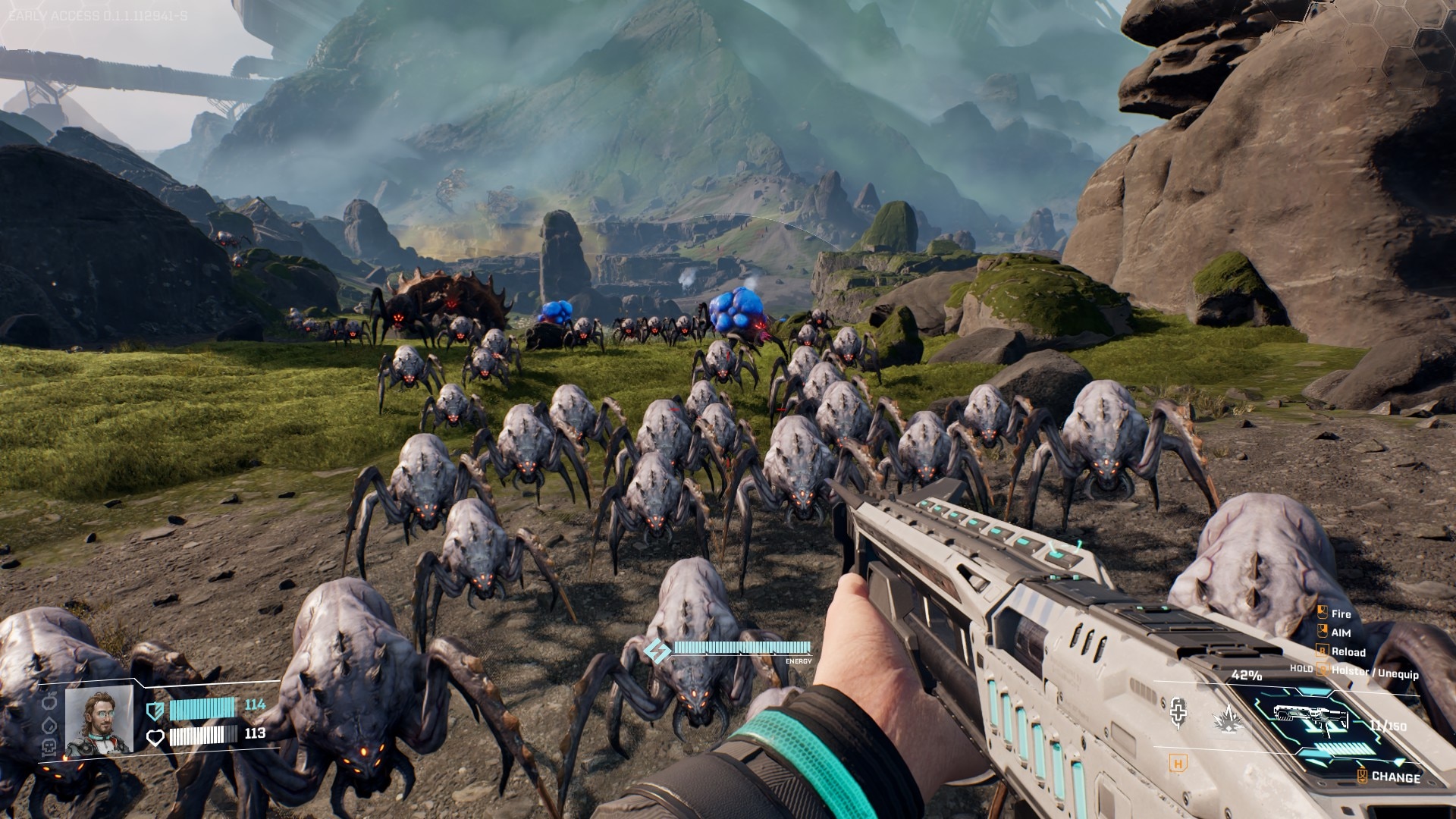
Gunplay is functional and responsive, providing a necessary counterbalance to the game’s slower, more methodical building systems. However, combat depth remains limited in the current build. Enemy behaviors lack variety, weapon progression is shallow, and encounters can feel repetitive over long sessions. Combat succeeds in maintaining tension and disrupting complacency, but it has yet to develop into a system with the same level of depth as automation or exploration.
Multiplayer
Cooperative play significantly enhances nearly every aspect of StarRupture. With up to four players working together, responsibilities can be divided organically, allowing one player to focus on exploration, another on factory optimization, and others on defense or logistics. This division of labor dramatically reduces grind and highlights the game’s systems at their best.
Co-op also mitigates many of the pacing issues present in solo play. Tasks that feel slow or overwhelming alone become engaging when shared, and communication between players adds an additional layer of strategy and satisfaction. While solo play is entirely viable, StarRupture clearly feels designed with cooperative play in mind, and it is where the game currently shines most brightly.
Technical Performance and Presentation
From a visual standpoint, StarRupture presents a grounded and cohesive alien world. Environments are varied and readable, with industrial structures integrated naturally into the landscape. The aesthetic favors functionality over spectacle, reinforcing the game’s utilitarian tone.
Performance is generally acceptable on mid-range PC systems, though optimization is inconsistent. Larger factories and complex production networks can introduce frame-rate drops, and performance issues become more noticeable as the game scales. While not unusual for an Early Access title of this scope, these issues can impact immersion during longer sessions.
The user interface is serviceable but underdeveloped. Inventory management, factory oversight, and system feedback lack refinement, and customization options are limited. These shortcomings do not render the game unplayable, but they contribute to a sense that many systems are still awaiting polish.
Strengths and Weaknesses
StarRupture is at its strongest when it embraces its ambition. The combination of deep factory automation, survival pressure, and a hostile alien world creates a compelling sense of purpose and progression. Building and maintaining industrial systems under constant threat is consistently engaging, and the co-op experience amplifies the game’s strengths by reducing grind and encouraging teamwork.
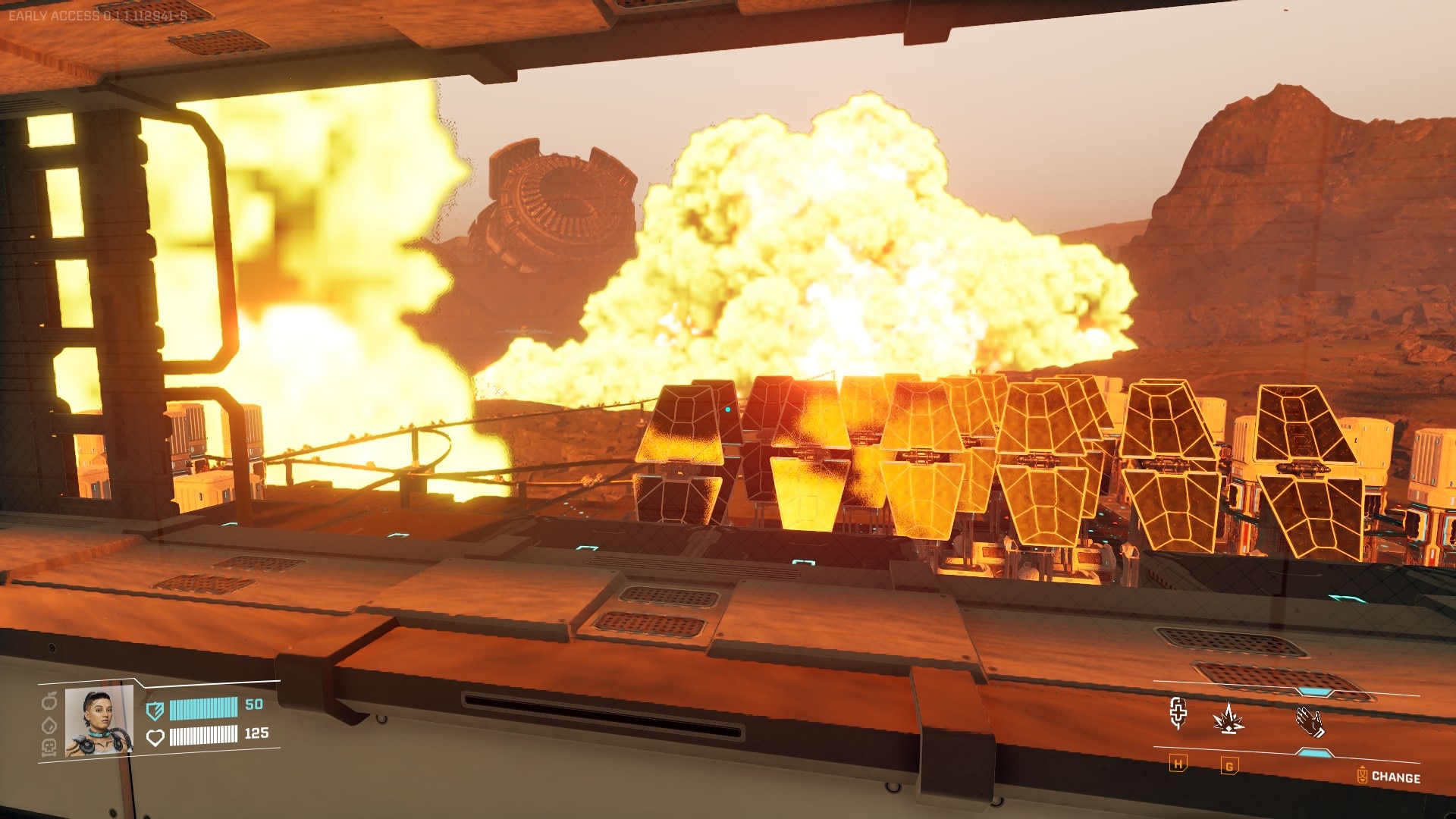
At the same time, the game’s Early Access state is impossible to ignore. Building tools lack precision, quality-of-life features are sparse, and combat systems lag behind the depth of other mechanics. Solo play can feel slow and repetitive, and technical inconsistencies occasionally disrupt the experience. These weaknesses do not undermine the game’s core vision, but they do shape its current identity as a work in progress rather than a finished product.
Final Verdict: 7.5/10
StarRupture stands as a bold and forward-thinking Early Access project that demonstrates clear ambition and a strong foundational design. Its most compelling achievement lies in the way it interlocks factory automation, survival mechanics, and environmental danger into a unified experience. Rather than treating automation as a detached systems puzzle, the game consistently frames it as a necessity for survival, reinforcing a sense of pressure and purpose that persists well beyond the opening hours.
The game is at its best when players engage with its systems holistically. Exploration feeds progression, progression enables automation, and automation creates the stability required to survive increasingly hostile conditions. This interconnected loop gives StarRupture a distinctive rhythm that separates it from more relaxed factory-building titles. The inclusion of meaningful combat and environmental threats ensures that the experience remains active and demanding, even during extended play sessions.
However, StarRupture is also unmistakably a work in progress. Mechanical friction, limited quality-of-life features, uneven combat depth, and technical inconsistencies frequently remind players of its Early Access status. These shortcomings do not negate the strengths of the experience, but they do shape expectations. The game currently rewards patience, experimentation, and tolerance for rough edges, particularly for those playing solo.
Where StarRupture truly excels is in cooperative play. Shared responsibilities transform what can feel like a slow or punishing experience into one that is strategic, engaging, and deeply satisfying. In this context, the game’s design philosophy feels fully realized, and its long-term potential becomes most apparent.