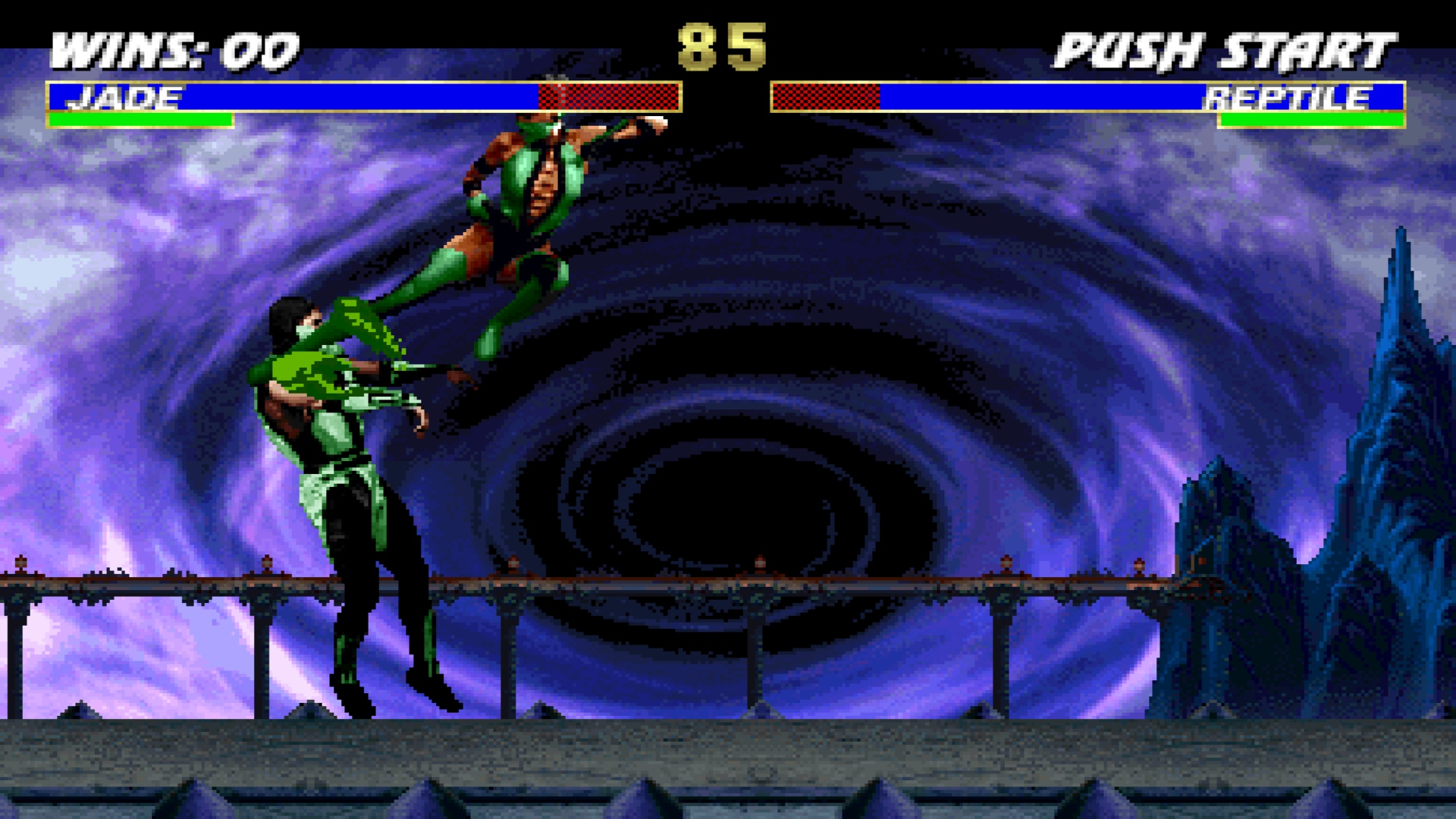
Over thirty years after Mortal Kombat first erupted onto the arcade scene in the early 1990s, it remains one of the most influential and enduring fighting game franchises in gaming history. The series shocked players with its intense, fast-paced combat, gruesome fatalities, and strikingly unique roster of characters, pushing the boundaries of what was considered acceptable in video games at the time. It not only defined a generation of arcade enthusiasts but also left a lasting cultural impact, influencing everything from competitive fighting games to mainstream media and even debates around video game violence and content regulation.

With the release of Mortal Kombat: Legacy Kollection on PC, developers have attempted something ambitious: to create a definitive anthology that doesn’t merely allow players to replay classic battles, but fully immerses them in the history, evolution, and creative process behind the franchise. It’s a project that seeks to bridge the gap between nostalgia and preservation, offering something for both those who lived through the arcade era and newcomers curious about the roots of one of gaming’s most iconic series.
The collection sets out to accomplish several goals simultaneously. For longtime fans, it is a nostalgic journey through familiar arenas, characters, and mechanics that defined countless childhood afternoons and competitive tournaments. For new players, it is an opportunity to understand where modern fighting games originated, to witness the raw mechanics and design decisions that shaped the genre. And for gaming historians and preservationists, it provides access to rare builds, regional variants, and behind-the-scenes materials that may have been inaccessible or nearly lost for decades.
This ambition, while admirable, also raises a critical question: can a modern release effectively preserve the integrity of these classic titles while still delivering an experience that feels natural and engaging on contemporary hardware? Retro collections often walk a fine line between authenticity and usability, and the success of Legacy Kollection hinges on its ability to strike that balance.
Ultimately, Mortal Kombat: Legacy Kollection is more than a simple re-release; it is an effort to cement the franchise’s legacy in gaming history. It promises a deep dive into the early years of a franchise that redefined fighting games, offering insight into both its cultural impact and mechanical evolution. While it succeeds in many ways, it also exposes the challenges inherent in bringing classic arcade experiences into the modern era, where expectations for technical polish, online functionality, and responsive gameplay are higher than ever.
Content and Presentation
At its core, Legacy Kollection is about scope and preservation. The collection includes the foundational trilogy of early Mortal Kombat titles, alongside multiple regional versions, lesser-known builds, and previously inaccessible variants. Beyond the games themselves, the package is brimming with supplementary content: developer commentary, galleries of concept art, digitized promotional material, and a documentary chronicling the creation of the franchise. This attention to context elevates the collection beyond a simple bundle of games, transforming it into a rich historical record of one of gaming’s most iconic series.
Visually, the collection is versatile. Players can choose between unfiltered emulation for a faithful arcade experience, or apply optional CRT shaders, smoothing filters, and color adjustments that replicate the appearance of 1990s arcade cabinets and CRT televisions. These options are more than cosmetic; they demonstrate a thoughtful understanding of how presentation shapes nostalgia. For players who remember dimly lit arcades or the distinctive glow of early home consoles, these touches add an additional layer of authenticity and immersion.

However, the interface is functional rather than polished. Navigation can be occasionally clunky, with some of the bonus content hidden behind unintuitive menu structures. The aesthetic, while clean and straightforward, lacks the refinement expected from a modern premium release. Despite these minor frustrations, the sheer breadth and depth of content make the collection compelling for fans and newcomers alike.
Gameplay and Combat
The gameplay in Legacy Kollection remains faithful to the originals. Early Mortal Kombat titles are preserved with their distinctive jump arcs, strict input timing, and notoriously rigid AI intact. Every combo, sweep, and projectile functions as it did decades ago, maintaining the deliberate pacing and spacing that defined the series’ early identity. For veterans, the accuracy is a welcome return, evoking memories of countless hours spent mastering the arcade machines. For newcomers, the experience may feel jarring, highlighting the contrast between the fluidity of modern fighting games and the precision-focused mechanics of the early series.
This dedication to authenticity is both a strength and a limitation. While the collection succeeds in capturing the essence of the originals, it also preserves their frustrations. Certain moves demand pixel-perfect positioning, AI patterns can be unforgiving, and some of the older systems may feel opaque to players accustomed to contemporary design conventions. These elements are historically significant, providing insight into the evolution of competitive fighting games, but they require patience and a willingness to engage with older mechanics to be fully appreciated.
Technical Performance
While the collection demonstrates meticulous care in curation, technical issues remain a noticeable hurdle. Chief among these is input latency. Even offline, the slight delay in registering commands can affect gameplay, particularly in a genre where precise timing and split-second reactions are essential. Combos that were reliable in arcades may feel inconsistent, and responsive execution—once second nature—can become a challenge.
Audio inconsistencies further detract from the experience. Distorted sound effects, occasionally missing musical cues, and uneven volume levels can break immersion and disrupt the sense of arcade authenticity. Outside of these issues, the collection performs well: menus load quickly, transitions are smooth, and the games run reliably across a variety of PC hardware. Nonetheless, for players seeking the tightest, most responsive combat, these technical limitations are difficult to overlook.
Online Play
Online features were among the most anticipated additions to Legacy Kollection, offering the promise of classic battles against other players in a modern setting. Unfortunately, the implementation falls short. Matchmaking is limited to basic quick matches, with no lobby system, no private rooms, no crossplay, and no direct friend-invitation functionality. In an era where even small-scale fighting games offer robust online infrastructure, this feels like a missed opportunity to modernize the experience.
While online matches work in principle, they lack flexibility, polish, and the reliability expected in contemporary competitive play. Players hoping to relive the thrill of classic duels with friends or challenge a broader community may find the online component underwhelming, reducing its long-term appeal.

Historical Importance
Where Legacy Kollection truly excels is in its archival ambition. It represents the most comprehensive and accessible collection of early Mortal Kombat titles ever released on modern hardware. For fighting-game historians, franchise fans, and preservation-minded players, it offers an unparalleled opportunity to study the series’ design, mechanics, and cultural impact in a single, cohesive package.
The inclusion of rare builds and regional variations enhances its educational value, allowing players to witness the evolution of the franchise firsthand. In this sense, the collection functions as both entertainment and a carefully curated historical document—a digital museum preserving a cornerstone of gaming history.
Final Verdict: 7/10
Mortal Kombat: Legacy Kollection is a paradoxical release: a triumph of archival ambition that simultaneously highlights the challenges of modernizing classic games. Its content is rich, its historical significance profound, and its presentation largely faithful to the originals. For fans who value nostalgia and preservation, it offers a unique and rewarding experience.
However, technical flaws—including input latency, audio inconsistencies, and limited online functionality—prevent it from reaching its full potential. The collection is best appreciated as a museum of Mortal Kombat history rather than a competitive fighting platform for modern players.
For anyone seeking to explore the origins of the franchise, celebrate its legacy, or study its evolution, Legacy Kollection is an essential anthology. For players looking for precision, polished competitive mechanics, or robust online features, a degree of patience—or moderated expectations—is required.