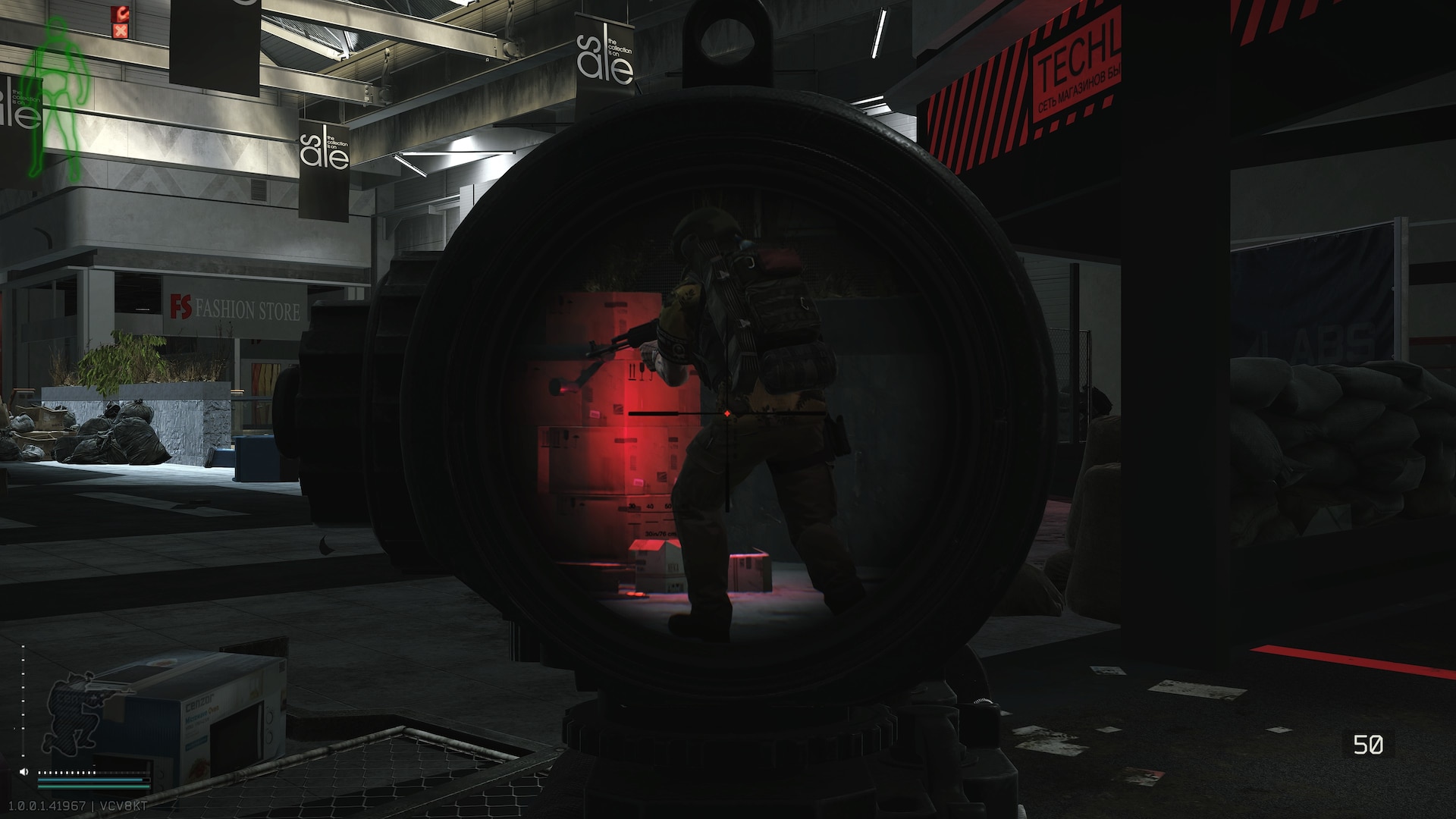
Few modern shooters have carried the weight of expectation that Escape from Tarkov brought into its long-awaited 1.0 release. After nearly a decade of development, countless revisions, and an extended early access period that became infamous within the industry, Battlestate Games has delivered a title that is both astonishingly ambitious and deeply polarizing. The final product is a fiercely uncompromising extraction shooter that pushes realism, mechanical depth, and systemic interactivity further than any mainstream competitor. At the same time, it exposes the fragility of such ambition, with persistent accessibility barriers, technical flaws, and design decisions that refuse to cater to a broad audience.
What Escape from Tarkov delivers better than any other shooter is the feeling that every action matters. Every footstep, inventory choice, ammunition type, and route through a hallway carries tangible consequence. This sense of weight defines the experience — it produces the game’s most unforgettable moments while also generating frustration that will inevitably drive some players away.

Core Gameplay and Design
At its foundation, Escape from Tarkov revolves around instanced raids. Players enter these sessions either as a hired PMC — bringing their own gear and risking permanent loss — or as a Scav, a lower-risk role with randomized equipment. Within each raid, objectives remain deceptively simple: gather valuable items, survive encounters with players and AI, and extract before the timer expires. Anything successfully extracted becomes part of a persistent inventory and progression system; anything lost upon death is gone permanently.
This permanence transforms what could have been a standard looter-shooter loop into something tense and methodical. Actions that would be trivial in other shooters — opening a drawer, crossing a hallway, or deciding whether to reload — become meaningful risks. The design heavily discourages impulsive play. Reckless aggression rarely succeeds, regardless of mechanical skill, and learning to avoid unnecessary engagements becomes essential. Tarkov teaches restraint, map knowledge, and risk management through harsh consequences rather than tutorials.
The psychological impact of this structure cannot be overstated. Few games generate genuine dread as effectively. Hearing distant footsteps in an abandoned factory, uncertain whether they belong to a lone Scav or a coordinated squad, forces players into rapid cost-benefit calculations. The tension elevates even mundane decisions, making successful extractions feel emotionally significant in a way few multiplayer titles achieve.
Combat, Weapons, and Ballistics
Combat in Escape from Tarkov is defined by lethality and simulation depth. Firearms behave with an obsessive level of mechanical fidelity that borders on simulation. Recoil patterns, muzzle velocity, barrel length, ergonomics, weight distribution, and ammunition type all affect performance. Ammunition selection is as important as weapon choice, with ballistic properties determining whether a hit pierces armor or simply causes blunt trauma. Armor itself varies in material and durability, meaning that a vest that saved a player moments ago may no longer reliably stop incoming rounds.
Weapon modification is not a cosmetic flourish but a core pillar of gameplay. Nearly every component of a firearm can be replaced, from receivers and bolts to stocks, grips, rails, and optics. Modding introduces meaningful trade-offs rather than linear upgrades. Increasing ergonomics may reduce recoil control, suppressors affect handling and sound signatures, and certain optic setups excel only under specific lighting or engagement distances. Building a weapon becomes a strategic exercise that rewards research and experimentation.
Firefights are often short and decisive. A single well-placed round can end a raid, even for heavily armored operators, creating high stakes in every engagement. Sound plays a crucial role in this dynamic. Tarkov’s audio design functions not merely as immersion but as a primary gameplay system. Footsteps communicate movement speed and surface type, gunshots echo realistically across environments, and subtle noises — a shifting backpack, a breathing change, a door latch — can reveal a player’s presence. Many encounters begin long before shots are fired, as players interpret sound cues to plan ambushes, escapes, or flanking routes.

Progression, Economy, and Mechanics
Outside of raids, Escape from Tarkov presents an intricate progression ecosystem built around traders, questlines, crafting, and the hideout. The hideout serves as a personalized base that players gradually develop, unlocking practical benefits such as improved stamina recovery, faster healing, more efficient crafting, and access to specialized equipment. This system provides a persistent sense of advancement independent of loot, anchoring long-term motivation.
Trader quests form the backbone of progression. These tasks are frequently challenging, requiring specific kill conditions, weapon builds, or rare items. Completing them unlocks higher trader loyalty levels, improved inventory access, and valuable crafting blueprints. The in-game economy further complicates progression, with item values fluctuating based on scarcity, demand, and seasonal changes.
However, this depth comes at a cost. The game provides minimal onboarding and assumes players will either experiment extensively or rely on external resources. Critical information—ballistic performance, armor penetration thresholds, crafting priorities—is largely undocumented in-game. For newcomers, early progression can feel punishingly opaque, and without community guides, many will struggle to understand core mechanics.
Periodic progression wipes, in which player progress is reset and systems are rebalanced, remain contentious. Supporters argue that wipes refresh the experience, maintain competitive balance, and reinvigorate the economy. Critics view them as discouraging, particularly for players with limited time who may feel their investment is repeatedly erased. Regardless, wipes fundamentally shape Tarkov’s pacing and community engagement.
Content and Variety
By its 1.0 release, Escape from Tarkov offers a diverse array of maps with distinct layouts, atmospheres, and gameplay profiles. Tight industrial interiors encourage close-quarters tactics, while expansive outdoor areas emphasize navigation, long-range shooting, and environmental awareness. Each map features unique loot distribution, AI behavior, and environmental hazards, requiring players to adapt both loadouts and strategies.
Roaming bosses and elite AI add unpredictability, capable of overwhelming unprepared players or offering valuable rewards. Their patrol patterns and aggression levels create dynamic hotspots that reshape raid flow.
Night raids introduce additional complexity. Reduced visibility demands the use of night-vision equipment or alternative lighting, while amplified audio increases the importance of stealth. These conditions force players to make meaningful trade-offs between concealment and awareness.
Replayability is driven not by scripted missions but by emergent encounters. A single raid might evolve from silent looting into a multi-squad battle triggered by a rare item spawn. This unpredictability ensures that even familiar maps remain engaging, and it underpins Tarkov’s long-term appeal.
Technical Performance and Launch State
The transition to version 1.0 and the Steam launch suffered from significant technical instability. Widespread server issues, matchmaking delays, crashes, and severe desynchronization marred the release window. For a game that relies so heavily on precision and fairness, these problems had an outsized impact on reception.
Performance remains uneven. High-end hardware can produce impressive visuals and smooth framerates, yet even well-optimized systems may encounter stutters, inconsistent frame pacing, or latency spikes. Hit registration and audio desynchronization occasionally disrupt otherwise tense engagements, undermining the sense of control essential to the experience.
Post-launch patches and infrastructure improvements have mitigated many of the most disruptive problems, but the memory of the unstable release continues to influence public perception. Technical reliability is not merely a refinement issue for Tarkov — it is a foundational requirement for its high-stakes design.

Evaluation and Audience
When Escape from Tarkov operates as intended, it delivers an intensity unmatched in modern shooters. The combination of high stakes, deep simulation, and meaningful progression creates moments of triumph that feel genuinely earned. The atmosphere is dense and absorbing, the sound design is exceptional, and emergent encounters generate stories no scripted campaign could replicate.
However, the qualities that define Tarkov’s strengths also form substantial barriers. The steep learning curve, absence of meaningful onboarding, and dependence on external knowledge make the early experience unforgiving. Technical instability and unpredictable economic shifts erode confidence, while the emotional toll of losing hard-earned gear will deter players who prefer more forgiving progression systems.
As a result, Tarkov appeals most strongly to players who value realism, tactical depth, and systemic mastery. Those willing to study mechanics, refine loadouts, and approach engagements strategically will find an endlessly rewarding experience. Players seeking fast-paced action, accessible progression, or polished mainstream design will likely feel overwhelmed or alienated.
Final Verdict: 7/10
Escape from Tarkov stands as one of the most daring and memorable shooters of its era. Its unwavering commitment to realism and consequence produces extraordinary tension and satisfaction, creating an experience unmatched by traditional multiplayer design. Yet its complexity, harshness, and technical shortcomings limit its broader appeal.
Ultimately, it is a niche masterpiece: brilliant, immersive, and exhilarating when everything works, but inconsistent and demanding enough to prevent mainstream success. For those willing to endure its challenges, Escape from Tarkov offers a uniquely compelling and unforgettable experience.