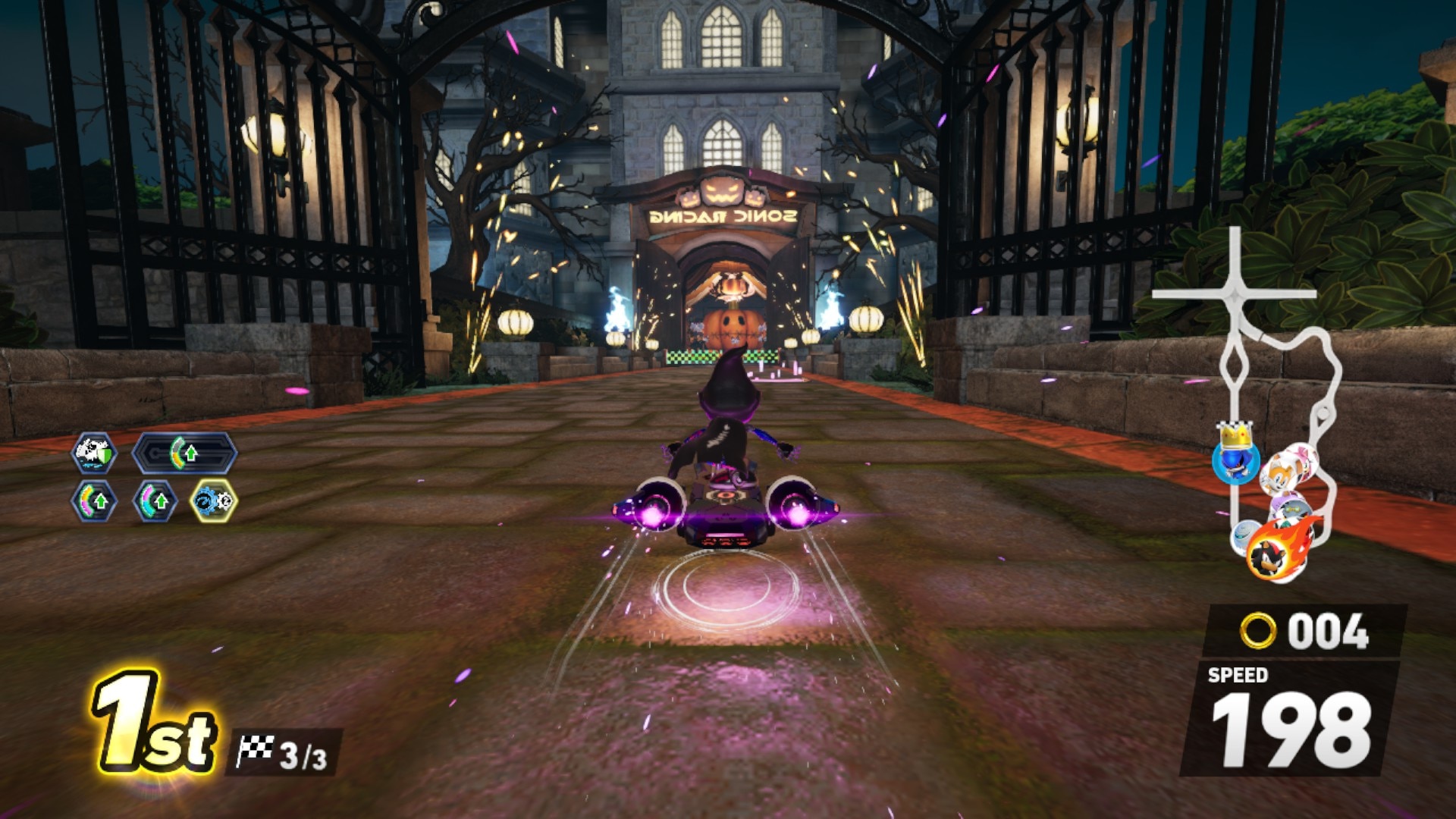
Over three decades after his 16-bit debut, Sonic the Hedgehog continues to chase new ways to go fast — and Sonic Racing: CrossWorlds might be the boldest experiment yet. Developed by Sonic Team and powered by Unreal Engine 5, this latest entry takes the familiar high-speed kart racing formula and shatters it across dimensions. The result is a crossover-laden spectacle that mixes the energy of Sonic & All-Stars Racing Transformed with modern presentation, online integration, and deep customization.
On PC, CrossWorlds is a feast for the eyes and ears — and when it’s firing on all cylinders, it’s one of the most exhilarating arcade racers in years. But under that blistering speed lies a game occasionally undermined by technical instability, uneven performance, and a progression system that demands patience. It’s not perfect, but when everything clicks, it’s pure Sega magic.
Gameplay and Mechanics
The foundation of Sonic Racing: CrossWorlds remains true to its predecessors: tight arcade handling, exaggerated drift physics, and a constant emphasis on maintaining momentum. The driving model hits a sweet spot between accessibility and mastery. Even newcomers can pick up a controller and start chaining drifts, while veterans will find depth in optimizing boost timing, slipstreaming, and managing item usage.
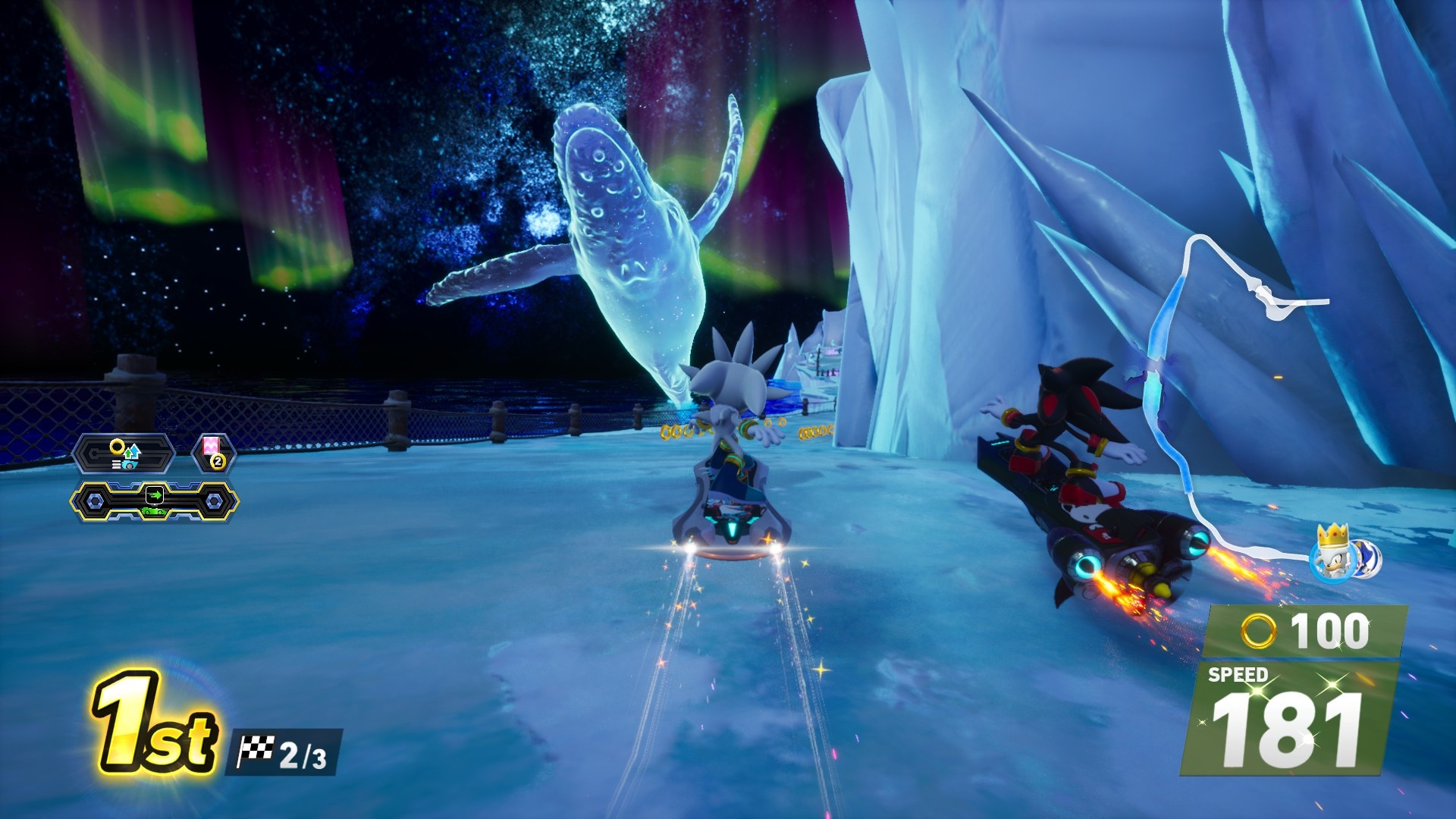
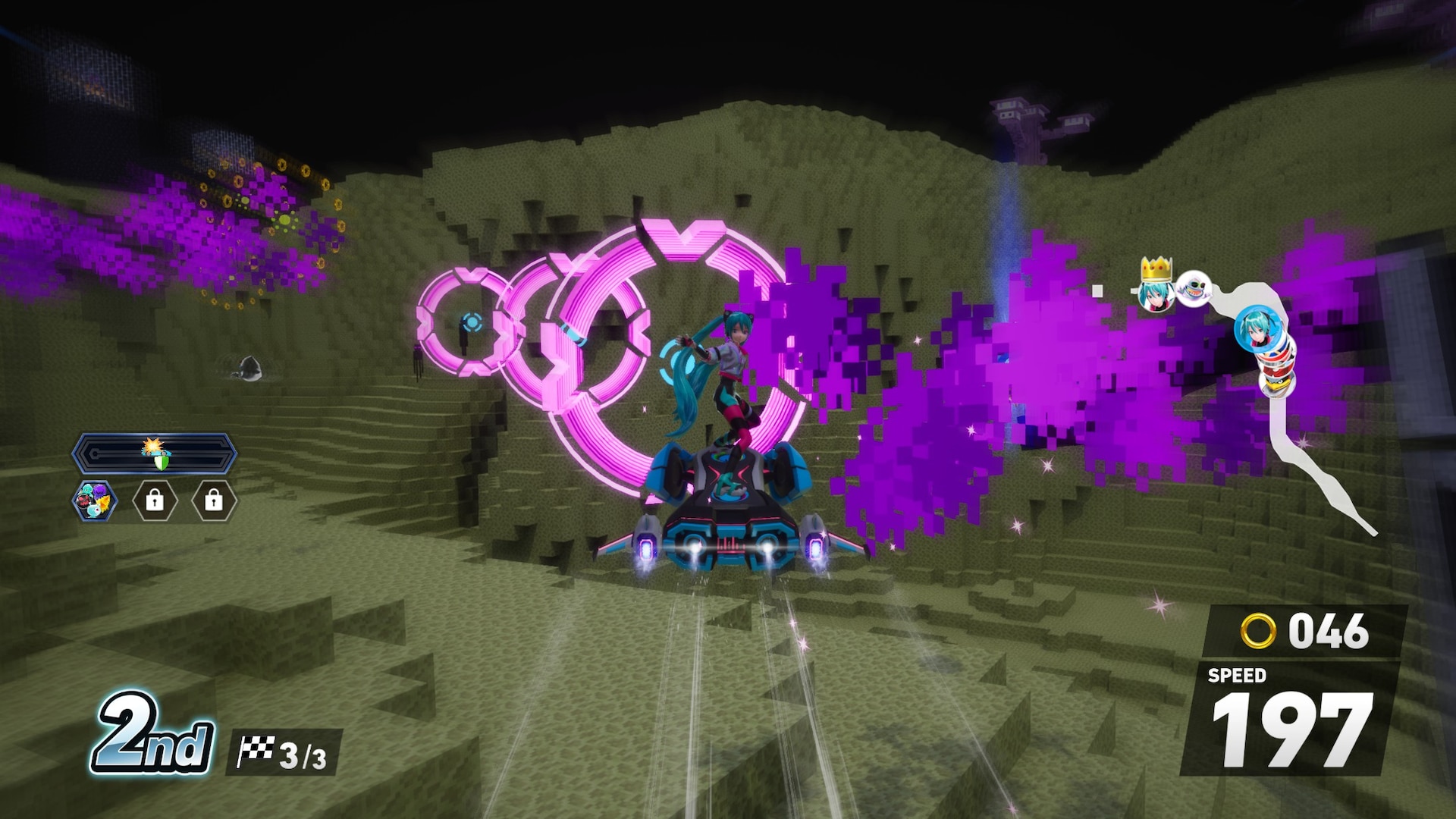
What truly sets this entry apart is the game’s namesake mechanic — the CrossWorlds portals. Scattered throughout each race, these glowing dimensional gates tear the fabric of the track open, sending racers hurtling through alternate realities. One moment you’re drifting through the neon skyline of Station Square; the next, you’re surfing over lava in a reimagined Green Hill Zone twisted by Chaos energy. These transitions aren’t just visual flourishes. They alter gravity, change surface traction, and introduce environmental hazards on the fly, forcing players to adapt in real time.
This mechanic breathes unpredictability into every lap. It can be chaotic — sometimes frustratingly so — but it also ensures that no two races feel the same. The sense of velocity when entering a portal, combined with the split-second decision-making it demands, is electrifying.
The item system, a staple of any kart racer, returns with a familiar mix of offensive and defensive tools. Sonic Team has tweaked the balance, introducing a few new power-ups that fit the interdimensional theme — such as the Warp Core, which temporarily reverses controls for nearby opponents, and the Ring Cyclone, a defensive shield that converts incoming attacks into collectible rings. However, the item distribution still skews toward chaos, and a single well-placed projectile can undo a perfect run. For players seeking precision and skill-based racing, that randomness may occasionally grate, though it fits the game’s cartoonish energy.
Customization and Progression
CrossWorlds is easily the most customizable Sonic racer to date. Every character — from Sonic and Tails to deeper Sega cuts like Beat from Jet Set Radio and Aigis from Persona 3 — comes with a base vehicle that can be fine-tuned through a robust parts system. Players can swap out engines, frames, tires, and even boosters, each affecting handling, acceleration, and drift potential.
These modifications aren’t superficial. The difference between a lightweight chassis tuned for cornering and a heavy build optimized for top speed is immediately noticeable. It’s a rare example of meaningful customization in an arcade racer, allowing players to build around personal playstyles rather than simply chasing stat boosts.
Cosmetic customization is equally satisfying. Paint jobs, decals, and accessories can be unlocked through gameplay or earned via event challenges. The color editor is especially flexible, letting players recreate everything from traditional Sonic blue-and-gold schemes to outlandish metallic gradients.
However, progression can feel padded. Unlocking new parts requires Chaos Tokens, earned through races and daily challenges. The grind can become tedious in single-player, as rewards are often small relative to the effort required. While this system ensures long-term engagement, it risks frustrating those who simply want to experiment freely.

Content and Game Modes
At launch, Sonic Racing: CrossWorlds offers a surprisingly rich array of content. The central Grand Prix Campaign serves as both a story mode and a tour through the game’s multiverse concept. Sonic and friends find themselves pulled into a digital realm known as the CrossWorlds, where characters from across Sega’s history converge for a grand racing tournament. The story is delightfully self-aware — campy, fast-paced, and filled with Easter eggs for long-time fans.
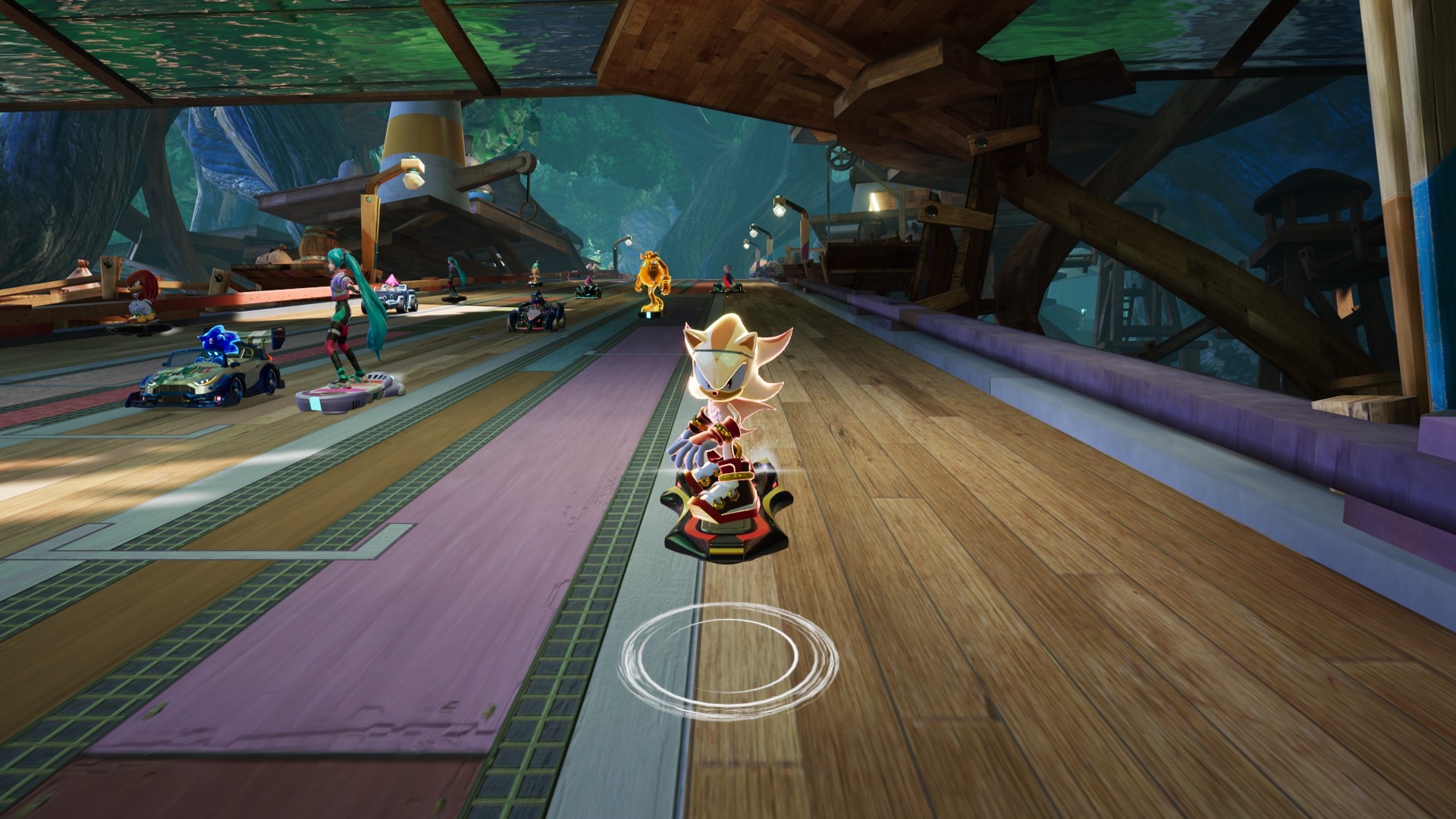
Outside the campaign, the game includes Time Trials, Quick Play, and a fully-featured Online Multiplayer suite. Online races support up to 12 players, and cross-platform play between PC and consoles works seamlessly when servers behave. Matchmaking can take a while, especially during off-peak hours, but when a race begins, the action is smooth and competitive.
Local Split-Screen also makes a welcome return, supporting up to four players with stable performance on most mid-range PCs. It’s an increasingly rare feature in modern racers and adds substantial replayability for couch sessions.
The variety of tracks deserves special mention. Spread across multiple worlds — from the techno-industrial sprawl of Eggopolis to the lush, dreamlike Mirage Garden — each track brims with visual personality. The CrossWorld transitions ensure visual diversity even within a single circuit, preventing the repetition that plagues many kart racers.
Visuals and Performance on PC
Running on Unreal Engine 5, CrossWorlds is visually spectacular. Character models are expressive and detailed, track environments burst with color and energy, and lighting effects give each race an almost cinematic flair. The moment you blast through a CrossWorld portal and watch the scenery dissolve into shards of color before reforming into a new dimension is one of the most jaw-dropping sights in any racing game this year.
On powerful hardware, the PC version delivers smooth 60–120 FPS gameplay with crisp textures and fast load times. Ultrawide and 4K displays are supported natively, and the game benefits from high refresh rates, making its sense of speed even more intoxicating. The options menu offers granular control over shadows, reflections, and post-processing, allowing players to fine-tune visuals for performance.
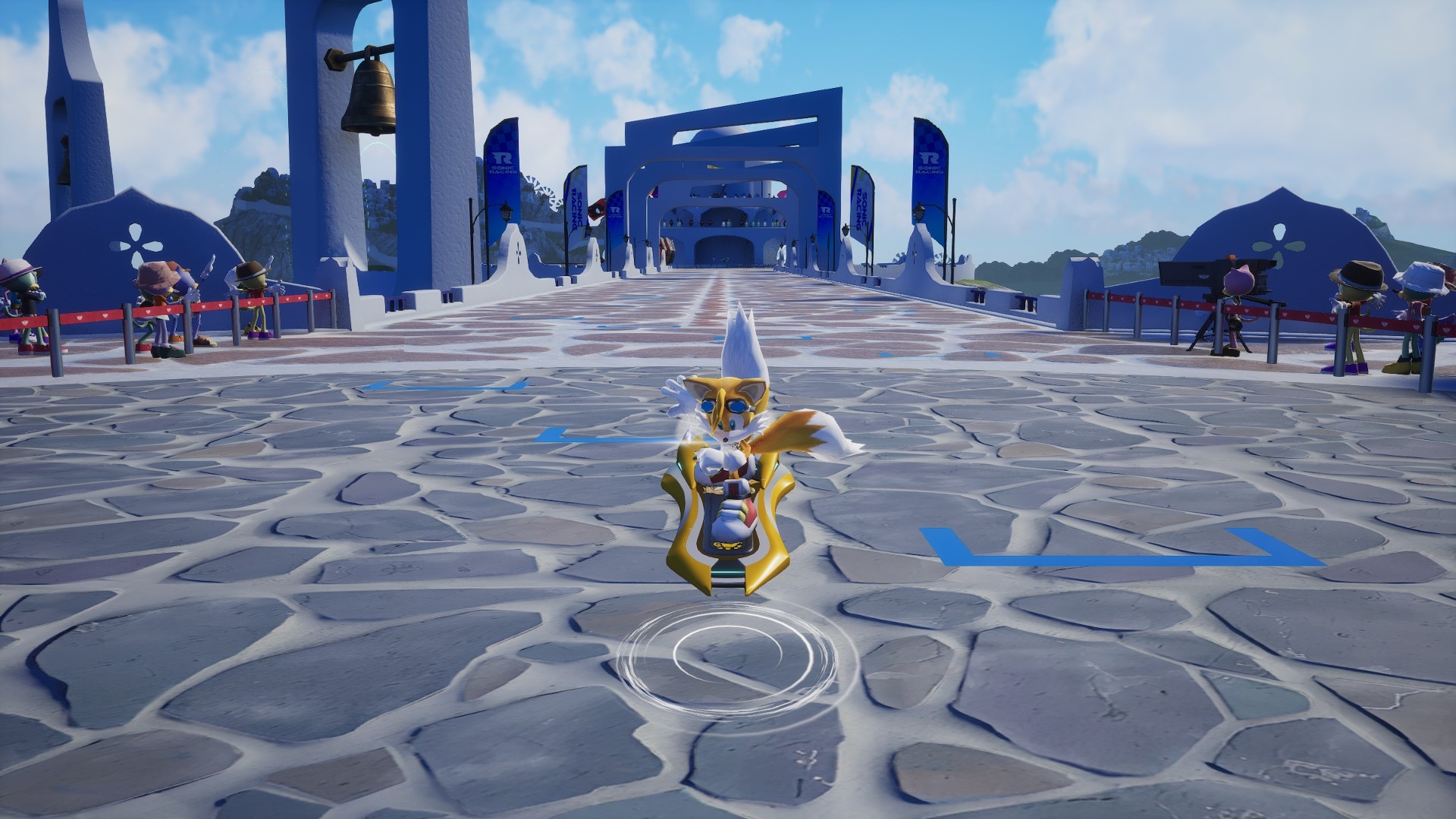
Unfortunately, optimization remains uneven. Some users experience stutters or frame pacing issues during CrossWorld transitions, and the game’s default DirectX 12 renderer has been linked to occasional crashes. Switching to DirectX 11 via launch options often improves stability without major visual compromises. While these issues are far from game-breaking, they do interrupt what is otherwise a technically impressive presentation.
Sound and Presentation
Sega’s trademark sound design shines in CrossWorlds. The soundtrack fuses energetic EDM with remixes of classic Sonic and Sega themes, shifting dynamically as you move between dimensions. It’s fast, loud, and unmistakably Sega — an adrenaline rush that perfectly complements the on-screen chaos.
Voice acting is light but effective, with returning cast members delivering their usual mix of bravado and humor. The banter between characters mid-race adds personality without becoming intrusive. Engine sounds, item effects, and boost audio cues all contribute to an incredibly satisfying sensory experience.
The interface, meanwhile, is clean and efficient, using bright neon accents and smooth animations that match the game’s futuristic tone. Navigating menus feels intuitive, and load times are impressively short on SSDs.
Final Verdict: 8/10
Sonic Racing: CrossWorlds isn’t just another spin-off — it’s Sonic Team’s most ambitious attempt to redefine what a Sonic racer can be. Its dazzling presentation, dynamic dimensional shifts, and deep customization make it stand out in a crowded genre. The PC version, despite some technical blemishes, offers the definitive experience thanks to its visual fidelity, control flexibility, and smooth performance on capable rigs.
It’s not without flaws. The grind-heavy progression, occasional online instability, and volatile item balance can frustrate, especially for players seeking pure competition. Yet for every moment of irritation, there are five of pure exhilaration — the kind only Sonic’s brand of speed can deliver.
At its best, CrossWorlds captures the spirit of classic Sega: fast, colorful, chaotic, and endlessly replayable. For fans of arcade racing, it’s a must-play. For everyone else, it’s one of the most vibrant and entertaining racing experiences of the year — as long as you don’t mind a few bumps on the road to top speed.