For two games, Little Nightmares belonged to Tarsier Studios — the Swedish team whose haunting world of childlike terror carved a place among modern indie horror classics. When Supermassive Games (of Until Dawn and The Dark Pictures Anthology fame) took the reins, fans were curious and cautious. Could a studio known for cinematic storytelling capture the wordless unease that defined Little Nightmares?
The short answer: mostly yes. Little Nightmares III feels like a proper sequel in tone and structure — a surreal odyssey through worlds that defy reason and physics — but its new ideas, particularly online co-op, occasionally clash with the series’ minimalist DNA. The result is a game that’s visually astonishing and emotionally affecting, but mechanically uneven.

Two Lost Souls
Little Nightmares III introduces two new child protagonists: Low, a quiet boy armed with a bow, and Alone, a small girl who carries a wrench that doubles as her survival tool. The game opens in the Necropolis, a sand-swept city of hollow towers and wind-choked corridors. From the first steps, it’s clear that Supermassive understands what makes this series tick: vulnerability. Every plank creak, every off-screen thud, every slow pan through a desolate room adds weight to your movement. You never feel safe.
Unlike previous entries, you’re not alone this time — literally. The entire game is built around two-player online co-op, letting you and a friend inhabit Low and Alone simultaneously. The idea is brilliant on paper. Horror is often more visceral when shared, and Little Nightmares III thrives on moments of silent coordination: one player holding a door while the other squeezes through, or both timing a sprint to avoid a searching spotlight. There’s a natural rhythm to the cooperation that makes simple actions — like handing over an item or hoisting your partner to a ledge — feel strangely intimate.
In practice, the implementation is less seamless. Connectivity is inconsistent, with occasional lag or desynchronization disrupting the experience. The lack of local co-op also feels like a missed opportunity, especially for a series built on shared storytelling. Still, when online play works, it adds a human warmth that the previous games deliberately withheld.
For solo players, the AI companion takes over your partner’s role. It’s functional but imperfect: the AI can lag behind, hesitate on jumps, or fumble timed interactions. It rarely breaks the game, but it can erode tension in sequences that demand split-second precision.
A World Worth Losing Sleep Over
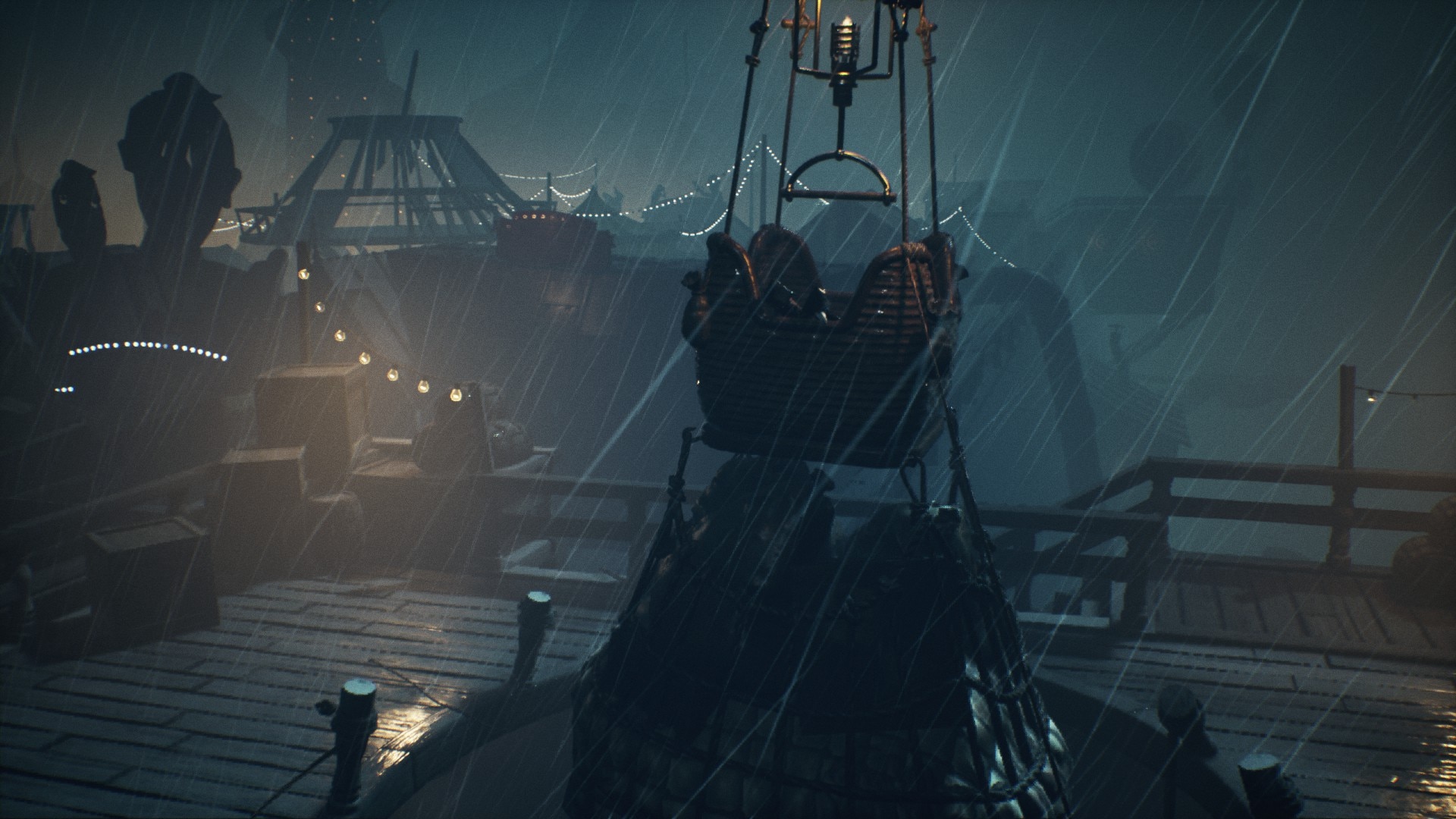
If the gameplay is occasionally uneven, the atmosphere is flawless. Little Nightmares III is, quite simply, one of the most visually arresting games of the year. Each chapter unfolds in a self-contained nightmare realm: the dusty Necropolis, the warped Carnevale, and the surreal Mirror City — all distinct, all deeply unsettling.
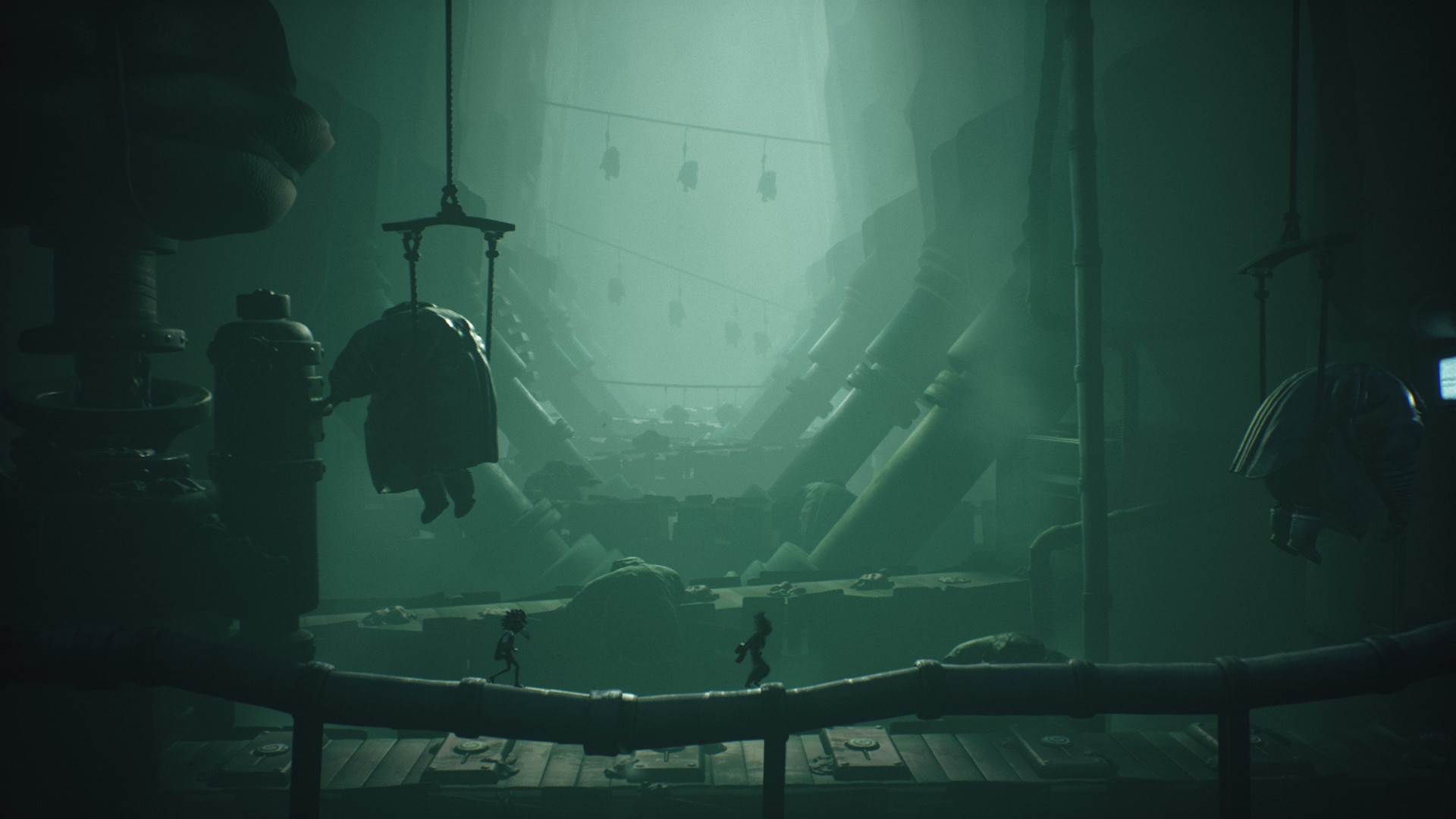
Supermassive expands on Tarsier’s diorama-like level design with more dynamic camera work. The camera occasionally pulls back, giving scenes a cinematic scope without sacrificing intimacy. In one standout moment, a camera pans across a crumbling bridge as you and your partner climb opposite sides — a breathtaking display of scale that underscores just how small and fragile these characters are.
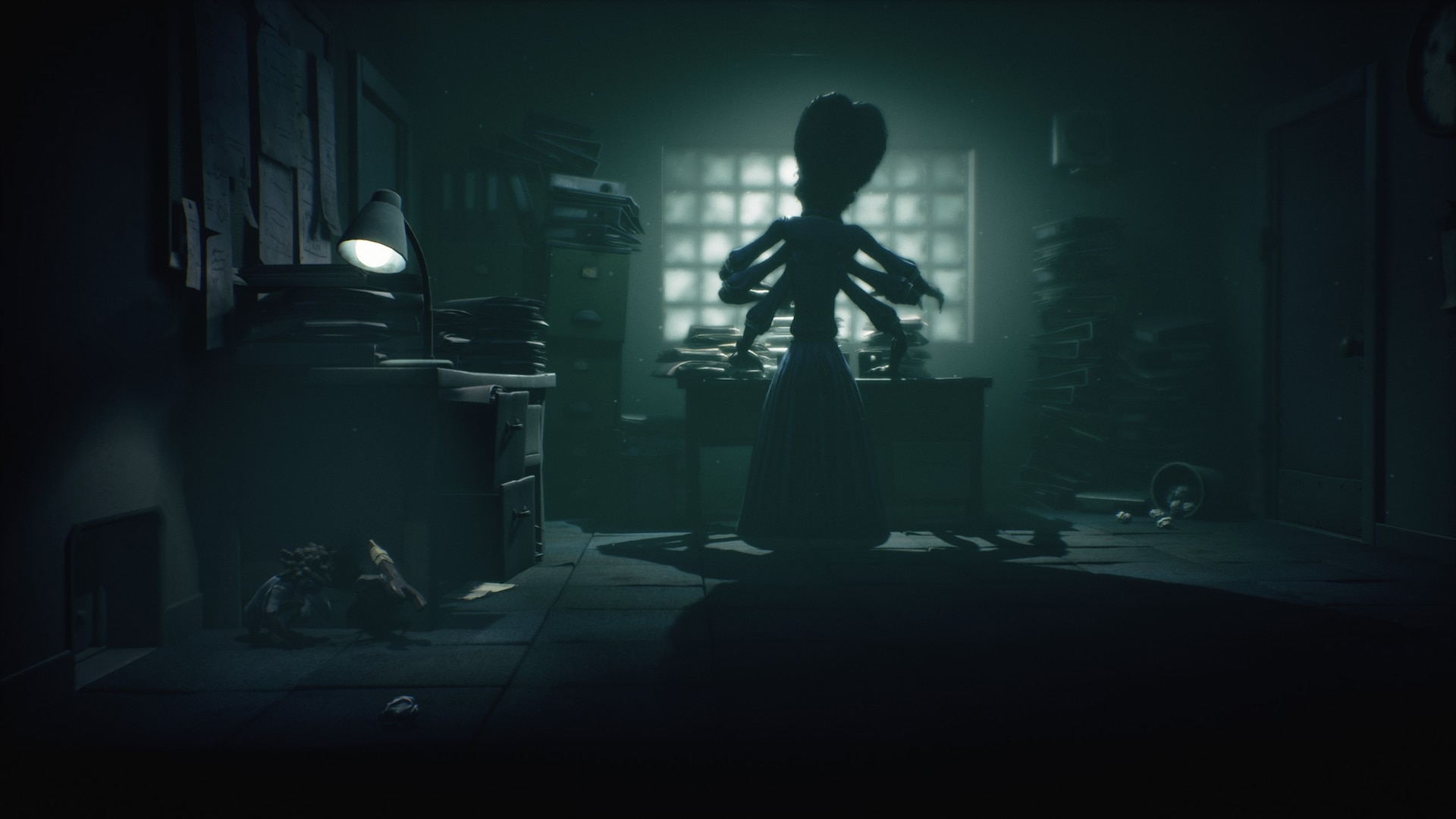
The visual fidelity on PC is impressive, with richly detailed textures, ambient fog, and layered lighting that gives each environment a tactile sense of decay. But the real artistry lies in the worldbuilding. Every prop tells a story: a playground buried in sand, a cracked mirror reflecting shapes that aren’t quite yours, a half-submerged doll’s head staring from the dark. Little Nightmares III doesn’t just depict horror — it implies it, inviting the player’s imagination to fill in the gaps.
Sound and Silence
Few games use sound as effectively as Little Nightmares III. The soundscape is a symphony of dread — the distant groan of machinery, the crunch of sand underfoot, the warped lullabies that drift through abandoned halls. Composer Tobias Lilja returns with a minimalist score that swells only when necessary, allowing silence to dominate the experience.
When music does intrude, it’s usually to underscore a chase or emotional beat. The result is a sound design philosophy that values restraint. Horror isn’t in the jump scare; it’s in the whisper, the drip, the stillness before something moves.
Mechanics and Momentum
Mechanically, Little Nightmares III follows the familiar pattern of the series: light platforming, environmental puzzles, and stealth. Each protagonist’s tool adds minor variety — Low’s bow can trigger distant mechanisms or distract enemies, while Alone’s wrench opens paths or destroys obstacles. The interplay between their abilities forms the backbone of the puzzle design.
Unfortunately, the puzzles themselves are somewhat conservative. They often rely on predictable patterns — pulling levers, moving boxes, coordinating switches — rather than evolving into deeper, multi-layered challenges. Even with two characters, most puzzles can be solved with minimal communication. The pacing, too, can feel uneven: long stretches of cautious stealth punctuated by brief bursts of adrenaline-fueled chases.
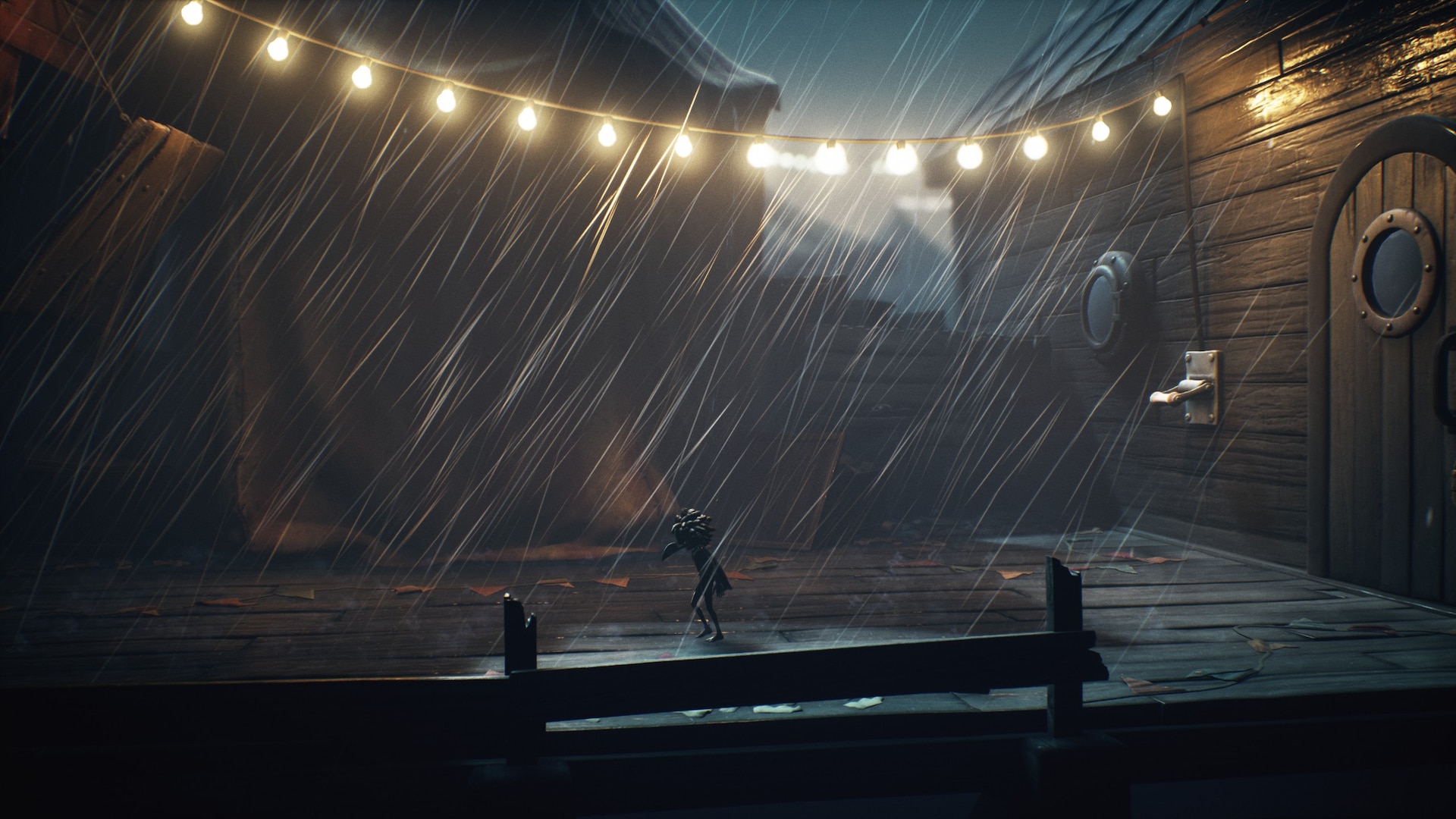
Yet when it clicks, it really clicks. A few standout moments — a shadow puzzle sequence in the Mirror City, or a chase through a collapsing carnival tent — show flashes of brilliance. These set pieces combine the series’ trademark dread with cinematic tension worthy of Inside or It Takes Two.
The platforming itself remains serviceable but occasionally imprecise. Collision boxes and jump detection can be finicky, leading to deaths that feel unfair. Thankfully, the checkpoint system is forgiving, so frustration rarely lingers long.
Technical Performance on PC
Visually, Little Nightmares III shines, but on PC, performance can dim that light. Even after a Day-1 patch, reports of stuttering, inconsistent frame pacing, and texture pop-in persist. On a high-end RTX 4070 setup, the game runs smoothly at 1440p, but midrange users may need to drop shadows or volumetric lighting to maintain 60 FPS. The game supports DLSS and FSR, but both can occasionally introduce artifacting during high-motion scenes.
Load times are fast on SSDs, and the UI is clean and controller-friendly. However, mouse and keyboard controls remain a secondary consideration — Little Nightmares III feels built for a gamepad, with analog sensitivity better suited to its deliberate pacing.
Narrative and Emotional Resonance
The story remains wordless, as tradition dictates. There’s no dialogue, only gestures, imagery, and context. This restraint continues to be one of the series’ great strengths. Little Nightmares III tells its tale through implication: the way Alone hesitates before holding Low’s hand, or how they flinch when a light flickers behind them. It’s minimalist, but deeply expressive.
At its heart, the game explores themes of trust, dependency, and the fear of loss. Where previous games portrayed isolation, III is about connection — and what it means to protect someone in a world determined to consume both of you. The final act, set in the reflective labyrinth of Mirror City, brings this full circle in a bittersweet conclusion that balances despair with fleeting hope.
Fans expecting explicit lore explanations will leave unsatisfied — the series continues to thrive on ambiguity — but thematically, Little Nightmares III is rich, resonant, and melancholy.
Length, Replayability, and Extras
The main campaign lasts roughly five to six hours, depending on how much time you spend exploring. Hidden collectibles return, and completionists can uncover bits of environmental storytelling through optional areas, though there’s no alternate ending or new game plus at launch.
Replayability is modest — this is a one-and-done experience for most players — but the addition of co-op adds incentive to replay levels with a friend. The lack of major post-launch content or DLC announcements at launch might disappoint some, but the game’s self-contained nature suits its storytelling style.
Final Verdict: 6/10
Little Nightmares III is an elegant, eerie, and occasionally frustrating entry in one of gaming’s most distinct horror series. Supermassive Games proves they understand the tone, texture, and rhythm of this world, even if they haven’t entirely mastered its mechanics. The co-op idea is bold but flawed, the puzzles familiar yet satisfying, and the world — as ever — unforgettable.
For fans of the series, this is essential, if imperfect, viewing: a haunting continuation that retains the soul of Little Nightmares while daring to dream bigger. For newcomers, it remains one of the most atmospheric horror experiences on PC — a quiet scream in a loud genre.