EA Sports FC 26 arrives with the weight of expectation. Following last year’s rebranding away from FIFA, EA continues the challenge of convincing fans that FC is more than just a name change. With FC 26, the studio makes a bold structural decision: rather than forcing all players into a single gameplay model, the game now features two distinct playstyles — Authentic and Competitive. This shift acknowledges the long-standing divide within the fanbase between those who prefer tactical, simulation-driven football and those who thrive on fast-paced, high-reward, online competition.
On PC, the ambition is clear: EA wants to offer the definitive football experience with cutting-edge visuals, immersive presentation, and broad game modes. Yet as with many ambitious launches, execution is uneven, and PC players in particular face as many frustrations as they do triumphs.
Gameplay and Mechanics
The heart of FC 26 lies in its gameplay, and the decision to split experiences into Authentic and Competitive playstyles is arguably the boldest design change EA has made in years. Authentic mode slows the game down, prioritizing build-up play, player positioning, and fatigue management. Matches unfold with a greater sense of realism: players jostle for space, defenders recover their shape intelligently, and ball physics feel truer to the sport. This mode resonates with single-player fans who want their career or offline league to replicate the ebb and flow of real football.

Competitive mode, in contrast, accelerates the tempo. Passes zip across the pitch, dribbling is more forgiving, and attackers have a clearer advantage over defenders. The idea is not subtle: this is the mode built for Ultimate Team and online ladders, where speed and spectacle drive engagement. The result is a game that feels dramatically different depending on which mode you choose, giving players more agency over their preferred experience. For some, this dual approach will feel like a revelation; for others, it may highlight how far apart the online and offline communities have drifted.
Attacking play is clearly improved compared to last year’s entry. Passing has been refined, especially in tight spaces, which reduces the clunky float that sometimes plagued FC 25. First-touch control and dribbling animations are more responsive, allowing players to pull off intricate moves without the slight delay that often interrupted flow. Shooting carries more weight, and while goalkeepers remain unpredictable at times, their decision-making is sharper overall.
Defending, however, is more divisive. In Authentic mode, defensive positioning is rewarding, with AI teammates closing gaps and pressing intelligently. But in Competitive mode, the pace of play often overwhelms defenders, making clean sheets rare unless the player has near-perfect timing. Tackles can feel inconsistent, with recovery frames sometimes punishing defenders harshly. Still, the improved balance of interceptions and a more situational awareness among AI defenders helps mitigate frustration.
Set pieces also benefit from refinement. Free kicks allow more control over run-ups and shot trajectories, and corners feel less scripted, giving players greater freedom in both delivery and finishing. While these improvements may not reinvent the system, they make key moments more engaging and less mechanical.
Modes and Content
One of the most encouraging aspects of FC 26 is its investment in offline play. Career Mode, often criticized in recent years for stagnation, receives substantial upgrades. Managerial movement introduces a dynamic sense of progression, as coaches can shift between clubs over multiple seasons. Randomized events add unpredictability, forcing players to adapt strategies and squad planning on the fly. Transfers feel more nuanced, with negotiations that reflect a broader range of variables rather than simple financial transactions. These changes reinvigorate Career Mode, making it one of the most rewarding single-player football simulations EA has produced in the last decade.
Manager Mode complements this by offering broader control over club identity, staff decisions, and long-term planning. Together, these offline modes provide depth that many fans feared had been lost in the franchise’s pivot toward live services.
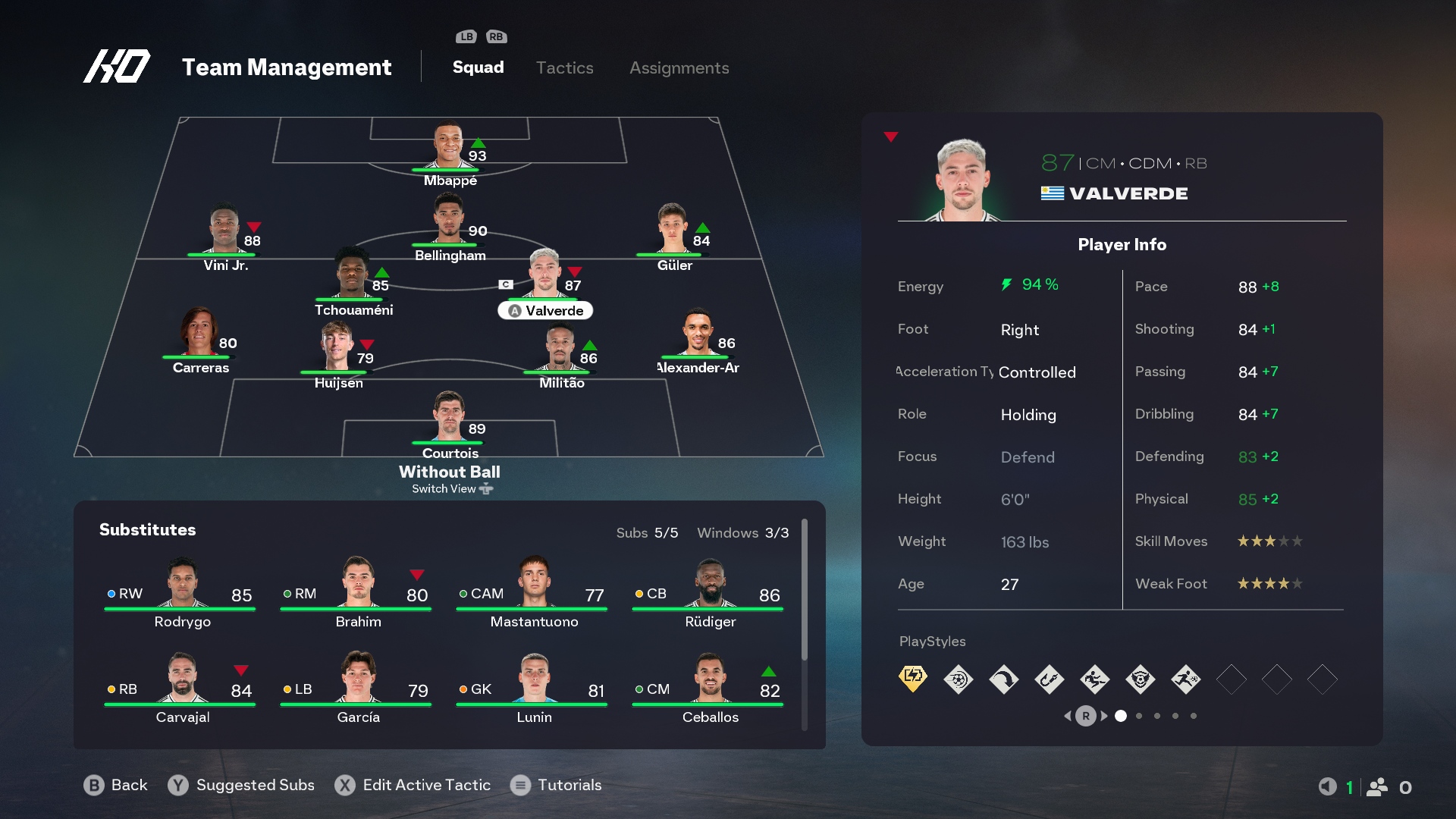
Online, Ultimate Team remains the dominant mode, and it too has undergone significant evolution. Archetypes and evolution systems allow players to shape their squad in more personalized ways, creating progression beyond simply packing elite cards. Rewards are tuned to feel more generous, though microtransactions remain a central part of the economy. While FUT is undeniably deeper, its reliance on seasonal grinds and premium currency continues to alienate players who prefer skill-based progression over financial investment.
Clubs and Rush also return, with both modes receiving quality-of-life upgrades. Clubs is more community-driven, with improved archetype progression and live events that encourage collaboration. Rush, the five-a-side arcade mode, is polished and fun, serving as a refreshing alternative to the grind-heavy main modes.
Presentation, Visuals, and Audio
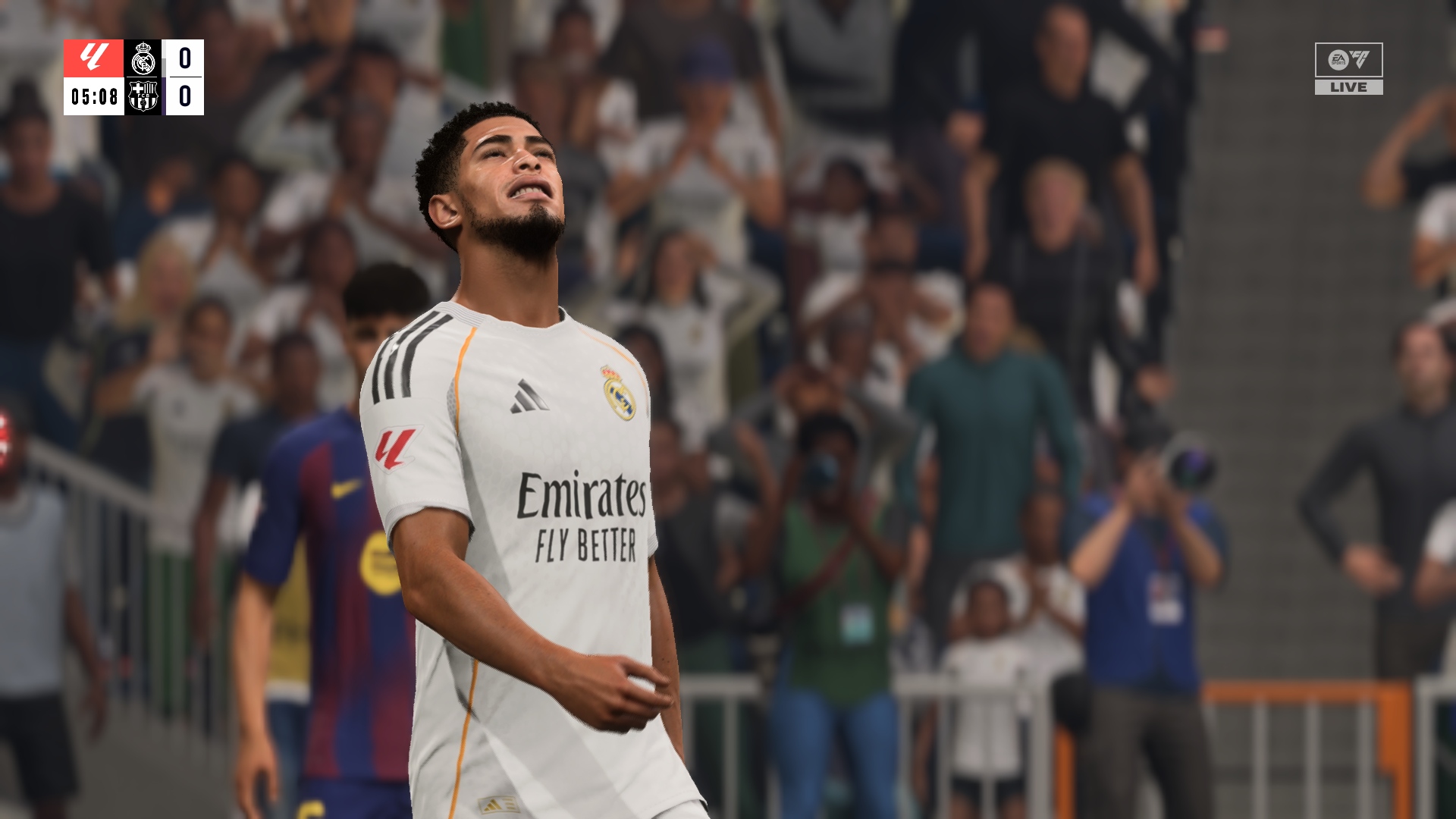
Visually, FC 26 is among the most striking sports titles on PC. Stadium lighting is richer and more dynamic, player models display increased fidelity in facial detail and kit textures, and crowd animations feel livelier. The atmosphere inside matches benefits enormously from this polish, especially in Authentic mode where the slower pace allows the presentation to breathe.
Audio design also impresses. Commentary, while still prone to occasional repetition, is sharper and more reactive to context. Crowd noise swells appropriately with momentum shifts, and the subtleties of ball contact, boot strikes, and pitch conditions are more finely tuned than ever. Combined with the consistently strong licensed soundtrack in menus, FC 26 delivers an immersive audiovisual package.
PC Performance and Technical State
On PC, however, the picture is less consistent. The game’s visual fidelity comes at a cost, and performance issues are widely reported across the community. Input lag is perhaps the most damaging problem, particularly for competitive players, as even minor delays can undermine precise timing in dribbling and finishing. Frame rate drops are frequent in menus, especially in Ultimate Team, and occasional stuttering occurs during matches regardless of hardware power.
Even high-end systems are not immune. Players with modern GPUs and CPUs have encountered instability, with crashes tied to the EA launcher and inconsistent optimization. Community forums highlight widespread frustration, with many players forced to experiment with settings such as V-Sync toggling, resolution scaling, and disabling overlays in order to achieve stable performance.
When optimized, the PC version shines. High refresh rates are supported, scaling options allow for fine-tuned performance, and controller haptic feedback is robust. Yet the uneven state at launch suggests EA still struggles to deliver a fully polished PC product compared to its console counterparts.

Strengths and Weaknesses
The greatest strength of FC 26 is its willingness to embrace diversity in its audience. By offering two distinct playstyles, EA has provided solutions for both simulation purists and arcade enthusiasts. Career and Manager Modes are deeper than they have been in years, offering real longevity for offline players. Presentation remains industry-leading, with visuals and audio that enhance immersion.
Yet these strengths are counterbalanced by real shortcomings. Performance on PC is inconsistent, often undermining the gameplay improvements. FUT, despite its new systems, remains heavily tied to microtransactions and seasonal progression, a model that continues to polarize the community. Competitive balance also feels skewed at times, particularly in defending mechanics where attackers maintain a distinct edge.
Final Verdict: 7/10
EA Sports FC 26 is a game of ambition and contrast. It is simultaneously one of the most rewarding entries in the series for offline players and one of the most frustrating launches for competitive PC gamers. When it works, the blend of tactical realism, sharper attacking play, and immersive presentation makes FC 26 feel like a genuine step forward for the franchise. Yet when performance issues emerge — from input lag to stuttering and stability concerns — it quickly becomes a reminder of EA’s ongoing struggle to deliver a flawless experience on PC.
For Career Mode enthusiasts and those who prefer offline play, FC 26 is an easy recommendation. The refinements to managerial systems, the improved flow of matches, and the sense of unpredictability make it arguably the best single-player football simulation EA has ever produced. It rewards patience, strategy, and immersion in a way the series hasn’t achieved in years.
For FUT veterans and online competitors, however, the picture is less clear. Ultimate Team introduces smart progression systems like archetypes and evolutions, but its heavy reliance on microtransactions and the uneven performance on PC make the mode feel unstable at launch. Until patches address technical flaws and refine balance in Competitive play, FC 26 is a promising but inconsistent experience for the online community.