When Hades launched in 2020, it redefined expectations for roguelike design. Supergiant Games achieved what many studios never manage: a fusion of sharp, repeatable gameplay with a narrative that unfolded naturally through failure. Few titles since have captured the same alchemy of mechanical mastery and storytelling finesse. With Hades II, Supergiant returns to its first-ever sequel, an inherently risky venture. The result is not only a continuation of what made the original remarkable, but also a substantial expansion of scope, ambition, and thematic weight.
Where Hades was an intimate story of rebellion, family, and escape, Hades II is a broader tale of resistance against one of the oldest and most powerful figures in myth. It asks a bigger question: how does one fight against Time itself?

Narrative and World-Building
The narrative foundation of Hades II is immediately compelling. Players step into the role of Melinoë, Princess of the Underworld and sister to Zagreus, who embarks on a mission to stop Chronos, the Titan of Time. This shift in focus distinguishes the sequel from its predecessor both in tone and in scope. While Zagreus’s journey was personal — a desperate attempt to escape his father’s domain and find his own identity — Melinoë’s story carries a far more epic weight. She is not merely running from something but standing against a primordial force whose power threatens to unravel the very fabric of the Underworld.
The writing continues to be one of Supergiant’s greatest strengths. Dialogue evolves dynamically depending on the player’s actions, successes, and failures. Characters such as Hecate, who serves as Melinoë’s stern but caring mentor, Nemesis, who embodies the tension between rivalry and respect, and Moros, whose grim forewarnings anchor the narrative in dread, are more than static NPCs. They become central figures in Melinoë’s emotional journey. The decision to spotlight less familiar figures of Greek mythology gives the story fresh energy, freeing it from overused Olympian archetypes and bringing new mythic voices to life.
Equally important is how the narrative is delivered. Exposition is never dumped on the player in long cutscenes. Instead, story threads emerge run by run, as conversations at the Crossroads (the new hub area) unfold naturally through repeated play. This design means that even failed runs contribute to the unfolding of the story, ensuring that repetition feels rewarding rather than punishing.
Gameplay and Combat
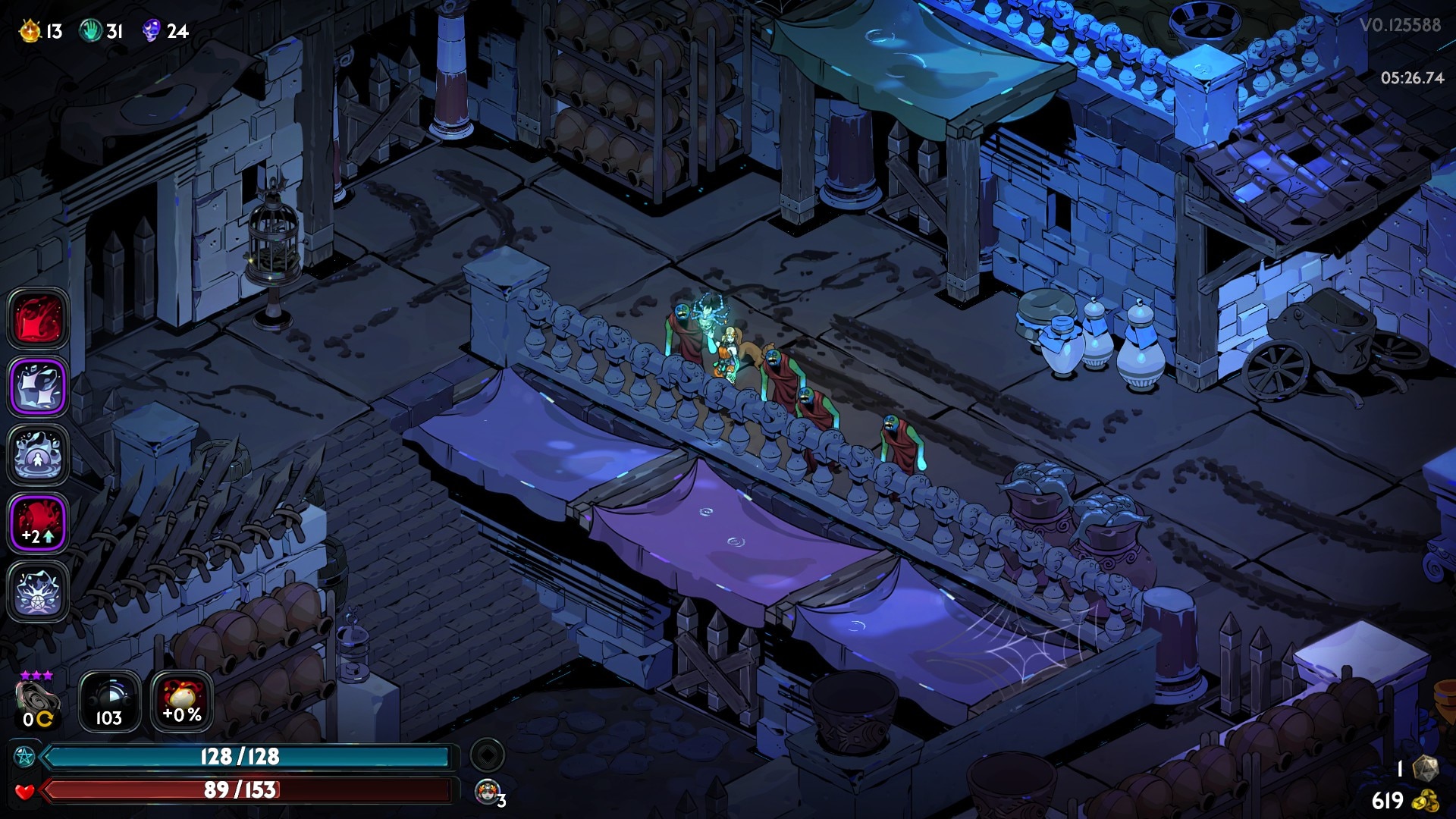
Combat in Hades II retains the immediacy and fluidity of the first game but layers in new complexities that reflect Melinoë’s identity as a witch and sorceress. Unlike Zagreus, whose style leaned heavily on melee weapons and dashes, Melinoë has access to both conventional arms and potent spellcraft. This duality defines the sequel’s combat identity.
Weapons form the backbone of her arsenal, each offering a distinct playstyle that feels transformative rather than cosmetic. A single run might see the player weaving quick strikes with a nimble blade, darting in and out of danger, while another run might encourage reliance on a heavier, slower weapon that rewards precision over speed. The real difference comes when these weapons are paired with Melinoë’s magic. Spells are not simply auxiliary attacks on a cooldown — they are integral to her combat rhythm, enabling her to immobilize enemies, summon protective wards, or unleash devastating area-of-effect strikes. The result is a fluid dance between physical attacks and magical abilities, with players constantly adapting to the synergies available to them.

The boon system returns, once again giving Olympian gods the chance to shape the player’s build. However, in Hades II these boons often interact more directly with spellcasting, creating combinations that feel unpredictable and rewarding. A run might evolve into a high-risk, high-reward glass cannon approach fueled by Poseidon’s offensive spells, or a defensive strategy built on Demeter’s chilling effects. The excitement lies in discovery, as no two builds feel quite the same.
Encounters are carefully constructed to test the full range of the player’s abilities. Standard chamber fights encourage mastery of positioning and resource management, while elite enemies and minibosses introduce layered mechanics that require quick adaptation. Boss encounters are among the game’s greatest triumphs, balancing spectacle with skill. They are not mere endurance tests but thematic challenges that embody their mythological essence. Chronos, in particular, is a masterstroke of design, his abilities bending the flow of combat in ways that force the player to rethink timing, spacing, and momentum.
Difficulty is finely tuned. The game’s progression ensures that permanent upgrades and unlocks create a sense of growth, but skill remains the defining factor in success. Even a well-upgraded character can falter if the player is careless. Supergiant balances this with optional modifiers that allow players to adjust the challenge to their liking, preserving both accessibility and depth.
Structure, Progression, and Replayability
The roguelike structure of Hades II mirrors that of its predecessor but with notable expansions. The sense of repetition is offset by layers of meta-progression that provide constant rewards. Resources gathered during runs feed into permanent upgrades, new abilities, and expanded systems at the Crossroads. These upgrades never feel trivial; each unlock meaningfully changes how future runs unfold, whether through new options in combat or enhanced opportunities for narrative interaction.
The variety of environments also contributes to replayability. Each region is visually distinct and mechanically unique, introducing environmental hazards and enemy types that demand fresh strategies. The pacing between these regions ensures that every run feels like a journey, with distinct phases that culminate in climactic encounters.
What makes the progression especially satisfying is how it ties into the narrative. Unlocking a new mechanic often comes with an associated story beat, giving a sense of purpose beyond mechanical gain. This integration prevents the grind from ever feeling hollow and reinforces the impression that Melinoë is genuinely growing in power and resolve.
Presentation
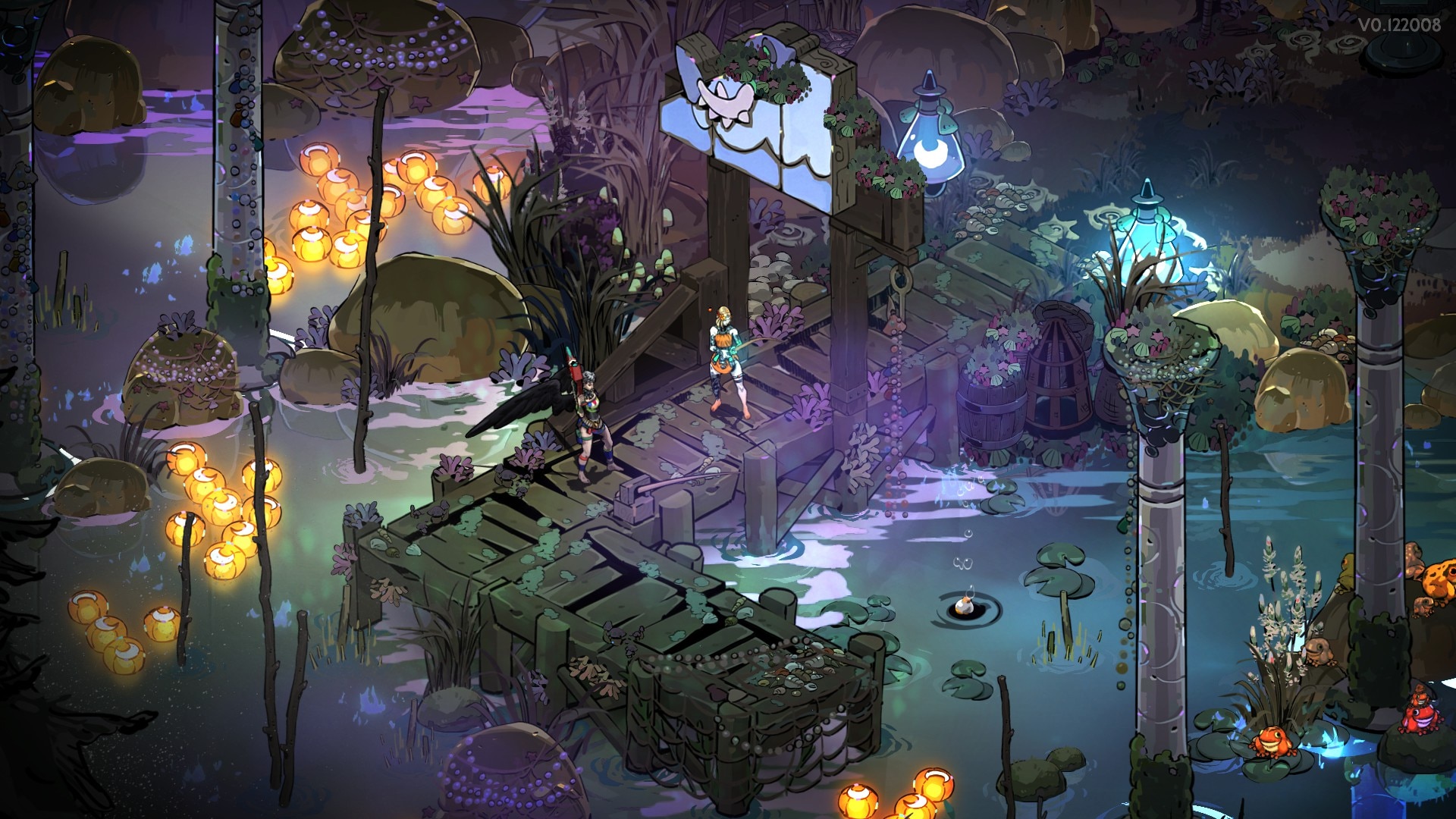
Few studios can match Supergiant’s attention to audiovisual detail, and Hades II is perhaps the studio’s most accomplished work to date. The art direction, once again led by Jen Zee, continues the painterly, vibrant aesthetic that made the first game so memorable. Character portraits are expressive and distinctive, ensuring that each mythological figure feels alive and immediately recognizable. Environments are lushly detailed, with atmospheric lighting and layered backdrops that contribute to both immersion and clarity.
The soundtrack, composed by Darren Korb, is equally vital. It blends moody, atmospheric pieces that underscore moments of quiet reflection with driving, percussive tracks that intensify the chaos of combat. The dynamic way in which the music shifts to reflect the pace of gameplay adds another layer of polish. Voice acting rounds out the presentation, with nuanced performances that lend weight to even minor characters. Melinoë, in particular, is voiced with a perfect balance of determination and vulnerability, grounding her in authenticity.
Technical Performance
On PC, the game performs smoothly, with responsive controls and stable frame rates even in the most demanding encounters. Supergiant has also made strides in accessibility, introducing a wider range of difficulty modifiers and visual clarity tools that make the game approachable without compromising its challenge. Load times are minimal, menus are intuitive, and overall technical stability reflects the studio’s trademark polish.
What Could Be Better?
Despite its strengths, Hades II is not without flaws. The expanded systems, while generally rewarding, can feel overwhelming to new players who are unused to juggling multiple currencies and upgrade paths. Certain side mechanics, though intriguing in concept, lack the same level of refinement as the core combat and progression systems. Additionally, the learning curve is steeper than in the original Hades, demanding greater patience before the game fully reveals its depth. These issues, however, are relatively minor in the face of the game’s broader accomplishments.
Final Verdict: 9/10
Hades II is a rare sequel that justifies its existence not by offering more of the same, but by expanding the formula in meaningful and ambitious ways. It preserves everything that made Hades exceptional — precise combat, elegant storytelling, and stunning presentation — while layering in greater complexity, higher stakes, and a broader mythological canvas.
Supergiant Games has delivered a roguelike that is as challenging as it is rewarding, as narratively rich as it is mechanically satisfying. For fans of the genre, it is essential. For newcomers, it may be demanding, but the rewards of perseverance are immense. Few sequels surpass their predecessors with such confidence and artistry.