Skate reintroduces one of gaming’s most beloved skateboarding franchises with an impressive mechanical foundation. Its tactile physics and Flick-It controls set a new benchmark for digital skating, but the PC Early Access release comes with limitations: technical quirks, stripped-back content, and a live-service structure that may not satisfy veterans longing for a traditional career-driven sequel.
It has been over a decade since Skate 3 carved its name into skateboarding history. Where Tony Hawk’s Pro Skater delivered arcade-style spectacle and high-scoring combo chains, Skate made its mark by leaning into authenticity. Its physics-driven design and the now-iconic Flick-It trick system created a sense of weight and creativity that was unmatched at the time. Fans have been asking for a return ever since, and with Skate, EA’s new studio Full Circle has attempted to modernize the formula for today’s always-online, multiplayer-first era.
This approach means that Skate is not simply Skate 4. It is a reboot, designed from the ground up as a live-service platform that will grow and evolve over time rather than arrive fully formed. That decision immediately sets it apart from its predecessors, and it is both the game’s greatest opportunity and its most divisive choice.

Gameplay and Controls
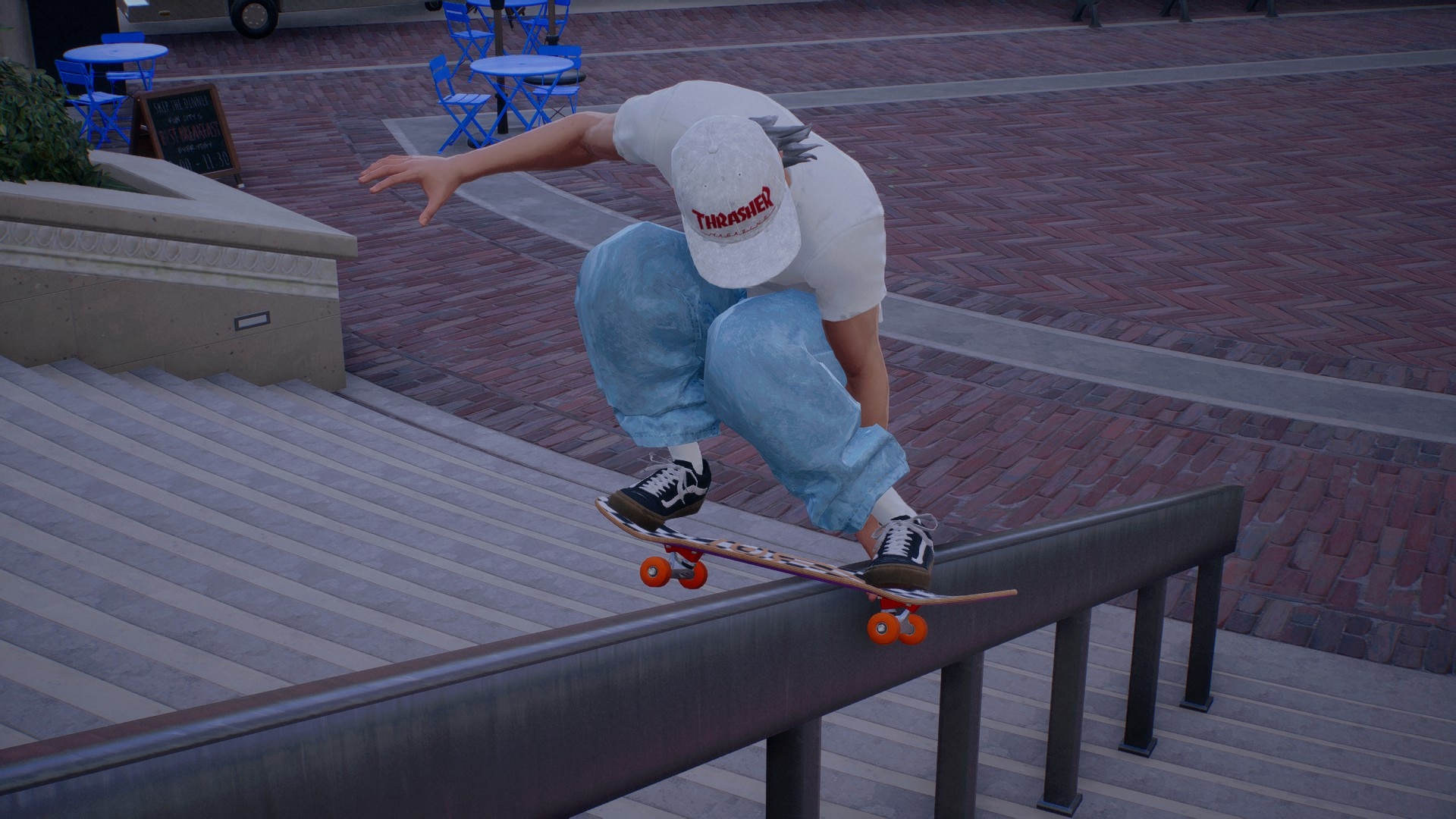
The soul of Skate lies in its feel, and in this regard the game succeeds spectacularly. The Flick-It control scheme returns with refinements, demanding careful analog stick movements to execute tricks. Kickflips, impossibles, manuals, and grinds are not performed by hammering buttons but by committing each precise flick or press. This makes every trick feel intentional, and when you manage to string a complex sequence together, the satisfaction is enormous.
The game’s physics-first design adds further weight to this system. Unlike arcade competitors, tricks do not snap into rigid canned animations. Instead, the skateboard reacts organically to the world, responding to terrain, momentum, and player input. Bombing down a hill and landing cleanly into a grind feels exhilarating because it carries genuine risk, and improvising a rooftop transfer feels earned because the system never bends to accommodate you.
This depth comes at a cost: Skate has a learning curve. Newcomers may find the initial hours daunting, as even basic tricks demand finesse. Tutorials provide guidance, but the real mastery comes from repetition and practice. That challenge, however, is part of the franchise’s identity and what ultimately makes its skating so rewarding.
On PC, the game currently requires a controller. Keyboard and mouse inputs are unsupported, which makes sense given the precision of analog sticks but limits flexibility for players who lack one. Compatibility is also blocked on Steam Deck due to the Javelin anti-cheat system, a disappointing restriction for those hoping to take the game on the go.
World Design and Exploration
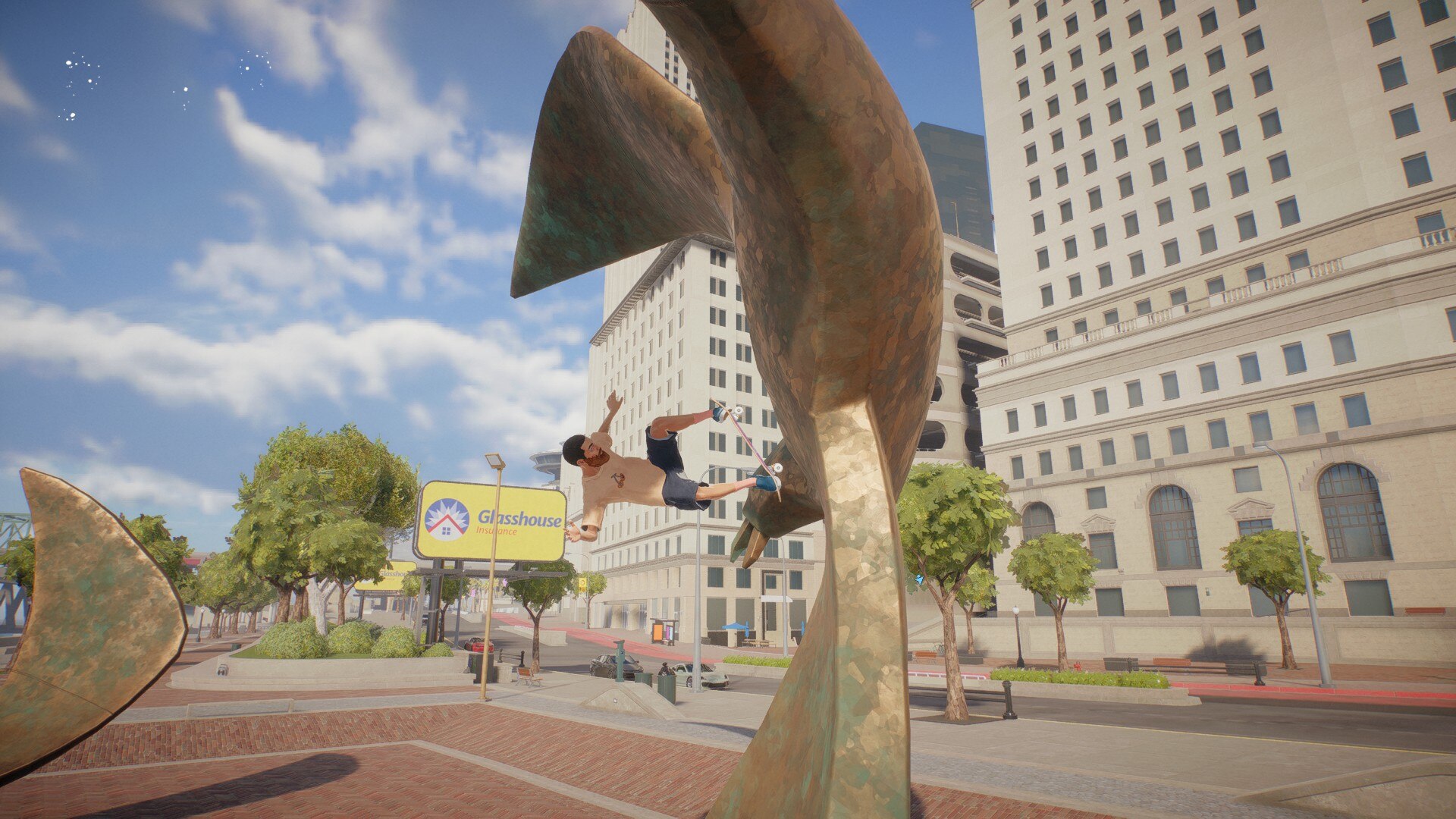
The world of San Vansterdam is the centerpiece of the experience, a sprawling metropolis built not just as a backdrop but as a playable canvas. Every corner of the city is packed with opportunity, from polished downtown plazas and industrial rail yards to rooftop lines and suburban streets. Rails, benches, stair sets, and ledges are everywhere, and nearly everything in the environment can be turned into a spot worth skating.
What makes the city shine is its ability to encourage improvisation. Even the most ordinary curb or slope can become a launchpad for creativity when you experiment with speed and timing. The inclusion of object placement tools expands that freedom further, allowing you to drop ramps or rails to extend or remix existing lines. San Vansterdam feels alive because it adapts to you, letting you shape the city into the park you imagine.
Visually, the city takes a clean and stylized approach. Its crisp aesthetic makes navigation easier and fits the modernized tone, but longtime fans may miss the grit and texture of earlier entries. The cracked concrete and scuffed rails of Skate 2 and Skate 3 contributed to their sense of realism, and in comparison, San Vansterdam can feel almost too polished. The new direction works for accessibility, but it lacks some of the raw urban edge that once defined the series.
Modes, Missions, and Multiplayer
Where earlier Skate games offered structured career modes and self-contained challenges, Skate instead places its focus on shared multiplayer spaces and evolving live-service content. Progression is built around seasonal updates, rotating events, and community-driven goals. Crossplay and cross-progression are smartly implemented, ensuring that friends can skate together regardless of platform, and the open city design makes social play seamless.

The trade-off, however, is the absence of many legacy features. The structured single-player campaigns of the older titles, with their memorable missions and challenges, are missing in this build. Instead, players are left with smaller tasks and objectives that can begin to feel repetitive over time. The shift toward a more freeform, online-first framework will appeal to those who want a persistent skateboarding sandbox to hang out in, but fans of the older formula may find the content light and the objectives undercooked.
Technical Performance on PC
From a technical perspective, the Early Access release is serviceable but unpolished. Performance on modern hardware is generally solid, though optimization remains inconsistent across different setups. The game runs smoothly in many cases, but bugs are still present, including mission-tracking errors, UI glitches, and occasional stability problems. The developers at Full Circle have been quick to acknowledge these issues, with hotfixes and patches already rolling out, but anyone expecting a flawless launch-day experience should temper expectations.
The mandatory controller support is another point worth reiterating. It works well once you are set up, but the lack of options may alienate players who prefer keyboard flexibility. And for those hoping to play on Steam Deck, the incompatibility caused by the anti-cheat system remains a major obstacle until further updates.
Monetization and Live-Service Structure
As a free-to-play title, Skate is supported by cosmetic purchases, seasonal passes, and rotating shops. The base game is fully playable without spending money, and there is no pay-to-win mechanic undermining progression, but the reliance on cosmetic economies is undeniable. For some players, this model will be a welcome way to keep content flowing and the game alive for years to come. For others, particularly veterans who remember buying a complete package in Skate 3, the shift may feel like a compromise of the franchise’s original spirit.
Final Verdict: 7/10
At its core, Skate achieves the one thing it absolutely had to: it makes skating feel incredible. The weight of the board, the responsiveness of the Flick-It controls, and the creativity encouraged by San Vansterdam all combine to create moments of pure joy that no other game can replicate. That authenticity alone secures its place as the most exciting skateboarding title in years.
But this is also a beginning, not an end. The Early Access release feels like a foundation rather than a finished product. Systems are incomplete, missions are thin, and technical quirks remain unsolved. The live-service framework may either give the game longevity or pull it away from the identity that made the franchise special.
For now, Skate is a brilliant platform to build on, but not yet the definitive sequel fans have been waiting for. It is a game that feels simultaneously triumphant and tentative, a return that celebrates what made the series beloved while testing new waters that won’t please everyone.