When Techland announced Dying Light: The Beast, many assumed it was a stopgap — a repurposed DLC spun out into a standalone product. In truth, it is something more interesting: a focused, character-driven return to the series’ roots. Where Dying Light 2 sprawled outward into grand political allegories and faction warfare, The Beast folds inward, zeroing in on Kyle Crane, the original series protagonist, and his violent metamorphosis into something less than human.
This isn’t a complete reinvention of Techland’s formula, but it does feel like a refinement: a concentrated dose of parkour, melee combat, and survival horror, filtered through a darker, more intimate narrative lens.

Story and Narrative Design
At its core, The Beast is a revenge story. Crane has been captured and experimented on, emerging scarred and infected with unstable abilities that blur the line between man and monster. This premise gives Techland room to explore identity, trauma, and moral erosion, while also grounding the game in a far more personal conflict than Dying Light 2’s sprawling urban politics.
The storytelling is tighter. Main missions frequently put Crane’s internal conflict front and center, whether through hallucinations, NPC confrontations, or moral choices tied to his monstrous powers. Side missions, by contrast, often fall back into familiar rhythms — fetch quests, zone clearing, or escorting survivors. They aren’t poorly designed, but they sometimes sap urgency from a plot that otherwise thrives on intensity.
Where Dying Light 2 often felt overextended, The Beast succeeds by staying leaner and more focused. Its emotional beats are sharper, its stakes more personal, though it lacks some of the spectacle and branching complexity that distinguished its predecessor.
World Design and Exploration
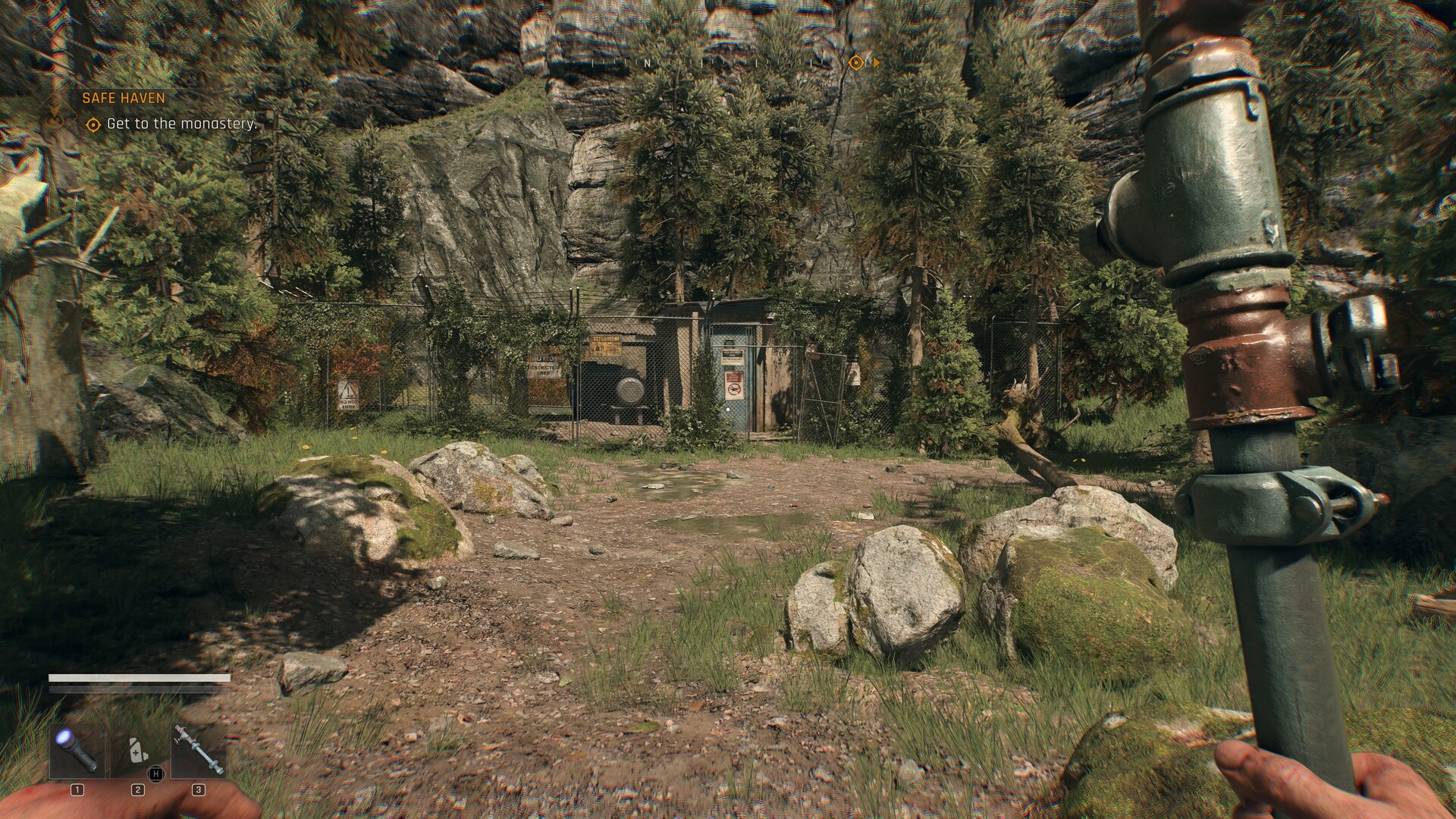
Castor Woods serves as the game’s new backdrop: a mountainous, forested region dotted with decayed tourist towns, misty swamps, and abandoned industrial sites. It’s a striking departure from the urban density of Harran and Villedor, trading claustrophobic alleys for wide valleys and precarious cliffside villages.
The verticality is superb. Mountainsides and towers invite free-climbing, while underground bunkers and swamp settlements keep exploration varied. Day/night cycles remain integral: by day, scavenging is manageable; by night, the infected grow feral, forcing tense rooftop chases and risky decisions.
Side content, however, is familiar. Clearing nests, defending safe zones, and collecting relics echo past entries. For completionists, there’s dozens of hours of content, but innovation is limited. The map is rich in vertical playgrounds, but structurally, the activity design feels evolutionary rather than revolutionary.
Gameplay and Combat
Parkour remains the undisputed highlight of Techland’s formula. Running, vaulting, and wall-scaling are smoother and weightier than ever, thanks to adjustments in momentum and collision detection. Rope swings, grapples, and ziplines extend vertical traversal, while rooftop chases maintain the pulse-pounding thrill that defined the original Dying Light.

Notably, Techland has improved collision feedback. Grabs and landings feel precise, and stamina management is tuned to reward skillful movement without being punishing. Navigating Castor Woods’ vertical settlements and cliffsides is exhilarating, and remains one of the most fluid first-person traversal systems in gaming.
Combat is equally visceral. Melee weapons have heft: hammers crush, machetes slice, and improvised tools splinter bone with gruesome feedback. Dismemberment remains grotesquely satisfying, while environmental creativity — kicking enemies into spikes, shocking them on power lines, setting oil traps alight — adds tactical variety.
Weapon crafting is back, enabling both functional upgrades (durability, elemental mods) and flamboyant experiments. The loop of scavenging, crafting, and upgrading encourages constant adaptation rather than reliance on a single overpowered build.
Beast Mode
The new mechanic Beast Mode is the game’s biggest gamble. Infected blood gives Crane short bursts of inhuman strength: bone-crunching finishers, enhanced speed, and brutal claw swipes that tear through hordes. The exhilaration is undeniable — a cathartic release valve when surrounded or cornered.
But Beast Mode is a double-edged sword. On one hand, it injects variety into combat and underscores Crane’s internal struggle. On the other, it undermines the franchise’s survival ethos. Scarcity, stealth, and tension fade when Crane can slaughter an entire horde in seconds. Techland attempts to balance this with cooldowns, story penalties, and limited resource tie-ins, but the tension between survival and empowerment remains unresolved. Used sparingly, it’s thrilling; used often, it risks trivializing the game’s core challenge.
Technical Performance
Performance at launch has been stable, with only occasional texture streaming hiccups on mid-range hardware. Importantly, The Beast is verified for Steam Deck, running at a consistent 30–40 FPS with adjusted settings, making it surprisingly viable for handheld play.
Visually, Techland’s proprietary engine continues to impress. Lighting is atmospheric, particularly during thunderstorms and night sequences, and character models exhibit improved detail. Audio complements the visuals: infected shrieks echo across valleys, ambient creaks instill dread, and the soundtrack blends ominous synths with desperate percussion to heighten tension.
Ultra settings with ray tracing demand modern high-end GPUs and ample VRAM, though the results — volumetric fogs, dynamic shadows, and reflective gore effects — are impressive.
Co-Op and Multiplayer
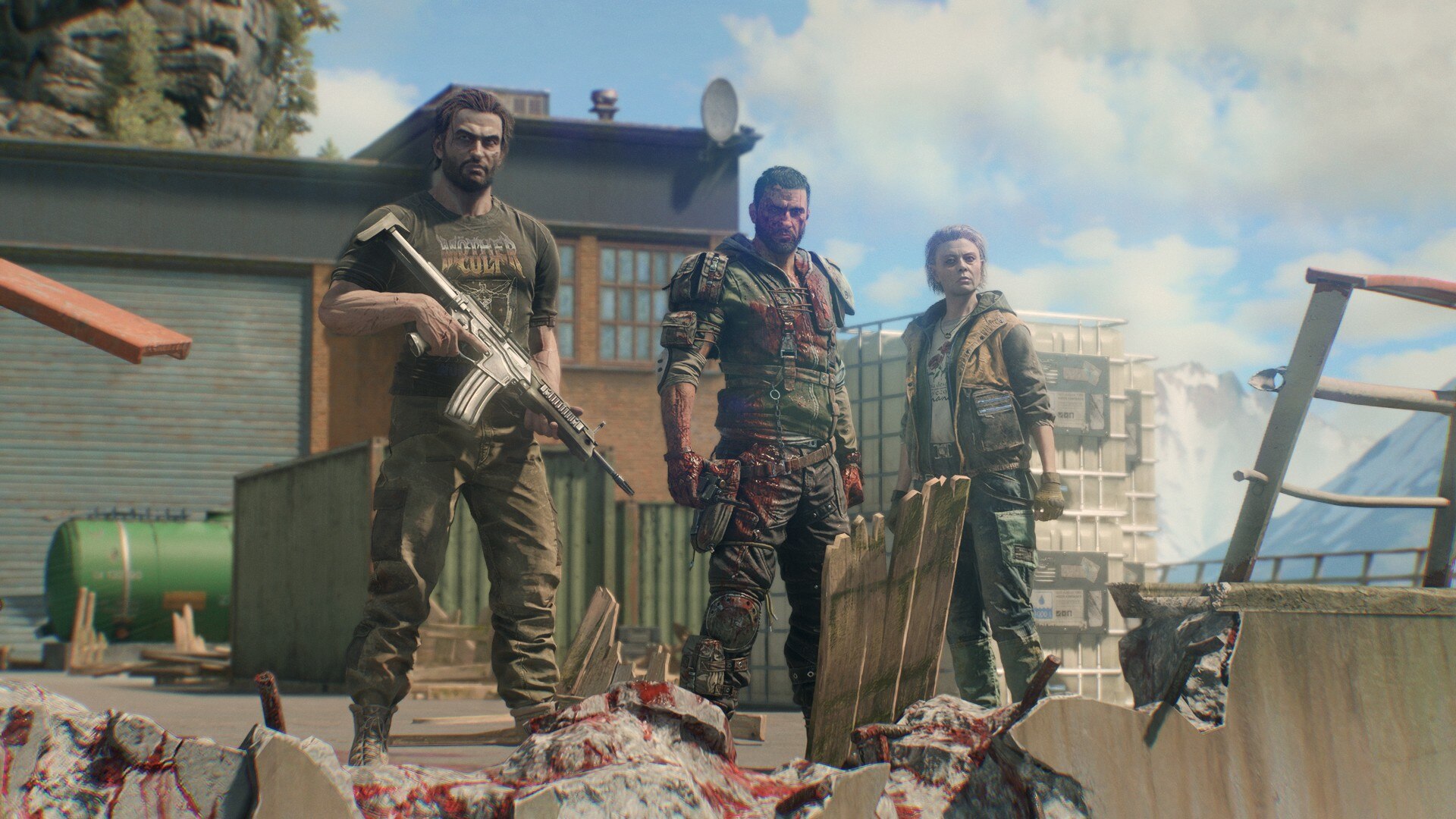
Co-op has always been a cornerstone of Dying Light, and The Beast is no exception. Traversing rooftops with friends, coordinating chases, or improvising survival strategies makes every encounter unpredictable. Beast Mode in co-op is especially chaotic — one player can unleash devastation while others exploit the distraction — but balance occasionally falters, leaving some encounters too lopsided.
Still, the cooperative sandbox is endlessly entertaining. Techland has wisely leaned into this by adding dynamic group challenges and scaling difficulty based on party size. For players who value emergent gameplay, The Beast thrives in multiplayer.
Longevity and Replayability
The main campaign runs approximately 20–30 hours depending on playstyle, while completionists can easily spend 40–60 hours exploring side content and collectibles.
Skill trees encourage experimentation, with new Beast-oriented perks complementing classic parkour and combat upgrades. Builds that emphasize stealth, crafting, or monstrous power each feel distinct, giving replay runs unique flavor. Dynamic nighttime events and rotating community challenges further extend longevity.
Final Verdict: 8.5/10
Dying Light: The Beast is not the seismic reinvention some might expect. Instead, it is a focused, confident refinement of Techland’s formula — leaner, darker, and anchored by Kyle Crane’s return. Its parkour remains the best in the genre, its melee combat is unflinching in its brutality, and its atmosphere is consistently tense.
Yet its central innovation — Beast Mode — is both its strength and weakness: a thrilling new toy that occasionally unravels the very survival mechanics that make Dying Light unique. The result is a game that excels moment to moment, but occasionally struggles to reconcile its power fantasy with its survival roots.
For fans of the series, The Beast is a triumphant return and arguably Techland’s most cohesive entry since the original. For newcomers, it offers a more approachable entry point, though its reliance on franchise conventions may feel dated in parts.