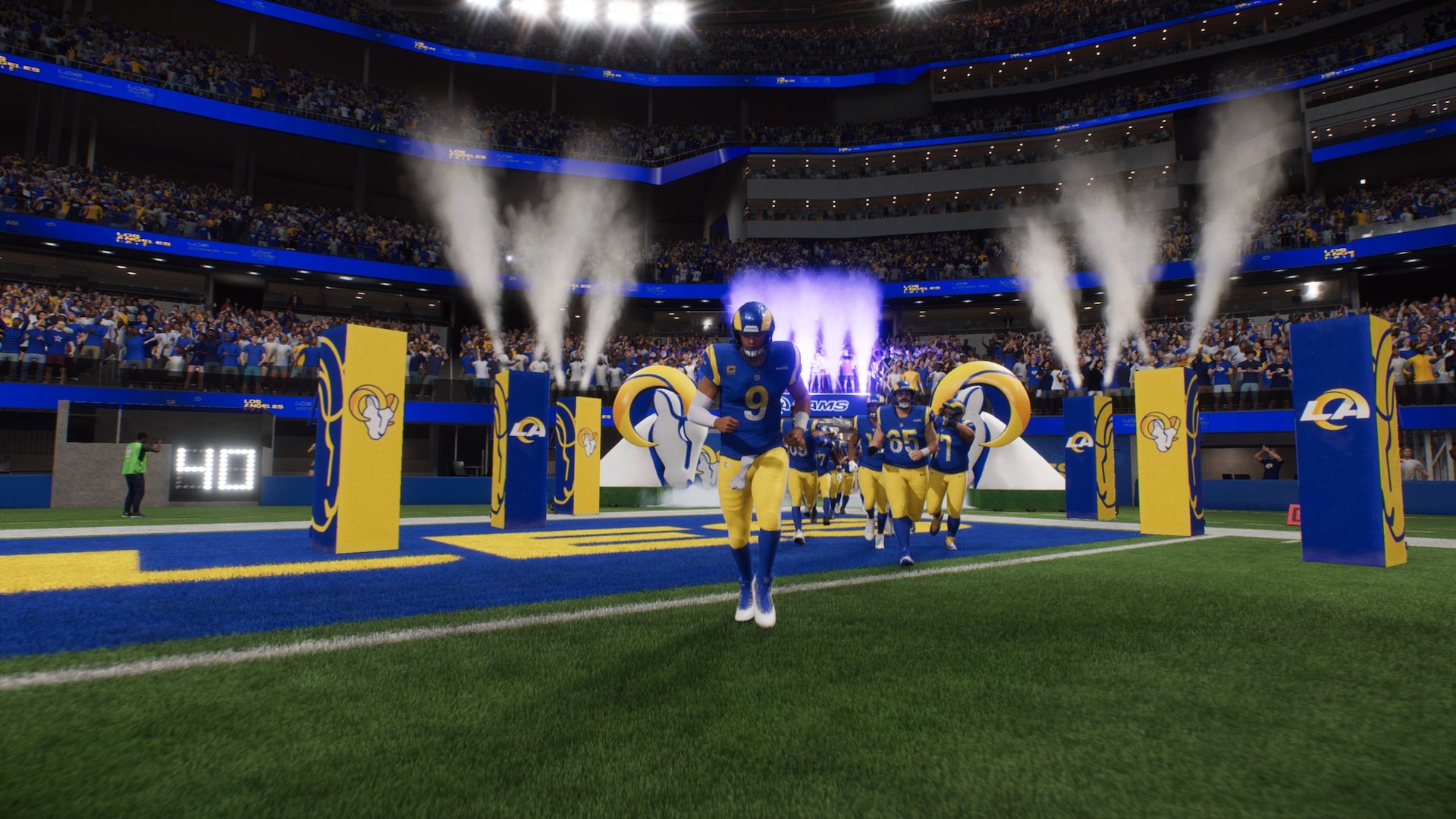
EA Sports has often been criticized for playing it safe with the Madden franchise. But Madden NFL 26 marks a turning point. With meaningful updates across gameplay, presentation, and Franchise Mode, this year’s installment finally feels like a modern football simulation. While some technical issues hold back the PC version, the core experience is more refined, immersive, and enjoyable than in recent years.
Gameplay
Gameplay in Madden 26 represents the most significant leap in responsiveness and realism the series has seen in over a decade. The reworked animation system abandons rigid, pre-scripted movements in favor of fluid, branching animations. Whether it’s a receiver adjusting mid-route, a defensive back reacting to a tipped ball, or a running back cutting through traffic, player movements now feel authentic and dynamic.

The revamped passing mechanic demands more from players. Skill-based passing emphasizes timing, anticipation, and reading the field. Unlike past entries where passing could feel binary and predictable, quarterbacks now showcase distinct playstyles. Elite passers like Patrick Mahomes and Josh Allen exhibit unique throwing motions and signature abilities that truly influence gameplay. The difference between an average quarterback and a superstar is no longer just cosmetic—it impacts how you approach each play.
One of the most noticeable changes is the improved physics engine. Contact feels far more impactful, with smoother tackles, believable momentum shifts, and more varied outcomes at the point of contact. The blocking AI has also been refined, particularly in the run game and pass protection, where offensive linemen now demonstrate better awareness and positional leverage.
Adding to the realism is the introduction of dynamic weather effects. Snow, rain, and wind are no longer mere visual flair. They meaningfully affect gameplay, altering visibility, ball handling, and footing. A December game in Green Bay, for instance, will demand a very different approach than a sunny September matchup in Miami.
Presentation
Madden 26 delivers the most immersive presentation the series has offered to date. From the moment you load into a game, the broadcast-style overlays, team introductions, and pre-game commentary mimic the feel of an actual NFL broadcast. The halftime show, hosted by Scott Hanson, adds mid-game insight that enhances the storytelling and rhythm of each matchup.
What’s particularly impressive is the attention to stadium detail. Each NFL venue feels alive and unique, capturing the energy and traditions of its fan base. Whether it’s the “SKOL” chant echoing through U.S. Bank Stadium in Minnesota or the thunderous “Keep Pounding” beat in Carolina, the environments finally reflect the real-life pageantry of NFL Sundays.
Crowd reactions have been tuned to reflect game context. A critical fourth-quarter turnover now elicits audible gasps, while game-winning touchdowns are met with wild eruptions that enhance the moment’s intensity. It’s an area where Madden has often struggled to capture emotion, but Madden 26 largely succeeds.
Franchise Mode
For the first time in years, Franchise Mode is more than just a placeholder. EA Sports has introduced several meaningful updates that finally make this mode feel like a true football management simulator.

Coaching now plays a pivotal role, with the introduction of coaching archetypes. Whether you choose to build around an offensive guru, a defensive tactician, or a player development specialist, each coaching type brings a unique skill tree that influences everything from player growth to game strategy. These specializations encourage different approaches to team-building and game planning.
A new “Wear and Tear” system introduces long-term player fatigue and injury risk, forcing you to consider depth and rotation more seriously. It’s no longer just about keeping your starters on the field at all times; managing player health over a full season becomes a critical part of success. It adds an unexpected but welcome layer of realism, even if the system may still need fine-tuning.
Weekly game planning has also been revamped. Scouting reports and AI-driven tendencies now allow you to craft game plans specific to your opponent. This system rewards strategic thinking and elevates Franchise Mode beyond a cycle of menus and simulations.
Overall, Franchise Mode in Madden 26 feels alive again. The decisions you make week-to-week now have visible consequences, and long-term planning is finally both necessary and rewarding.
Other Game Modes
Superstar Mode has undergone a subtle but meaningful evolution. This year’s version introduces a progression system that revolves around a player’s relationships, decisions, and achievements. Your off-field actions and in-game performance influence your reputation and career path. The mode also benefits from integration with College Football 26, allowing you to import your created player and carry their legacy into the NFL.
Ultimate Team, as expected, continues to be Madden’s most polarizing feature. While the core gameplay is solid, microtransactions still dominate the experience. However, EA has made strides in making the mode more approachable for players who prefer not to spend real money. The new “Solo Champions” feature allows users to compete against AI opponents for rewards, and card comparison tools have been streamlined to make roster management more intuitive.
Despite improvements, the underlying monetization structure still limits Ultimate Team’s broader appeal, particularly on PC where the player base is smaller and competition with other sports titles is stiffer.

PC Performance and Technical Observations
Madden NFL 26 on PC brings several visual benefits, including higher resolution textures, improved framerates, and customizable settings. However, it also suffers from performance and stability issues that noticeably detract from the experience.
Menu navigation remains sluggish, particularly in Franchise Mode and Ultimate Team. Load times can be inconsistent, and crashes during simulations or game transitions have been reported by numerous users. While EA has released several hotfixes since launch, these issues continue to affect overall player satisfaction on the platform.
Steam reviews currently sit in the “Mixed” category, reflecting a divide between players who appreciate the core gameplay improvements and those frustrated by lingering technical problems. For PC players with higher-end setups, the visual payoff may be worth it—but the lack of optimization compared to consoles is disappointing.
Final Verdict: 6/10
Madden NFL 26 is the most complete and forward-thinking entry in the series in over a decade. The gameplay overhaul, particularly in animation and quarterback play, brings much-needed freshness. The reimagined Franchise Mode rewards strategic thinking and long-term planning, while the improved presentation closes the gap between simulation and Sunday broadcast.
However, the PC version still feels like an afterthought in some areas. UI lag, technical instability, and occasional crashes prevent it from achieving its full potential on the platform. And while Ultimate Team remains deeply monetized, its accessibility for casual players has improved.
For fans who’ve been waiting for Madden to take a true step forward, Madden 26 delivers in key areas—especially on the field and in Franchise Mode. It’s not flawless, but it’s finally a game that feels built for football lovers, not just annual buyers.