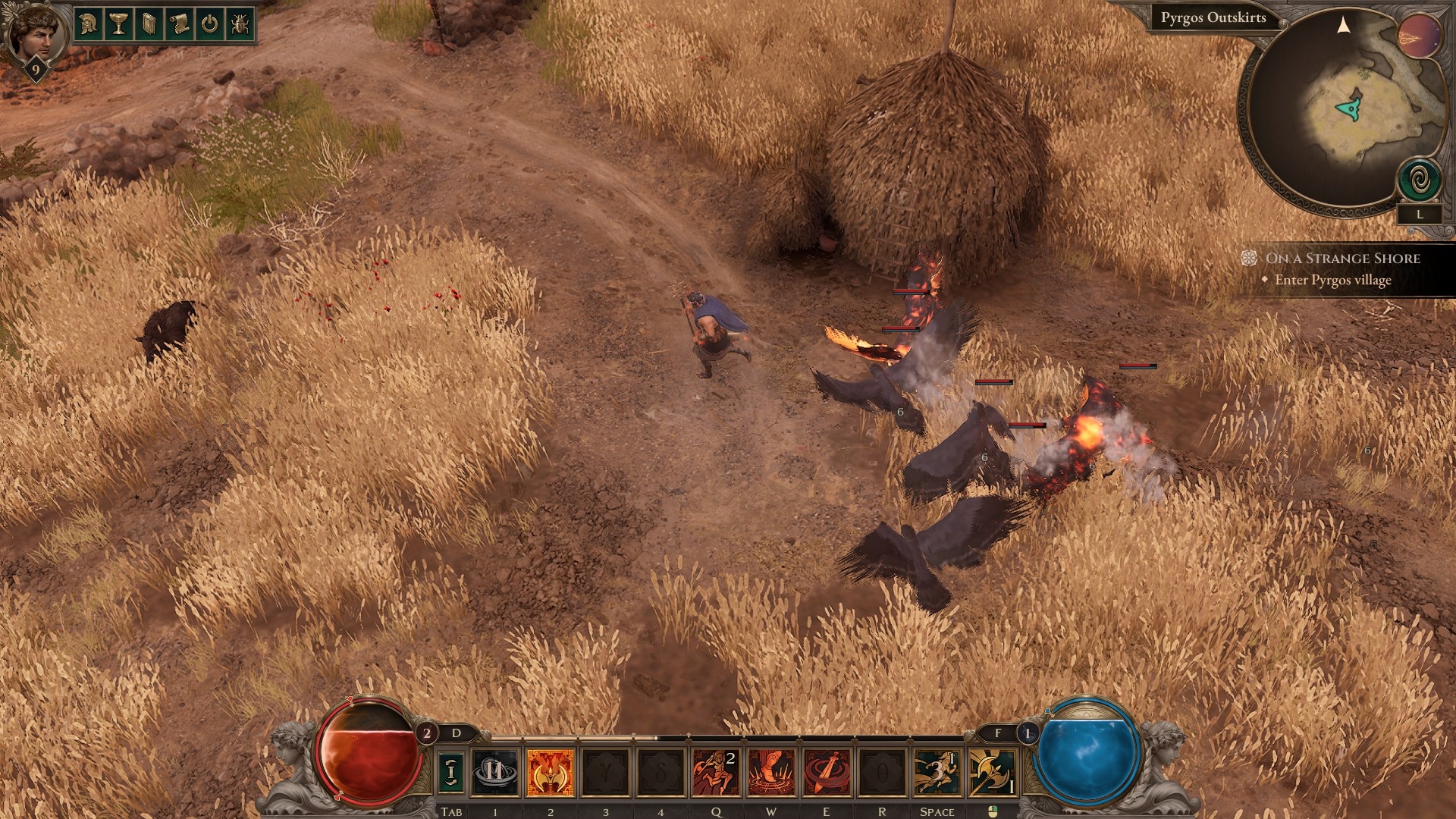
Almost two decades after the original Titan Quest carved out a devoted following in the ARPG space, its long-awaited sequel has arrived—albeit in an unfinished form. Titan Quest II, now in Early Access on PC, represents both a nostalgic revival and a modern reinvention of the classic hack-and-slash RPG. Developed by Grimlore Games, the sequel aims to capture the mythological wonder of ancient Greece while offering deeper customization, more responsive combat, and a richer, more immersive world.
At its current state, Titan Quest II is a compelling framework. It’s a title that shows enormous potential, even as its systems and polish are still very much in development.

World-Building and Atmosphere
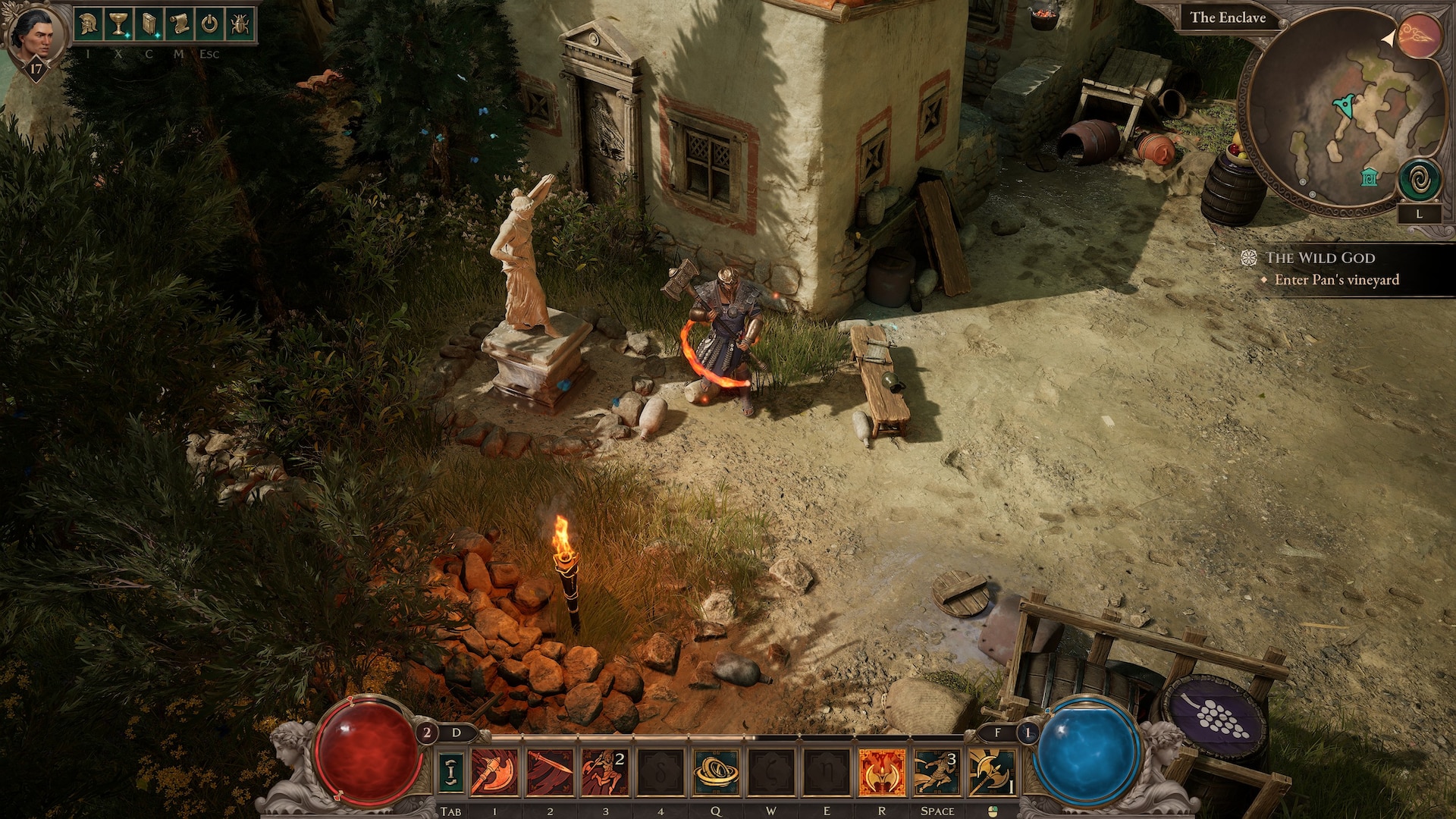
From the opening moments, Titan Quest II excels in environmental storytelling. Grimlore’s rendition of ancient Greece is steeped in myth and detail. The world feels alive, with crumbling ruins, windswept coastlines, dense olive groves, and sun-baked stone cities that evoke a sense of place that’s both fantastical and grounded in history. It’s a handcrafted setting—each region feels designed rather than procedurally generated—and that attention to detail pays off. There’s a verticality to the maps that encourages exploration, and scattered secrets reward players who take the time to veer off the main path.
Unlike many action RPGs, which often prioritize combat loops over world design, Titan Quest II invites you to slow down and engage with your surroundings. It features emergent events like surprise enemy attacks on villages, or NPCs moving between tasks, creating a sense of dynamism that’s often missing in the genre. The color palette, however, might feel muted for returning fans expecting the brighter tone of the original. The game leans into earthier hues and weathered textures, which serve the realism but occasionally dull the visual punch.
Gameplay and Mechanics
Combat in Titan Quest II is familiar yet flexible. Players begin by choosing one of four masteries—Storm, Earth, Warfare, or Rogue—and eventually select a second, creating a hybrid class. This dual-mastery system is where the game starts to shine. Each mastery offers its own tree of active and passive skills, and the ability to blend them opens up a broad range of viable builds, whether you’re leaning into elemental damage, brute-force melee, or subtle traps and poisons.
Beyond the mastery system, the game introduces a skill modifier mechanic that allows you to reshape how your abilities work. For example, a basic fireball can be retooled to explode into clusters or burn targets over time. These choices add a layer of tactical depth without overwhelming the player, giving you meaningful control over your build’s direction.

However, while the build variety is excellent on paper, the execution in combat currently feels uneven. Melee attacks often lack weight, and there’s noticeable input lag or imprecise targeting in crowded encounters. Ranged combat fares a bit better, though certain animations and feedback loops still need tuning. Enemy AI shows promise—mobs will retreat, regroup, or flank—but it’s undermined by the inconsistent hit detection and a lack of satisfying impact in many encounters.
What’s clear is that Titan Quest II is built for experimentation. The systems are in place to support deep character progression, and Grimlore has laid the foundation for a highly replayable experience. But without more responsive combat and refined feedback, the moment-to-moment gameplay doesn’t yet match the ambition of its systems.
Performance and Technical Polish
As with many Early Access titles, technical stability is currently a sticking point. While the game runs well on higher-end machines under controlled settings, performance takes a noticeable dip in more demanding areas. Frame rates can drop sharply during weather effects or large-scale battles, and GPU usage is unexpectedly high, even on modern hardware. Steam Deck compatibility, while technically present, suffers from performance issues that make the experience frustrating without major tweaks.
Visuals themselves are solid—environmental effects, lighting, and spell animations all reflect a modern ARPG standard—but polish is inconsistent. Some character models look impressive; others appear flat or under-detailed. More pressing are the bugs: players have reported animation glitches, ladder pathfinding problems, and UI issues that range from minor annoyances to gameplay disruptions.
The user interface, in particular, feels like a placeholder. Inventory management is clunky, keybindings aren’t fully customizable, and tooltips can behave unpredictably. There’s currently no full controller support, and accessibility features are notably absent. These shortcomings don’t break the game, but they create friction in nearly every system.
Content and Community Engagement
At the time of writing, the Early Access version offers roughly 12–15 hours of story content, ending with the first major boss encounter. While limited in scope, the available zones are dense with content and side quests, and the current systems hint at how the full game will unfold. Multiplayer is technically available, though the implementation is basic—lacking proper chat systems, friend management, and connectivity stability.
What’s encouraging is Grimlore’s transparency and communication. The developers have released a clear roadmap that includes quarterly updates, with planned features such as transmog, expanded customization, more masteries, improved UI, and better performance optimization. Community feedback is already influencing post-launch patches, and the development team appears genuinely invested in building the game alongside its player base.
Importantly, Titan Quest II eschews the live-service trappings so common in today’s ARPG landscape. There are no microtransactions, no battle passes, and no FOMO-driven monetization systems. The game is a single purchase, with paid expansions planned post-launch. For fans disillusioned with the direction of games like Diablo IV, this approach is a breath of fresh air.
Final Verdict: 8/10
At this early stage, Titan Quest II feels like a highly promising project still in the process of finding its footing. Its mythological world is vibrant and thoughtfully designed. The dual-mastery system and skill modifiers offer meaningful depth without overwhelming complexity. And its clean, non-exploitative monetization model shows welcome respect for the player.
But for all its strengths, the game is still rough around the edges. Combat lacks polish, performance needs work, and the UI systems remain clunky. It’s not quite ready for mainstream consumption, but it’s an exciting sandbox for genre enthusiasts who are willing to overlook its rough spots and participate in its growth.
For fans of classic ARPGs who value build experimentation, mythological settings, and developer transparency, Titan Quest II is already worth a look. For those seeking a more complete or polished experience, it may be best to wait until closer to its projected full release in late 2026.