
Cabernet is an ambitious, narrative-driven RPG that blends classic vampire mythology with the emotional weight of addiction, isolation, and moral compromise. Set in a richly imagined 19th-century Eastern European-inspired world, it tells a story of personal transformation, temptation, and the constant struggle between humanity and hunger. Despite a number of technical missteps, Cabernet delivers an experience that is both thematically bold and mechanically thoughtful.
Story & World-Building
You play as Liza, a doctor’s apprentice recently turned vampire. Her transformation introduces her not only to the cold politics of vampire society but also to the struggle of maintaining relationships with the mortals around her. What makes Cabernet compelling is how it humanizes its gothic setting—its themes of addiction and moral erosion are not only explored through the metaphor of vampirism but are directly confronted in character dialogue and branching choices.
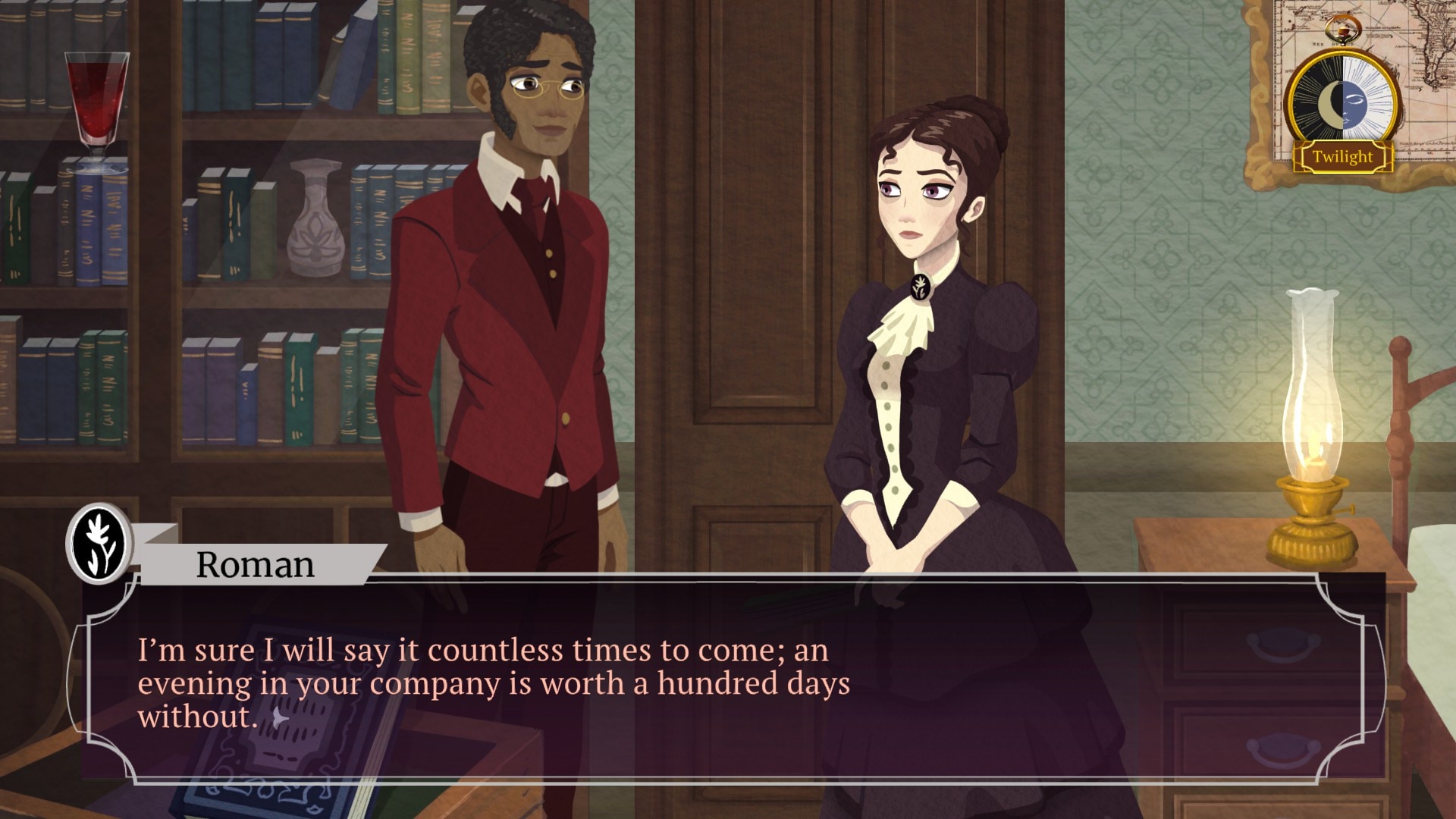
Liza’s relationships with other characters—both mortal and undead—are rich with consequence. Romantic subplots are available, but they’re far from formulaic. Each companion, from the poetic Roman to the aloof noblewoman Alisa, has their own arc and moral gravity. These dynamics form the emotional core of the experience, and the choices you make carry real weight, reflected in multiple endings and relationship consequences.
Gameplay & Mechanics
Cabernet operates on a cycle-based system, not unlike Persona or Disco Elysium. Each night, you choose how Liza spends her time: studying vampiric lore, meeting with allies, working to afford bottled blood, or exploring the world. Every action consumes limited time, creating a compelling sense of urgency and pressure.
The game also introduces a morality system tied to how you feed. You can purchase blood, ration it, or prey on those around you—but the more you feed on others, the more your relationships fray and your humanity dwindles. It’s a nuanced mechanic that supports the narrative rather than distracting from it.
Liza’s vampiric abilities—ranging from bat-like traversal to enhanced persuasion—are fun conceptually but uneven in execution. Some mini-games and action sequences feel underdeveloped or jarring against the otherwise grounded narrative tone.
Visuals & Audio
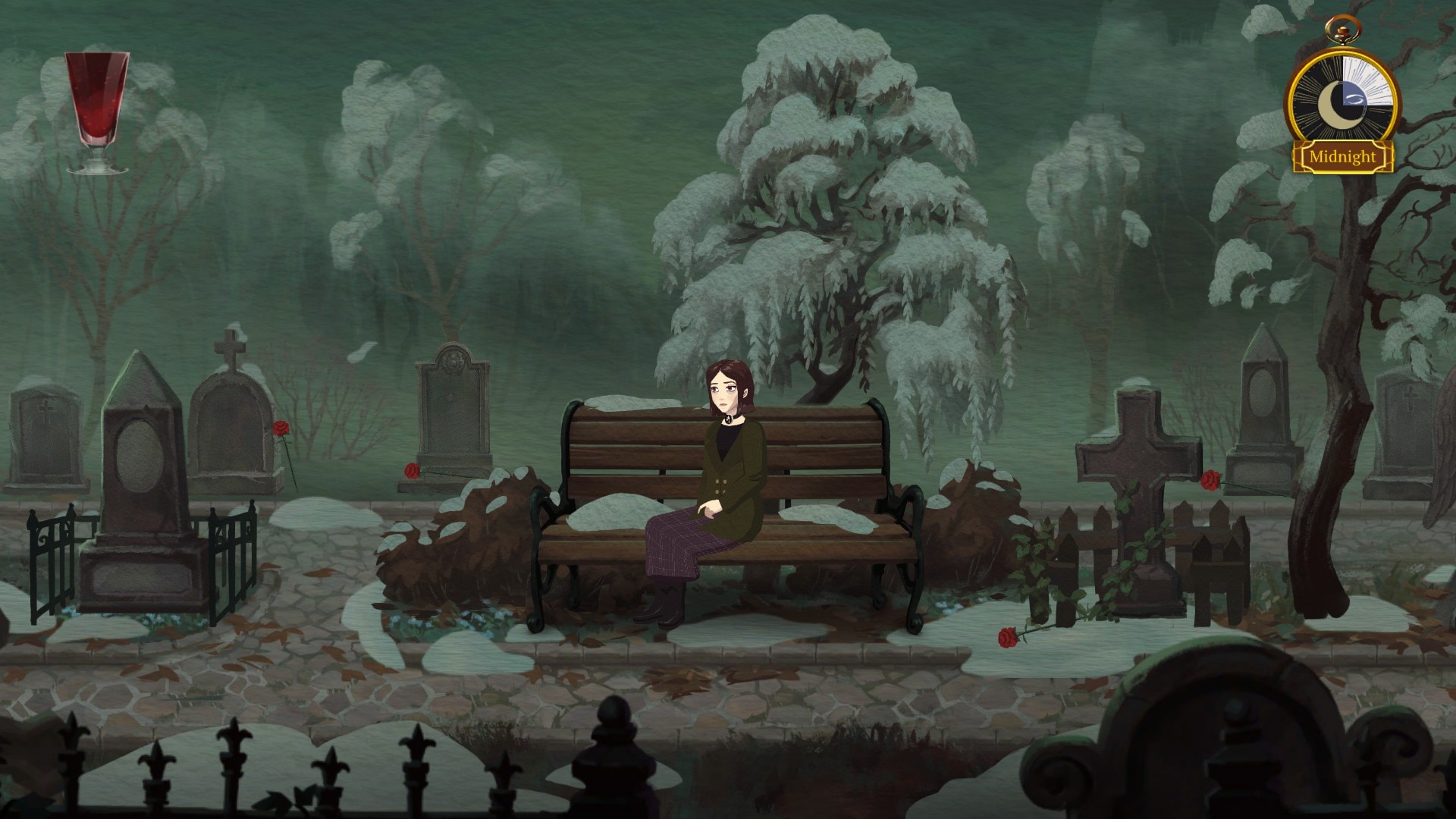
Visually, Cabernet is distinctive. Its 2.5D storybook art style blends well with the gothic atmosphere, lending a unique identity to its world. Character designs are expressive, and the muted, earthy palette complements the game’s somber themes.
The voice acting is generally strong, particularly for Liza. Supporting characters vary in quality, with a few performances hampered by poor audio mixing or uneven direction. The soundtrack, a melancholy blend of strings and ambient piano, is understated but effective—it rarely draws attention to itself, but subtly reinforces the emotional tone throughout.
Technical Performance
Here’s where Cabernet falters most. Even post-launch patches haven’t entirely resolved the game’s performance issues. Players have reported frequent soft-locks, quest-breaking bugs, UI problems (especially on Switch), and loading delays. Some sections may require manual reloads or backtracking to advance, and the lack of polish in certain interface elements—menus, dialogue boxes, navigation—undermines the otherwise high-quality writing and systems.
These issues are less prominent on PC, but still noticeable. For console players, particularly on Nintendo Switch, the experience can feel rough and occasionally frustrating.
Replayability & Narrative Depth
One of Cabernet’s greatest strengths is its replay value. Choices you make around feeding, relationships, and faction loyalty significantly alter the course of the story. There’s no obvious “right” path—only compromises. Compassion and pragmatism often clash, and how you navigate that tension shapes both the narrative and your relationships.
There’s also a surprising amount of lore embedded in the world, much of it optional. An in-game glossary helps contextualize historical and folkloric references, which adds depth without overwhelming the player.
Final Verdict: 9/10
Cabernet is a flawed but fascinating game. It offers a rare blend of character-driven storytelling, thoughtful moral design, and emotional maturity, all wrapped in a beautifully melancholic world. Despite its technical shortcomings, especially on console, it deserves recognition for what it tries—and often succeeds—to do. It won’t be for everyone, but for those drawn to story-rich, morally complex games like Vampyr, Pathologic, or Pentiment, Cabernet is a memorable and rewarding experience.


