For nearly three decades, DOOM has been the benchmark for what a first-person shooter should feel like. It has reinvented itself multiple times, each rebirth defining a new era of action design — from the pure speed and simplicity of the 1993 original, to the hyper-kinetic precision of DOOM Eternal. Now, with DOOM: The Dark Ages, id Software has taken its most audacious step yet, transposing the franchise’s demonic fury into a world of rusted iron, medieval horror, and divine retribution.
This isn’t merely a reskin or a nostalgic detour. It is a full-blooded reimagining that redefines the essence of DOOM. The sterile laboratories and Martian colonies are gone, replaced by gothic cathedrals, scorched battlements, and desecrated kingdoms. Firelight flickers against stained glass. War drums echo through fog-choked valleys. And at the center of it all stands the Slayer — no longer a futuristic avenger, but a mythic warrior whose armor feels forged as much by sin as by steel.
Forged in Blood and Momentum
Mechanically, The Dark Ages remains unmistakably DOOM. Every encounter is a test of tempo and awareness, a brutal conversation between aggression and survival. Yet the shift to a medieval setting changes everything about the cadence of play. Where DOOM Eternal was built around aerial agility — double jumps, dashes, and a fluid dance of traversal — The Dark Ages opts for grounded brutality. The Slayer feels heavier, more deliberate, less like a parkouring god and more like a walking siege engine. The sense of momentum is still there, but it manifests as forward drive rather than vertical escape. You push, you crush, you dominate.
The arsenal has been completely reinvented to suit this new identity. The Flailgun replaces the traditional shotgun, hurling chained spiked orbs that detonate with thunderous satisfaction. The Stake Cannon, an evolution of the Gauss Rifle, fires enormous iron bolts that pin enemies to walls in showers of sparks. The Crucible Shield serves both as weapon and defense, allowing you to block projectiles and retaliate with bone-shattering counters. Even the sidearms feel ancient — black-powder pistols that belch smoke and kick like beasts. Each weapon carries heft, each reload animation a punctuation mark in the Slayer’s relentless rhythm.
Encounters remain arenas of controlled chaos. Every battle is a puzzle of positioning, timing, and resource management. Health, armor, and ammunition remain part of the triad of survival, and glory kills once again reward aggression. The dance of combat feels familiar yet refreshed, infused with a primal texture that makes each strike more tangible. Fights are not merely about movement and shooting — they are about maintaining dominance over space, reading enemy tells, and adapting your rhythm as the chaos escalates. When it all clicks, The Dark Ages channels the same intoxicating rush that defined Eternal, but with an added weight that makes every victory feel earned through brute will.
Demons in Chainmail
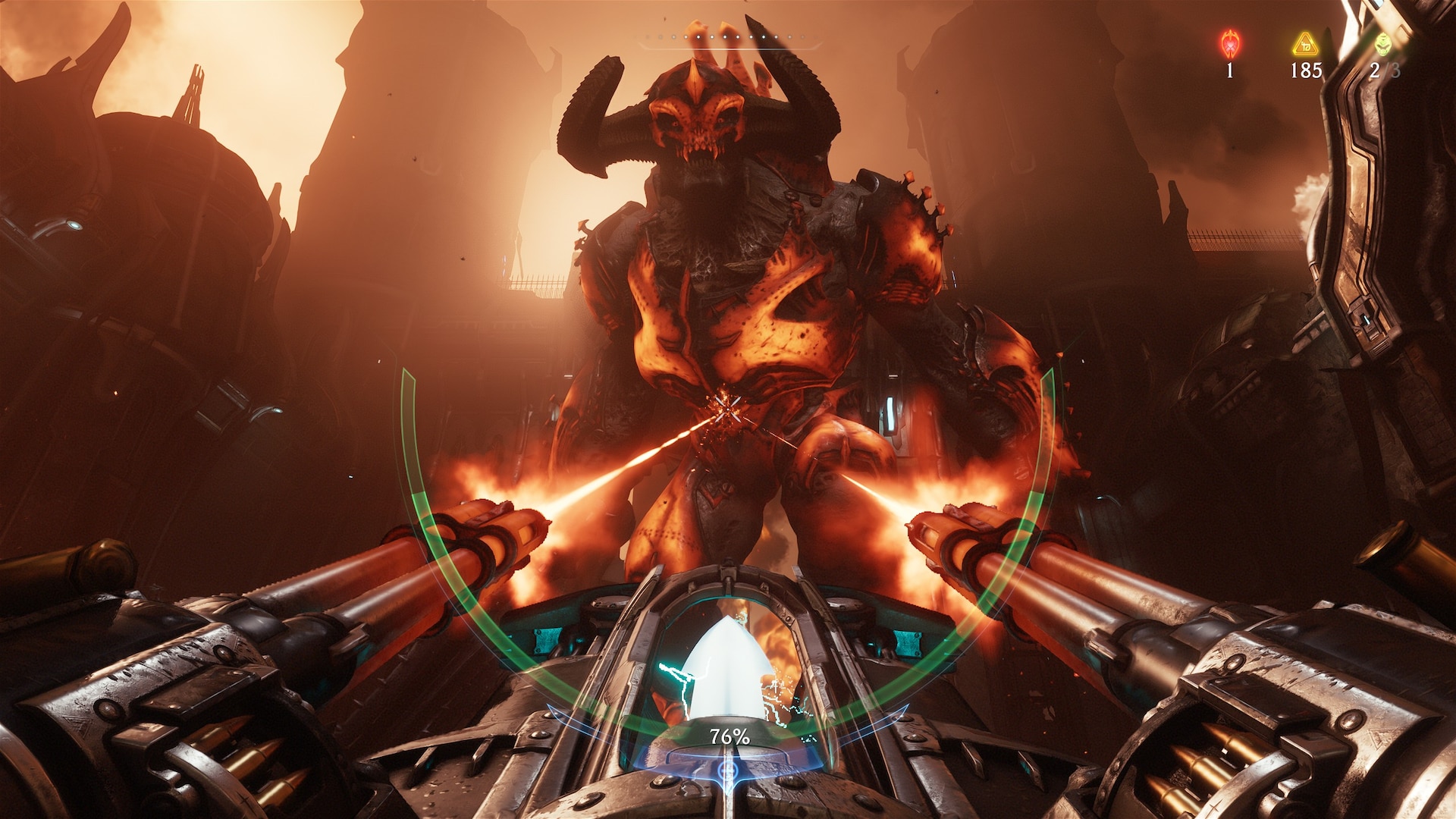
The enemies of The Dark Ages reflect its new mythology. Instead of cybernetic monstrosities, you face corrupted knights, heretic priests, skeletal cavalry, and grotesque amalgamations of flesh and armor. The design language draws from both medieval iconography and id’s signature demonic grotesquerie. Each creature has a clear silhouette and behavior pattern, keeping combat readable even amid the visual mayhem. Some enemies swarm in numbers, others anchor the battlefield as priority targets demanding immediate attention. Larger foes — such as the Abyssal Crusader and the Stone Seraph — are set-piece encounters in their own right, mixing ranged assaults with close-quarters pressure that forces constant weapon switching.
Boss fights are lavish, theatrical affairs. One early highlight pits the Slayer against a cathedral-sized beast chained to the ruins of a fortress, where the environment collapses mid-battle and the player must adapt as the arena transforms beneath their feet. These moments show id’s mastery of pacing and spectacle, though a few later bosses overstay their welcome with extended health bars and repetitive attack loops. Even so, the sense of scale and intensity rarely falters.
The World and Its Wounds
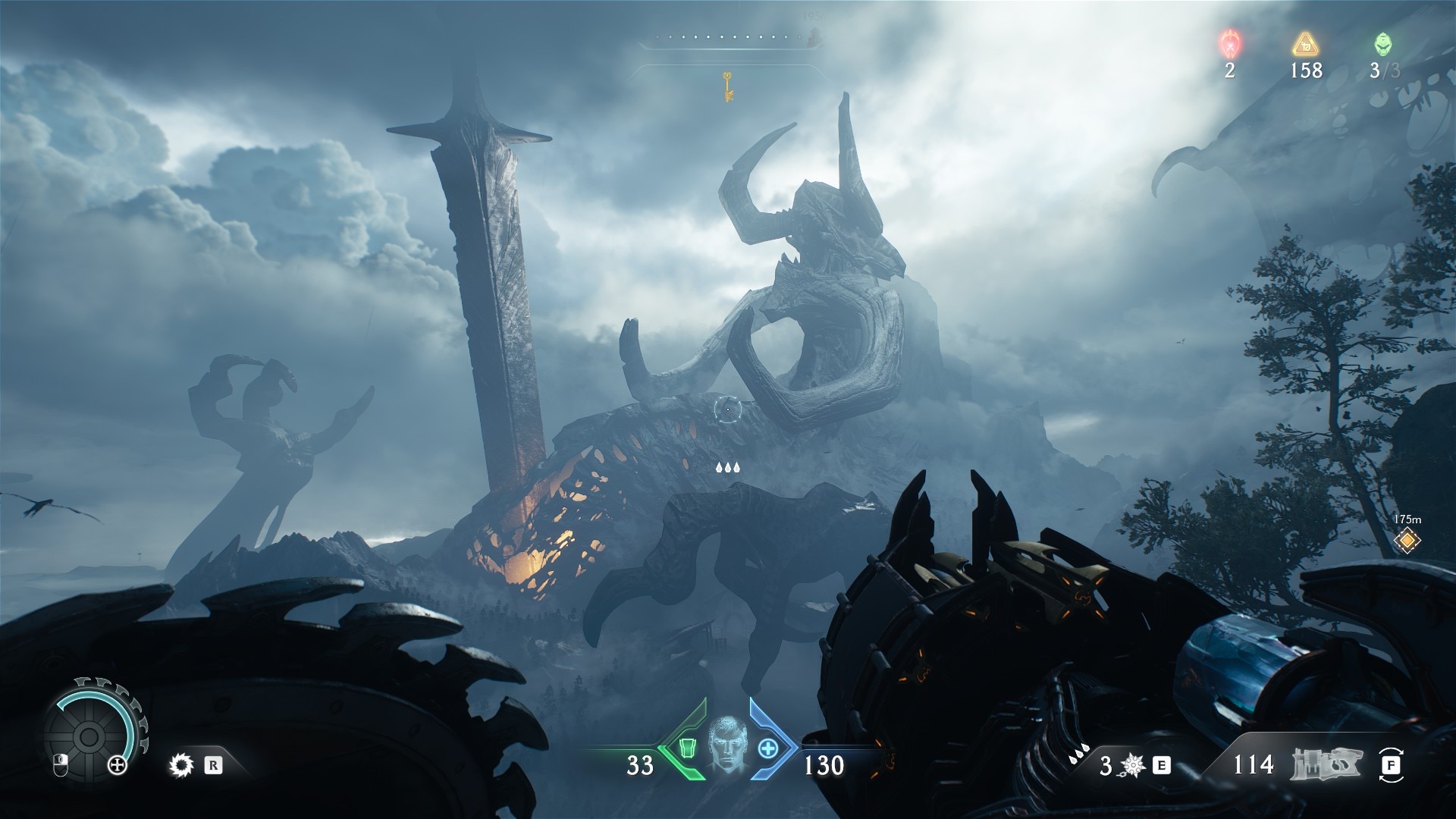
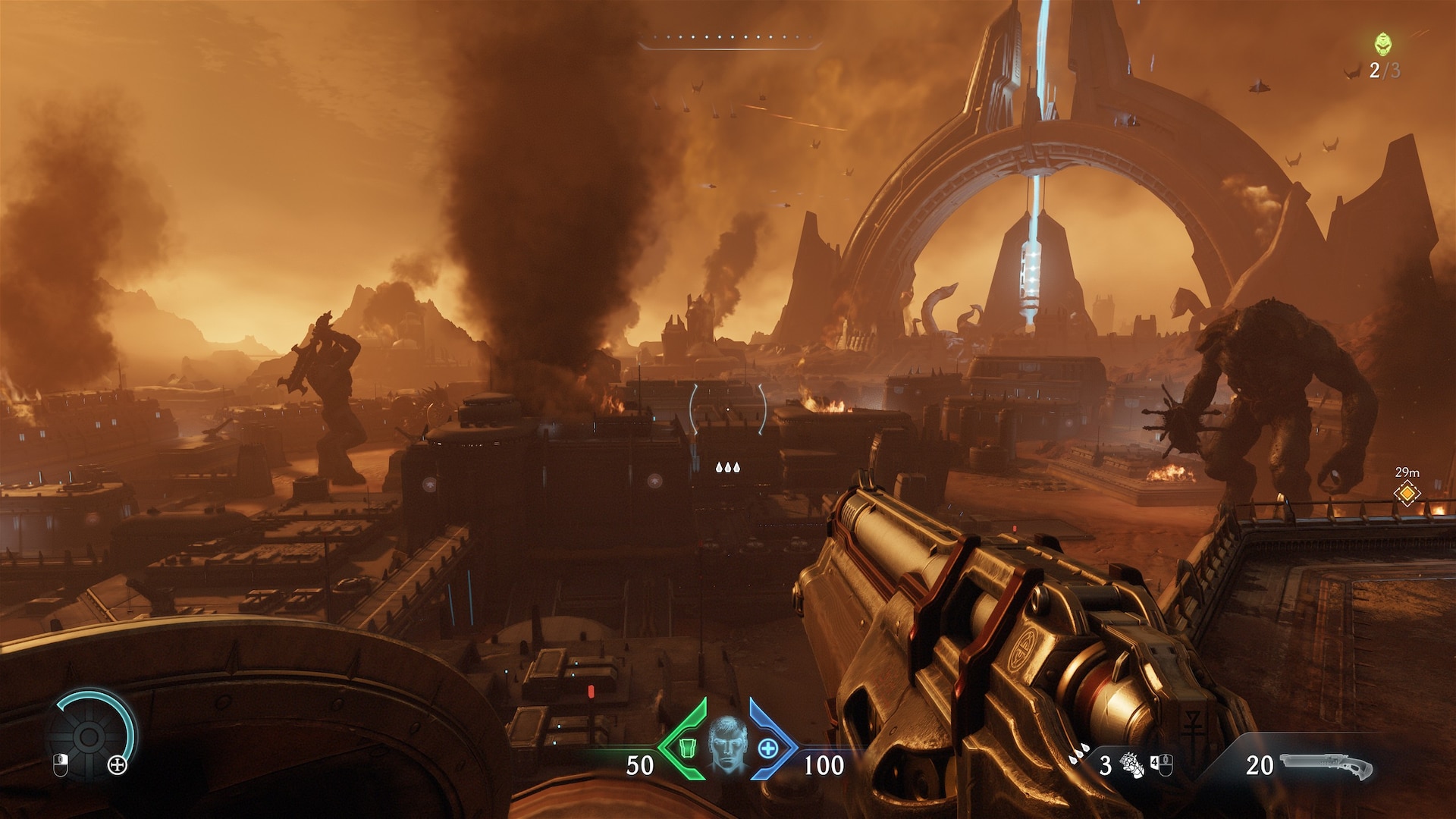
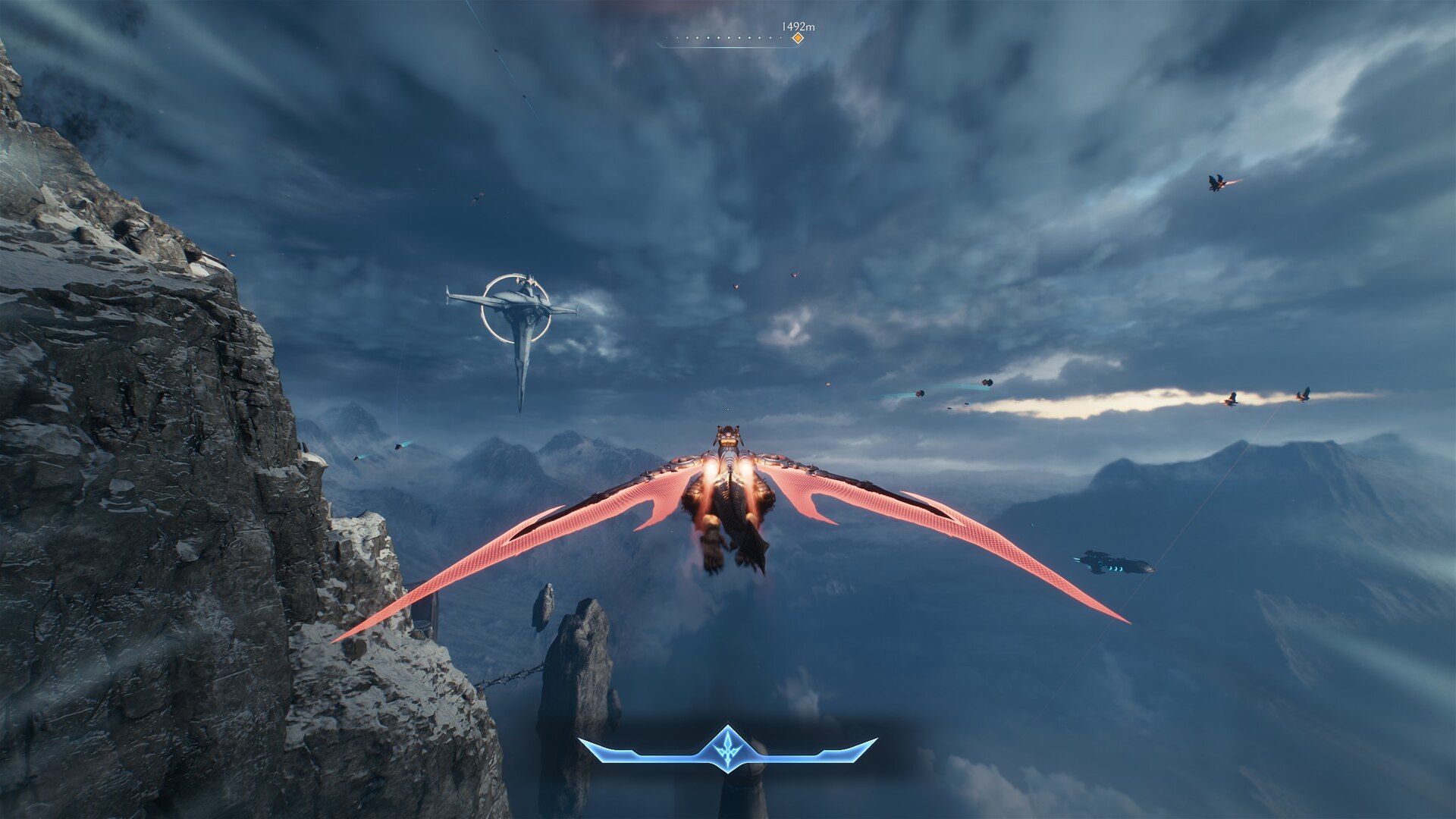
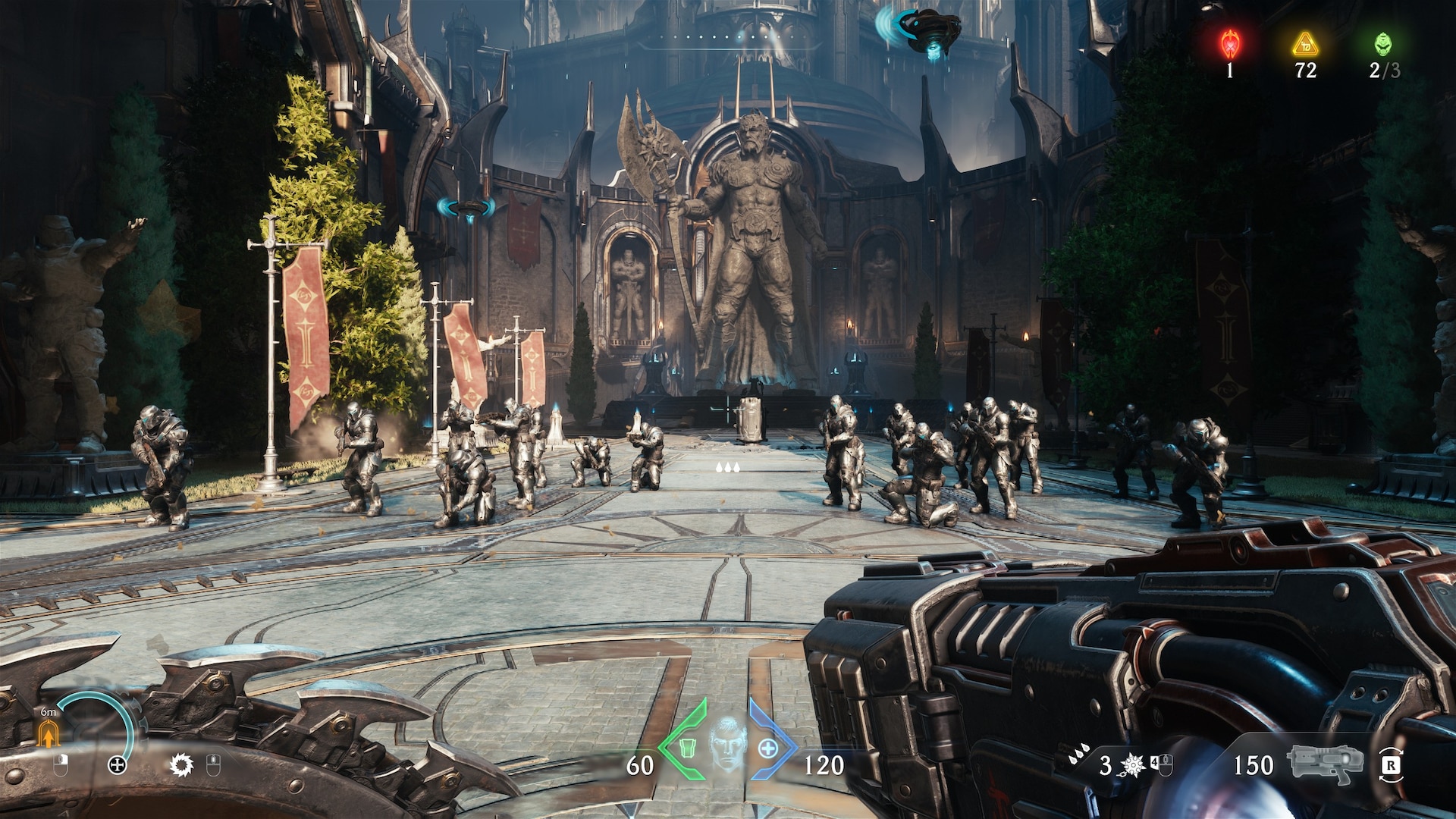
Visually, The Dark Ages is astonishing. The id Tech 8 engine has been pushed into darker, moodier territory. Lighting and shadow play a crucial role, using volumetric fog, flickering torches, and shafts of divine light that pierce through the murk to create painterly scenes of destruction. The world feels ancient, tactile, and cursed. From the scorched ramparts of Bastion Vhail to the bone-littered plains of the Dead March, each region tells a story through architecture and decay. The design aesthetic recalls the heavy-metal fantasy of 1980s album covers — all iron and agony — but polished with id’s modern precision.
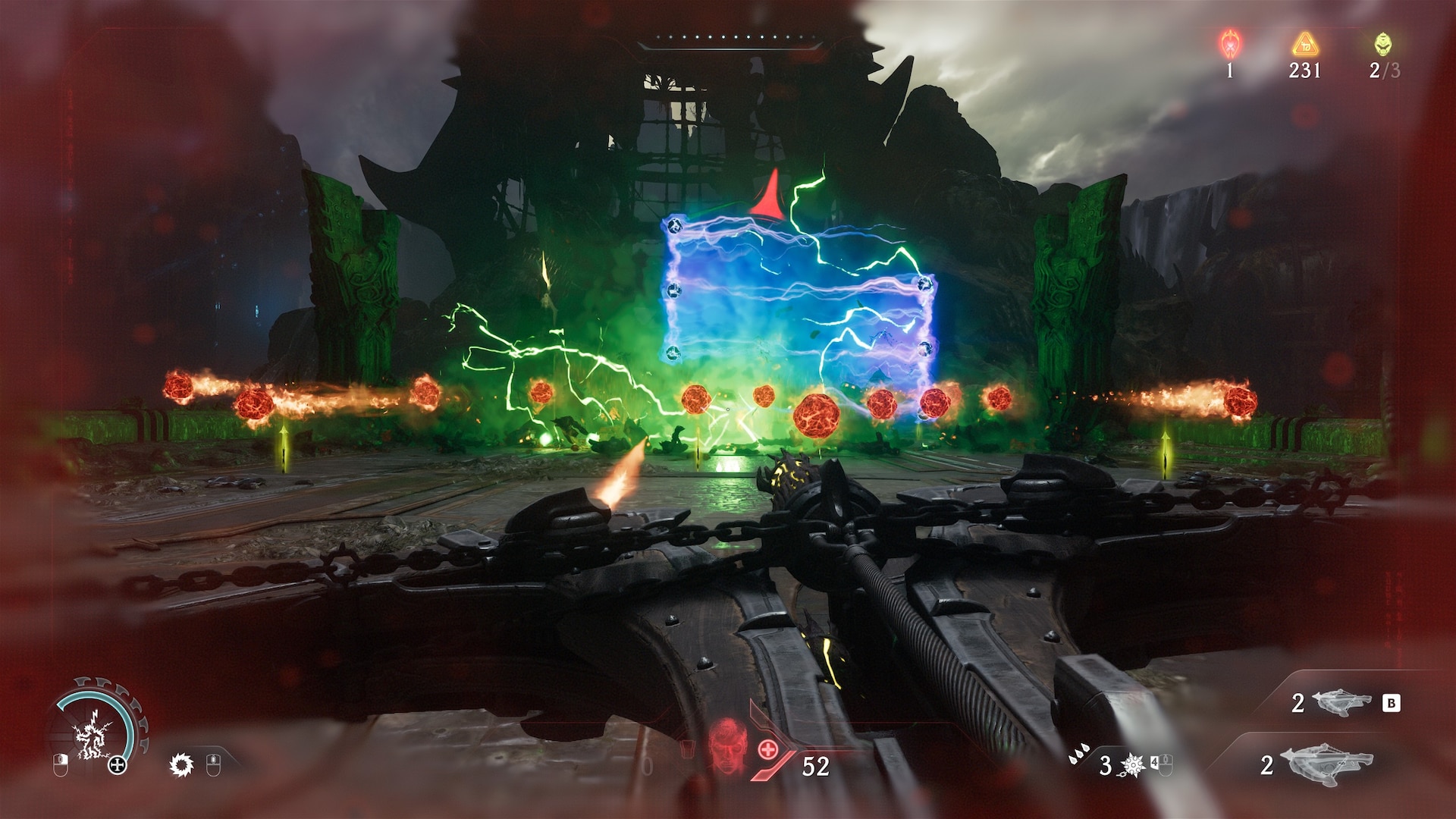
The performance is characteristically excellent. Even during the most chaotic battles, frame rates remain stable and responsive, preserving that crucial DOOM fluidity. On a high-end rig, the game easily runs above 120 frames per second at 1440p, while still supporting DLSS, FSR, and ray tracing for players seeking cutting-edge fidelity. Load times are nearly nonexistent, thanks to optimized streaming and modern SSD integration. Texture streaming and animation detail are so sharp that even close-up gore holds definition and clarity. Technical excellence has always been id Software’s quiet superpower, and The Dark Ages continues that tradition.
The Sound of Damnation
If DOOM Eternal was a metal concert in digital form, The Dark Ages is something more ritualistic — a requiem played on broken instruments. The soundtrack, composed by Mick Lemire (a spiritual successor to Mick Gordon’s iconic work), blends industrial percussion with distorted medieval motifs: hammered dulcimers twisted through distortion pedals, choirs recorded in stone crypts, and relentless low-end bass that makes each encounter feel apocalyptic. The result is less head-banging bravado and more ominous incantation. It perfectly mirrors the tone of this world — less technological, more spiritual, and all the more disturbing for it.
Sound design plays a key role in the combat feedback loop. Every weapon has a distinctive sonic texture: the whirring chain of the Flailgun, the crackling hum of the Hellspire Staff, the crunch of a shield bash that sends armored foes reeling. Enemies growl and hiss with layered reverb, their presence often telegraphed by sound before sight. The mix is meticulously balanced, ensuring clarity even amid chaos.
Narrative Threads and Thematic Depth
DOOM has never been known for elaborate storytelling, but The Dark Ages weaves its mythos with surprising sophistication. It acts as both prequel and legend, exploring the origins of the Slayer as a divine weapon forged to fight not technology’s excesses, but humanity’s corruption and celestial hypocrisy. Fragments of lore are hidden throughout the world, carved into murals and whispered through spectral echoes. The writing never overexplains — it suggests, hints, and trusts the player to assemble meaning from ruin.
There is an undercurrent of tragedy in this portrayal of the Slayer. Stripped of the sardonic tone of Eternal, he becomes less a rage machine and more a martyr bound to an endless war. His silence carries weight, his violence framed not as revenge but as ritual. The game’s environmental storytelling, reinforced by haunting visuals, evokes this sense of cyclical damnation better than any exposition could.
Pacing, Progression, and Flow
The campaign spans roughly fifteen hours, divided into sprawling chapters that each introduce new mechanics or enemy archetypes. Early missions establish fundamentals with clarity, gradually layering in complexity through weapon upgrades, arena variations, and environmental hazards. The middle section sags slightly, with a few encounters leaning too heavily on repetitive waves rather than creative design, but the final third reclaims momentum with breathtaking set-pieces that rival anything in Eternal.
Progression feels more organic than ever. Rather than a rigid upgrade tree, The Dark Ages employs relics and blessings found within the world. These confer small but meaningful tweaks — faster glory kill recovery, enhanced resource drops, or improved shield counters. The system encourages exploration without burdening the player with excessive micromanagement. Secrets remain a key pleasure, with hidden rooms, lore tablets, and puzzle-locked caches that echo the spirit of the classic games.
A Testament to Craft
What makes DOOM: The Dark Ages remarkable is not simply that it changes the setting, but that it commits so fully to the transformation. The tone, art, sound, and mechanics all align toward a singular vision: a world where faith and fury intertwine, where the Slayer’s rampage feels both epic and inevitable. It is less concerned with spectacle for its own sake and more with atmosphere — a grim meditation on violence rendered through immaculate design.
The game is not without flaws. The reduced mobility can feel restrictive to veterans who thrived on Eternal’s acrobatics, and certain boss encounters rely more on spectacle than strategy. A handful of pacing issues in the campaign’s midpoint blunt the otherwise razor-sharp flow. Yet even in these moments, the sheer craftsmanship of id’s encounter design and environmental art sustains engagement.
Final Verdict: 8/10
DOOM: The Dark Ages is not just another chapter in the series; it is a creative pivot that redefines what DOOM can be. It trades velocity for weight, science fiction for dark fantasy, and sardonic wit for solemn power. What emerges is a shooter that feels both ancient and modern, primal and precise — a blood-soaked hymn to id Software’s enduring mastery of rhythm and combat design.
For those seeking the purest expression of fast, skill-based first-person action, Eternal still reigns supreme. But for players who crave something richer, moodier, and more tactile, The Dark Ages delivers a haunting, unforgettable experience. It proves that even after thirty years, DOOM still has the power to surprise — and to remind us that in every age, darkness finds its Slayer.