There has been no shortage of action games attempting to capture the excitement of challenging sword combat in recent years. From Souls-inspired adventures to character-action games built around elaborate combinations and precise timing, the genre has become increasingly competitive. Standing out in such a crowded field is not easy, particularly for a developer attempting to establish a new property. However, S-Game’s Phantom Blade Zero manages to make a strong impression, largely because it understands what makes this type of game enjoyable: responsive combat, memorable enemies, interesting weapons, and encounters that reward players for learning their opponents.
Released for PC and PlayStation 5 in October 2026, Phantom Blade Zero is an action-adventure game built around Chinese wuxia traditions, supernatural elements, and a visual style the developers describe as kungfupunk. It combines traditional martial arts imagery with mechanical contraptions, grotesque creatures, mysterious organizations, and a dark interpretation of historical Chinese settings. The result is a world that feels familiar in some respects but has enough personality to distinguish itself from other fantasy action games.
The game follows Soul, a highly skilled warrior and former member of an organization known as the Order. After being framed for the murder of its leader, Soul is betrayed by those he once trusted and left with a fatal wound. He is eventually saved by a mysterious figure known as the Flesh Sculptor, but his survival comes with a condition: his new heart will stop beating in 66 days. With limited time remaining, he sets out to uncover the truth behind the conspiracy and find a way to save himself.
This premise provides a straightforward reason to move through the game’s different locations, meet its unusual characters, uncover more about the world, and fight increasingly dangerous opponents. More importantly, it establishes the atmosphere that defines the experience from beginning to end. Phantom Blade Zero is a game about martial artists, assassins, supernatural forces, and people whose ambitions have turned them into something considerably more dangerous than ordinary human beings.
What makes the adventure particularly interesting, though, is that it doesn’t attempt to build everything around its narrative. Instead, it places most of its attention on the combat, and this is where S-Game’s work is at its strongest.
Story and Setting
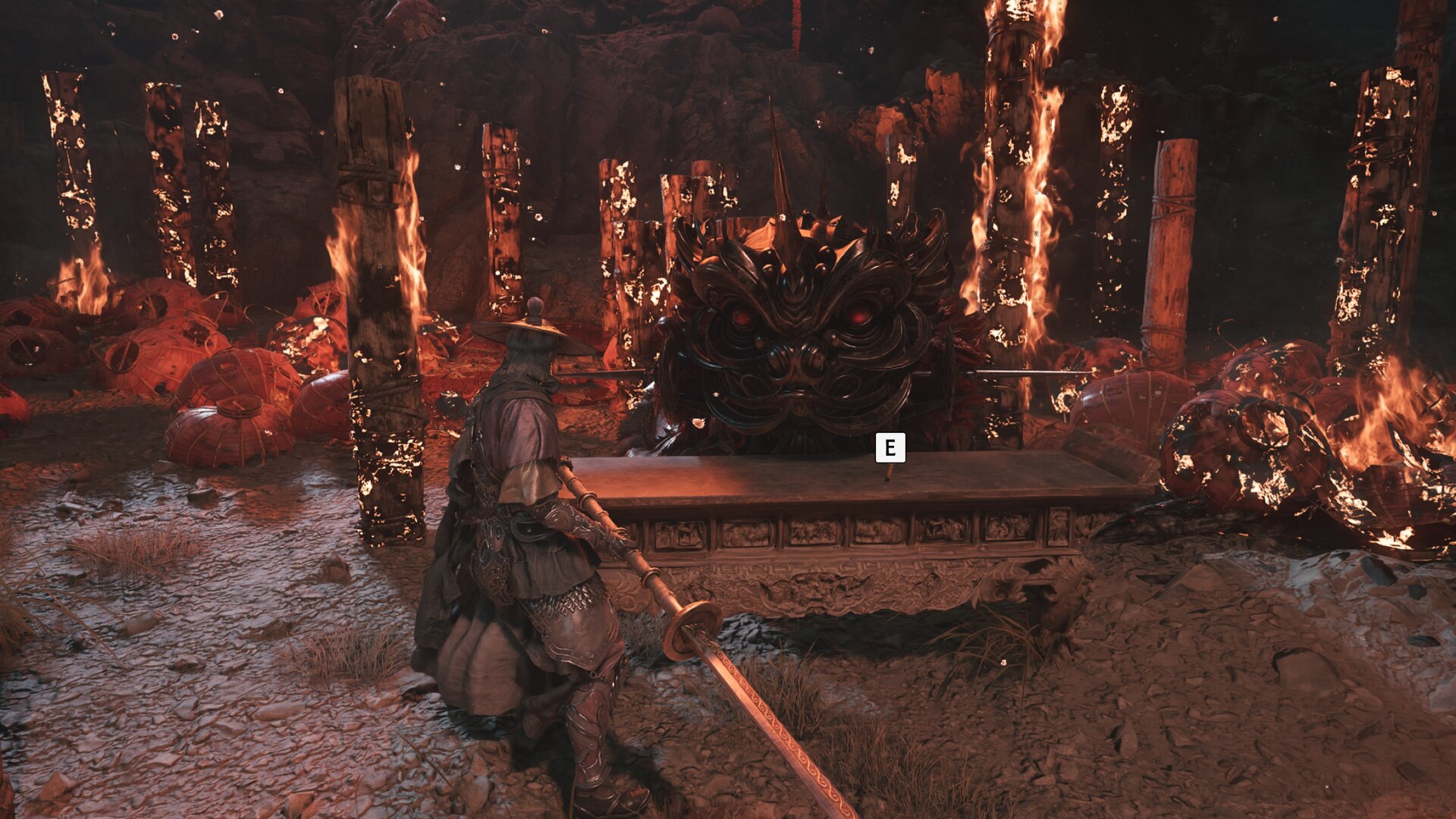
The world of Phantom Blade Zero is one of its most immediately appealing qualities. Rather than relying entirely on conventional medieval fantasy imagery, the game draws heavily from wuxia fiction, Chinese mythology, martial arts cinema, and supernatural horror. Its kungfupunk identity combines these influences with machinery and industrial elements, creating environments that can shift from beautiful natural landscapes to unsettling settlements and elaborate structures.
The locations are varied enough to maintain interest throughout the adventure. Players travel through villages, forests, cliffs, caves, estates, and other environments, encountering everything from ordinary warriors to bizarre supernatural creatures. Some areas have a distinctly traditional appearance, while others introduce more unusual architectural and mechanical details. This contrast gives the world a recognizable visual identity without making every location feel as though it belongs to the same setting.
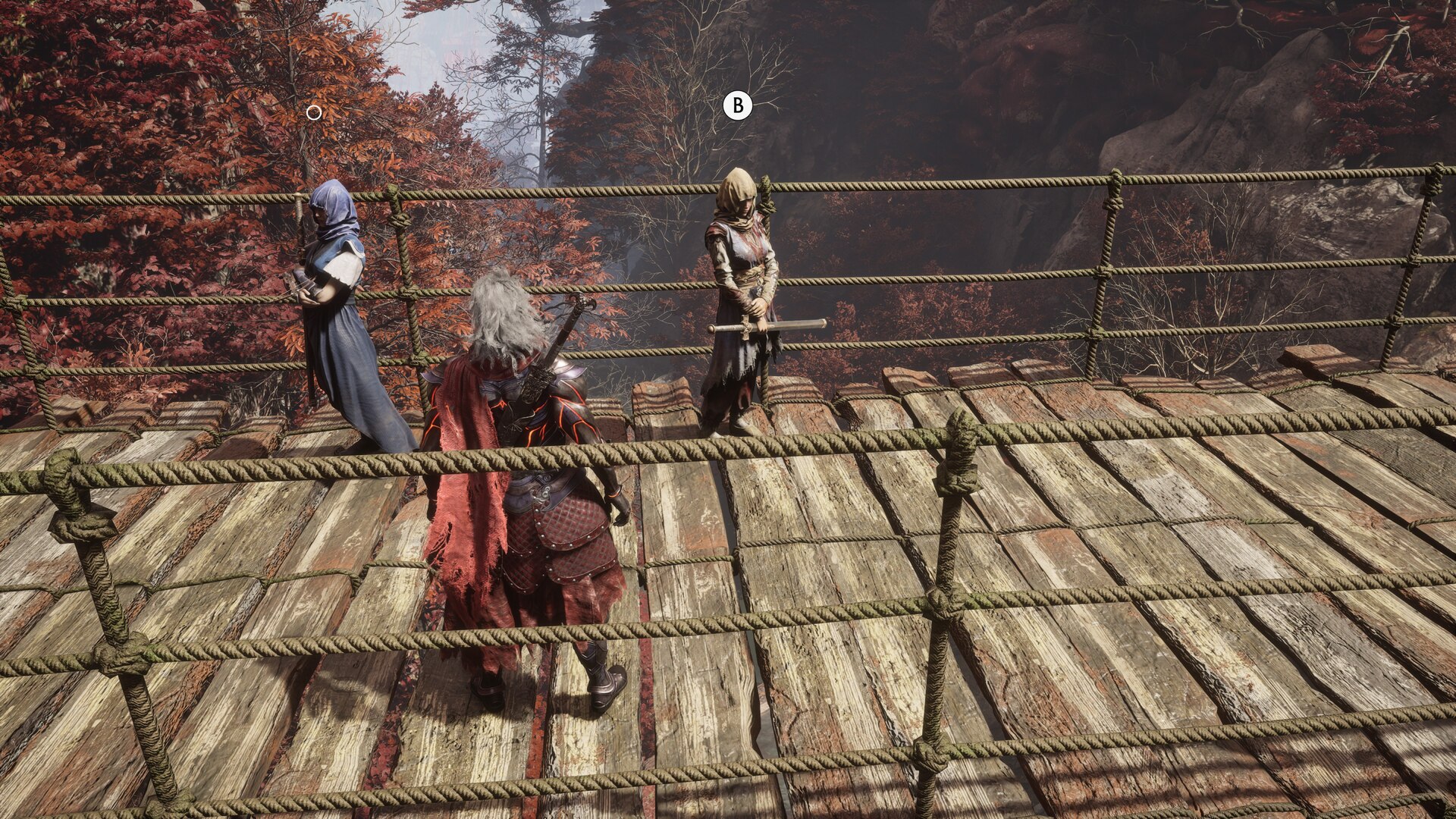
The central story, meanwhile, is considerably less consistent. Soul’s limited lifespan provides a useful narrative framework, but the mystery surrounding his betrayal takes time to become genuinely engaging. There are interesting characters and moments of effective storytelling, although the presentation can be uneven. The game frequently introduces unfamiliar names, organizations, historical references, and pieces of background information without always providing enough context to make them immediately meaningful.
There is also a substantial amount of written material scattered throughout the world. These documents and notes offer additional information about the setting, its inhabitants, and the events that have shaped it. Players who enjoy investigating every detail of a fictional universe may appreciate the additional background, but those primarily interested in the action might find themselves skipping much of it.
The narrative occasionally becomes more interesting when it focuses on individual characters rather than trying to explain the entire world. Unfortunately, several characters could have benefited from more development, and some of the story’s revelations lack the impact they should have. The shifts between different periods and perspectives can also make the narrative harder to follow, particularly during the earlier sections.
Still, the story serves its purpose. It gives Soul a reason to continue his journey and provides enough intrigue to encourage players to discover what happens next. It simply isn’t the main reason to experience Phantom Blade Zero, and the game is considerably more successful when it allows its combat and environments to do the talking.
Gameplay and Mechanics
Combat is unquestionably the highlight of Phantom Blade Zero. It is also the aspect that gives the game its strongest identity. At first glance, the system might appear familiar to anyone who has played modern action games built around dodging, blocking, parrying, and carefully timed attacks. However, the speed of its encounters, the variety of available weapons, and the way different defensive actions interact give it a distinct rhythm.
Soul is capable of chaining together fast attacks, heavier strikes, evasive movements, and special abilities. Rather than simply attacking until an opponent’s health bar disappears, players need to pay attention to enemy behaviour and look for opportunities to interrupt their offence. Blocking, parrying, and using stronger attacks gradually deplete an opponent’s Sha-Chi gauge. Once it has been depleted, the enemy becomes considerably more vulnerable, allowing Soul to unleash a more damaging combination of attacks.
This system creates an interesting balance between aggression and defence. Attacking constantly is not necessarily the best approach, particularly against stronger opponents capable of interrupting careless combinations. At the same time, playing too defensively can make encounters unnecessarily long. The most effective approach involves switching between offensive pressure and well-timed defensive actions, taking advantage of openings rather than simply waiting for an enemy to finish attacking.
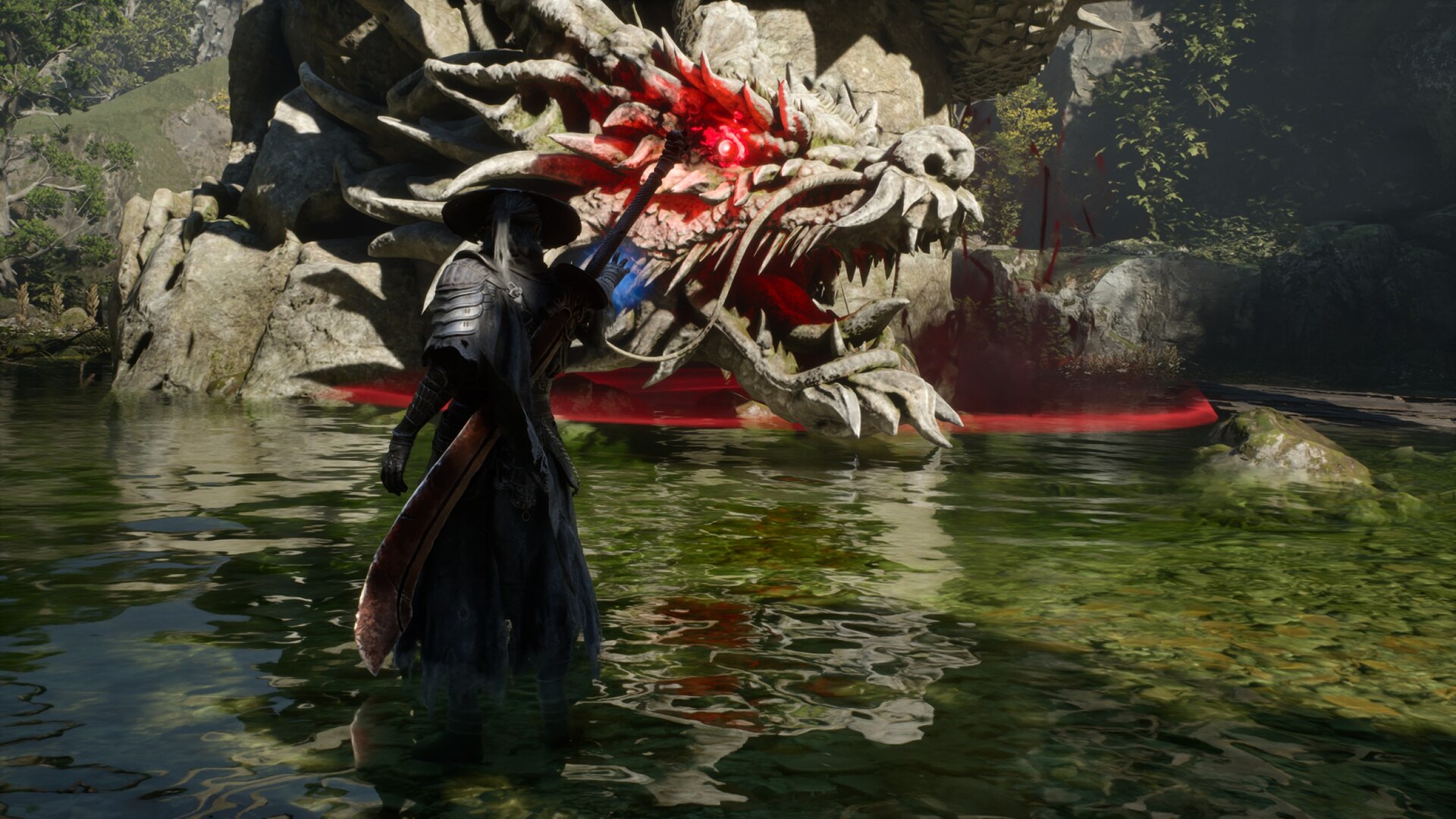
Parrying is especially important, although the game provides several ways to deal with incoming attacks. Certain enemy moves are indicated by distinctive visual effects, helping players determine whether they should block, dodge, or get out of the way entirely. Red attacks generally require a properly timed dodge, while blue attacks can be countered through parrying. Other particularly dangerous attacks are best avoided altogether.
The speed of some encounters can make individual attacks difficult to distinguish, especially when several enemies are attacking simultaneously. Nevertheless, the overall combat remains satisfying because successful counters and well-executed combinations have a noticeable impact on the flow of battle.
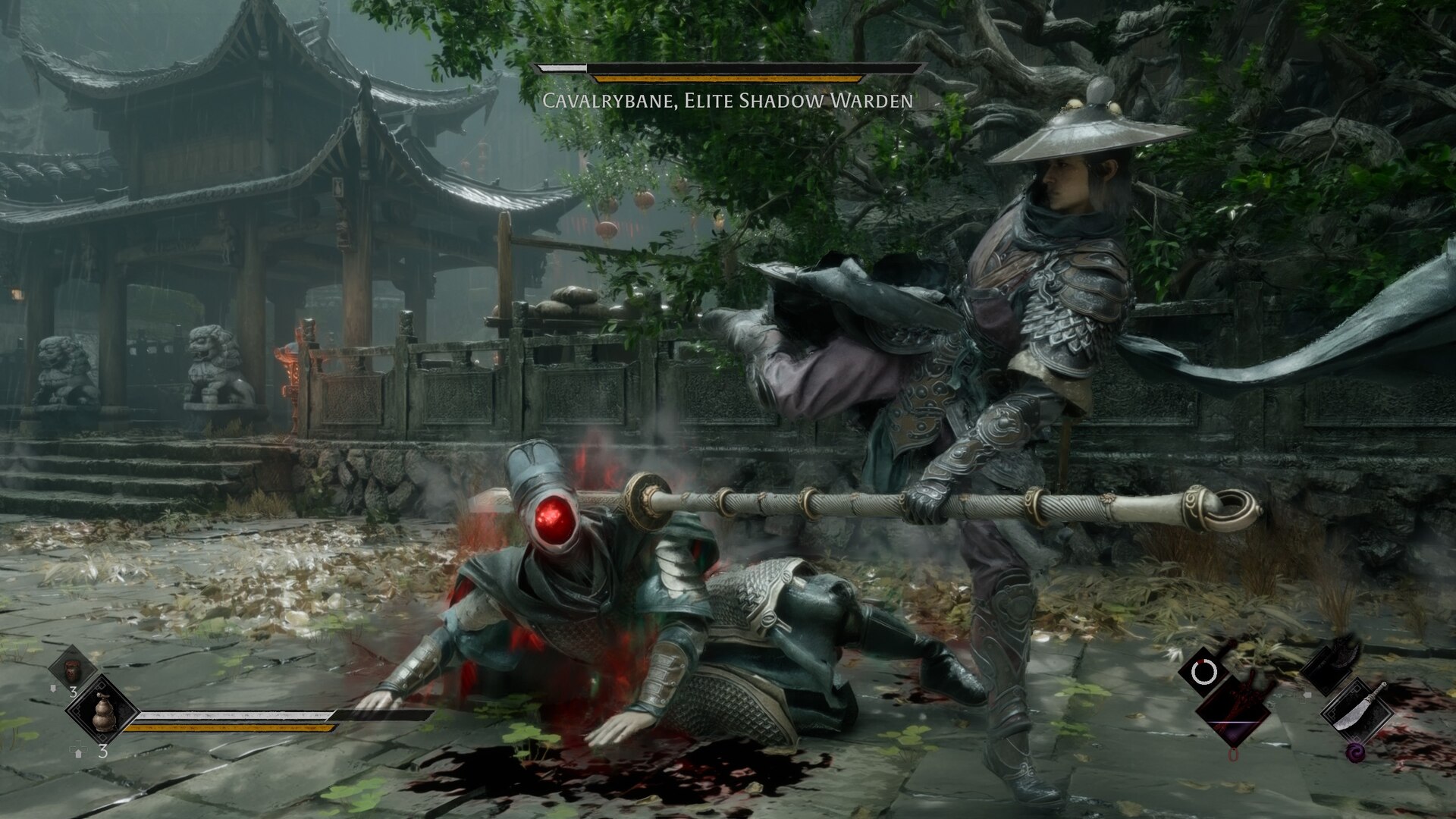
One of the more interesting mechanics is the ability to equip two primary weapons and switch between them during combat. This is not simply a cosmetic choice or an alternative moveset. Different weapons have individual characteristics and special properties, meaning that selecting the right combination can influence how players approach particular encounters. Some are better suited to breaking through enemy defences, while others offer different offensive advantages or status effects.
There are around 30 regular weapons to discover, and their individual characteristics make experimentation worthwhile. Finding a new weapon can substantially change the way an encounter plays out, particularly when its special abilities complement the player’s preferred approach. Weapon upgrades provide another reason to explore optional areas and complete additional activities, gradually improving Soul’s effectiveness against increasingly dangerous opponents.
The ability to switch between two equipped weapons also has an important connection to the Sha-Chi system. Changing weapons can restore the depleted gauge, providing another tactical option during longer encounters. This encourages players to make use of their available equipment instead of relying on a single weapon throughout the entire game.
Then there are Phantom Edges, a separate category of special equipment with a variety of applications. Some function as powerful additional weapons, while others provide temporary support or utility abilities. Certain Phantom Edges also help with exploration by allowing Soul to interact with environmental obstacles and access previously inaccessible routes. They add another layer to the combat system without making the basic controls unnecessarily complicated.
The result is a system that is relatively easy to understand but offers enough variety to remain interesting throughout the adventure. It doesn’t demand the kind of elaborate combo memorisation associated with some traditional character-action games, but there is still considerable room to improve your timing, weapon selection, and understanding of enemy behaviour.
Boss Battles and Enemy Design
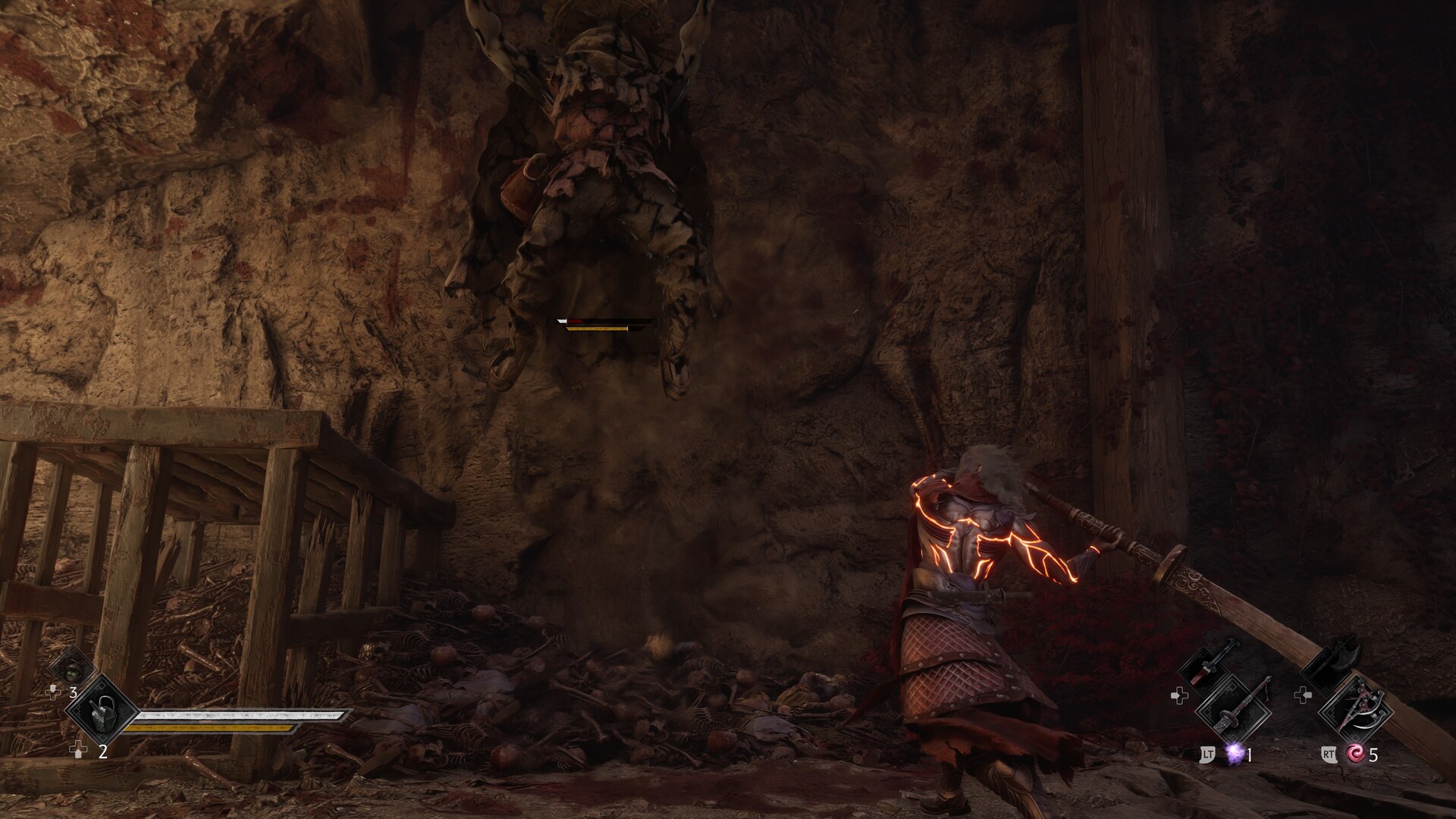
Boss encounters are among the strongest parts of Phantom Blade Zero. They provide some of the game’s most memorable moments and demonstrate just how much attention S-Game has invested in its combat animations and enemy behaviour.
Rather than simply presenting larger opponents with more health, the game introduces bosses with distinctive attack patterns, different fighting styles, and individual approaches to combat. Some are exceptionally quick and rely on graceful, almost theatrical movements, while others are enormous warriors whose attacks cover considerable portions of the arena. Learning to recognise their behaviour is essential, particularly when facing opponents capable of chaining several attacks together.
The animation work deserves particular attention. Enemy movements have a strong martial arts influence, with fluid transitions between attacks, defensive manoeuvres, and sudden changes in direction. Some encounters resemble carefully choreographed fights from traditional Hong Kong action cinema, although the game rarely sacrifices gameplay readability simply to make an animation look impressive.
That said, the visual presentation can occasionally work against the player. The speed and fluidity of certain opponents make their attack timings difficult to recognise during initial encounters. It is not always immediately obvious whether an enemy is preparing to attack or simply repositioning itself. These moments can result in some frustrating early attempts, although learning the patterns usually makes subsequent encounters considerably more manageable.
Regular enemies are reasonably varied, although they naturally become less threatening as Soul’s abilities improve. Groups of weaker opponents can still create problems, particularly when several enemies attack from different directions or use ranged weapons. The camera can occasionally struggle to keep everything visible during these encounters, making crowd control more frustrating than it should be.
Nevertheless, the boss battles are a major reason to keep playing. They offer a satisfying combination of spectacle, mechanical challenge, and visual variety, and several encounters demonstrate the potential of the combat system better than any other part of the game.
Exploration and Level Design
Although combat receives most of the attention, Phantom Blade Zero offers more exploration than its relatively linear structure might initially suggest. Its world consists of several interconnected areas and regions, with optional routes, hidden encounters, additional equipment, and secrets waiting to be discovered.
It would be misleading to describe the game as a traditional open-world experience. Its environments are carefully structured, and the main progression generally follows a clearly defined route. However, there is usually more to discover than simply reaching the next objective. Taking a moment to investigate a side passage or explore an area away from the main path can lead to useful upgrade materials, new weapons, optional bosses, and additional story content.
The Phantom Edges play an important role here. Some of their abilities can be used to interact with environmental obstacles, opening paths that were previously inaccessible. This creates a light Metroidvania element, as players gradually acquire the tools needed to reach areas they encountered earlier. It gives exploration a practical purpose beyond collecting items and defeating enemies.
Exploration is generally rewarding, and the game does a good job of encouraging curiosity without requiring players to spend excessive amounts of time wandering around. There are also optional bosses that provide additional challenges and can reward particularly useful equipment.
However, the level design is not always as impressive as the combat. The environments look excellent, but movement and traversal are relatively basic. Soul is an accomplished martial artist, yet his exploration abilities are surprisingly limited. Jumping, in particular, feels underutilised outside combat, and invisible boundaries occasionally make the environments feel more restrictive than their appearance suggests.
Side quests are another mixed element. They provide additional encounters, introduce secondary characters, and offer useful rewards, but their objectives are often fairly conventional. Some have interesting narrative details, although they rarely reach the same standard as the main boss encounters.
One unusual design decision is the limited respawning of regular enemies. Once an area has been cleared, it can remain relatively quiet when players return. This reduces repetitive encounters and makes progression more straightforward, but it also removes opportunities to practise combat or experiment with newly acquired weapons against familiar opponents.
Even so, exploration provides a welcome change of pace. There is enough optional content to reward players who enjoy investigating every corner of a game world, and the discovery of new weapons or hidden opponents can make exploring an area worthwhile.
Graphics and Presentation
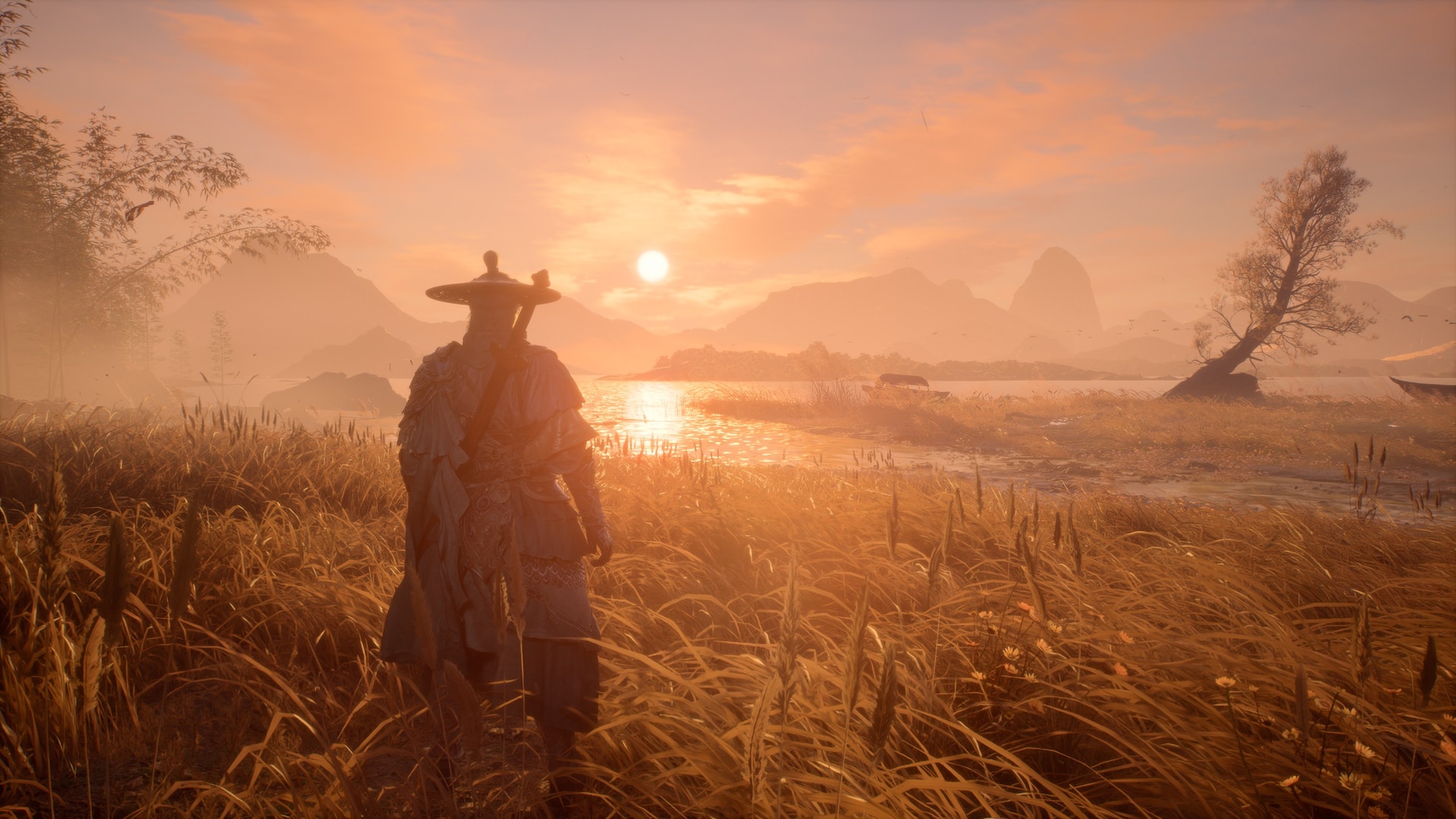
Visually, Phantom Blade Zero is an impressive production, although its greatest strength is arguably its art direction rather than its technical achievements alone. The developers have created a world that combines traditional Chinese architecture, natural landscapes, supernatural imagery, and industrial influences in a way that feels cohesive without becoming repetitive.
Character and enemy designs are particularly memorable. The game features an assortment of warriors, masked figures, strange creatures, and heavily armoured opponents, many of whom have distinctive silhouettes and elaborate equipment. Even relatively ordinary enemies benefit from the attention given to their clothing, weapons, and animations. Bosses receive considerably more elaborate treatment, with their appearances and fighting styles often reflecting their personalities.
The environments are similarly impressive. Dense forests, atmospheric villages, elaborate buildings, and unsettling underground locations provide a strong sense of place. Lighting and environmental effects contribute significantly to the atmosphere, particularly in areas featuring water, fog, rain, or complex interior environments.
The animation work is arguably the most important part of the presentation. Much of the game’s visual identity comes from the way characters move during combat. Attacks have considerable weight and personality, while defensive movements and finishing animations help make encounters feel like choreographed martial arts sequences. This is especially noticeable during boss battles, where the movements of both Soul and his opponents can be remarkably expressive.
Character facial animation is less consistent, and some of the game’s visual presentation is uneven. Certain models and textures appear surprisingly basic when compared with the more elaborate environments and combat animations. However, these issues do not fundamentally undermine the overall presentation.
The soundtrack and sound design deserve credit as well. Weapon impacts, parries, enemy attacks, and environmental sounds provide useful feedback during combat. The sound of a successful defensive action is particularly satisfying, helping reinforce the timing and impact of the combat system. The music complements the setting without constantly demanding attention, although the soundtrack is not necessarily as memorable as the game’s visual and combat presentation.
Technical Performance on PC
The PC version is built using Unreal Engine 5.7.4 and includes an extensive collection of graphical options. Alongside conventional rendering, the game supports hardware ray tracing and path tracing, as well as modern upscaling and frame-generation technologies. DLSS, FSR, and XeSS support provides several options for players using different graphics hardware, while HDR and ultrawide display support offer additional flexibility.
This is a welcome selection of features, particularly for a game that places so much emphasis on detailed environments, lighting, and elaborate combat animations. Path tracing can produce particularly attractive results, improving reflections and the way light interacts with the environment. However, these features come with a substantial performance cost.
The PC version is demanding, especially when the more advanced lighting options are enabled. Independent hardware testing has shown that even powerful graphics cards can struggle to maintain high frame rates at demanding resolutions and quality settings. In one high-end test configuration using an RTX 4080, performance at 4K with High settings and DLSS Quality was around the 100 FPS range, but enabling ray tracing reduced it to the high 50s, while path tracing brought performance down considerably further.
Results also vary between graphics cards and test configurations. Some benchmark testing has highlighted surprisingly weak performance using conventional rendering, meaning that the game is not necessarily easy to run even without its most demanding visual options. Upscaling and frame generation can help, but players should not assume that enabling them will automatically eliminate every performance limitation.
There is better news regarding shader compilation. The game performs a substantial pre-compilation process when launched for the first time, which helps reduce the disruptive shader compilation stuttering commonly associated with Unreal Engine releases. Some testing has reported smooth gameplay with only occasional traversal-related stutters, although other reports describe less consistent frame pacing. The experience can therefore vary depending on the hardware and settings being used.
The graphical options provide considerable flexibility, and players should experiment with individual settings rather than automatically selecting the highest preset. High and Very High settings can offer a more sensible balance between visual quality and performance, particularly when combined with appropriate upscaling. Path tracing is an attractive option for those with sufficiently powerful hardware, but it is difficult to justify sacrificing a consistently smooth frame rate in a game where combat depends so heavily on timing and responsiveness.
Overall, the PC release offers an impressive collection of modern graphical technologies, but its performance is not entirely consistent across hardware configurations. The standard visual presentation is already attractive, so there is little reason to enable expensive rendering features at the expense of smoother gameplay. A more stable frame rate is ultimately more valuable than marginal improvements in lighting quality.
Difficulty and Accessibility
Despite its demanding combat, Phantom Blade Zero is not quite the Soulslike experience some players might expect from its early presentation. It borrows certain familiar mechanics, particularly the emphasis on learning enemy patterns, defensive timing, and boss encounters, but its overall structure is considerably different.
Checkpoints are generally generous, and healing resources are replenished after death. Regular enemies also do not consistently respawn after an area has been cleared. This makes progression less dependent on repeatedly fighting through the same groups of opponents and allows players to concentrate on the encounters that matter.
The game also offers adjustable difficulty, giving players some flexibility in how demanding they want the experience to be. Boss encounters can still be challenging, particularly when facing opponents with complicated attack patterns, but the relatively forgiving checkpoint structure makes experimentation less frustrating. Players are encouraged to learn the combat mechanics rather than simply endure repeated attempts until they get lucky.
Accessibility options are more limited than some players might prefer. The game includes subtitle options, adjustable text size, volume controls, and visual adjustments such as camera-shake and motion-blur settings. However, the range of options is not particularly extensive, and players who require more comprehensive accessibility adjustments may find the available settings restrictive.
Even so, the difficulty balance is generally successful. The combat is demanding without constantly resorting to artificial difficulty, and the game does a reasonable job of allowing players to recover from mistakes. It is considerably more interested in making players feel capable and skilled than in punishing them for every failed encounter.
Replayability and Endgame Content
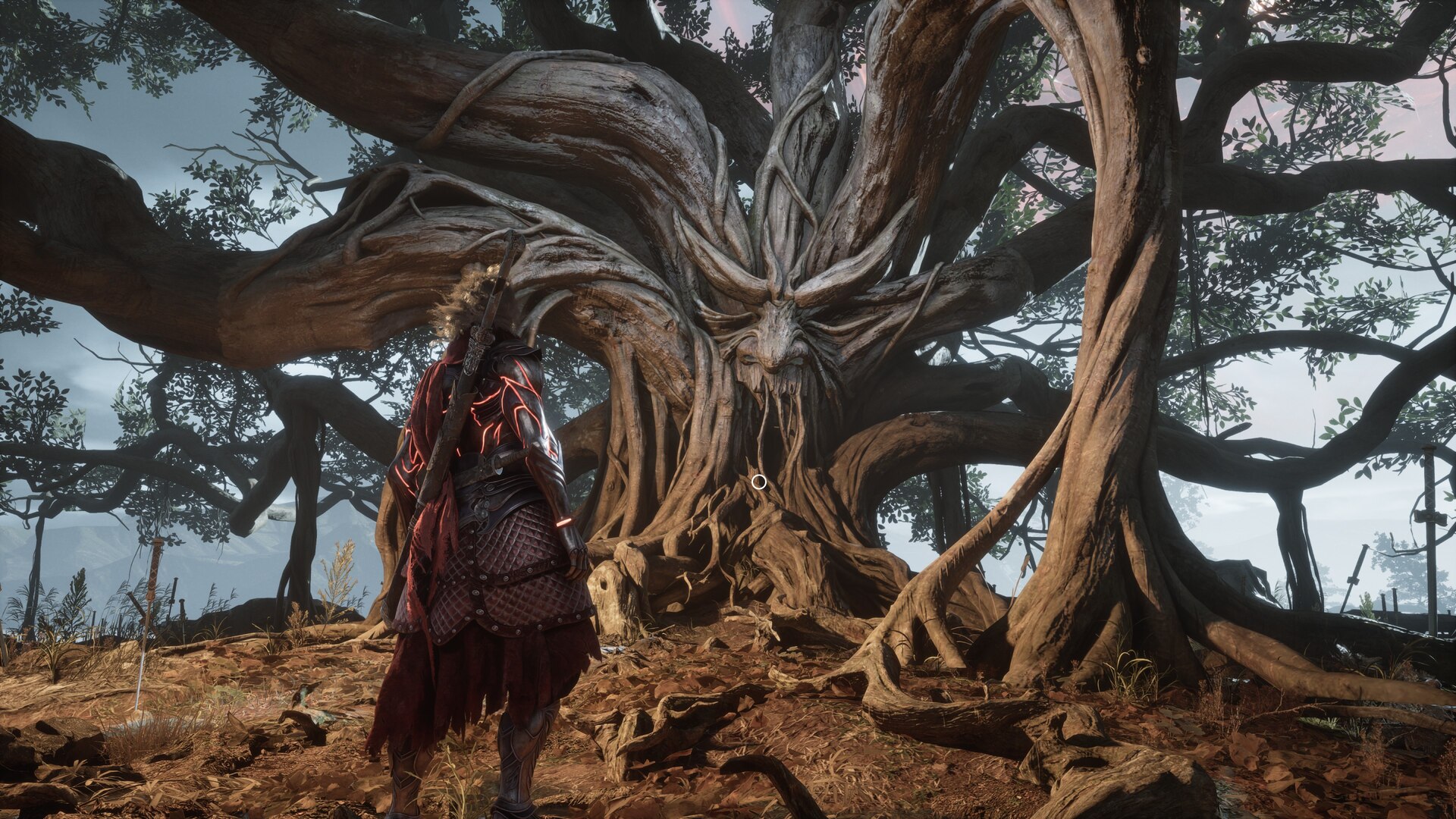
Completing the main story does not necessarily mean that there is nothing left to do. Phantom Blade Zero offers a considerable amount of optional content, and players who enjoy collecting weapons, discovering hidden encounters, uncovering hidden secrets, and exploring every available region will find plenty of reasons to continue playing and uncover more of what the game has to offer after reaching the main conclusion.
There are additional secrets to uncover, optional bosses to defeat, and multiple outcomes to discover. Players who finish the game without investigating everything may find that they have missed substantial portions of the experience. Some of the optional encounters are considerably more difficult than anything encountered during the main adventure, providing an additional challenge for those who have become comfortable with the combat system.
Weapon collection also contributes to replayability. With numerous weapons to discover and upgrade, there is plenty of room to experiment with different combinations and approaches. Players who have settled into a particular setup during their first playthrough may find that trying different equipment changes the way they approach familiar encounters.
The game is not built around an endless progression system, nor does it offer the kind of multiplayer component that could keep players returning indefinitely. Its longevity instead comes from optional content, exploration, alternative outcomes, and the simple satisfaction of mastering its combat.
For an action game primarily focused on a single-player adventure, this is a reasonable approach. There is enough additional material to reward completionists without making the main campaign feel artificially stretched.
Final Verdict: 8.5/10
Phantom Blade Zero is an excellent action game with a combat system that deserves most of the attention it receives. S-Game has created an experience that understands the appeal of martial arts action and translates it into a game with responsive controls, impressive animations, varied weapons, and some genuinely memorable boss encounters.
Its greatest achievement is making combat consistently enjoyable. The combination of weapon switching, Sha-Chi management, parrying, dodging, and special abilities creates encounters that reward both aggression and careful observation. The bosses are particularly impressive, and the variety of their fighting styles helps prevent the action from becoming monotonous.
The world is another major strength. Its combination of wuxia influences, supernatural horror, and industrial imagery gives the game a distinctive identity, while its environments provide plenty of opportunities for exploration. There is also a respectable amount of optional content for players willing to look beyond the main story.
Unfortunately, not every aspect reaches the same standard. The narrative is occasionally confusing and lacks consistent character development, while side activities can feel repetitive. Level design is sometimes restrictive, and certain camera and animation issues can make encounters more frustrating than they should be. The PC version also demands considerable hardware for its most advanced graphical features, and performance can vary depending on the system.
These problems are noticeable, but they rarely overshadow what the game does well. The combat is strong enough to carry the experience through its weaker sections, and the variety of encounters makes it difficult to lose interest for long.
Ultimately, Phantom Blade Zero is an easy recommendation for fans of action games, martial arts combat, and challenging boss encounters. It is not a perfect production, nor does it reinvent the genre, but it brings together familiar mechanics in a way that feels distinctive and thoroughly enjoyable. S-Game has delivered a particularly strong action adventure, and despite a few shortcomings, this is one of the more compelling releases of 2026.