For a series as long-running as Final Fantasy, looking backward can be just as difficult as moving forward. The franchise has spent decades reinventing itself, shifting from traditional turn-based battles to increasingly elaborate real-time combat systems while experimenting with different approaches to storytelling and world design. That willingness to change has kept the series relevant, but it has also left some longtime fans longing for the kind of adventure that defined its earlier entries. Final Fantasy Resonance is a response to that desire, bringing the franchise back to a more traditional role-playing experience while dressing it in Square Enix’s increasingly familiar HD-2D presentation.
Based on the first story arc of the discontinued mobile game Final Fantasy Brave Exvius, Resonance has more to prove than a typical nostalgic spin-off. It needs to work as a standalone RPG, appeal to players unfamiliar with its source material, and justify revisiting a style of adventure that has already been explored extensively by the genre. Removing the original game’s gacha mechanics and rebuilding its progression around a conventional single-player campaign gives this adaptation a much stronger foundation, even if some aspects of its design still reflect its mobile origins.
The result is an enjoyable Japanese role-playing game built around strategic turn-based combat, flexible character customization, an appealing soundtrack, and a visual style that makes excellent use of pixel art. Its story and supporting cast are less consistently successful, and the adventure occasionally feels constrained by familiar genre conventions. Nevertheless, Resonance offers a satisfying return to traditional Final Fantasy territory, even if it doesn’t always reach the heights of the classics it celebrates.
Story and Setting
Final Fantasy Resonance takes place in Lapis, a fantasy world sustained by powerful crystals. Players follow Rain and Lasswell, two knights serving the kingdom of Grandshelt, whose lives change when they encounter Fina, a mysterious young woman with unusual magical abilities. Their journey soon becomes a race to protect the world’s crystals from the Sworn Six of Paladia, a group of formidable warriors whose ambitions threaten the stability of the realm.
The premise is unmistakably Final Fantasy. Crystals, kingdoms, mysterious powers, and a conflict between opposing forces form the foundation of an adventure that could comfortably sit alongside several earlier entries in the series. Resonance doesn’t attempt to disguise these influences, nor does it particularly need to. Its appeal comes partly from returning to a straightforward fantasy structure that allows players to understand the stakes without having to untangle an unnecessarily complicated mythology.
The problem is that familiarity can become predictability. Many story developments follow recognizable JRPG patterns, from the introduction of new party members to the discovery of increasingly dangerous threats. Experienced players will likely anticipate several major turns well before they arrive. Although the narrative has moments of genuine drama and occasional surprises, it doesn’t consistently sustain the emotional complexity that distinguishes the strongest Final Fantasy stories.
Rain and Lasswell provide a likable starting point for the adventure. Their contrasting personalities give the early chapters a natural sense of camaraderie, and their relationship helps ground a story that might otherwise feel like a collection of familiar fantasy ideas. Rain’s central role and unusual abilities gradually draw the narrative toward larger questions about the world, while Lasswell offers a more reserved counterbalance. Their relationship develops alongside the larger conflict, giving the adventure a personal dimension beyond the need to save the crystals.
The supporting cast is more uneven, although not without its strengths. Characters such as Lid and Nichol have memorable introductions, and the wider party gradually reveals more about its members through individual story developments and optional quests. Some characters receive more meaningful attention than others, however, and their importance to the gameplay can sometimes exceed their contribution to the main narrative. The antagonists fare somewhat better when the story explores their motivations, but the early chapters take time to establish what the Sworn Six are actually trying to achieve. This uncertainty can make the central conflict feel less urgent than it should.
The pacing also deserves consideration. The early and middle portions establish a reasonably engaging mystery, with new party members helping maintain interest as the journey expands. The story becomes more involving as the characters’ backgrounds and motivations emerge, and some revelations give earlier events greater significance. However, the central conflict can take too long to develop, while familiar plot developments prevent several major moments from having the impact they might otherwise achieve. Optional character quests offer additional context and can be more emotionally effective than some of the main story’s passages, but their quality varies.
Even so, the uncomplicated storytelling has its advantages. Resonance generally keeps the adventure moving, introducing new locations and conflicts without overwhelming players with exposition. Its familiar structure also leaves room for humor and lighter character interactions. It may not deliver the most memorable cast in the series, but it provides a serviceable framework for the journey, with enough worthwhile character moments to keep the narrative engaging.
Gameplay and Mechanics
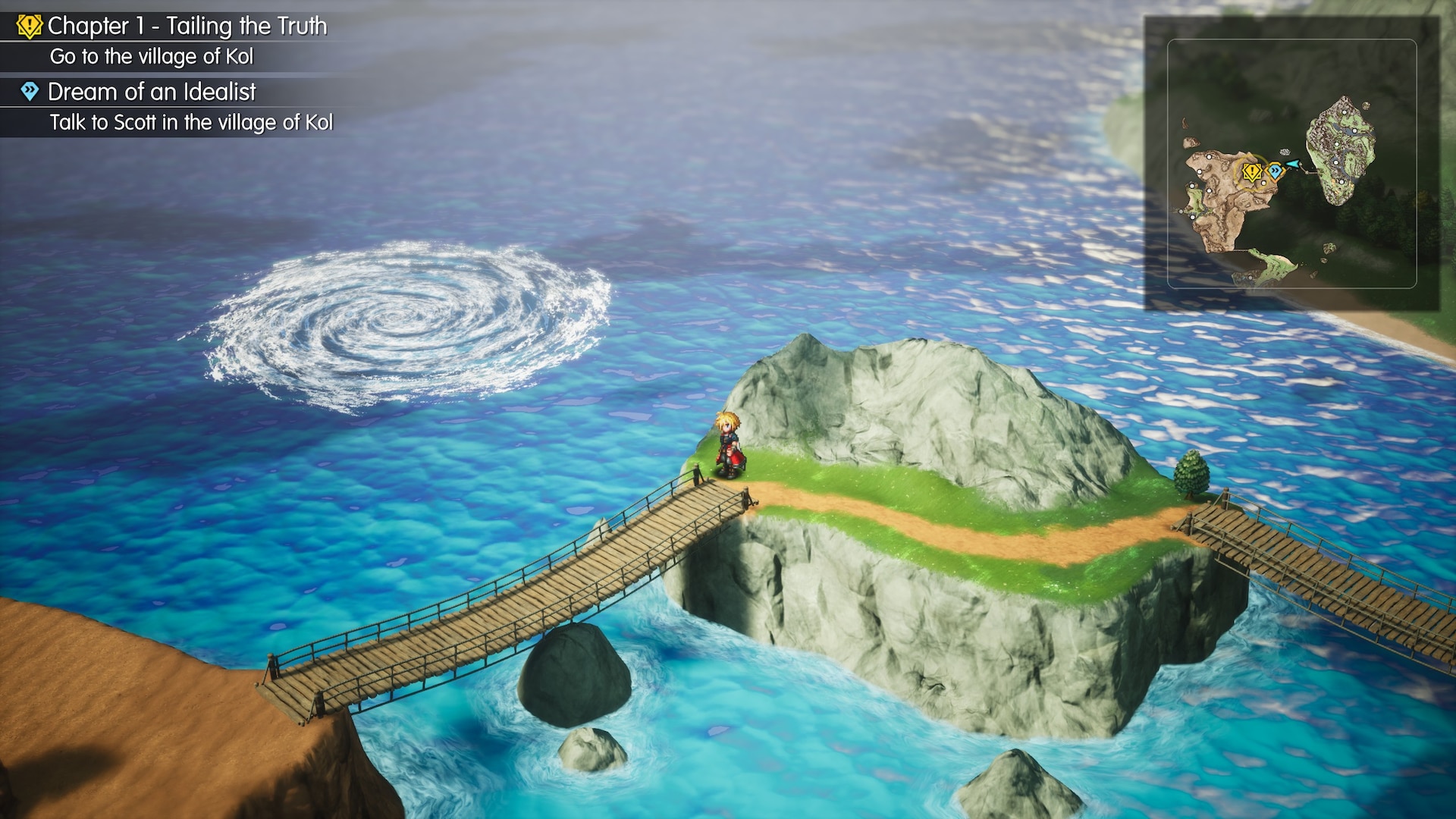
Resonance follows the traditional JRPG formula with considerable confidence. Players travel across an overworld, visit towns to purchase equipment and gather information, explore dungeons, complete side quests, and fight enemies in turn-based encounters. The adventure begins relatively linearly before gradually opening up, introducing optional locations and additional opportunities to explore.
There is something refreshing about this structure. Modern role-playing games frequently expand their campaigns with enormous maps, lengthy side activities, and elaborate progression systems that can make finishing the main story feel like a commitment in itself. Resonance takes a more measured approach. Its objectives are easy to follow, its travel conveniences reduce unnecessary repetition, and its campaign generally maintains a steady pace.
An airship eventually broadens the player’s freedom to explore Lapis, allowing access to optional areas and additional challenges. The world is not especially dense in every region, and some dungeons rely on relatively straightforward layouts rather than intricate environmental puzzles or elaborate exploration. However, the world map contains points of interest that are easy to overlook if players follow the main objectives without investigating their surroundings. Hidden caves, equipment, optional battles, and other discoveries give exploration a practical purpose, even when the individual dungeons themselves are not particularly complex.
Side quests offer another reason to explore, providing additional rewards, character-related activities, and equipment improvements. Their quality varies considerably. Some errands involve familiar collection objectives or revisiting previously explored locations, while optional challenges and character-focused quests provide more substantial reasons to step away from the main story. The Colosseum and other difficult encounters also give experienced players opportunities to test their party builds. Fast travel helps reduce the inconvenience of returning to familiar areas, although it cannot entirely disguise the repetition of some objectives.
These shortcomings are rarely enough to derail the adventure. Resonance understands that a traditional RPG doesn’t need to make every activity elaborate to remain engaging. Its exploration is comfortable and approachable, and the combination of optional rewards and a reasonably focused campaign helps keep the adventure moving. Players looking for consistently intricate dungeon design or a particularly expansive world may find it lacking, but those who enjoy exploring at their own pace will find worthwhile reasons to leave the main route.
Combat and Character Progression
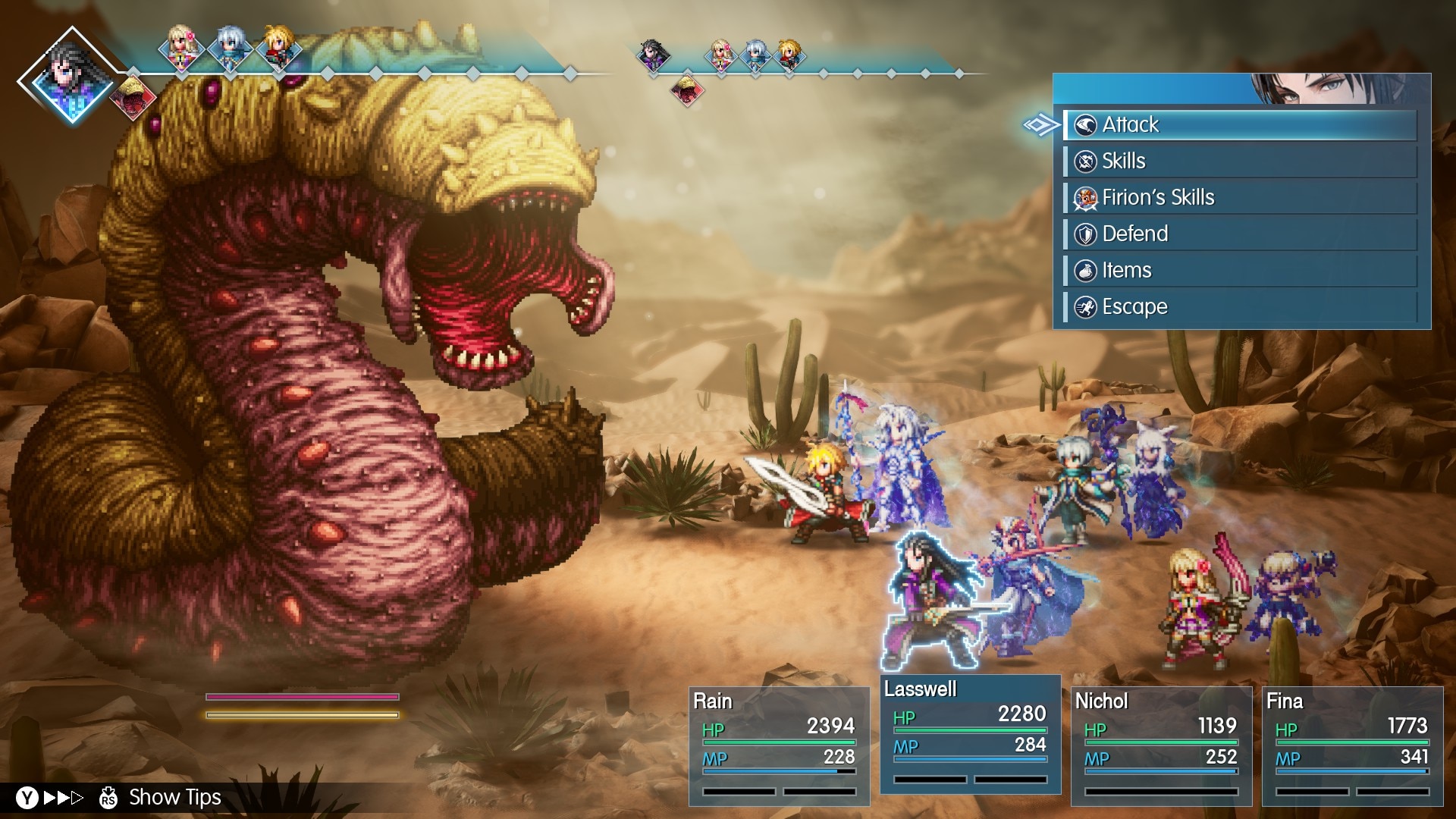
Turn-based combat is one of Resonance’s strongest features. Battles begin with a familiar selection of physical attacks, magical abilities, healing spells, and defensive options, but additional systems gradually give encounters more strategic depth. Rather than relying entirely on character levels and increasingly powerful attacks, the game encourages players to consider elemental weaknesses, enemy defenses, and the order in which actions are performed.
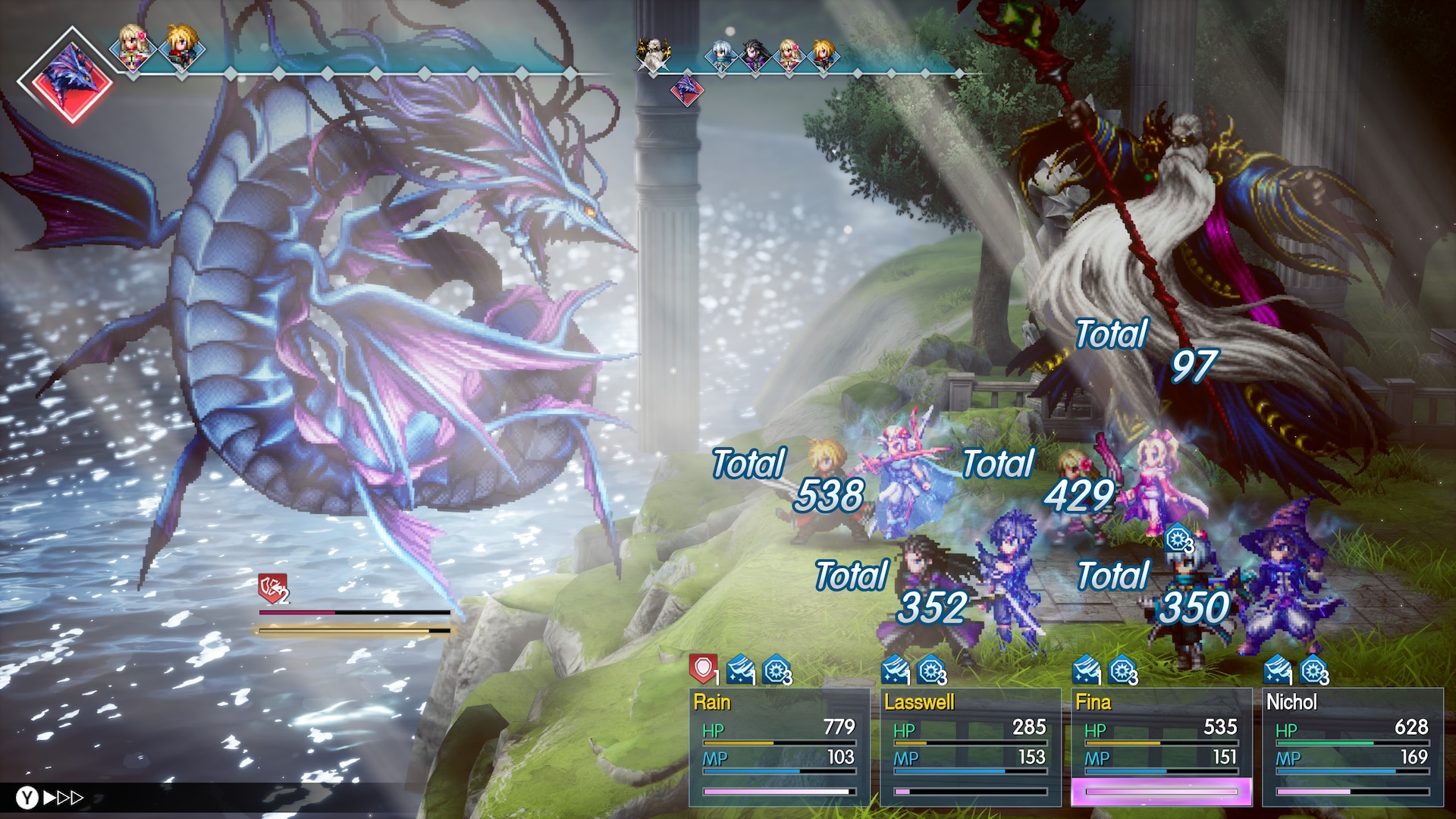
A key component is the stagger system. Enemies have health and stagger gauges, and exploiting their weaknesses helps reduce the latter. Once an enemy is staggered, the character responsible gains an additional action, creating opportunities to extend an offensive sequence and deal more damage. If every enemy on the field is staggered, the party can trigger a Sweeping Stagger, giving the entire group additional actions and opening the way for a powerful attack from an equipped Vision. The distinction between reducing an enemy’s stagger gauge and attacking its health creates an additional layer of decision-making, particularly when stronger enemies require several carefully chosen actions before they become vulnerable.
This approach rewards preparation without making every encounter feel like a complicated puzzle. Learning which elements are effective against an enemy, selecting the appropriate abilities, and coordinating attacks can turn a difficult fight into a satisfying demonstration of the party’s capabilities. The visible turn order also helps players plan ahead, making it easier to decide whether to heal, attack aggressively, or concentrate on breaking an opponent’s defenses before it can unleash a dangerous move.
Limit Bursts and Esper summons provide further tactical options. Limit Bursts offer powerful attacks when the relevant gauge is available, while Espers can be summoned to deliver their own abilities. The Vision system adds another layer to this approach, since a Sweeping Stagger can lead into a special attack associated with one of the equipped Visions. These sequences can deal substantial damage and provide some of the battle system’s most visually impressive moments. Their animations can occasionally interrupt the otherwise brisk pace of combat, but the special-attack sequences can be skipped when players prefer to keep battles moving.
The biggest strength of the system is how its mechanics work together. Weakness exploitation, stagger management, turn order, and character customization all contribute to the same tactical framework. Strong enemies and bosses demand more attention than ordinary encounters, and learning when to conserve resources or commit to an aggressive strategy gives battles a welcome sense of purpose. Optional superbosses and other challenging encounters provide a further test for players who want to get the most out of the system.
The main limitation is that the underlying battle structure remains familiar. Random encounters can become repetitive over a lengthy campaign, especially when players are fighting weaker enemies that no longer demand much strategic thought. Some later encounters also require a more specialized approach than the main story’s regular battles, which can expose weaknesses in a poorly prepared party. Resonance offers enough variety to keep its combat interesting, but it doesn’t entirely escape the repetition associated with traditional RPG encounter design.
The Vision System
The Vision system is the game’s most distinctive mechanic and its strongest reason to experiment with different character builds. Visions are manifestations of characters from across the Final Fantasy series, including recognizable heroes and other notable figures. Rather than functioning as conventional party members, they provide the characters who equip them with additional abilities, passive bonuses, and new ways to approach combat.
The system combines elements of a job mechanic with the series’ tradition of character-specific abilities. Equipping a Vision can broaden a character’s options or reinforce an existing specialty, allowing players to tailor the party to their preferred strategy. A character who specializes in physical attacks can gain access to useful magical abilities, while another can become more effective at healing, elemental damage, or supporting the rest of the group. This flexibility is one of the system’s most satisfying features, allowing players to develop characters according to the demands of the adventure rather than being locked into a single role.
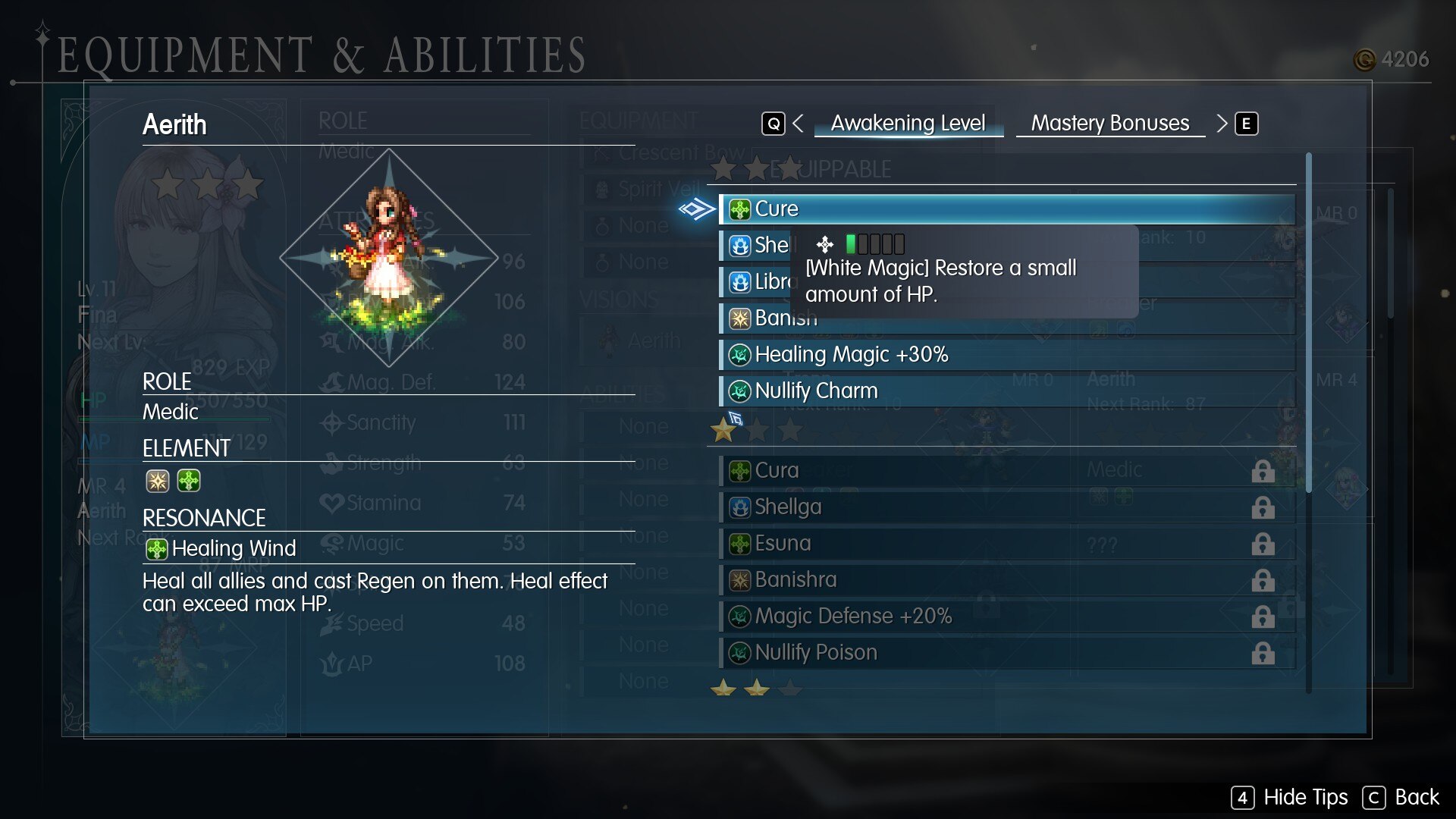
The possibilities become more interesting as players unlock additional Visions and develop their abilities. Mastery Points earned through combat allow characters to unlock passive abilities associated with their equipped Visions, while awakening improves a Vision’s capabilities through resources collected during the adventure. Learned passives can then be equipped to further customize a character, creating opportunities to combine abilities and develop specialized builds. The two progression systems give players different ways to improve their party, rewarding both regular combat and exploration.
This flexibility is particularly valuable during challenging boss encounters. A setup that works well against ordinary enemies might prove ineffective against an opponent with different elemental resistances or more demanding attack patterns. Changing Visions and rethinking the party’s abilities can make a substantial difference, giving character progression a practical purpose beyond simply increasing statistics.
There is also an undeniable appeal to seeing familiar Final Fantasy characters represented in this context. The crossover elements provide a welcome connection to the wider franchise, and the Visions are integrated into the battle system rather than serving solely as collectible references. Their abilities and signature attacks give longtime fans something to recognize, while newcomers can appreciate the tactical options without needing to understand every reference.
However, the system has a few limitations. Visions cannot be changed once a battle begins, meaning an unsuitable setup can leave players at a disadvantage against enemies whose weaknesses they cannot exploit effectively. In some difficult encounters, a restart and a different arrangement may be necessary. Mastery progression also encourages players to think carefully about which characters use particular Visions, since the associated passive progression is tied to the character using that Vision. Moving one to another character can therefore require renewed investment in its mastery, even though its awakened abilities remain available. This adds a layer of planning, but it can also make experimentation more time-consuming than necessary.
The way Visions are acquired is another important distinction from the original mobile game. Rather than relying on randomized gacha pulls, Resonance offers a fixed collection of unlockable Visions obtained through exploration and dedicated encounters. Some of these discoveries involve visiting caves and answering questions associated with the character being unlocked. This is a substantial improvement for a premium single-player RPG, allowing players to work toward specific rewards without gambling on random outcomes. The system still requires investment and repeated battles to develop fully, but its progression is much better suited to a conventional role-playing adventure.
Visuals and Presentation
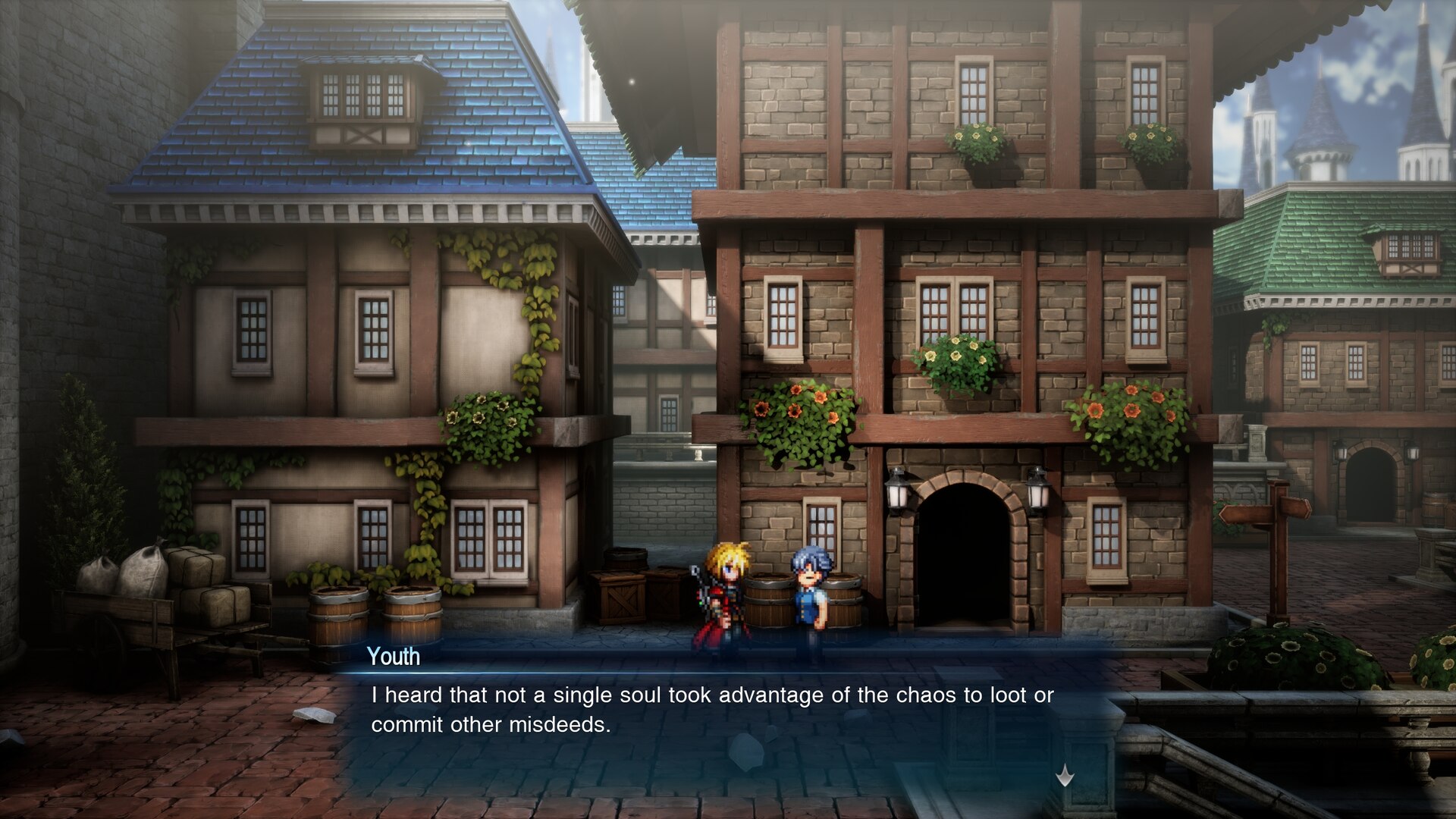
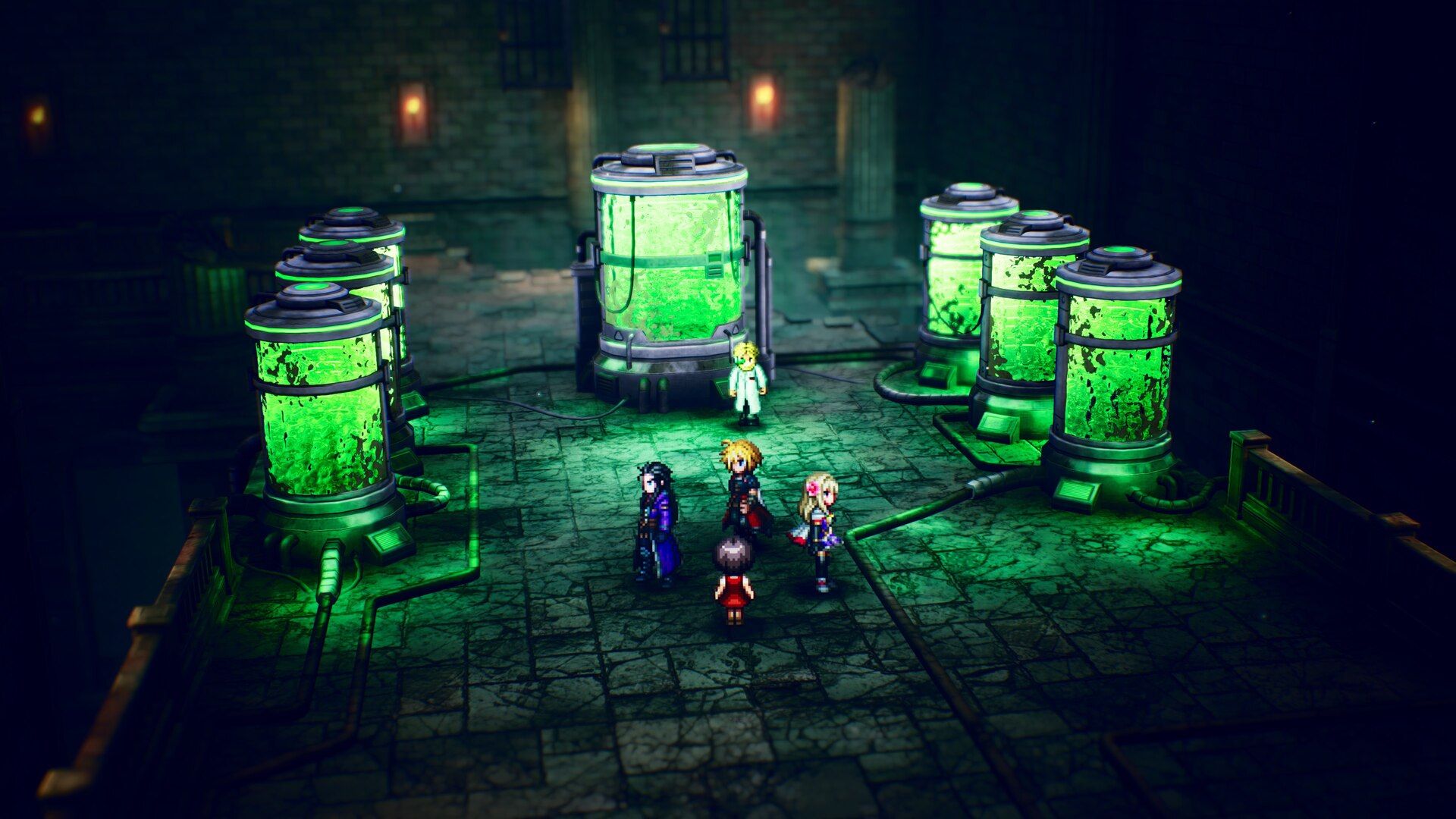
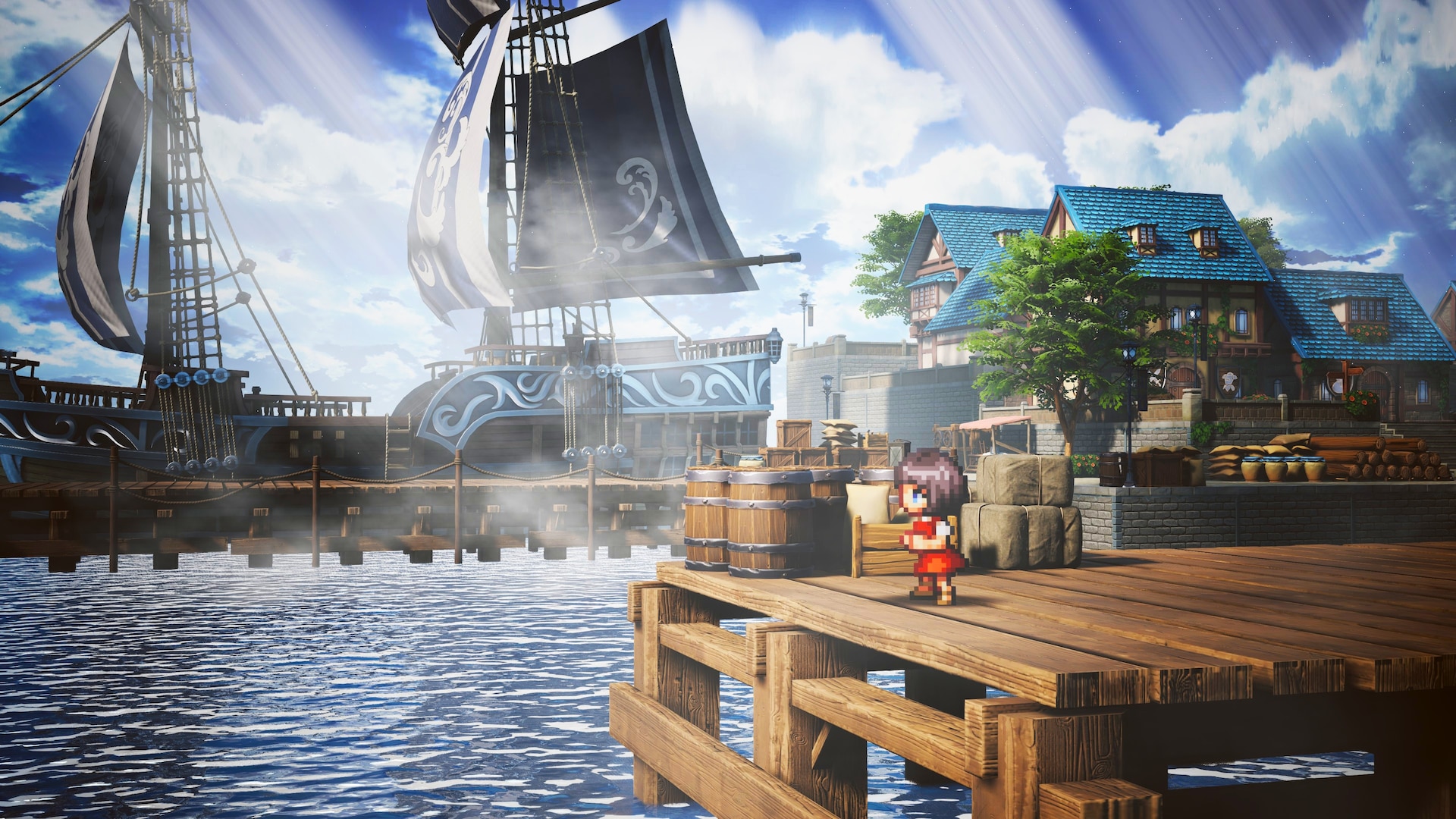
Resonance is the first Final Fantasy entry to use Square Enix’s HD-2D approach, combining detailed pixel-art characters with three-dimensional environments, atmospheric lighting, and modern visual effects. The style has become familiar through other Square Enix RPGs, but the game finds ways to make it feel appropriate for this particular series.
Character sprites are expressive and carefully animated, giving the cast a degree of personality that would be difficult to achieve with static or minimally animated pixel art. Towns and other locations benefit from the contrast between traditional character designs and more elaborate environments, while lighting effects help distinguish different regions. Battles are particularly effective, with camera movement and dynamic effects giving important attacks more impact.
Some of the strongest moments occur during major encounters and cinematic scenes. The presentation occasionally shifts perspective to emphasize a boss or a powerful ability, demonstrating how much more expressive HD-2D can be than a straightforward recreation of older pixel-art games. These touches help Resonance feel like a modern production rather than a retro imitation, and the larger, more detailed sprites give its characters a visual identity that separates them from the smaller figures seen in some earlier HD-2D titles.
The approach isn’t entirely consistent. Certain computer-generated sequences, particularly those associated with Vision attacks, move away from the surrounding pixel-art presentation. The shift can be striking, although it may also feel less integrated with the rest of the game’s visual style. Some of these attacks retain Japanese voice performances even when the surrounding dialogue is available in English, creating a noticeable inconsistency for players using the English voice track.
These are relatively minor issues in an otherwise attractive production. Resonance makes a convincing case for HD-2D as a suitable visual direction for Final Fantasy, offering a balance between nostalgia and contemporary presentation without sacrificing the charm of pixel art.
Soundtrack and Audio
Music has always been an important part of Final Fantasy’s identity, and Resonance understands the role a strong soundtrack plays in establishing a fantasy adventure’s atmosphere. Its compositions move between energetic battle themes, lighter melodies for exploration, and more dramatic pieces for significant story moments.
The soundtrack is one of the game’s most consistent strengths. Combat music provides the energy needed to keep routine encounters engaging, while more emotional compositions support the story’s better scenes. The musical direction also reinforces the game’s connection to earlier Final Fantasy titles without making every moment feel like an exercise in nostalgia. Familiar musical ideas and the return of recognizable series traditions give the soundtrack an identity that extends beyond simply accompanying the action.
Voice acting adds another layer to the presentation. The principal characters benefit from voiced dialogue, helping establish their personalities and making important exchanges more immediate. Performances are generally effective, even when the writing itself doesn’t give the cast much to work with. The distinction between English dialogue and the Japanese-only vocalizations associated with certain Vision attacks is less convincing, however, and can make some crossover moments feel disconnected from the rest of the production.
Taken together, the audio presentation does a great deal to elevate the adventure. The soundtrack and voice work are especially useful during sections where the plot relies on familiar developments rather than particularly original writing.
Technical Performance on PC
The PC version offers a useful range of display and graphics options, allowing players to adjust the presentation to their hardware and preferences. The graphics menu includes fullscreen, windowed, and borderless windowed modes, V-Sync, and frame-rate limits of 30, 60, 120, and 144 FPS, alongside an uncapped option. Texture quality, post-processing, anti-aliasing, and shadows can each be adjusted across several quality levels.
Square Enix lists Windows 11 as the required operating system, with a minimum of 8 GB of RAM and 15 GB of available storage. The minimum graphics specification is an AMD Radeon RX 6400, Intel Arc A580, or NVIDIA GeForce GTX 1650, with a stated target of 1080p at 30 FPS on the Low preset. The recommended specification lists an AMD Radeon RX 5500 XT, Intel Arc A580, or NVIDIA GeForce GTX 1650, with a target of 1080p at 60 FPS on the Highest preset. Both specifications list DirectX 12 and 8 GB of RAM. These are the publisher’s stated requirements and targets, rather than a guarantee of performance on every system.
Published testing of the Steam Deck version provides additional context for the game’s demands on portable PC hardware. Testing reports that the game can run at 60 FPS with the default High settings, while a 45 FPS limit with Ultra settings offers a balance between image quality, smoothness, and battery consumption. Other testing reports occasional dips below 60 FPS in certain scenes, with reducing shadow quality suggested as a possible adjustment. These observations are encouraging, but handheld results should not be treated as desktop benchmarks or a guarantee of consistent performance across different Windows PCs.
The PC release is reasonably configurable on paper, with useful options for adjusting image quality and frame-rate limits. However, a complete desktop technical verdict would require testing across representative hardware, including frame pacing, loading times, controller and keyboard behavior, and performance during effects-heavy battles. It would be misleading to describe the port as flawless or universally well optimized without that evidence. Players unsure whether their hardware meets the game’s requirements can try the free demo before purchasing; the publisher confirms that save data can carry over to the full game on the same platform.
Final Verdict: 8.5/10
Final Fantasy Resonance succeeds because it understands what makes a traditional Final Fantasy adventure appealing. Its turn-based combat offers a satisfying combination of accessibility and tactical depth, the Vision system provides meaningful opportunities for character customization, and the HD-2D presentation gives the world a distinctive visual identity. The soundtrack and familiar series elements further strengthen its appeal, making the adventure enjoyable even when the narrative doesn’t reach the same standard as the franchise’s strongest entries.
Its weaknesses are more apparent in the writing and world design. The story relies heavily on familiar fantasy conventions, some supporting characters receive less development than they deserve, and the quality of side quests varies considerably. The Vision system can also become frustrating when an encounter demands a setup that the player hasn’t prepared, while repeated battles and mastery progression can make character development feel repetitive. The presentation is generally excellent, although the change in style during certain Vision attacks is not always seamless.
These limitations prevent Resonance from feeling like a major reinvention of the genre. It is instead a well-executed return to an established formula, one that prioritizes a comfortable adventure and satisfying combat over ambitious storytelling or radical mechanical changes. Its mobile origins remain visible in some of its narrative and progression choices, but the removal of gacha mechanics and the more substantial presentation give it a clearer identity as a standalone RPG.
For fans who miss the traditional turn-based side of Final Fantasy, that approach is likely to be enough. Newcomers can also enjoy the straightforward story and accessible systems without needing extensive knowledge of the franchise, although longtime fans will get more out of the references and returning characters. The PC version offers useful graphical flexibility, and published Steam Deck testing suggests that the game can be a strong fit for portable play, though desktop performance deserves its own testing before any definitive technical claims are made.
Final Fantasy Resonance may not reach the narrative heights of the series’ greatest games, but it demonstrates that the classic formula still has plenty to offer. Its best ideas are strong enough to carry the adventure, even when its familiar structure keeps it from becoming something truly exceptional. For players who value strategic combat, flexible character development, a memorable soundtrack, and a polished pixel-art presentation, it is an appealing RPG that captures much of what made earlier Final Fantasy games so enduring.