Planet Zoo 2 expands Frontier Developments’ zoo management simulation with flying and aquatic animals, flexible construction tools and Wildlife Reserves that take players beyond conventional zoo exhibits. The sequel retains the original game’s focus on designing habitats, caring for wildlife and managing visitor facilities, while introducing new environments and a more direct role for conservation. These additions broaden the creative possibilities, although their impact depends on how well the game’s building, management and animal simulation systems work together.
The appeal lies in the relationship between construction and animal care. A successful habitat must look convincing, accommodate its inhabitants and fit naturally into the wider park. Players can shape terrain, arrange vegetation and build structures around a particular theme, then observe animals moving through the environments they have created. Aquariums and aviaries introduce different design challenges, while Wildlife Reserves provide an alternative to the visitor-focused business of running a zoo.
The game’s ambition also creates practical challenges. Managing a zoo involves numerous interconnected systems, and the interface does not always make their complexity easy to handle. Menus and routine interactions can interrupt the creative process, while launch-period technical problems have affected stability and animal behaviour. Frontier has released an early update addressing several issues, but its own notes make clear that work remains.
Planet Zoo 2 builds on an established formula rather than reinventing it. Its strongest additions expand what players can create and how they engage with wildlife. Its weaknesses emerge when usability and technical reliability fail to support those ambitions consistently. The result is a promising sequel whose breadth is more convincing than its current level of polish.
Gameplay and Mechanics
The central management loop is familiar: build habitats, acquire animals, maintain suitable living conditions, provide facilities for visitors and expand the zoo as finances allow. Each element affects the others. A new exhibit needs space and infrastructure, visitor routes must connect sensibly, and amenities help generate income for further development. Players must consider the zoo as a functioning whole rather than a collection of attractive enclosures.
That relationship between design and management gives the simulation its purpose. Adding a habitat is not simply a matter of placing a fence and introducing an animal. Its surroundings, accessibility and practical requirements influence how it fits into the park. A well-planned expansion can improve the visitor experience while providing an appropriate environment for its inhabitants; a poorly organised one can create extra work and make the park harder to navigate.
Animal welfare adds another layer to these decisions. Players need to consider the needs of different species and whether their habitats support their wellbeing. An enclosure must do more than look impressive: its design should serve the animals living in it. This connection between appearance and function is central to the game’s appeal.
The difficulty is that not every management task feels equally worthwhile. Choosing where to expand or how to accommodate a species can be engaging because the consequences affect the wider zoo. Repeatedly navigating menus or correcting minor problems is less rewarding, particularly when the interface makes simple actions unnecessarily awkward. The game sometimes demands attention without offering a decision of comparable value in return.
This balance will appeal to some players more than others. Fans of detailed simulations may enjoy overseeing interconnected systems, while those drawn primarily to construction and animal observation may find the administrative workload intrusive. The underlying formula remains effective, but clearer information and more convenient controls would make its depth feel more purposeful.
Building and Customisation
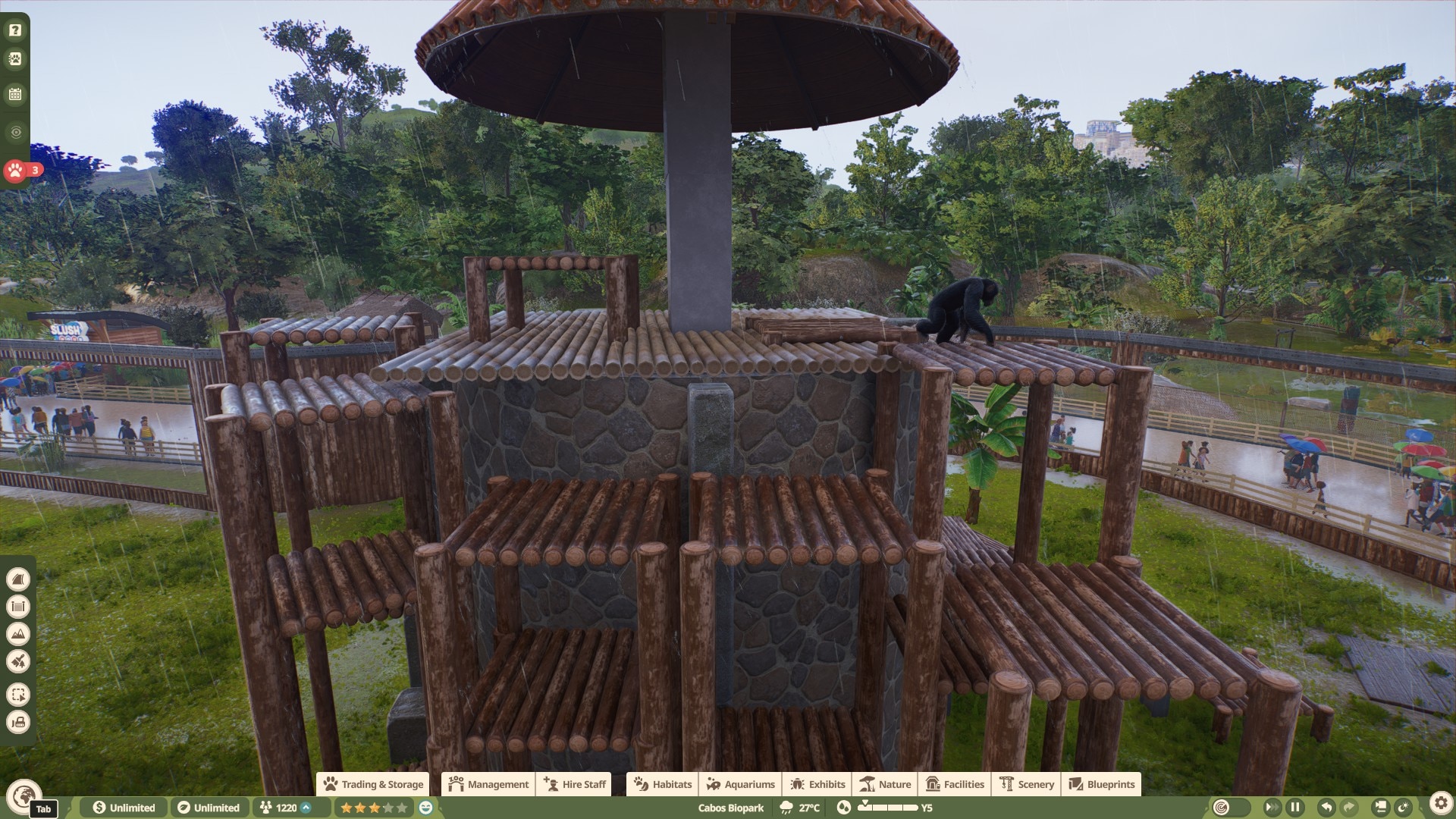
Construction is one of the sequel’s principal attractions. Players can shape terrain, place vegetation, build habitats and assemble structures that give a zoo its own architectural identity. The tools allow for detailed designs, while the ability to work with the landscape helps enclosures feel integrated into their surroundings rather than simply placed on a flat map.
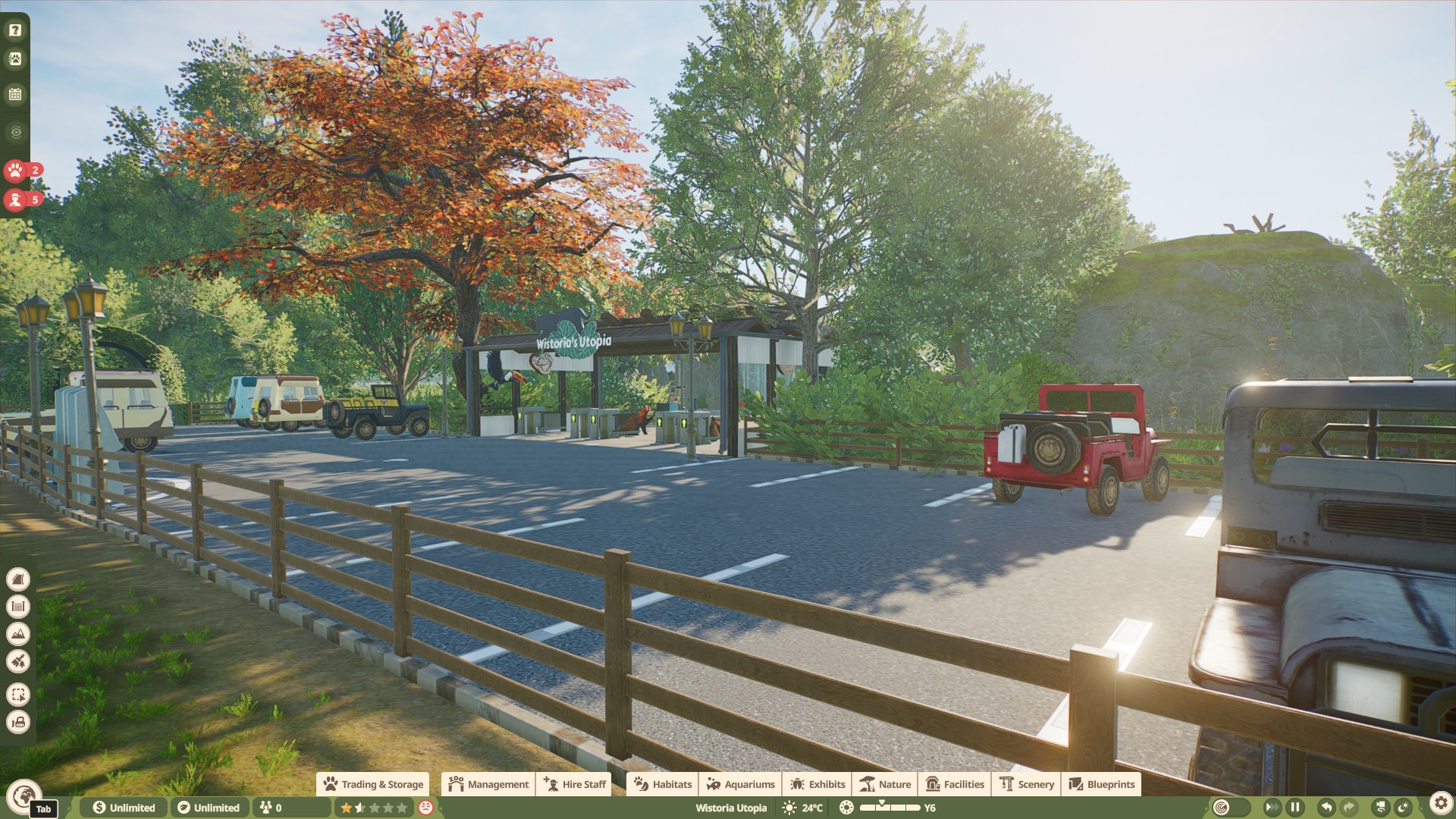
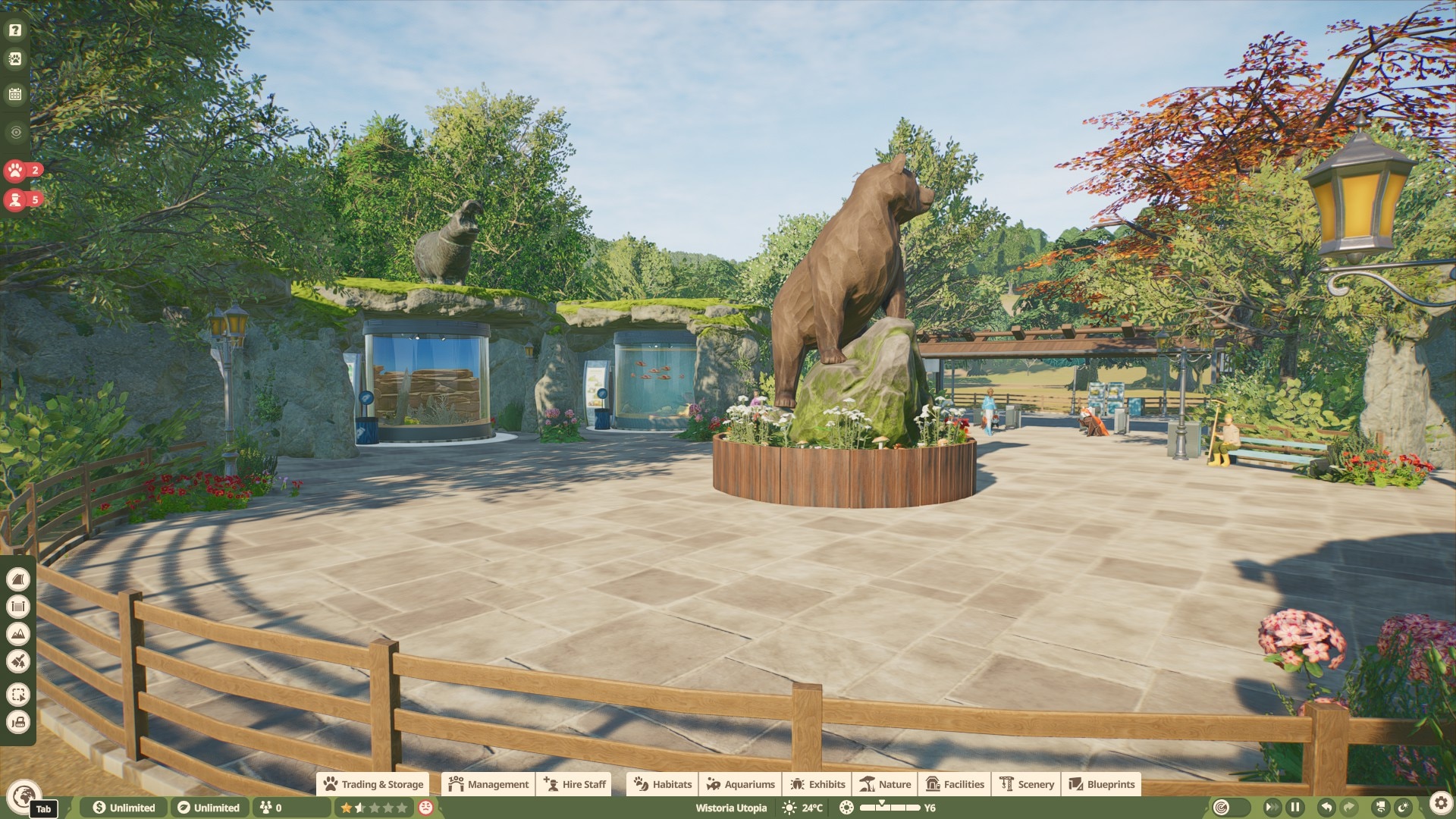
The strongest designs depend on how individual elements work together. A habitat can follow a slope, use planting to create depth and incorporate water into its layout. Paths guide visitors through the park, while buildings and scenery establish a consistent visual theme. Construction therefore serves two purposes: creating functional facilities and giving the zoo a distinctive character.
The Frontier Workshop extends these possibilities by letting players share and reuse community-made blueprints. Builders can contribute their creations, while players who prefer management can use existing designs instead of assembling every structure themselves. Community sharing also provides a source of inspiration for players looking to experiment with different styles.
However, flexibility does not always translate into a comfortable building experience. Precise placement can be fiddly, and unfamiliar controls can make small adjustments more laborious than they should be. Learning a complex construction system is reasonable in a game of this depth; struggling with the interface simply to perform a routine action is not.
This distinction matters because construction is central to the game’s appeal. The tools offer considerable freedom, but usability problems can interrupt the creative process. More intuitive controls and consistent placement behaviour would help newcomers learn the system and allow experienced builders to concentrate on their designs. The Workshop provides useful shortcuts, but it cannot compensate for every frustration in the underlying tools.
Animals, Aviaries and Aquariums
The expanded roster broadens the range of habitats players can create. Flying species introduce movement above ground, while aquatic exhibits allow players to design environments around swimming animals and underwater viewing. These additions create more variety than a park built entirely around terrestrial species and provide new ways to organise exhibits and the visitor experience.
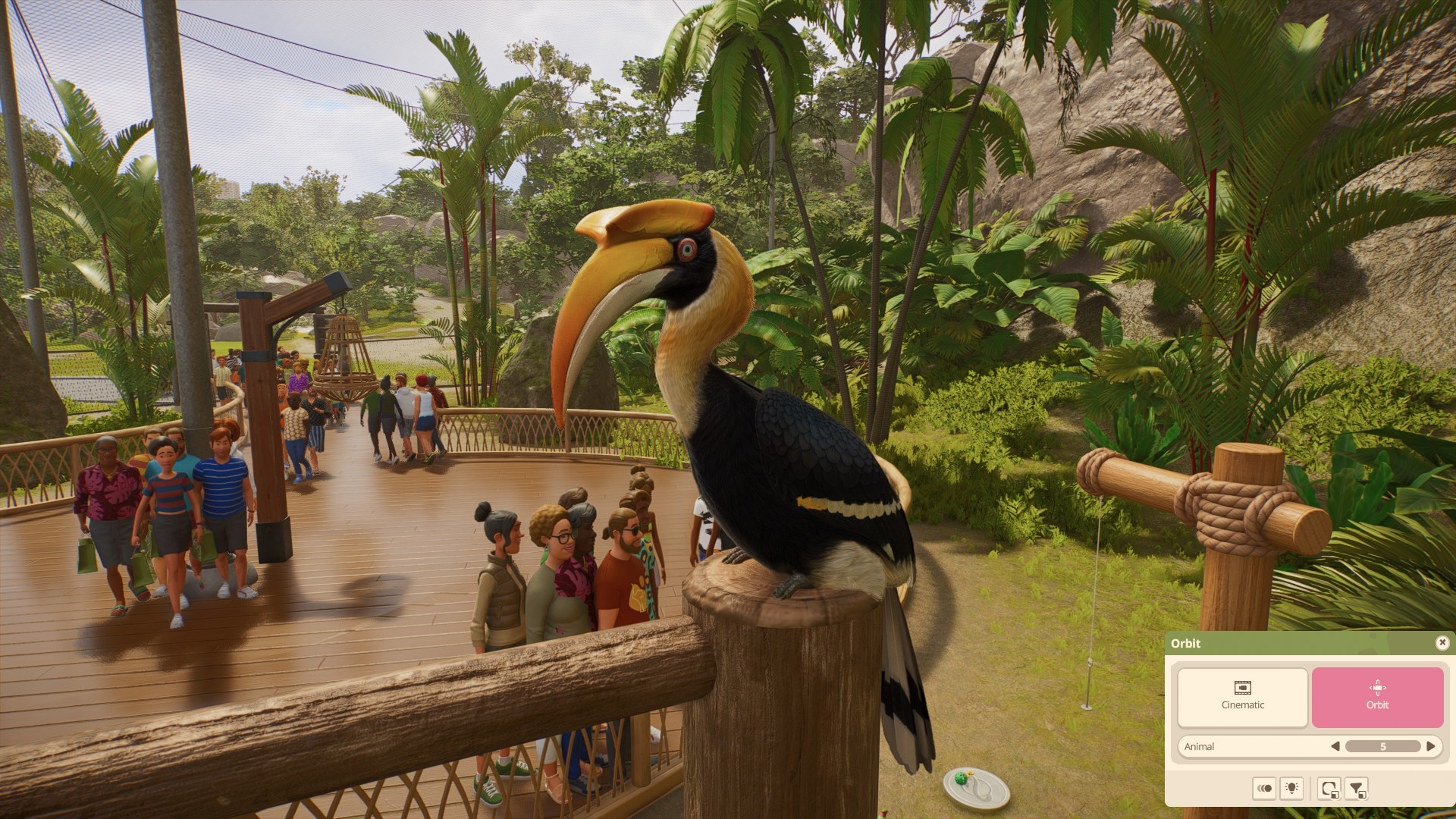
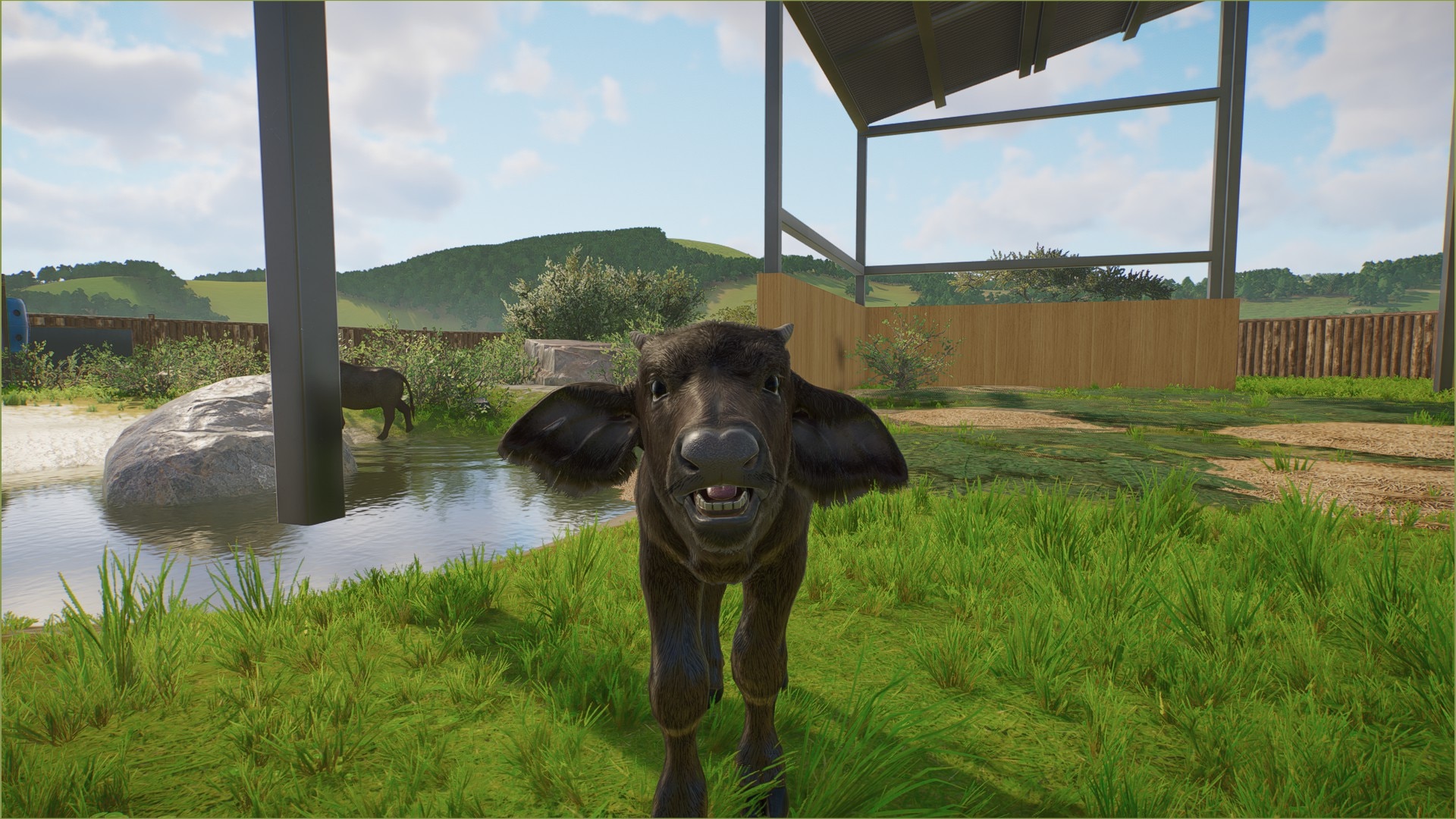
The animals remain the main attraction. Detailed models and animation give players reasons to observe their inhabitants rather than simply monitor welfare statistics. Aquatic and flying species introduce different kinds of activity, making the park more visually varied and expanding the possibilities for habitat design.
Aquariums encourage players to think about space in three dimensions. Water becomes an environment in which animals move and visitors observe them from different perspectives. Aviaries similarly change the visual rhythm of a zoo, adding movement to the spaces above and around visitors. These features are meaningful because they affect both the habitats players construct and the way animals are presented.
Their success depends on convincing behaviour. Frontier’s October 16 update fixed specific issues, including fish becoming stuck outside aquariums when habitats were moved and shoals failing to use newly expanded space. It also made initial improvements to climbing animations. The developer continues to identify problems with climbing, jumping, pouncing and interactions with enrichment objects as areas for further work. These issues can undermine the illusion that the detailed presentation is intended to create.
The expanded roster is a welcome addition, but variety alone is not enough. Animals must behave consistently with the environments players build for them. When movement and habitat interactions work convincingly, the visual detail becomes more than decoration. Continued improvements to animal behaviour will help the new species and exhibit types fulfil their potential.
Wildlife Reserves and Conservation
Wildlife Reserves are among the sequel’s most distinctive additions. Instead of focusing exclusively on public exhibits and visitor facilities, players can work with larger environments centred on releasing animals into the wild. The emphasis shifts from presenting wildlife to visitors towards managing landscapes, supporting animal populations and observing animals in a different setting.
Players can explore on foot or by vehicle, photograph animals and use research activities to monitor wildlife. Animals may react fearfully to nearby vehicles, making the approach to observation part of the experience. These activities offer a change of pace from construction and menus, giving players a more direct way to engage with the environment.
The reserves also connect to the wider progression system. Releasing animals and improving biodiversity contribute to conservation progression, linking work in these larger environments to the management experience elsewhere. This gives reserve activities a purpose beyond exploration and helps distinguish the sequel from a straightforward expansion of conventional zoo management.
The concept fits the series, but its long-term success depends on the depth of the activities. Exploring a reserve and observing wildlife can be appealing, particularly when the landscape and animal presentation are convincing. If the activities become repetitive or offer little sense of consequence, however, the experience risks feeling like a separate set of chores. Meaningful progression and variety will be important to maintaining interest after the initial novelty wears off.
Wildlife Reserves broaden the game’s scope and give conservation a more tangible role. They provide an alternative to managing visitor-facing exhibits and introduce a different set of environmental challenges. Their lasting value will depend on how meaningfully the environment responds to players’ choices, but the addition gives the sequel a distinct identity beyond its expanded animal roster.
Career Mode and Progression
Career Mode provides structure for players who prefer defined objectives to an open-ended building experience. Its scenarios introduce different challenges and encourage players to use construction, animal-care and management systems in particular ways. The inclusion of Wildlife Reserves also helps introduce the sequel’s expanded scope.
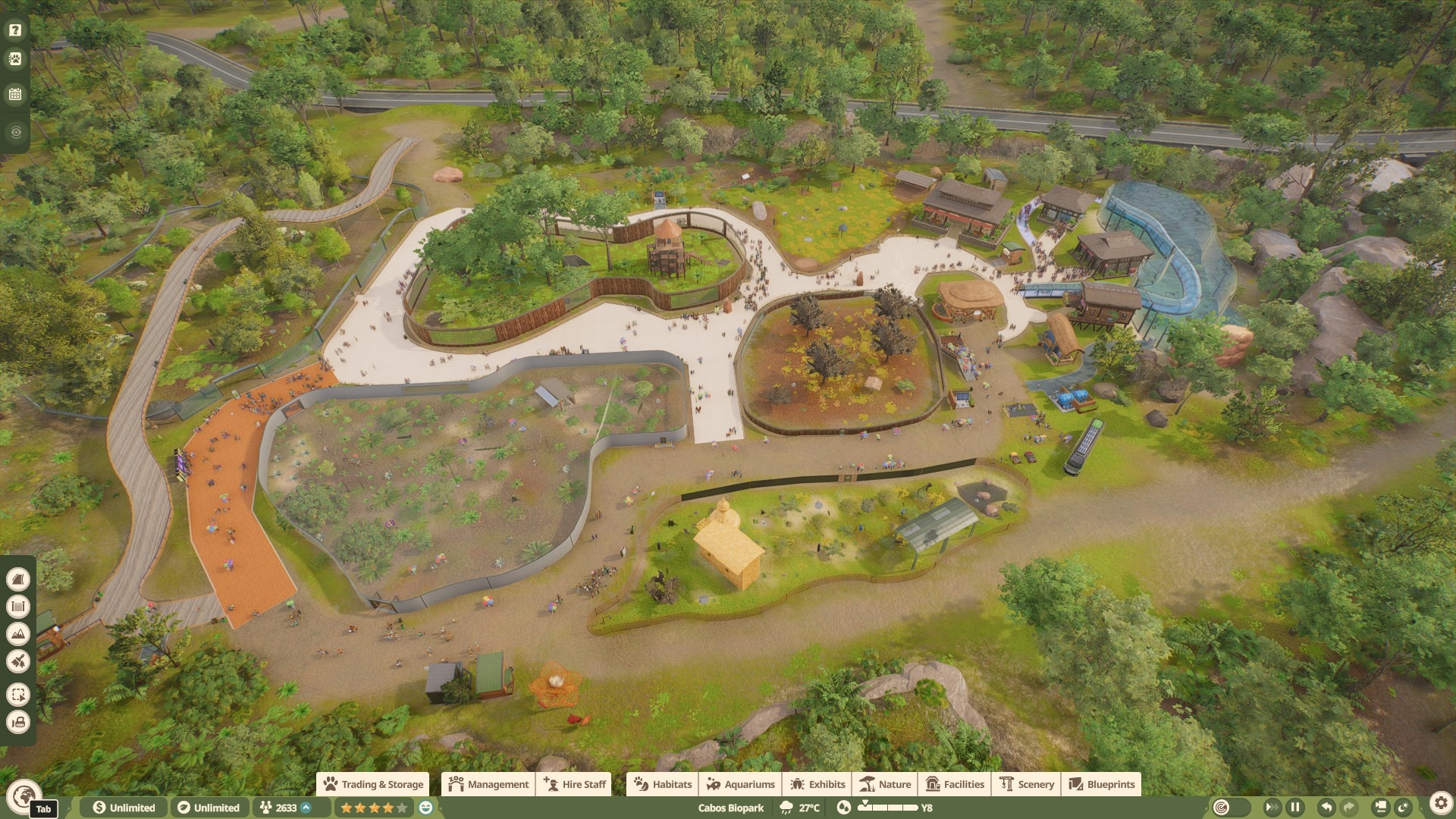
Structure is valuable in a game with so many tools and options. A blank map offers freedom, but it can leave newcomers uncertain about where to begin or what to prioritise. Scenarios provide a clearer starting point, while constraints can turn familiar tasks into design problems that require players to balance available space, animal needs and practical considerations. The mode is most effective when objectives encourage experimentation and creative thinking rather than simply asking players to follow instructions.
Technical problems have sometimes undermined that structure. Frontier’s early updates addressed several Career Mode progression issues, including bugs that could prevent objectives from advancing. Such problems are particularly disruptive in a mode intended to teach players how the simulation works: when progress stalls, players can be forced to repeat work or struggle to understand whether they have met a requirement.
Career Mode’s value depends on the quality of its objectives and the reliability of the systems supporting them. Clear goals can make the management tools easier to understand and encourage players to experiment with features they might otherwise overlook. Varied challenges and dependable progression would allow the mode to serve both as an introduction and as a worthwhile experience for players already familiar with the series.
Franchise and Sandbox Modes
Franchise Mode offers a longer-term framework for developing zoos, with animal trading connecting individual parks to a wider system. Acquiring and breeding animals becomes part of continuing progression, giving players reasons to plan beyond the immediate needs of a new exhibit. For those who enjoy gradual expansion and managing a park over many sessions, the mode offers a clear incentive to keep going.
Its appeal depends heavily on technical reliability. Frontier acknowledged stability and connectivity problems affecting Franchise Mode after launch and made improvements to server capacity, connection timeouts and the availability of animals in the trading market. The developer also adjusted the balance of male and female animals entering the market and of births. These changes address specific problems, but the October 16 update still listed Franchise Mode stability as an ongoing priority.
This is more than a minor inconvenience. A mode built around long-term progression needs to give players confidence that their zoos and progress will remain accessible. Unreliable connections or save-related problems can undermine the incentive to invest hours in a park. Franchise Mode has the potential to support continued play, but it needs dependable systems before players can fully trust it.
Sandbox Mode offers a contrasting experience. It lets players concentrate on construction without the same economic pressure or progression requirements. It is the natural place to experiment with terrain, develop elaborate habitats and explore the limits of the building tools. The Workshop complements this freedom by making it possible to share and reuse designs, giving players access to ideas beyond their own creations.
The modes serve different audiences. Franchise is built around continuing management and progression, while Sandbox gives creative players room to pursue their own ambitions. Both contribute to the game’s longevity, but their strengths depend on different systems working well. Franchise needs stable online and save systems; Sandbox needs construction tools that behave predictably. The foundations are in place, but the launch problems have distracted from what should be two complementary reasons to keep playing.
Management, Interface and Quality of Life
The interface is one of the sequel’s most significant weaknesses because it sits between the player and nearly every major activity. Construction, animal care, staff management and finances all depend on menus and controls that make relevant information accessible. When routine actions require too much navigation or options are difficult to locate, the friction spreads across the entire experience.
The distinction between depth and inconvenience is important. A detailed zoo simulator should ask players to consider animal welfare, available space, visitor needs and finances. These systems create meaningful decisions. Players should not, however, have to spend unnecessary time figuring out how to perform simple actions or correcting problems because the interface is unclear. The former enriches the simulation; the latter interrupts it.
The absence of familiar quality-of-life features at launch made this problem more noticeable. Update 1.0.5 restored edge scrolling, which lets players move the camera by positioning the cursor near the edge of the screen, and fixed settings that had failed to persist after restarting. Frontier also listed exhibit quick-sell and release options among the quality-of-life features needing attention. These details may sound minor, but convenient controls matter in a game built around repeated, precise interactions.
The interface affects new and returning players differently. Beginners must learn how the systems fit together, while experienced players may find familiar actions less convenient than expected. In both cases, unnecessary friction takes attention away from the zoo itself. A strong interface should make the consequences of decisions easier to understand without turning the act of managing them into a chore.
Improving clarity and consistency would strengthen the game without reducing its depth. The aim should not be to remove meaningful decisions, but to make them easier to understand and act upon. Until then, some of the sequel’s complexity feels like administrative overhead rather than a rewarding part of the simulation.
Graphics, Animation and Sound
The visual presentation gives players a strong foundation for creating distinctive environments. Animal models, vegetation, terrain and water provide a varied set of elements to work with, while the expanded roster makes it easier to give different areas of a zoo their own character. The construction tools allow players to create habitats that feel integrated into their surroundings rather than assembled from unrelated pieces.
Animation is particularly important because animals are the main attraction. Convincing movement makes an enclosure feel occupied and gives players a reason to observe their creations after construction is complete. Aquatic and flying species bring different kinds of activity to exhibits, while the animal-behaviour systems aim to connect movement with the environment. When these elements work together, the zoo feels like a living place rather than a static display.
Sound contributes to the atmosphere, supporting the sense of an active park. The presentation is most effective when its visual and audio elements complement the player’s design instead of distracting from it. In a game built around detailed environments, the ability to create a coherent space is as important as the quality of individual models.
Visual quality cannot compensate for inconsistent behaviour or technical problems. Erratic animation can break the illusion, while texture pop-in and performance issues detract from the detail that makes the environments attractive. Frontier’s early updates included improvements intended to reduce texture pop-in and fixes for specific animation problems, but other animal behaviours remain under investigation. The presentation is a strength, and continued work on the simulation is necessary to support it.
Technical Performance on PC
Planet Zoo 2 launched on PC on October 13, 2026. Frontier’s first post-launch updates focused on stability, performance, save reliability and Franchise Mode. Update 1.0.5, released on October 16, included general stability improvements, fixes for specific crashes, changes intended to reduce texture pop-in and corrections to several gameplay issues. It also restored edge scrolling and addressed settings that had not been saved correctly between sessions.
These changes are welcome, but they do not establish that every launch problem has been resolved. Frontier’s update notes identify Franchise Mode stability, crashes, performance concerns, save stability and animal behaviour as ongoing priorities. The developer also lists issues with climbing, jumping, pouncing, enrichment interactions and animals escaping from habitats during certain behaviours. The update should therefore be viewed as an early step in an ongoing process, not as proof that the game is fully polished.
The official minimum PC requirements are a 64-bit processor and operating system, Windows 10 or 11, an Intel Core i7-8700K or AMD Ryzen 5 3600, 16GB of RAM, DirectX 12 and 40GB of storage. The minimum graphics options are an NVIDIA GeForce RTX 2060 with 6GB of VRAM, AMD Radeon RX 5600 XT with 6GB, or Intel Arc A750 with 8GB. The recommended configuration raises the processor requirement to an Intel Core i7-10700K or AMD Ryzen 7 5800X and the graphics requirement to an RTX 3070, Radeon RX 6700 XT or Intel Arc A770. Windows 11 is the recommended operating system, and an SSD is required at the recommended specification.
These requirements provide a baseline, not a guarantee of consistent performance in every situation. A large zoo with many animals, visitors and detailed environments can place different demands on a system from a smaller park. Without controlled testing across different PC configurations, it would be misleading to claim a particular frame rate or describe performance as uniformly smooth or poor.
Technical reliability matters especially in a game built around long creative projects. Players may spend hours developing a zoo, so crashes or save problems can put that investment at risk. Unstable online access can also interfere with Franchise Mode, while unpredictable construction tools make precise work more difficult. Stability and usability are fundamental to the experience, not optional refinements.
Frontier’s early updates show that the developer is responding to reported problems, but the game’s performance across different systems and the timeline for resolving remaining issues cannot be established from patch notes alone. Players considering the sequel should weigh its creative strengths against the current state of its technical support, particularly if they intend to build large parks or rely heavily on Franchise Mode.
Final Verdict: 7.5/10
Planet Zoo 2 expands the original formula in meaningful ways. Aquatic and flying species broaden the range of habitats, Wildlife Reserves introduce a different approach to conservation, and the construction tools give players considerable freedom to design distinctive parks. The animals remain the main attraction, while the Workshop extends the creative possibilities beyond a single zoo.
The weaknesses are equally important. The interface makes routine tasks more laborious than they need to be, construction can be less intuitive than the finished results suggest, and animal behaviour has required further work since launch. Franchise Mode’s stability problems have also affected a feature intended to support long-term progression. Frontier has addressed specific faults through early updates, but those fixes should be viewed as progress rather than proof that the game is fully polished.
The sequel’s central challenge is making its systems work together as smoothly as its creative ambitions suggest. Building should encourage experimentation, animal behaviour should reward observation, and management should create interesting decisions rather than unnecessary administration. When these elements align, the game’s combination of construction and wildlife simulation has considerable appeal. When they do not, technical problems and awkward interactions can distract from the zoo itself.
For players who enjoy designing habitats, shaping landscapes and gradually developing a distinctive park, Planet Zoo 2 offers a broad set of tools and activities. Those looking for a polished management experience from the outset may find the launch problems and interface friction harder to overlook. The sequel expands what players can create, but its creative strengths are not yet matched consistently by the reliability and convenience of its systems. Continued technical improvements and a more intuitive interface would allow its strongest ideas to shine.