Enshrouded has spent more than two years in Early Access, growing from a promising survival game into a substantial open-world adventure. Developed by Keen Games, it combines exploration, action RPG combat, resource gathering, crafting, and an unusually flexible building system. Its premise is familiar enough: a fallen kingdom, a dangerous wilderness, and a protagonist tasked with reclaiming what remains. What makes the experience compelling is how these different systems support one another.
The world of Embervale has been devastated by the Shroud, a deadly fog that conceals hostile creatures, valuable resources, and the remains of a lost civilization. As one of the Flameborn, players venture into corrupted regions, search abandoned settlements, improve their equipment, and gradually establish a foothold in the world. The story provides direction, but the game is equally interested in the adventures that emerge from exploring, building, and discovering places beyond the immediate objective.
The October 15, 2026, version 1.0 release completes the game’s Early Access journey, opening the remaining portions of Embervale and bringing the main storyline to a conclusion. It also expands character progression, adds enemies and equipment, and introduces further improvements to combat, building, and presentation. The foundations remain recognizable, but the full release offers a more complete experience than the version that first attracted attention.
Not every element is equally successful. Combat is more varied than it was during earlier stages of development, but enemy encounters can still become frustrating, and crafting sometimes demands more gathering than the adventure needs. Nevertheless, Enshrouded succeeds where many survival games struggle: it gives players worthwhile reasons to explore, projects worth pursuing, and a home that feels like a meaningful achievement rather than a temporary shelter.
The World of Embervale
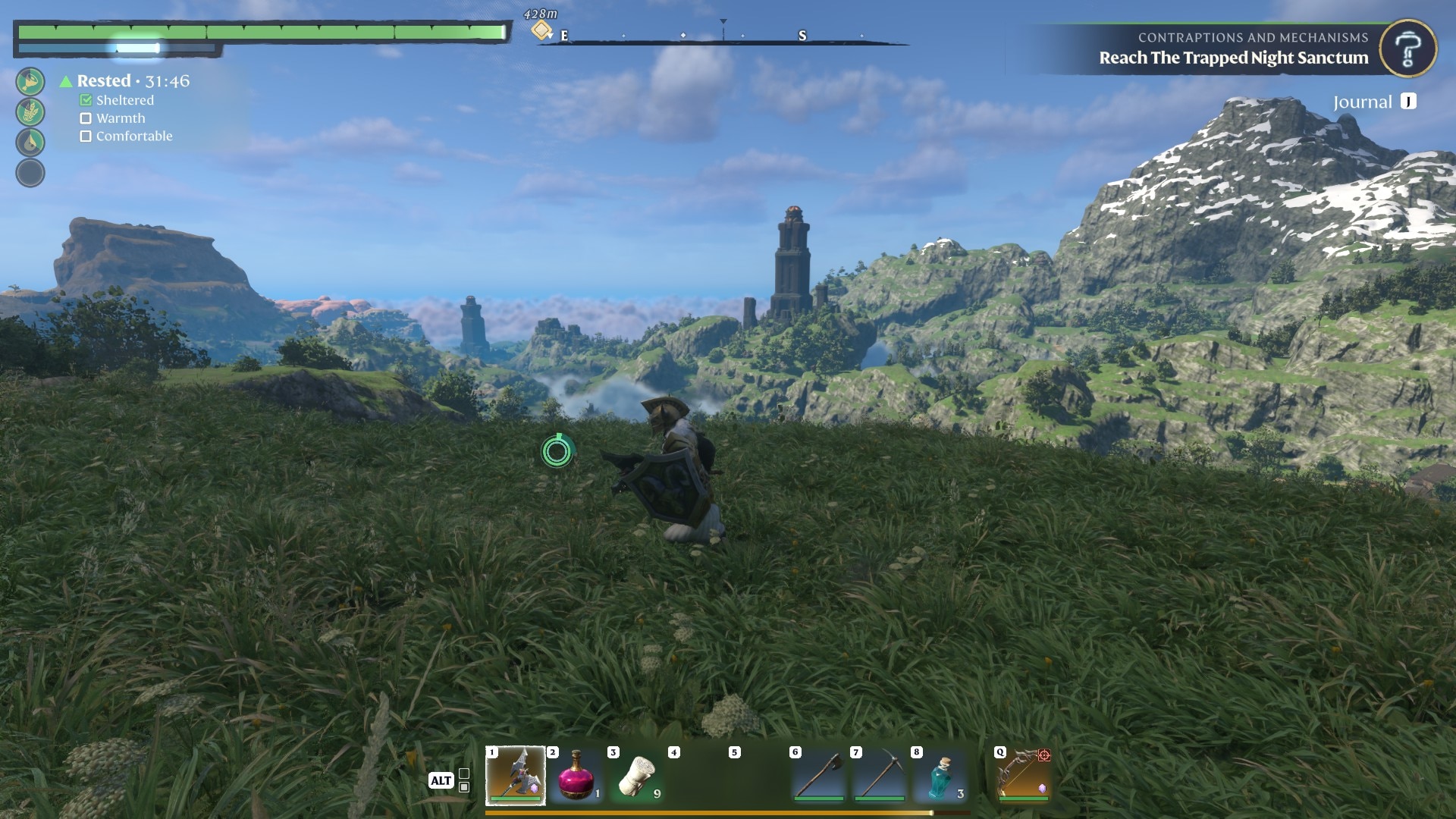
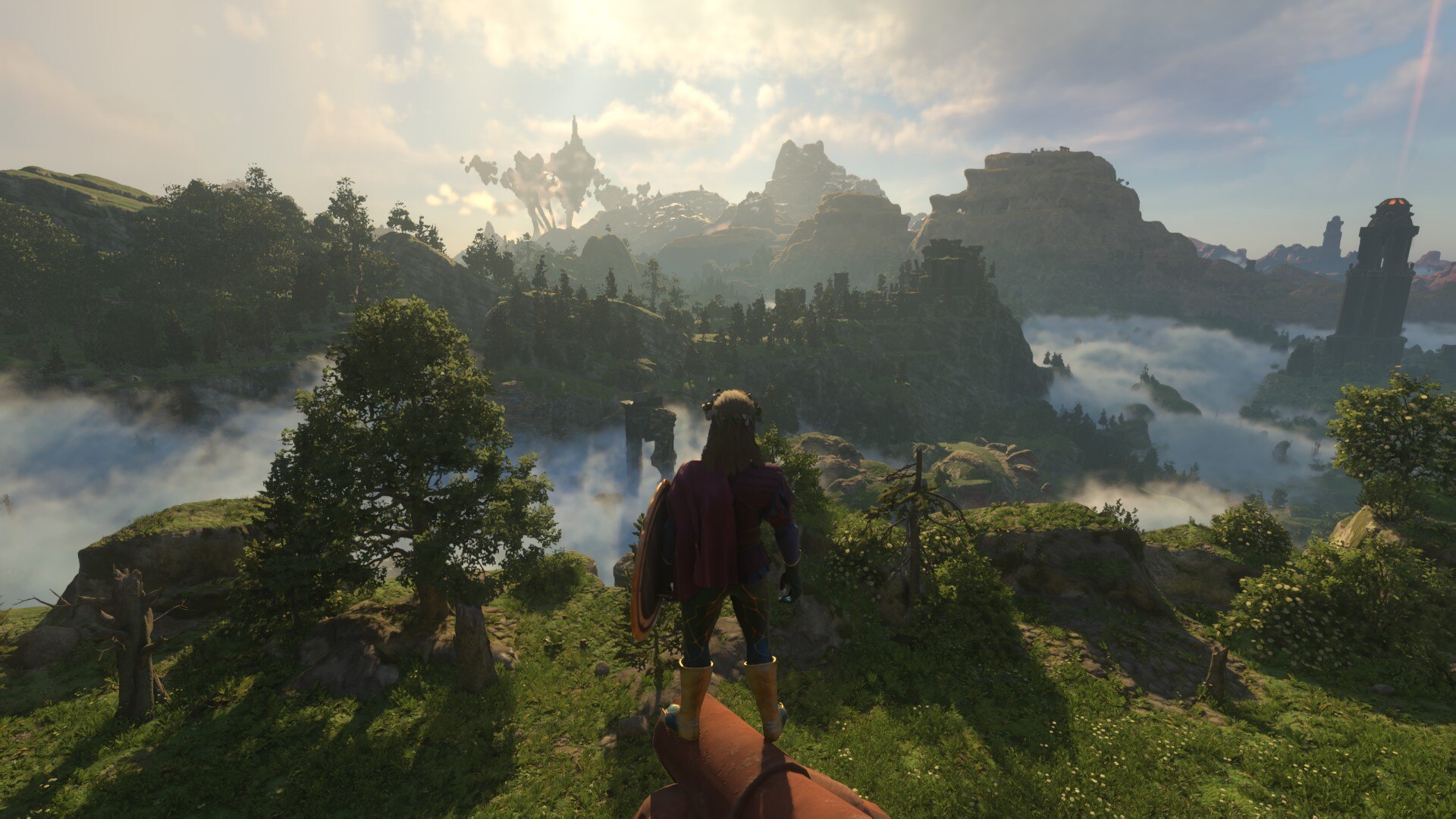
Embervale is the game’s greatest asset. Its environments range from wooded valleys and overgrown ruins to settlements abandoned after the kingdom’s collapse. Ancient structures and remnants of the past give these locations a sense of history. Different regions introduce their own resources, enemies, and environmental challenges, giving exploration a sense of progression without making the map feel like a collection of interchangeable biomes.
Verticality is just as important as distance. Hills conceal entrances, ruined structures offer multiple routes through their interiors, and elevated locations reveal landmarks that might otherwise go unnoticed. A ruined tower, an unusual rock formation, or a building perched above a ravine can be enough to encourage a detour. The world often rewards curiosity without needing to announce every discovery through a marker.
That freedom works because exploration frequently produces something useful. Abandoned buildings contain equipment and supplies, hidden locations provide crafting materials, and dangerous areas can offer improvements that make subsequent journeys easier. Ancient spires provide elevated vantage points and fast-travel access, while dungeons and other points of interest introduce additional challenges. These activities give players practical reasons to investigate the landscape rather than simply travel through it.
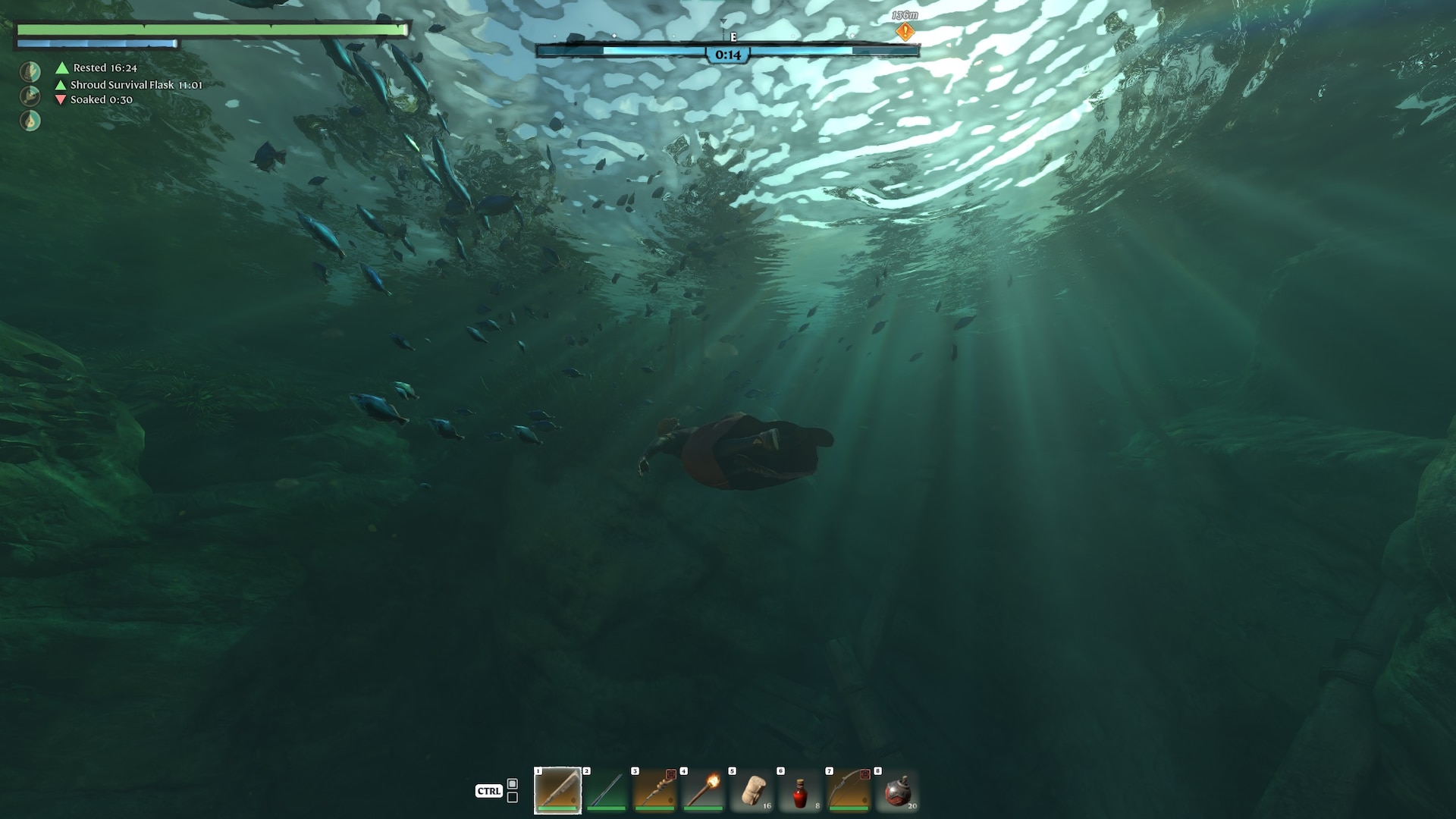
The Shroud adds tension to these expeditions. Entering its fog-covered areas means facing hostile creatures while keeping an eye on a limited window of time. Players must decide how far to venture, whether to investigate a side passage, and when to retreat. The pressure encourages preparation without turning every expedition into a punishing survival exercise.
The new northern region, Cinder’s Cradle, gives the full release another substantial destination. Its volcanic landscape and floating islands introduce a different visual character, along with new enemies and more demanding challenges for advanced characters. Combined with the newly accessible parts of the map, it makes Embervale feel more complete. Exploration remains the strongest reason to spend time in the world, although individual encounters and rewards vary in quality.
There is one limitation worth noting. Embervale is not a completely persistent sandbox in which every alteration remains forever. Changes to terrain and resource nodes outside protected base areas can reset, which can undermine the satisfaction of large-scale excavation or make a cleared location feel less permanent than expected. It is a practical compromise for a world with extensive destructibility, but one that sits somewhat awkwardly alongside the game’s theme of rebuilding a fallen kingdom.
Gameplay and Mechanics
Enshrouded combines the resource-gathering loop of a survival game with the equipment, abilities, and character progression of an action RPG. Players collect wood and stone, mine ore, gather plants, hunt creatures, and search ruins for useful materials. These resources feed into crafting stations, equipment upgrades, consumables, and increasingly elaborate construction projects.
None of these activities is particularly revolutionary on its own. Anyone familiar with survival-crafting games will recognize the process of collecting ingredients, unlocking recipes, and returning to a base to manufacture better equipment. The appeal lies in how these activities connect. Exploration supplies the materials needed for crafting, crafting improves combat effectiveness, and successful expeditions unlock resources required for further progression.
The game also avoids making survival itself excessively demanding. Food buffs, preparation, and equipment matter, but the experience is not built around constantly fighting basic needs. This leaves more room for exploration than in games where maintaining supplies and replacing lost resources dominate the experience.
That approach has a drawback. Players who enjoy severe survival pressure may find the routine too forgiving, while those who dislike gathering and crafting will still encounter plenty of both. The full release reduces the cost of some recipes, helping to ease the grind, but gathering remains central to progression. Large projects can still require repeated trips for specific materials, and limited inventory space can turn expeditions into a process of deciding what to carry home and what to leave behind.
The Flame Altar provides a practical anchor for the adventure. Establishing and improving a base gives players a place to recover, organize supplies, and expand their crafting capabilities. Rather than requiring them to remain in one location, the game encourages additional footholds as the world opens up. The base becomes part of the exploration loop instead of an activity competing with it.
The result is a game that is easy to settle into. Its systems have enough depth to support long sessions, but they rarely require hours of learning before the adventure becomes enjoyable. The challenge lies less in understanding how everything works than in deciding which projects deserve attention and how best to prepare for the next journey.
Combat and Character Progression
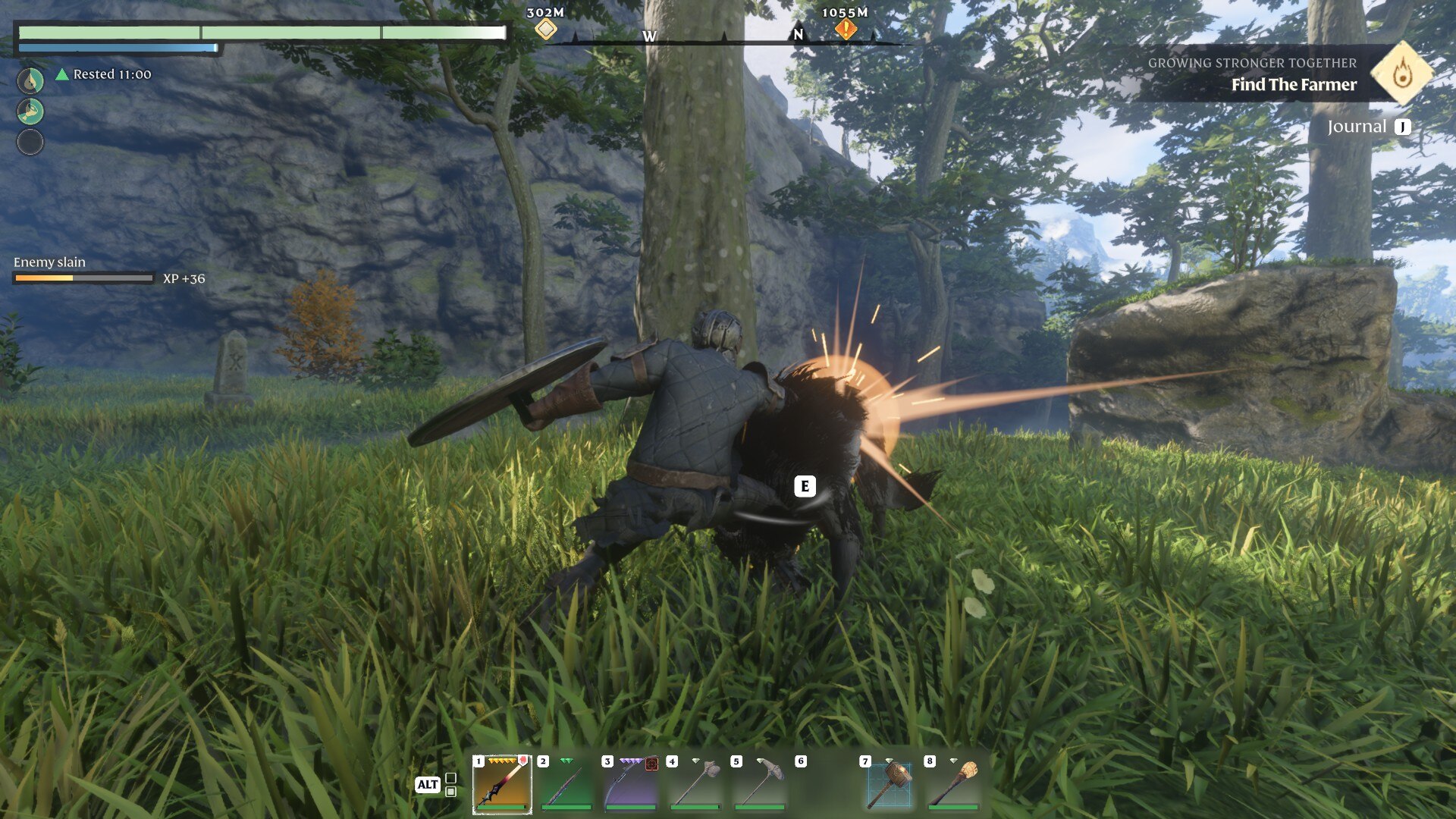
Combat has improved considerably over the course of development, and the 1.0 release gives players more ways to approach encounters. Melee weapons, bows, wands, magical staves, defensive equipment, and a flexible skill tree allow for different styles of play. Blocking, parrying, dodging, and positioning matter, particularly against stronger enemies that punish careless attacks and leave little room for mistakes.
Melee combat is most satisfying when players pay attention to enemy movements rather than simply attacking until something falls over. Defensive actions create opportunities to retaliate, while dodging helps avoid attacks that would otherwise interrupt an offensive approach. The expanded selection of active skills gives fighters more options for responding to different threats. Boss encounters are often the best showcase for these mechanics, requiring players to recognize attack patterns and choose the right moment to strike.
The experience is not consistently smooth, however. Enemies can become overwhelming when several attack at once, and some encounters punish players sharply for entering an area before their equipment and character level are ready. Groups of aggressive creatures can make travel more frustrating than it should be, particularly when the player is already dealing with the Shroud’s time limit. Combat has more depth than the earlier version offered, but difficulty and encounter balance can still be uneven.
Character progression revolves around a skill tree rather than a rigid class selection. Players can invest in melee strength, ranged damage, magical abilities, and other specializations, combining branches to create a character suited to their preferences. A dedicated fighter, spellcaster, or archer can approach the same location differently, while hybrid builds leave room for experimentation.
Magic receives particular attention in the full release. New spells introduce crowd control, area damage, and summoning, while wand combat gains additional options that make magical combat more flexible. Archers also receive new skills, and the expanded equipment progression gives experienced characters further goals as they enter the new region.
These additions make the combat system more versatile, especially for players who enjoy developing a specialized build. They do not make every encounter exceptional, but they give players more meaningful choices about how to approach a fight. Combat is therefore best understood as a strong supporting system that benefits from the broader exploration and progression loop, rather than the game’s sole reason to play.
Building and Crafting
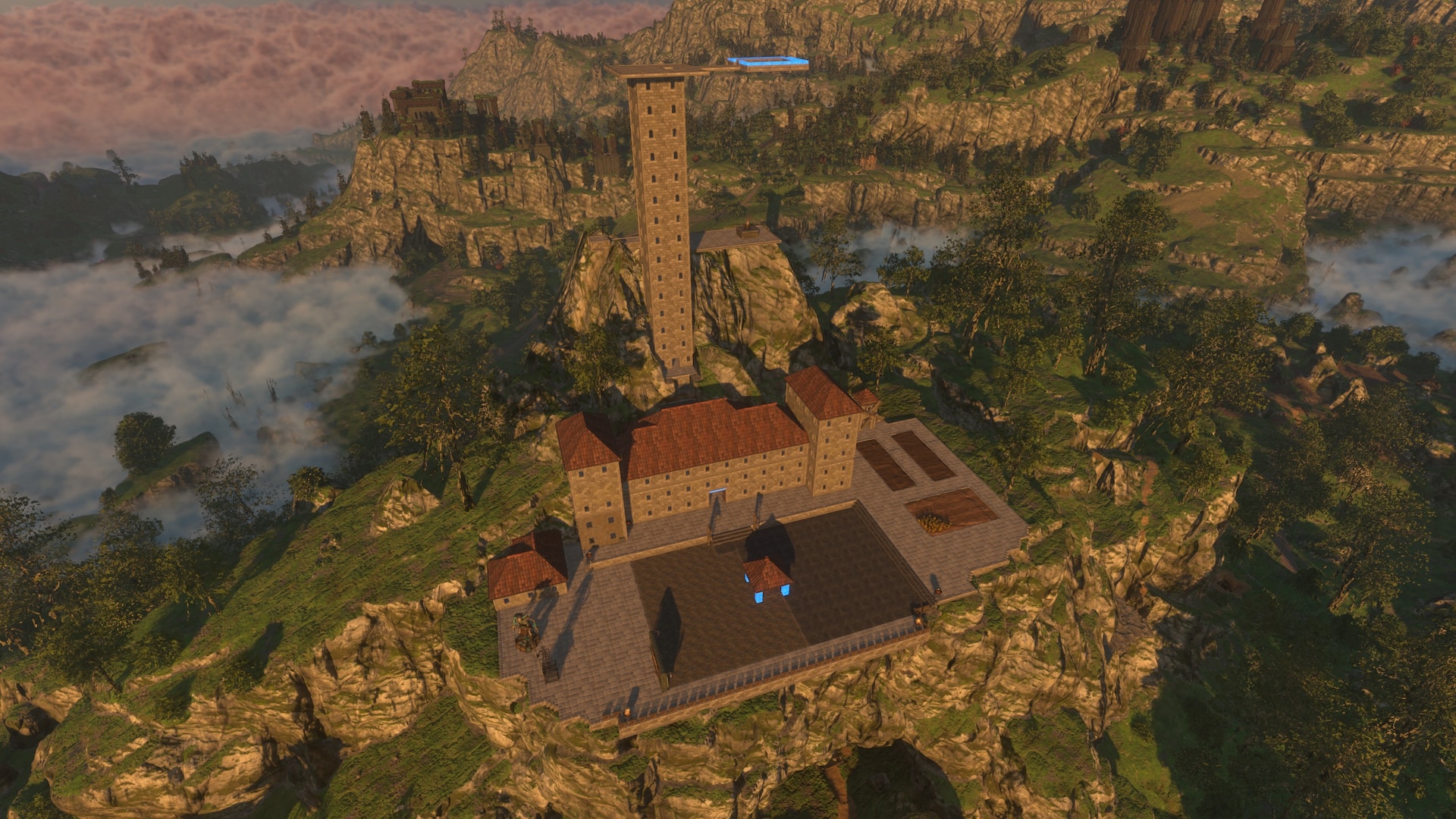
Building is where Enshrouded distinguishes itself most clearly from many of its peers. Players can create anything from a modest wooden shelter to elaborate castles, workshops, and entire settlements. Its voxel-based approach gives construction a degree of flexibility that conventional snap-together building systems often struggle to match.
Instead of being restricted to a limited selection of predefined structures, players can shape walls, floors, roofs, and other architectural elements to suit their designs. Different materials and decorative pieces offer considerable freedom, while the ability to alter terrain and incorporate the surrounding landscape makes it possible to create structures that feel connected to their location. A fortress built into a mountainside can look quite different from a village spread across a forest clearing.
The system is approachable enough that players do not need architectural skills to get started. Basic structures are relatively easy to assemble, while more elaborate options become available as players gather materials and develop their crafting capabilities. Those who enjoy detailed construction can spend hours refining a building’s appearance; players who simply need a functional base can establish one without turning the process into a separate game.
Construction also connects meaningfully with the rest of the adventure. A building is not merely decorative: it can house crafting stations, accommodate useful facilities, and give players a reason to return after a long expedition. Rescuing artisans and bringing them back to a base unlocks additional production options and recipes, making settlement development a practical part of progression. Watching a modest shelter grow into a populated settlement is one of the game’s more satisfying long-term rewards.
The full release adds further tools for creative players, including Sparkworks, a logic system that can be used to build interactive contraptions, puzzles, traps, and other player-designed activities. Its potential is considerable, but the more complex functions require a willingness to understand circuits and logic. Players who enjoy tinkering can use it to create elaborate mechanisms, while those interested primarily in building attractive homes can largely treat it as an optional extra.
The main weakness is the preparation involved in larger projects. Ambitious buildings can require substantial quantities of specific materials, encouraging repeated trips to familiar resource locations. The reduced costs in version 1.0 help, but do not remove the need for gathering. This will not bother everyone, particularly those who enjoy collecting resources as part of the process, but it can interrupt the pace for players eager to return to exploration. Even with that limitation, building is one of the game’s most compelling features, offering creative freedom that remains rewarding long after the initial novelty wears off.
Exploration, Traversal, and World Design
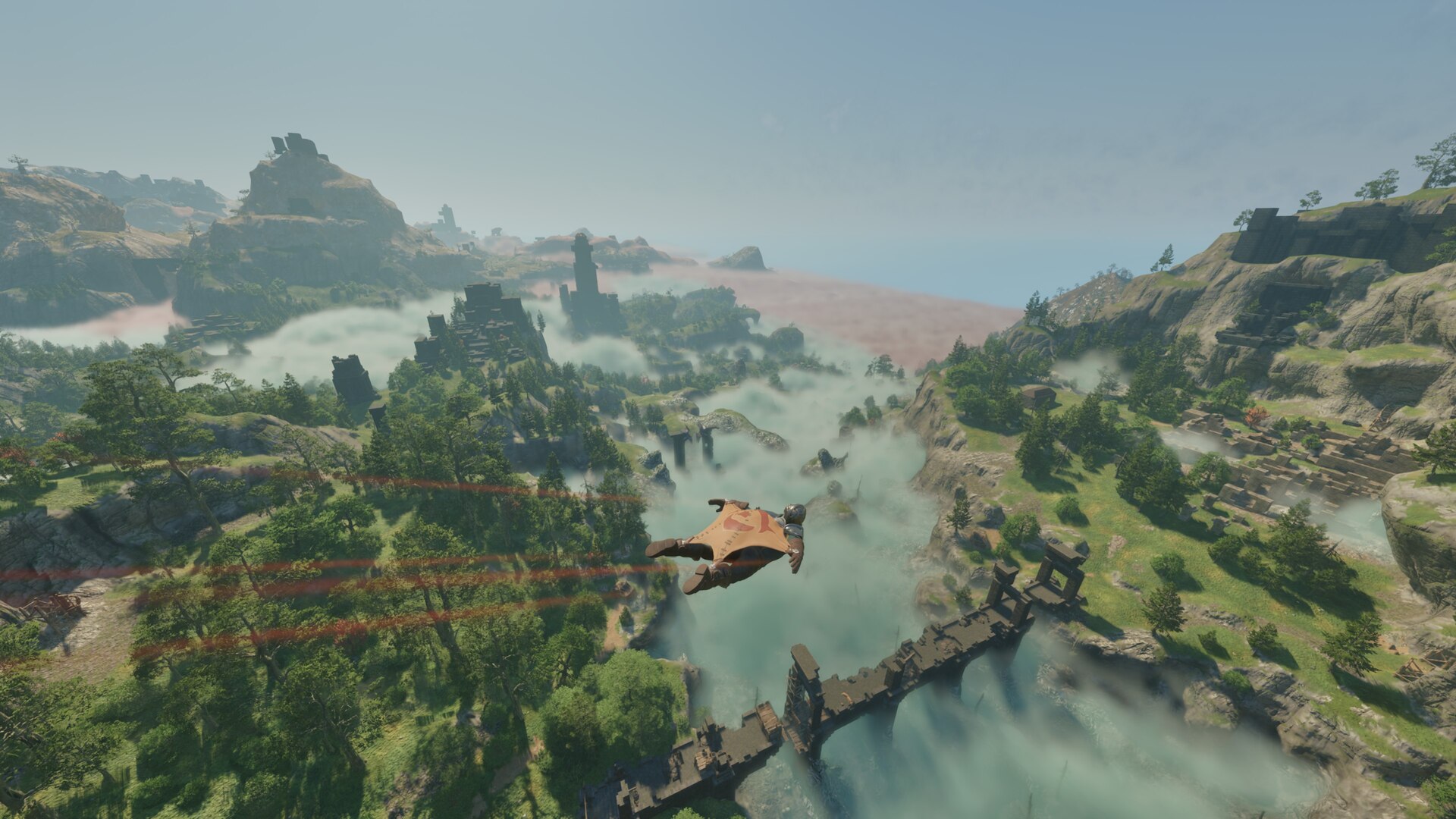
Movement is essential to Enshrouded because Embervale is designed to be explored from multiple elevations. Climbing, gliding, and using a grappling hook allow players to cross gaps, reach elevated platforms, and find routes through difficult terrain. These tools change how familiar locations can be approached, making previously inaccessible areas easier to reach as characters develop.
The glider is particularly useful because it turns elevation into an opportunity rather than an obstacle. Reaching a high point can open up a long descent across valleys and ruins, while the grappling hook helps negotiate certain gaps and surfaces. Together, these abilities make navigation more active than simply following roads between marked objectives.
There is a welcome sense of physical geography to the world. Mountains influence routes, buildings offer opportunities for vertical movement, and natural barriers encourage players to search for alternative paths. Reaching a destination can become an adventure in itself, especially when a seemingly straightforward route involves a dangerous detour or an unexpected climb.
Traversal is not always perfectly smooth. Moving between climbing, jumping, and gliding can occasionally feel awkward, and the system does not offer the precision of a game built primarily around platforming. These limitations are noticeable, but they rarely undermine the overall appeal of exploring a world designed to reward vertical movement.
Traversal contributes substantially to the game’s identity. It encourages players to examine the landscape rather than treat it as empty space between combat encounters, giving exploration a rhythm that gathering and quest completion alone could not provide.
Story, Quests, and Atmosphere
The story establishes a useful reason to explore Embervale, but it is not the game’s strongest element. The kingdom’s collapse, the Shroud’s spread, and the fate of its inhabitants provide a backdrop for the player’s journey. Environmental details and abandoned settlements often communicate the consequences of the disaster more effectively than exposition alone.
Quests generally serve a practical purpose. They direct players toward new locations, introduce crafting opportunities, or encourage them to investigate areas that might otherwise remain undiscovered. This structure works well with the open world, since objectives frequently lead to additional discoveries along the way. However, some quests feel more like instructions for progressing through the game’s systems than memorable narrative episodes in their own right.
The full release brings the main storyline to a conclusion, giving the journey a more definite endpoint than it had during Early Access. Players interested in the setting can piece together its history through notes, ruins, and other discoveries, while the completed narrative provides greater context for the disaster that devastated Embervale. The storytelling remains relatively conventional, though, and rarely becomes compelling enough to compete with the immediate appeal of exploring another region or improving a settlement.
Atmosphere does more of the heavy lifting. The contrast between inviting natural environments and the oppressive Shroud gives the world a recognizable character, while ruined buildings suggest a history that extends beyond the player’s immediate objectives. The visual presentation is appealing without relying entirely on cinematic sequences, and the landscape often provides the strongest moments of immersion.
The soundtrack and sound design support this atmosphere without consistently becoming defining features in their own right. The environmental presentation is effective, but it is the combination of exploration, architecture, and the Shroud’s presence that gives Embervale its character.
Multiplayer and Replay Value
Enshrouded supports solo play and cooperative groups of up to 16 players on a server. Cooperative play suits the game’s structure because different players can contribute to exploration, combat, resource gathering, and construction without needing to follow identical priorities.
One player might spend an evening expanding the settlement while another ventures into dangerous territory for rare materials. Groups can also tackle difficult locations together, making encounters more manageable and turning discoveries into shared experiences. The freedom to divide responsibilities is particularly welcome in a game with so many systems competing for attention.
Sparkworks gives creative players another reason to spend time together, allowing them to construct interactive challenges, puzzles, and other activities within their worlds. Its usefulness depends on how much time someone wants to spend experimenting with the building systems, but it broadens the game’s appeal beyond conventional cooperative exploration.
Playing alone remains viable, and the experience does not depend on having a regular group. Solo players can develop their characters, establish bases, and explore at their own pace. Certain activities naturally demand more time when there is nobody else to help gather materials or deal with groups of enemies, but the game accommodates a solitary approach.
Replay value comes primarily from experimentation. Different character builds change how players approach combat, while the building system provides a seemingly endless supply of personal projects. Exploring missed locations, gathering rare materials, and improving an established settlement can occupy many additional hours after the main progression has been completed.
Nevertheless, the appeal of another playthrough depends heavily on how much someone enjoys the underlying gathering, exploration, and construction loops. The handcrafted world offers plenty to discover during a first journey, but players seeking radically different maps or a highly branching narrative may find less reason to start over. Enshrouded is better suited to long-term projects and cooperative adventures than repeated campaigns undertaken solely for story variations.
Graphics and Performance
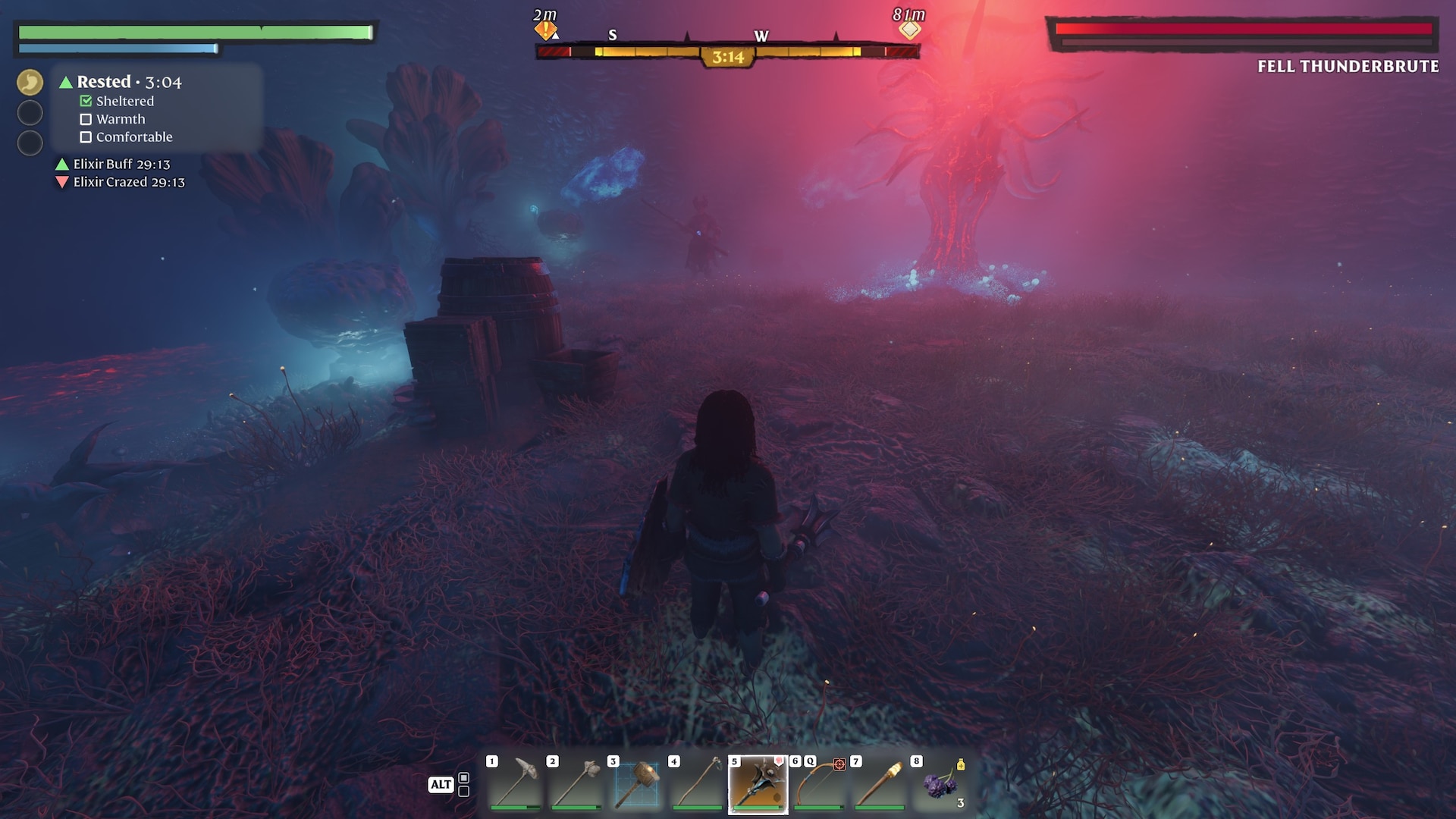
The visual design is one of the game’s quieter strengths. Embervale combines broad landscapes, dense vegetation, ruined architecture, and distinctive fog-covered regions to create a world that feels varied without abandoning a consistent artistic direction. The voxel-based construction system also integrates naturally with the wider environment, allowing player-created structures to feel like part of the landscape rather than separate objects placed upon it.
The presentation is not flawless. Some locations look more impressive from a distance than they do up close, and objects can appear abruptly as the player moves through the world. The visual detail and lighting also do not always match the best-looking modern PC releases. Still, the combination of terrain, atmosphere, and architectural variety gives exploration a visual appeal that remains important throughout a long playthrough.
The PC version uses Vulkan rather than DirectX 12, and this has practical consequences for graphics performance and upscaling support. Independent testing of the 1.0 release has found significant differences between graphics-card families, with Radeon cards performing particularly well in some comparisons while Nvidia cards offer access to newer DLSS upscaling options. AMD’s FSR 4.1 and Intel’s XeSS are not available through the game’s standard Vulkan implementation, and frame generation is absent. These limitations are worth considering for players who rely on upscaling to maintain smooth performance at higher resolutions.
The game can look striking, but it also places substantial demands on graphics hardware, particularly at high resolutions and maximum settings. Players should check the current system requirements and consult benchmarks for their particular graphics card before deciding which settings to use. The technical picture is more nuanced than simply calling the game well optimized or poorly optimized: performance, image quality, and available upscaling options vary by hardware.
Keen Games has continued to improve rendering and performance during development, and the full release includes further changes to how distant terrain and buildings are displayed. Nevertheless, those improvements do not eliminate every technical limitation. For a game whose world and building system are such important attractions, the visual presentation is effective, but the PC version’s hardware demands and uneven upscaling support prevent it from being an unqualified technical success.
Final Verdict: 8.5/10
Enshrouded is a rewarding survival RPG whose greatest achievement is the way it connects exploration, crafting, character progression, and building into a coherent experience. Embervale is worth exploring because its locations frequently offer useful discoveries, while the Shroud adds enough danger to make preparation and careful decisions matter. The flexible skill tree gives combat room for experimentation, and the construction system provides a creative outlet that can sustain interest long after the initial adventure has begun to feel familiar.
Its weaknesses are real. Combat can become frustrating when enemies overwhelm the player, the narrative rarely becomes particularly memorable, and resource gathering can turn into repetitive work. The world also does not preserve every change outside protected areas, while the more advanced building tools will appeal to some players far more than others. On PC, hardware demands and uneven upscaling support are further considerations for anyone hoping to play at high resolutions.
These limitations do not undermine what the game does well. The full release brings the adventure to a more satisfying conclusion, with a completed storyline, an expanded world, and additional systems giving players substantial reasons to explore. More importantly, the core loop remains enjoyable: venture into the unknown, return with something valuable, improve your equipment or settlement, and set out again with a new goal.
Players seeking a punishing survival simulation or an RPG built around exceptionally precise combat may find Enshrouded less satisfying. Those who enjoy open-world exploration, creative construction, and cooperative adventures will find considerably more to appreciate.
Keen Games has delivered a survival RPG that is at its best when it allows players to decide what matters to them. Whether that means exploring every ruined settlement, perfecting a character build, or spending an evening constructing an elaborate fortress, there are plenty of reasons to keep playing. Its individual systems are not all equally strong, but together they make Enshrouded a worthwhile PC adventure.